


 Not all images were able to load for printing. Please close the print window and try again.
 An X-Ray View with the new Rado Anatom Skeleton
A skeletonised interpretation of Rado’s sleek and ergonomic Anatom in high-tech plasma ceramic.
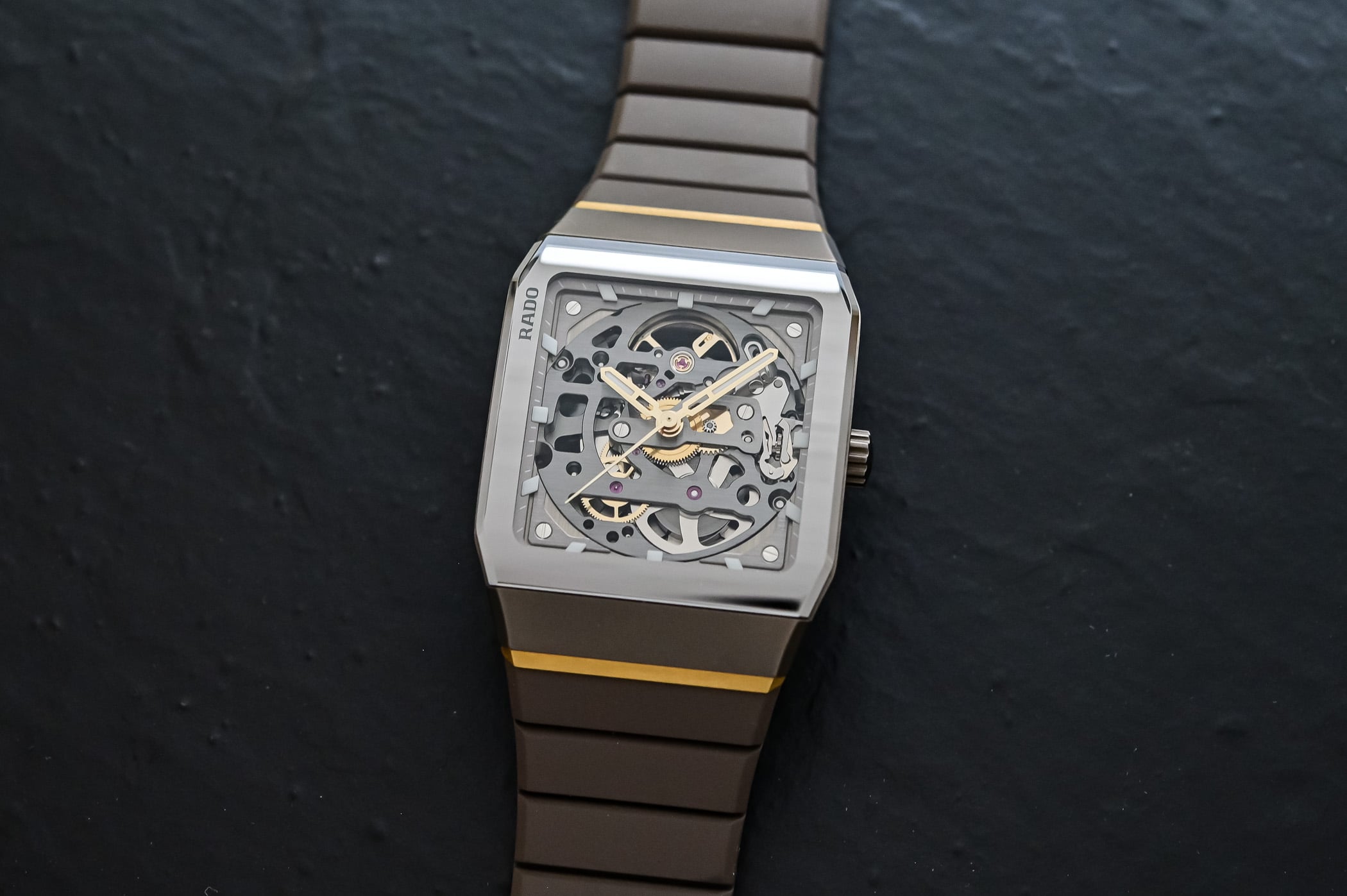
Rado is a byword for innovative, resilient high-tech materials designed to weather life’s knocks and blows, and for its taste for square and rectangular case designs. Touted as the “world’s first scratchproof watch”, Rado’s 1962 DiaStar got the brand noticed with its proprietary Hardmetal tungsten carbide composite case. Like its DiaStar ancestor, the 1983 Anatom featured a Hardmetal case but stood out with its sweeping convex sapphire crystal and fluid, anatomical – hence the name – design. For its 40th birthday, the Anatom was given a high-tech ceramic makeover, followed a year later by ceramic bracelets. Succumbing to the trend for skeletonised models that runs through Rado’s repertoire, the Anatom gets a full-body X-ray and returns as the Anatom Skeleton, revealing the anatomy of its calibre R808 in full.
Often referred to as the “Master of Materials”, Rado’s sophisticated high-tech plasma ceramic stands out from regular ceramic with its metallic shine, a finish achieved in a special plasma reactor heated to 20,000°C, where ionised gases alter the surface molecular composition, introducing carbon to produce an incredible futuristic liquid-metal look.
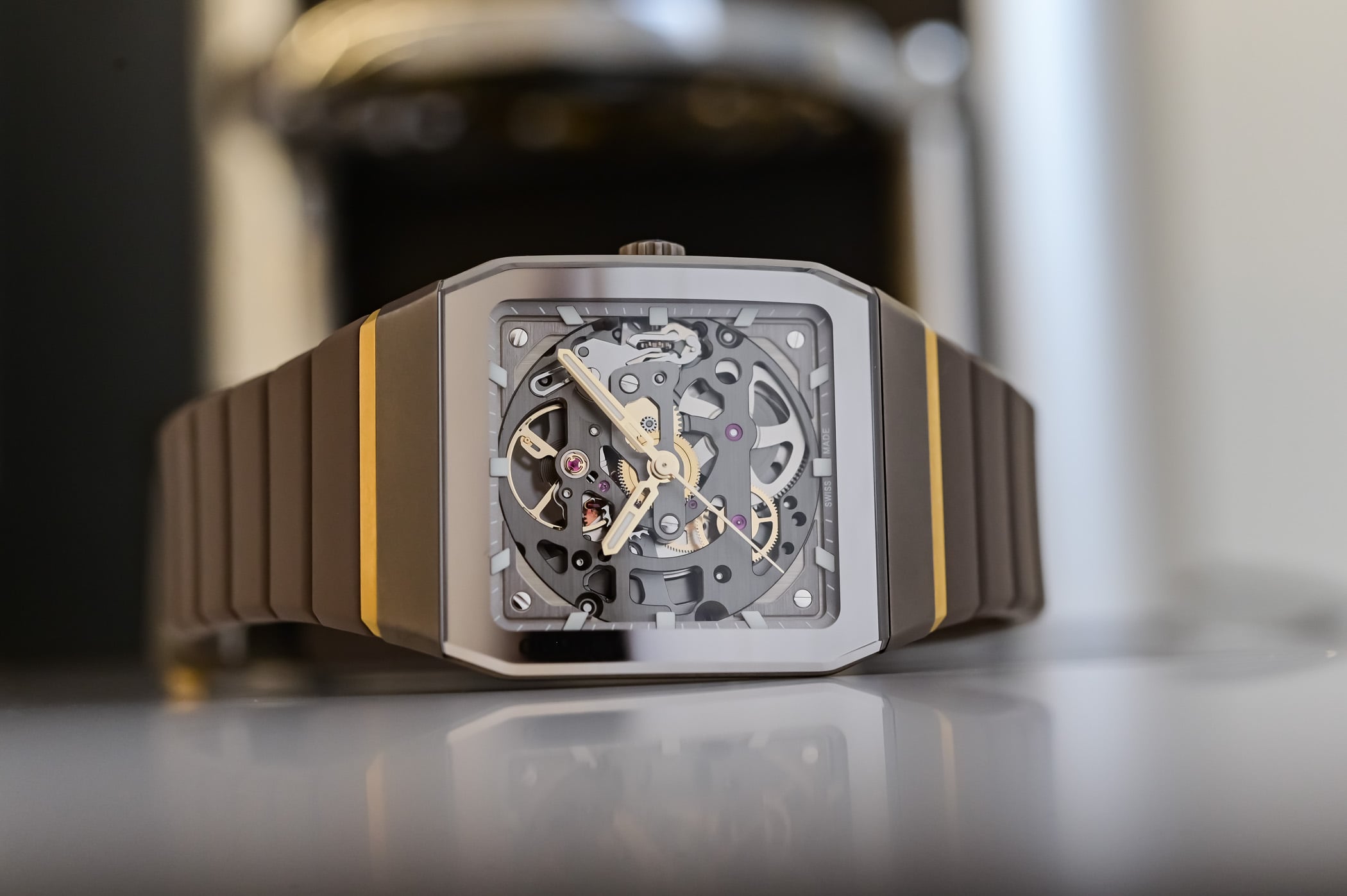
The bezel and crown of the new reference are made of matte grey plasma ceramic, while the middle case is made from brushed stainless steel. Since Rado is all about textures and tactility, the cool, pearlescent plasma ceramic is paired with a smooth, velvety grey rubber strap, with yellow gold-coloured steel end pieces and a double-folding steel clasp covered in grey plasma ceramic.
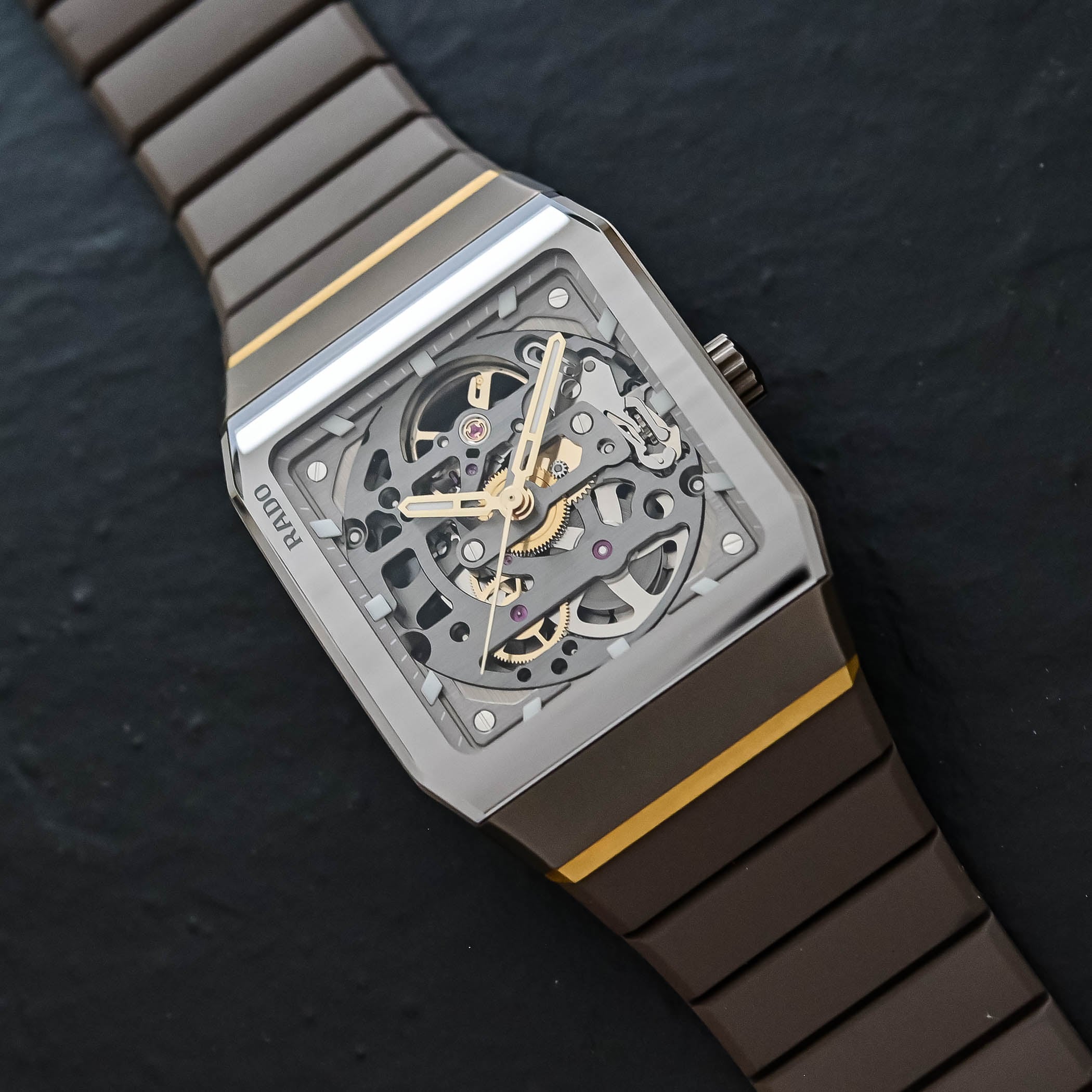
Measuring 32.5mm across, 11.5mm high, and 46.3mm long, the ergonomically designed case hugs the wrist like a second skin. True to its original anatomy, the dial is covered by an edge-to-edge convex sapphire crystal, this time finished with grey metallisation at its edges. Rather than a flat plane, the cylindrical and bevelled sapphire crystal forms part of the watch’s architecture and requires an elaborate manufacturing process to ensure consistent thickness and optical quality.
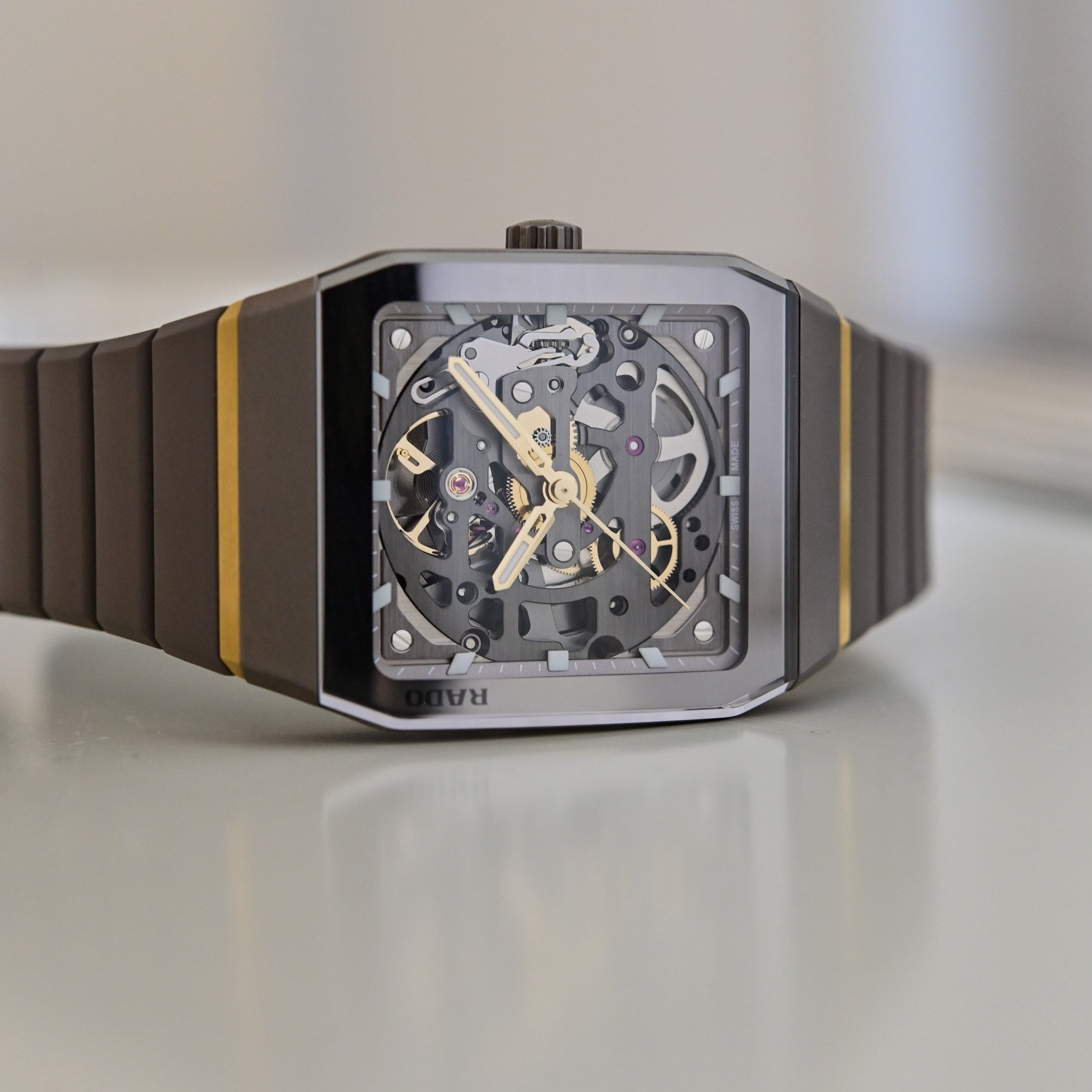
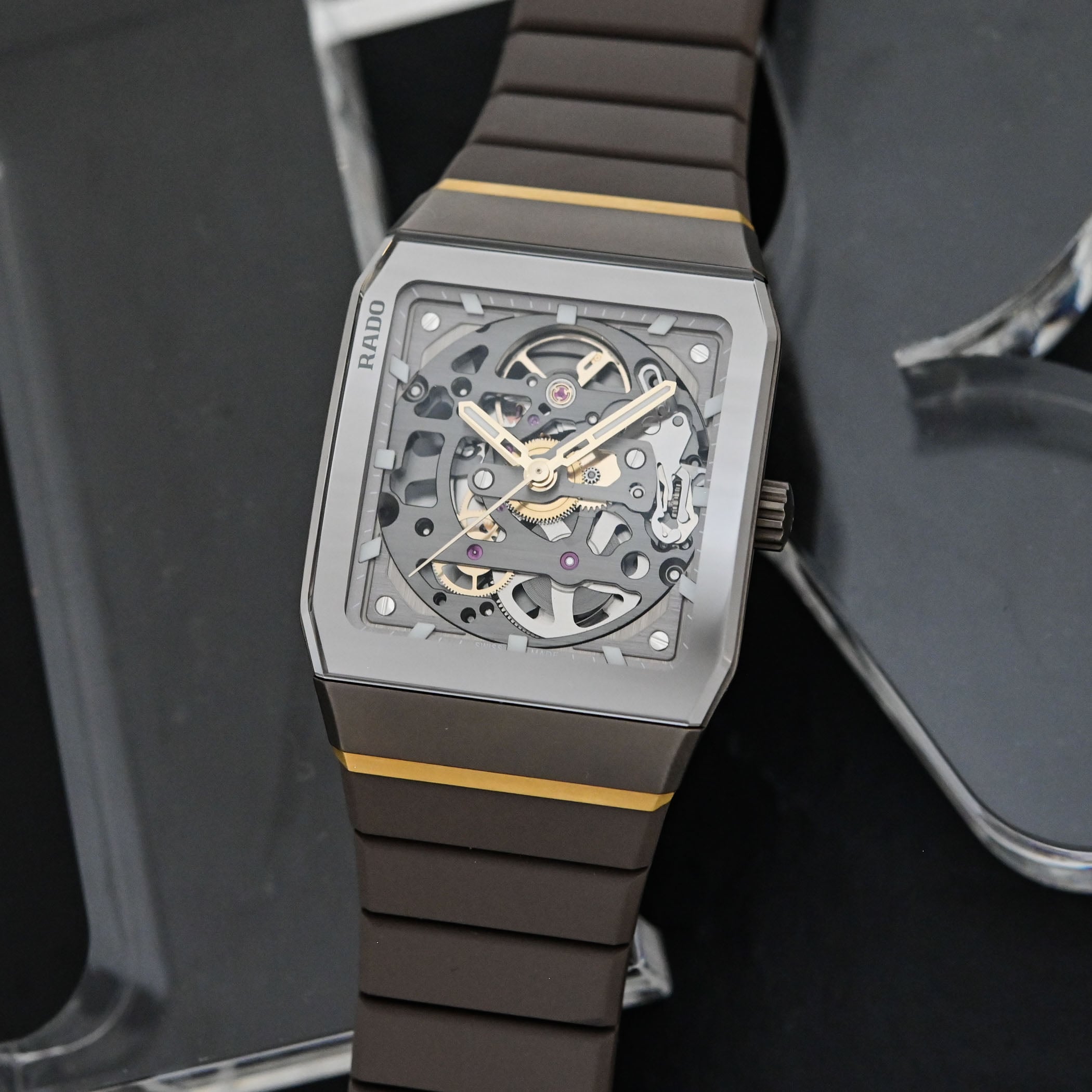
Rado has embraced skeletonisation with open arms, and all its core models powered by the calibre R808 – from the Captain Cook to the DiaStar and True Square – have appeared with skeletonised dials. Now it’s the Anatom’s turn to strip off, revealing its anatomy beneath a network of openworked grey bridges. Playing with different finishes and colours, the anthracite-coated elements contrast with the yellow gold-coloured cogs and wheels. The dial is roughly divided into three sections: the balance wheel with its anti-magnetic hairspring at noon, the middle section with the wheel train and the keyless work of the crown, and the barrel and mainspring occupying the central and lower segments.
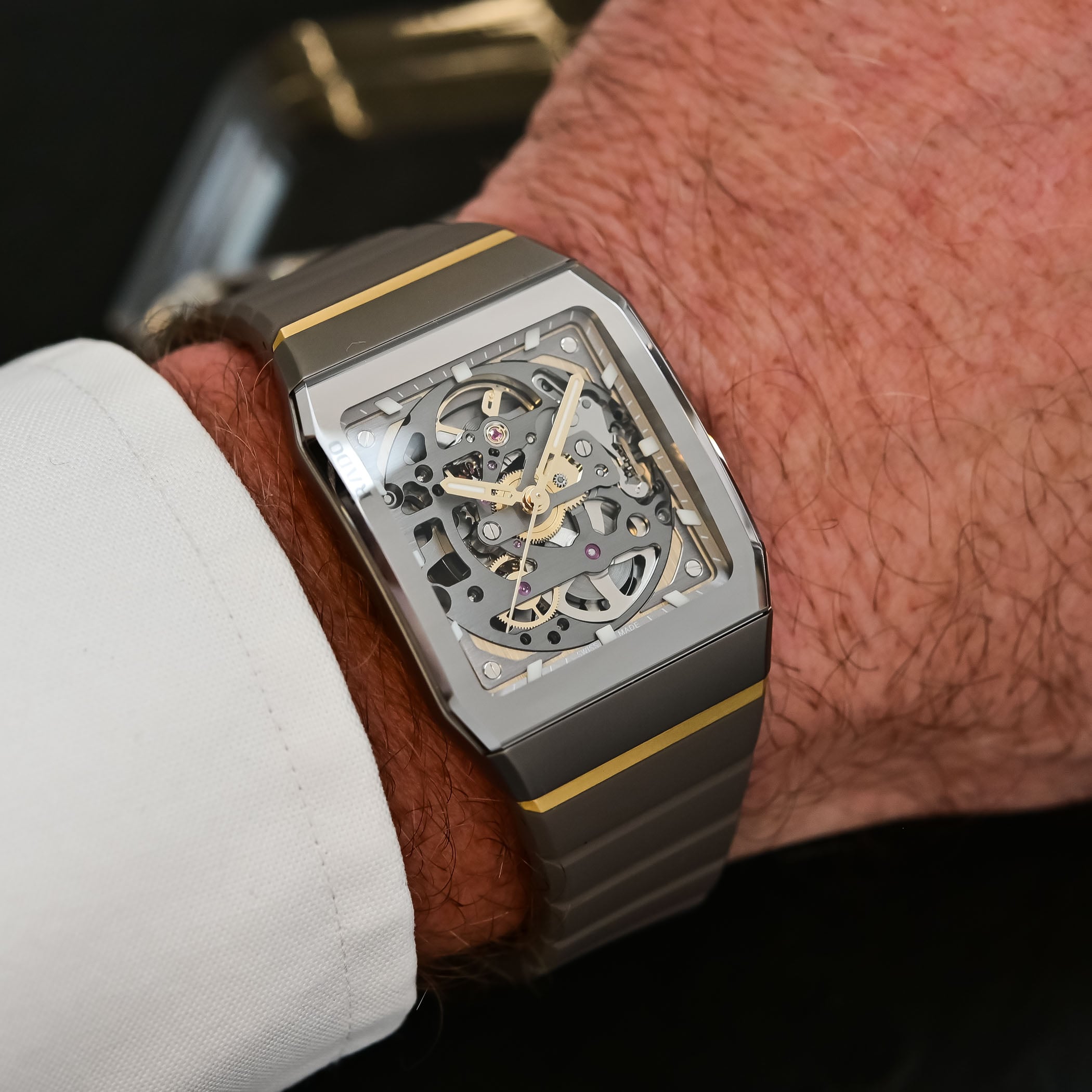
Suspended on the periphery, the white minutes track features cast Super-LumiNova block indices indicated by the gold-coloured openworked hands with lumed inserts. With so much happening on the dial, the brand name is featured on the left side of the plasma ceramic bezel.
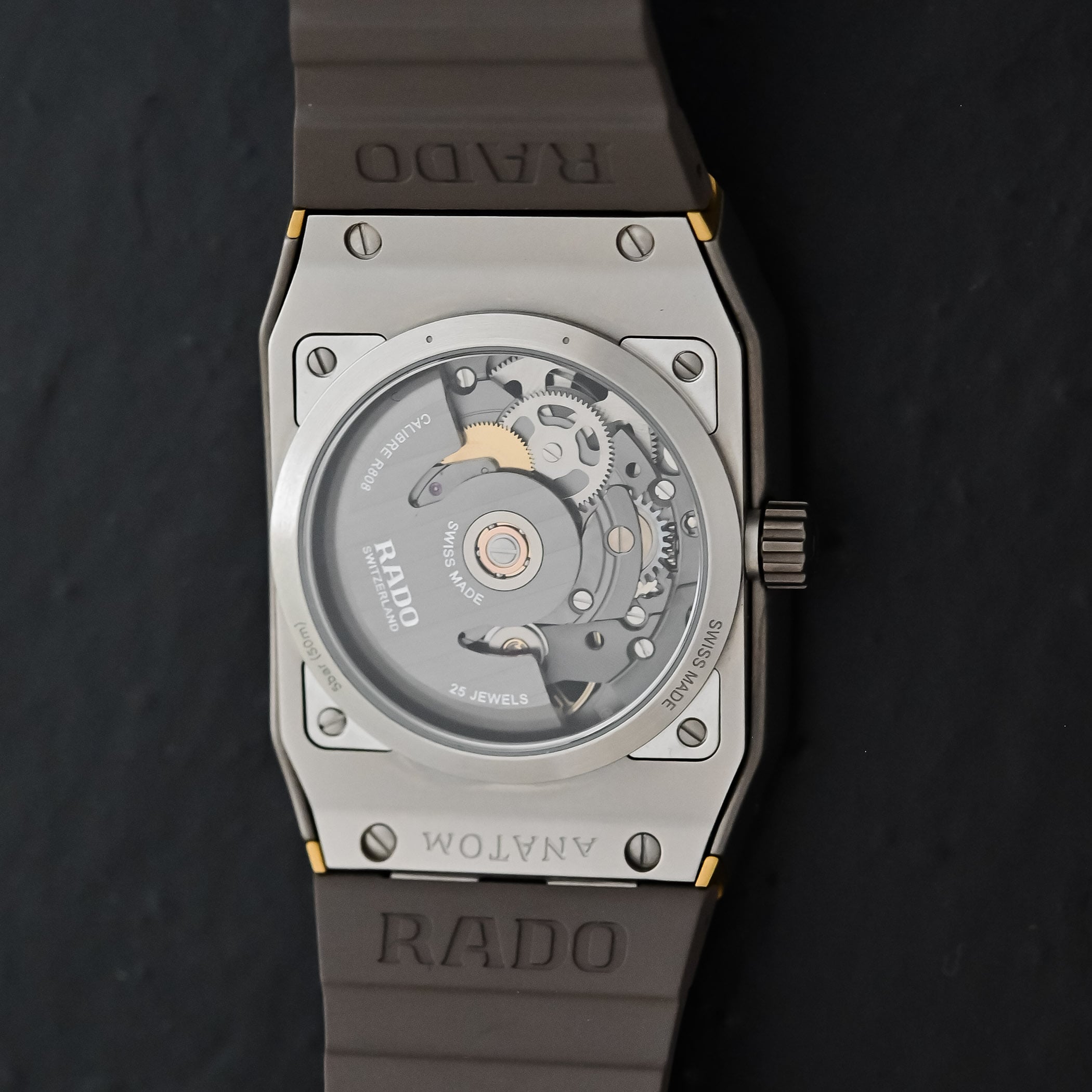
A round sapphire glass on the caseback exposes the large anchor-shaped rotor of calibre R808, decorated with Côtes de Genève. Delivering a robust 80-hour power reserve, Rado’s R808 automatic movement is fitted with a Nivachron hairspring that is unaffected by magnetic fields and temperature fluctuation.
The Rado Anatom Skeleton retails for EUR 4,500. More information at rado.com.


3 responses
I like it, price is steep, for that kind of money I would expect a ceramic bracelet.
Nice. Bit unusual, but a bit pricey.
i like it but not in rubber strap , if in cermice that money what you coat is good, for for rubber