


 Not all images were able to load for printing. Please close the print window and try again.
 Nomos Goes Precious, with the Elegant Tangente Gold and Ludwig Gold (Incl. Video)
The charm of gold and German watchmaking, at a surprisingly accessible level.
Every brand at one point dreamt of having an icon on their hands. A cornerstone model that stands the test of time, design trends, and, more importantly, captures the hearts of fans and collectors worldwide, indefinitely. Watches like the Lange 1, the Submariner, the Nautilus, the Speedmaster or the Royal Oak. For Nomos, even though it doesn’t have centuries of watchmaking to look back on, the Tangente fits the bill and has become a true signature model. But we shouldn’t forget another model launched in 1994, the more rounded and yet extremely elegant Ludwig. And now that we’re on the topic of elegance, Nomos has given its two cornerstone models an extra layer of luxury and refinement, with the introduction of the Tangente Neomatik Gold and Ludwig Gold, here reviewed.
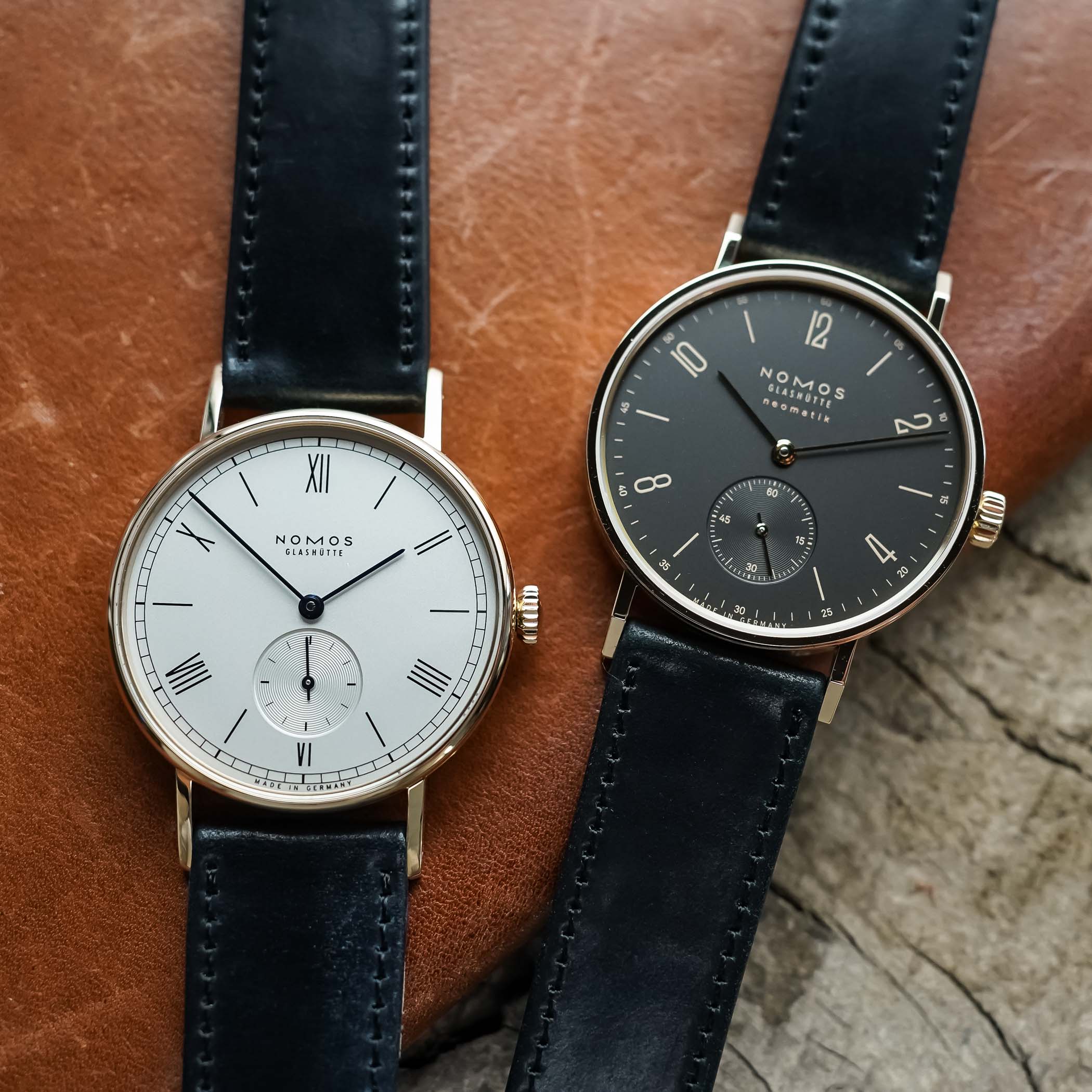
We all know the Nomos Tangente… A relatively simple, Bauhaus-inspired watch that was part of the brand’s inaugural quartet of watches, and has remained in production ever since, fairly unchanged. But what if you’re not that much into the Tangente’s simple, sharp lines, the angular lugs or its flat sapphire crystal? What if you want something more…. Rounded? Well, Nomos serves up a perfectly suitable alternative, in the form of the Ludwig, which at first might feel like a Tangente, but isn’t. And in order to understand this, we had the latest Tangente Gold and Ludwig Gold for a video review.
Emblematic designs with notable differences
As mentioned, at first glance, it’s easy to think the Tangente and Ludwig are cut from the same block. However, dive a little deeper and things start to fall into place. The Tangente, as Nomos’ poster-boy watch, can be spotted from across the room. Its sharp and crisp profile, narrow and straight lugs and flat top crystal are very reminiscent of the 1930s. The design is deliberately simple, and nothing feels out of place or overpowering.
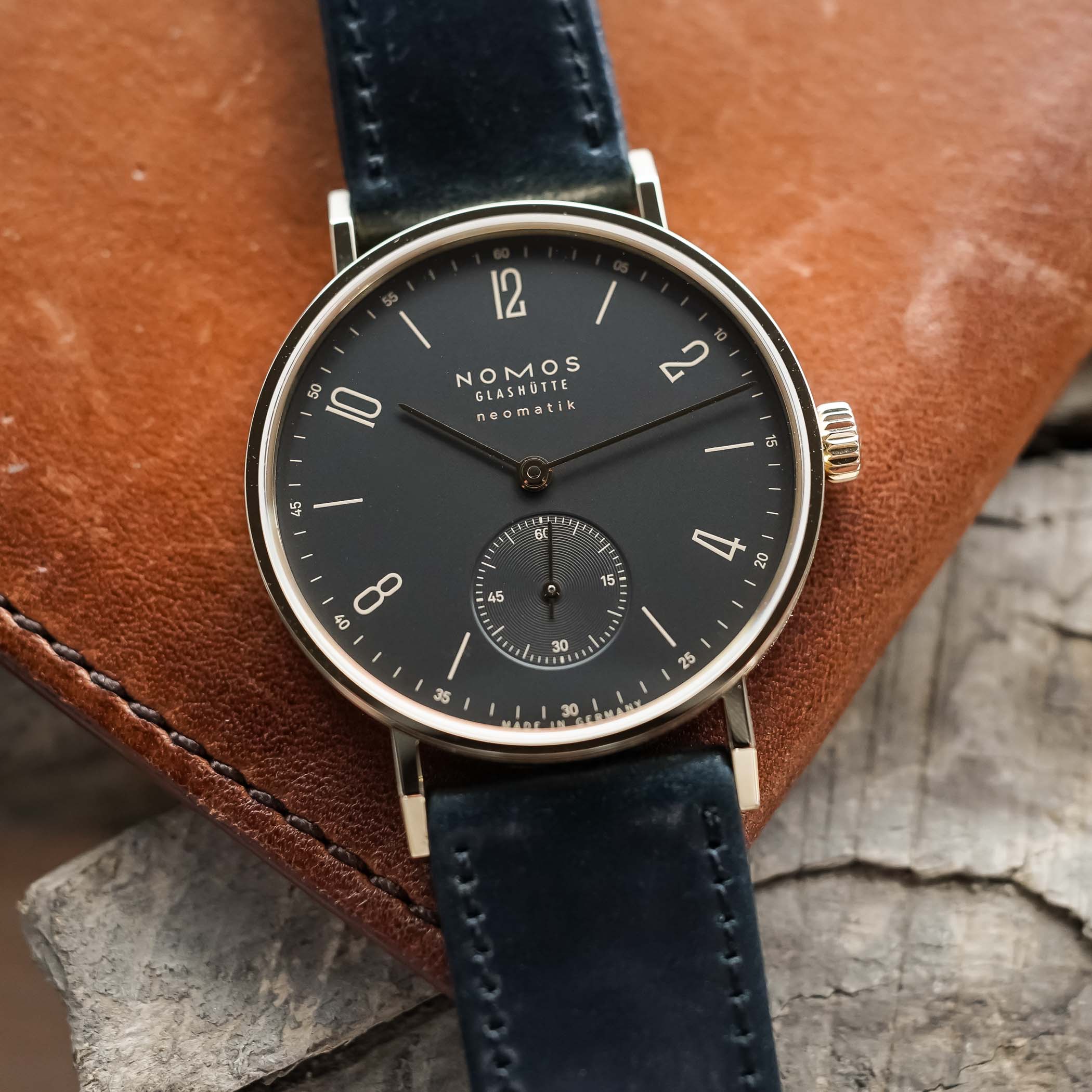
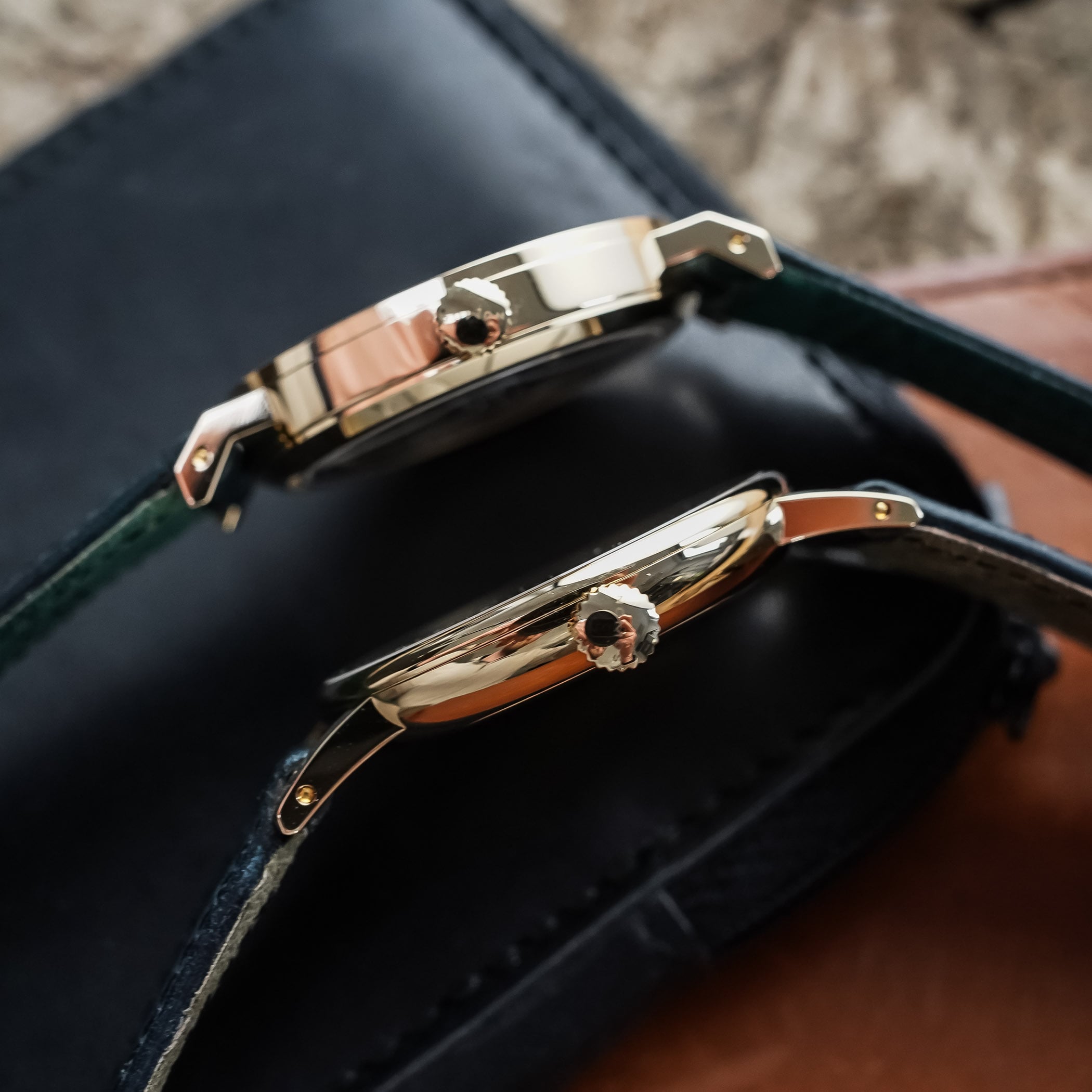
On the contrary, it radiates a soothing calmness regardless of case material, dial colour and so on. The Tangente collection spans several sizes, uses both manual and automatic in-house produced movements, and, if desired, can even come with complications. The Tangente Gold we have for this review was introduced at the end of 2025 and measures a slender 35mm by 6.9mm. The lines, as ever, are sharp and to the point. It’s fully polished, has a very narrow bezel and a simple knurled and signed crown. The drilled lugs are straight as an arrow, take a step down halfway, and extend the watch to a lug-to-lug length of 43.0mm. The sapphire crystal is as flat as it can be. No frills, no exaggerated details, no drama. But a beautifully balanced design with character.
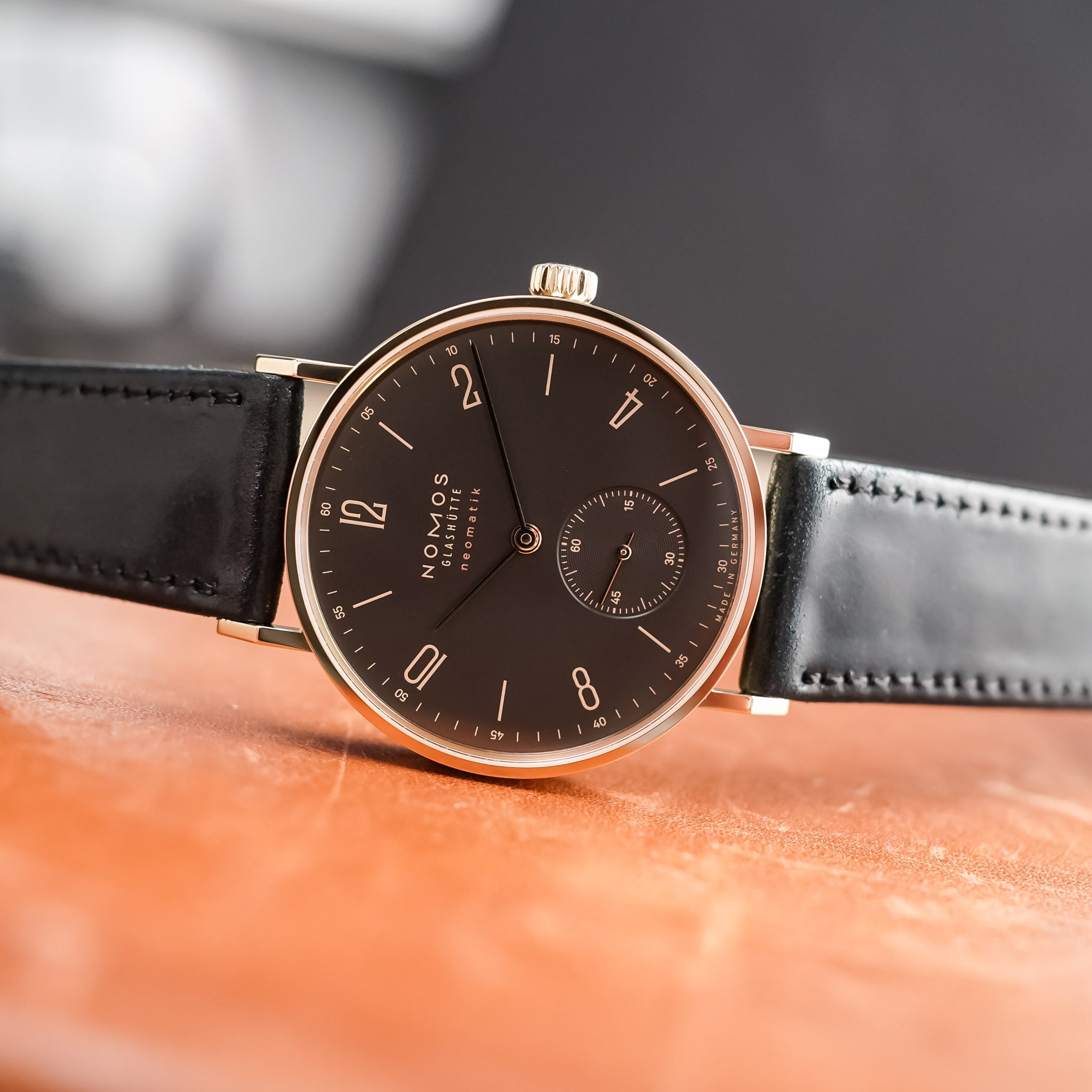
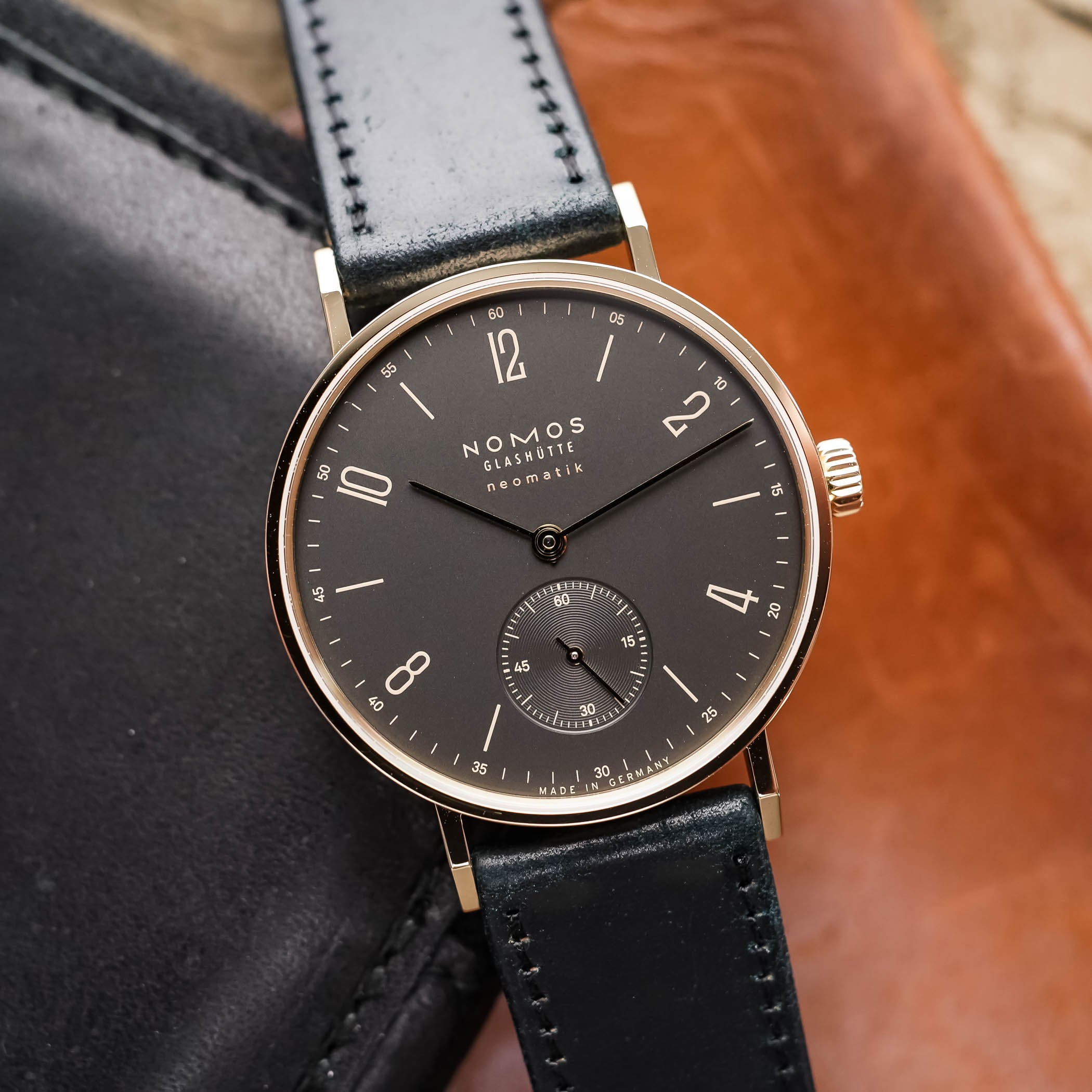
We’ve had the pleasure of handling the Ruthenium dial with gold markers, numerals and hands, but it’s also available in silver, with gold hands and black scales and markers, or with blued hands and black all around. Regardless of the colour and finish, the design is identical, with elongated Arabic numerals mixed with baton markers, a recessed small seconds subdial with a snailed finish and a gold Neomatik script beneath the logo, hinting at its movement, but more on that in a bit.
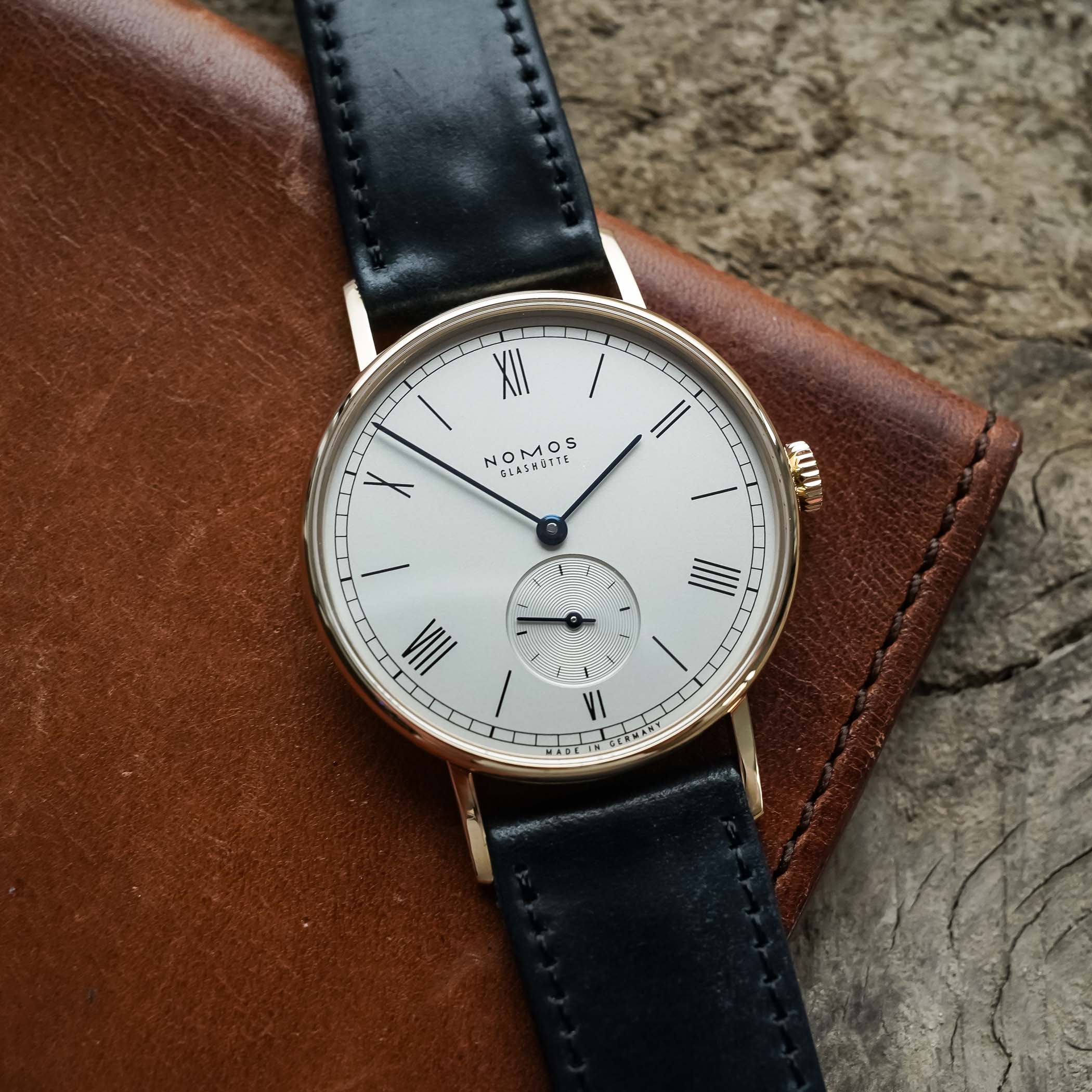
Then the Ludwig, which sways you with a softer, more curvaceous profile. Although it looks quite identical at first, the bowl-shaped case is a clear break from the purist Tangente. The Ludwig is produced in five sizes, ranging from 33 to 41mm, with this one being 35mm in diameter. At 6.3mm in height, it’s slightly slimmer compared to the Tangente Gold (but this is due to a different movement inside), and instead of an angle in the lugs, they slope downward from case to tip. In terms of total length, the Ludwig Gold measures 45.0mm from lug-to-lug, surprisingly long for a watch of that size. The top sapphire crystal is domed ever so slightly, and the crown is a touch flatter than the one on the Tangente.
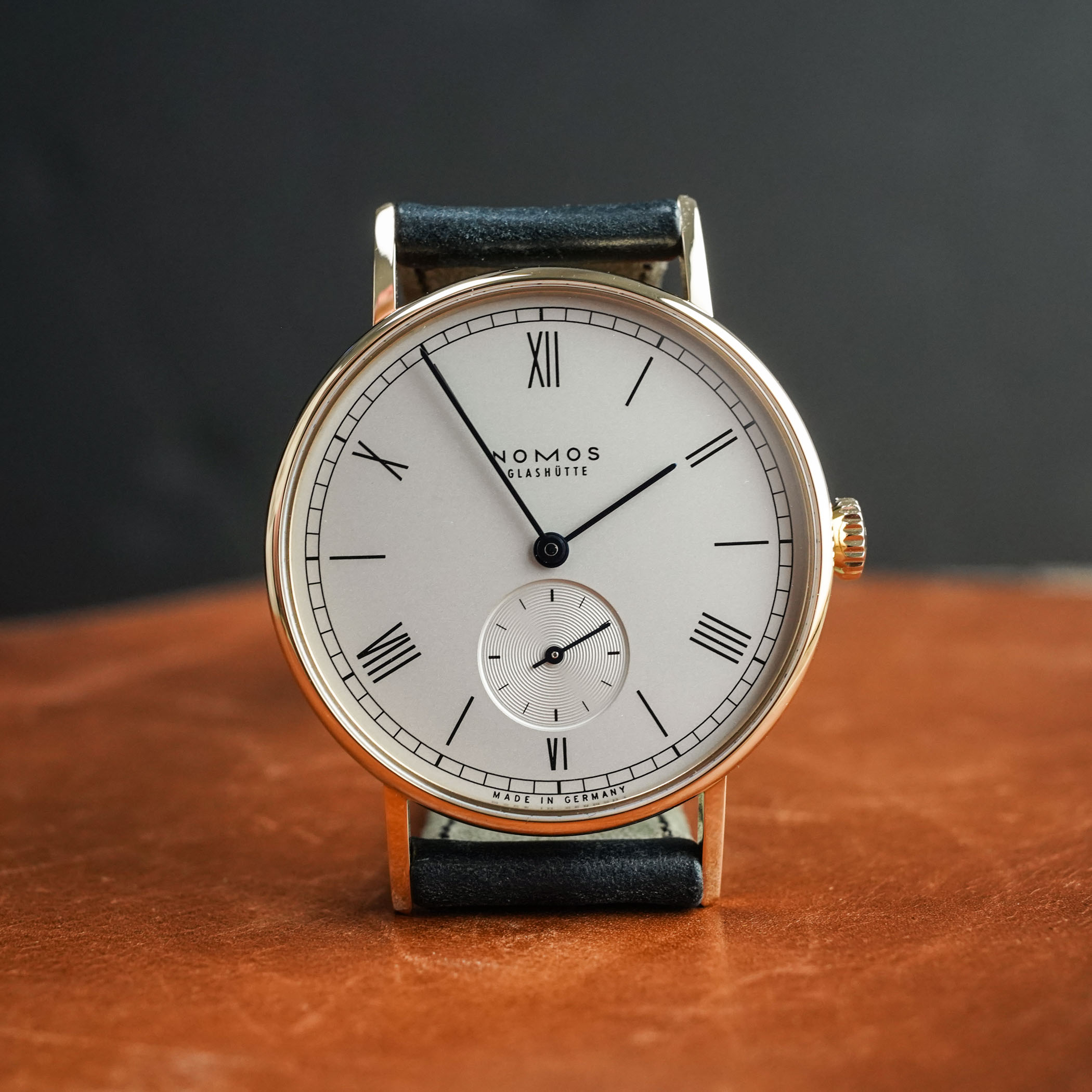
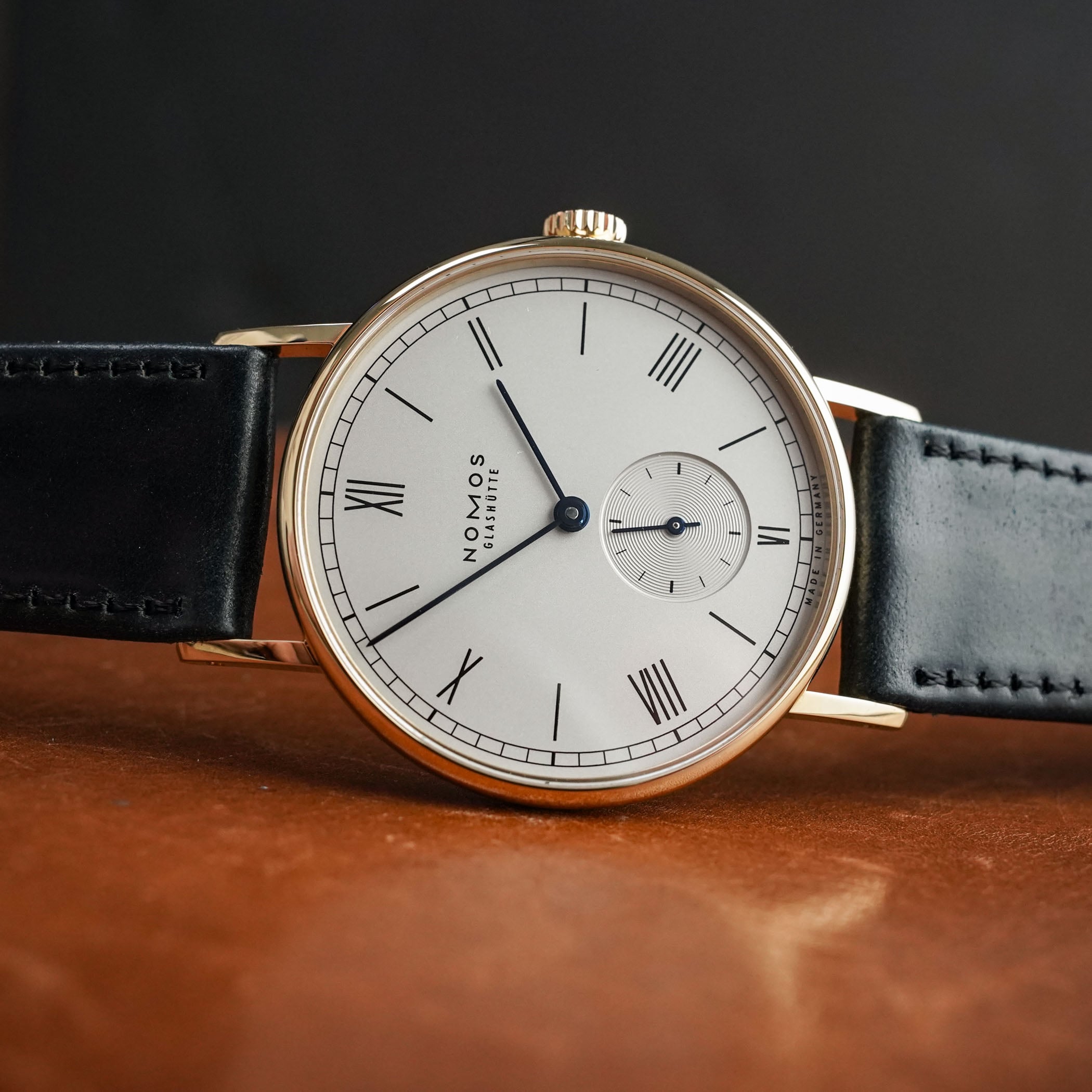
For the dial, you have two options: a galvanised silver-plated finish with either blued hands or gold hands. The outer perimeter shows a railroad-style minute track in black, with elongated Roman numerals and baton markers all around. The small-seconds subdial is recessed and snailed yet again, but comes without numerals for the fifteen-second intervals. See, the differences might be subtle, but they are there.
Automatic vs. handwound
In terms of mechanics, these two precious metal dress watches take off in different directions. While both the Tangente and Ludwig are available with automatic and hand-wound movements, Nomos opted for an automatic one in the Tangente Gold and a manual one in the Ludwig Gold. It’s important to note that Nomos makes all of its own movements, minus just a very few parts. Even in its simplest calibre, the DUW 4001, which replaced the Alpha, Nomos uses its own Swing System escapement. So, in terms of production, and I know this will please quite a few, they are true in-house movements.
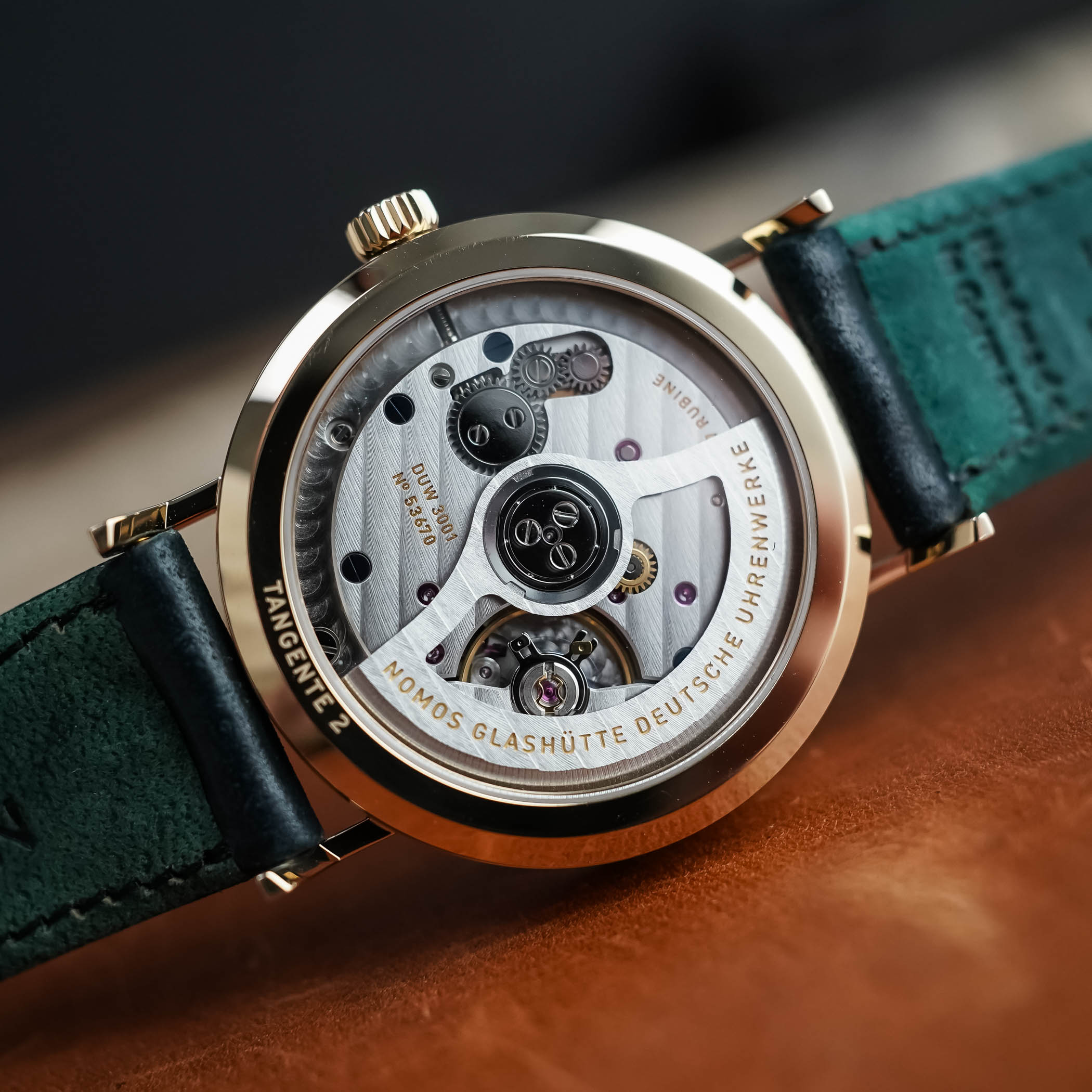
The Tangente Gold is equipped with the Calibre DUW 3001 Neomatik, which is wound by a central rotor. The movement runs at a rate of 21,600vph and delivers a power reserve of 43 hours. It’s nothing earth-shattering, but it performs as it should and looks rather handsome through the sapphire crystal caseback. The finishing is typical of Nomos, with crisp Glashütte ribbing, blued hairspring and screws, gold-infilled engravings and plenty of elements polished to a mirror-like finish.
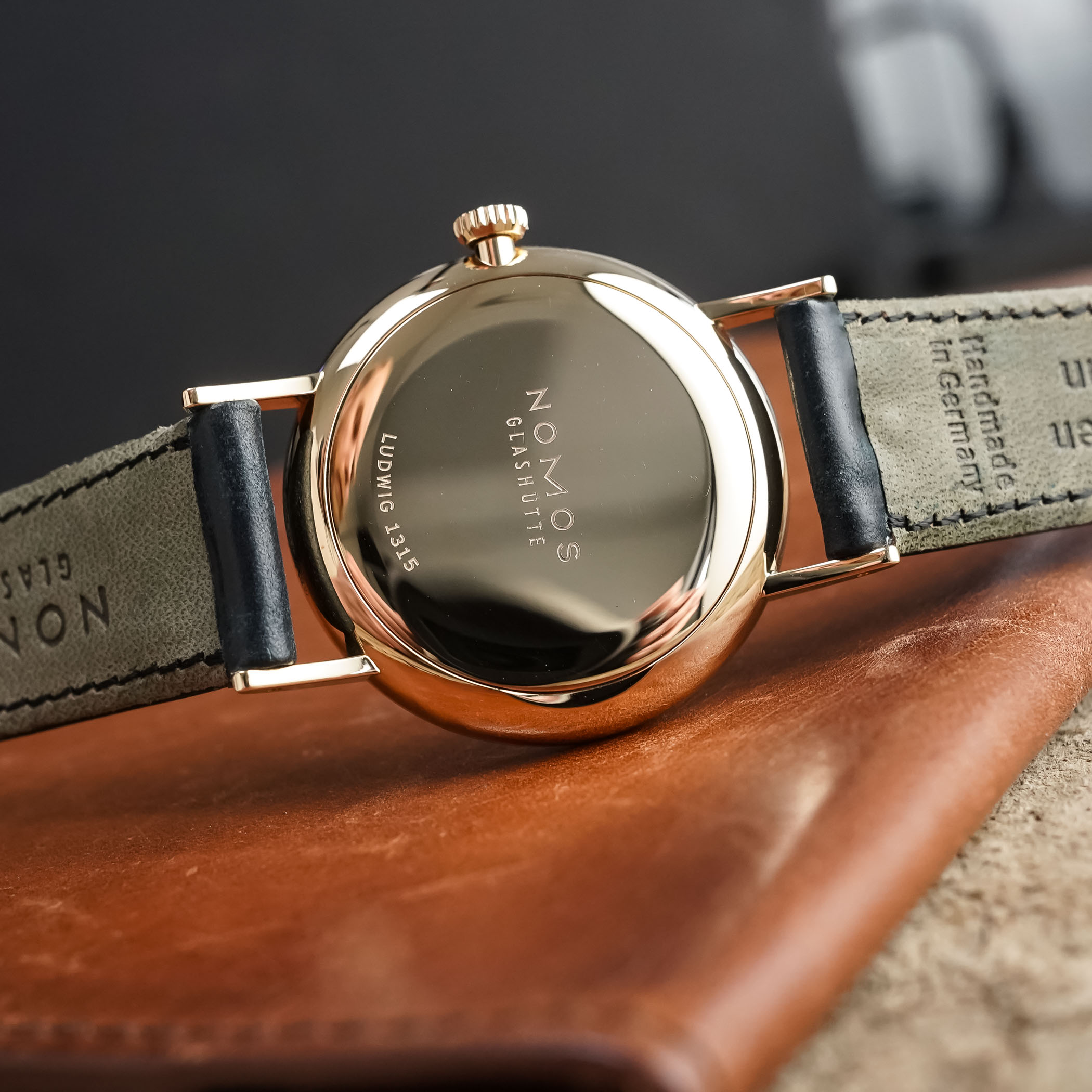
Although we can’t see it, the same can be said for the Calibre DUW 4001 in the Ludwig Gold, which is an evolution of the Alpha, as I mentioned. The biggest change is the incorporation of the Swing System, which is very pleasant. This movement is also finished with that typical Nomos style. However, as a reminder, it is wound by hand. So every day, or every 53 hours maximum if you let it run out of energy completely, you get time to interact with it in the most tactile way, by winding the crown and thus your watch.
Thoughts, availability & Price
Both the Nomos Tangente Gold and the Ludwig Gold come on an 18mm Shell Cordovan strap in black or brown, with a yellow gold pin buckle to match the case. They are both part of the permanent collection and retail for EUR 8,700 for the manually wound Ludwig, or EUR 9,800 for the automatic Tangente.
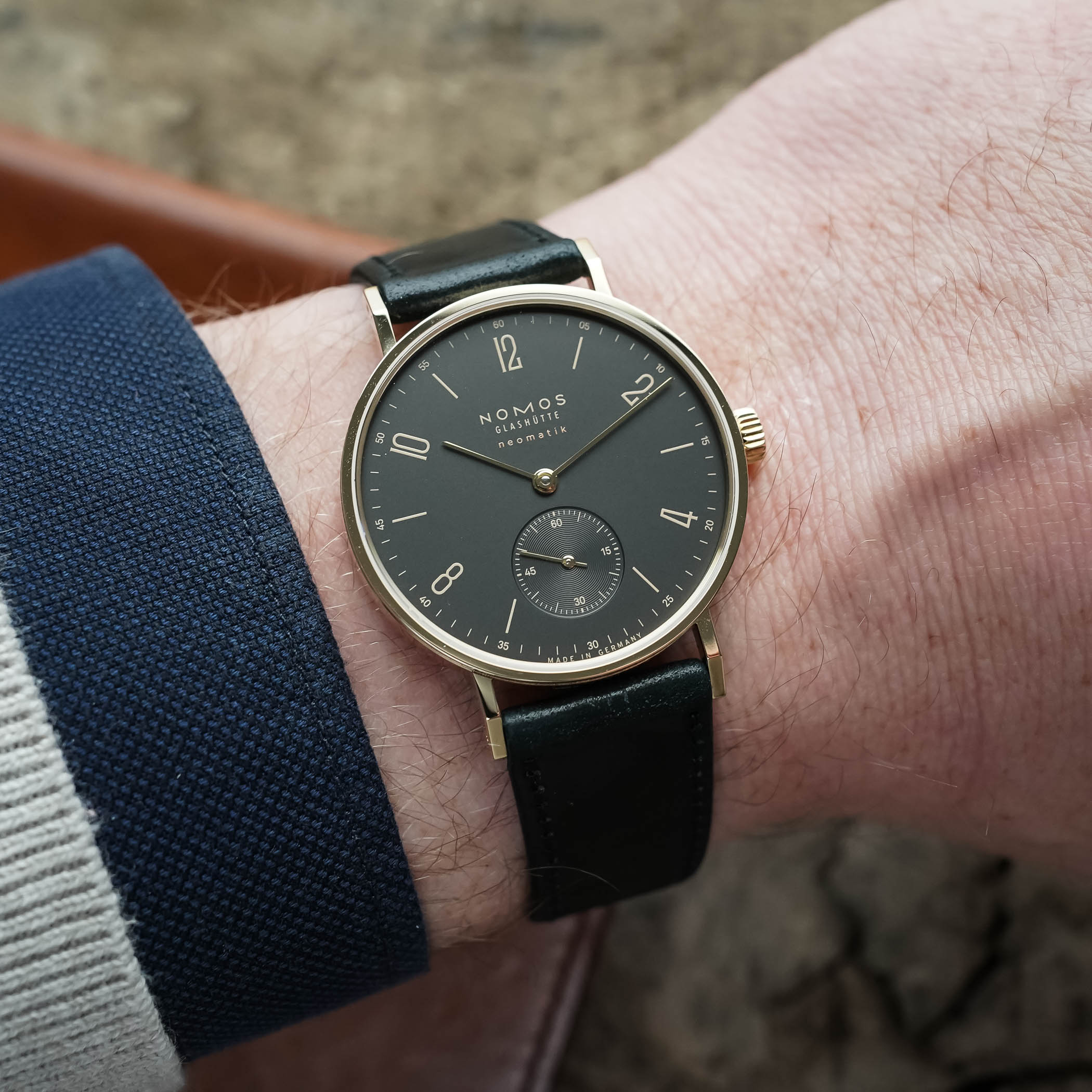
It remains quite a large amount of money for the majority of watch enthusiasts out there, myself included, but I do feel both offer fair value. The Tangente and Ludwig are as classy and timeless as can be, and for less than 10k euros, you can steal the show in solid yellow gold. Both rely on the ever-appealing style of the Bauhaus design movement, with simple indications, yet with little twists in execution.
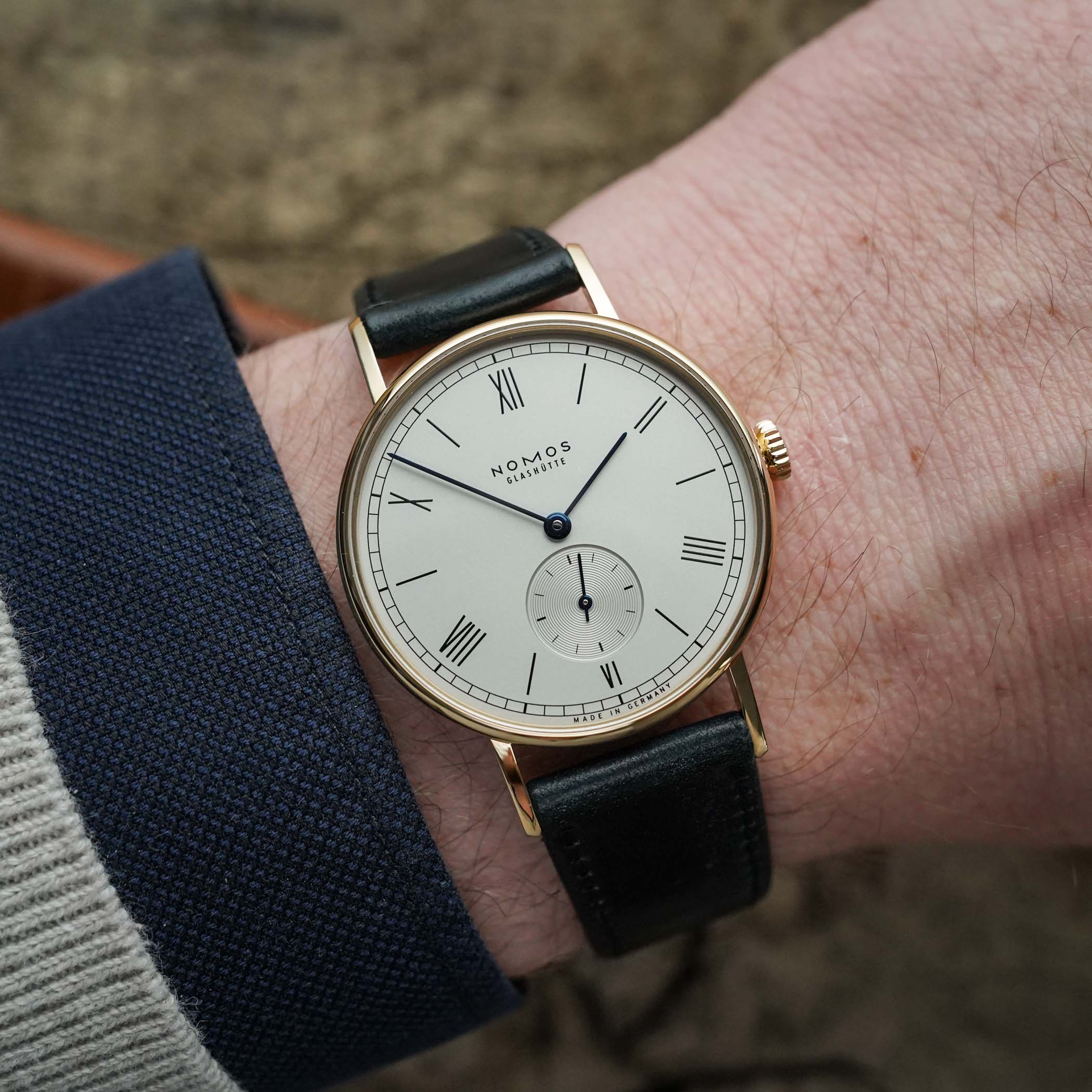
It really is a this-or-that decision between the two. I’m sure the Tangente garners first attention, but the Ludwig shouldn’t be overlooked. It is as elegant and refined as its more famous sister, just softer than the Tangente. These gold editions only emphasise why both hold their place in Nomos’ catalogue, and it’s best summarised in a single word, which is oddly contradictory in watchmaking, and that’s timeless.
For more details about the Nomos Tangente Neomatik Gold and Ludwig Gold, please visit the brand’s website.


1 response
Very steep premium for gold compared to the same watches in steel, they shouldn’t cost more than 6k EUR