

 Not all images were able to load for printing. Please close the print window and try again.
 The Ming 57.05 Comet, A Worldtimer with a Clever Answer to Daylight Saving Time
Indie watchmaker Ming celebrates its ninth anniversary with a new worldtimer featuring a patent-pending bezel system that accounts for DST.
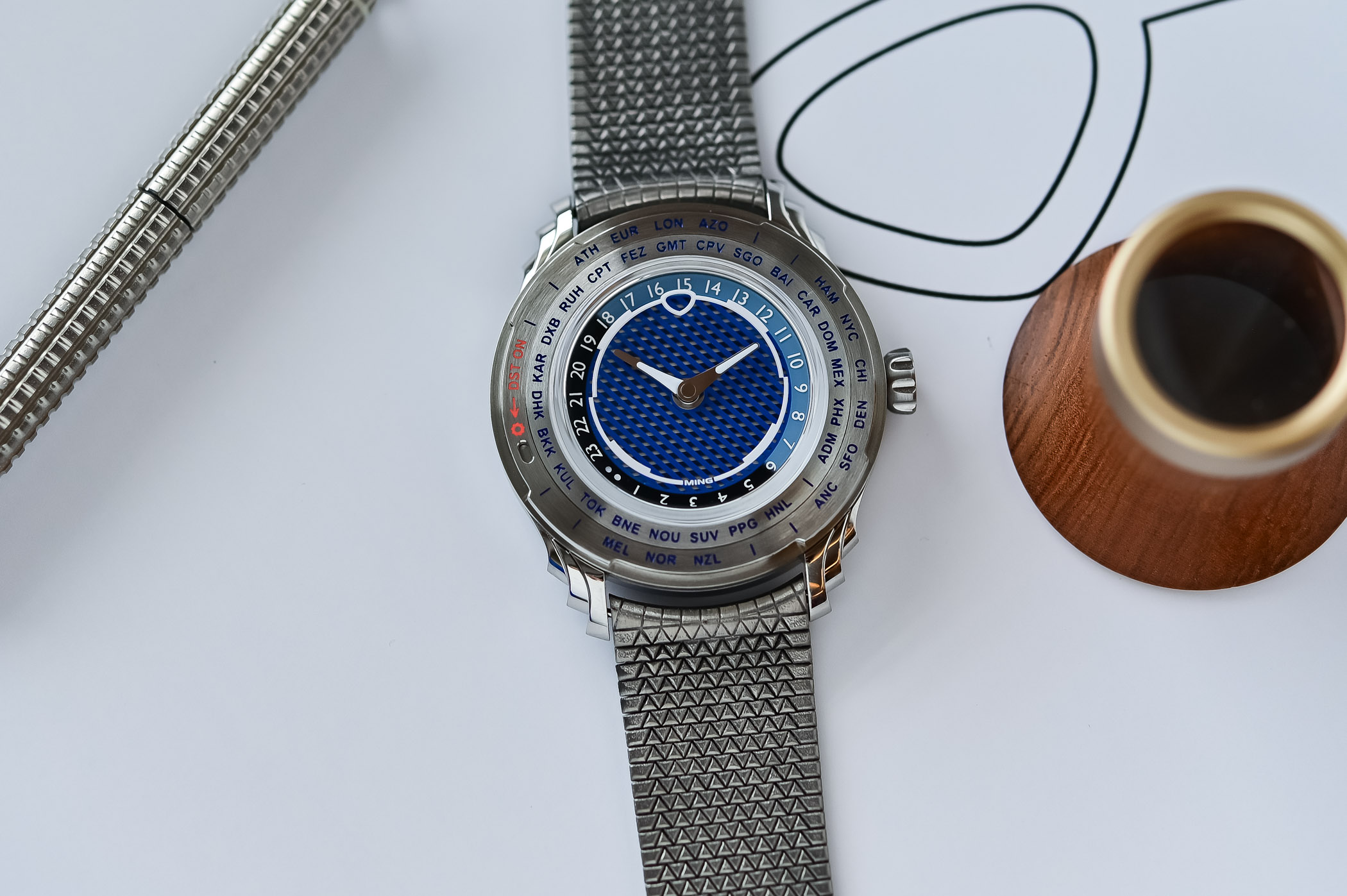
Worldtimers are among the most practical complications for frequent travellers, yet they have, apart from a few high-end, complex watches, one persistent limitation: daylight saving time. Twice a year, depending on where you are, the neat logic of a conventional worldtime display becomes… not so neat anymore. The new 57.05 Comet by indie watchmaker Ming solves this issue with an original, patent-pending bezel mechanism that adjusts the cities observing DST without affecting those that don’t observe DST.
The 57.05 is named to honour the de Havilland Comet, the world’s first commercial jet airliner, and revisits a complication the indie brand has explored before, most notably with the 19.02 Worldtimer and the more recent 29.01 Worldtimer. However, this new model takes a different approach from the high-end micro-rotor movement and titanium construction of the 29.01. The Comet uses a stainless steel case and a Sellita-based automatic movement, making this Ming’s worldtimer more accessible.
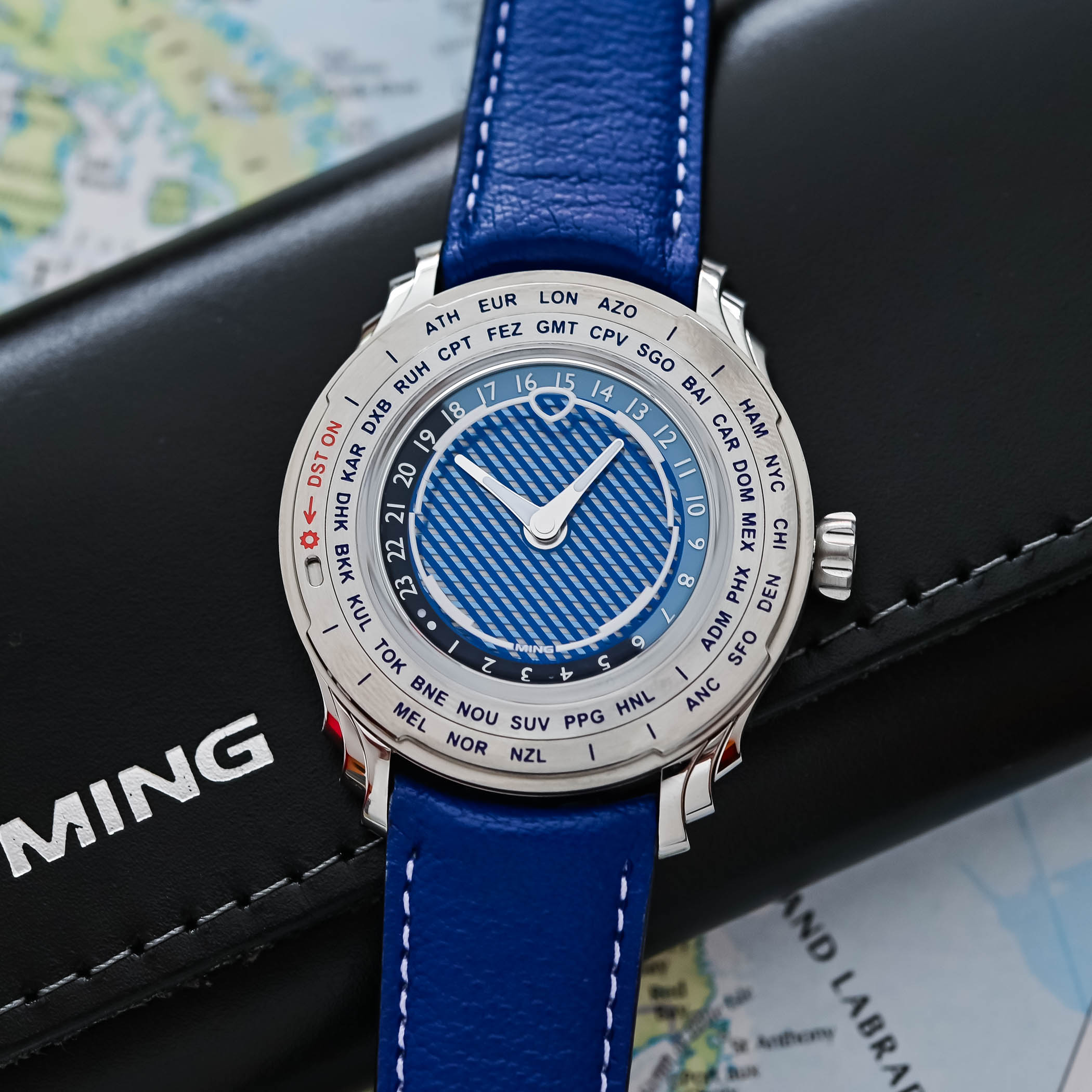
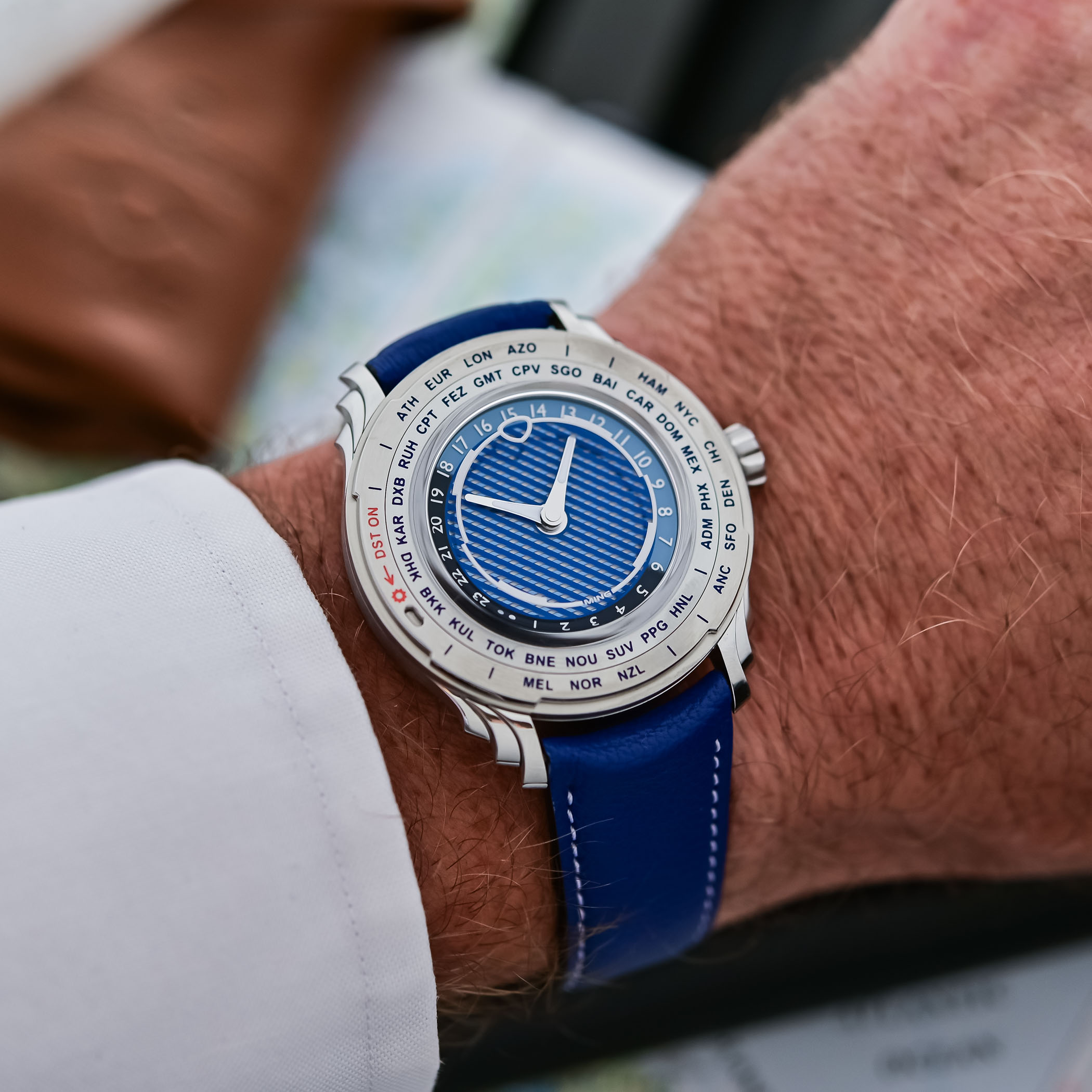
The 57.05 Comet introduces the worldtime complication to Ming’s fifth-generation designs. The 316L stainless steel case measures 40mm in diameter, 10.33mm thick and 47.8mm from lug to lug, with 100m of water resistance. The overall appearance is defined by the brand’s triple-stepped lugs, a complex construction requiring nine separate components for the lugs alone.
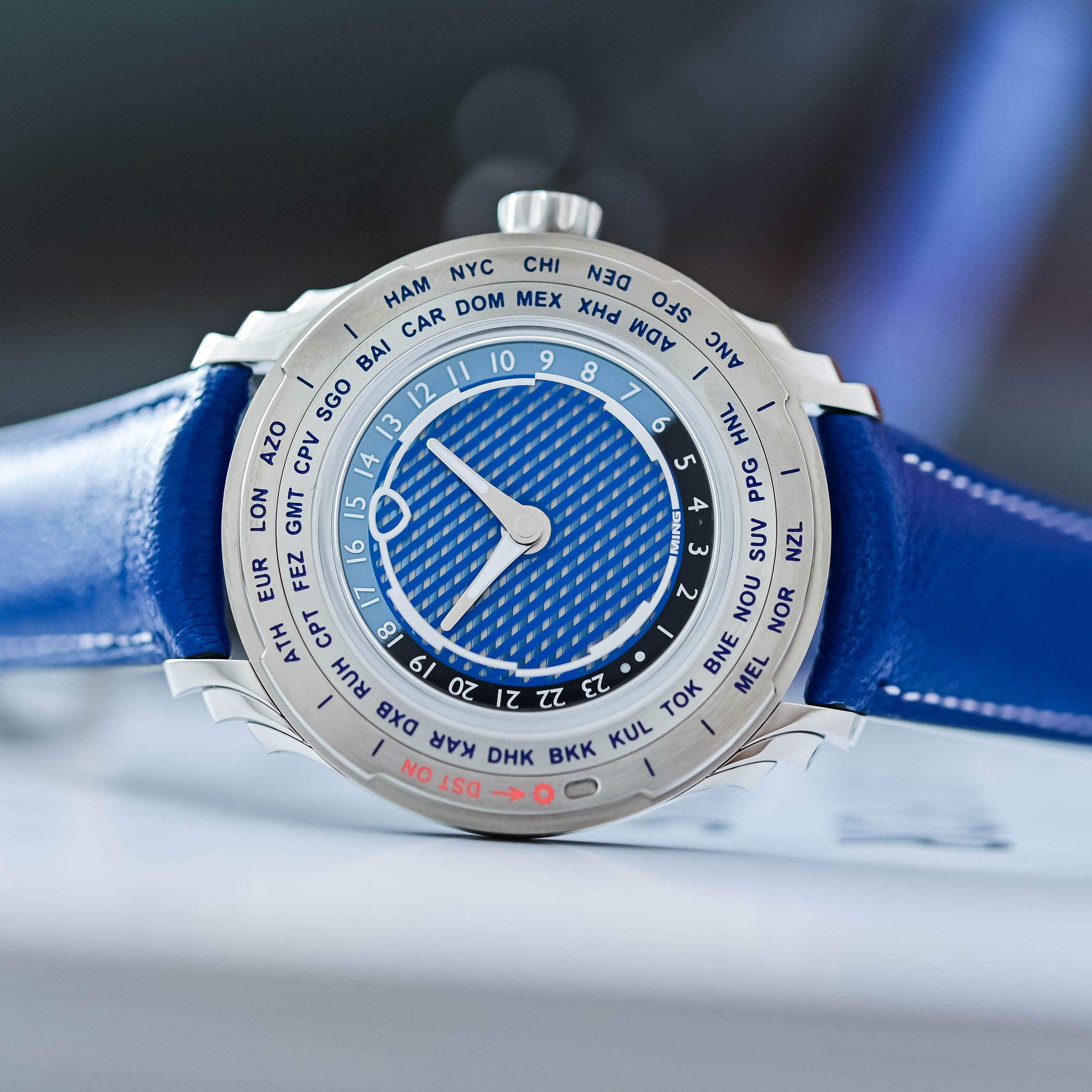
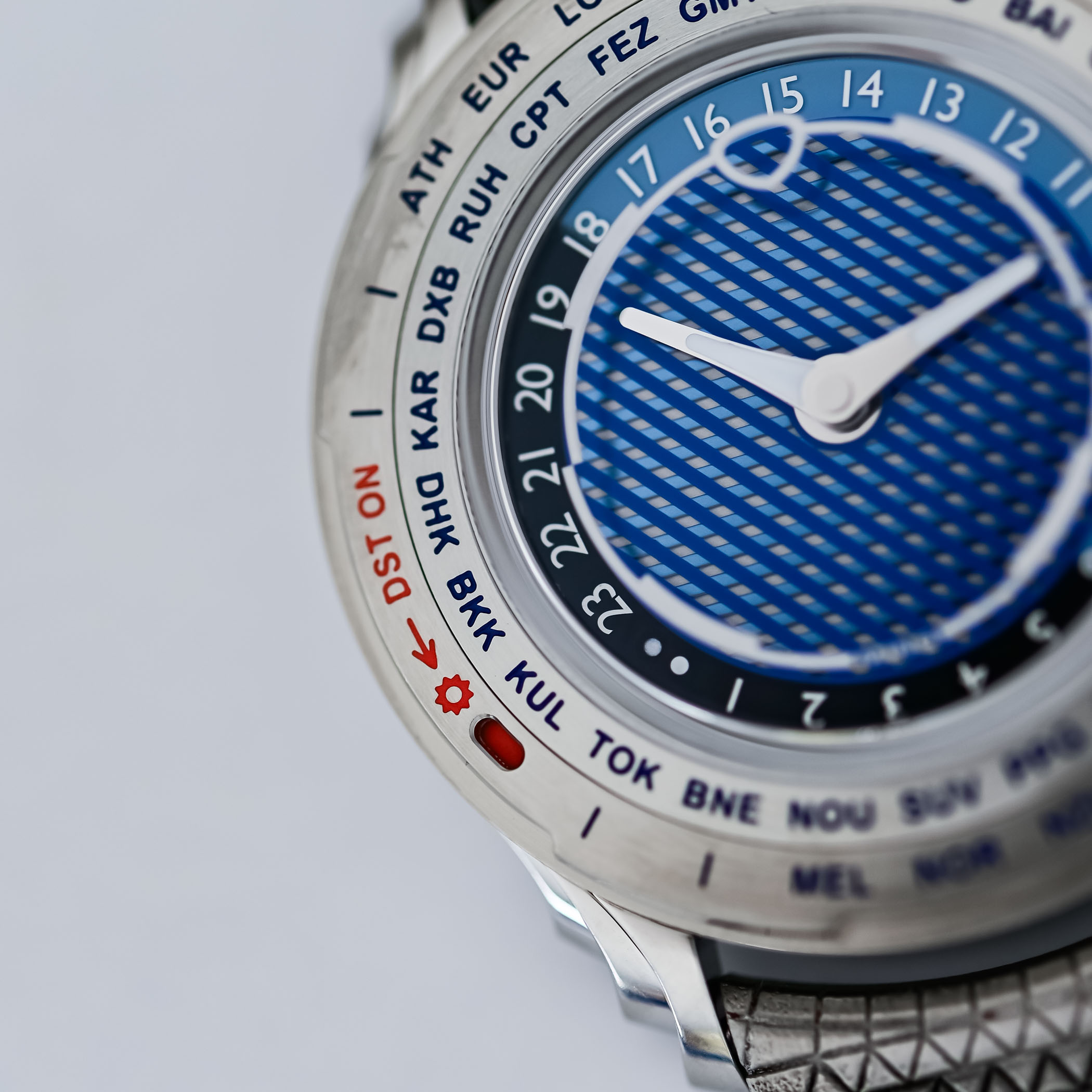
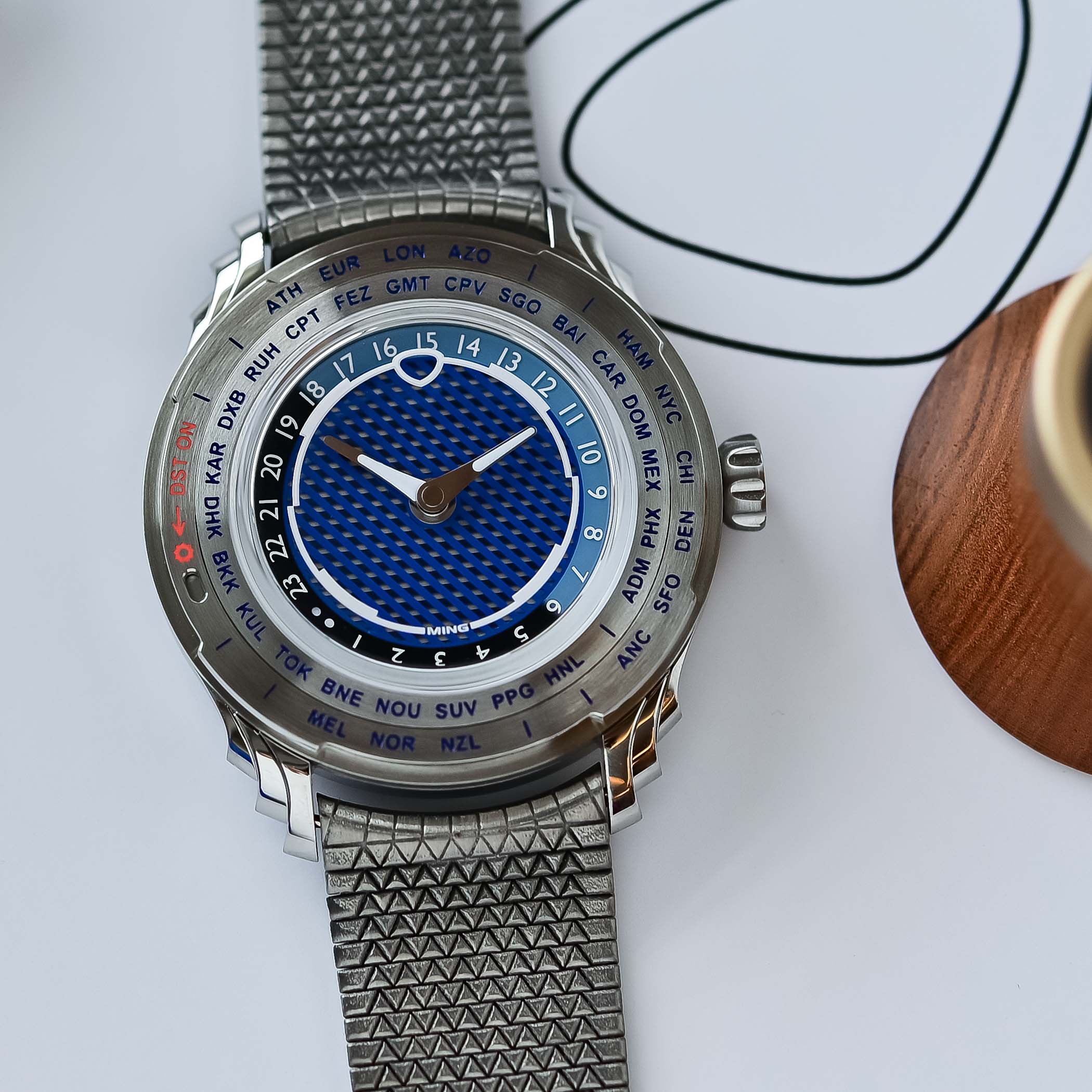
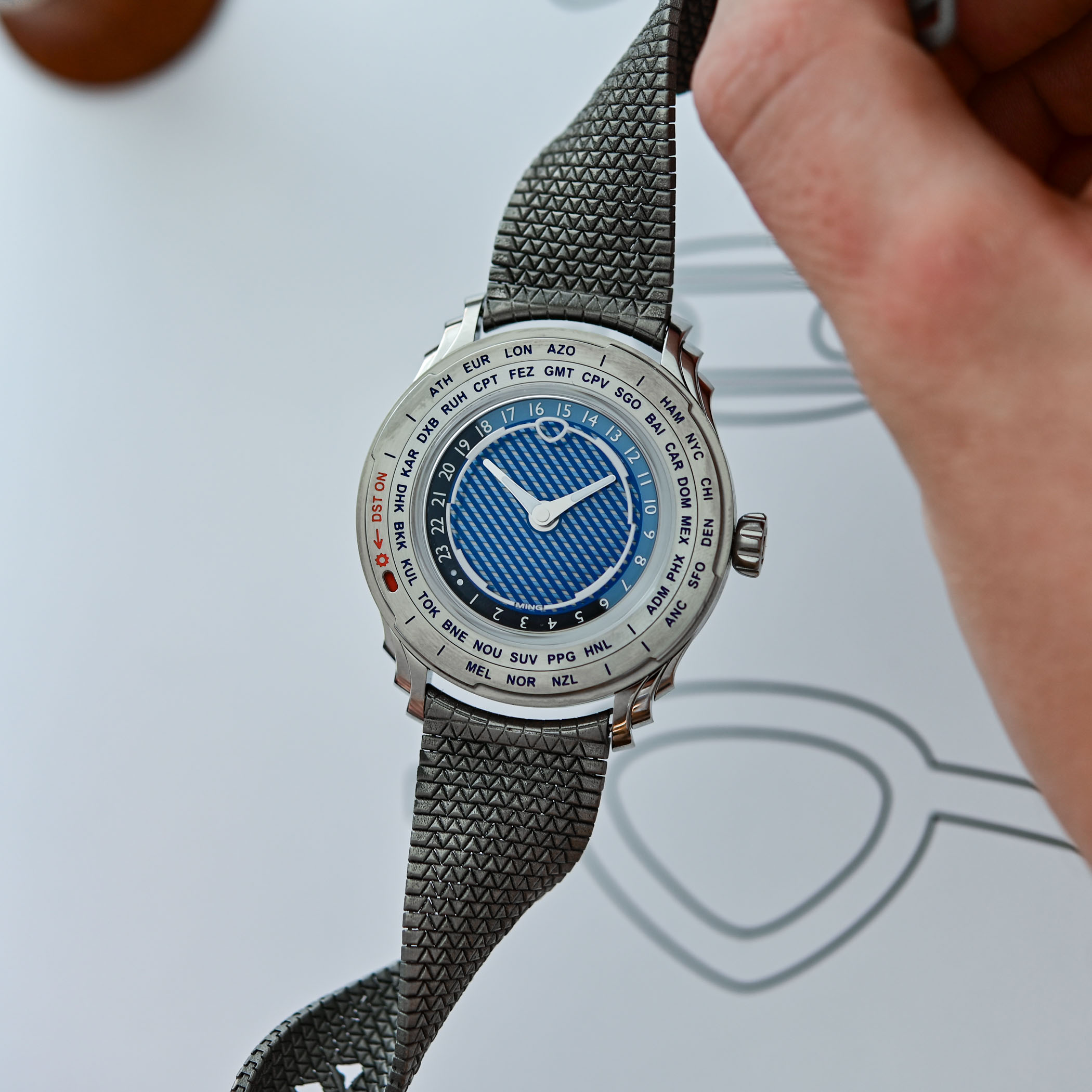
The most interesting element, however, is the bezel. Cities/locations that do not observe daylight saving time are positioned on a fixed inner bezel, and the ones affected by DST are placed on a separate rotating outer bezel. A single click moves the relevant cities forward by one hour against the 24-hour scale. The bezel locks in the needed position using a spring-loaded ball and corresponding recesses, and an aperture at about 9 o’clock indicates the selected setting, silver for standard time and red for DST.
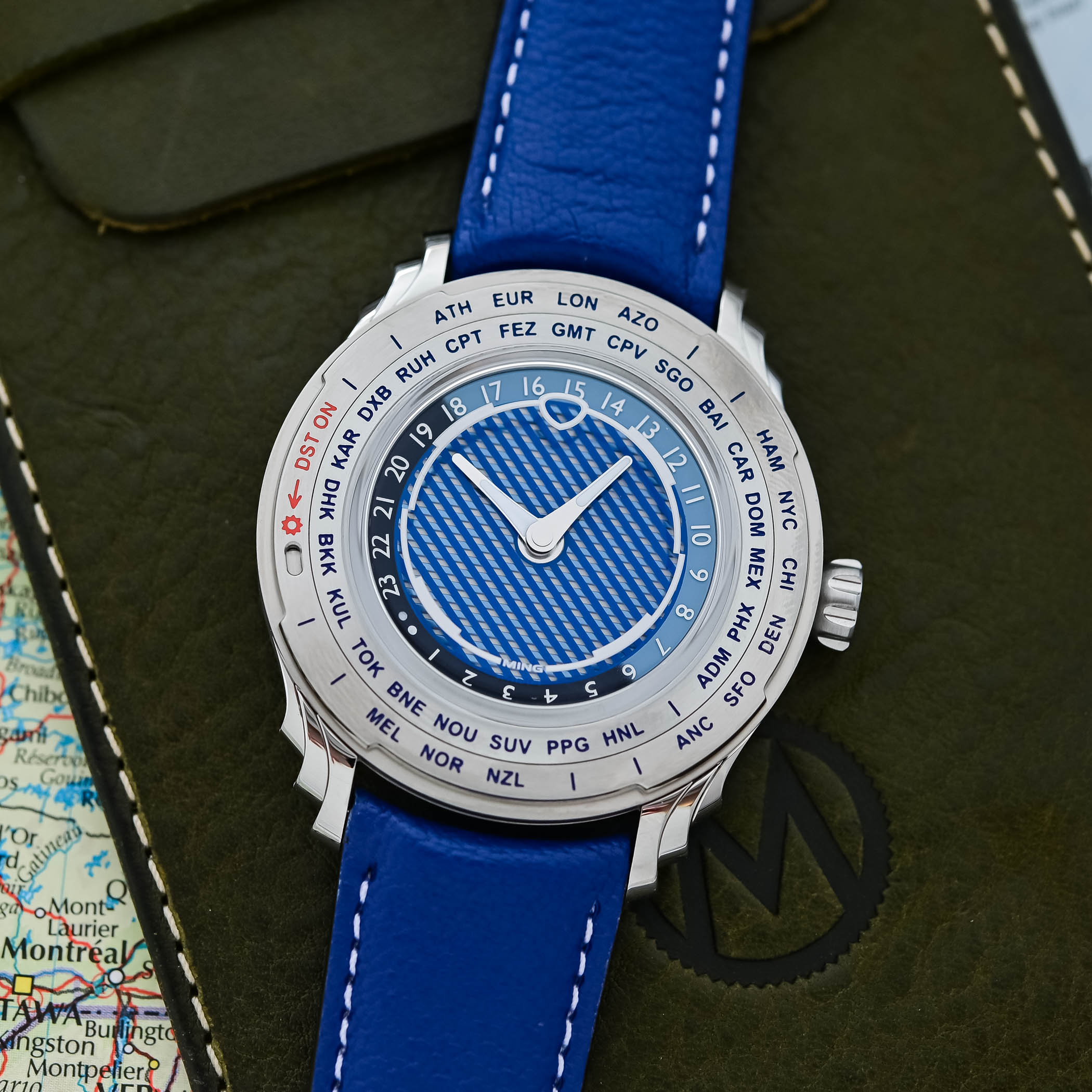
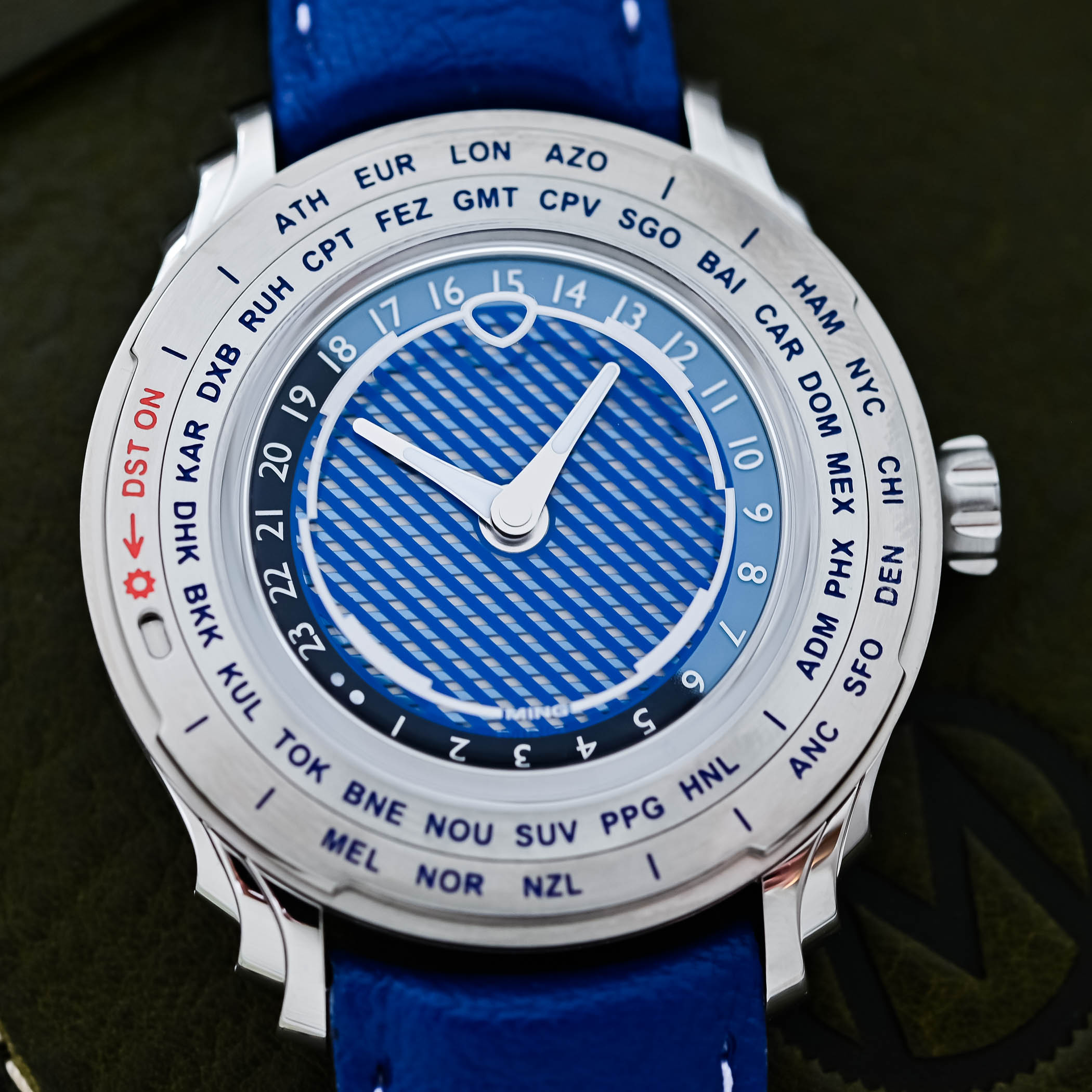
The dial of the 57.05 Comet, protected by a floating box-shaped sapphire crystal, laser-engraved and filled with Ming’s proprietary Polar White luminous material to create the primary 12-hour markers, is no less interesting. At the centre, you see overlapping raster structures that create an animated interference pattern Ming calls the Comet Tail. As the relationship between these layers gradually shifts over the hours, the dial changes appearance throughout the day rather than remaining visually static. Truly captivating. The rotating 24-hour worldtime ring is coloured blue and black for the day/night indication, with blue-emission Super-LumiNova X1 for the daytime hours and orange-emission Super-LumiNova X1 for the nighttime portion. The hands also glow blue, while the DST ON indicator glows red in darkness when activated.
The 57.05 is powered by the Sellita for Ming calibre 330.M2, an automatic GMT movement operating at a frequency of 28,800 vibrations/hour, with an approximately 50-hour power reserve. The movement is visible through the sapphire caseback, and features skeletonised bridges with brushed finishing and an anthracite coating, with an anthracite-coated baseplate.
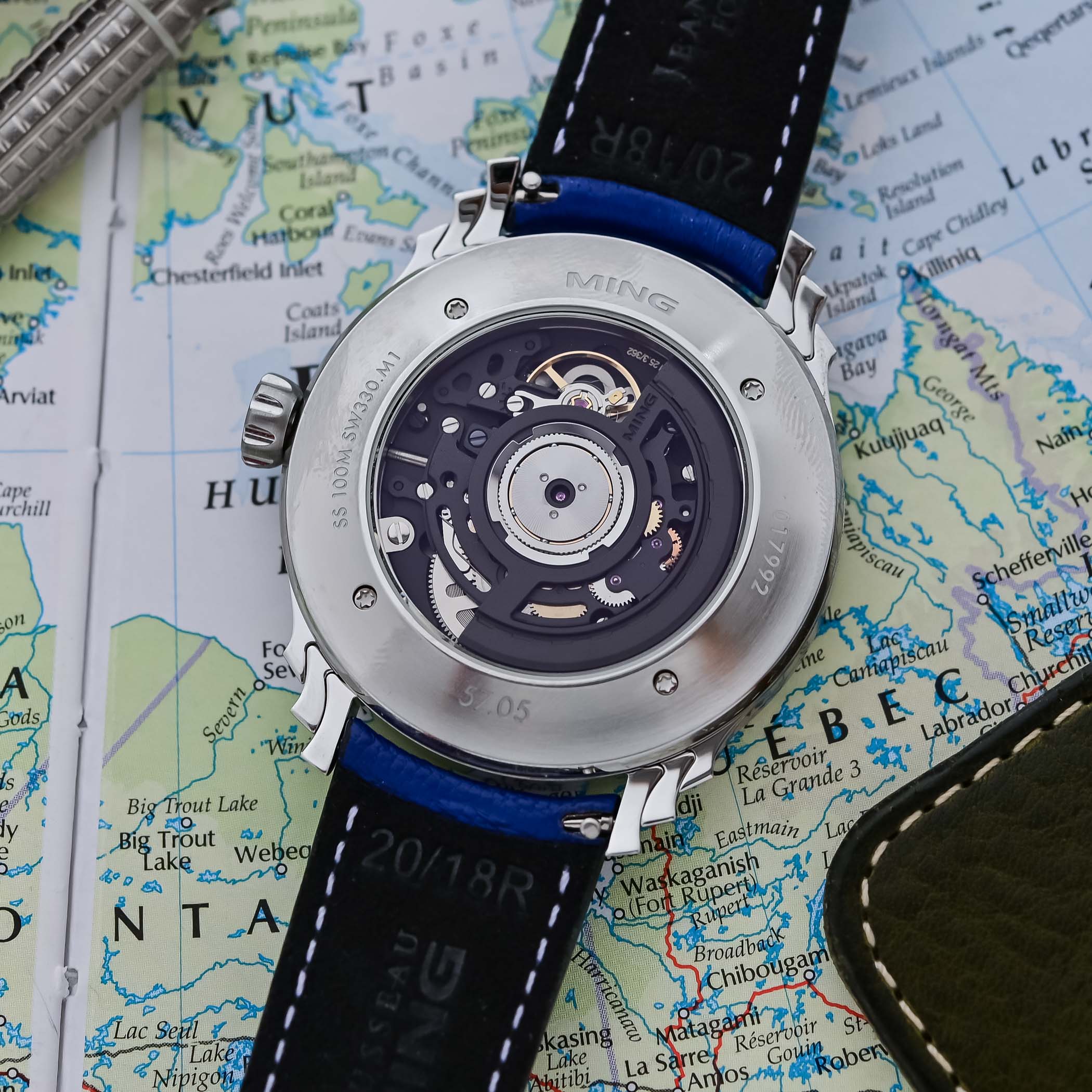
The watch will be produced as a limited edition of 200 pieces. It is worn on a cobalt-blue goat-leather strap by Jean Rousseau Paris, equipped with quick-release spring bars and Ming’s flying-blade tuck buckle with micro-adjustment, or on the brand’s signature titanium Polymesh bracelet. The new Ming 57.05 Comet will be available to order from 27 August 2026 at 1:00 PM GMT through Ming and its retail network. The price is CHF 6,950 on leather and CHF 7,950 on a titanium bracelet (excluding taxes). Visit ming.watch for more information.