


 Not all images were able to load for printing. Please close the print window and try again.
 The Leica ZM 1 and ZM 2, How They Came to Be and What They Are
Photography and watchmaking have been walking hand in hand for far longer than we tend to remember.
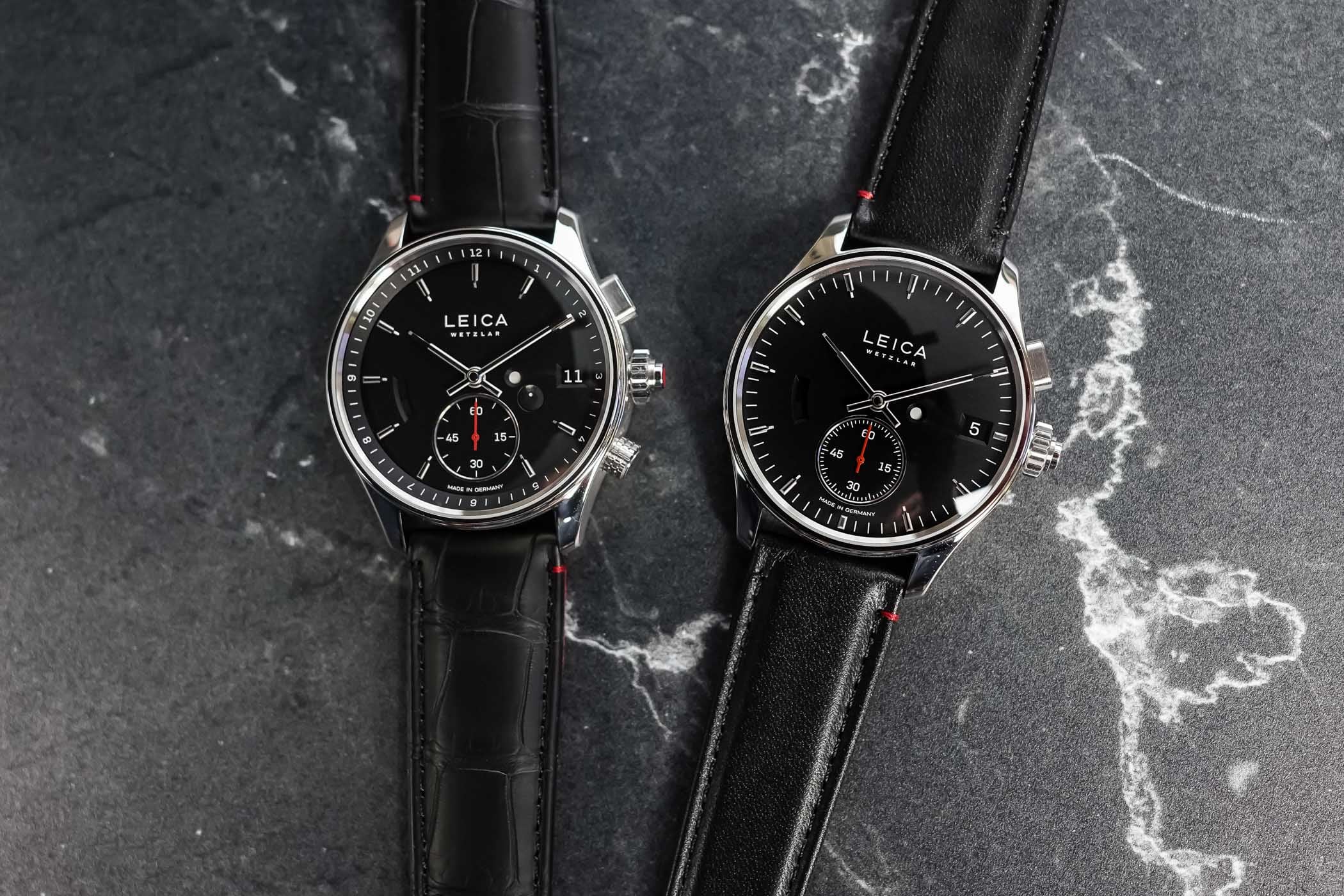
Most watches have a story to tell, but some carry several narratives woven together. The Leica ZM 1 and ZM 2 (previously named L1 and L2), taken out of context, are fine and interesting creations; add the story, and their appeal multiplies. Their allure goes beyond design or mechanics, drawing from Leica’s technical heritage, unexpected historical links to horology, and a carefully assembled team of experienced watchmaking specialists. To understand these watches adequately, one must follow the threads that led to their creation, and that is exactly where we begin.
The Background
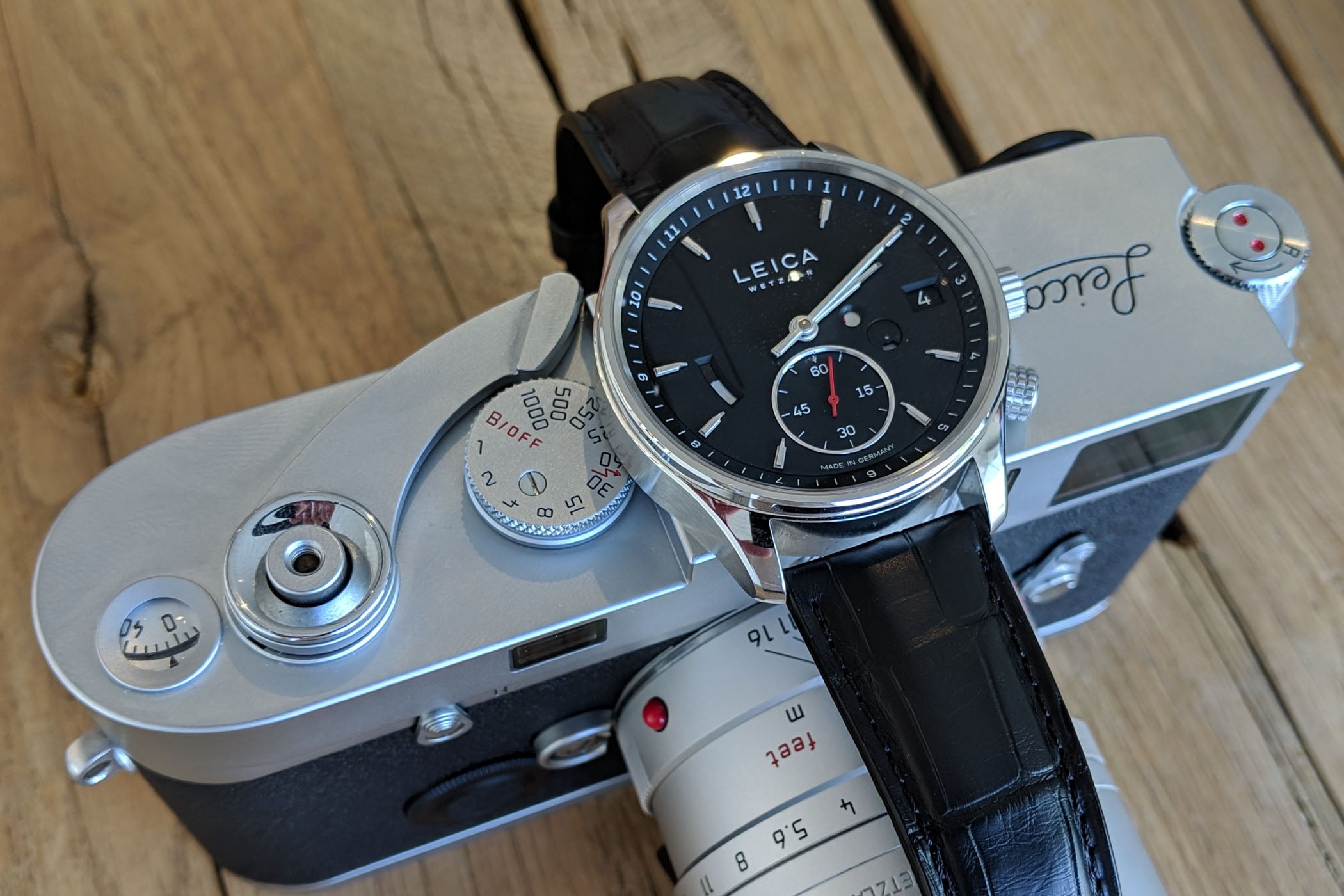
Everybody knows Leica, the famed camera manufacturer, even those who have never owned or used one of its cameras. But watches by Leica? Yes, they exist (apart from the ZM 1 and ZM 2, there’s also the ZM 11 and ZM 12, with Swiss automatic movements from Chronode), and come to think about it, the connection is far from far-fetched. Long before the Leica name appeared on a watch dial, Jaeger-LeCoultre was producing ultra-compact 35mm Compass cameras in the 1930s. An analogue camera is, at its core, a precision timing instrument: shutter speeds are measured in exact seconds and fractions thereof, down to 1/1000th. Mechanically, the parallels are obvious: gears, bridges, springs and carefully regulated energy working together to deliver accuracy and repeatability.

And Leica’s roots further reinforce the link with watches. In 1858, a 20-year-old Ernst Leitz I travelled to Switzerland to train as a watchmaker, reportedly mastering his skills under the respected clockmaker and inventor Matthäus Hipp in Neuchâtel. That experience proved formative: armed with the discipline of Swiss precision engineering, Leitz went on to establish his own company, Ernst Leitz Wetzlar, in 1869, initially to make microscopes and later to become known worldwide as Leica.
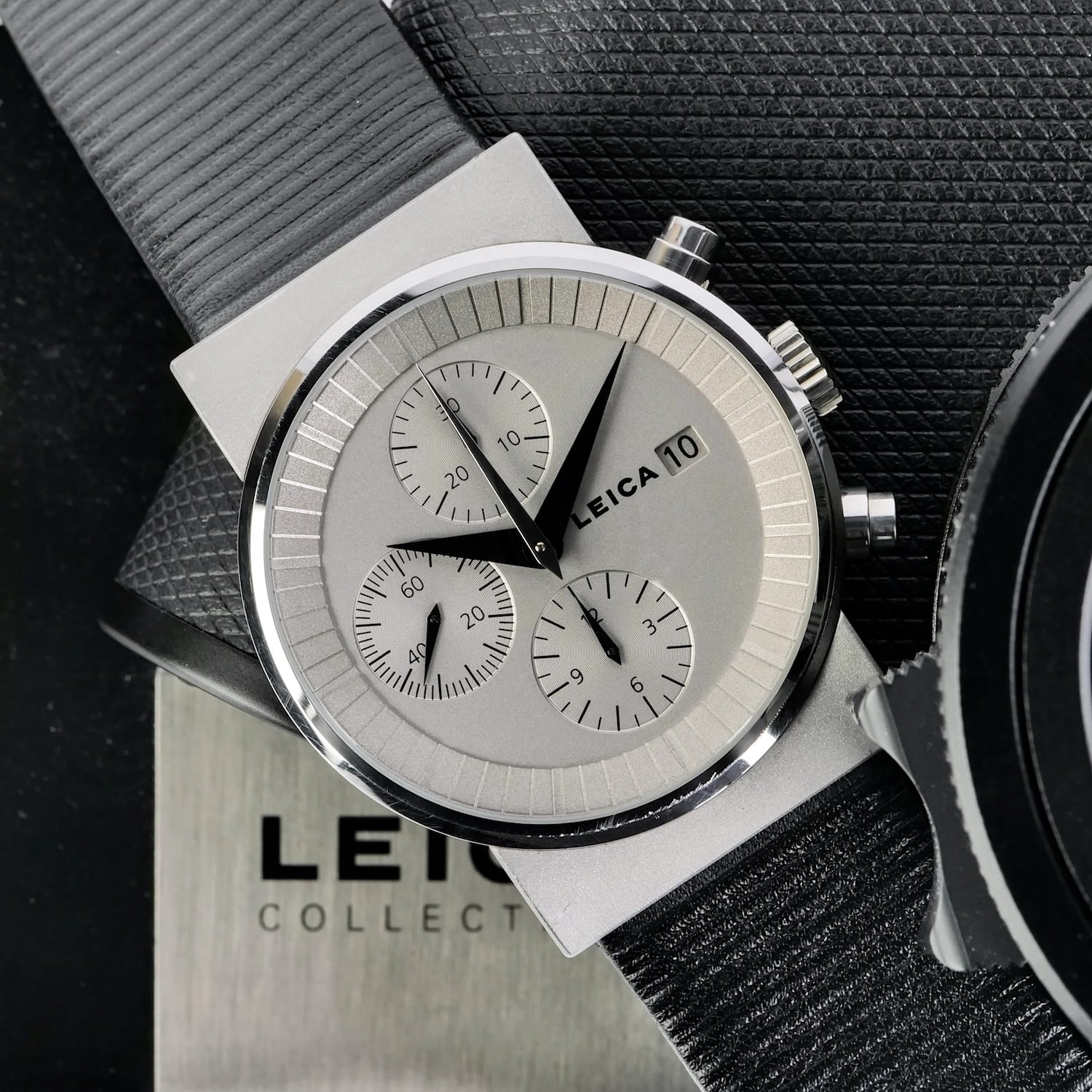
Much closer to our time, Leica’s interest in watchmaking “resurfaced”. In the 1980s and 1990s, the brand offered a series of watches powered by the ETA 7750 chronograph movement. The Classic Collection Chronograph Automatik was marked “Made in Germany” and came in a 39mm stainless steel case with a sapphire crystal and exhibition caseback. Some examples were sold paired with select Leica cameras. Was that an early sign that the brand already saw watches as an extension of its photographic universe?
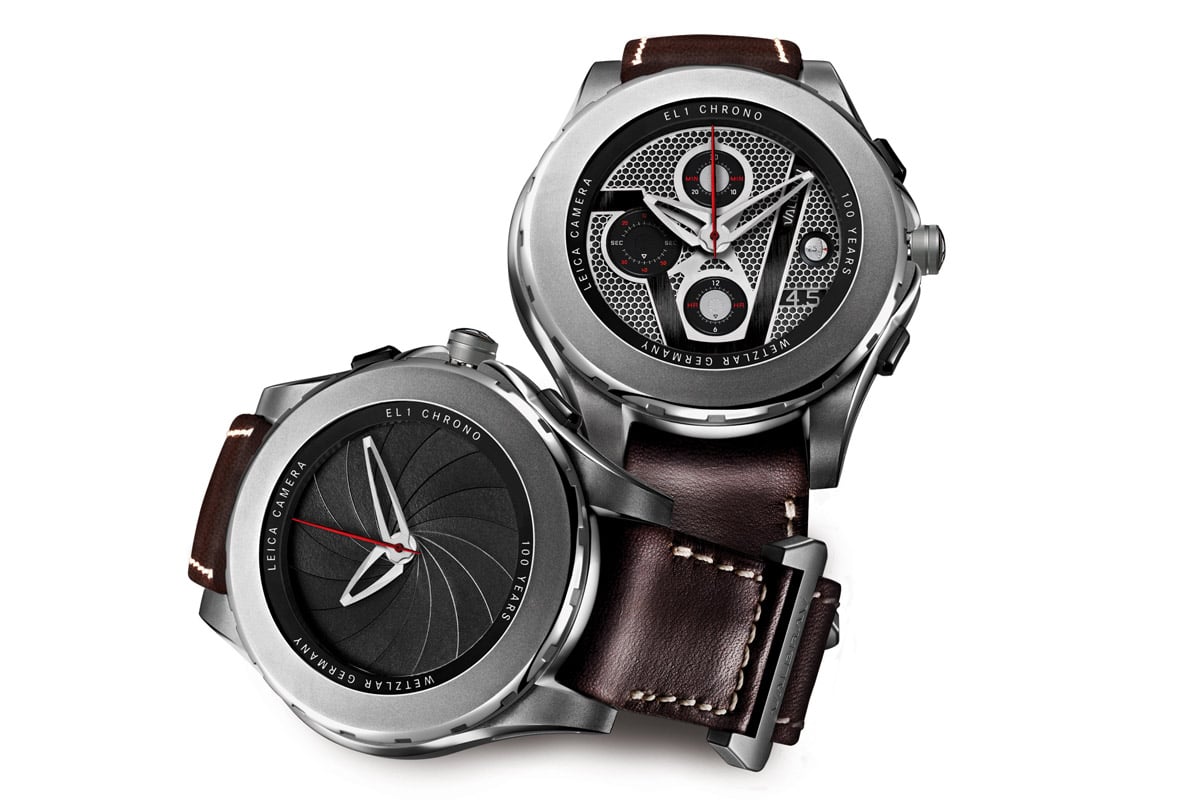
In 2014, Leica partnered with Valbray to create the EL1 Chronograph Leica Limited Edition (EL standing for Ernst Leitz). This 46mm watch featured Valbray’s Oculus system, a shutter-like diaphragm with 16 ultra-thin blades that opened or closed by rotating the bezel. Like camera shutters, the Oculus revealed or concealed the chronograph registers beneath, with the hours, minutes, and stopwatch function legible with the shutters closed. Production was limited to 100 pieces, 50 in sandblasted titanium and 50 in black DLC. Valbray would quietly disappear after 2016, but Leica’s ambitions only grew.

By 2018, Leica unveiled the L1 and L2 prototypes, later refined and renamed ZM 1 and ZM 2 (ZM for Zeitmesser). Before moving hands-on with these watches, it is worth acknowledging the man who made this evolution possible: Andreas Kaufmann. Through his family holding company, ACM Projektentwicklung GmbH, Kaufmann stepped in during Leica’s difficult times, stabilising the company when it faced insolvency in 2004-2005. Like Kodak, Leica initially missed the digital photography revolution and, by then, was operating at a loss, with shareholders, including Hermès (which bought a 36% stake in the German camera company in 2000), considering an exit.
Two decades later, the picture is dramatically different. Under Kaufmann’s leadership and with family members involved in management, Leica diversified intelligently while preserving its identity. For fiscal year 2024/25, Leica Camera AG reported record revenues of EUR 596 million and is now valued at around EUR 1 billion. Reports in early 2026 suggested that Blackstone and ACM might consider selling their stakes, approximately 45% and 55% respectively, yet Kaufmann’s continued involvement would likely ensure strategic continuity. Ernst Leitz Werkstätten GmbH, Leica’s horological and accessories arm, appears well-positioned to grow, led by Henrik Ekdahl since 2024, and reinforced by the appointment of former IWC senior designer of 20 years, Gerd Plange, in 2025.
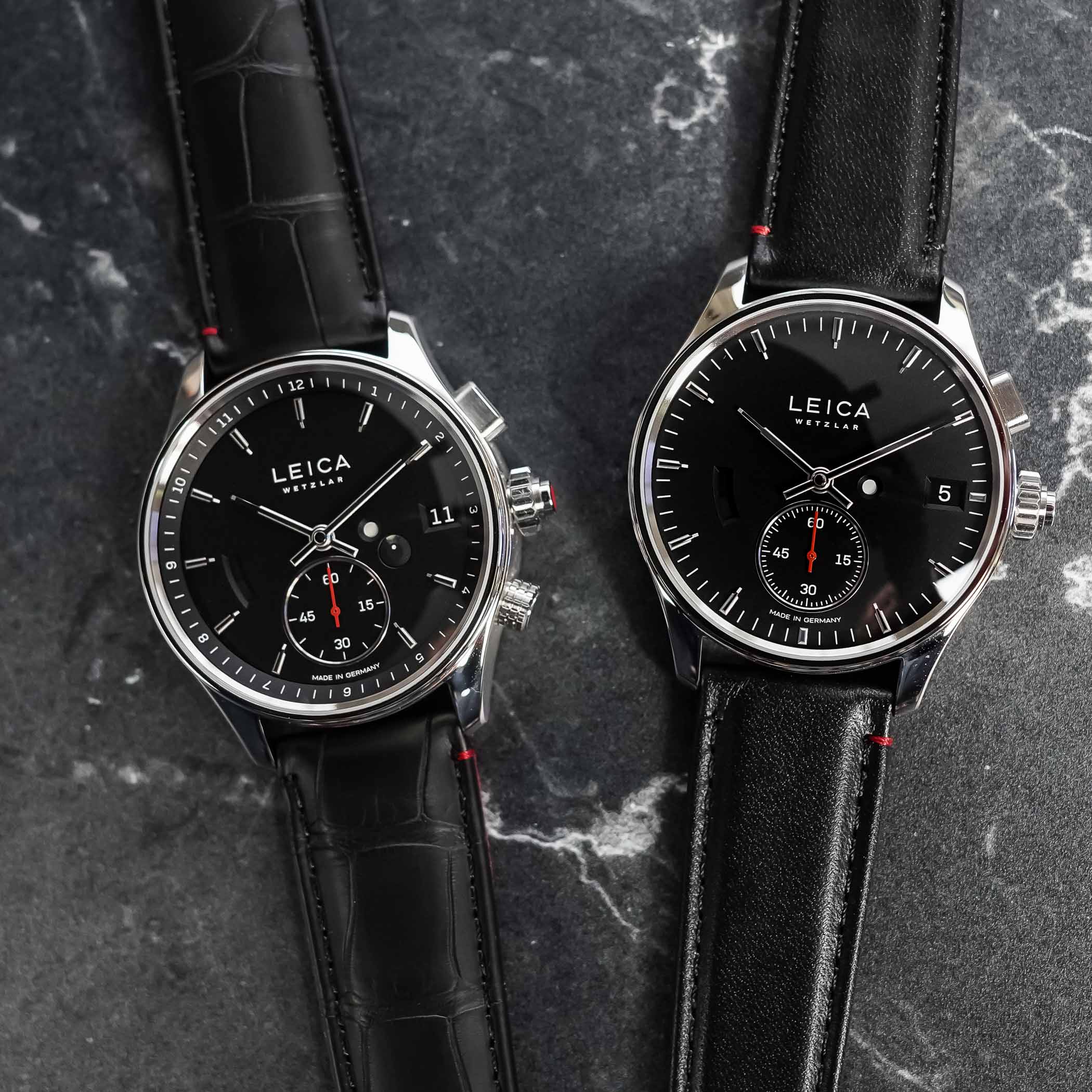
And now, on this high note, we arrive at the latest Leica ZM 1 and ZM 2. Unlike the overtly camera-inspired Vabray´s EL1, the Zeitmeisters are far more restrained in that sense. They are original watches, conceived and developed from the ground up in Germany by a team drawn from the top tier of modern horology, and given the time to do things properly.
The Case
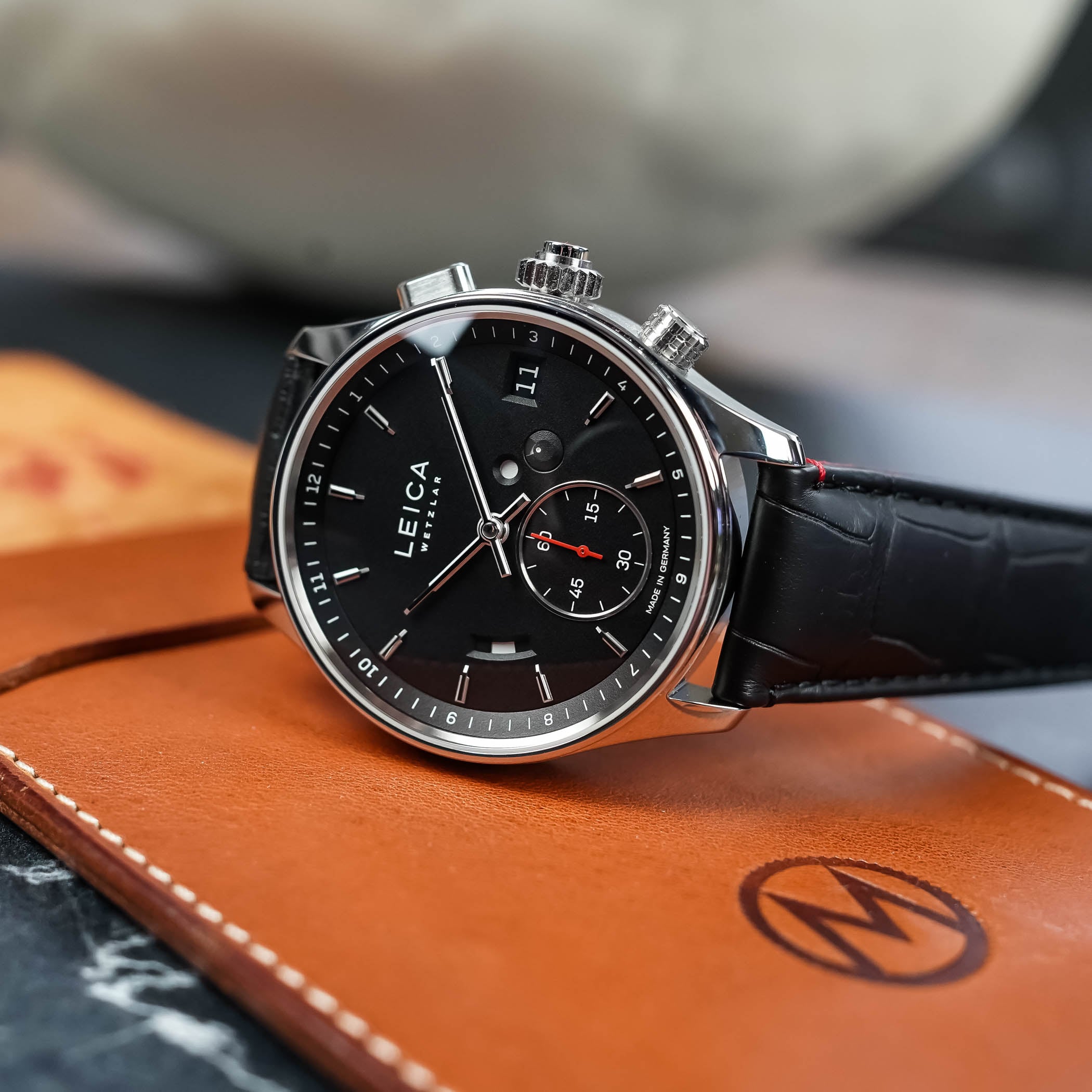
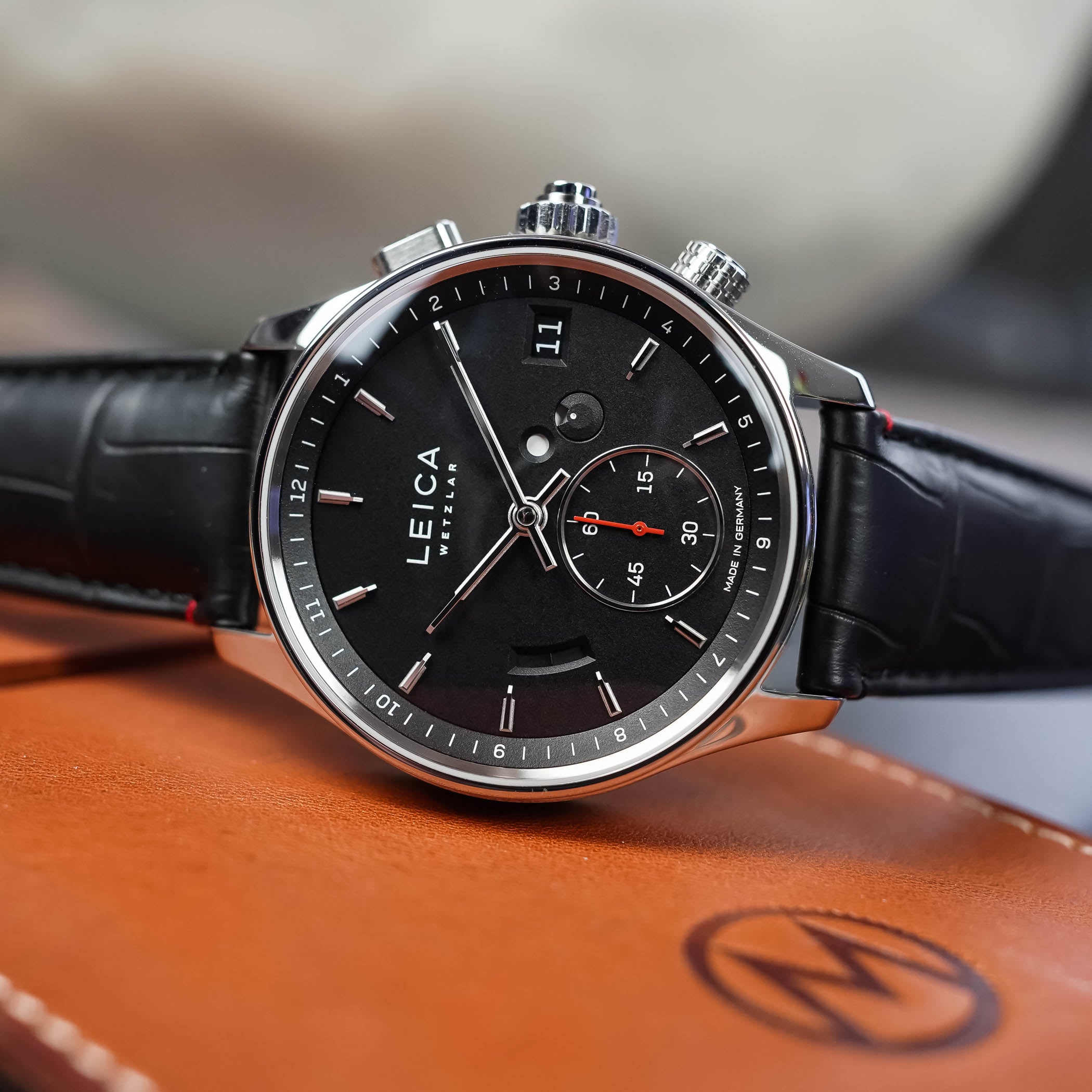
Both watches share the same stainless-steel case, measuring 41mm in diameter and 14.5mm thick. These are not small dimensions, and they are not in line with the trend toward smaller sizes, yet the proportions are cleverly resolved. A highly domed sapphire crystal, recessed caseback and rounded, downward-sloping lugs allow the watch to sit lower and wear more compactly than expected. From the side, the silhouette deliberately echoes the top plate of a Leica M camera. The watch´s overall design was suggested by Achim Heine, Professor of Product Design at the University of the Arts Berlin, who has conceived numerous Leica products in the past, and the watches reflect the very special, tactile and sensual relationship one usually has with a Leica camera.
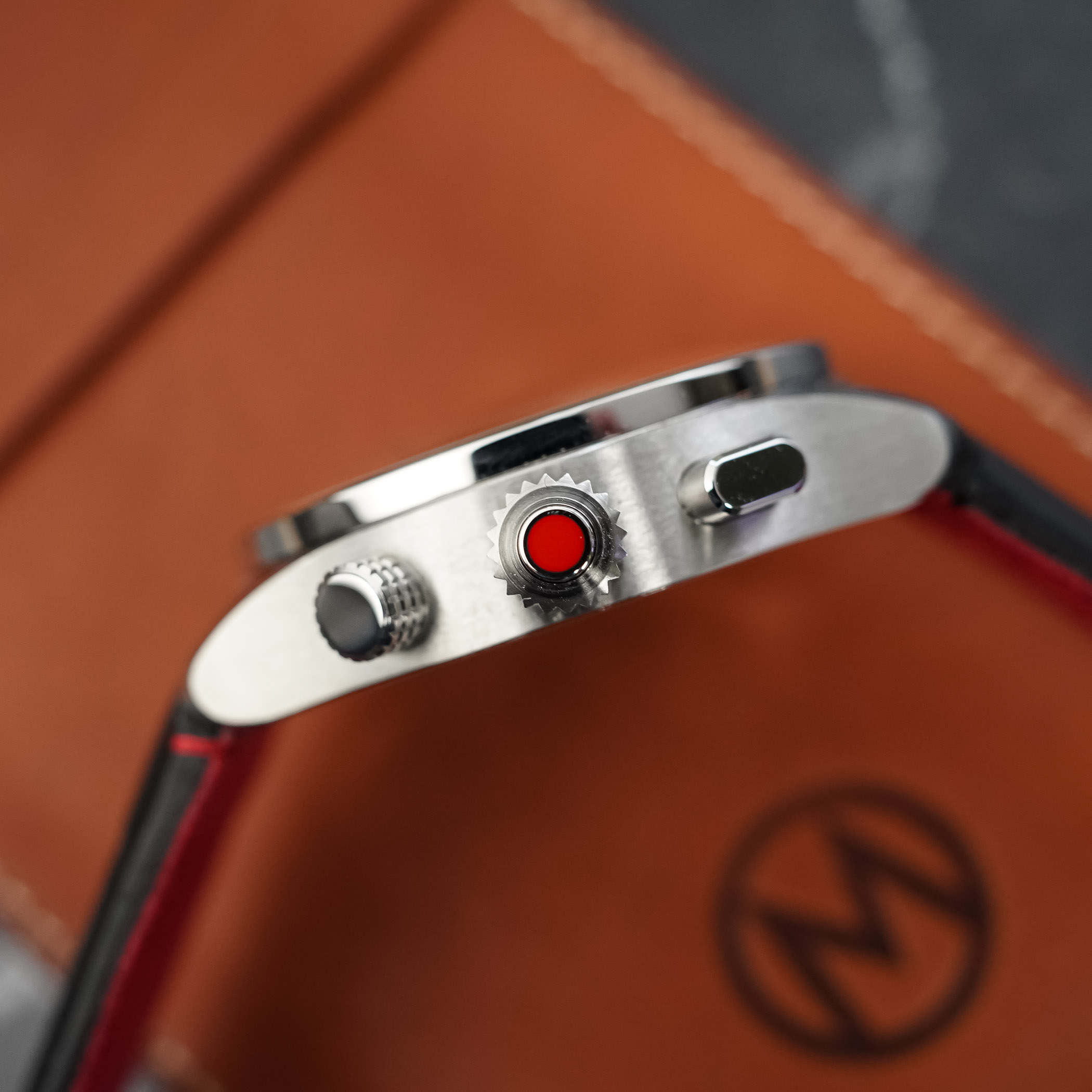
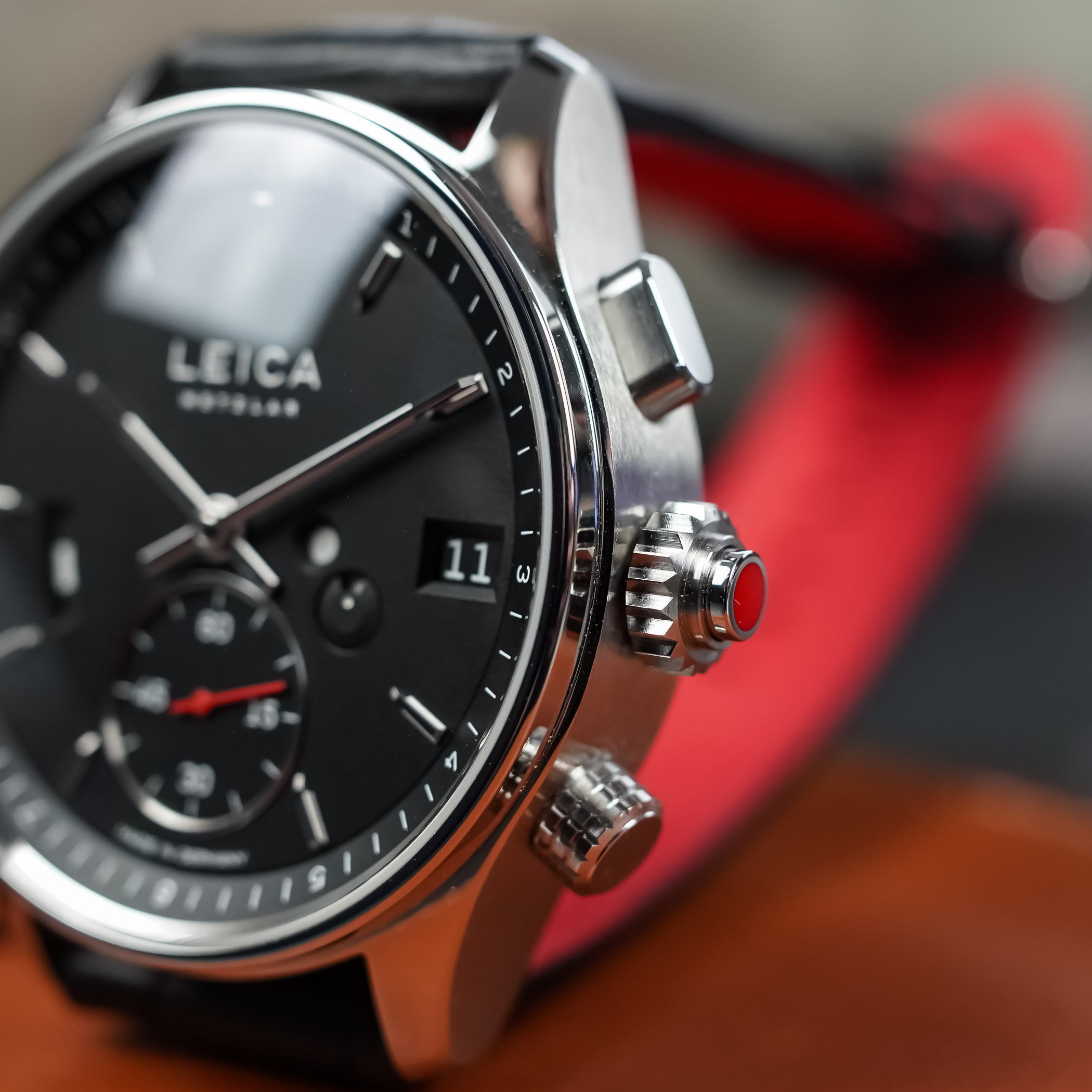
The case construction is screwed together from both sides, including a slender bezel fixed from above, and finished with a mix of sandblasting, brushing and polished accents. Knurled crowns reference Leica camera controls, each offering distinct tactile feedback. A pusher at 2 o’clock provides rapid date adjustment, which we are told addresses Andreas Kaufmann’s long-standing irritation with slow, crown-driven date mechanisms. The ZM 2 adds a crown at 4 o’clock to operate its second time zone function. Water resistance is 50m, realistic and honest, given the number of moving components involved.
The Dial
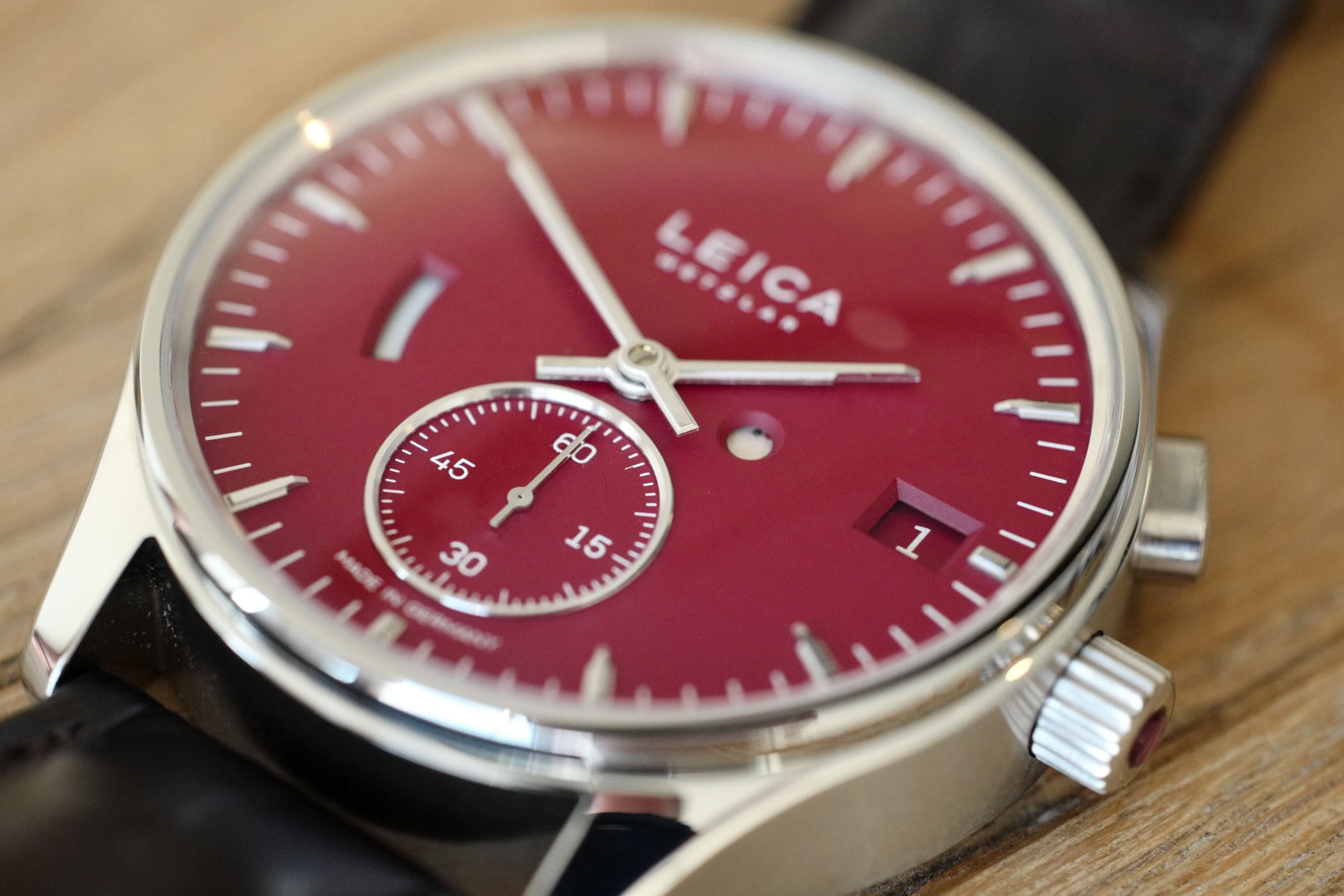
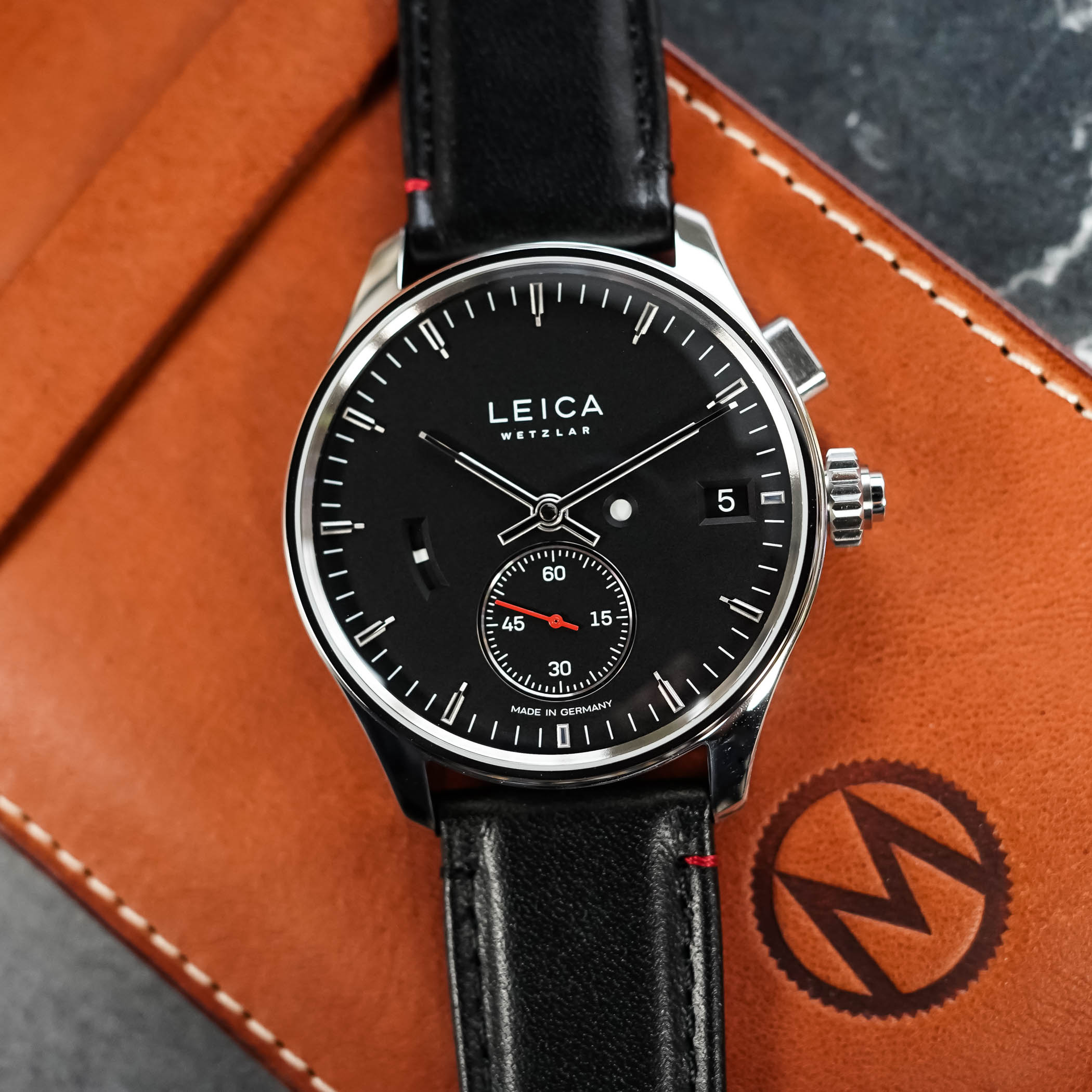
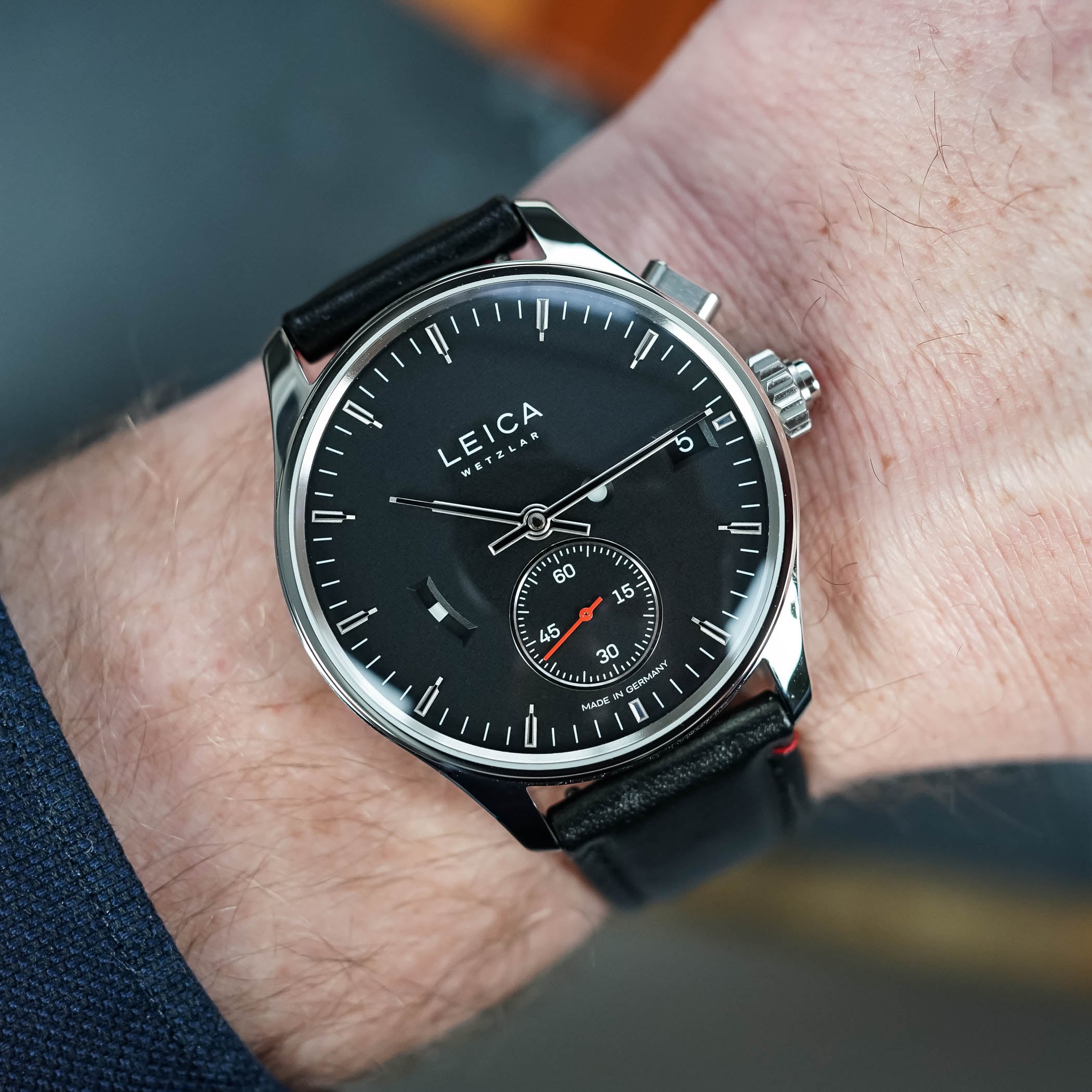
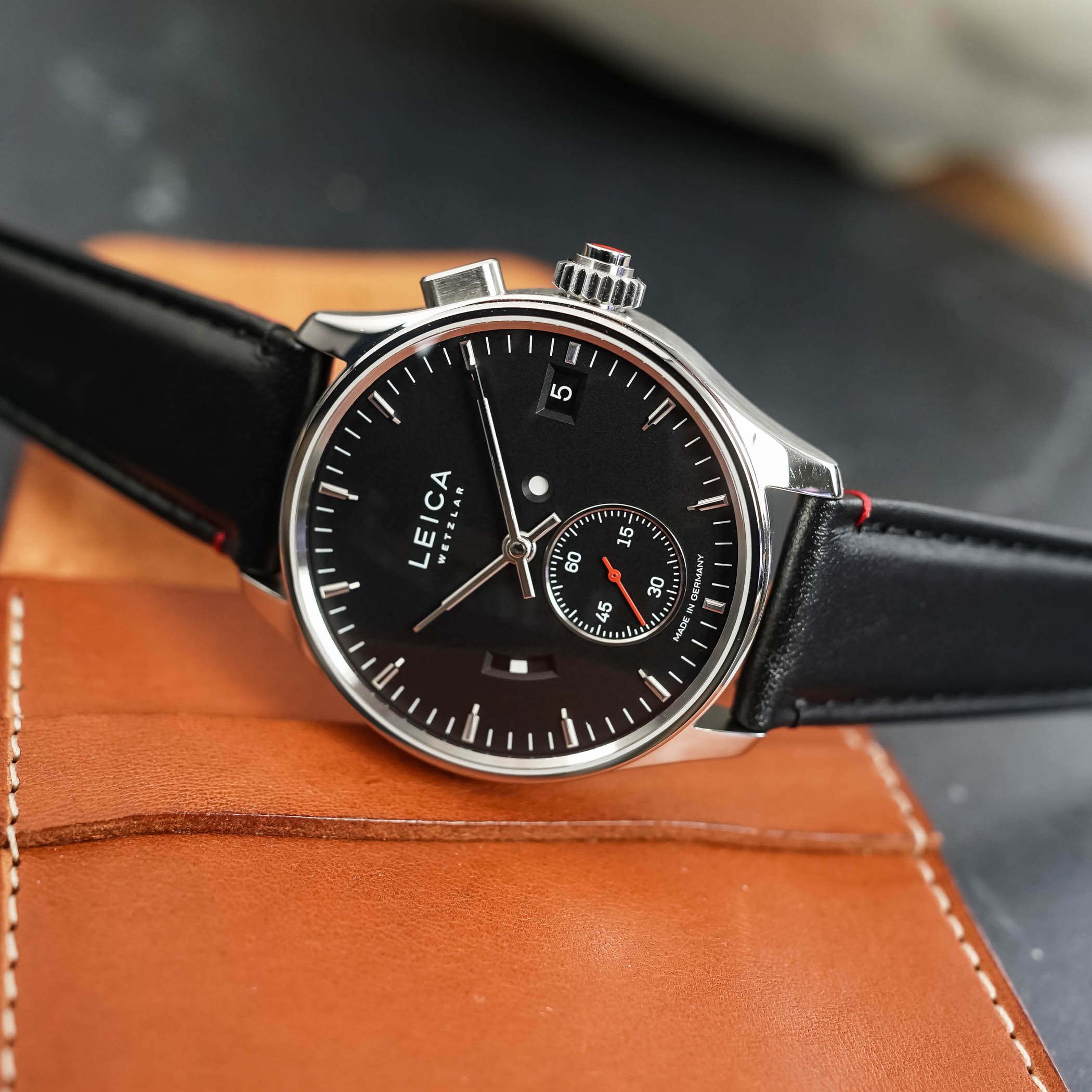
The dials are calm, legible, and very Leica, with matte surfaces, applied indices, and camera-derived (Leica M6) typography. There is no luminous material on the diamond-cut, rhodium-plated baton-style hands and indices, perhaps to distance the watch from the tool-watch look and to prioritise clarity. Both models display central hours and minutes, a small red running seconds hand at 6 o’clock, and a discreet date at 3. The patented power reserve indicator at 9 o’clock opens and closes simultaneously from both sides like a camera shutter curtain. Also note the movement status indicator near the centre: white when running, red when stopped.
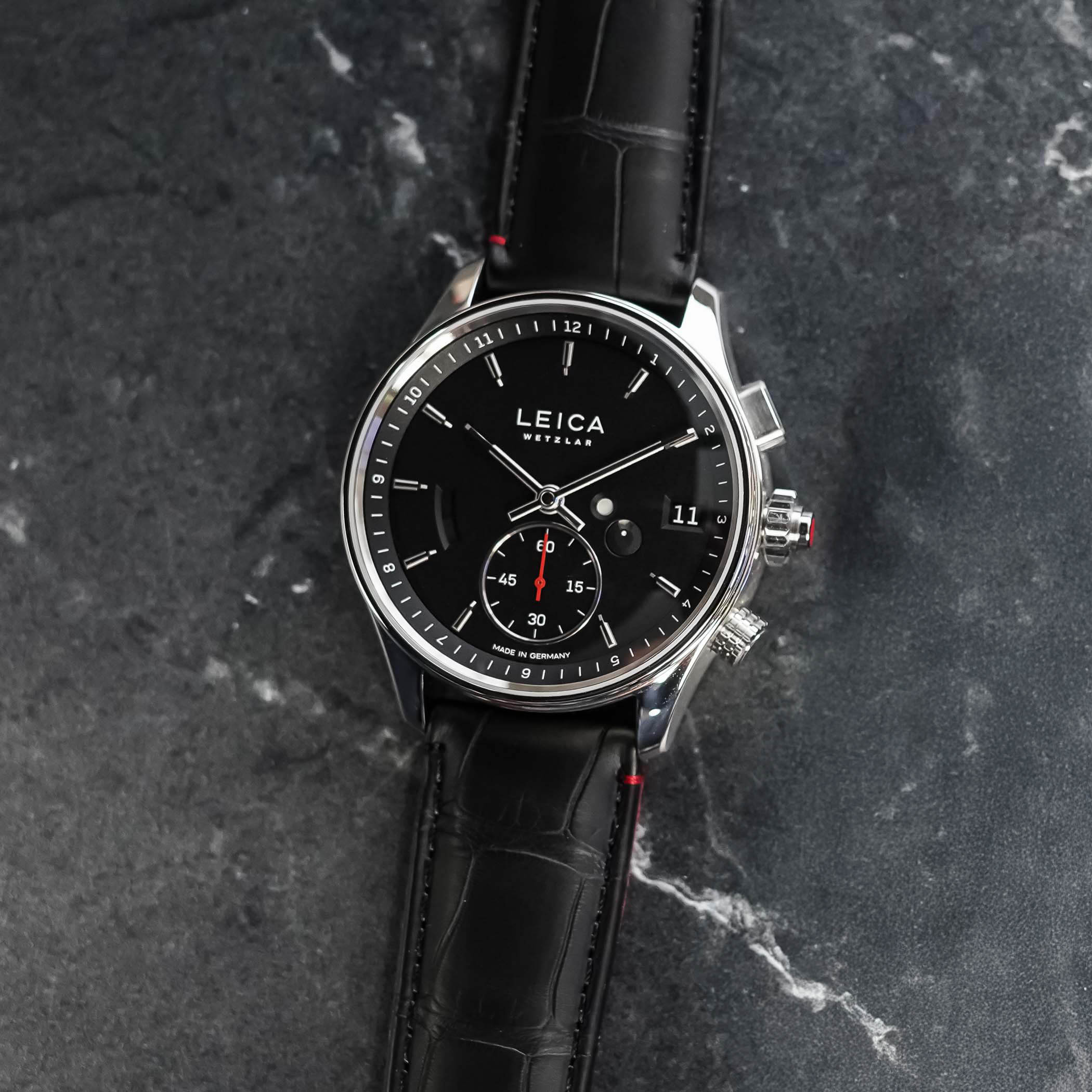
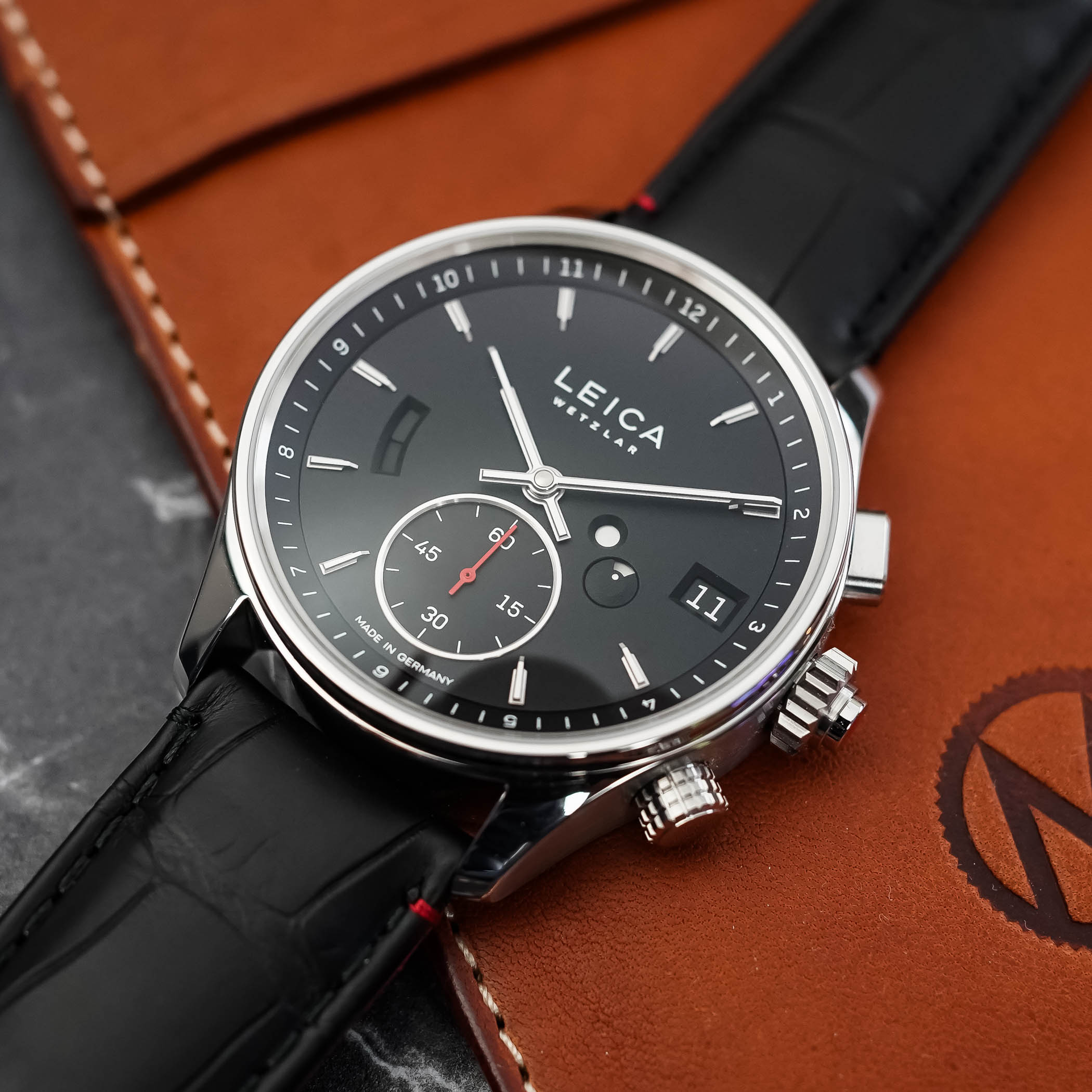
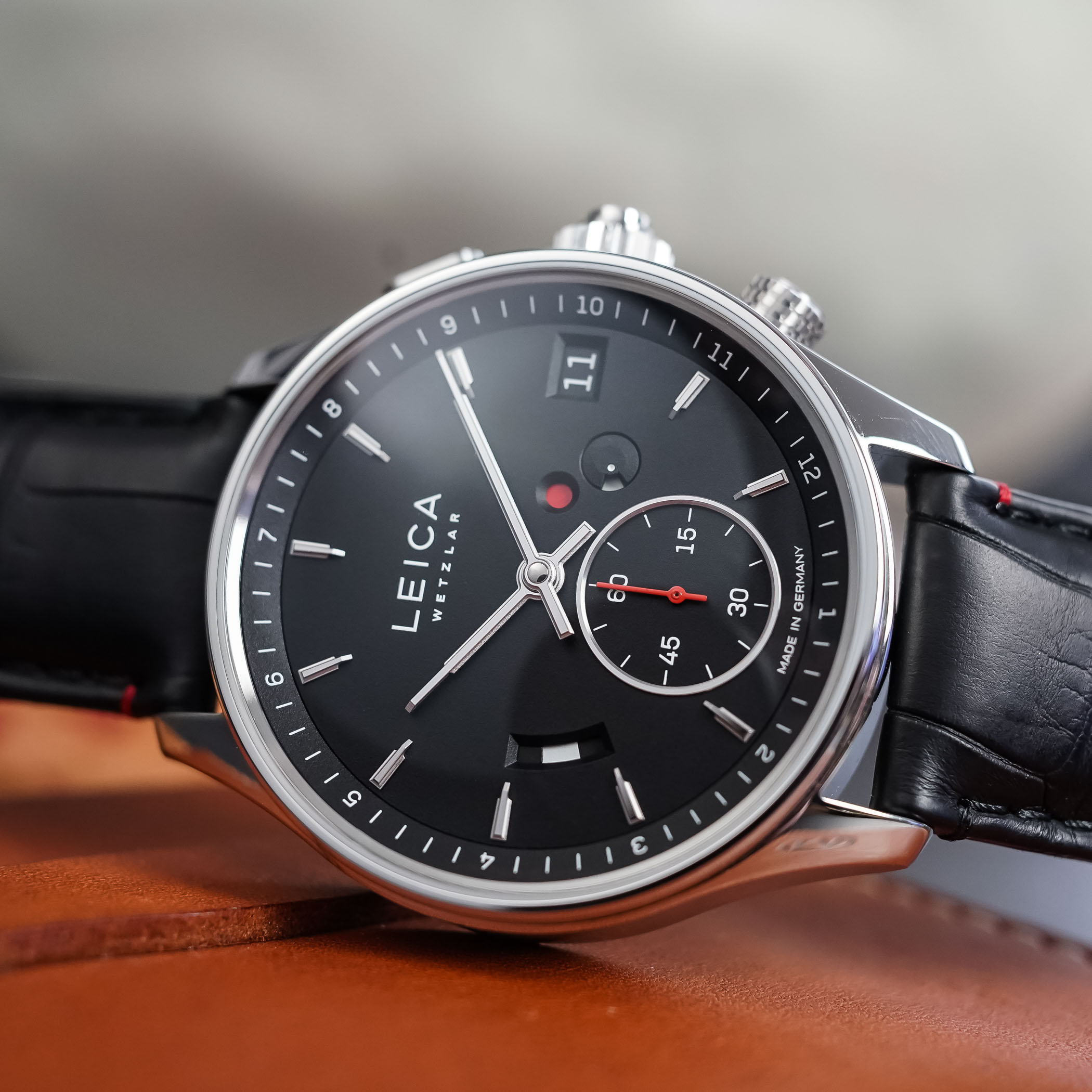
The ZM 2’s second time zone is handled via an internal rotating 12-hour ring, paired with a hardly noticeable day/night indicator. It is not the most conventional GMT solution, but it is intuitive, tactile and entirely in character.
The Movement and Innovations
Both watches share Leica’s patented push-crown system, developed under Reinhard Meis, former head of development at A. Lange & Söhne. A single press stops the movement, resets the seconds to zero and turns the status indicator red. A second press restarts the watch. Mechanically, this is achieved via a locking differential and a column wheel, closer to chronograph engineering than to conventional setting systems. The push crown is decorated with a red ceramic-inlay dot, another Leica camera “element”, and the latest design looks different from the L1 and L2 watches presented in 2018 (with a ruby cabochon). Now it is monopusher-chrono style, which was not the case earlier.
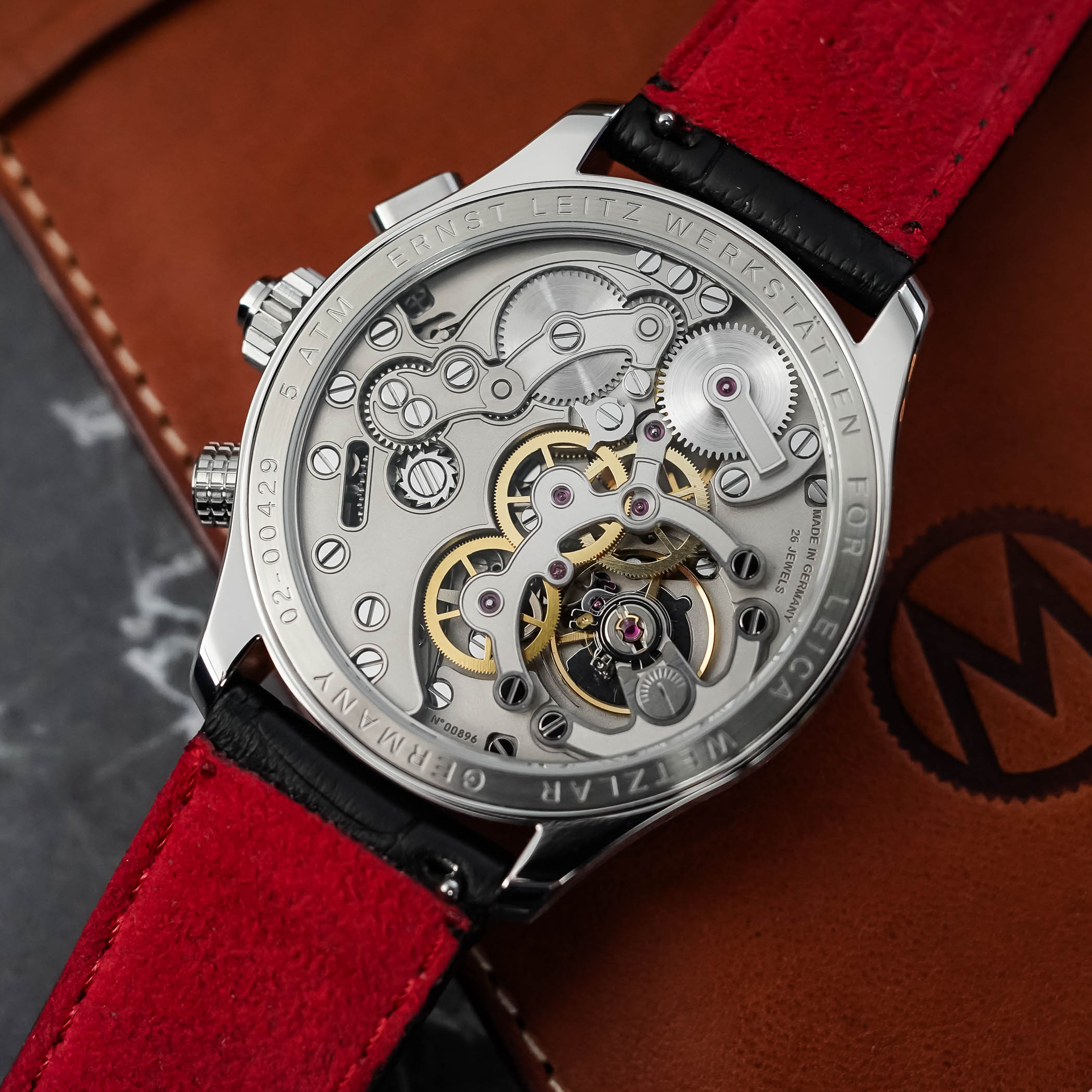
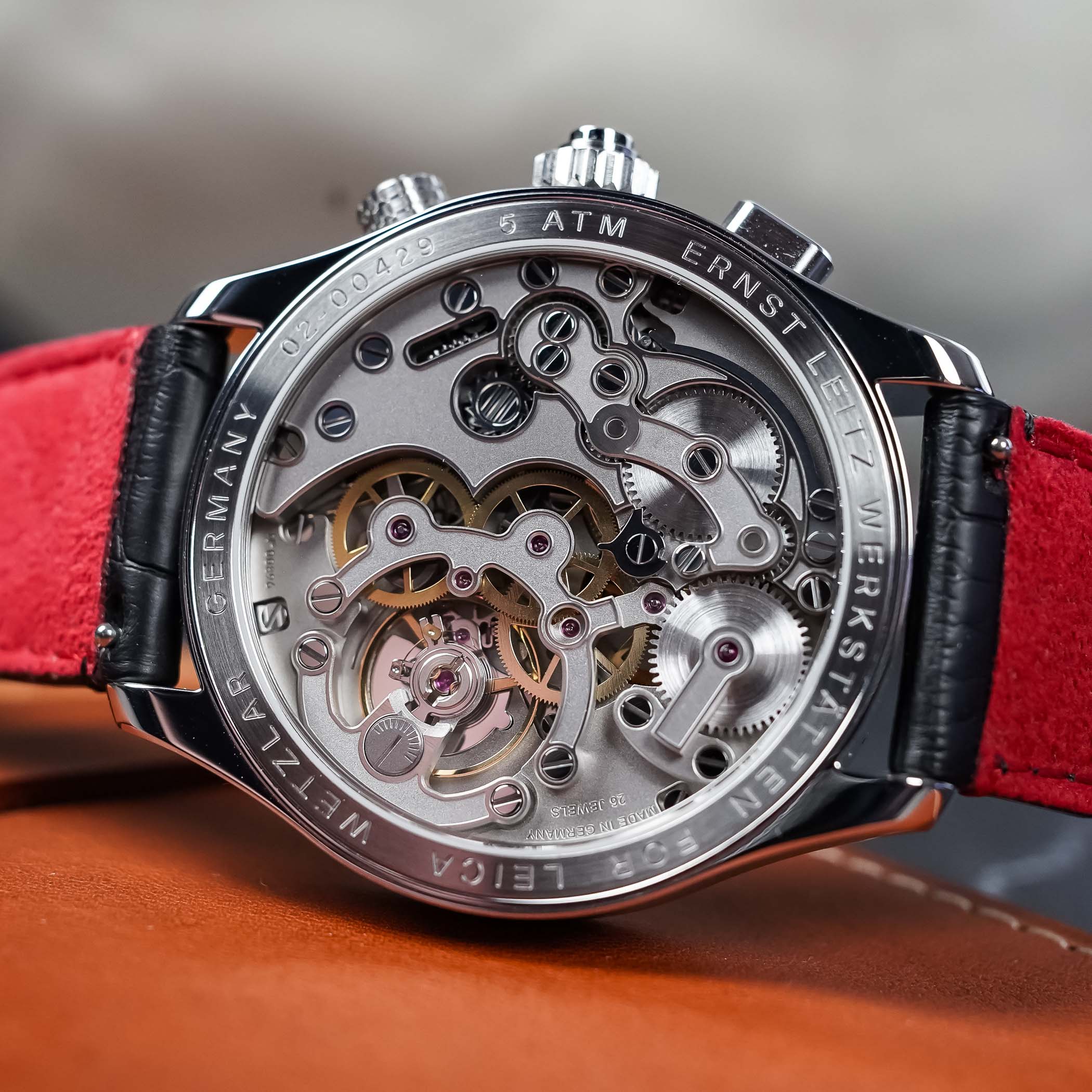
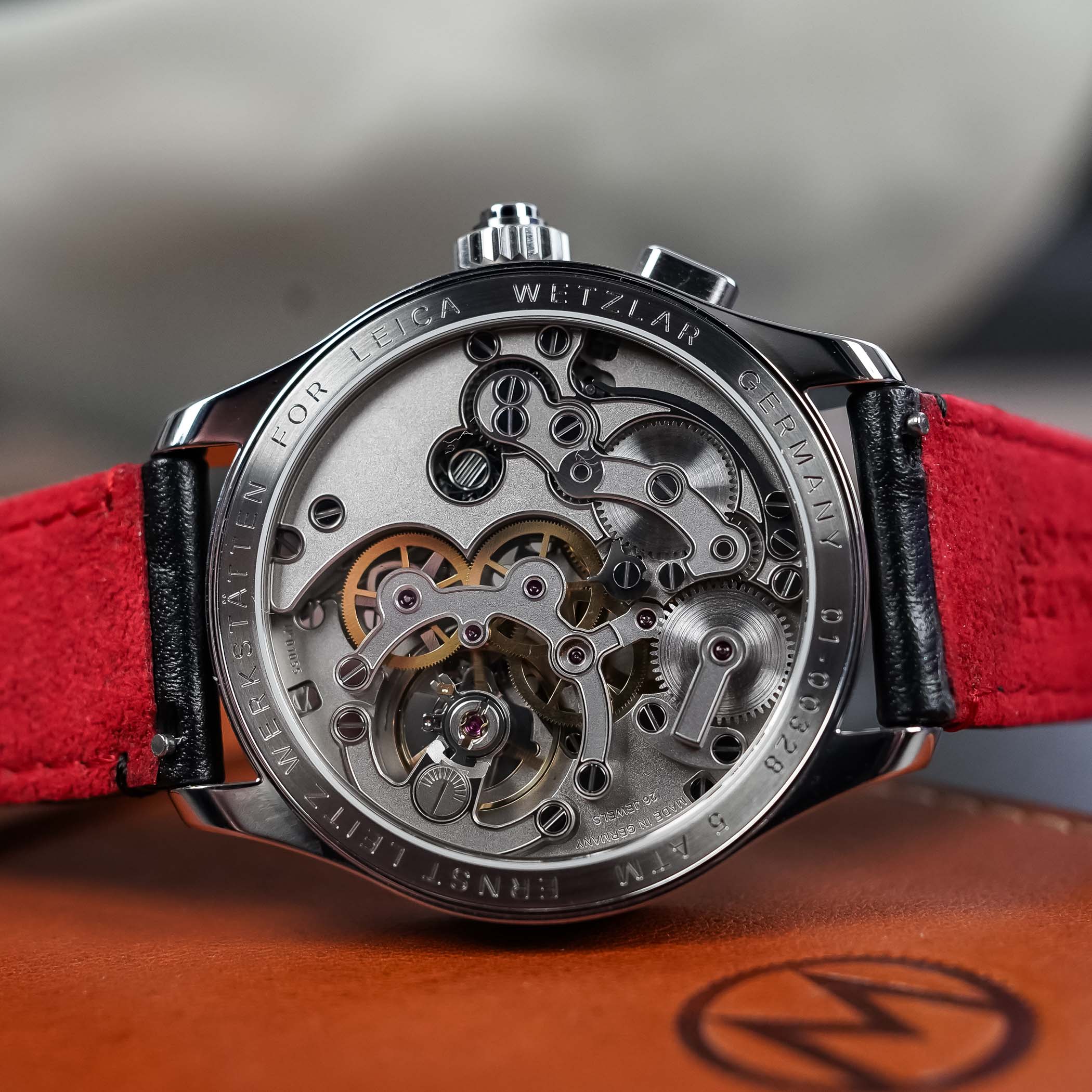
The ZM 1 is powered by the hand-wound calibre LH-10; the ZM 2 by the LH-20 with integrated GMT. Both were conceived by Meis, refined with Andreas Strehler, and manufactured by Lehmann Präzision, with just a few elements derived from an Eterna movement that never reached the market. Lehmann also produces the cases and dials (and makes its own watches within the Lehmann Uhren division, with production of manufacturing equipment and precision parts for various industries being the primary focus). Both calibres offer 60 hours of power reserve, operate at 28,800 vibrations/hour and are regulated in five positions. Decoration is deliberately industrial, much like Leica’s camera components rather than classical haute horlogerie.
The Details
The watches are delivered on diamond-embossed calfskin straps closed with steel pin buckles, steel mesh bracelets and other kinds of straps are available from Leica stores. Production is limited to roughly 20–50 pieces per month. Aside from the sapphire crystals and leather straps, everything is made in Germany. Pricing starts at EUR 9,950 or CHF 10,305 for the ZM 1 and EUR 13,750 or CHF 13,950 for the ZM 2, VAT included.
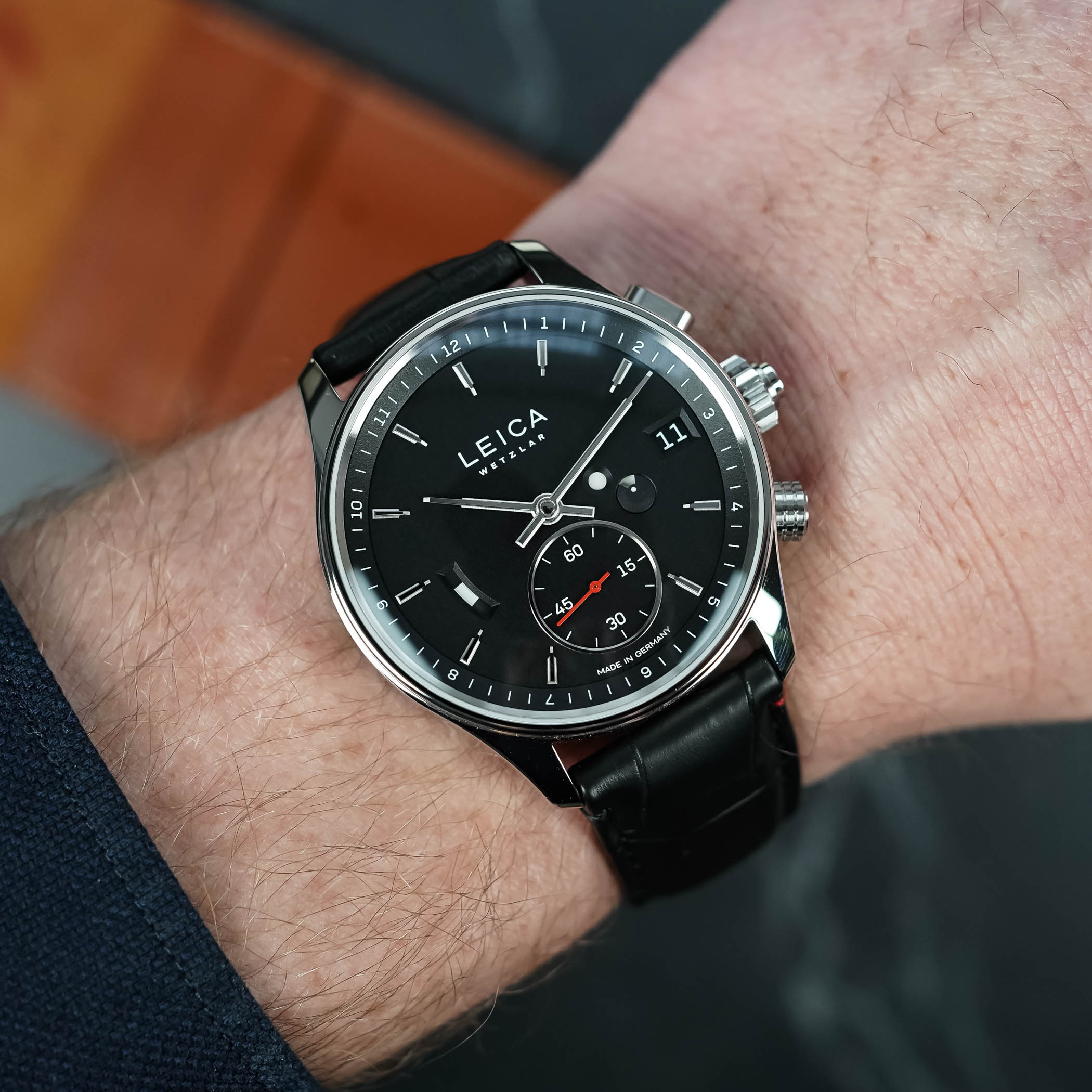
Taken together, the Leica ZM 1 and ZM 2 are among the most convincing recent non-watch-brand entries into modern horology. Restrained yet inventive, quiet and confident rather than demonstrative, they are designed to reward closer inspection rather than demand attention. They are unmistakably Leica, unmistakably German, and serious. Not for everyone, not merely because of price, but because of concept. You can buy an excellent camera for less. And yet, something draws people to Leica. For those who understand that pull, a Leica watch becomes a natural extension of a lifetime of considered choices.
For a closing thought, something different, a suggestion. Take the time to read about Matthäus Hipp, Ernst Leitz’s mentor, and Noel Pemberton Billing, who commissioned the Jaeger-LeCoultre Compass camera. Explore the story of the Leica Freedom Train, a humanitarian effort led by Ernst Leitz II and his daughter Elsie Kühn-Leitz. Look into Leica’s relationship with Hermès through Jean-Louis Dumas, then chairman of Hermès and a devoted Leica user, which resulted in collaborative objects such as the leather-clad Leica M9. Read Reinhard Meis’s book on A. Lange & Söhne, “The Momentous Century”. If business intrigues you, study how Andreas Kaufmann, originally trained in literary studies, transformed a struggling manufacturer into a thriving one. And if that feels too earnest, look up the de Grisogono Occhio Ripetizione Minuti from 2005, a minute repeater with a twelve-blade shutter revealing the movement while chiming. Whatever you choose to spend time on, you´ll be rewarded.
For more details, please visit www.leica-camera.com.

3 responses
One look at the price tells you how they came to be and what they are. Granted, they carry the Leica moniker and what appears to be a unique movement, but still….
Thanks Boris for an amazing review.
I have researched the ZM watches some months ago, but you came up with so many to me unknown nuggets and details – you have my respect!
Those watches are so much more than their face value. – well done!
Sorry, this sounds like an odd justification. Companies like Mido offer 200m at a fraction of the price / “Water resistance is 50m, realistic and honest, given the number of moving components involved.”