


 Not all images were able to load for printing. Please close the print window and try again.
 L’Atelier Bernard, the Extraordinary Story of Two Young Belgian Watchmakers in Fleurier and their “Owl” Watch
The story of two Belgian watchmakers handcrafting a timepiece with duplex escapement…
Hitting the road to Fleurier, the discovery of L’Atelier Bernard was not what I expected. Bernard is a rather dated first name – one you rarely hear anymore for young people in Europe’s French-speaking countries. So, when I pushed open the door of their workshop in Fleurier, I was expecting to meet two old Swiss gentlemen. Well… not quite. Nestled between Vaucher Manufacture and Parmigiani Fleurier, in the shadow of Kari Voutilainen’s legendary Chapeau de Napoléon atelier, two atypical, young Belgian watchmakers are forging something unusual. Working entirely by hand, inside their own apartment-workshop in Fleurier, they craft watches that surprise and delight with their originality.
Van Ormelingen and Braboretz, two Belgian watchmakers in their mid-20s, both named Bernard, have a rather unusual trajectory. L’Atelier Bernard wasn’t born out of a business plan. It grew from a shared passion for watchmaking and traditional crafts. Bernard van Ormelingen (27) trained as a watchmaker at the Institut d’Art et de Technique in Namur, Belgium, before working at Jaeger-LeCoultre in Le Sentier. Early on, alongside his studies, he developed a passion for guilloché – the art of hand-engraved engine turning. He began doing subcontract work for various brands. He eventually bought the guilloché lathe from his first teacher, expanded his collection of machines and ended up storing and renting them out in Les Verrières, Switzerland. The other Bernard, Bernard Braboretz (26), is self-taught. He started in smaller workshops near Belgium’s famous racing circuit, Spa-Francorchamps, gradually acquiring his own horological tools, making components by hand, and refining his craft without formal schooling.
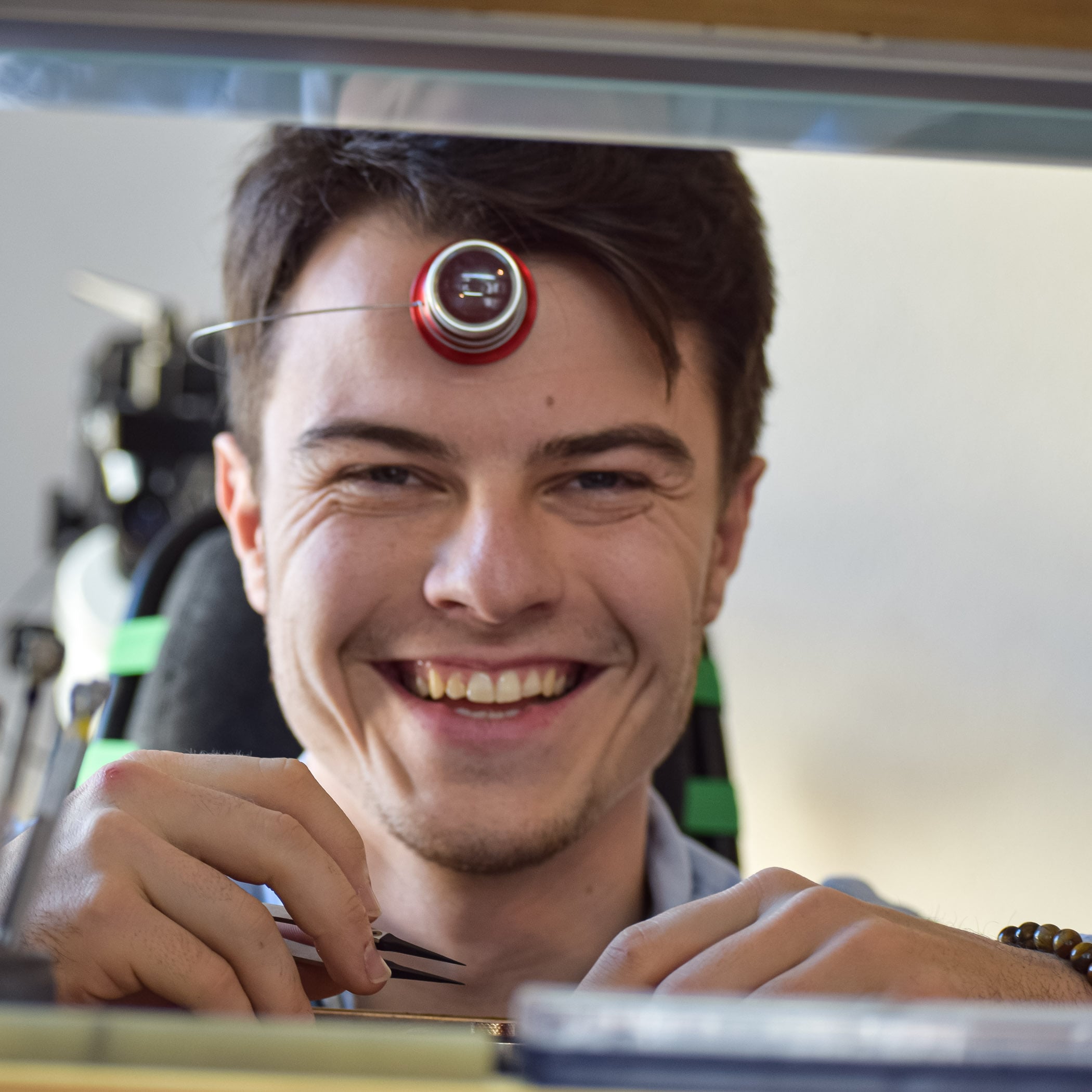
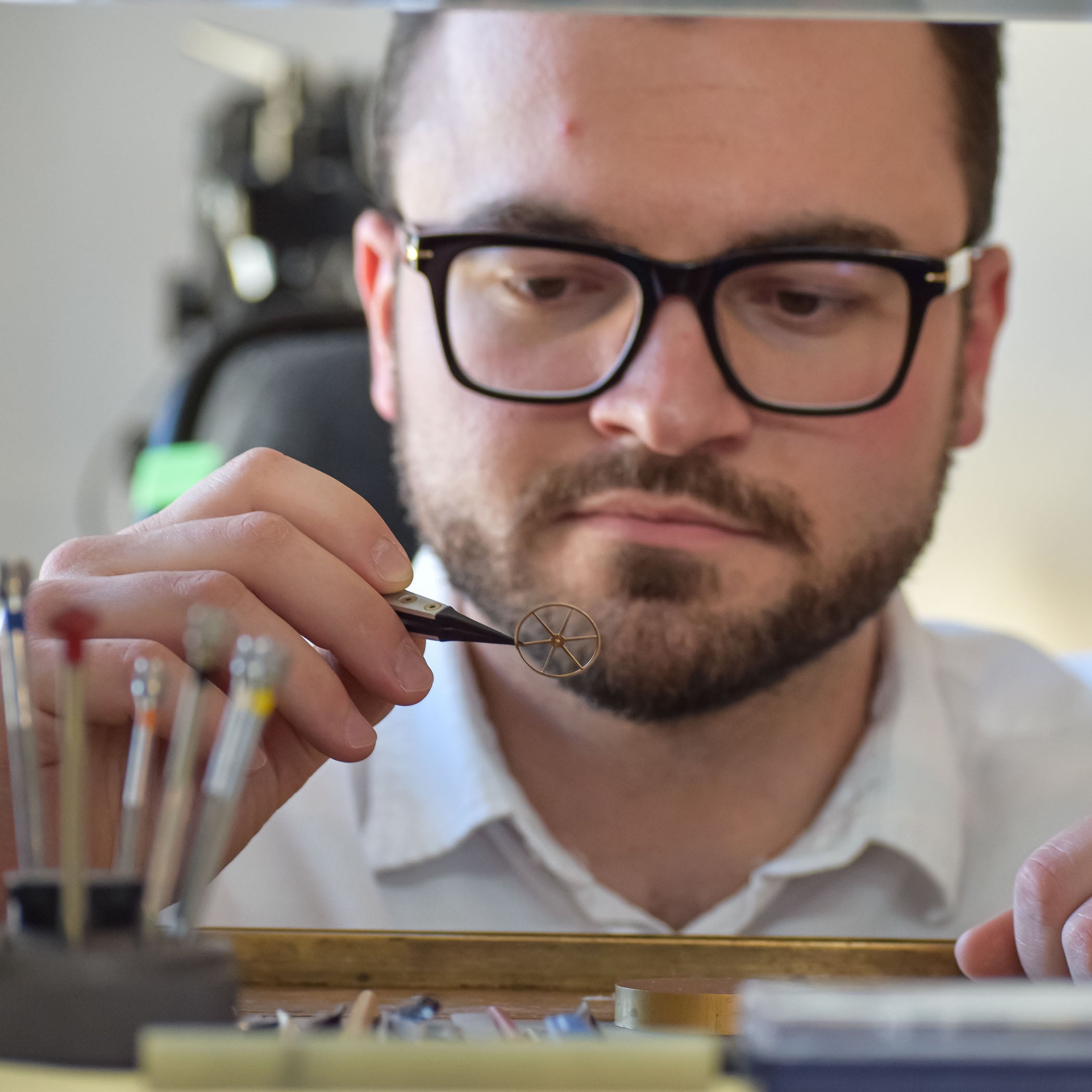
As they met in Belgium, they soon began sketching ideas for their first collaborative timepiece, which would ultimately lead them to settle in Fleurier, right at the centre of the Swiss watchmaking cradle. With a philosophy that is clear, deliberate, and uncompromising.
As the two Bernards explained to Robin in his recent interview, “From the beginning, we decided that every watch would be developed and finished entirely by us, with no compromise on quality, construction or aesthetics. From the first sketches to the final regulation of the balance wheel, it would all be done by the two of us. No concessions, no delegations of essential savoir-faire to machines, and no multiplication of suppliers. The only elements in the movement, for instance, that are not made by us are the mainspring, hairspring and the jewels. Everything else is of our own making. Only six watches, made slowly, with discipline and absolute care, rigor and full personal responsibility at every single stage. From the beginning, we decided that every watch would be developed and finished by us, with no compromise on quality, construction or aesthetics. From the first sketches to the final regulation of the balance wheel, it would all be done by the two of us. No concessions, no delegations of essential savoir-faire to machines, and no multiplication of suppliers. The only elements in the movement, for instance, that are not made by us are the mainspring, hairspring and the jewels. Everything else is of our own making. Only six watches, made slowly, with discipline and absolute care, rigour and full personal responsibility at every single stage.”
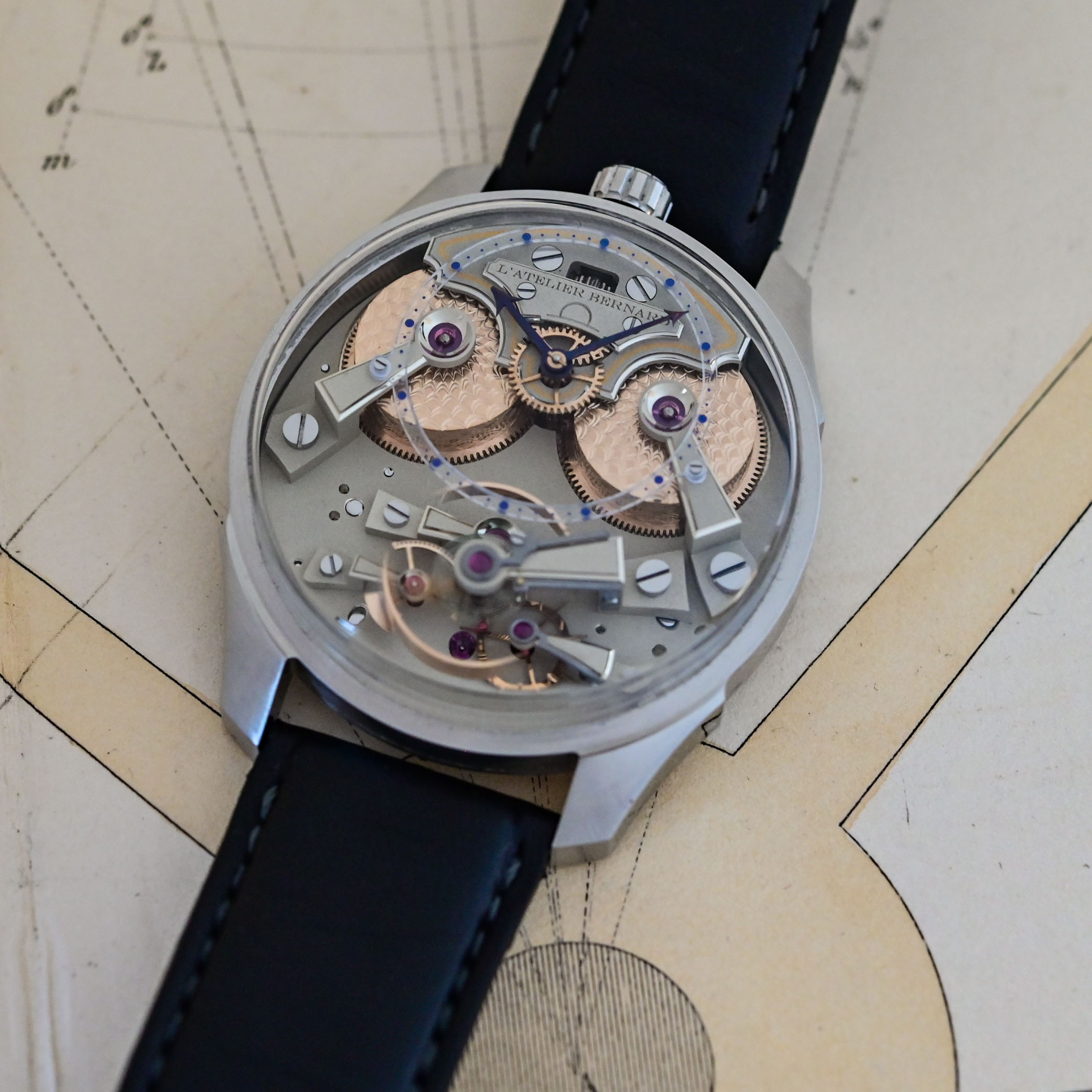
The Owl watch
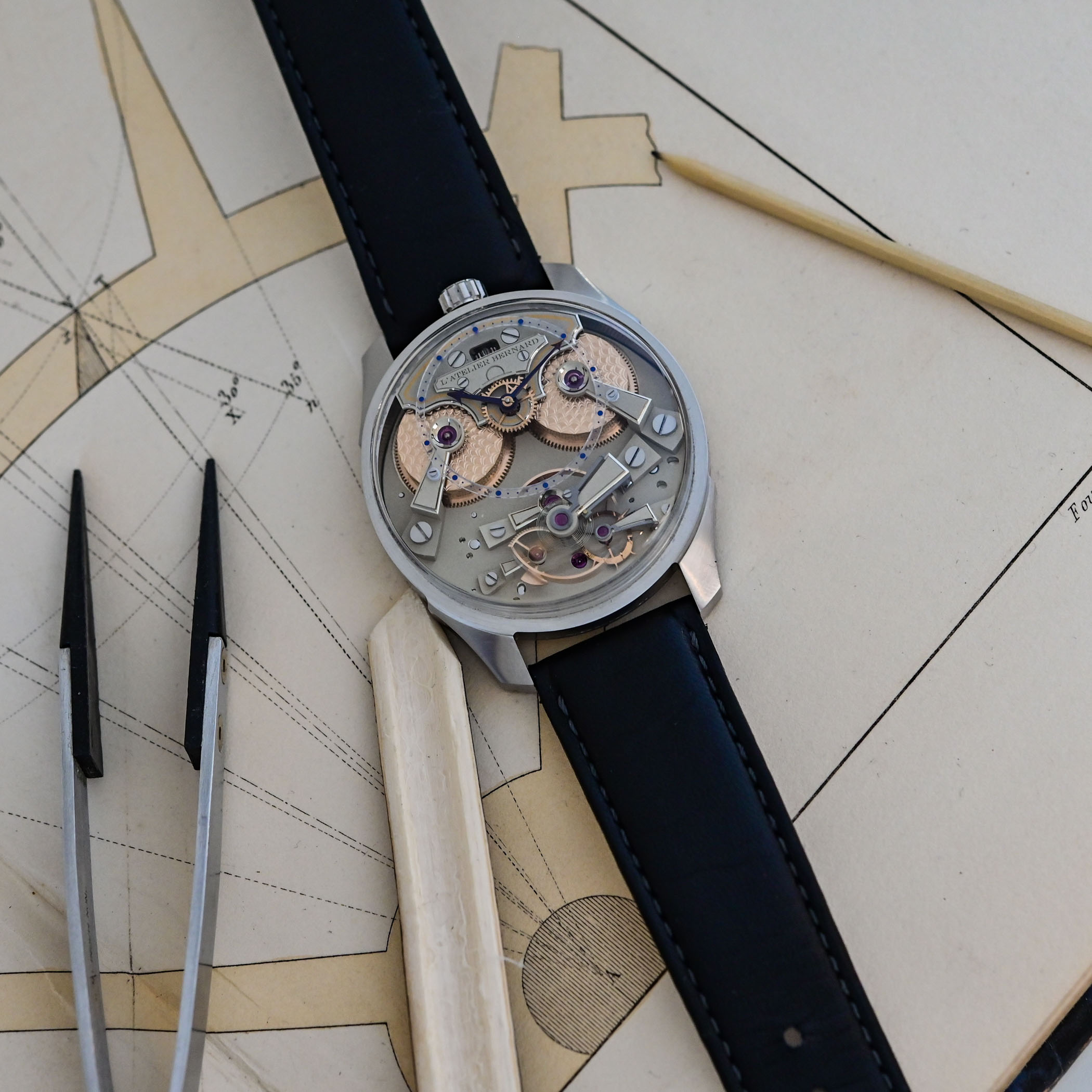
Their debut watch, nicknamed The Owl, is a limited edition of just six pieces – three made per year across 2026 and 2027 – each entirely handmade, from movement plates to bridges, by the two Bernards themselves, in their workshop-apartment in Fleurier.
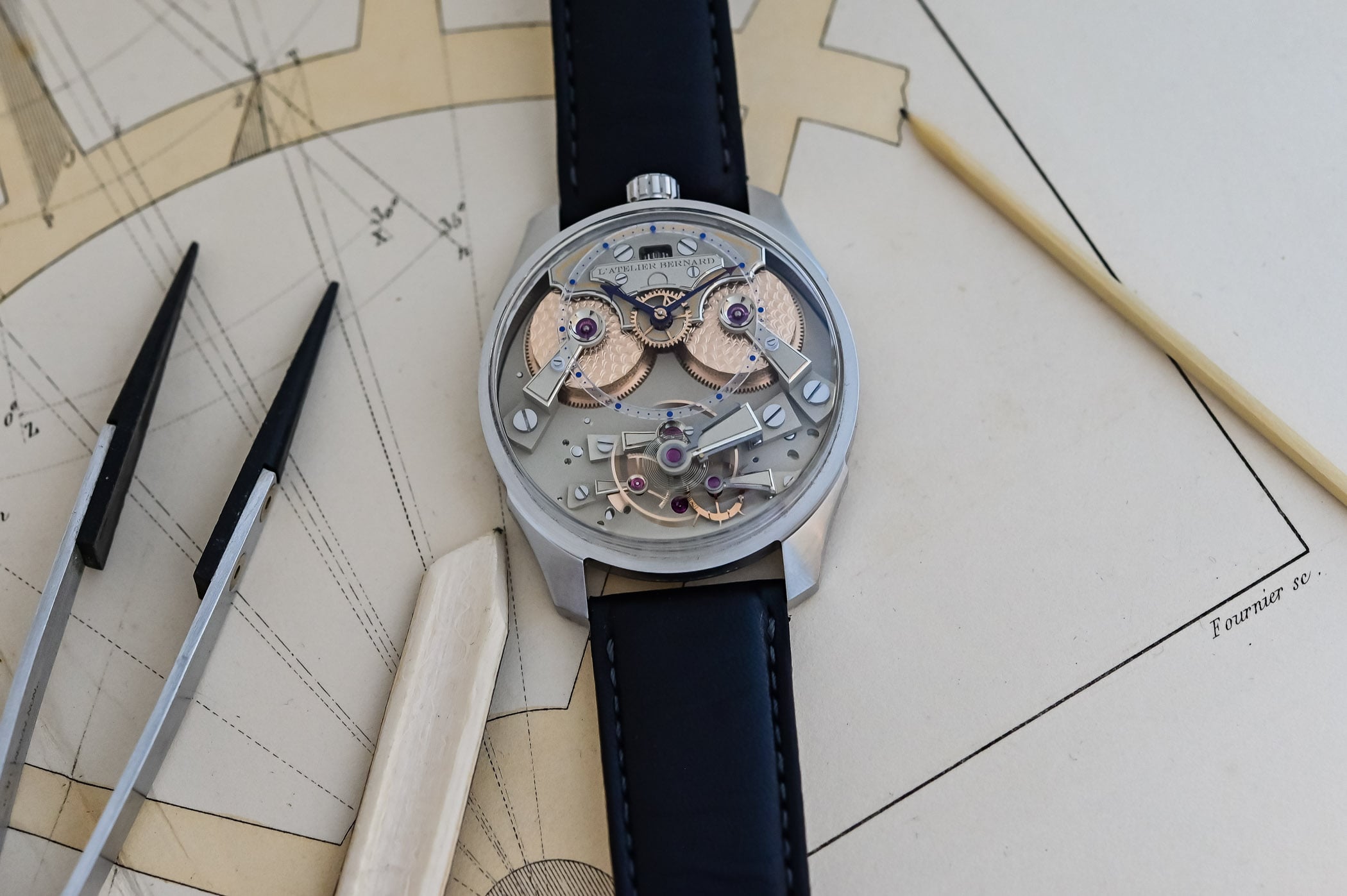
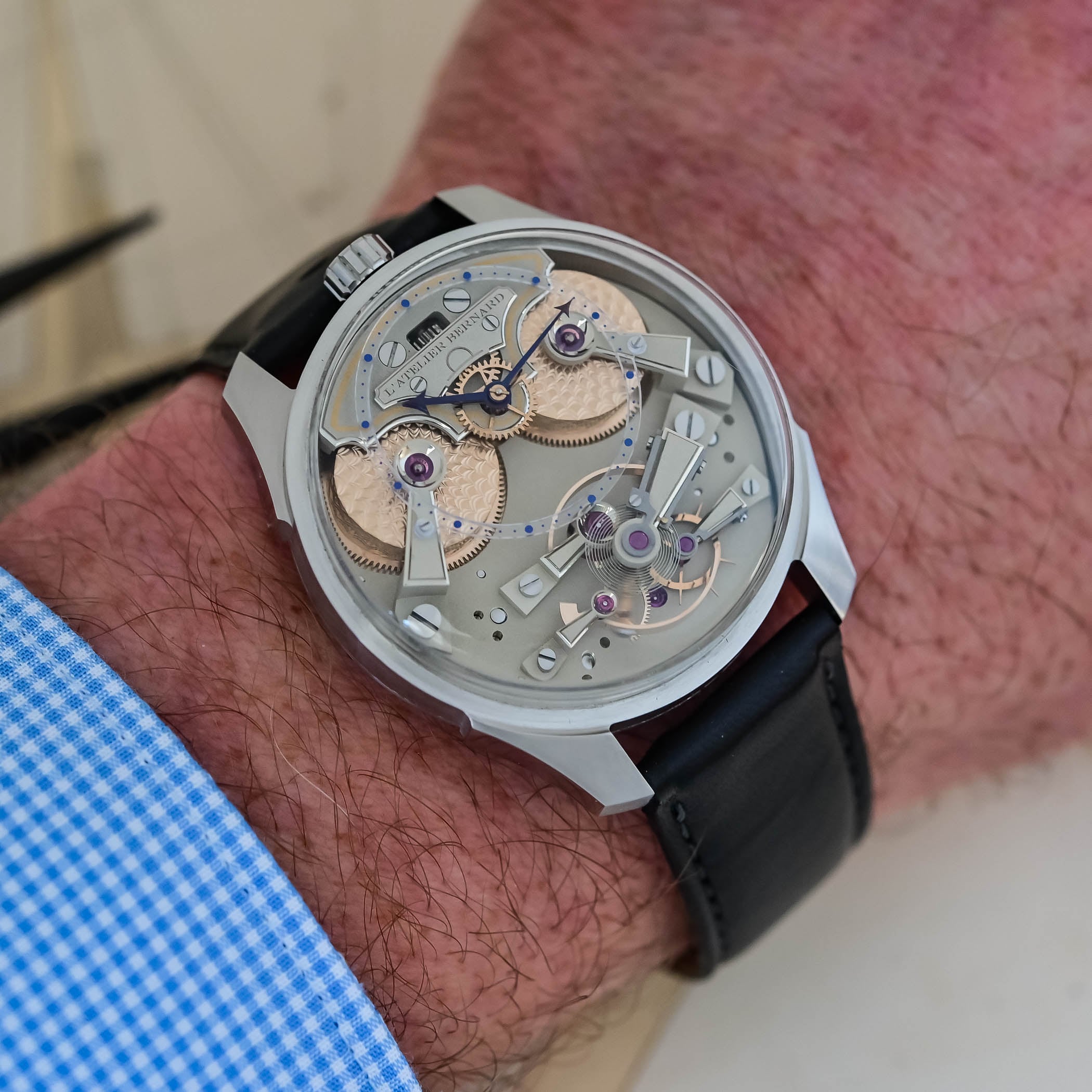
At first glance, the design of the L’Atelier Bernard The Owl is in the vein of what other young, independent watchmakers often find compelling today: a striking openworked architecture without a dial, an inverted movement, and richly layered, three-dimensional, stepped bridges that draw the eye into the mechanics. Two large, symmetrical hand-guilloché barrels dominate the upper dial, reminiscent of an owl’s eyes, while a large balance wheel floats above the main plate.
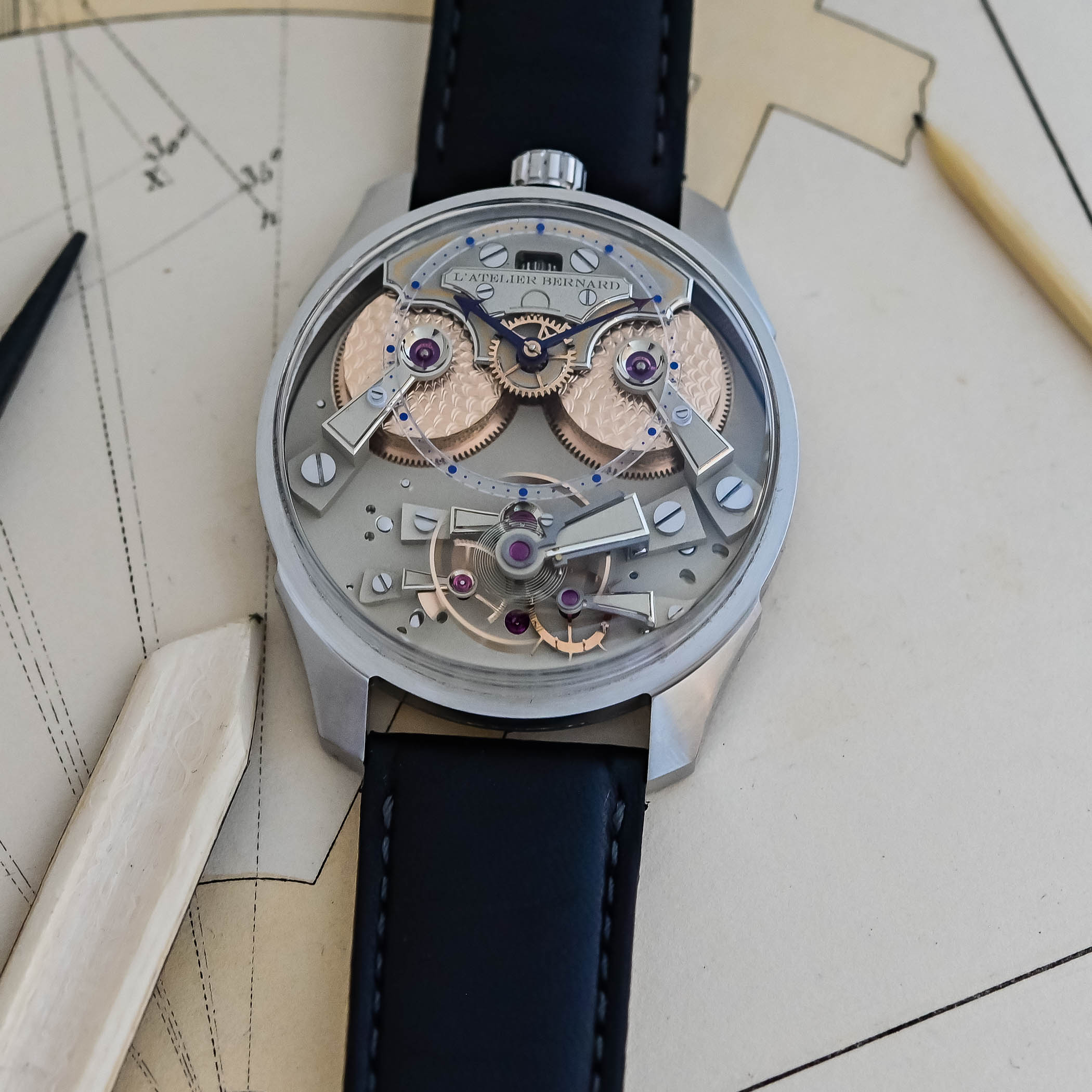
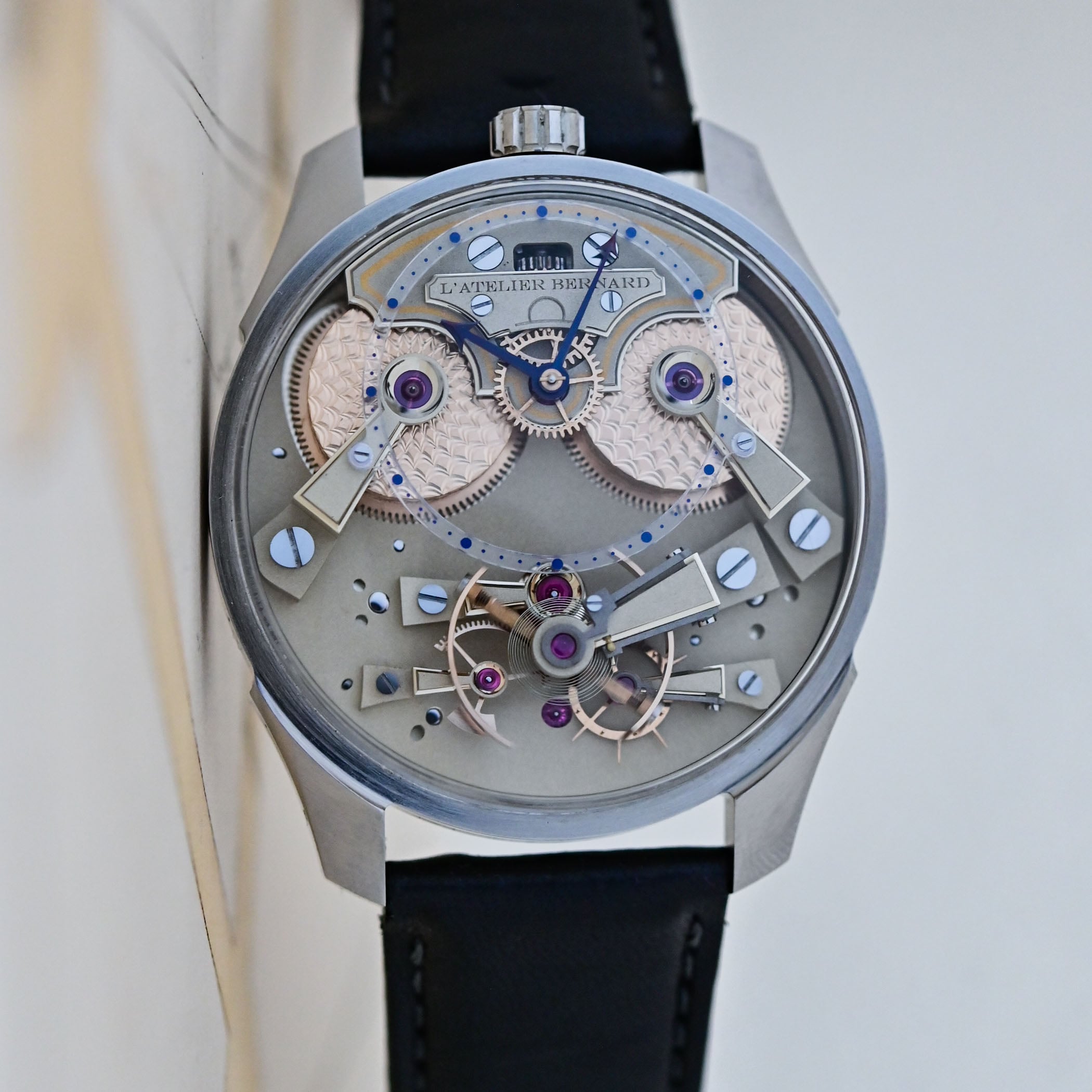
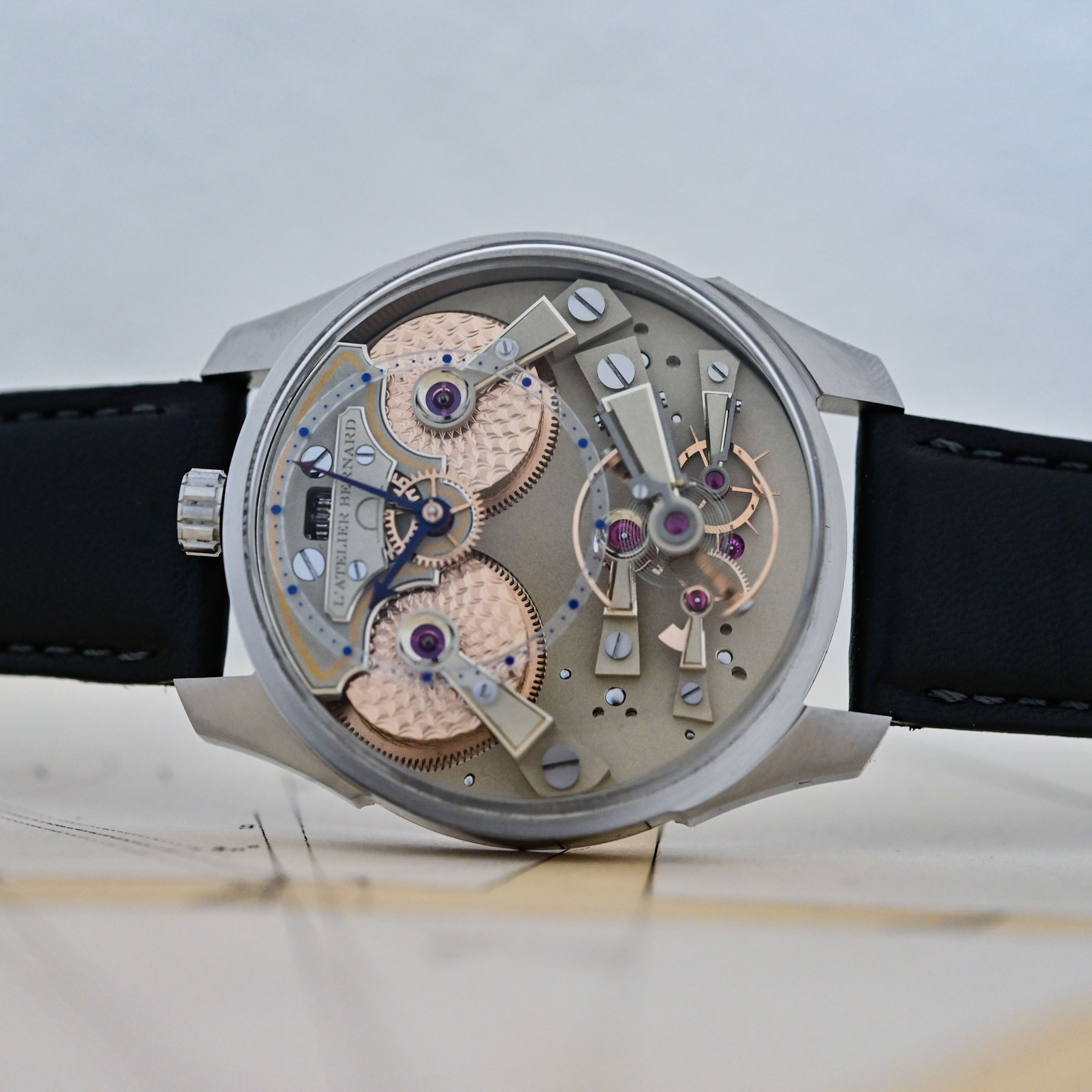
Taking a closer look at the watch and movement reveals many truly original and refined details. The case itself features a sloped profile, a 12 o’clock crown, angular lugs and a cool ultra-domed sapphire crystal that offers a compelling sight of the movement and its slow-beating regulating organ from different angles. Time is indicated by flame-blued hands on a sapphire ring. Another nod to early pocket watches, a short pin at the end of the cannon pinion keeps them securely in place. Hand finishes – including raw frosted surfaces on raw German silver and stunning, concave chamfering – give the watch a character that feels handcrafted and alive. The old-style parachute (anti-shock device) on top of the balance bridge is another beautiful detail.
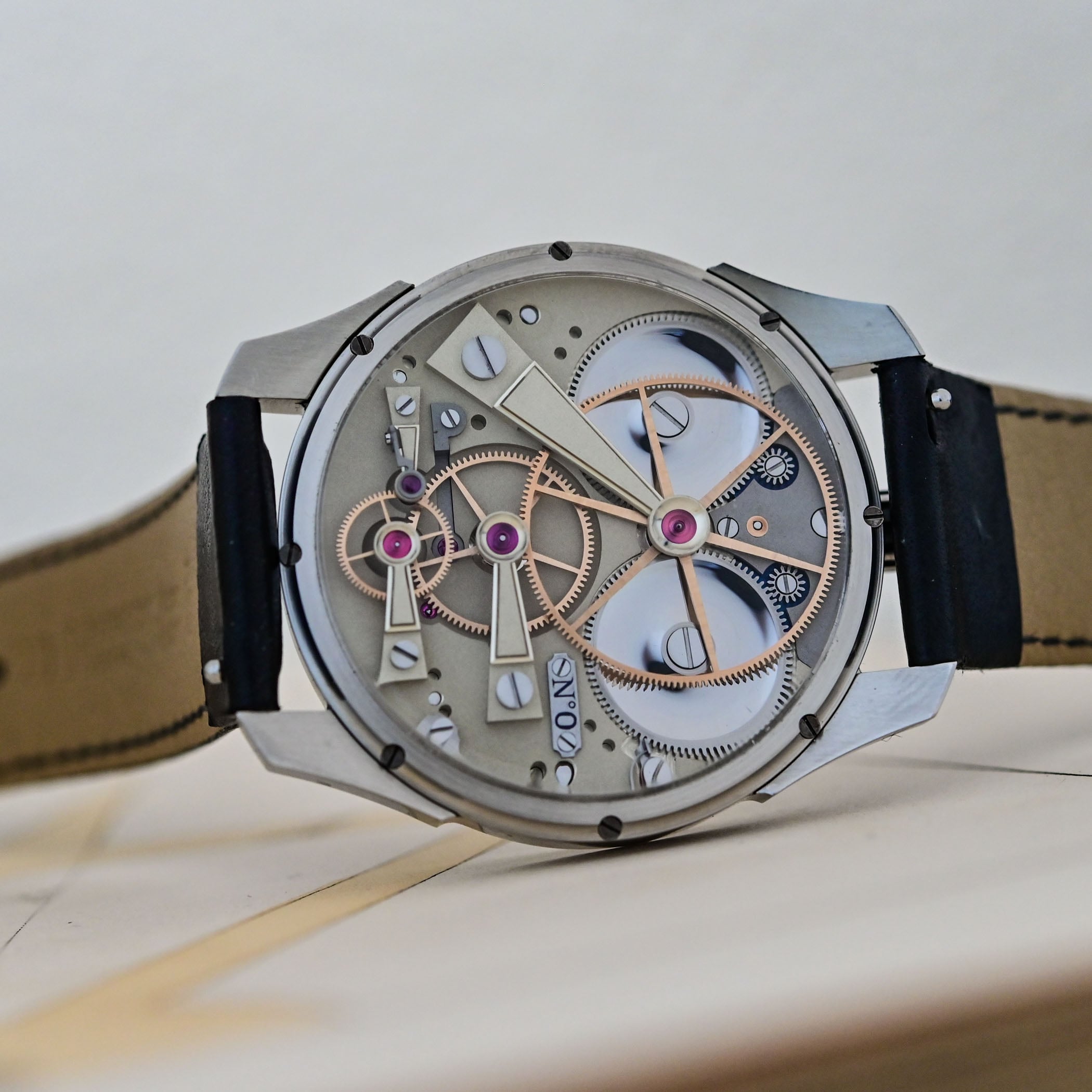
A reworked Duplex Escapement
One element that truly sets The Owl apart is its escapement. It seems that two Belgian watchmakers could not bring themselves to use a Swiss lever escapement! Instead, the watch uses a duplex escapement, a historical mechanism with roots in early 18th- and 19th-century pocket watches. It has fallen into disuse because it requires extremely tight tolerances, is sensitive to shocks, and requires delicate lubrication.
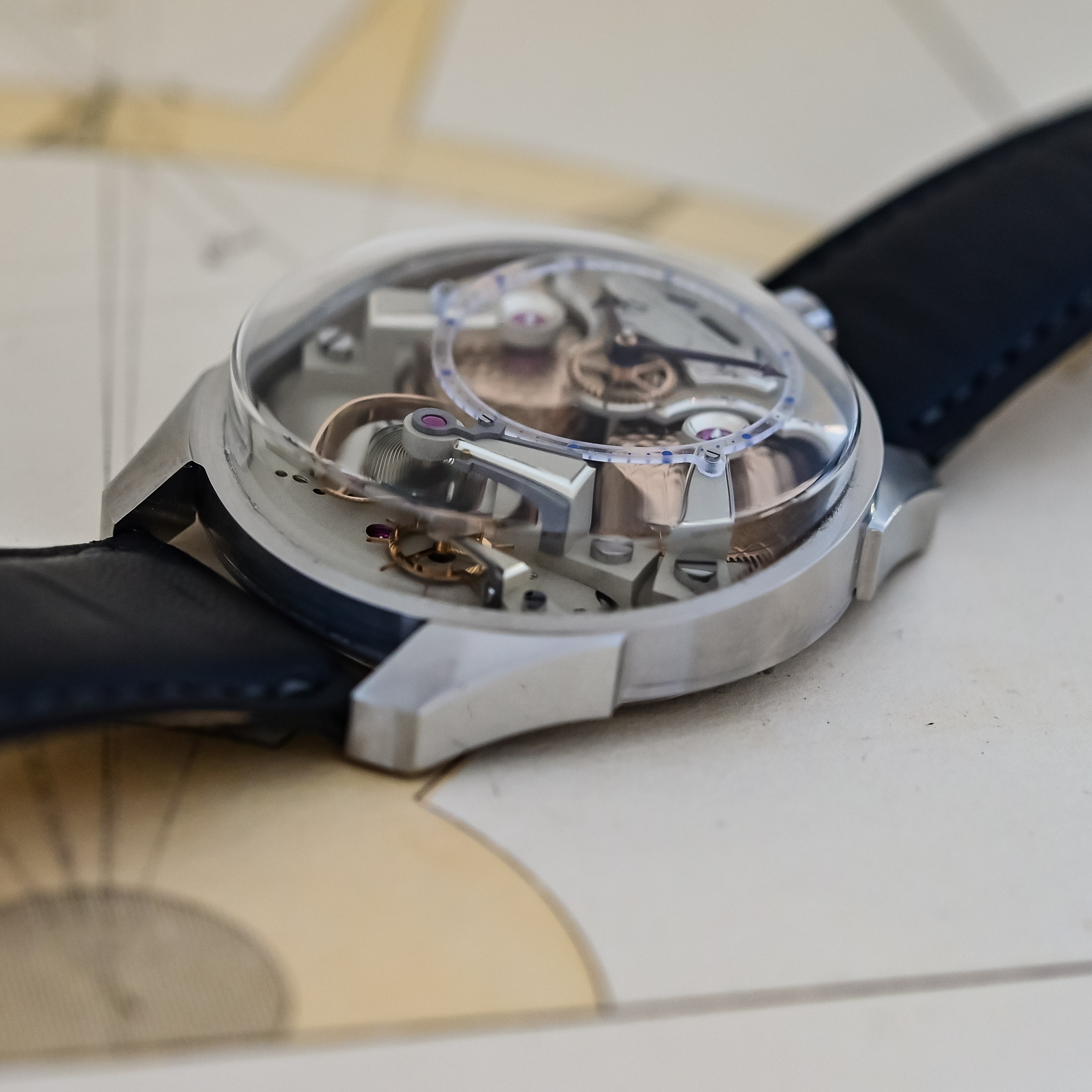
In essence, a duplex escapement uses alternately two sets of teeth, eliminating the need for a separate pallet fork. One set of horizontal teeth provides the locking function, while a second set of vertical teeth delivers the impulse to the balance. While elegant in concept, this direct impulse escapement requires robust torque and careful regulation; hence the substantial twin barrels, which provide approximately 45 hours of power despite a slow 1.5 Hz beat rate.
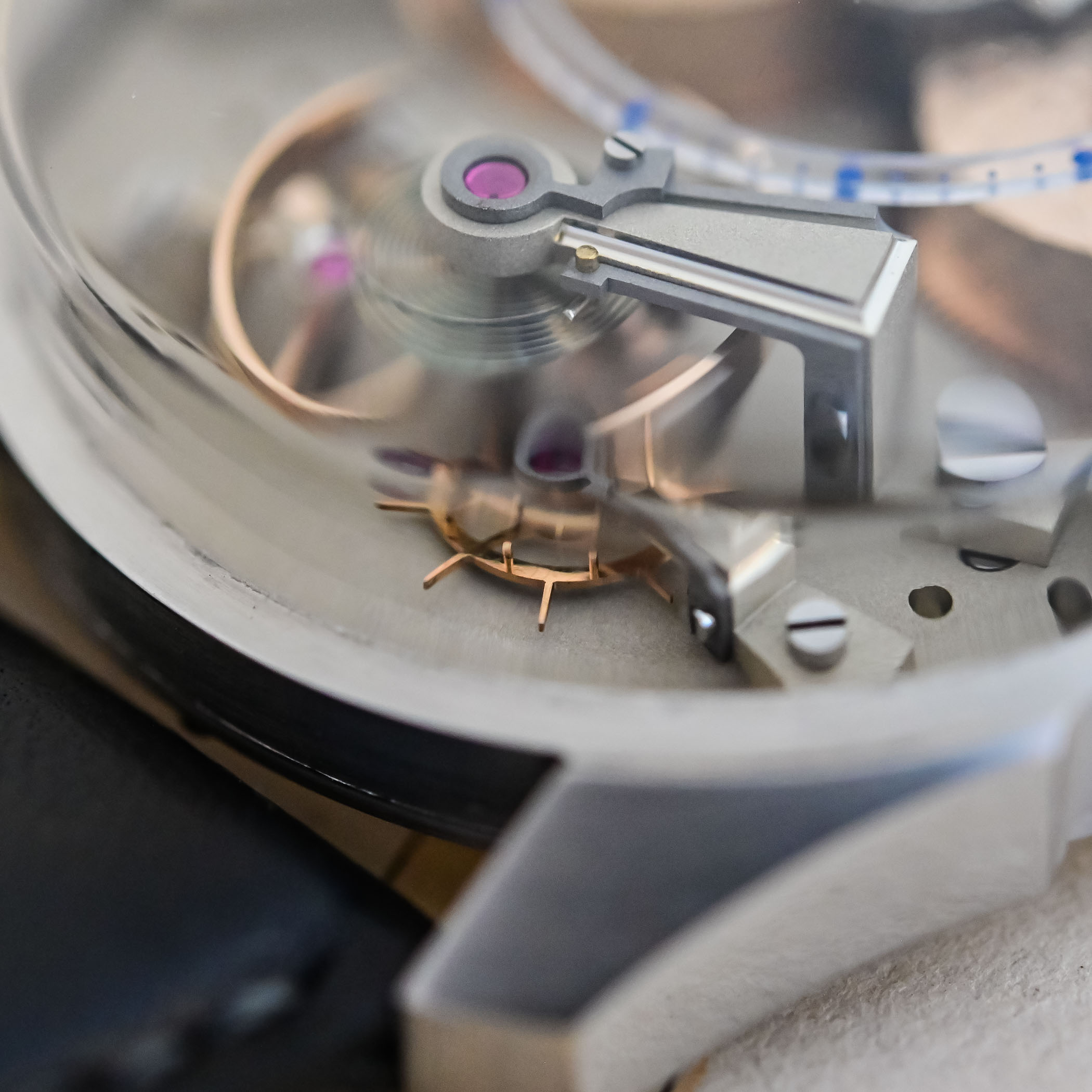
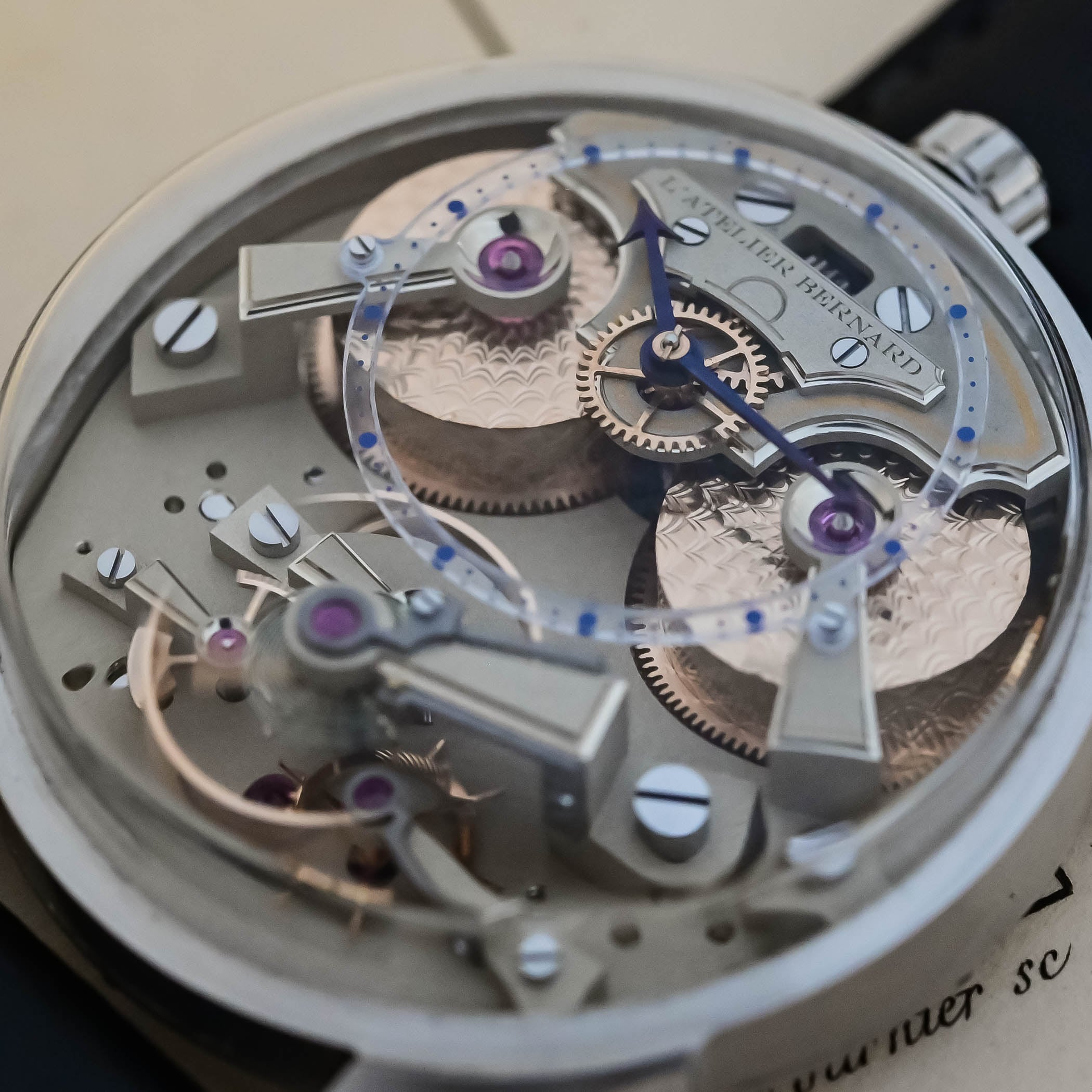
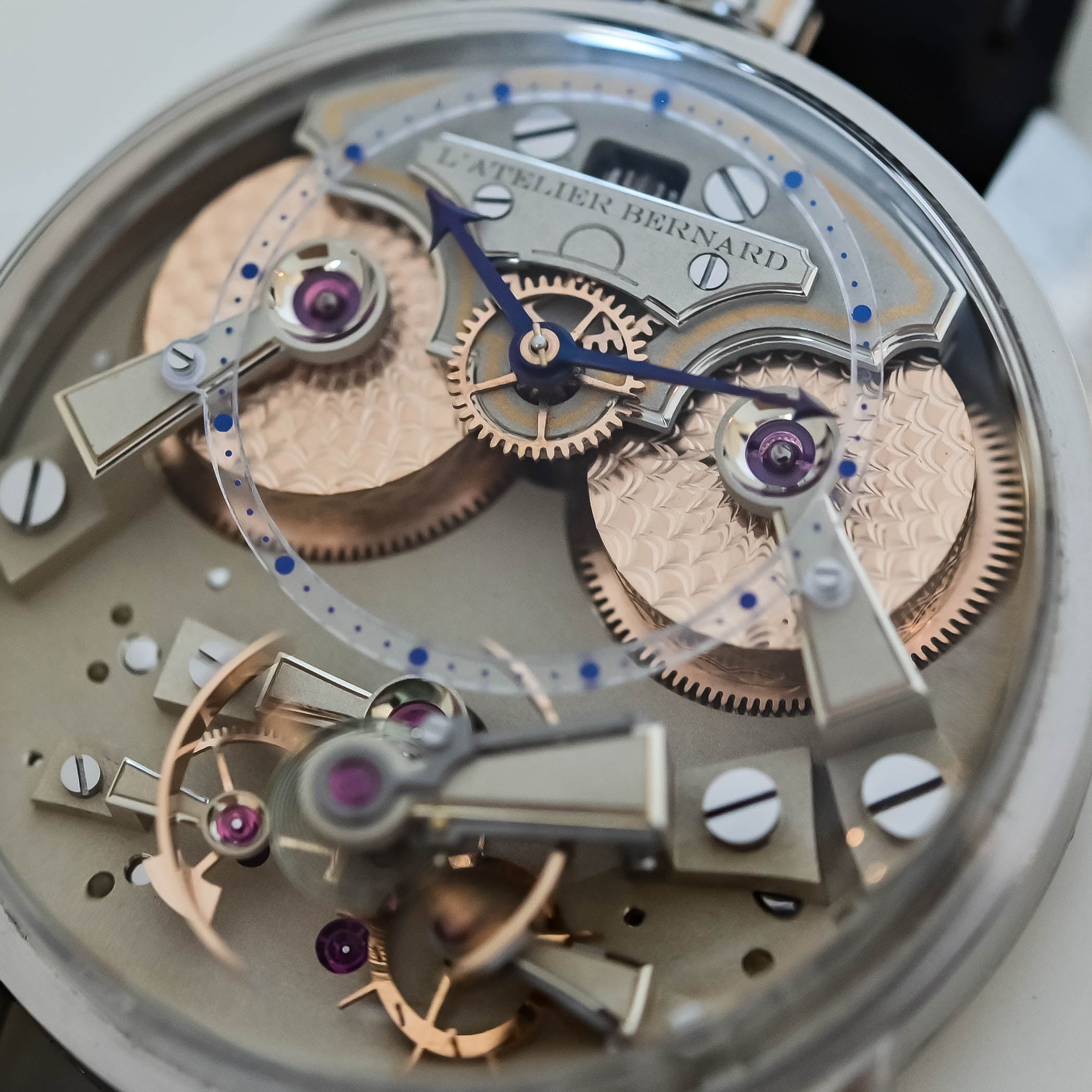
A safety rake and counterweight mechanism guard against overbanking if the watch experiences a shock. The escapement wheel is monobloc, which seems quite a challenge to manufacture with precision. The variable inertia balance is cut and made of three parts. The hairspring features a Breguet overcoil.
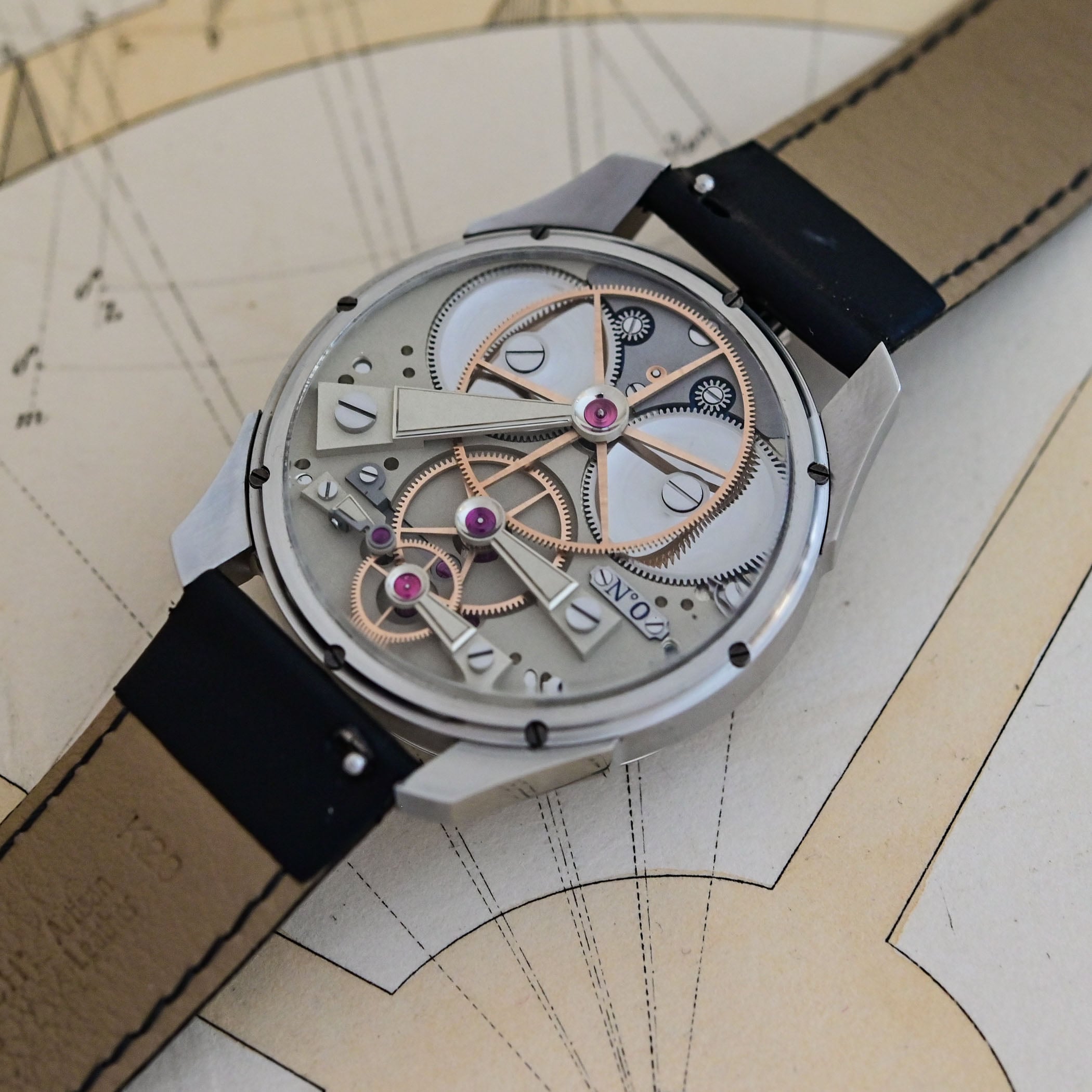
Turning the watch over, the aesthetics are perfectly coherent with the front. However, the first thing that catches the eye is an oversized wheel driving the gear train to the escapement, a choice dictated by the torque required for the escapement. Working on the escapement is truly the heart of watchmaking, so it’s all the more impressive coming from such young watchmakers.
Availability & Price
L’Atelier Bernard The Owl is a superb watch and a promising glimpse of what to expect from the young duo. With only six pieces set to reach collectors’ hands in 2026 and 2027, Atelier Bernard is a name to watch in contemporary independent horology.
As said, only six pieces of The Owl will be manufactured. Price is set at CHF 150,000 excl. taxes. For more details, please visit @l_atelier_bernard on Instagram and read Robin’s interview with them here.


4 responses
You can get a Breguet Tradition for 90% less, and including taxes too since it’d be used. Way to bloat the market.
To start your carreer making 450K / year with two mouths to feed is… damn impressive if you pull it off.
They just might, mind you, the watch itself is damn impressive too and I wish them all the best. Hats off to a stunning, original creation.
The watch is very impressive and beautifully finished. Unfortunately, I stopped counting the number of brands that offer high end independent watchmaking. It feels like there is a new brand popping up every week. I wish them all a lot of success but I am left wondering whether this niche of the market has become extremely overcrowded with little differentiation between the brand occupying this niche.
A true open-worked watch, unlike the one from a big name that claims to be open-worked but certainly isn’t. Love it.
That being said, I can’t imagine ever being able to afford something like this in my wildest dreams.