
 Not all images were able to load for printing. Please close the print window and try again.
 The Spellbinding Van Cleef & Arpels Brassée de Lavande Automaton
An inside view of the enchanting Brassée de Lavande Automaton.
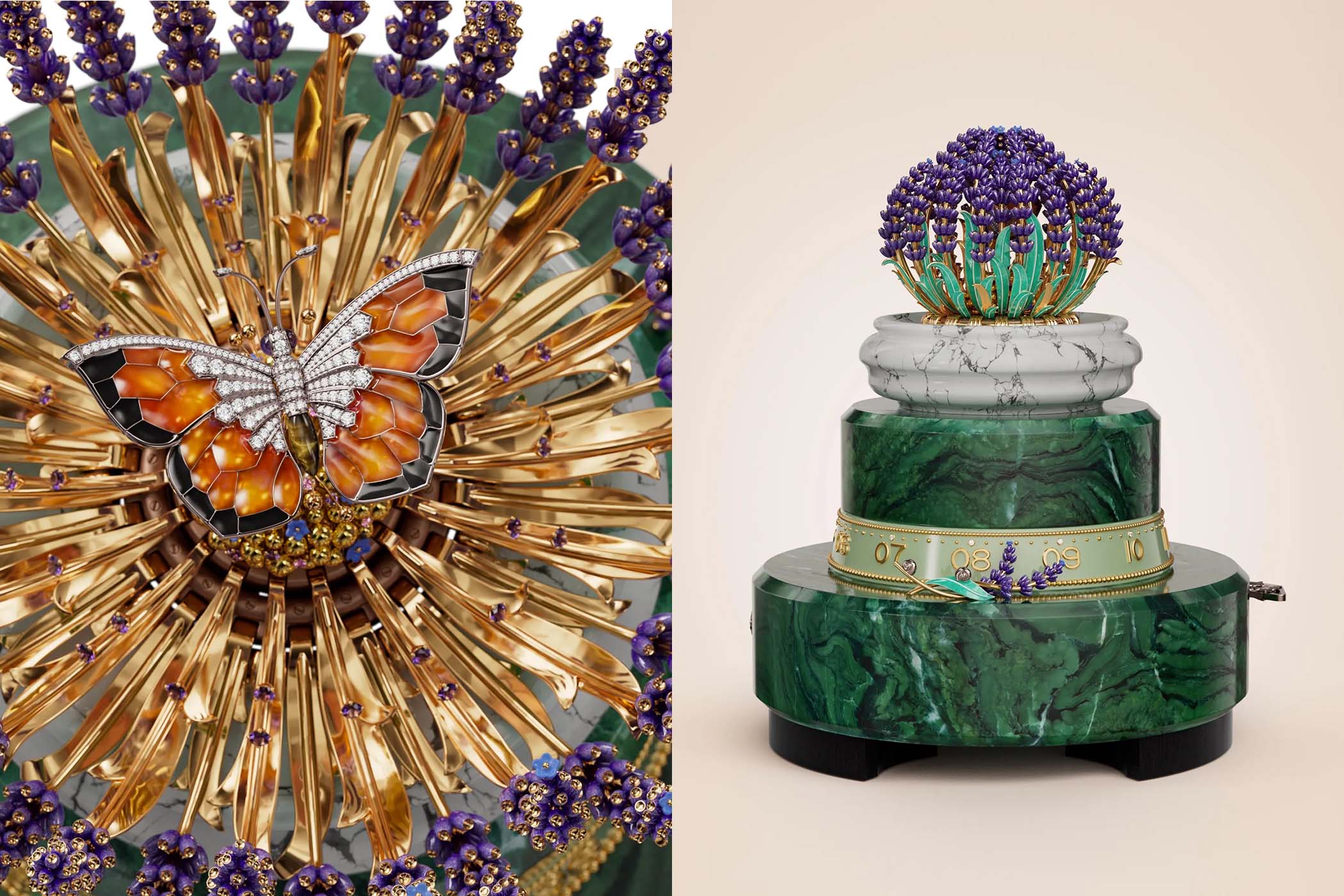
Founded in 1906 in the Place de Vendôme, Van Cleef & Arpels is the signature behind delightful high jewellery and timepieces inspired by fairies, flowers and butterflies. With its rich history and impressive lineup of artisans, Van Cleef’s Extraordinary Objects collection is home to some of the most spellbinding automata. The Brassée de Lavande (an armful of lavender) automaton is a unique masterpiece of high jewellery, métiers d’art and mechanical finesse with an on-demand animated display of lavender sprigs that slowly open to reveal a butterfly fluttering in time to the carillon.
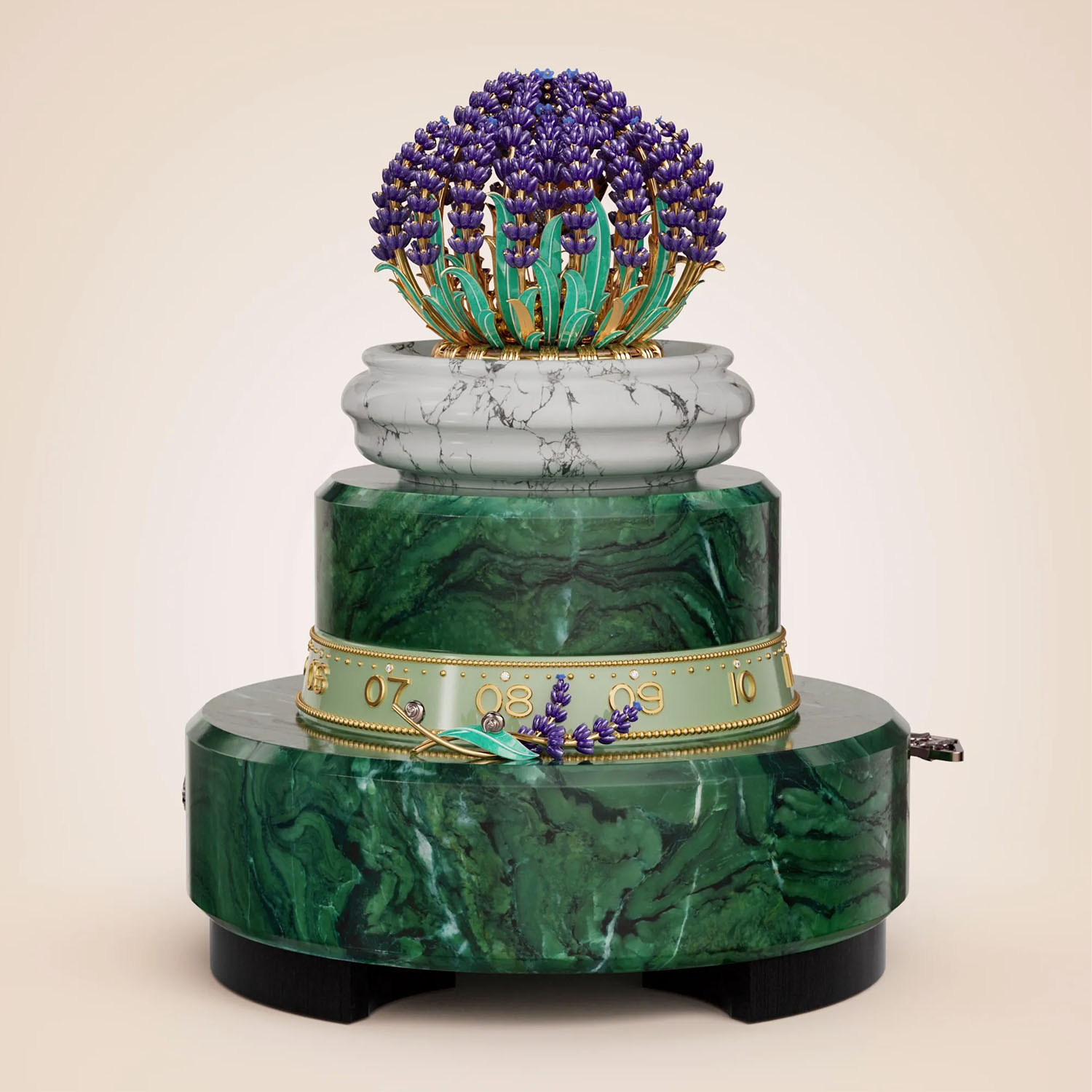
Stacked on two tiers, the base of the automaton is crafted from verdite, and time is displayed on a rotating band with yellow gold and diamond hour markers, indicated by two small white gold snails with two lavender springs. Beneath the green stone exterior lie the two separate mechanisms: the first mechanism animates the opening and closing motion of the 36 rose gold lavender sprigs and the butterfly’s flight; the second powers the clock’s rotating ring.
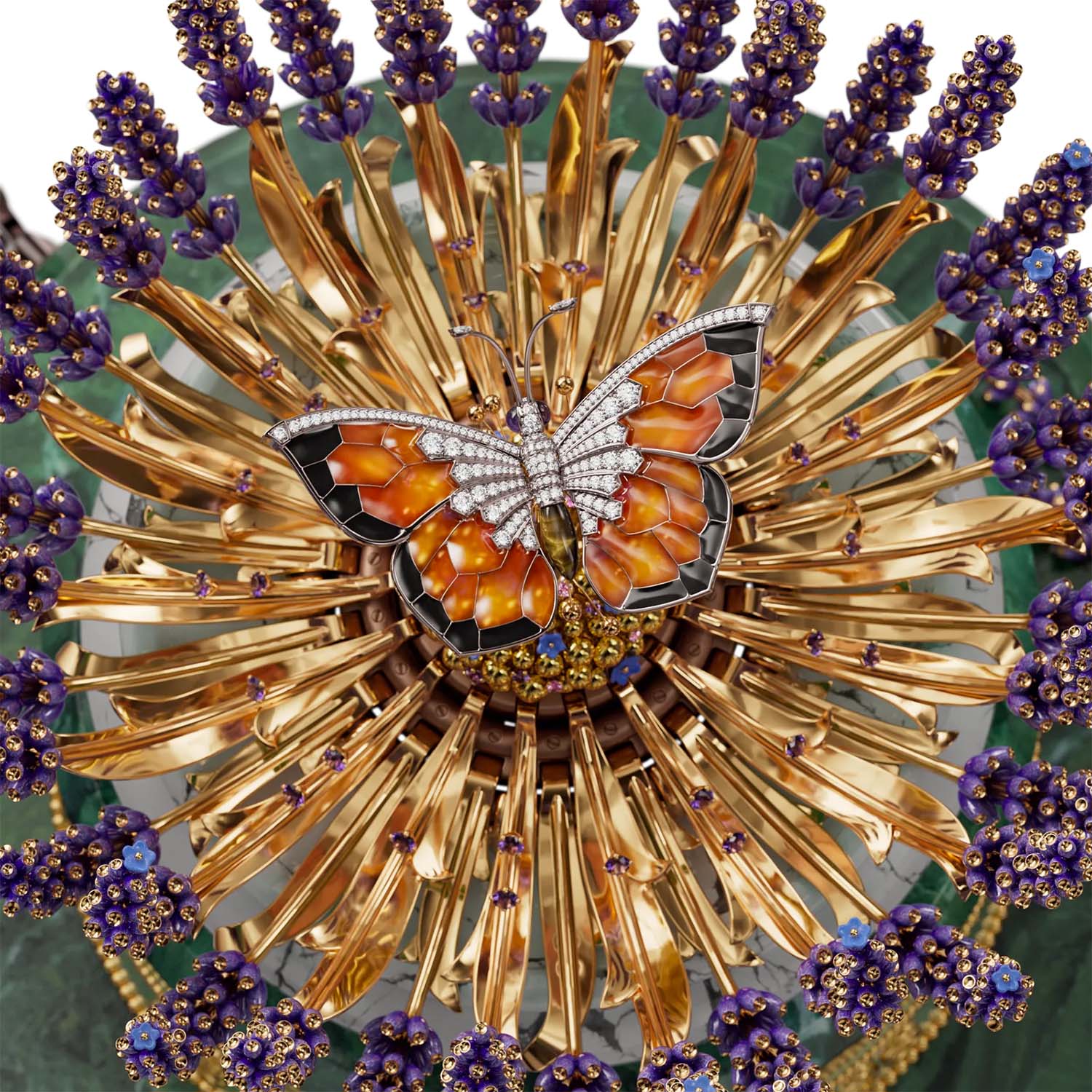
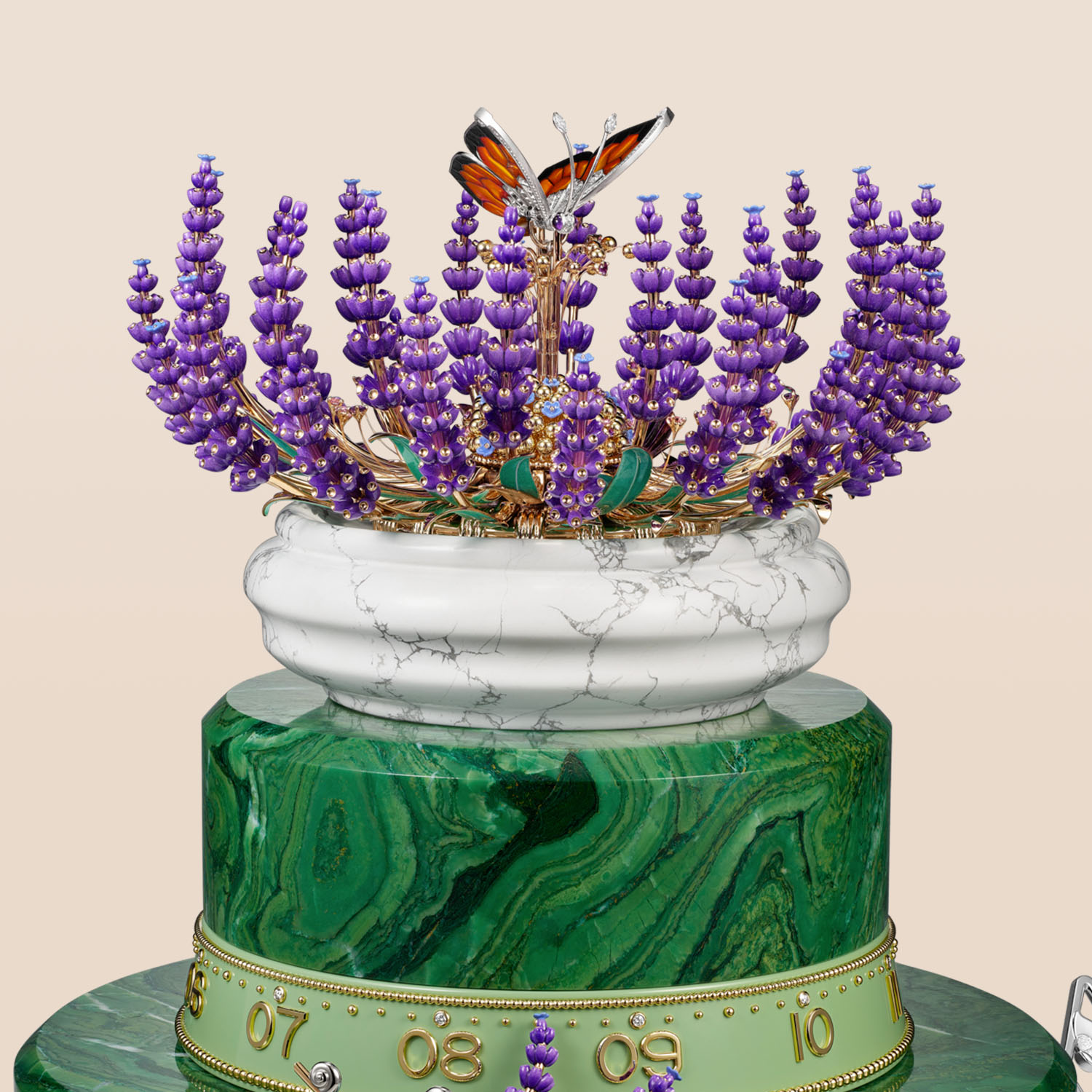
Using plique-à-jour enamel, the butterfly’s delicate wings are like stained-glass windows, allowing the light to pass through the translucent enamel applied to their cells. The white gold structure is embellished with black enamel contours and diamonds, as well as tiger’s eye and amethyst cabochons. Completing the enchanting spectacle, a carillon accompanies the flight of the butterfly.
Answers on behalf of The Maison
How does the design of such a project start? At Van Cleef & Arpels, every creation starts with a story. The Brassée de Lavande automaton pays tribute to nature in a magical scene: lavender corollas slowly unfold, revealing a butterfly, a key aesthetic of the Maison, twirling in an aerial dance before finding refuge within the bouquet’s heart. This collective work required several years of research and development to skillfully blend movement and music, and the expertise of different métiers, from the Studio to the R&D team to the craftsmen from France and Switzerland.
Is there a technical base to get started from, or is everything, design plus the entire mechanism, designed from scratch?
Over the years, Van Cleef & Arpels has acquired expertise in the creation of automaton mechanisms and each story is designed from scratch. Each design is unique; we rely on a basic mechanism that we adapt to our stories. For the Brassée de Lavande automaton, the challenge was to create the effect of wind moving the bouquet – the result of continuous in-house research and development.
How are the various moving parts developed and made?
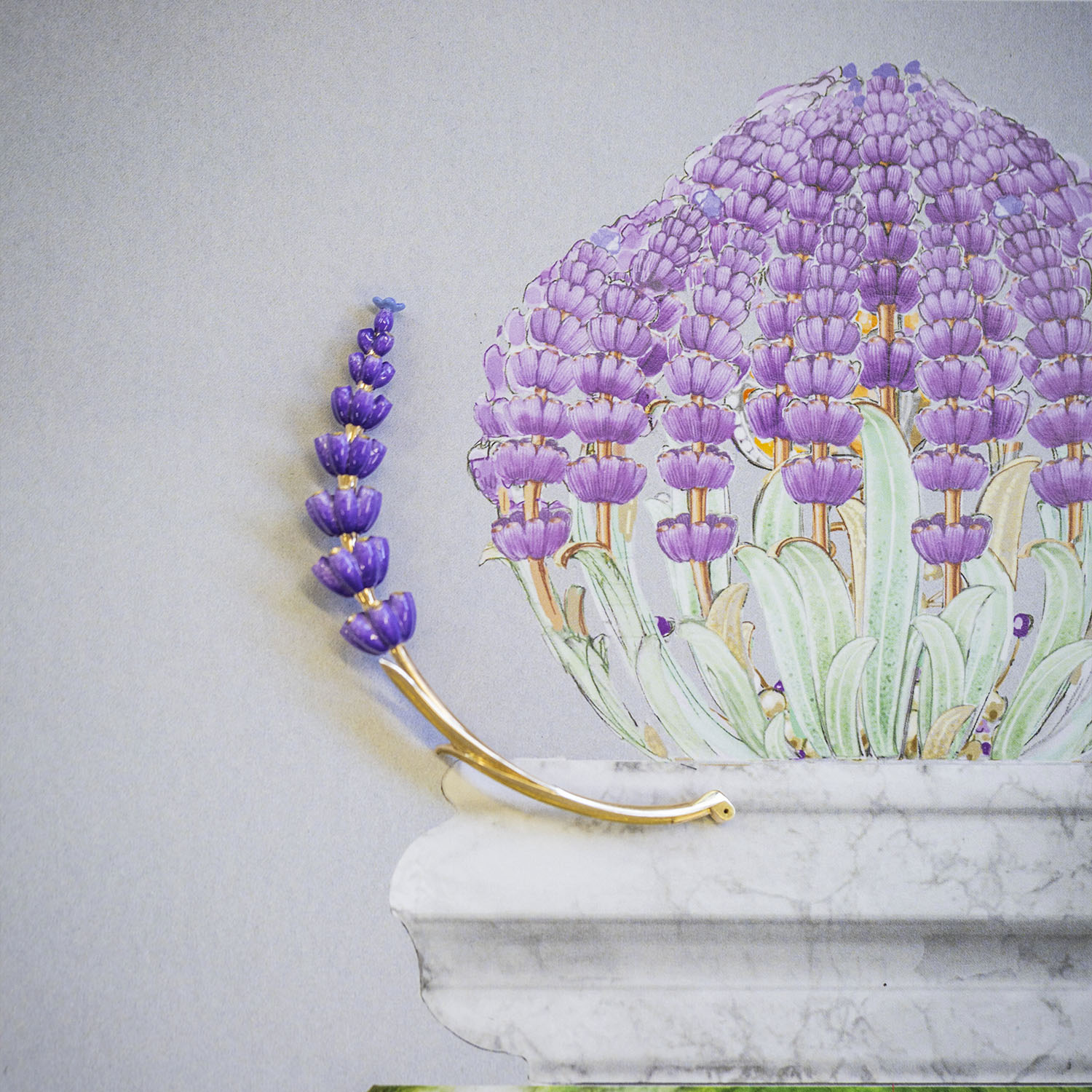
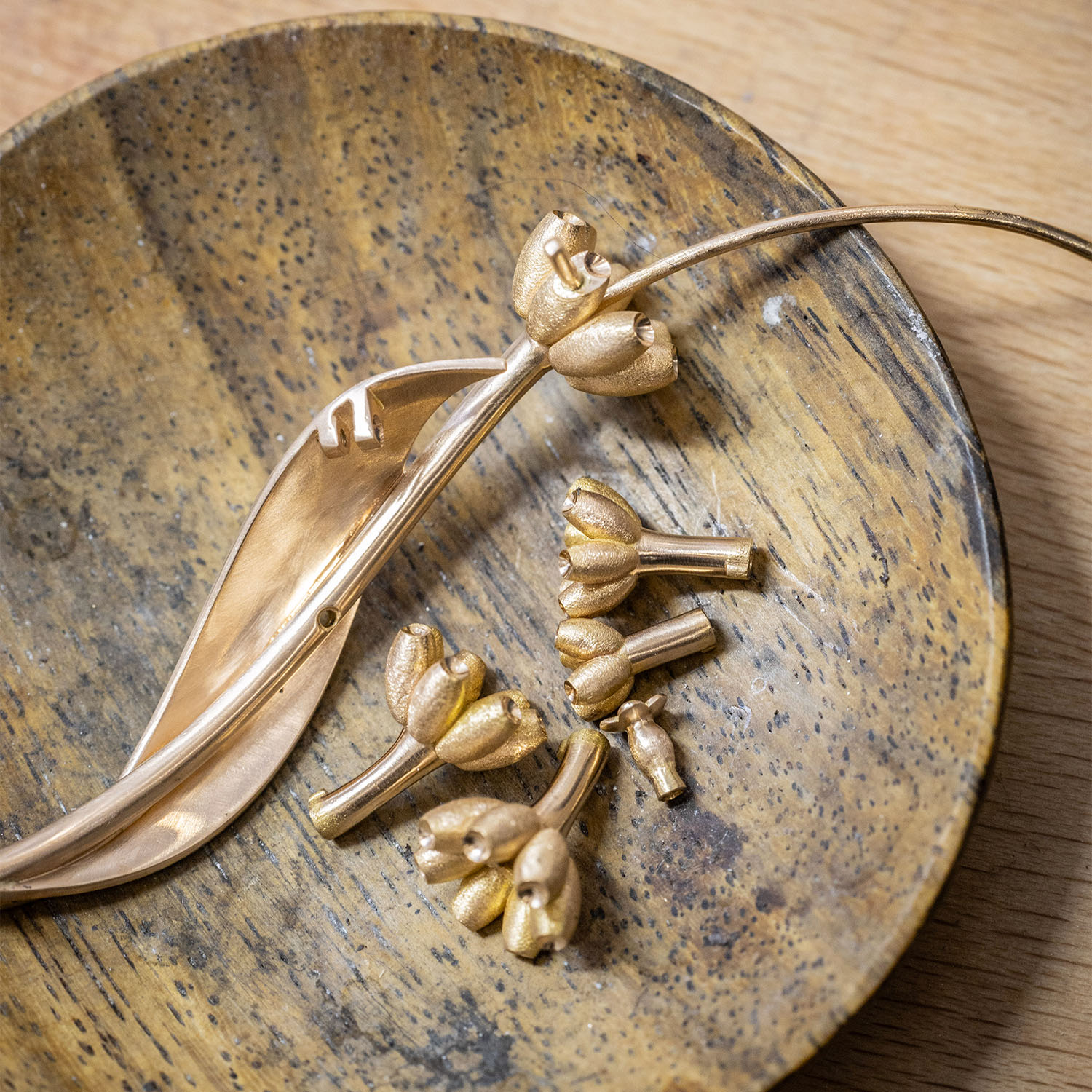
On this automaton, the lavender corollas and the butterfly are part of the animation, slowly unfolding and tracing a gentle sway as the butterfly twirls in an aerial dance. They are created in Van Cleef & Arpels’ High Jewellery ateliers and assembled in the Maison’s ateliers in Sainte Croix, Switzerland. Each corolla is meticulously crafted, reshaped, and polished from gold. They are lacquered by Catherine Nicolas, a talented lacquerer awarded the Meilleur Ouvrier de France (Best Craftsman of France) title. To achieve this effect, fifteen layers of lacquer were meticulously applied to the 36 lavender sprigs, and the gold was textured to ensure optimal adhesion of the lacquer.
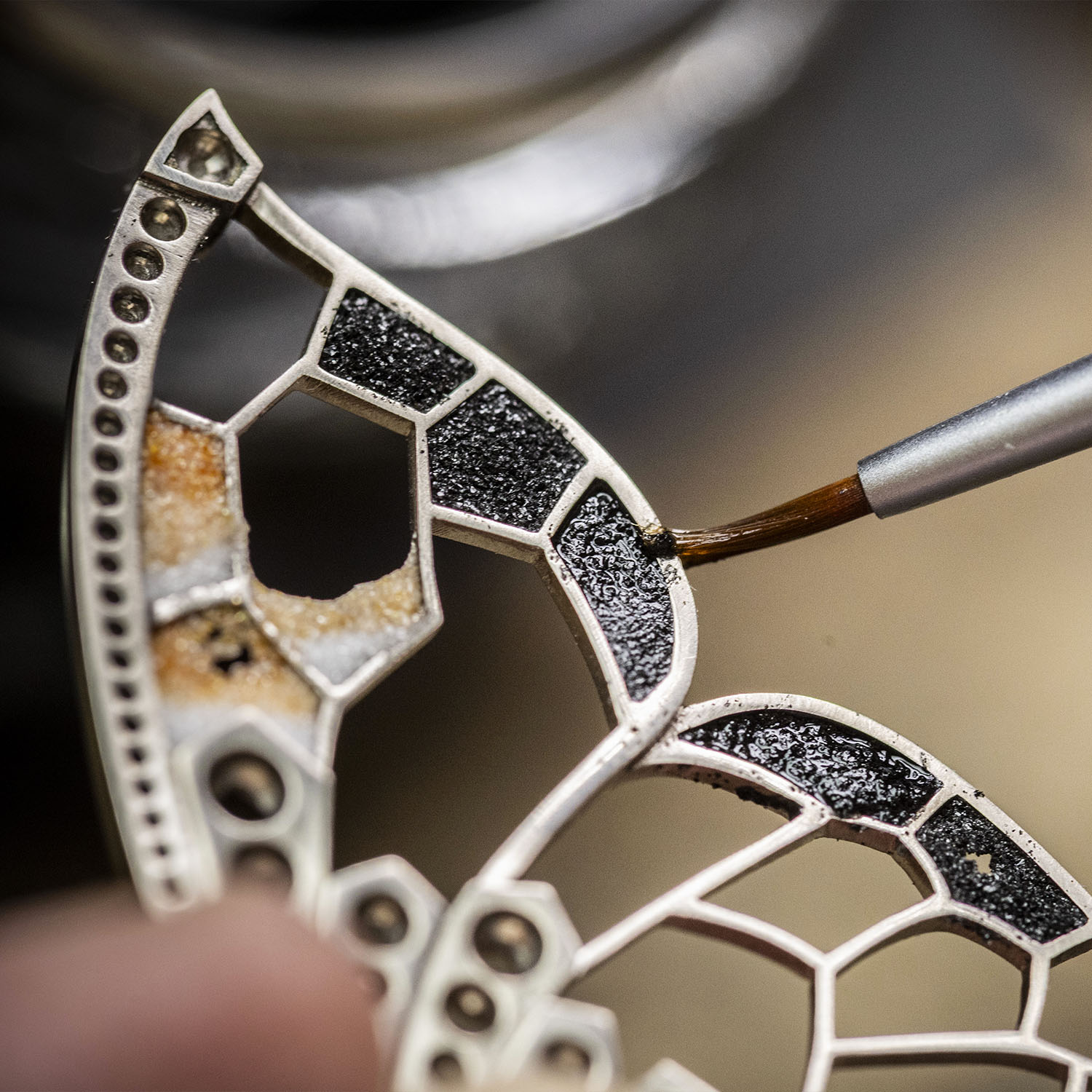
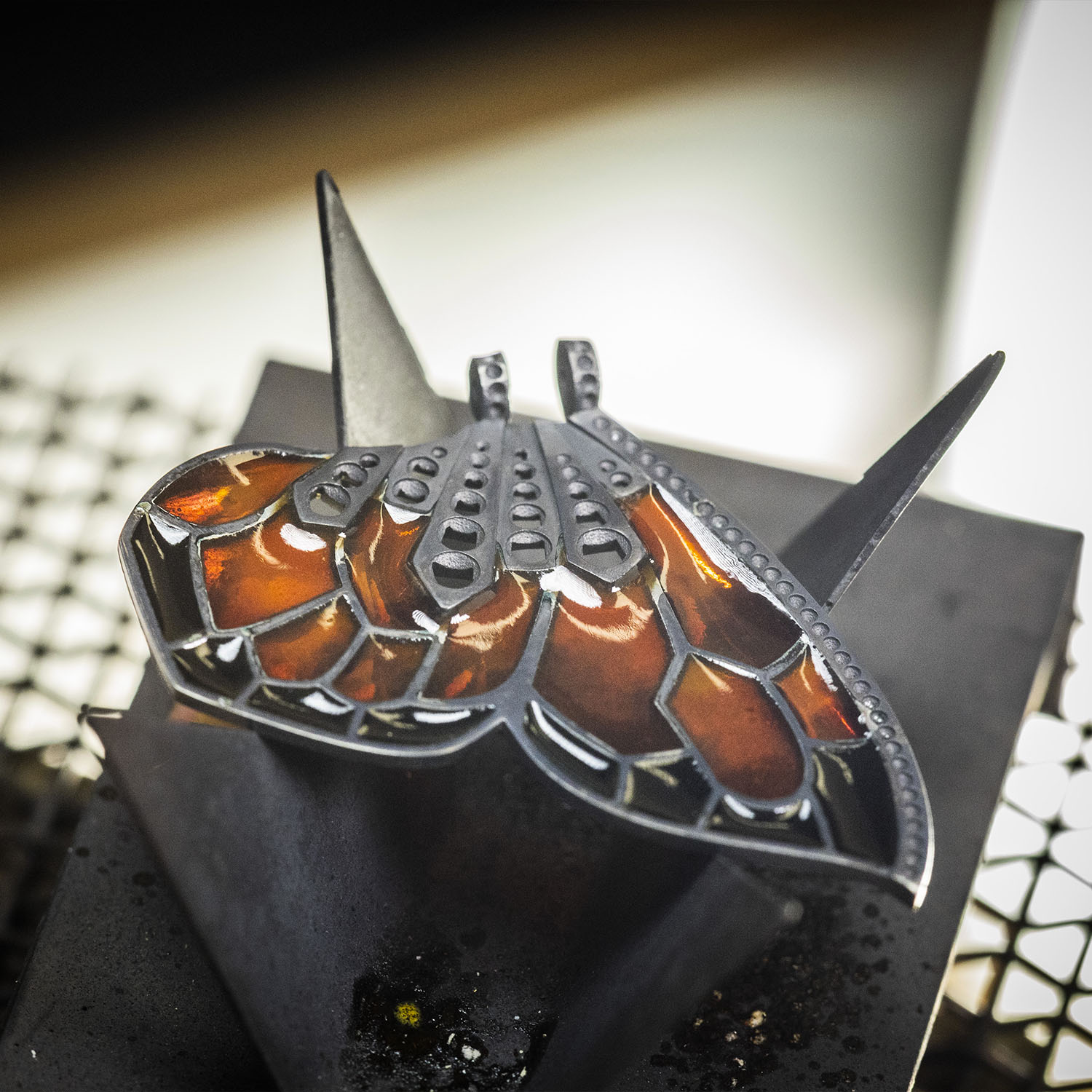
For the butterfly, its design features diamond-paved wings and upper body, diamond-tipped antennas, a tiger’s eye lower body, and amethyst eyes. Its wings feature plique-à-jour enamel, a technique that creates a captivating interplay of transparency and light with opacity and shadow.
Is everything built in-house?
It is. The Brassée de Lavande automaton is the result of a close collaboration between Art Mechanics and High Jewelry workshops. This creation is assembled by the automata experts at the Maison’s Sainte-Croix atelier in Switzerland.
How many craftsmen and women work in such an automaton?
More than 15 métiers are involved in such a piece: lapidary, polisher, enameller, cabinetmaker, watchmaker, automaton maker, music composer, bell maker… All creations and projects at Van Cleef & Arpels are collective. Everyone works and collaborates with a team spirit to create and bring pieces to life. Automatons are a perfect example of this, from inspiration, research, elaboration, development, and realisation.
How many hours does it take from A to Z?
The production of the Brassée de Lavande automaton took approximately 3466 hours: 2066 hours at the High Jewelry workshop, and approximately 1400 hours for the movement and assembly.
More information at vancleefarpels.com.