


 Not all images were able to load for printing. Please close the print window and try again.
 The COSC Releases Excellence Chronometer, its New, Stricter Standard in Chronometry
An extension of the existing standard, with stricter tolerances and mild testing of magnetic resistance...
What is a chronometer…? In short, it is a watch that has been officially tested for its precision. And to guarantee the precision of watches, several tools exist, such as the ISO 3159 standard (which celebrates its 50th anniversary this year) and official organisations, such as the Observatoire de Besançon in France, the Glashütte Observatory in Germany, the Japan Chronometer Inspection Institute or the recently created Geneva Observatory. For over 50 years, the leading authority in this context has been the COSC or Contrôle Officiel Suisse des Chronomètres, created in 1973. Now, as teased in an interview we ran with its CEO, Andreas Wyss, the COSC raises the bar and establishes a new standard in Swiss chronometry, with the COSC Excellence Chronometer. More stringent, with new testing procedures (magnetic fields, power reserve, real-life wear…), it is said to take into account how watches have evolved over the past half-century. Better? Sure. Perfect? Let’s take a closer look.
The COSC, its competition, and how it became slightly obsolete
For over 50 years, the COSC or Contrôle Officiel Suisse des Chronomètres has been the main organ in order to certify watches for their precision and to grant them the title of chronometer (as a reminder, the term chronometer can’t be used loosely and refers to an officially certified procedure.) In recent years, however, the certification environment has drastically changed. First, many new organisations have been created, with much more stringent testing procedures than those of the COSC, which relies on the ISO 3159 standard. In addition, the life of mechanical watches has evolved over the past half century – greater exposure to magnetic fields, longer power reserves, new materials, and more intensive daily wear.
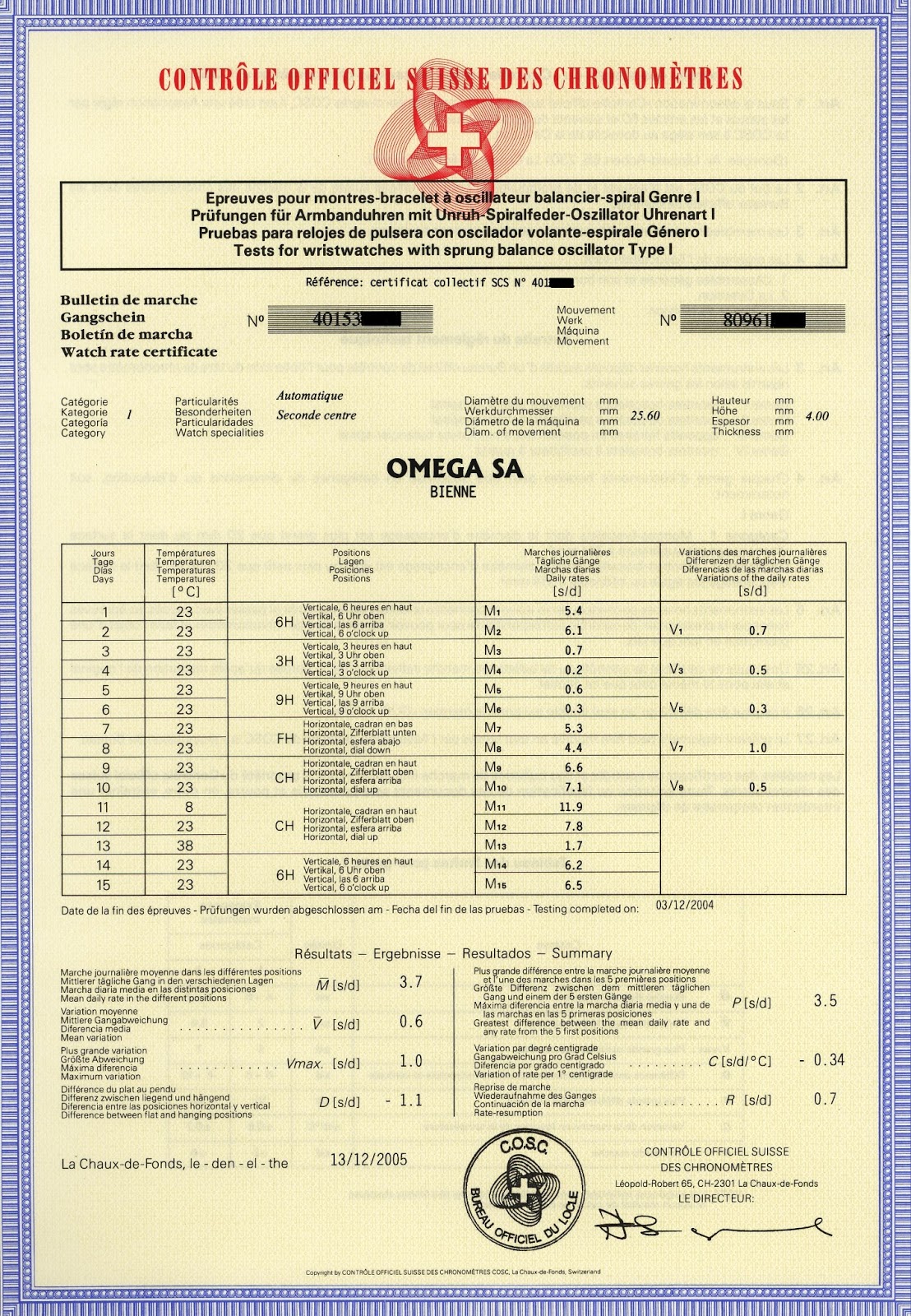
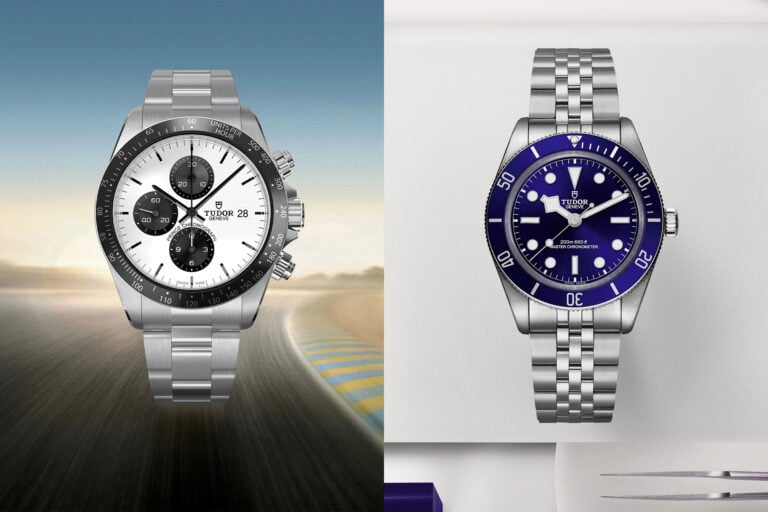
To bring things into perspective, the COSC is far from being the only organisation to have the ability to officially certify watches and to grant them the title of chronometer. While it remains the leading organisation, in particular for Swiss-made watches, major competitors have been created in recent years. Besides traditional organs such as the Observatoire de Besançon, the Glashütte Observatory, the Japan Chronometer Inspection Institute or the Geneva Observatory, the COSC has been under pressure from impressive alternatives, first and foremost, the Master Chronometer certification created in 2015 by Omega, and now also used by Tudor.



A chronometer is a watch that has been tested according to the ISO 3159 standard for “Timekeeping instruments – Wrist-chronometers with spring balance oscillator”, and a certified chronometer goes one step further, being certified by a third party as a chronometer, for example by the COSC or another official authority. The COSC runs a series of tests over the course of 15 days, operating independently, with watch manufacturers sending movements to one of its facilities. “The checks performed by the COSC consist of static tests performed in the laboratory. Each individual movement/watch undergoes a battery of tests specific to each of the four types, for several consecutive days, in five positions and at three different temperatures.” To summarise, the COSC measures seven criteria, including the well-known average daily rate of -4/+6 seconds per day. This alone is not sufficient to make a watch a chronometer, but it gives a solid indication of what to expect.
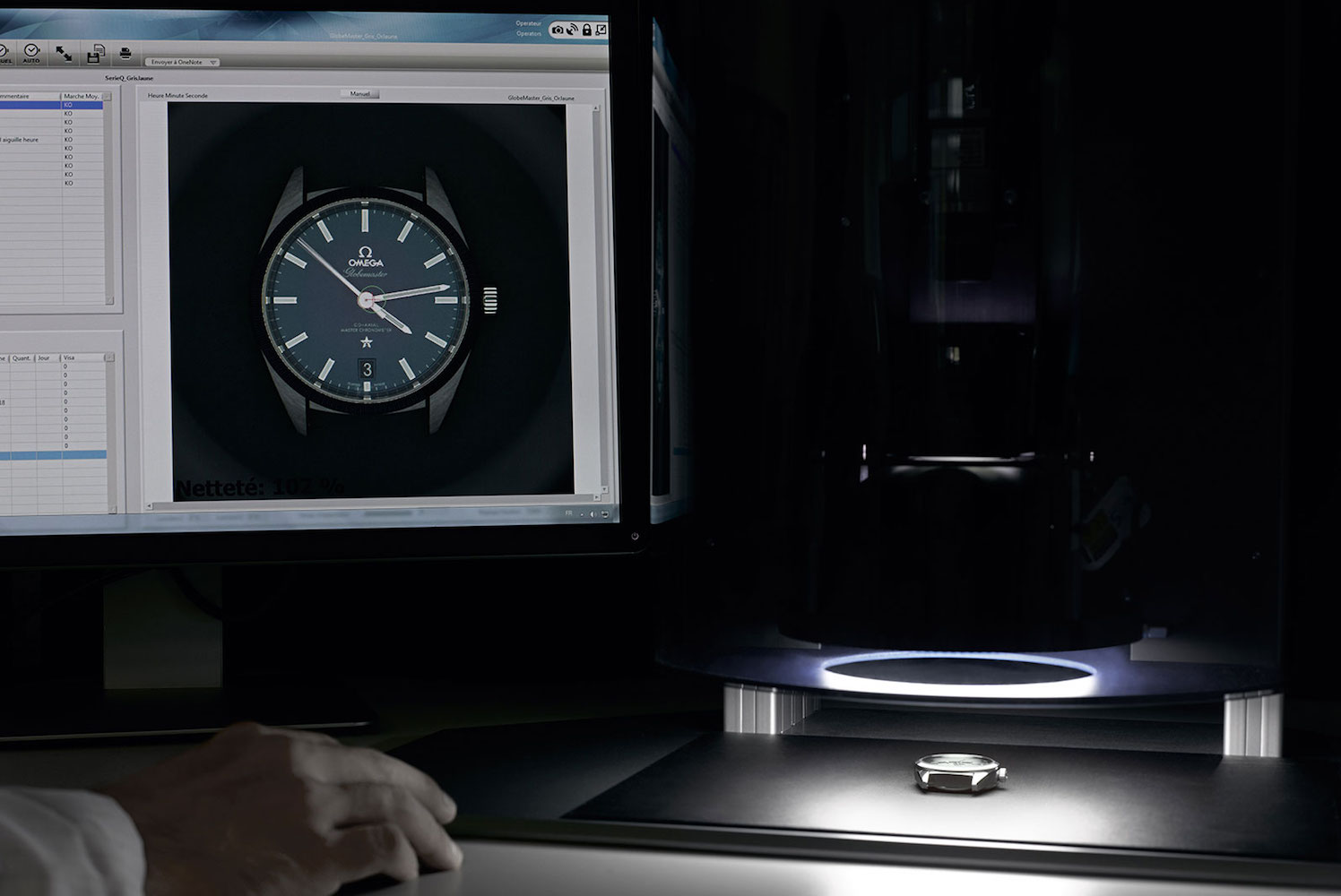
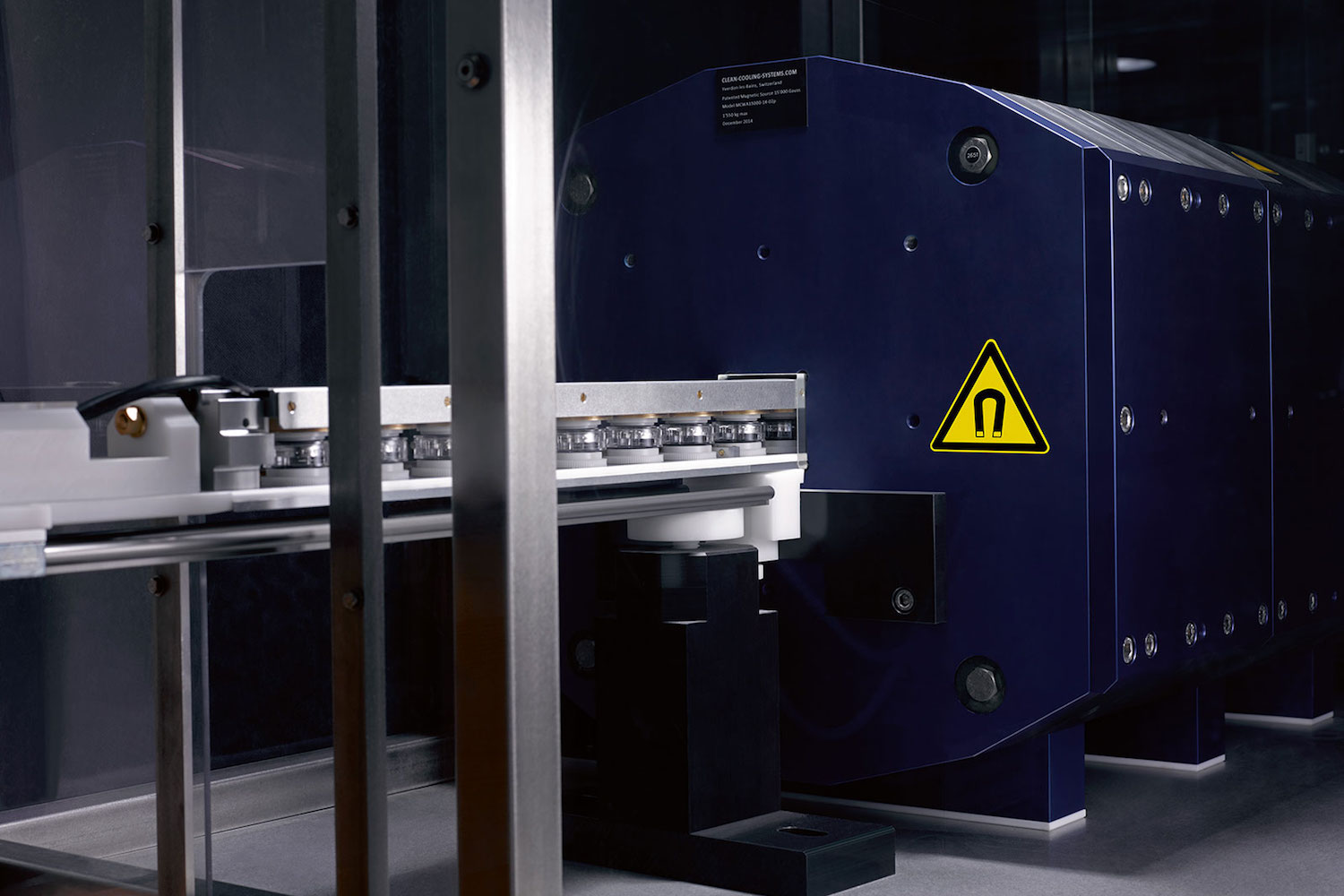
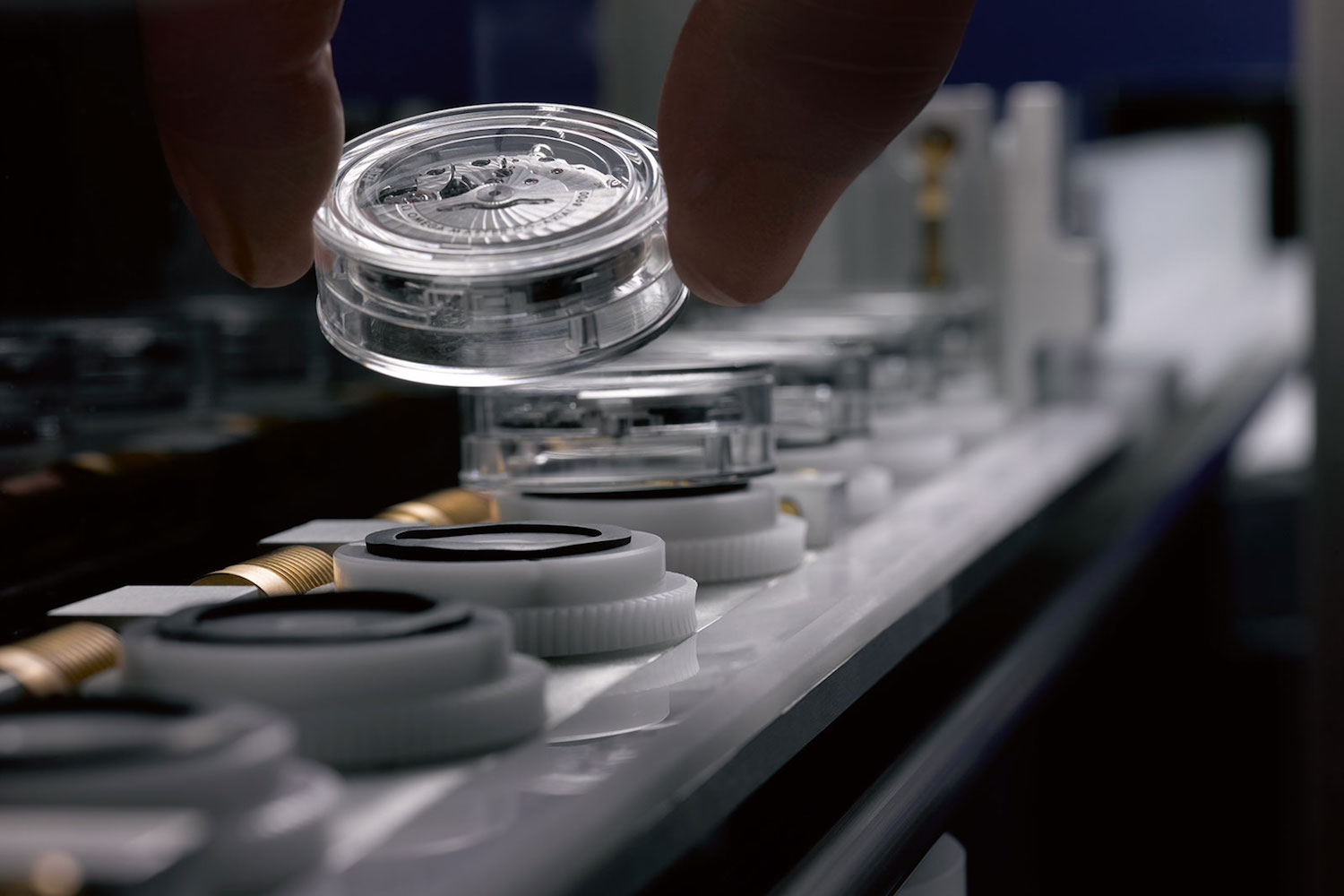
In recent years, other initiatives such as the Master Chronometer, jointly developed by Omega and METAS, have raised the bar of certification to a whole new level. Notably, in addition to stricter deviation standards (0/+5 seconds per day, thus twice as precise as COSC), Master Chronometer includes testing movements and full watches to extremely high magnetic fields (up to 15,000 gauss), as well as testing water-resistance, durability and power reserve.
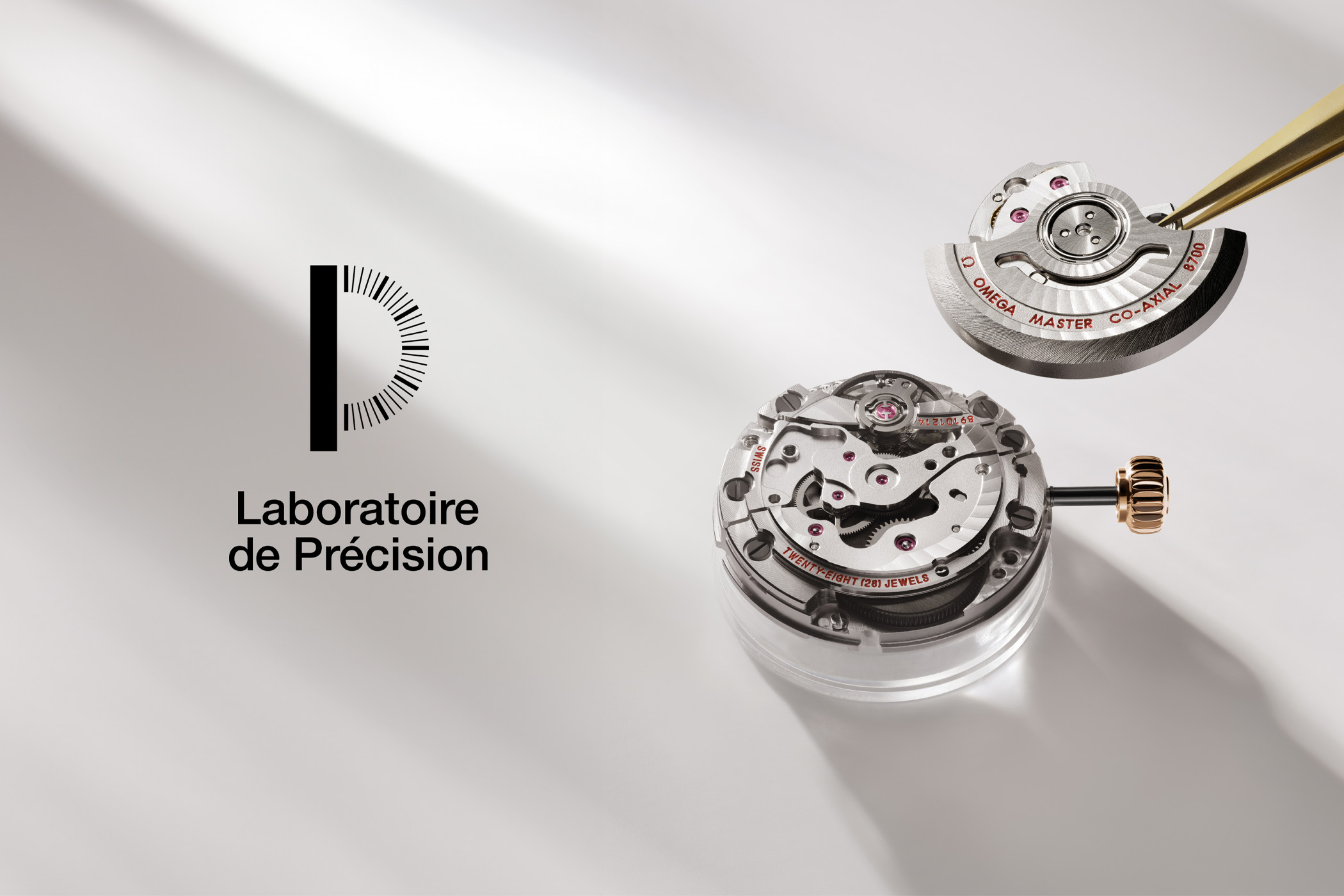
Other initiatives exist, such as Qualité Fleurier (which adds several quality criteria to the initial COSC certification) or the Poinçon de Genève, today part of TIMELAB (again, COSC is a prerequisite and then quality, origin and finishing criteria are added). But that’s just one side of the coin, as many of the large Swiss brands have developed their own internal certifications. Of course, the official chronometer certification by an independent organ is still a prerequisite, but then brands add a series of far more stringent criteria to the equation. For instance, Rolex and its Superlative Chronometer certification only accept daily deviations of -2/+2 seconds per day. Omega has recently presented Laboratoire de Précision, a new chronometer certification to compete with COSC, open to all brands, officially authorised by SAS (the Swiss Accreditation Service). Finally, Patek and its internal Seal guarantee a rather staggering precision, with a tolerance of no more than -1/+2 seconds per day.
All of that to say that the older COSC certification, according to the ISO 3159 standard, felt a bit outdated compared to what the competition was doing. And probably not in line with current expectations.
The COSC Excellence Chronometer
The mission of the Contrôle Officiel Suisse des Chronomètres (COSC), of course, remains the same; being an independent organ to test the precision of Swiss-made watches, “through a neutral, independent, and rigorous method.” But since the competitive environment has evolved rapidly, and since the expectations of brands and clients for watches have changed over the years, the basic “Certified Chronometer” standard is not enough anymore. Yet, this first level of certification will continue to exist as a hallmark of performance, but now brands will have the opportunity to climb one step higher if they choose, with the new Excellence Chronometer certification.
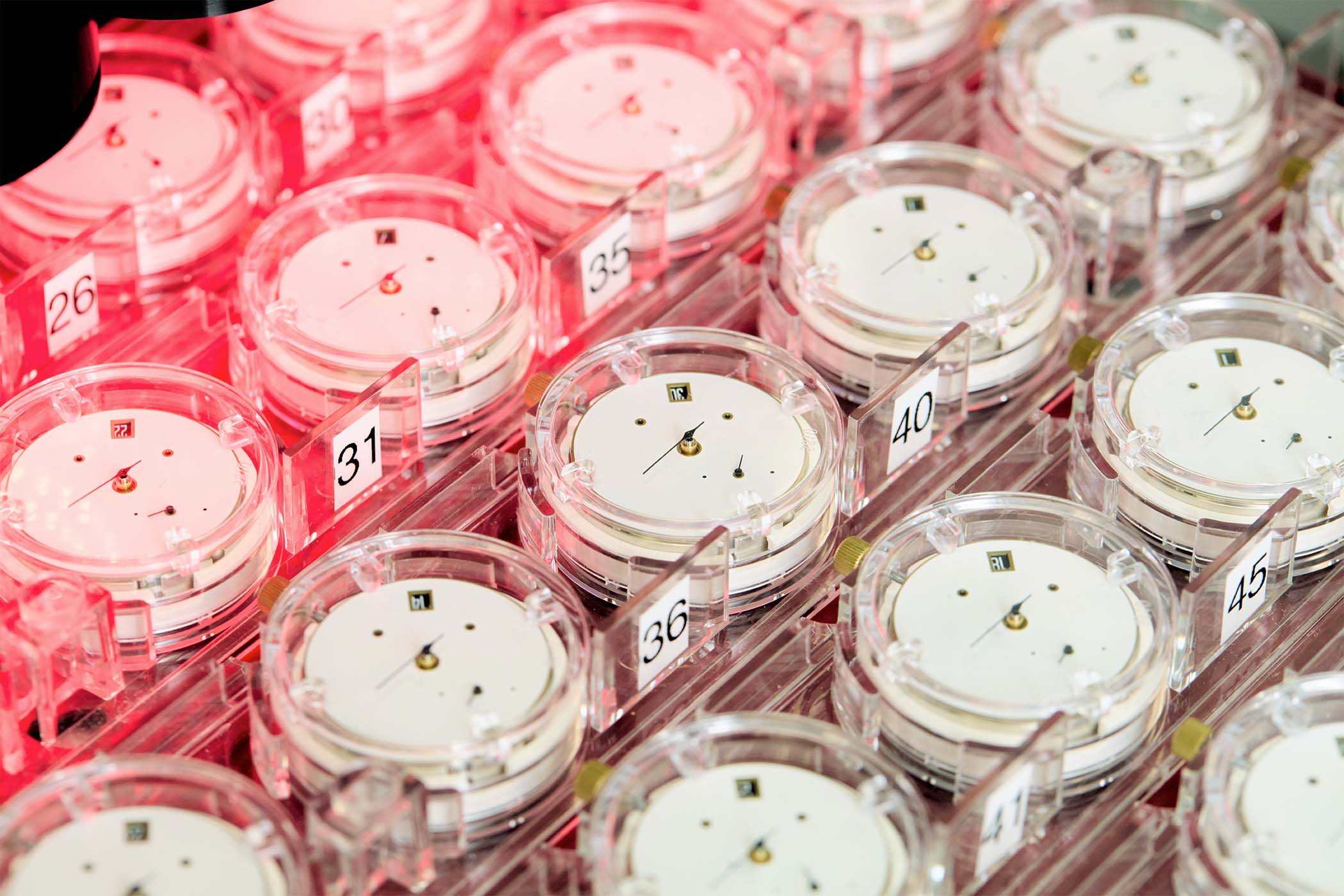
So what is this Excellence Chronometer certification all about? In short, more stringent precision standards and the addition of criteria to make the certification relevant in today’s context. In the COSC’s own words, “it will feature a daily rate tolerance of 6 seconds instead of 10, magnetic resistance up to 200 Gauss, and verification of the stated power reserve. In addition, watches will be tested under conditions that closely simulate real-life wear.”
The new certification builds upon what has defined the COSC’s Certified Chronometer certification, according to the seven criteria of the ISO 3159 standard. Once certified as chronometers, the movements return to the manufacture for casing. Complete watches then undergo five additional days of evaluation. Using a robot capable of simulating average wrist wear, the watch’s precision is tested under semi-dynamic conditions for 24 hours. This is followed by a measurement where the average daily rate must fall between -2 and +4 seconds per day (instead of -4 and +6 seconds per day for standard COSC certification). On this, it certainly is better than what the COCS used to set as a standard, but it remains far from what brands such as Rolex or Patek Philippe are offering, and it gets closer to what the Master Chronometer certification imposes. Why is the COSC not setting even more stringent standards…? Besides the complexity of having mechanical watches regulated to a daily rate tolerance below 3 to 4 seconds, such a criterion could potentially eliminate many entrants, such as watches equipped with outsourced movements from Sellita or other third-party movement makers. It isn’t impossible, but requires large investments in precision manufacturing.


Next, the watch is exposed to a 200 Gauss magnetic field while maintaining its performance. Here, we have to compare this level of magnetic resistance to several other industry standards in order to assess its relevance. Let’s start with the basic rule, the ISO 764 or its equivalent DIN 8309. Here, a watch must resist exposure to a direct current magnetic field of 4800 A/m, which corresponds to about 60 gauss. A new version of the ISO 764 standard was published in 2020, for “enhanced magnetic resistant watch” and a resistance to direct current magnetic field equal or higher than 16 000 A/m, which corresponds to about 200 gauss – which is exactly what the COSC is using in its new Excellence Chronometer certification.
But then, the environment has changed drastically over the years. Let’s start with Rolex, which released the Milgauss model in the mid-1950s. This watch, designed for scientists working closely with magnetic fields, could resist fields up to 1,000 gauss (hence its name), or about 80,000 A/m. In 1989, IWC released the Ingenieur 3508, which was able to withstand magnetic fields of up to 500,000 A/m, or about 6,300 gauss. And then there’s the Master Chronometer certification, which tests watches up to 15,000 gauss, or about 1,120,000 A/m.

We have to take into account that we are, in our day and age, surrounded by magnets. Our phones, the fridge door, speakers, headphones, electric cars… These are everywhere, and our watches are subjected to them constantly. There is a reason why so many brands now add magnetic-resistant hairsprings, made from silicon or Nivachron, in their movements. On that, the new Excellence Chronometer certification by COSC falls short. Testing watches to a 200 Gauss magnetic field might be three times more stringent than before; it is nevertheless low compared to what the rest of the industry can do.
Thoughts
On one side, we can only applaud the COSC for delivering a new and stricter standard with its Excellence Chronometer certification. Precision is key to mechanical watchmaking. It is its true essence. What is a watch if it can’t tell the time accurately…? The COSC delivering a new chronometer standard of -2/+4 seconds/day (among other things) is certainly great news. The fact that the COSC also now tests complete watches and not only movements makes the whole testing process far more relevant, as the classic chronometer certification was testing movements only (and the casing procedure after can affect the performance of the movement within the watch). Finally, the simulation of wrist wear is a great addition.

But it’s not enough. There’s more to a modern mechanical watch, including greater magnetic resistance, quality, origin of the parts, and bienfacture (craftsmanship). And on all these criteria, COSC’s Excellence Chronometer falls short compared to the rest of the industry.
COSC’s Excellence Chronometer certification has already started to be integrated within the organisation’s environment, and in March 2026, the first pilot tests will be conducted in COSC laboratories to validate procedures and support brands through this adjustment phase. Starting in October 2026, deployment begins as brands will fully enter the new process, and the first watches certified under these redefined standards will start to emerge.
For more information, please visit www.cosc.swiss.

8 responses
Its not enough for me to convince me it is tangibly better than a master chronometer.
I appreciate mechanical watches, I really do. This is why I own 13 of them too. But let me be clear: I don’t own them for their accuracy. Once you accept that anchor escapement regulated timekeepers are woefully bad at keeping time, you can start enjoying the watch for what it is:
A cracking piece of design that makes you feel good and is fascinating to look at.
The most autonomously accurate watches in my collection are +/-10 second per year high accuracy quartz watches. Therefore, calling a -730 to +1460 seconds per year deviation an “excellence chronometer” feels a bit silly. If you look at the current state of horological technology, it’s just not relevant.
“On this, it certainly is better than what the COCS used to set as a standard, but it remains far from what brands such as Rolex or Patek Philippe are offering” – Actually this statement is bunkum because Rolex do not publish their full testing regime so there is no way to determine if the new Excellence Chronometer standard is equal to, better than or worse than Rolex’s Superlative Chronometer standard. Secondly, as some commentators seem to suggest this new COSC standard is not equal to or even close to the METAS Master Chronometer standard. That is something that can be verified by looking at the published criteria on the METAS website. Overall this is a welcome step up from the basic COSC chronometer standard we have been used to but does fall short of some of the more recent standards that have been introduced. As far as these are concerned those that are unverifiable in-house standards are frankly not worth the paper they are written on as in much the same way as I would not allow my children to grade their own school work I do not have any faith in what could be nonsense standards made up to favour the company’s own watches. If you want to know if the small mechanical engineering you are buying for thousand of whatever currency you spend is worth at least some of the price then buy watches that have been independently tested and certified.
It’s hard to take the word of those associated with the brands and a broken swiss watch industry with any degree of seriousness, including COSC. They lie and are corrupted. I don’t take lightly how cynical this may sound, but it’s based on experience with different brands, in different price ranges, over time, and with the watch industry itself. And this goes for COSC as well. One need look no further than the absurd labeling of a watch brand putting “swiss made” on its dials. These brands and those associated with them and the watch industry just can’t be trusted. It has helped destroy interest in what was once an enthusiast hobby.
Definitely a step in the right direction. Well done COSC! It cannot be expected to come up with even more stringent requirements for accuracy at this point or else it would risk losing half of its clientele.
All of this really feels a bit silly as Chris says. If one wants to read the time precisely, just look at your mobile phone. Watches are mechanical objects made of many parts which must run as smoothly and lightly as possible in order to reduce friction as much as possible. As there are 86’400 seconds in a day, a 15 second tolerance for example means a deviation of less than 0.02%! You can’t even find this degree of tolerance in the aircraft industry.
Even quartz watches pale into insignificance compared to your phone.
So most young people don’t bother with watches, considering the price I don’t blame them.
So just enjoy the hobby,before Ai speeds up your mechanical watch to warp speed.
Well if Rolex and other watch brands do not want to prove their accuracy. So what! Just label them as “maybe chronometric” and leave it at that. If a watch mechanism is worth it’s salt, it has to prove it or will always be known as a “maybe”.