
 Not all images were able to load for printing. Please close the print window and try again.
 Talking To Daizoh Makihara, AHCI Candidate And LV Watch Prize Finalist
The indie watchmaker is one of the biggest talents coming from the land of the rising sun!
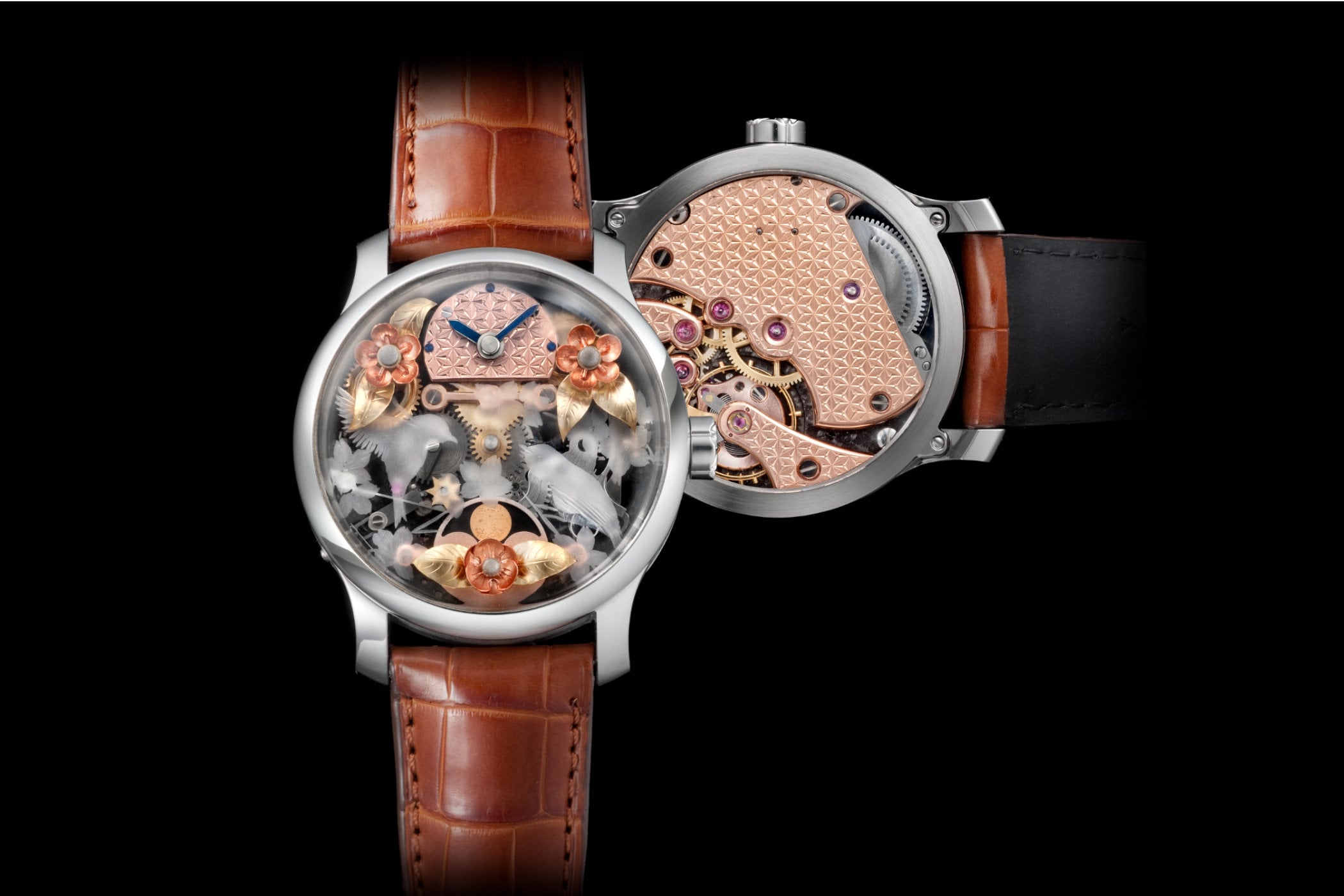
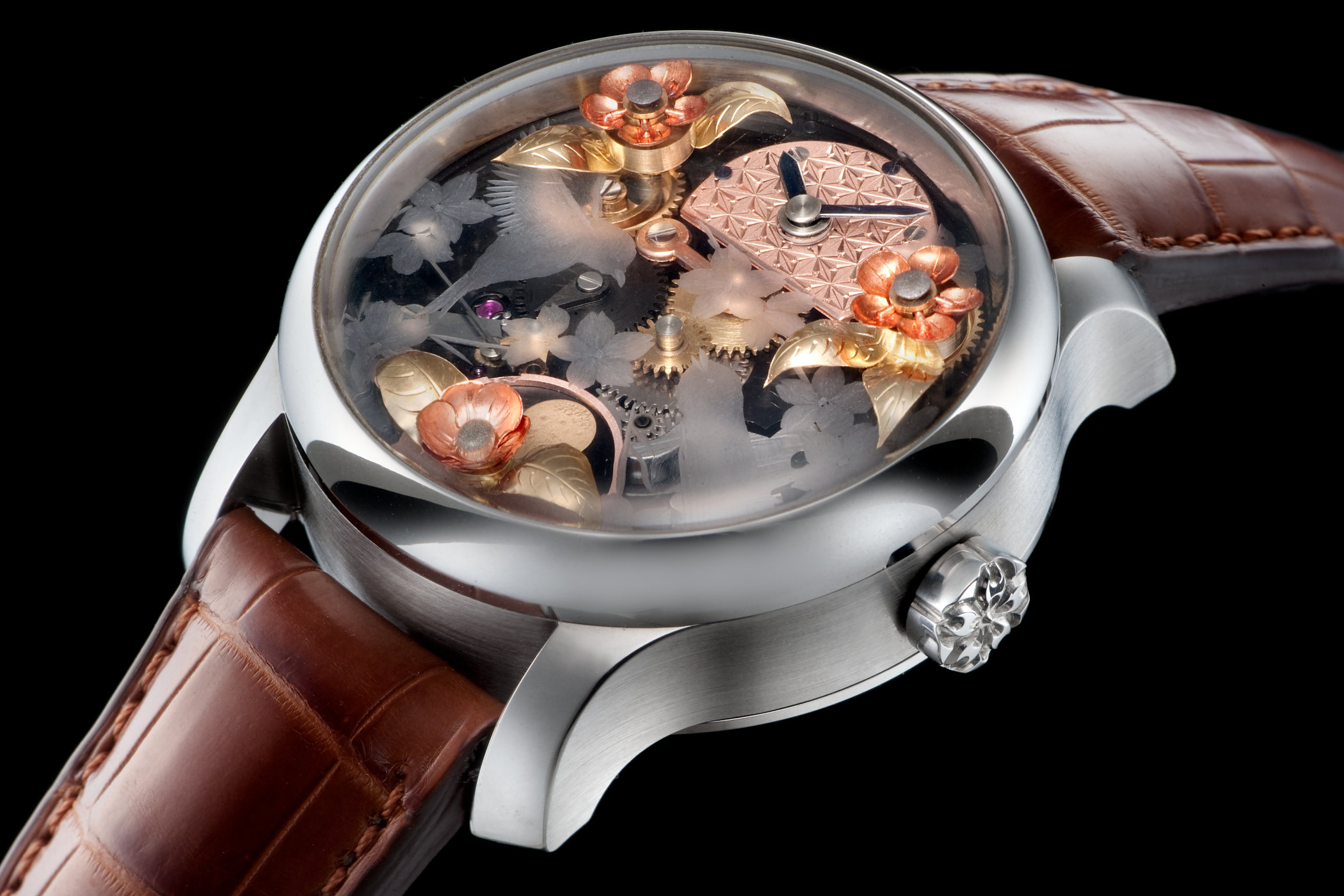
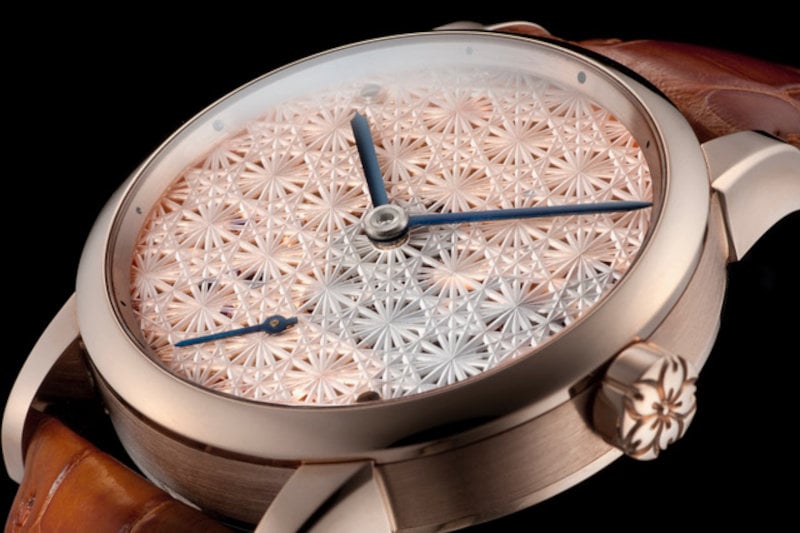
Japanese culture is full of superbly interesting and ancient crafts, which every now and then find their way into a watch. Some of the best-known examples are Urushi lacquering, Washi paper, and Arita porcelain, but there are dozens of other crafts deeply embedded in the country’s history and tradition. Japanese independent watchmaker and AHCI-member Daizoh Makihara, however, has chosen a very different and rare craft for his watches. Making his debut in 2018 with the Kikustunagimon Sakura, or Chrysanthemum Sakura watch, Daizoh Makihara has embraced the art of Edo-kiriko. This technique involves hand-cutting very intricate patterns into crystal glass. Selected as one of the finalists of the Louis Vuitton Watch Prize For Independent Creatives, it was about time we learned more about his work and the exceptional artistry of Edo-kiriko.
Robin, MONOCHROME Watches – Daizoh, what made you pursue a career in independent watchmaking?
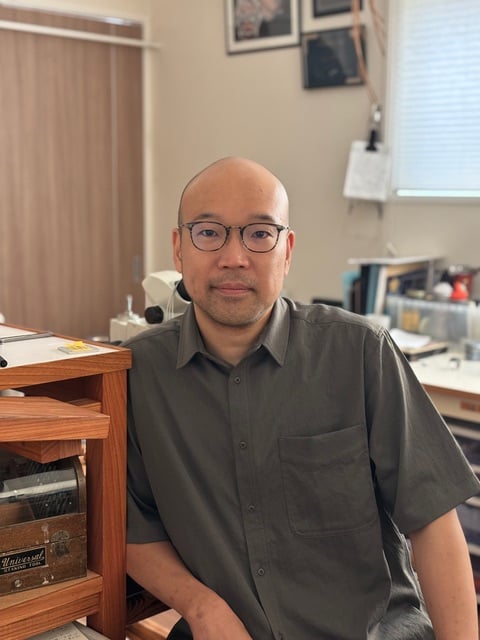
After graduating from high school, I considered becoming a chef (Italian chef) or a watchmaker. However, I didn’t know that watchmaking schools existed at the time, so I worked as a chef for eight years. However, I couldn’t give up on my love for watches, so I changed jobs at age 27. At age 29, while still a student, I met Philippe Dufour of AHCI and found my passion for watchmaking. After finishing watchmaking school, I started working on my first watch. In 2018, I released “Kikustunagimon Sakura” and joined the AHCI as an associate member that same year. In 2022, I released the “Beauties Of Nature,” watch and was also recognised as a full AHCI member.
That’s quite a story! What caused you to go down this path?
At the time, the internet wasn’t widespread, so I couldn’t find a watchmaking school (Hiko-Mizuno). However, I found out that my best friend, whom I met at the time, was taking the Hiko-Mizuno jewellery course, and that’s how I learned about the watchmaking course. I was around 26 or 27 years old at the time. I couldn’t give up on the world of watches, so at the age of 27, I jumped into the world of watches as a second life.
After studying at the Hiko Mizuno College, what did you do?
I studied at Hiko-Mizuno for three years, then took an additional year to study watchmaking. Hiko-Mizuno places a strong emphasis on training watch repair specialists, so I decided to continue for a fourth year. In my fourth year, I was asked to create a watch of my own design, and although it wasn’t perfect, I created a tourbillon watch as a school watch.
Having met Philippe Dufour while I was a student, I had a desire to make watches, so after graduating, I worked at a local watch shop to gather the equipment and tools necessary for watchmaking. My work varied, including watch overhauls and battery replacements.
Where does your fascination with watches come from?
I have been interested in delicate work since I was a child. I remember taking my alarm clock apart and not being able to put it back together. I also took apart toys with gimmicks to see what was inside. I think this is still relevant to my current watchmaking.
Who or what made you pursue watchmaking as a career?
As mentioned earlier, it all started with my meeting with Philippe Dufour. While I was studying at Hiko, I had the opportunity to meet him during an interview for Japanese television. I learned everything from him: about watchmaking, the mindset of a watchmaker, and how to approach watchmaking. Although it was a short time, it was the moment that decided my path.
Your first watch was the Kikutsunagimon Sakura, or Chrysanthemum Sakura. How did that come about?
In many places in Japan, beautiful scenery can be seen during cherry blossom season. I wanted to express those cherry blossoms on a watch. Also, I am self-taught in metal engraving, so the cherry blossom pattern is one of my specialities, and since cherry blossoms and chrysanthemums are Japan’s national flowers, I wanted to create a uniquely Japanese expression by combining the chrysanthemum pattern on the dial.
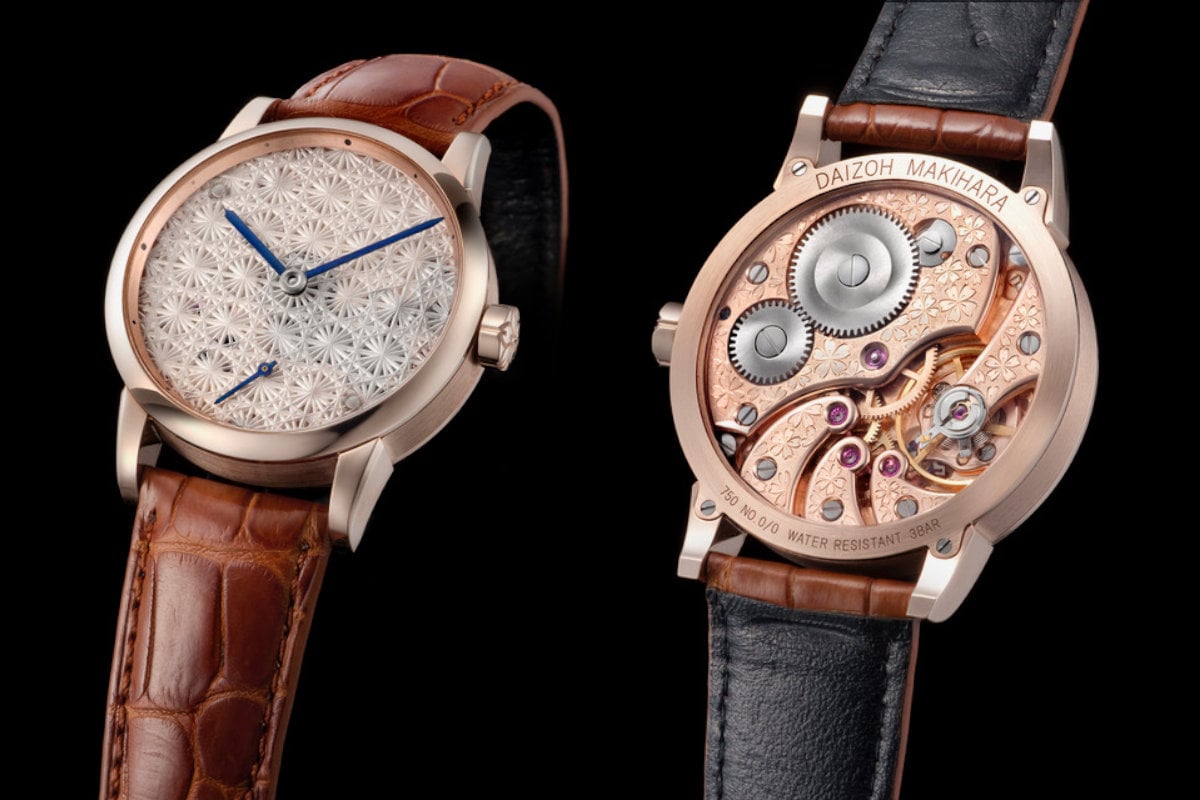
The Edo Kiriko style engraved glass dials are a true work of art. Can you explain to us how they were made?
Edo Kiriko is a traditional craft that has been in Japan for a long time. Unfortunately, however, the number of artisans of Japan’s traditional crafts is decreasing year by year due to issues such as finding successors and cheap imitations. I was saddened by this, and I also wanted to let people around the world know about the beauty of Edo Kiriko through watches, so I came up with this idea.
However, many Edo Kiriko artisans are elderly, and the glass is thinner than traditional cups, so I initially couldn’t find any artisans willing to help me. After persevering, I met the president of a company that had a young artisan, who was happy to take on the job. And so, I was able to successfully complete the world’s first watch incorporating an Edo Kiriko dial.
You followed with the Beauties of Nature watch in 2019. How did you evolve from your first to your second watch?
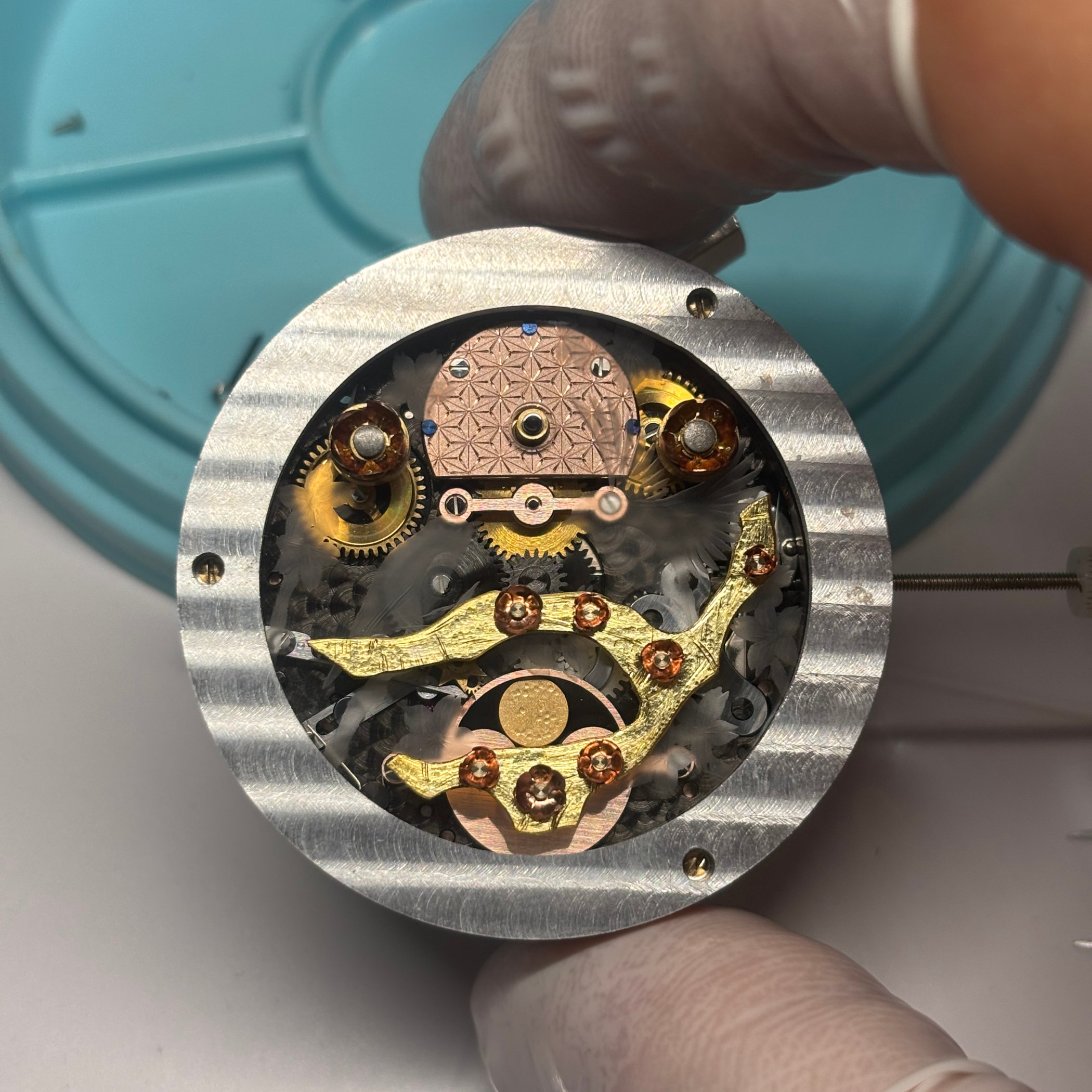
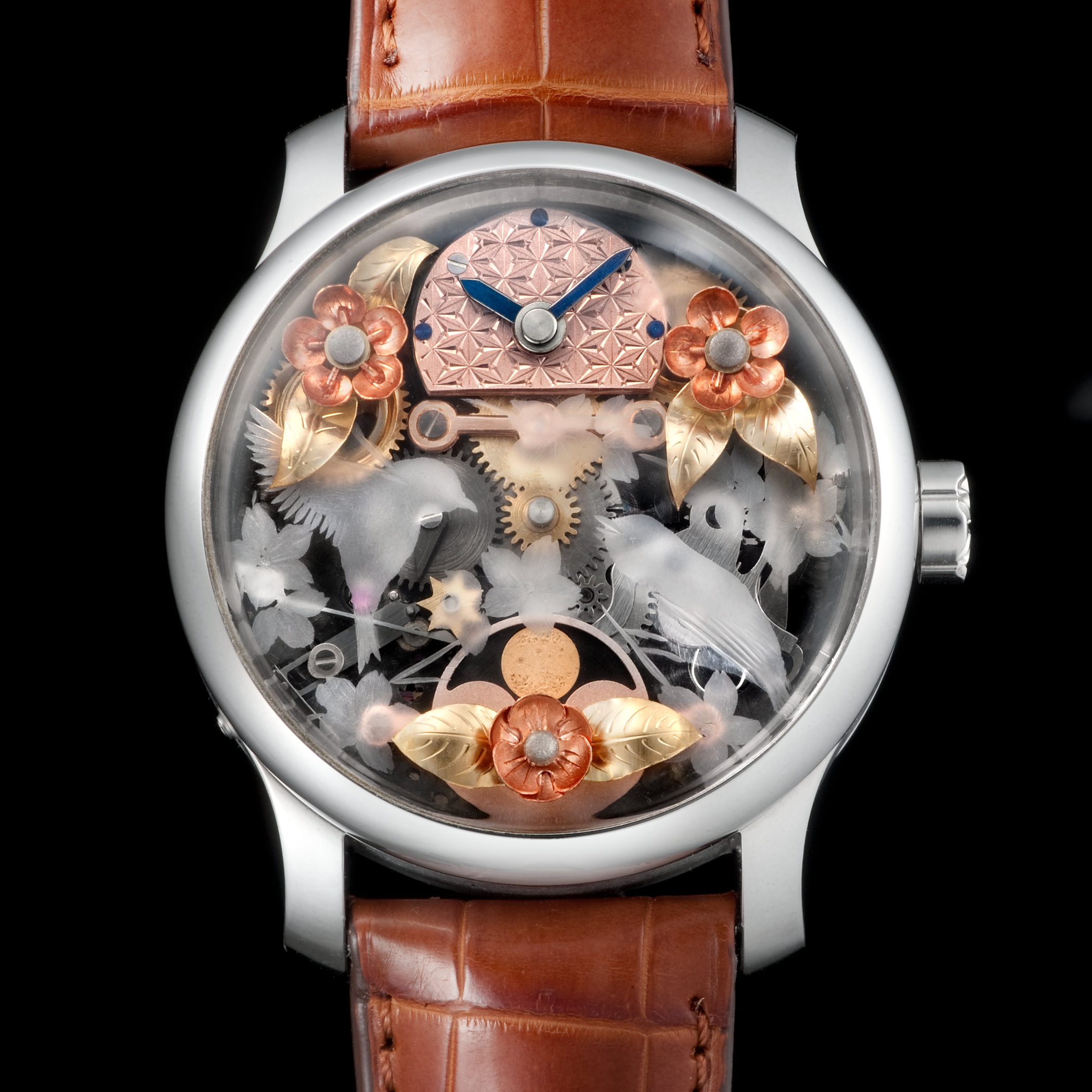
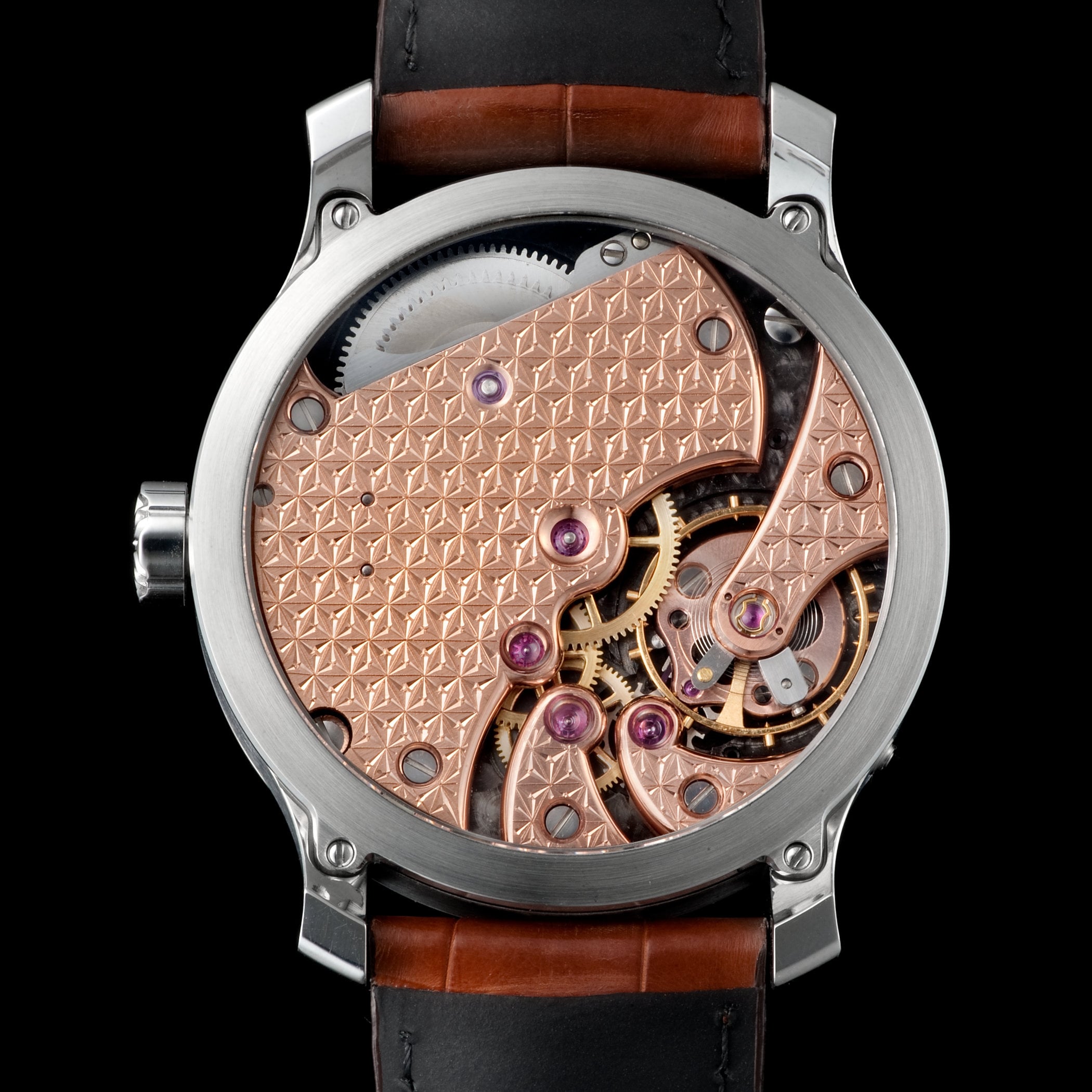
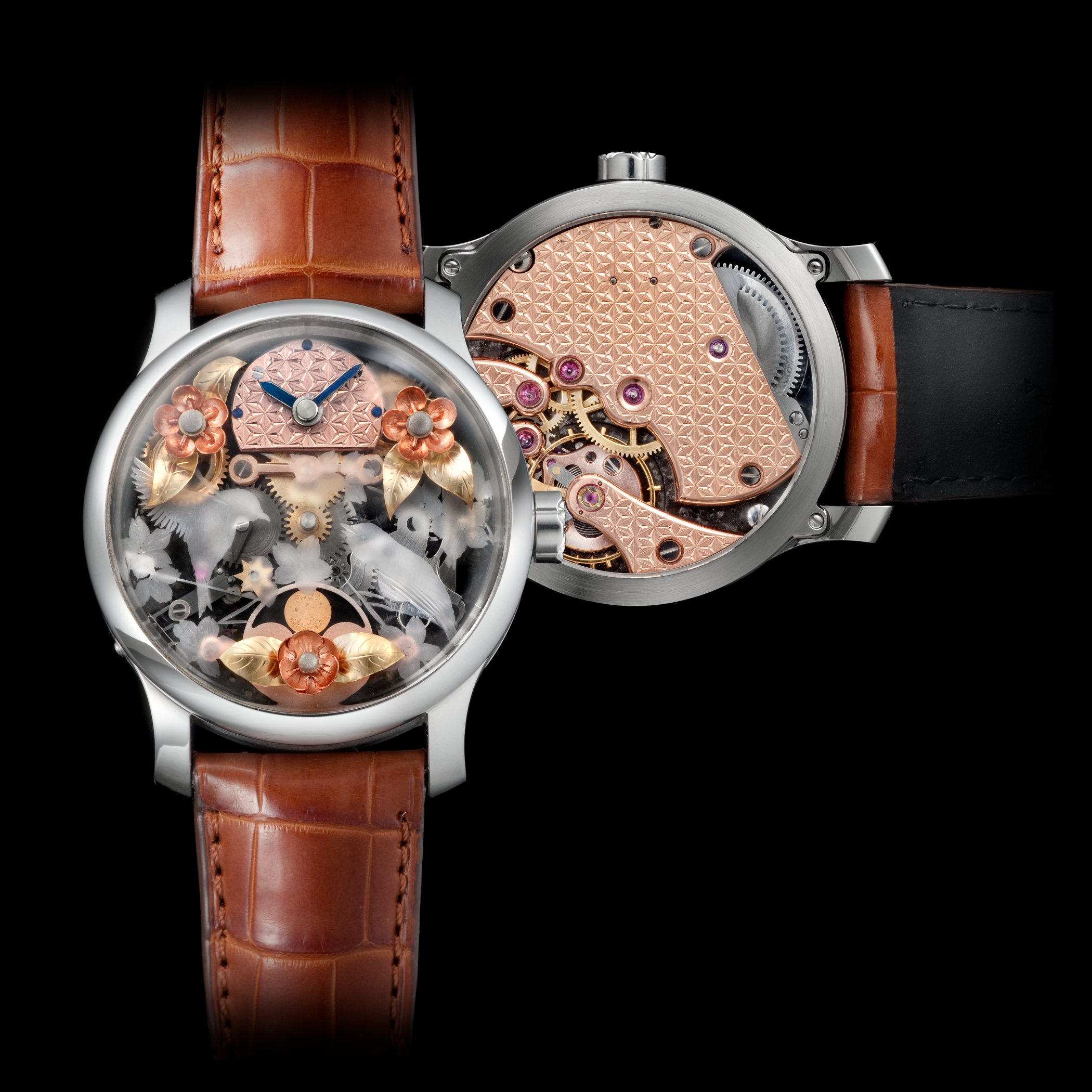
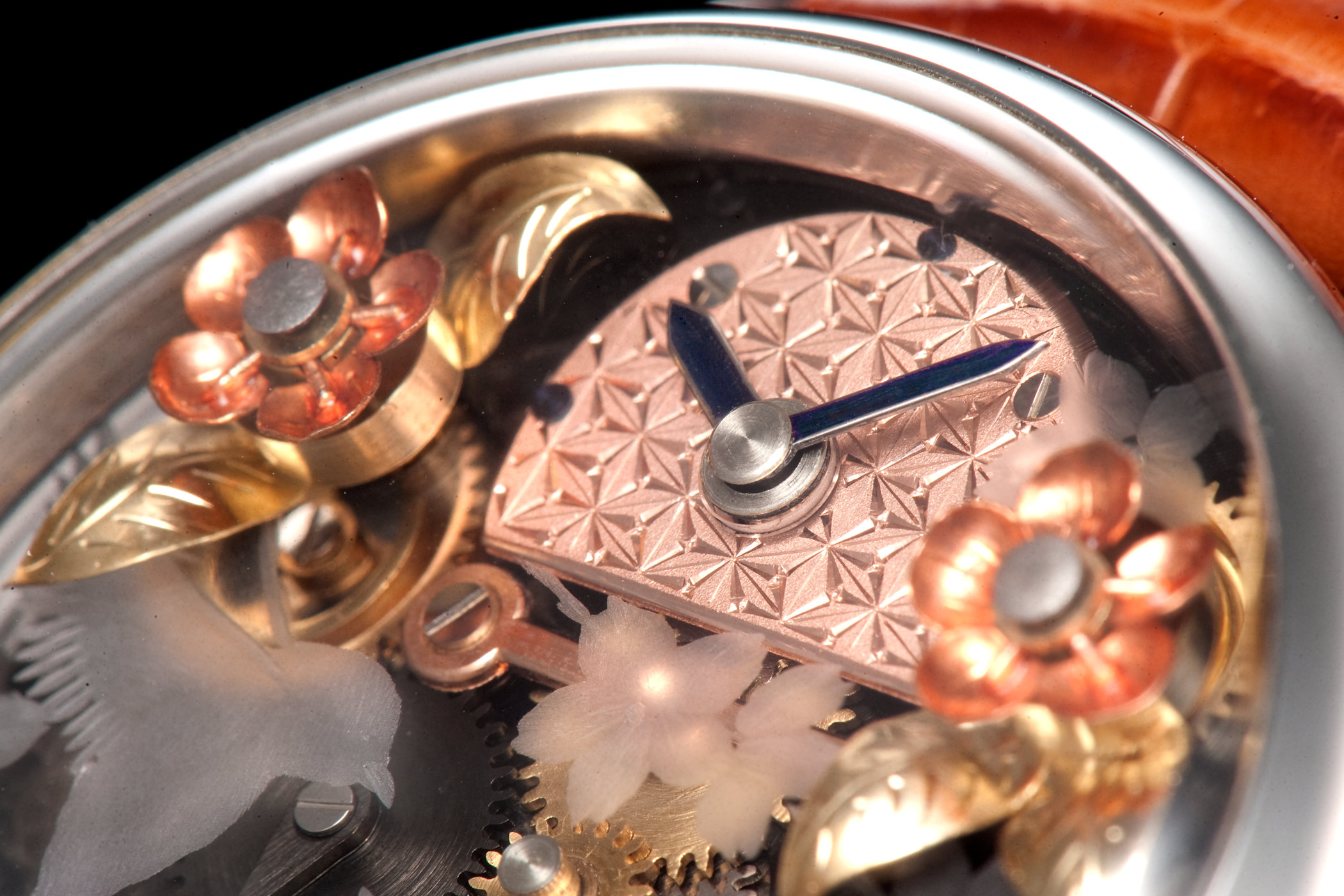
Kikustunagimon -Sakura is a simple three-hand watch, but it gave me confidence that I could manufacture watches (of saleable quality). For Beauties of Nature, I wanted to create a complication, so I had to come up with a mechanism that no other manufacturer had made before. In Japan, we say “kachofugetsu,” which refers to flowers, birds, wind, and moon, and I wanted to express the changing seasons and emotions in a watch like a story of life.
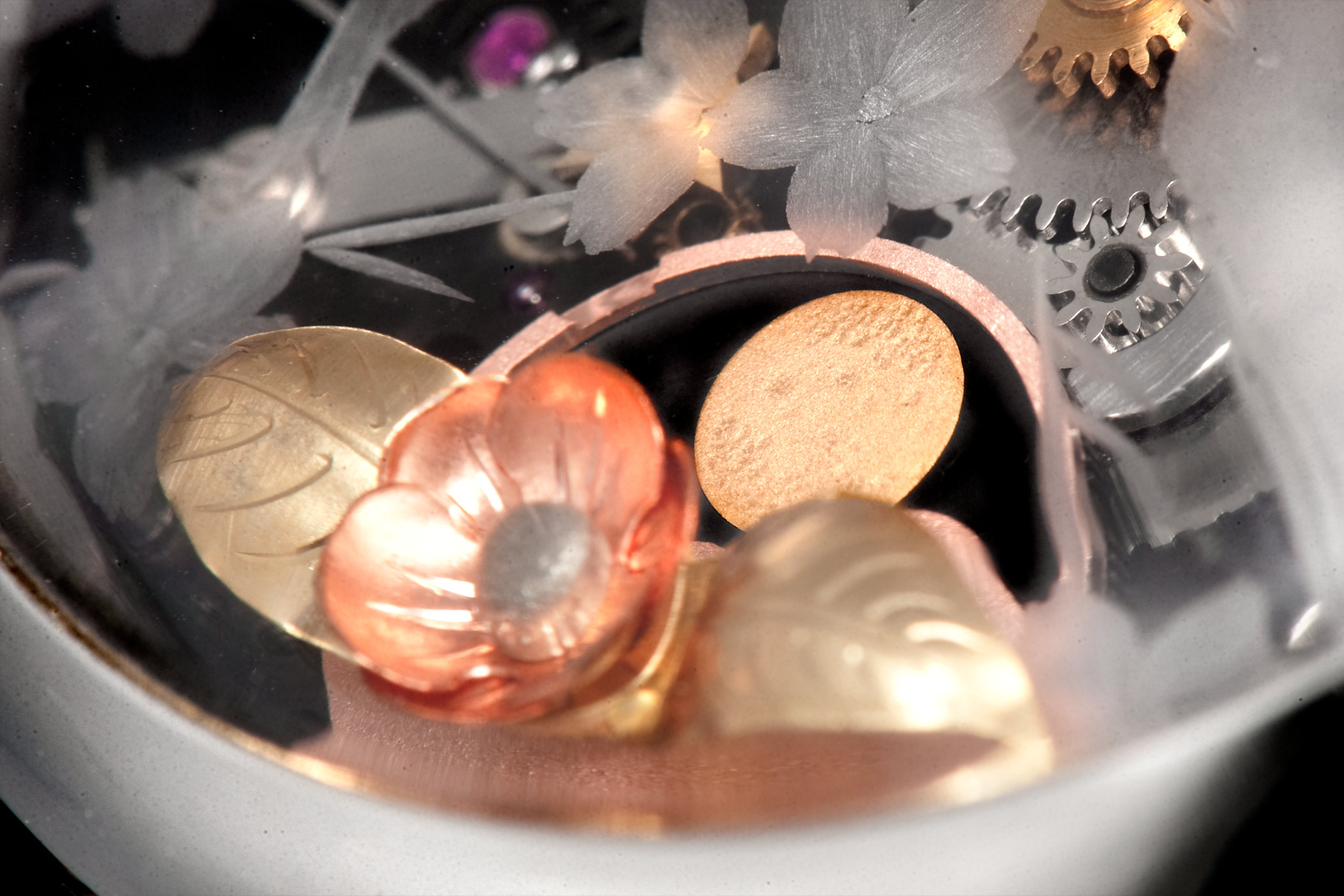
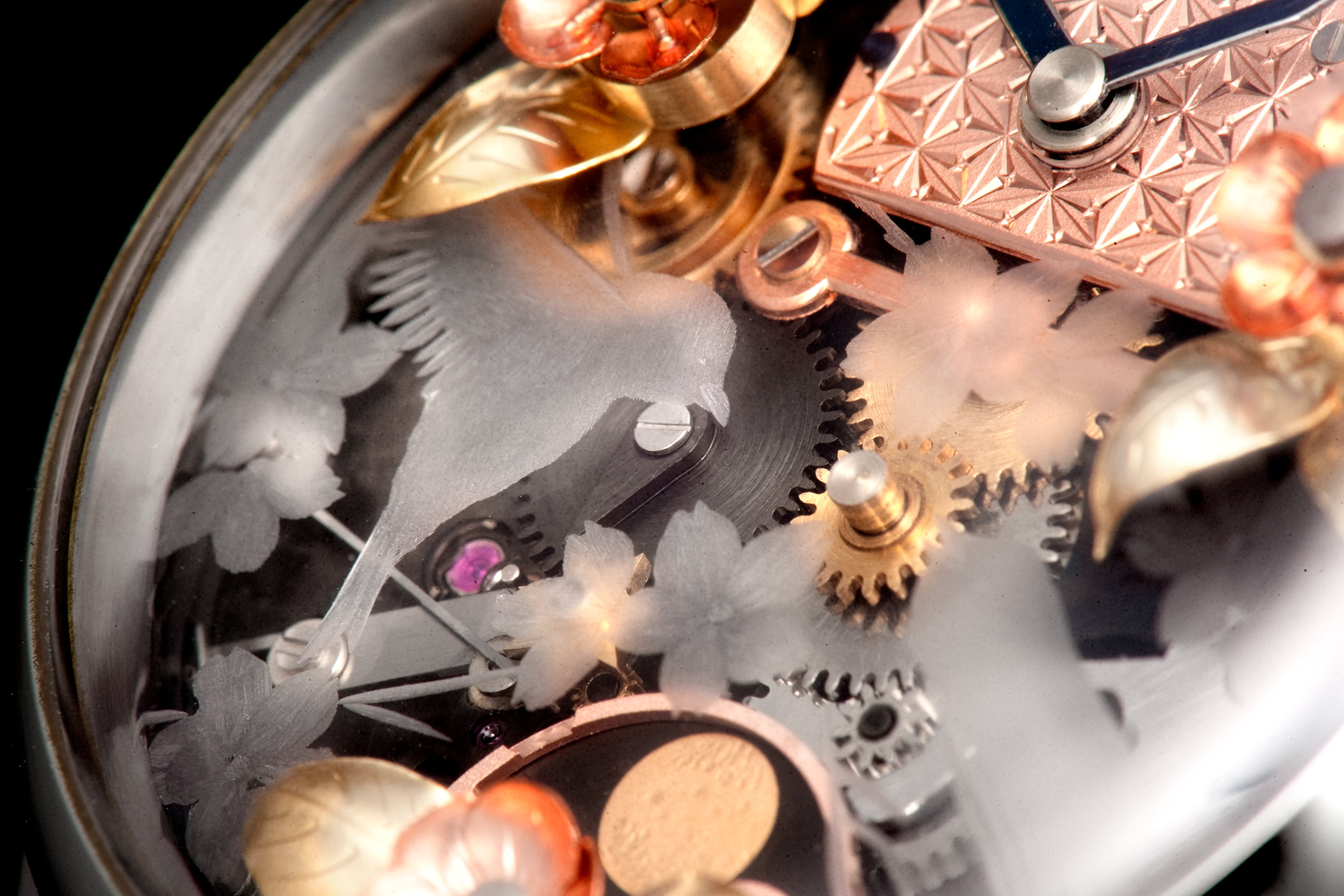
And because I wanted to express the fleeting changes of flowers with an automaton, this is the mechanism I poured the most time and effort into. I had already confirmed that Edo Kiriko artisans could express the bird, so I wasn’t worried. For the wind, I thought I could express my own unique interpretation of traditional Japanese motifs in a geometric pattern. For the moon, I decided to use a moon phase, which is common in watches, but I felt that I needed a highly accurate representation of the moon’s phases, so I created a perpetual moon phase that is accurate to within one day every 122 years.
A lot of the work is done by hand. Can you explain what you do in your atelier?
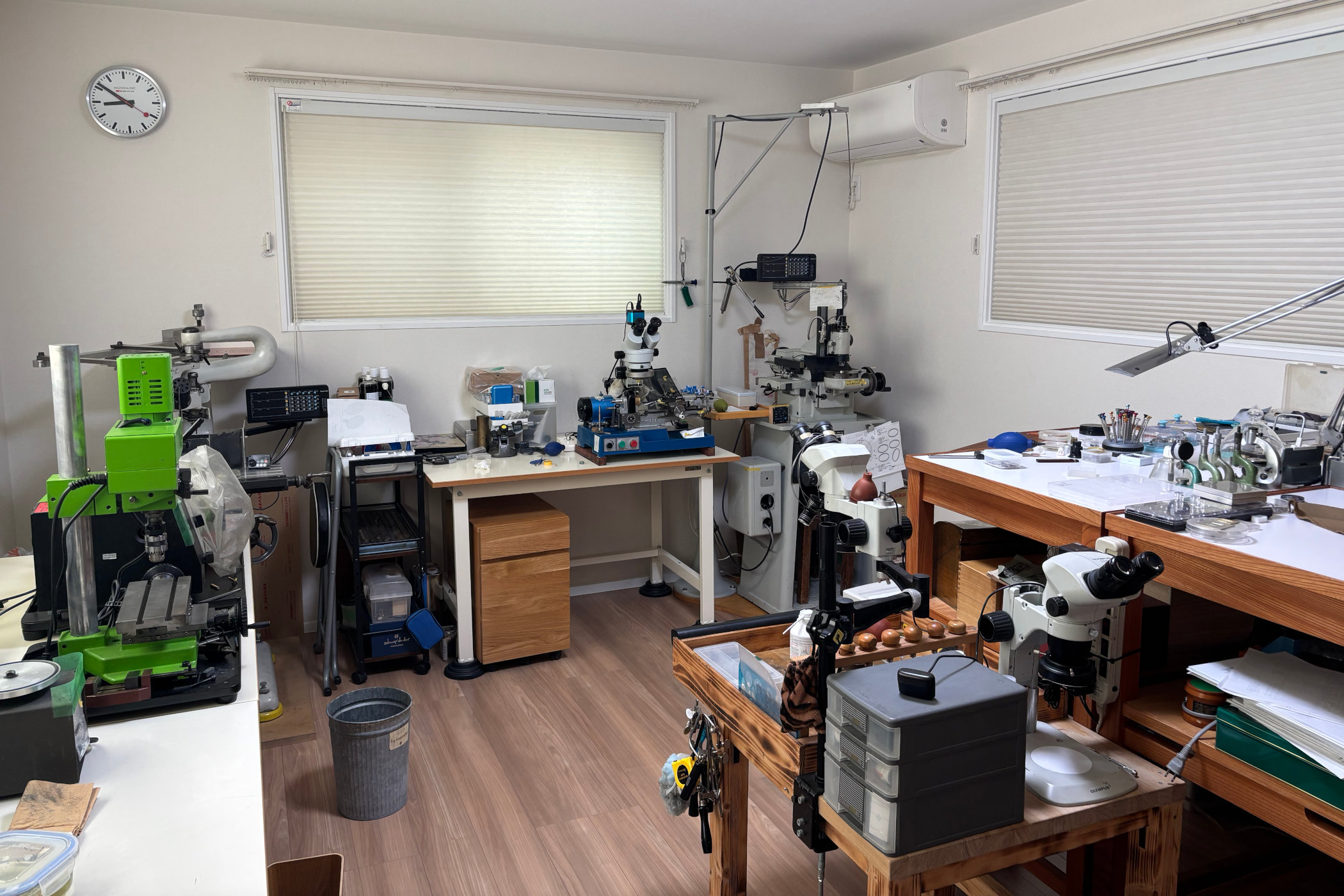
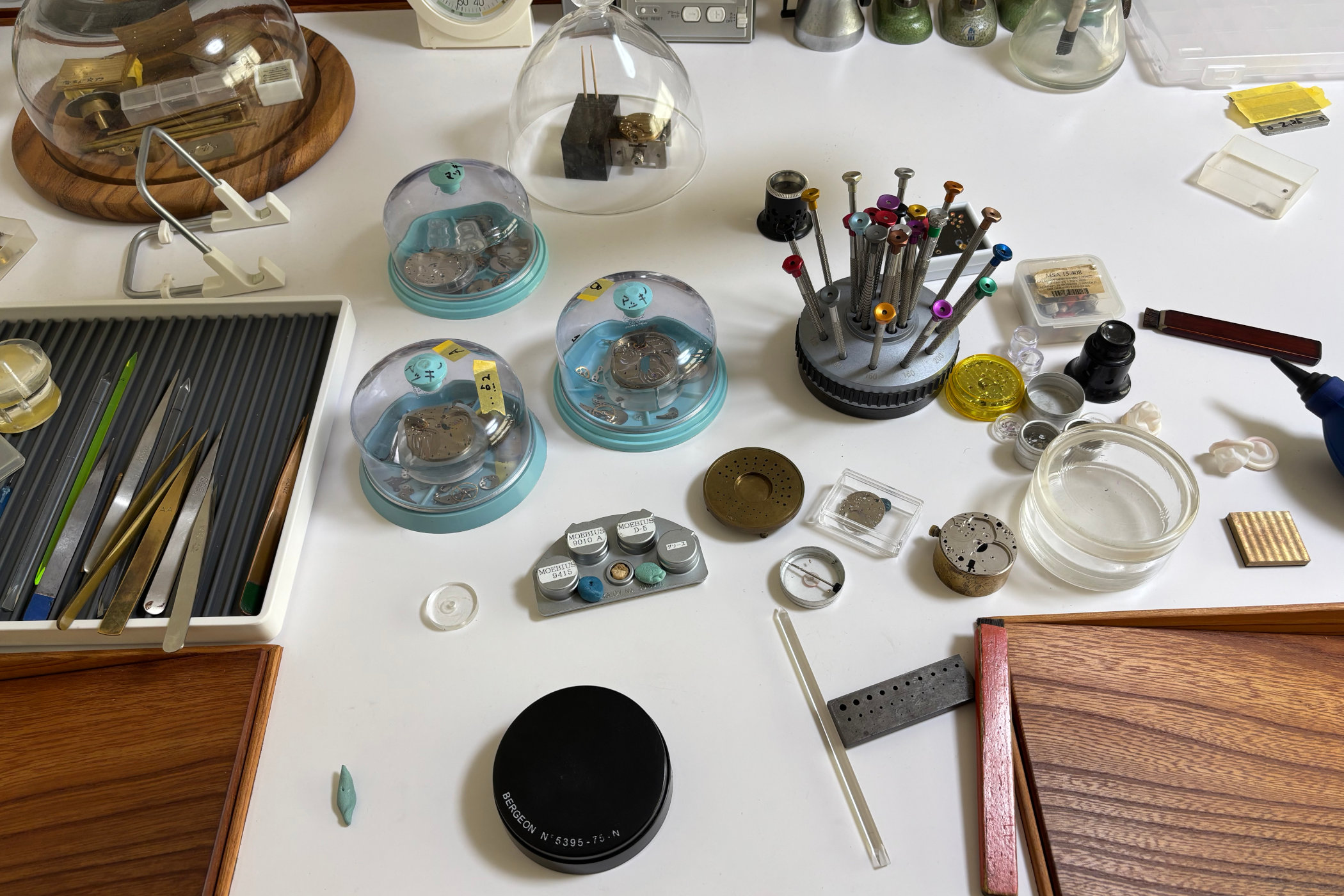
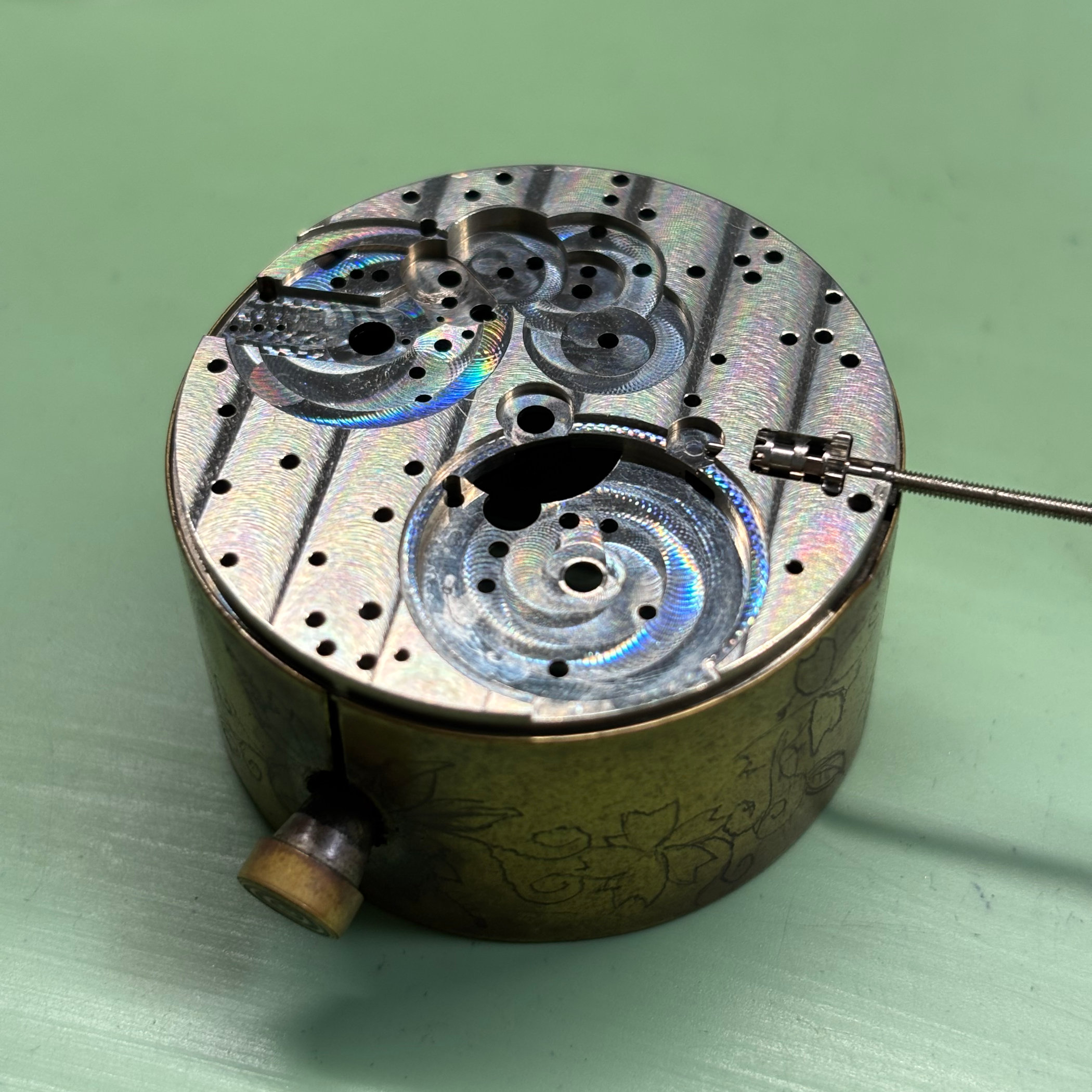
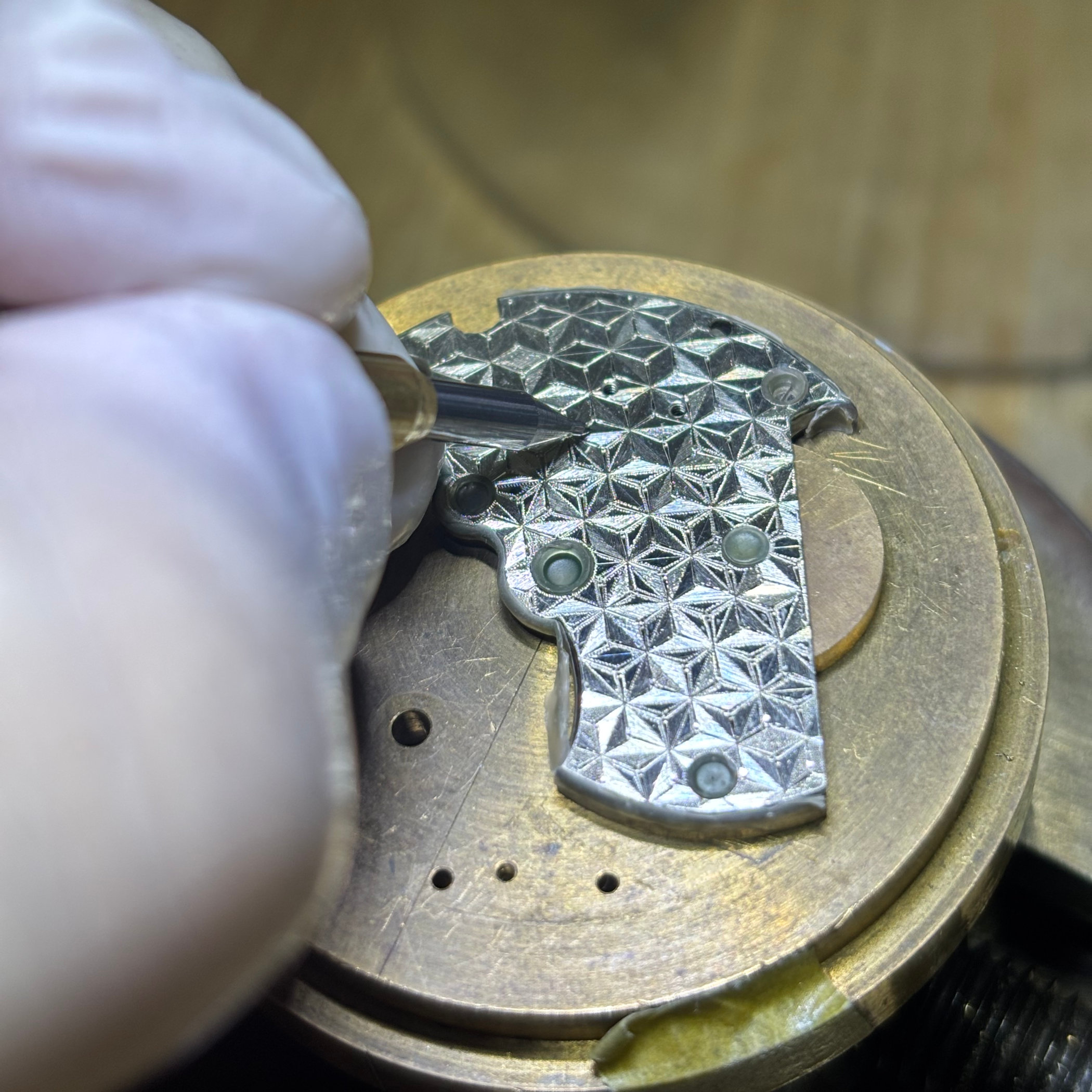
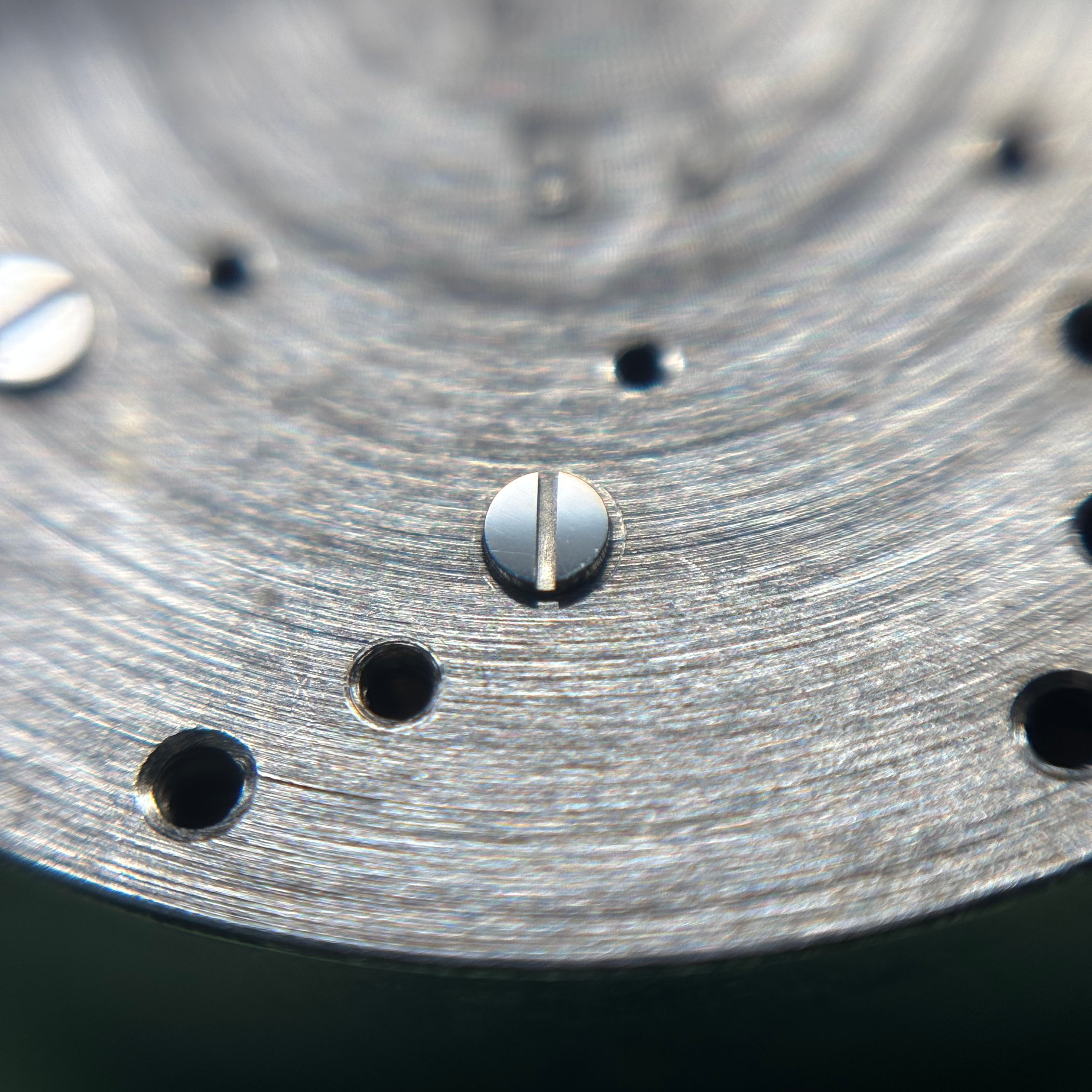
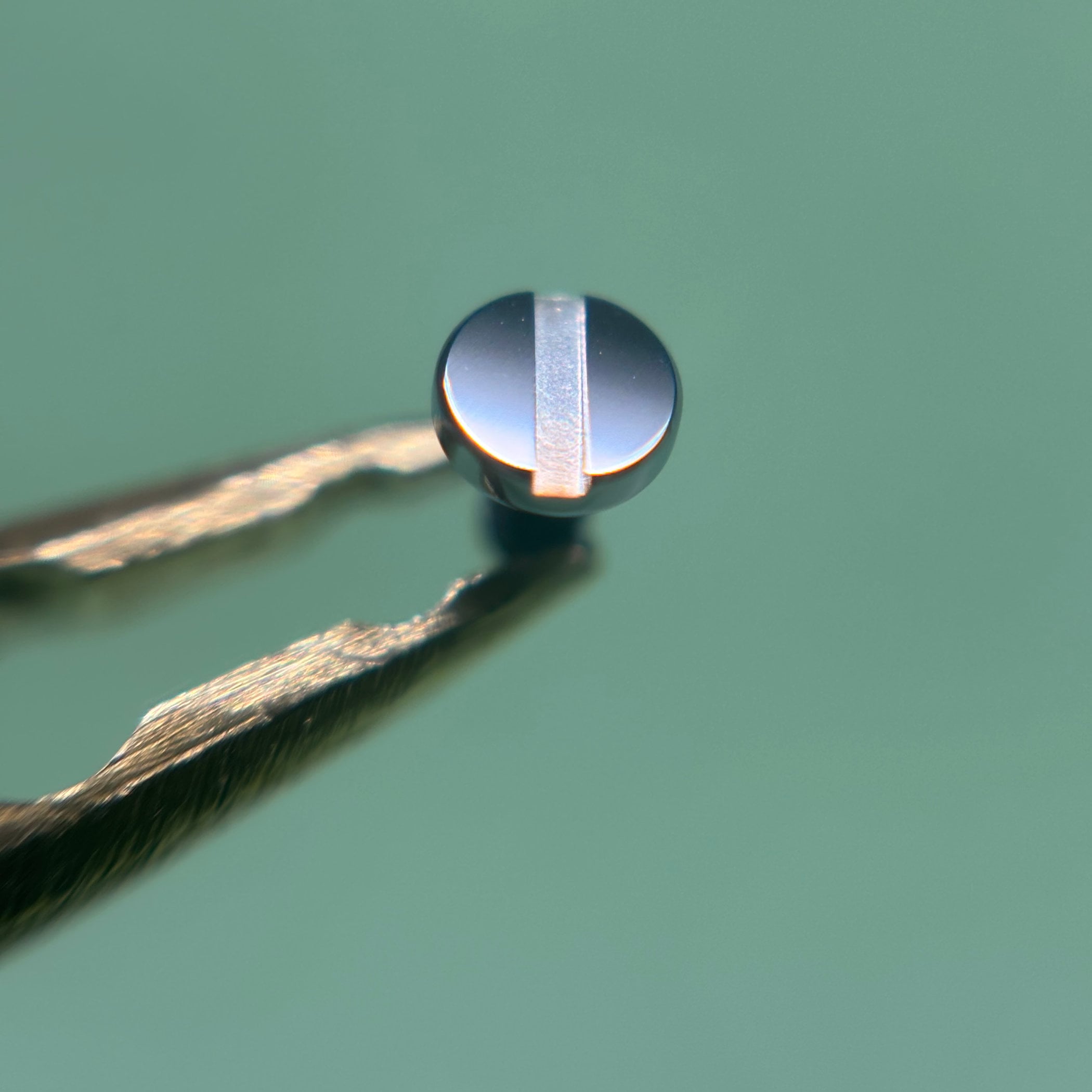
In the atelier, I handle everything by myself, from conception to design, engineering, parts production, assembly, and marketing. We outsource the Edo Kiriko dials. The reason is that traditional Japanese crafts require nationally recognised qualifications, and anyone without these qualifications cannot be called an official Edo Kiriko craftsman. Most of the watches are made using old machines. I do everything from drilling the holes, boring the countersinks, and making the gears from scratch. It takes time, and the number of units produced is small, but I believe it is valuable in a world overflowing with material things.
The Beauties of Nature watch also features Edo Kiriko dial elements, but also other decorative elements. Can you explain how you came to this design?
Some of this overlaps with my previous answer, but the impetus for the idea came from the need to create a complication and be recognised as a full member of AHCI. The town where I live still has a lot of nature, and after work I go for walks with my wife. On those walks, I can feel the changing seasons, the birdsong, the strength of the wind depending on the weather, the temperature I feel, and in winter, the air is clear, and the moon looks beautiful. I am inspired by nature, and I wanted to capture this splendour in a watch.
You’re a finalist in this year’s LV Watch Prize for Independent Creatives. How did that come about?
I rarely use Social Media, and to be honest, I had no idea this existed. An acquaintance of mine, a Japanese journalist and editor-in-chief for a magazine, emailed me directly saying that he wanted to feature my watch in the LV Watch Prize. I had never even participated in a competition like this before, but I felt that the recent releases of LV watches, such as the automata, were similar to my goal of “creating crafts and works of art called watches”. I was also curious to know how my own watches are being evaluated around the world, so I gladly accepted the invitation. I later found out I had also received multiple messages on Social Media from other watch journalists who wanted to feature me, so I felt both happy and sorry.
After that, I immediately replied, and two months later, I received news that I had been selected as one of the 20 semi-finalists. At that point, I was already very happy! I also remember thinking that it would be very difficult to make it as one of the only five finalists, as there were so many great watchmakers among the twenty candidates! But then, after a couple of months, I was shocked to hear I made it! As I said, I don’t use social media, so I rarely learn what people think of my work other than through my clients, journalists and some of my peers. However, I assumed that the judges selected by Louis Vuitton had appreciated the philosophy, story and passion behind my watch. I felt that my watch had been recognised and clearly remember feeling very nervous for what was to come!
Just like the semi-finals, the five finalists are all incredible watchmakers who are highly regarded, so I think it will be a fantastic competition. On March 24th, we’ll know who won!
(Editorial Note: Next to Daizoh, the finalists are Fam Al Hut, Bernhard Lederer, Hazemann & Monnin and Quiet Club)
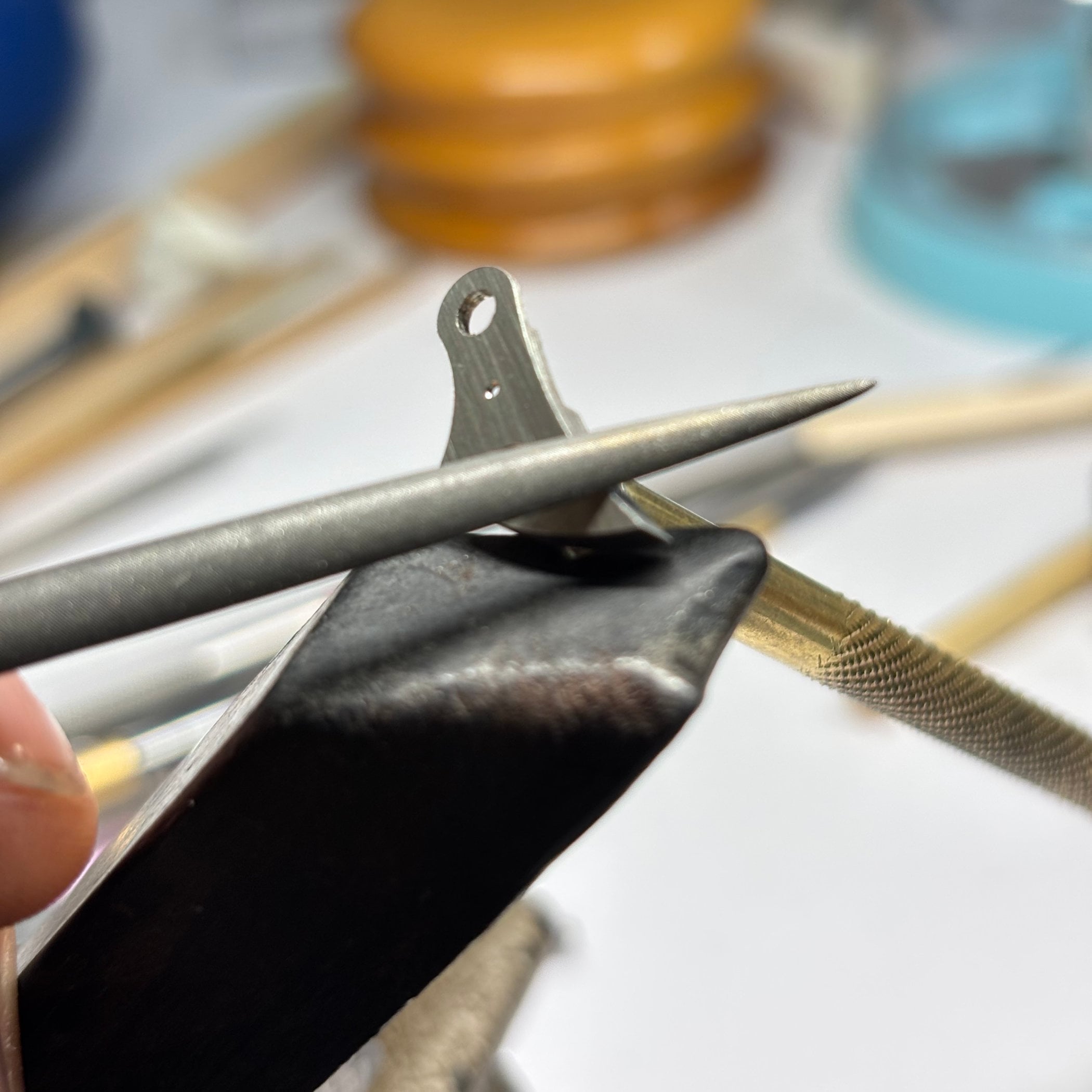
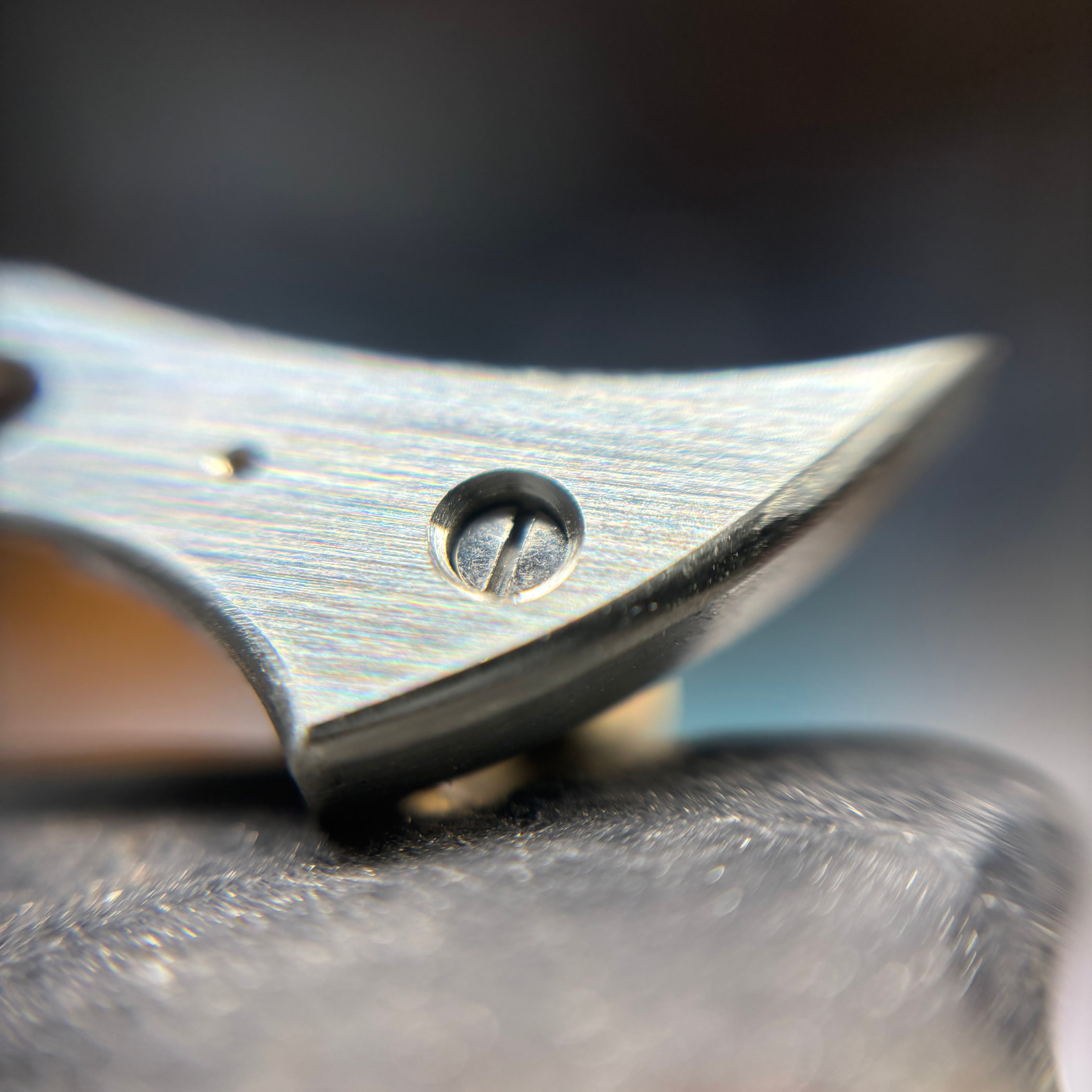
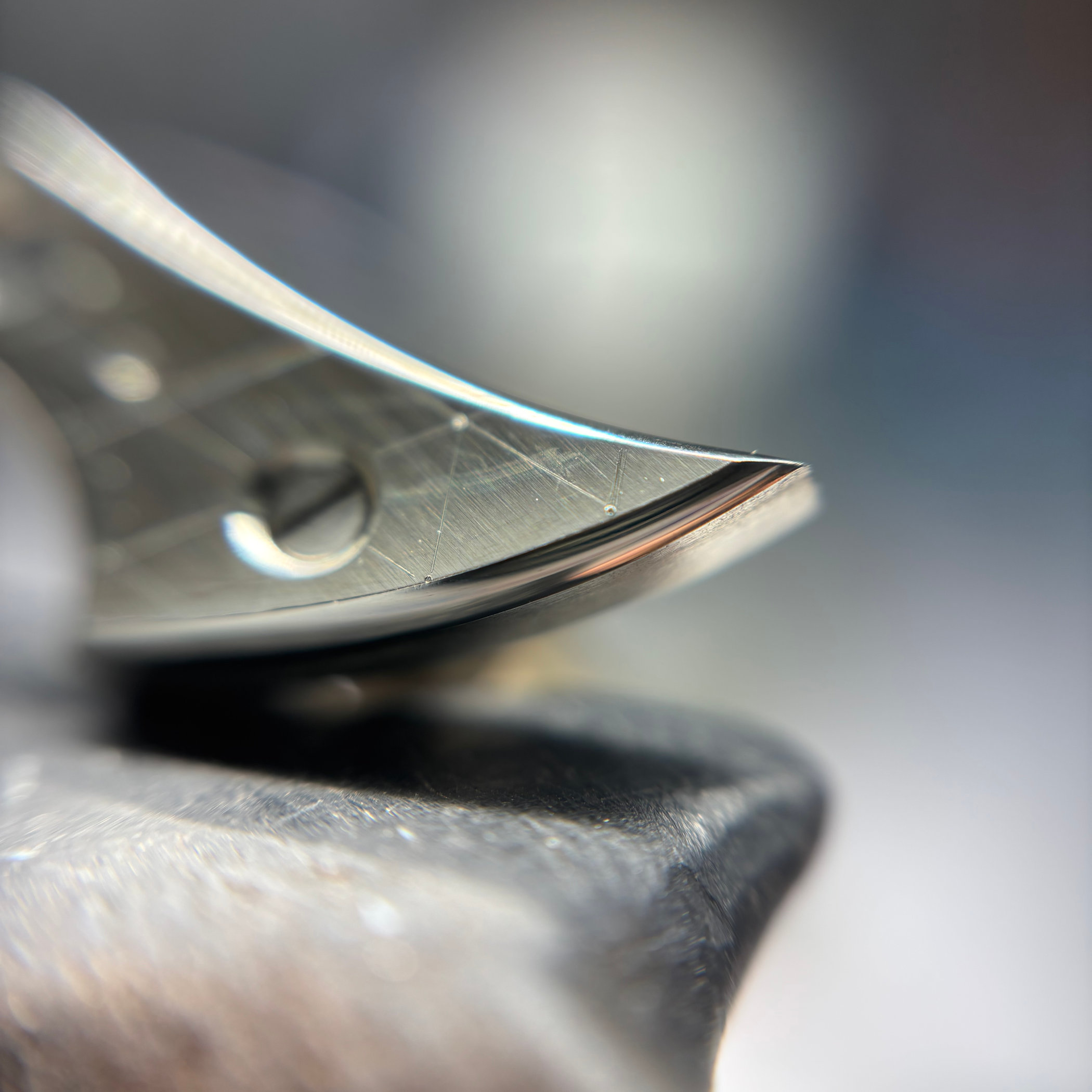
What’s the next step for you? Are you working on a new model?
Yes! I’m already working on my third project, a simple three-hand watch planned for around 36mm to 38mm. The first project was to build confidence in my ability to make watches. The second project was to build confidence in my ability to make complicated watches. For the third project, I’ll make it even more compact, improve the Edo Kiriko dial, and develop it so that I can make even smaller parts myself.
I consider the completion of the third project to be the completion of the trilogy. The fourth project will probably be for women. (It’s not decided yet, so keep it a secret!)
Any final thoughts to share with our audience?
There are now more micro-maisons around the world, and watches that are bursting with originality are being produced. As a result, buyers are more knowledgeable and informed, and I’m happy to see the excitement surrounding independent watchmakers as a whole. However, I feel very sorry for those like me who produce extremely small numbers of watches and have to wait years to buy one. No one can predict what the future holds, but I want to continue making watches with sincerity, using old-fashioned machines and tools.
For more information, please visit DaizohMakihara.jp.