


 Not all images were able to load for printing. Please close the print window and try again.
 Girard-Perregaux’s Superbly Technical New Minute Repeater Flying Bridges (Incl. Video)
A spectacular timepiece where sound, symmetry and the iconic Bridges architecture converge beautifully.
Few timepieces showcase the technical sophistication of traditional watchmaking as clearly as minute repeaters. The new Girard-Perregaux Minute Repeater Flying Bridges introduces this complication with its demanding mechanism, combined with a tourbillon and an automatic micro-rotor winding system. The watch is built around the brand’s recognisable Three Bridges architecture, presented in a modern openworked interpretation where the components appear suspended within the case.
Chiming watches are part of the Manufacture’s history. As early as the late 18th century, the Geneva watchmaker Jean-François Bautte, thanks to whom GP can trace its origins to 1791, was already producing repeating mechanisms capable of sounding the hours and quarters. During the 19th century, the company continued to develop complex chiming watches, including alarm models and pieces combining repeaters with additional complications. In the modern era, Girard-Perregaux explored the complication with highly complex wristwatches, such as the Opera I and Opera II, equipped with Westminster chimes that reproduce the four-note carillon melody, or the mid-2010s Minute Repeater Tourbillon. The new Minute Repeater Flying Bridges combines the brand’s historic expertise in chiming mechanisms with its signature Bridges architecture in a newly in-house developed calibre.
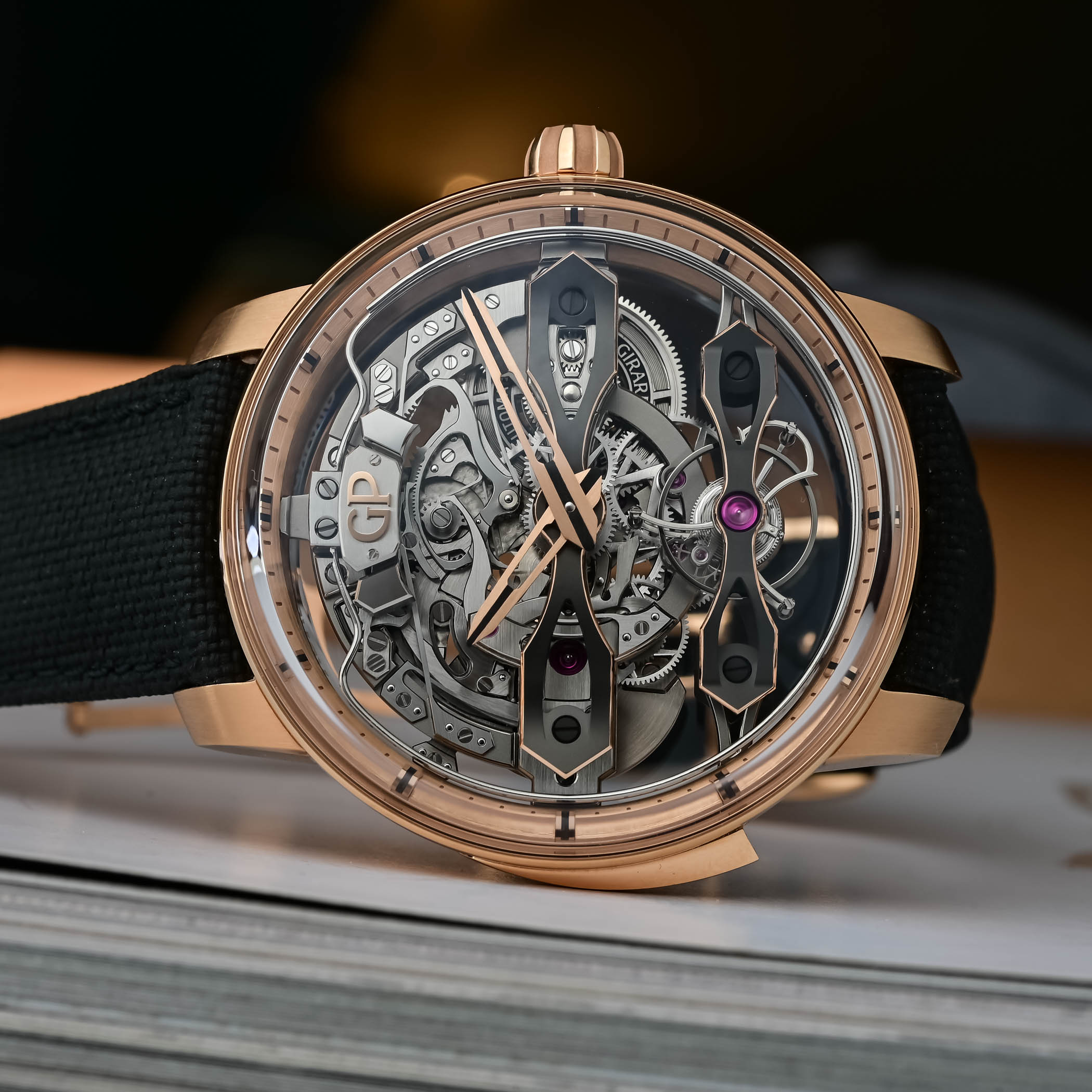
A modern take on GP’s Bridge Design
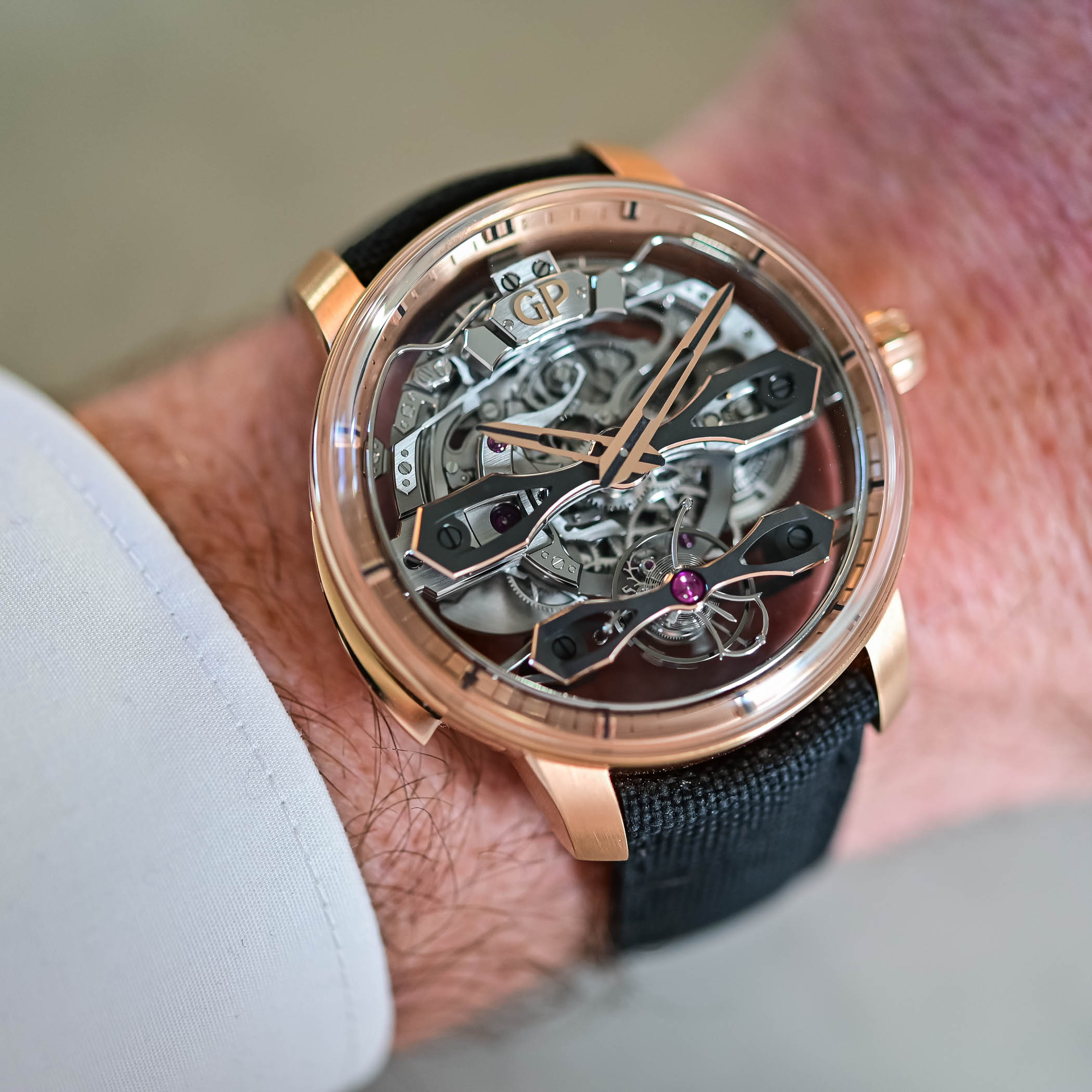
The Minute Repeater Flying Bridges is presented in a 46mm pink gold case, with its proportions serving a practical purpose: space is crucial for allowing the sound to resonate. Box-shaped sapphire crystals on the front and back of the watch act almost like miniature sound chambers, amplifying and diffusing the chimes produced by the hammers striking the gongs. At the same time, they provide an unobstructed view of the seemingly floating-in-the-air movement.
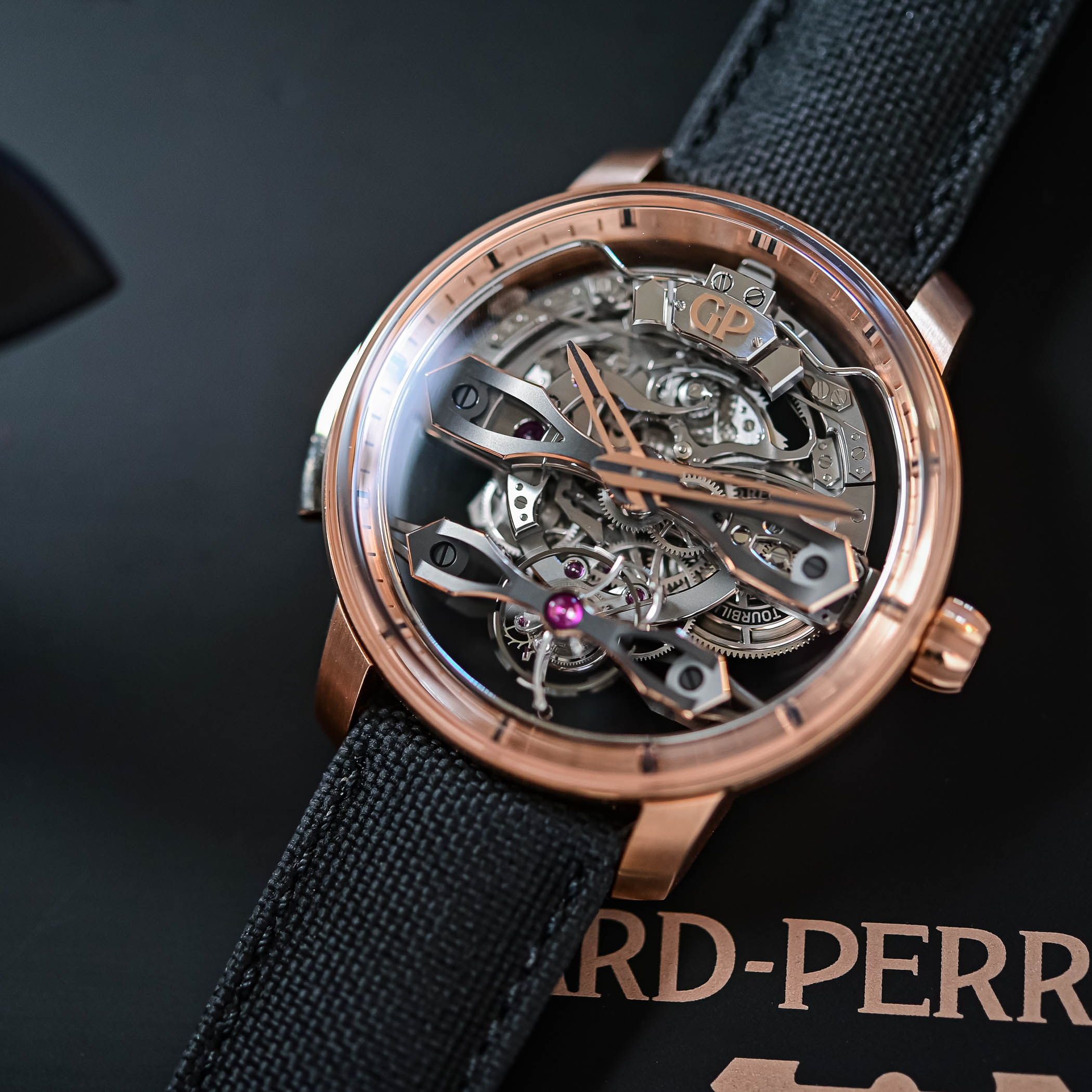
The case features a smart slide mechanism to activate the repeater. Instead of the traditional construction that usually leaves a visible opening when the slide is engaged, Girard-Perregaux integrates the system into a monobloc case middle. The monobloc design improves water resistance. While many minute repeaters offer little or no protection, the construction here allows the watch to maintain a 30m rating, a small but notable achievement.
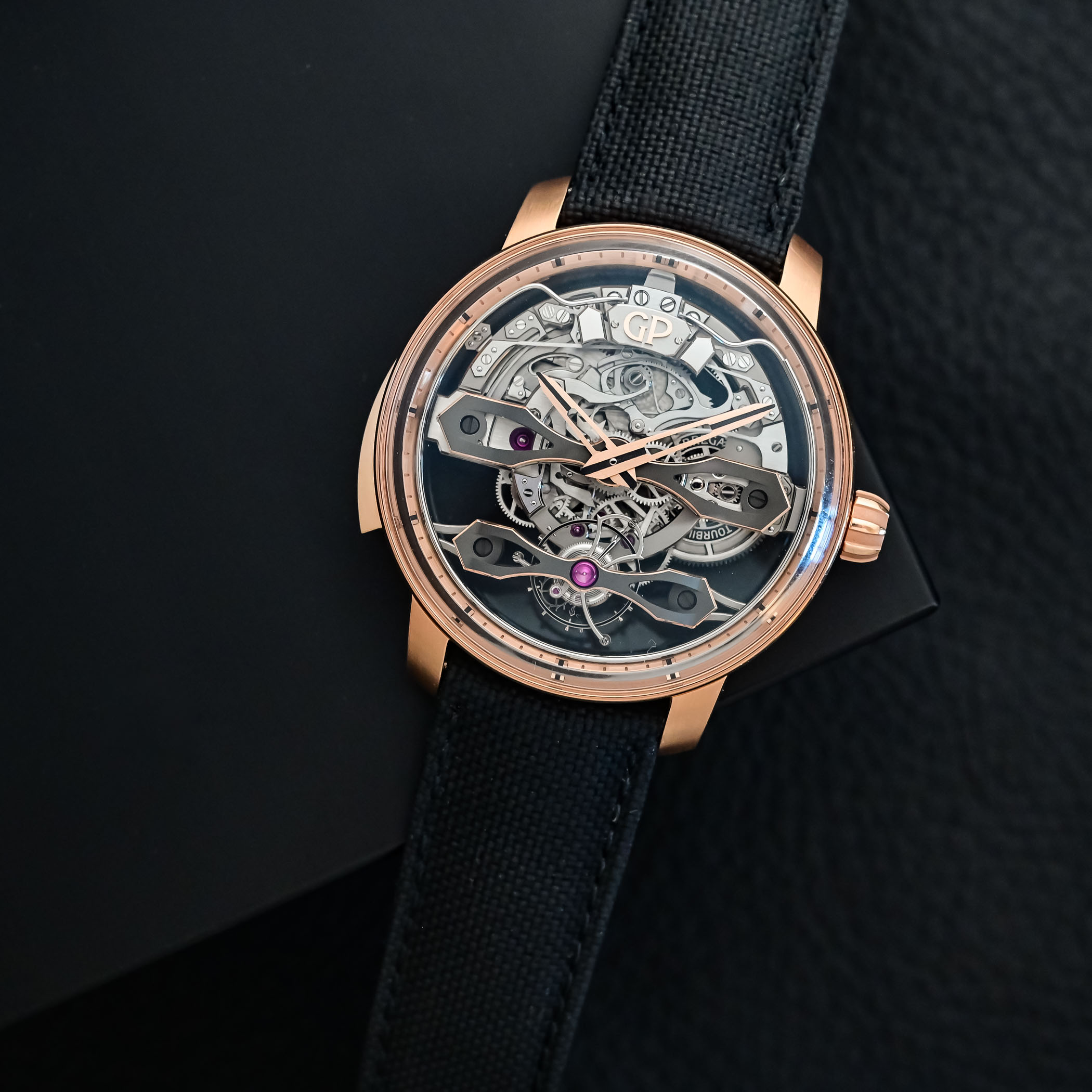
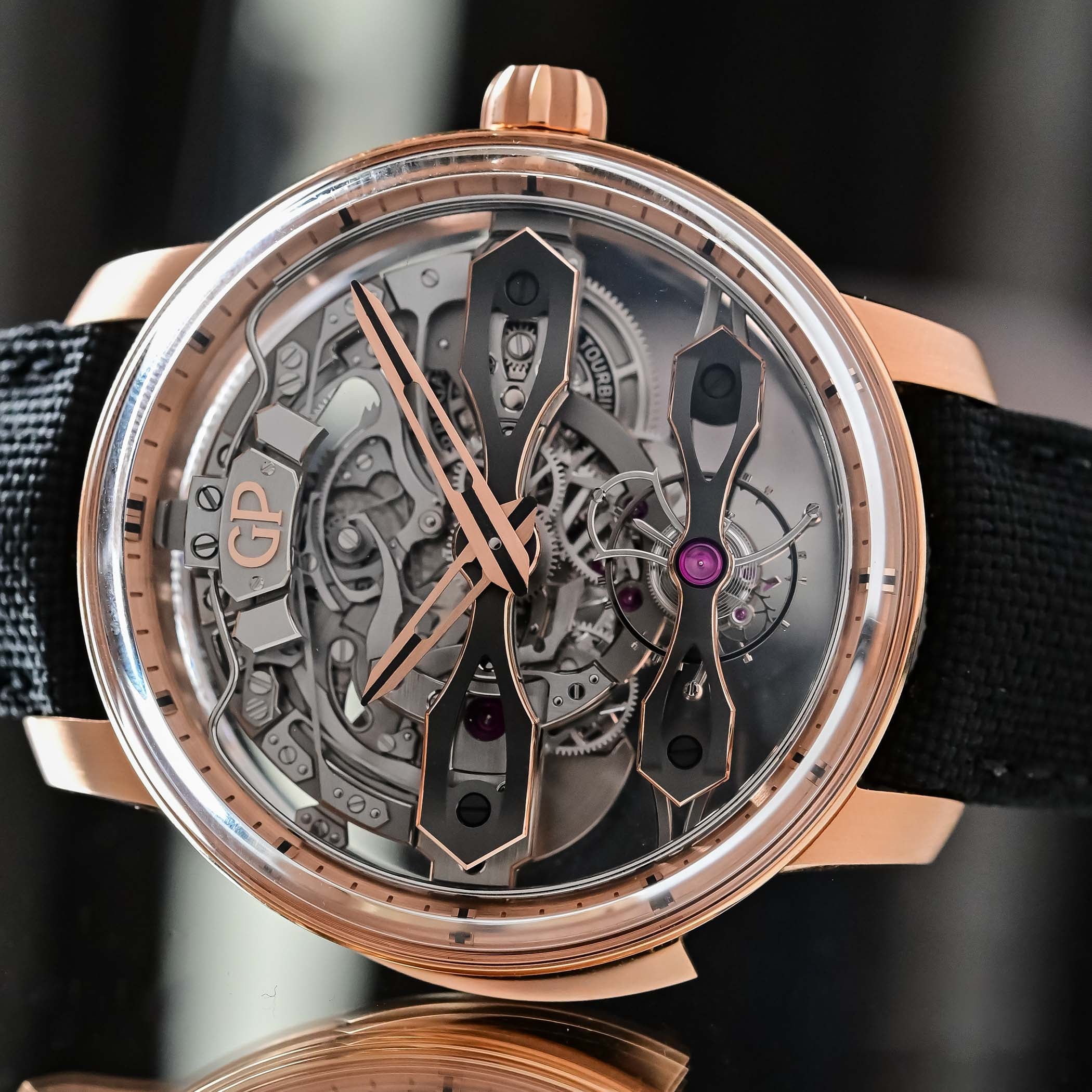
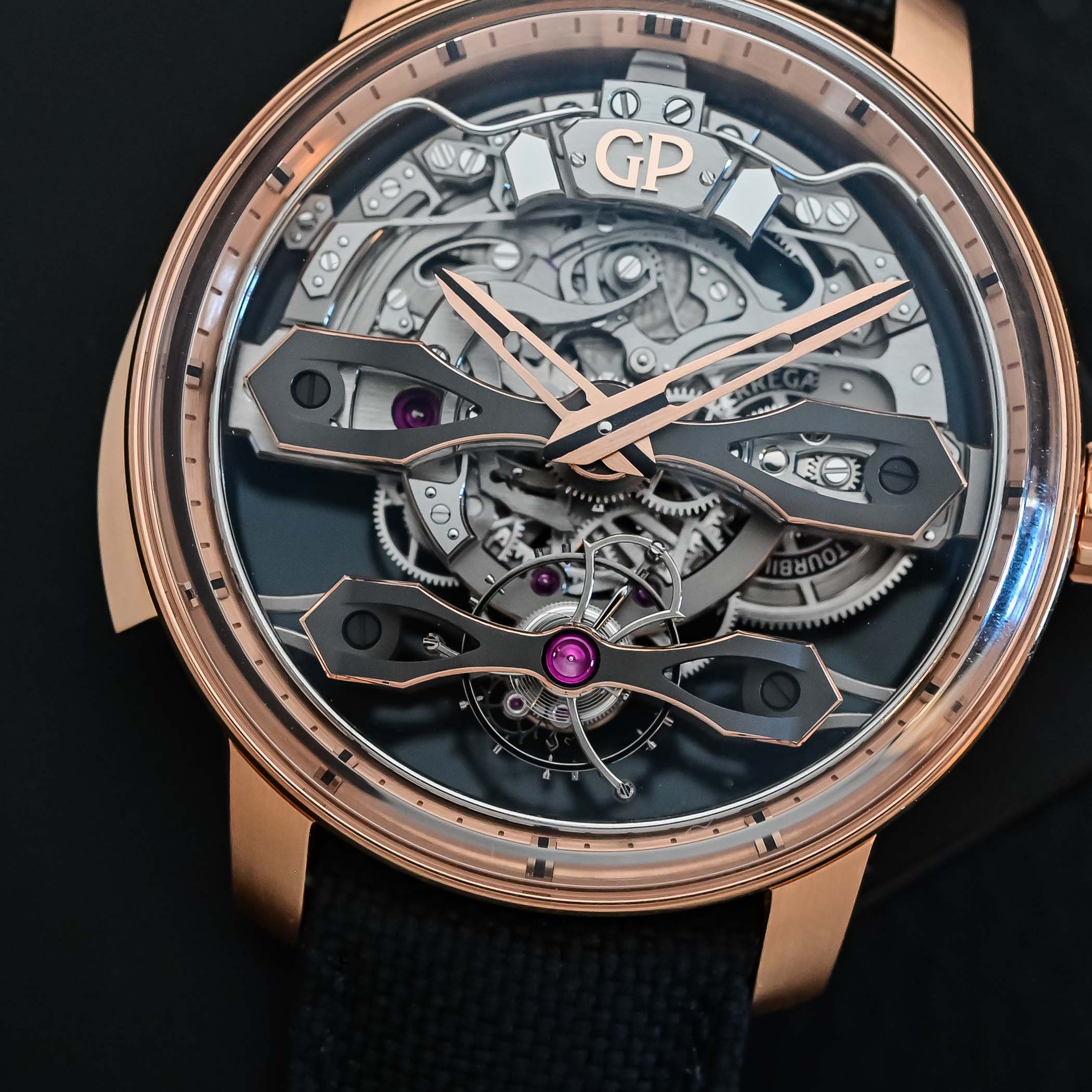
Like other watches from the Bridges collection, the dial is the movement. The two modern (Neo style, different from the classic Esmeralda style) pink gold bridges dominate the composition, stretching horizontally across the movement, with one on the back. The tourbillon sits prominently at 6 o’clock, housed in the brand’s signature lyre-shaped cage, also acting as a small seconds display, with a discreet hand mounted on the cage. A thin pink gold flange on the dial´s periphery hosts applied hour markers filled with blue-emission luminescent material. Skeletonised pink gold hands, also treated with lume, indicate the hours and minutes.
Superb in-house movement
The watch is powered by a newly developed Calibre GP9530, an in-house automatic movement created specifically for this grand complication. Measuring 43.55mm in diameter and 10.75mm thick, the calibre contains 475 components and 47 jewels. The movement operates at 21,600 vibrations/hour and provides a power reserve of at least 60 hours. More impressive, however, is the way in which Girard-Perregaux has combined three demanding mechanisms into a single architecture: the minute repeater, the tourbillon and an automatic winding system with a micro-rotor.
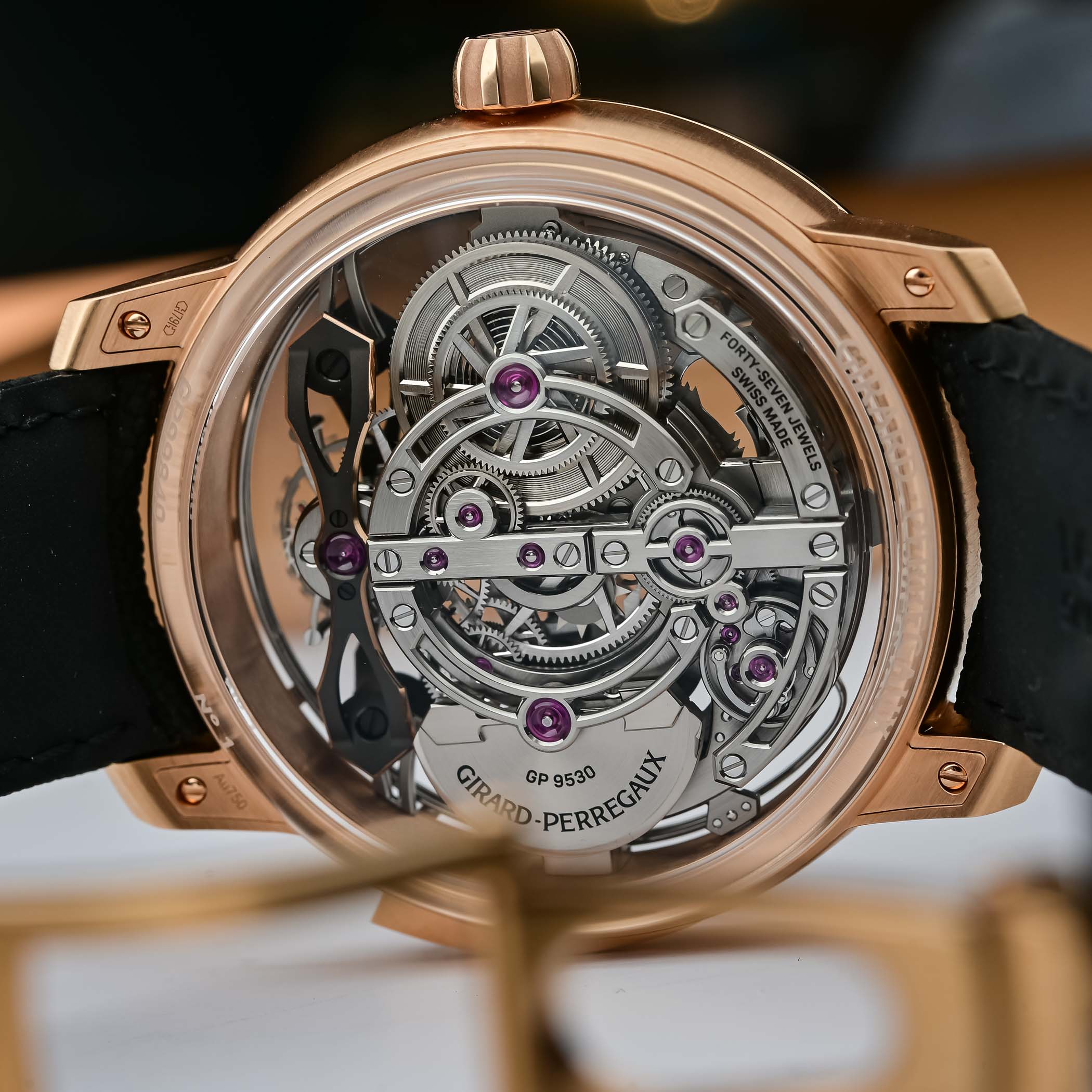
Now, automatic winding systems are rarely used in minute repeaters due to limited space within the movement and the potential noise they generate. Here, the white gold rotor is mounted on a jewel rather than a ball bearing, so it rotates silently without interfering with the sound of the chimes, that is, in case someone chooses to perform wrist movements when the gongs are striking.
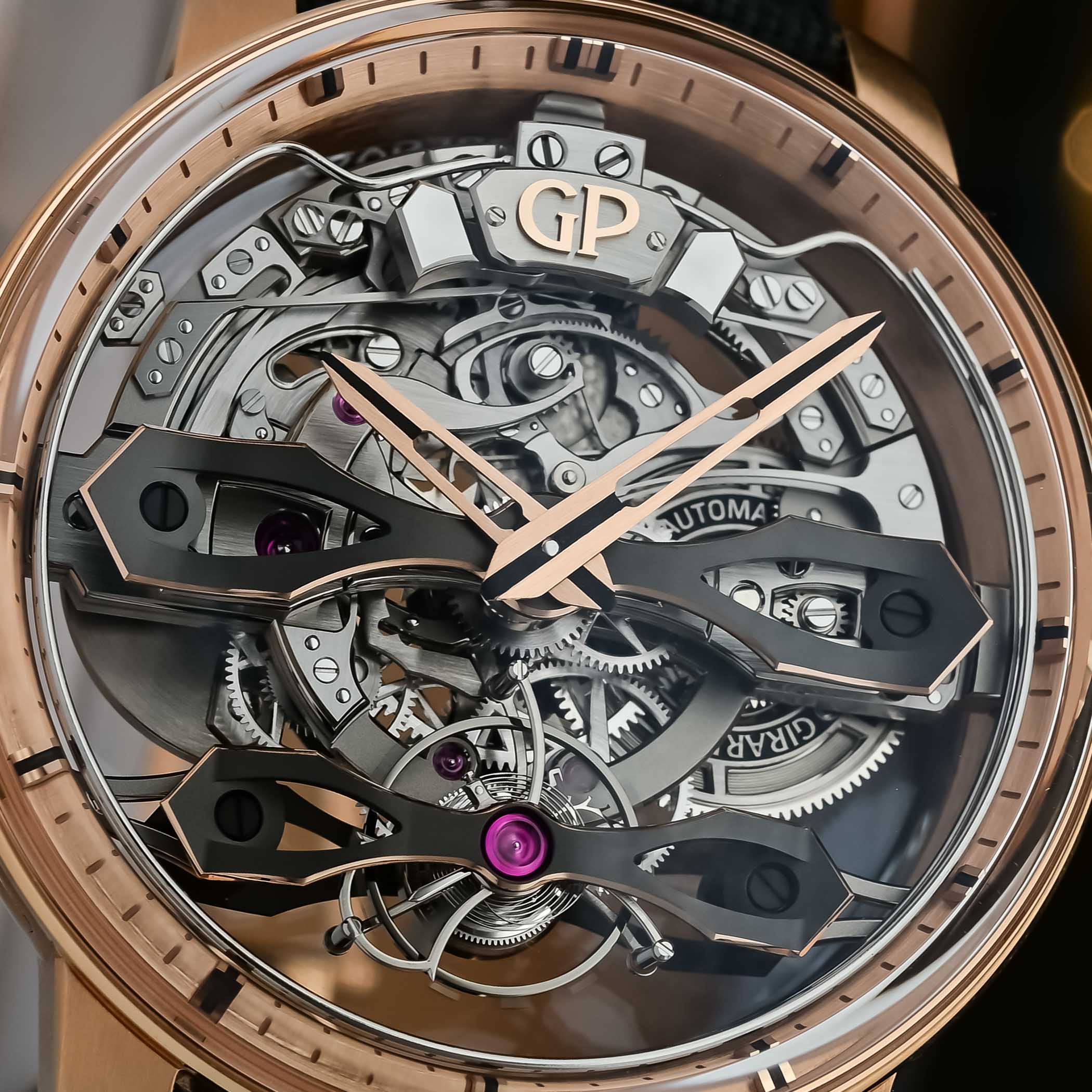
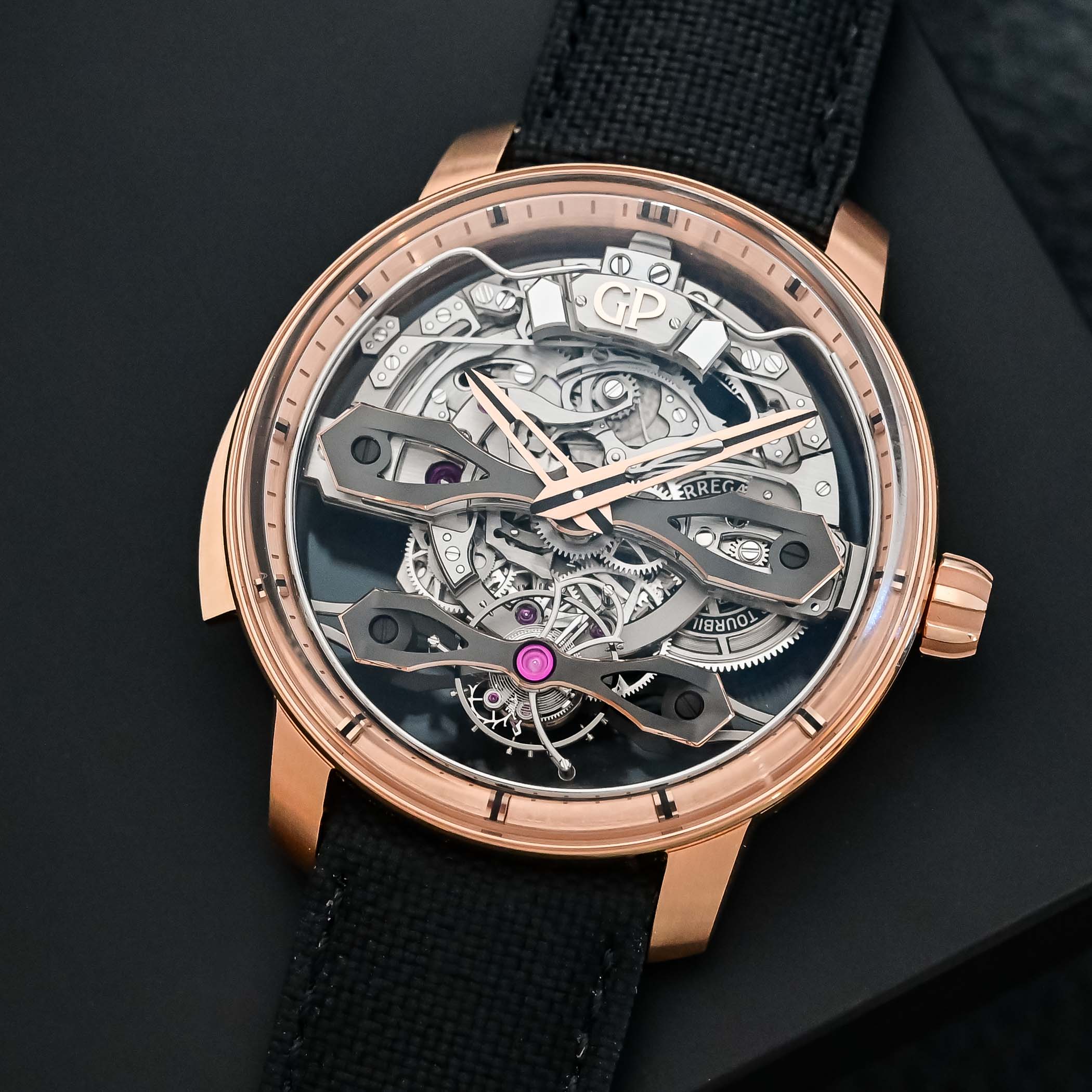
The entire movement has been designed with acoustics in mind. The repeater hammers above the gongs are positioned on the dial side, allowing the sound to travel more freely. The mainplate and bridges are crafted from titanium for its rigidity and efficient vibration transmission. The plate is screwed into the case so that vibrations from the gongs travel uninterrupted through the movement and into the case. The gongs are formed from a single piece of metal along with their support block, eliminating joints that might dampen vibrations. The centrifugal governor, which regulates the speed of the chiming sequence, is positioned on the back of the movement to prevent its mechanical noise from interfering with the sound.
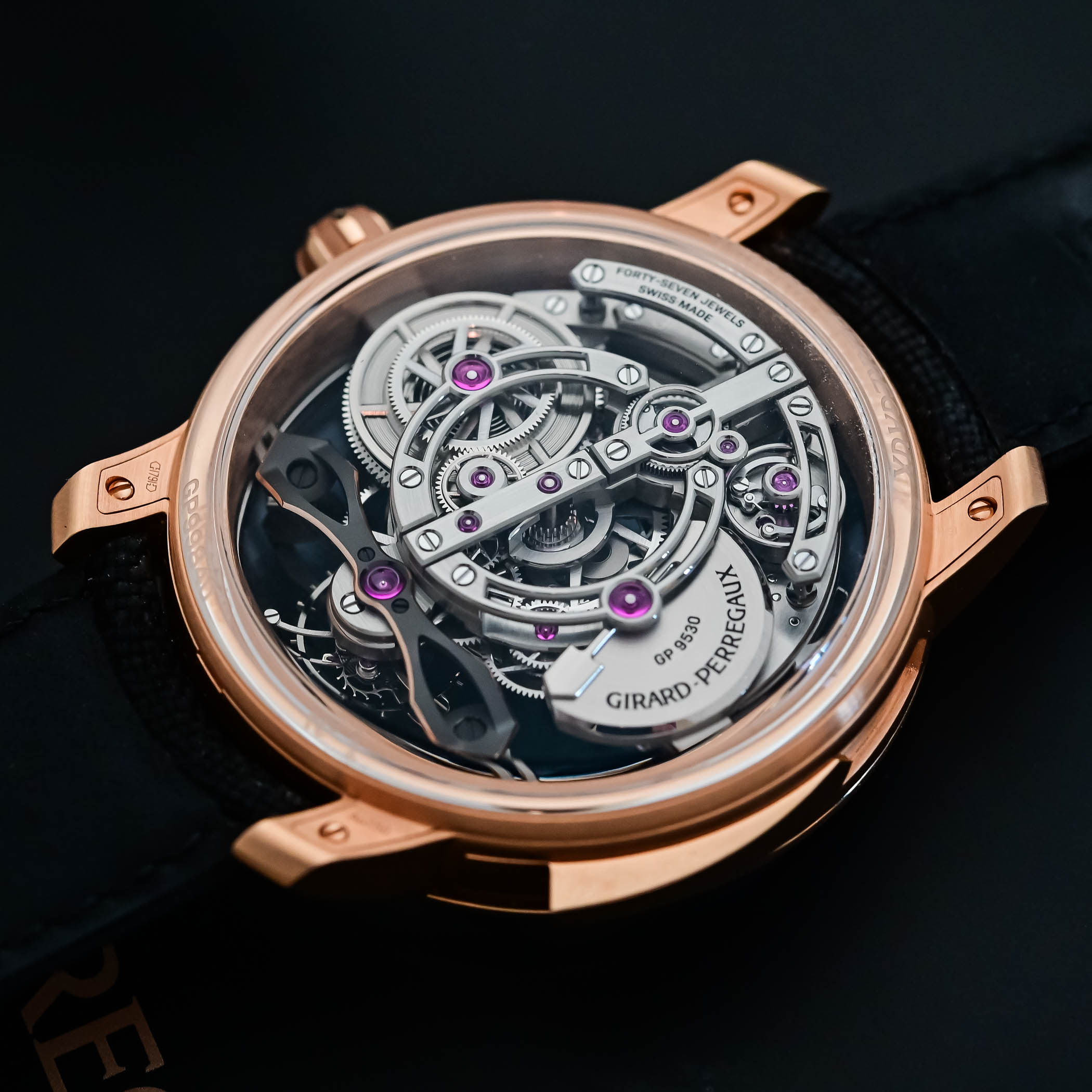
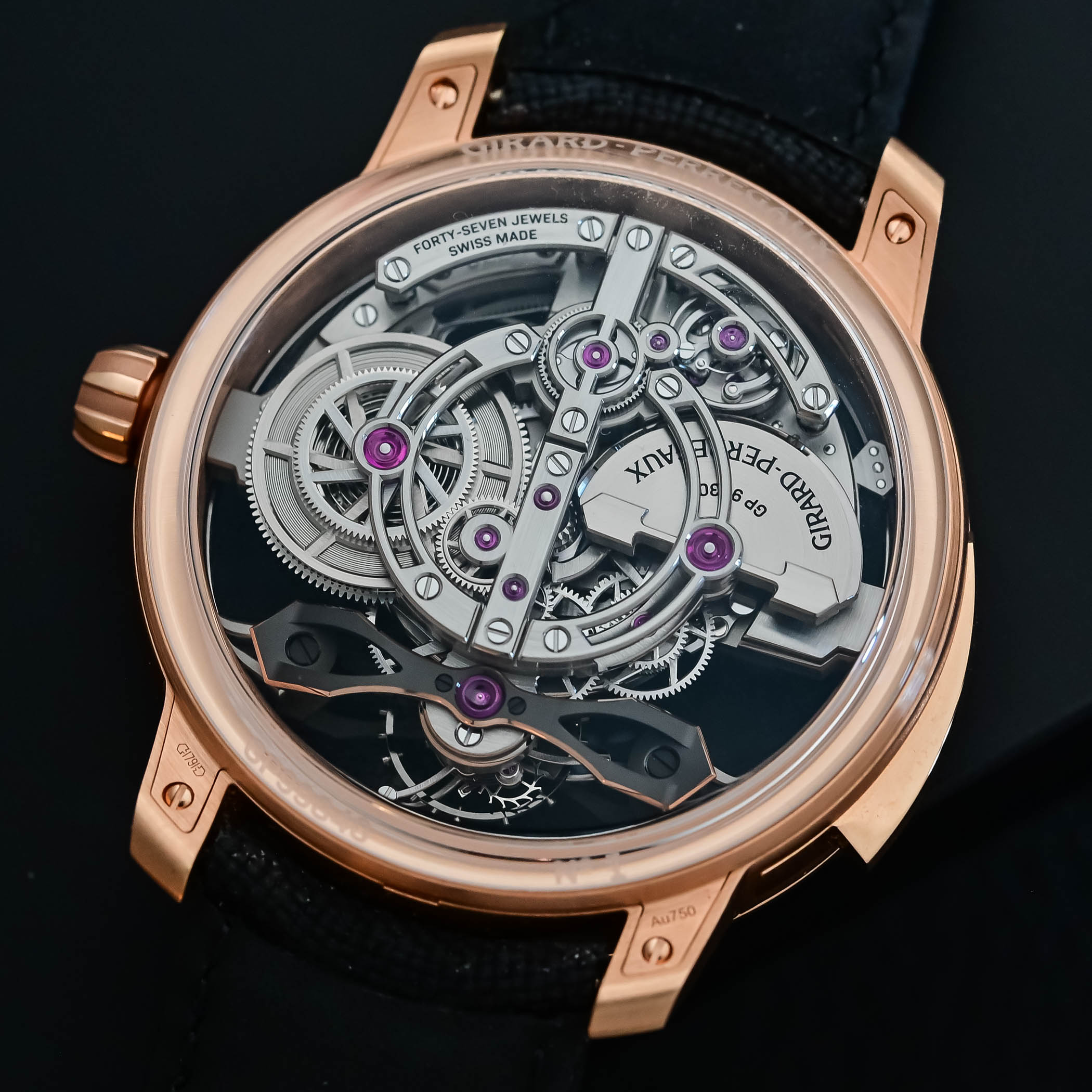
The level of finishing is equally remarkable. Skeletonisation exposes nearly every component of the movement, meaning that even normally hidden surfaces must be decorated. In total, more than 440 hours are devoted to assembling and finishing the calibre, with finishing taking 240 hours. The movement has more than 1,300 polished chamfers, including 295 interior angles, an extraordinary craftsmanship indeed. A small plate engraved with the initials of the watchmaker who assembled the movement adds a nice touch; look for it hidden under the bridge with the jewel count and Swiss-made mentions.
Availability & Price
In a slightly unusual move for such a classical grand complication, the Minute Repeater Flying Bridges is paired with a black rubber strap with a fabric-effect texture, giving the piece a contemporary edge. The strap is closed by a pink gold triple-folding clasp that matches the case. As can be expected, exclusivity comes at a price: the Girard-Perregaux Minute Repeater Flying Bridges retails for CHF 564,000 (incl. taxes) and isn’t limited.
For more information, please visit www.girard-perregaux.com.

3 responses
I’ll take two.
Ugly mess.
Beautiful Watch coming from one of my three Favorite Brands- GP!!!! The sound is so pristine, and the finish is out of this world!!!