


 Not all images were able to load for printing. Please close the print window and try again.
 The Chronoswiss Neo Digiteur Pastel Code Brings Fresh Tones to the Collection
The brand’s "mechanical digital regulator" returns with attractive pastel-coloured dials.
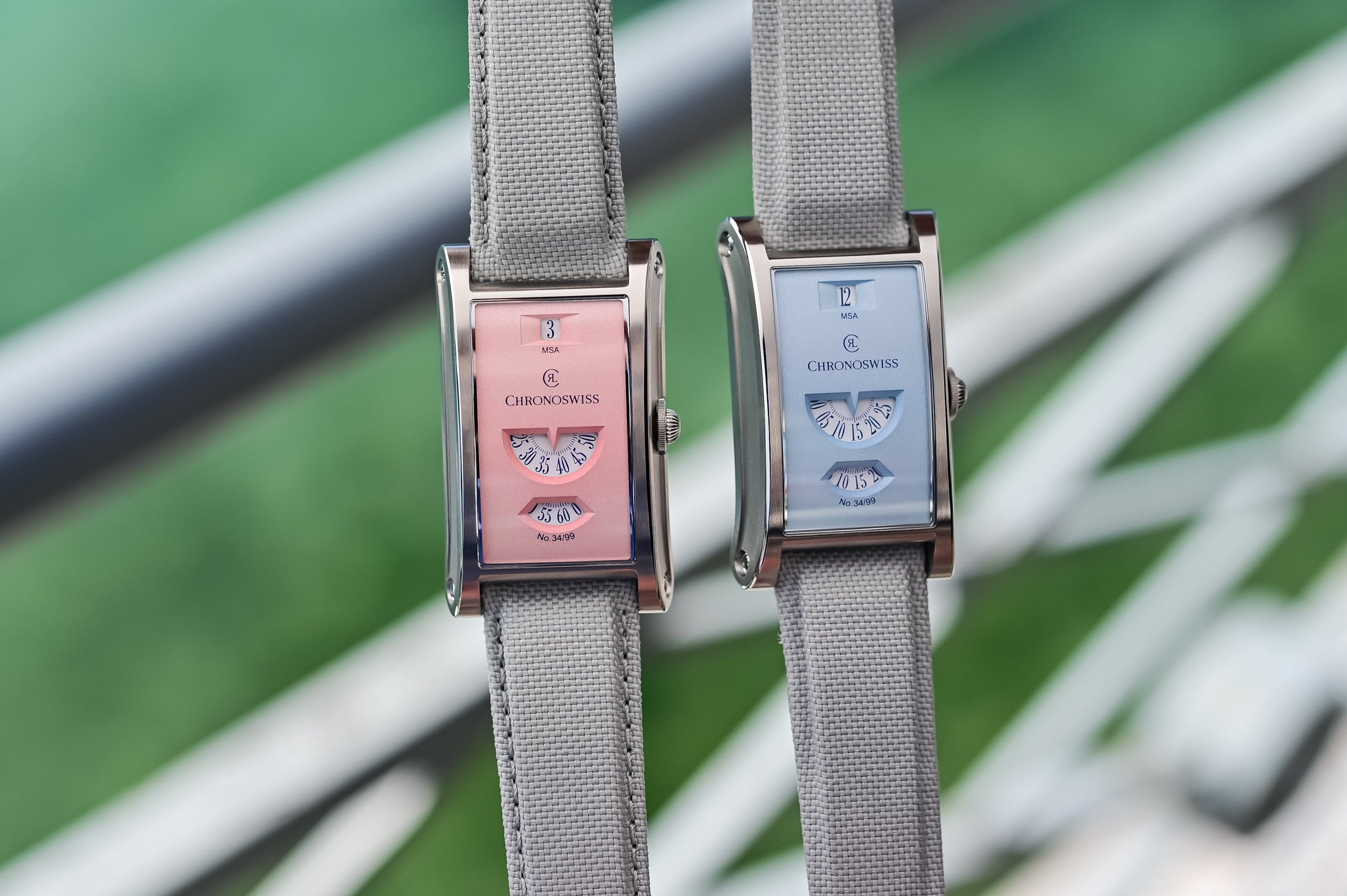
Chronoswiss founder Gerd Lang will forever be remembered as the watchmaker who produced the world’s first serially produced wristwatch with a regulator layout in 1987. Without a shared central axis, the separation of hours, minutes and seconds characteristic of regulators connects directly to the Digiteur of 2005, a digital regulator with jumping hours at noon, digital minutes in the centre and sweeping seconds below, powered by a mechanical movement. Lang’s Digiteur MSA (montre sans aiguilles – watch without hands) also paid tribute to the digital wristwatches (montres à guichets, or aperture watches) popularised during the 1920s and 1930s with its sleek Art Deco-inspired case. Buoyed by the current fascination with jumping hours and guichet watches, Chronoswiss revisited the model in 2025 as the Neo Digiteur. Today, the model returns with three attractive limited editions featuring pastel-coloured dials and slightly lower prices.

The streamlined rectangular case with its cambered profile retains the dimensions of the 2025 editions with a length of 48mm, a width of 30mm and a thickness of 9.7mm. Made from stainless steel, the case’s arched edges are horizontally brushed with bright, polished bevels, while the recessed case flanks are sandblasted for contrast. To preserve the case’s sleek lines, the crown is a modern interpretation of the traditional Chronoswiss onion crown scaled down, with a flattened, fluted underside to facilitate winding.
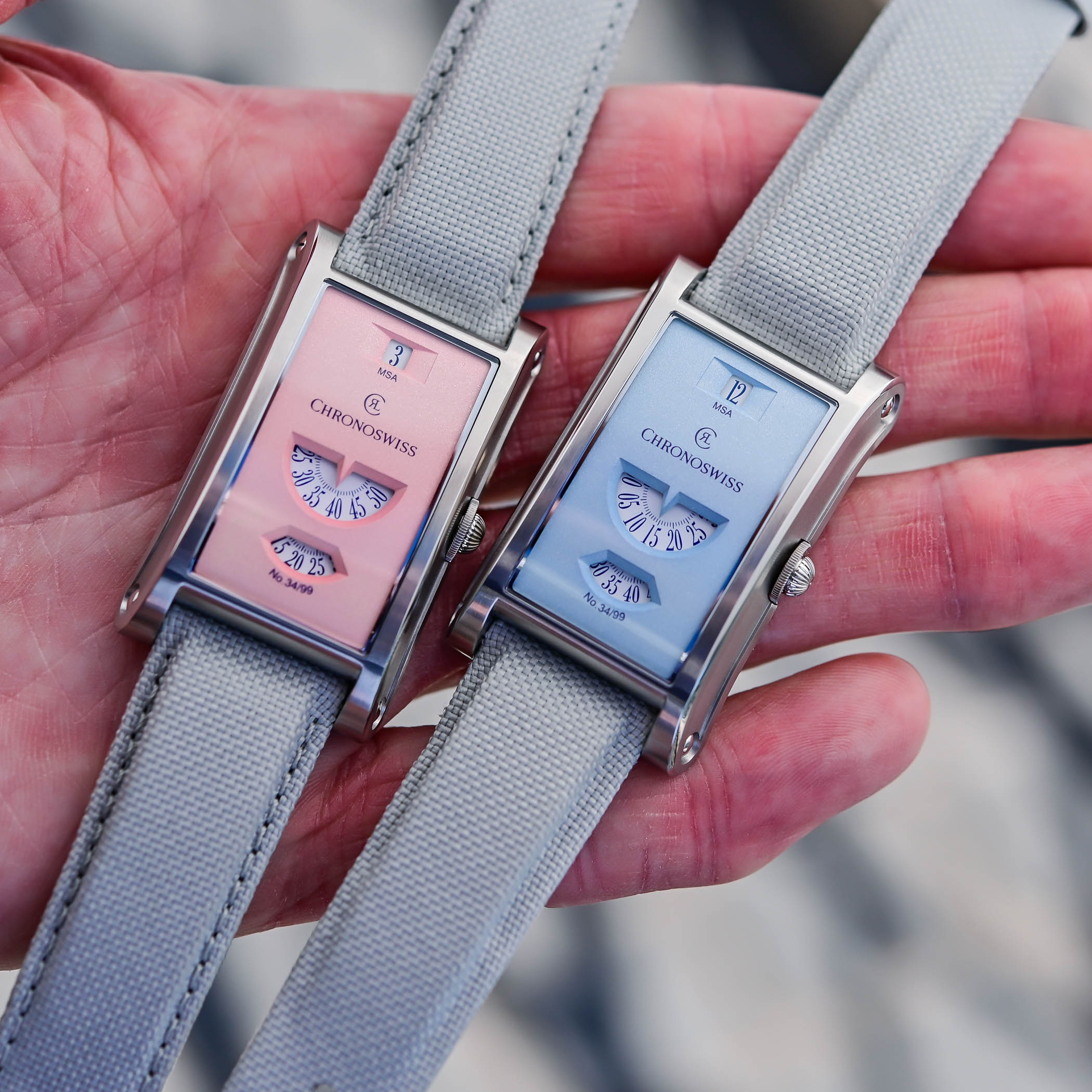

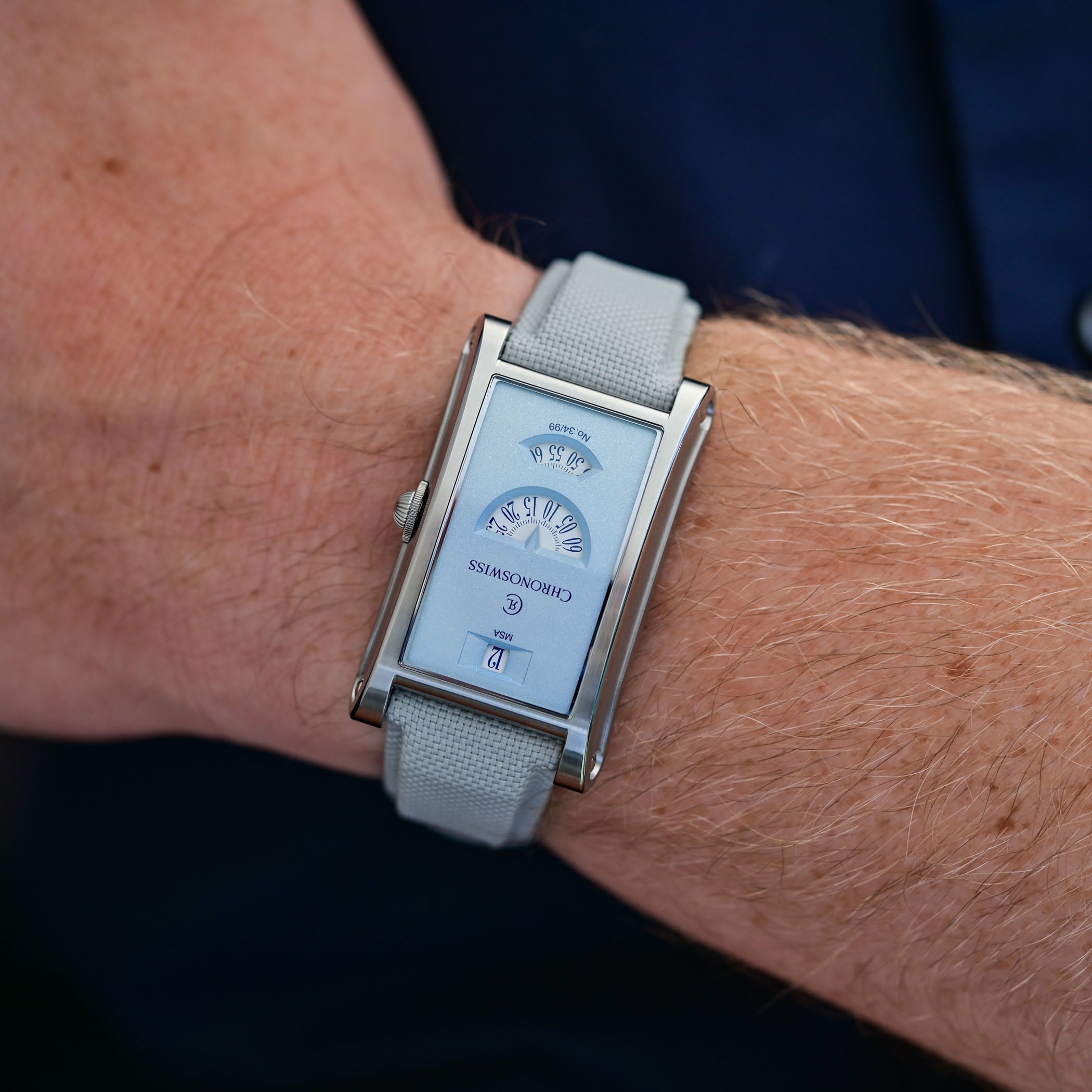
Since the brand’s acquisition by Oliver Ebstein in 2012 and its subsequent relocation from Munich to Lucerne, colour has played a prominent role. While the pastel dials are not as loud as those on some other pieces, the colours stray from traditional palettes, delivering a refreshing, contemporary punch. Available in Rose (pink), Mint (green), or Sky (blue), the dials are sandblasted for a matte finish, then lacquered to add depth and interest.

The vertical layout is retained, with three sharply defined, deep-set, bevelled windows. At noon, a rectangular aperture with sloping side edges frames the jumping-hour display with its matte white background and dark blue numerals. The larger arched aperture with its built-in indicator displays the sweeping minutes, while the horizontal panoramic arc below tracks the running seconds. Limited to 99 pieces in each colour, the watch’s individual number is printed on the dial below the seconds.
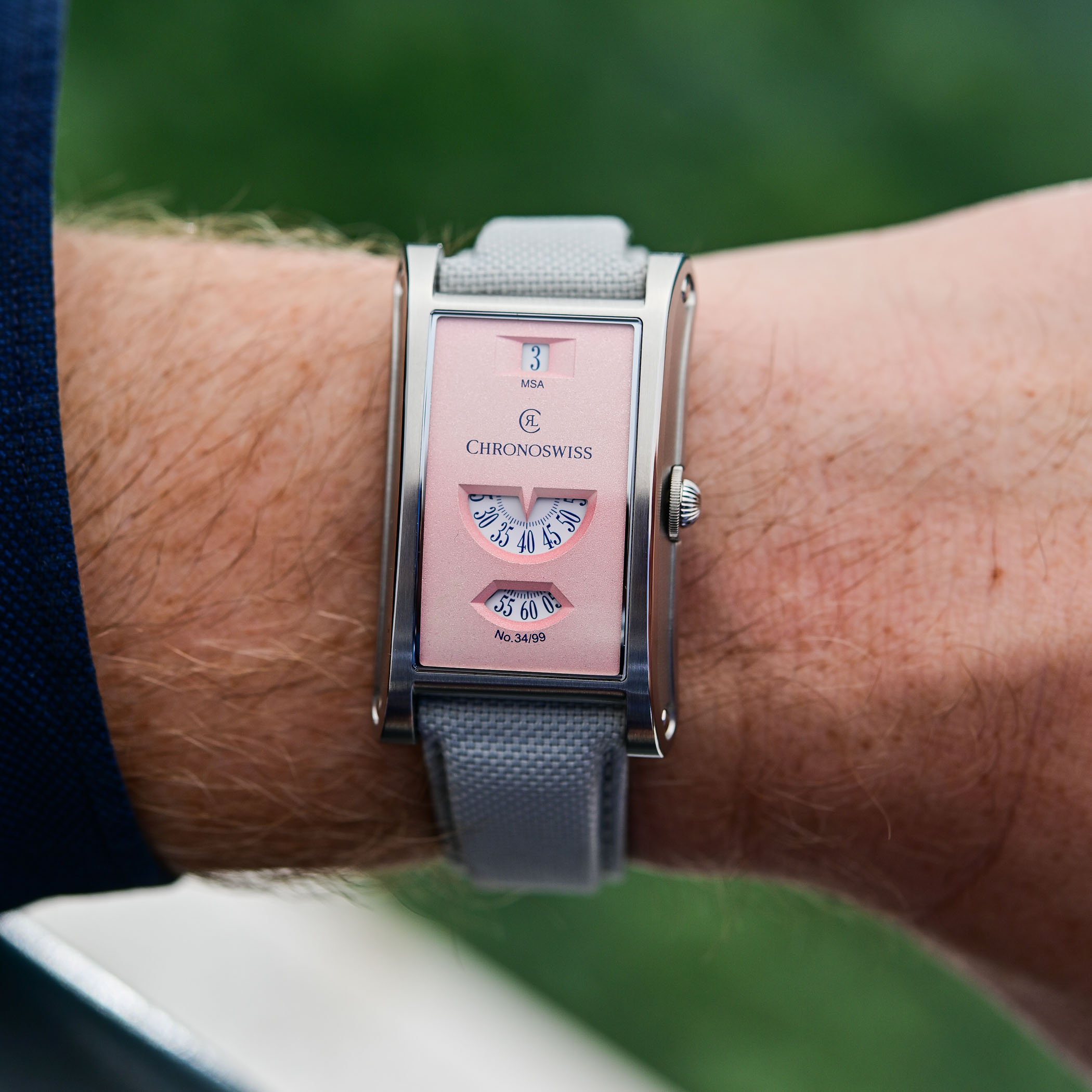
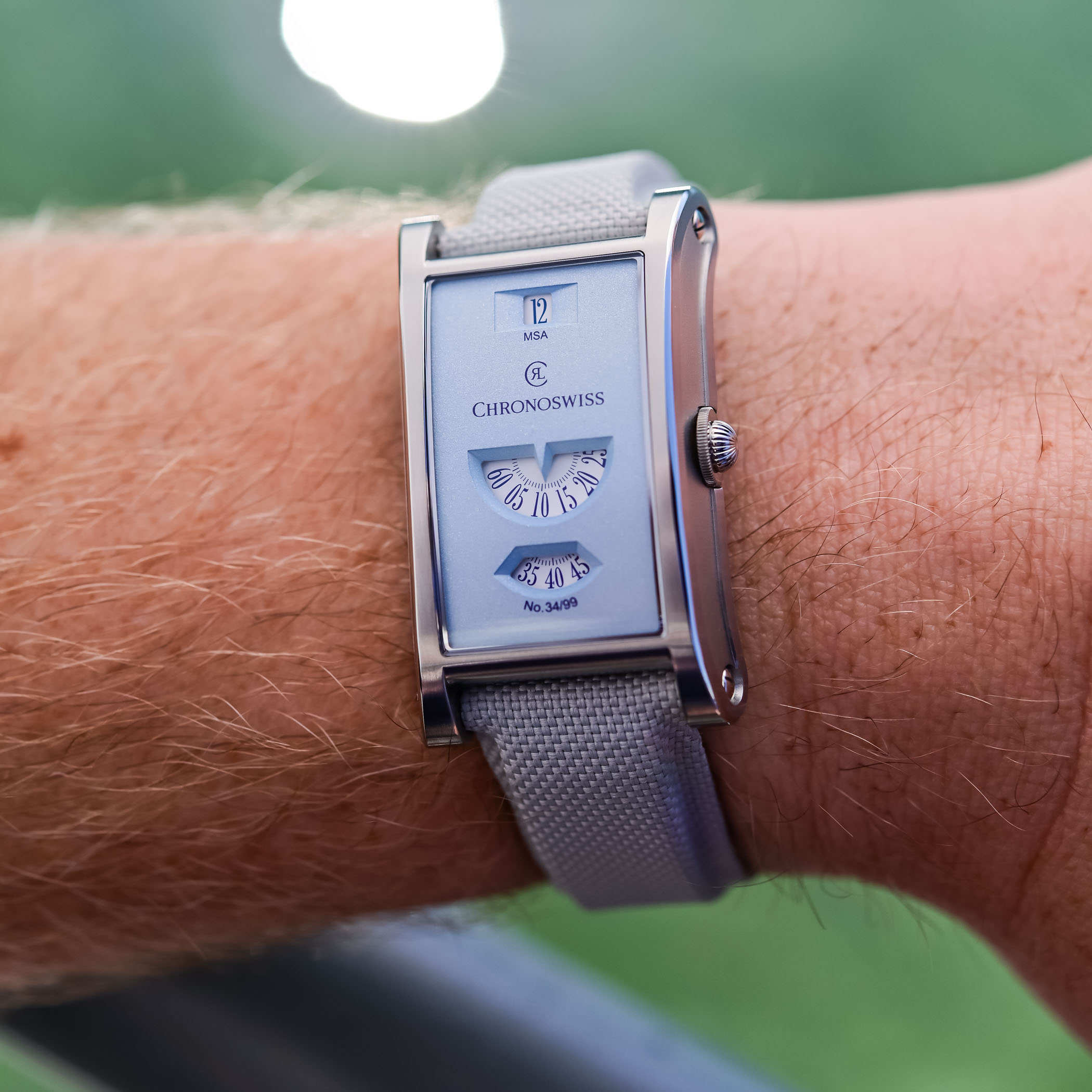
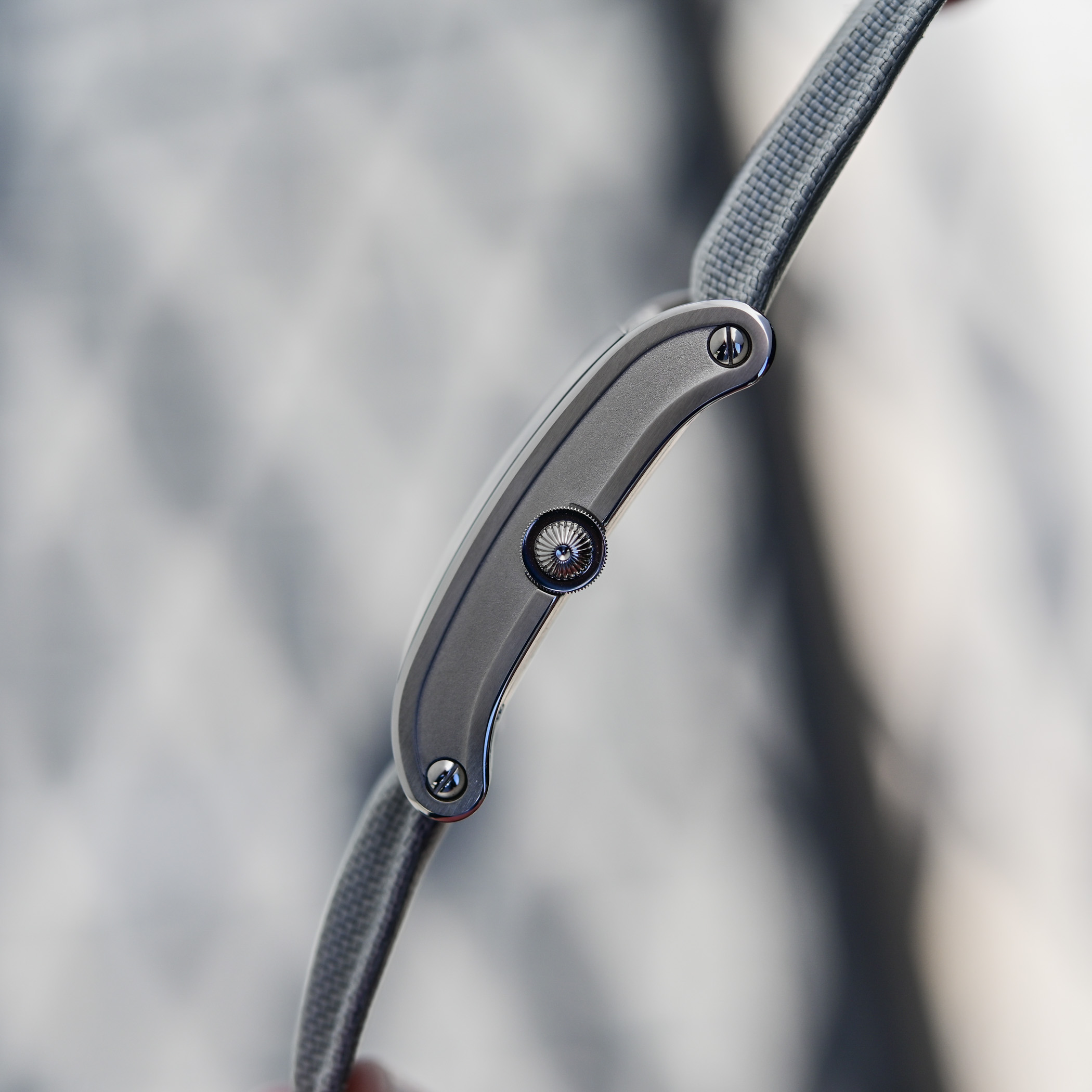
The precisely framed, flawlessly legible digits beneath the curved windows are the result of several mechanical solutions. Because the display relies on three rotating discs, which can add weight and slow movement, they are made from lightweight aluminium. To protect the jumping hour mechanism, Chronoswiss’s proprietary in-house Digiteur module is bidirectional, allowing you to turn the crown in either direction without damaging the mechanics. Moreover, the module manages the energy spike needed to advance the jumping hour disc instantly by storing energy in a spring and releasing it in a powerful burst, while keeping the minutes and seconds discs as dragging elements.
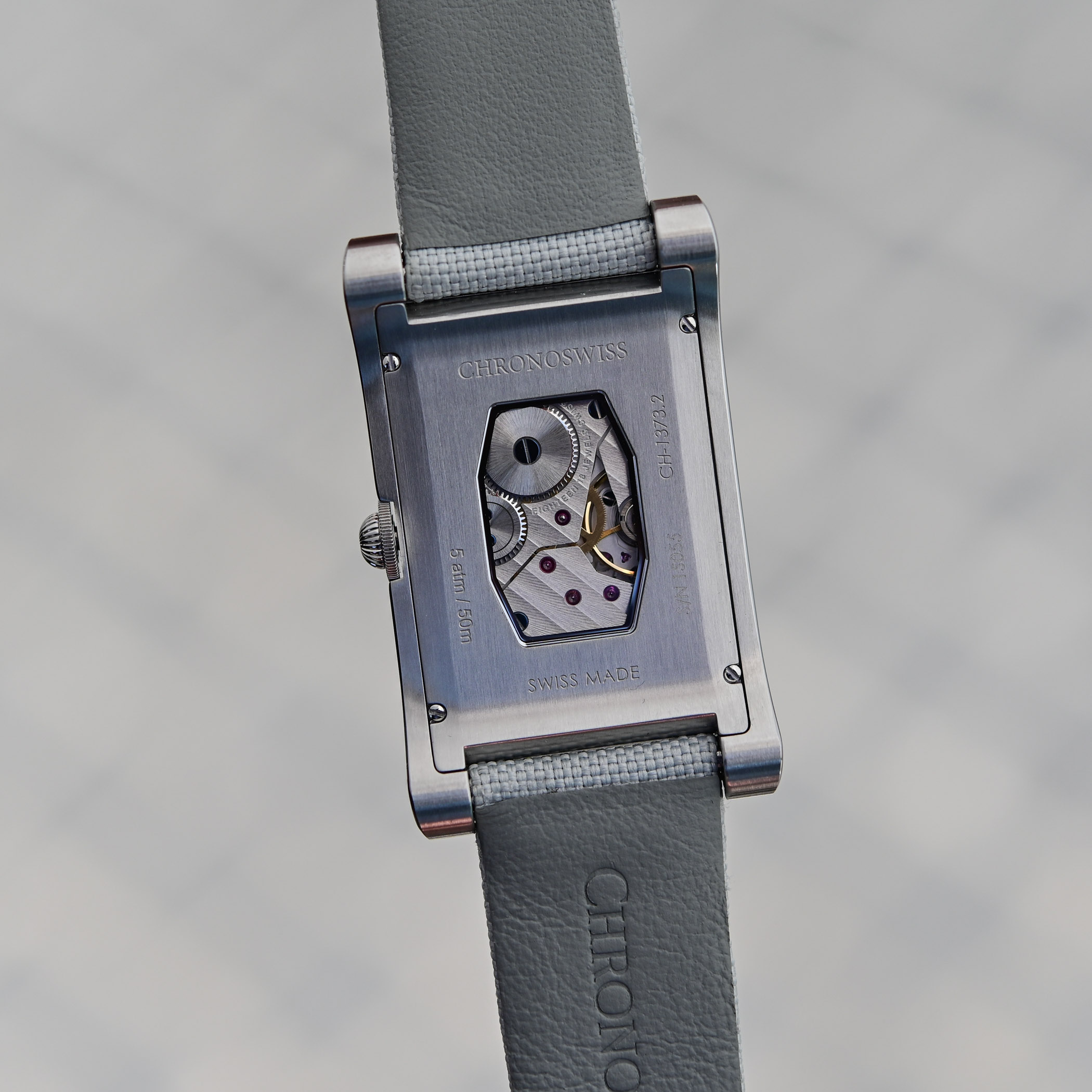
The manual-winding calibre C.85757, built on a Peseux 7001 architecture, operates at 3Hz and delivers a 48-hour power reserve. Unlike earlier editions with hand-guilloché flourishes on the wheel bridge, the new Pastel Code is decorated with a Côtes de Genève finish, which has a direct impact on the price.
Availability & Price
Limited to 99 pieces in each colourway, the Neo Digiteur Pastel Code models retail for CHF 11,500, EUR 12,700 or USD 13,900. More information at chronoswiss.com.



1 response
On the chase with JLC, however, like JLC ChronoSwiss is way over priced. If said ChronoSwiss pieces sold for five thousand U.S. I would make the purchase. Remedy: Purchase an Echo Neutra or even a Baume Mercier Hampton which still reside in the realm of reality at decent prices.