


 Not all images were able to load for printing. Please close the print window and try again.
 Blancpain Goes Vintage with the new Fifty Fathoms Bathyscaphe 70th Anniversary
A faithfull re-edition of a 1968 model, celebrating the 70th anniversary of the Bathyscaphe.
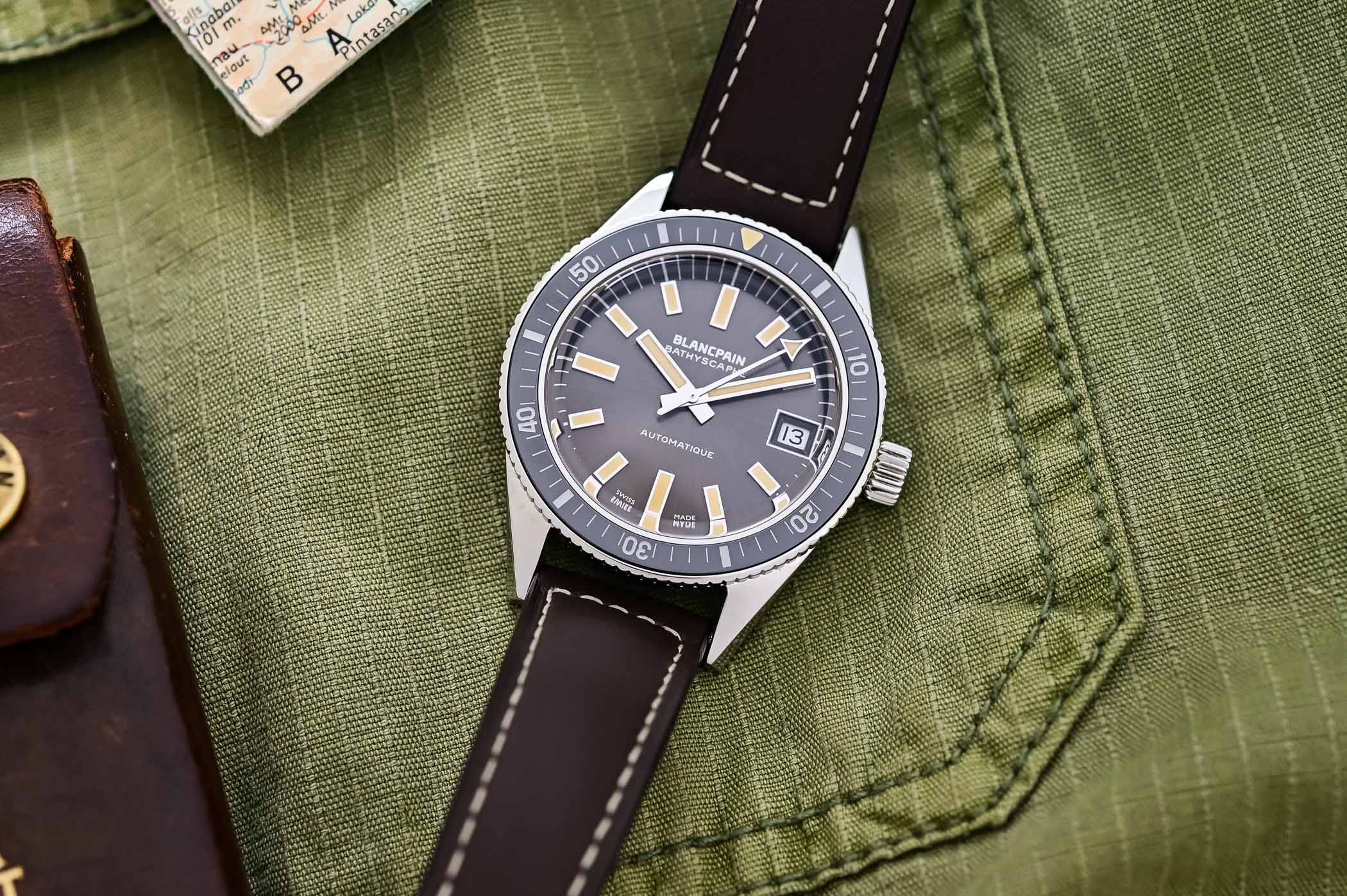
While the fact that the Blancpain Fifty Fathoms was one of the earliest dive watches on the market is now well-known, this professional, mostly military-issued model wasn’t the only one produced by the brand. There is another watch in the collection that was created back in 1956, as the civilian counterpart to the Fifty Fathoms (the pro version), a so-called skin diver timepiece with more restrained looks and credentials: the Bathyscaphe. A watch that reflected the vision of Blancpain’s then-CEO and passionate diver, Jean-Jacques Fiechter, to offer something more wearable, it now celebrates its 70th anniversary. And Blancpain prepared something pretty cool for us, with a faithful reproduction of an emblematic model from 1968, the Fifty Fathoms Bathyscaphe 70th Anniversary.
Background
We’re not here to talk about the classic, professional Fifty Fathoms, but about its small sister, the Bathyscaphe… And if you know your diving history, you’re surely aware that this name has some importance. The name “Bathyscaphe” refers to the pioneering deep-sea exploration vessel conceived by Swiss scientist Auguste Piccard in the 1940s, a free-diving, self-propelled deep-sea submersible. Designed to reach the greatest depths of the ocean, the Bathyscaphe represented a major milestone in humanity’s exploration of the underwater world, to the point of breaking one record of depth after another. The story of Piccard’s Bathyscaphe culminated in 1960, when his son Jacques Piccard and Don Walsh reached the deepest known point on the Earth’s surface, the Challenger Deep, in the Mariana Trench in the Pacific Ocean, onboard the Trieste (on 23 January 1960, reaching a depth then measured at 10,916 meters, later slightly corrected).
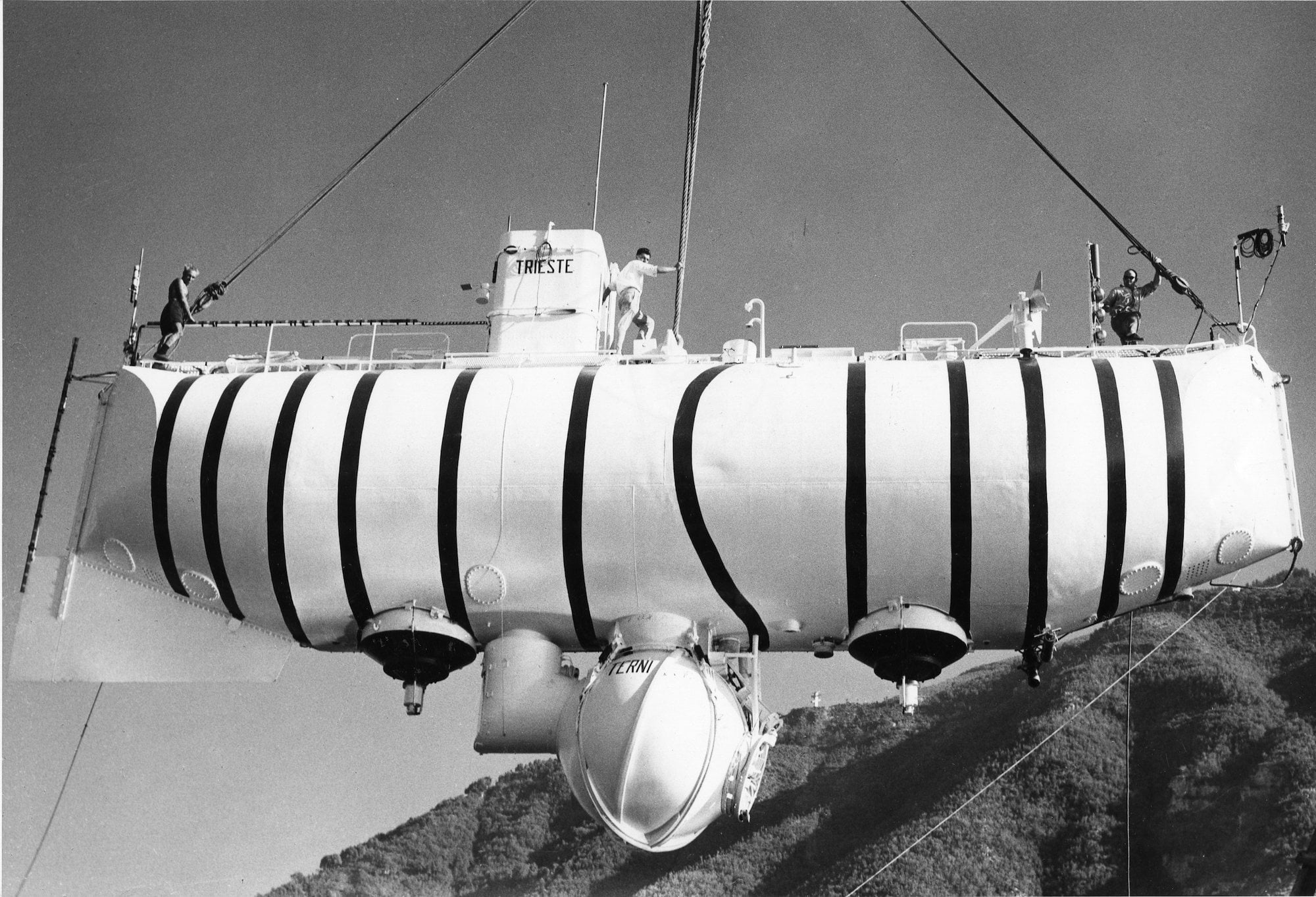

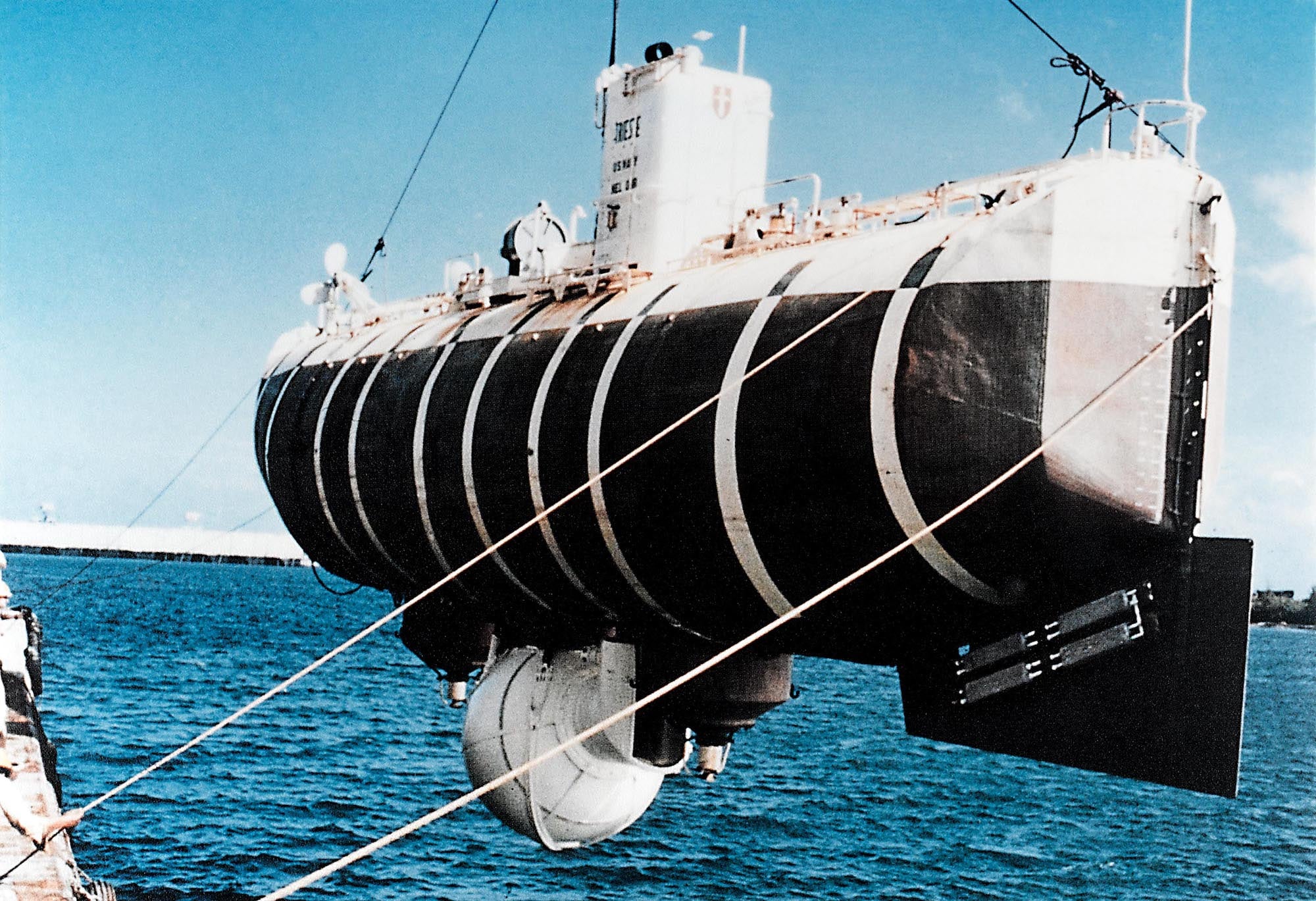
These achievements didn’t remain unnoticed, specifically resonating in Jean-Jacques Fiechter’s mind. Besides being the CEO of Blancpain, Fiechter was also a passionate diver. Rewinding a bit, on 26 August 1953, Auguste Piccard and his son Jacques carried out the first dive with the second bathyscaphe, the Trieste. Piloted by Jacques Piccard, the Trieste set a new depth-diving record, reaching 3,150 metres below sea level in the Tyrrhenian Sea. Only ten days later, on 5 September 1953, Jean-Jacques Fiechter registered the name Bathyscaphe with the Swiss Commercial Office, as attested by the extracts of the Archives Horlogères de la FH et la Feuille Officielle Suisse du Commerce below.
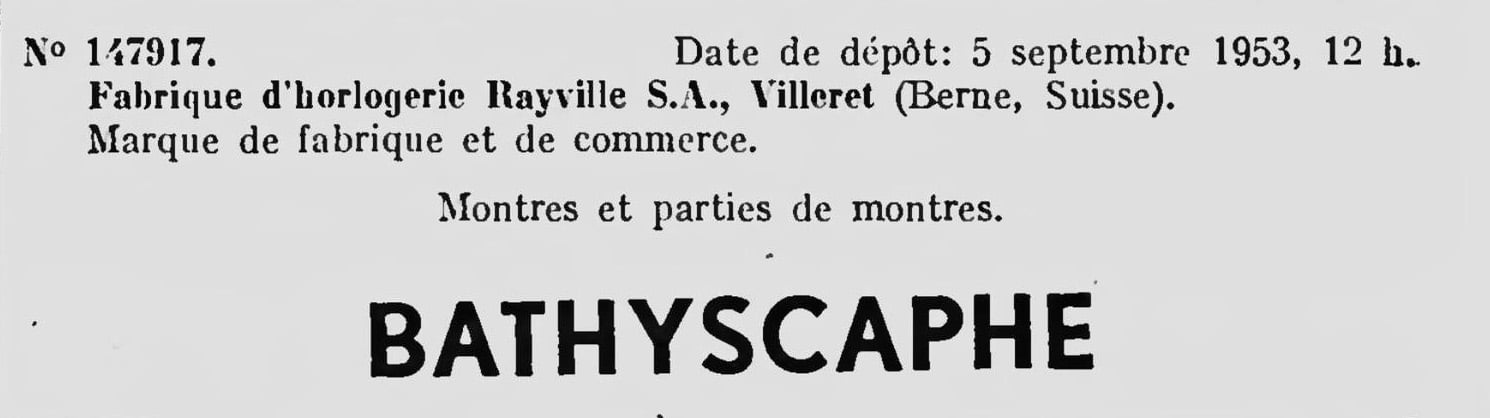
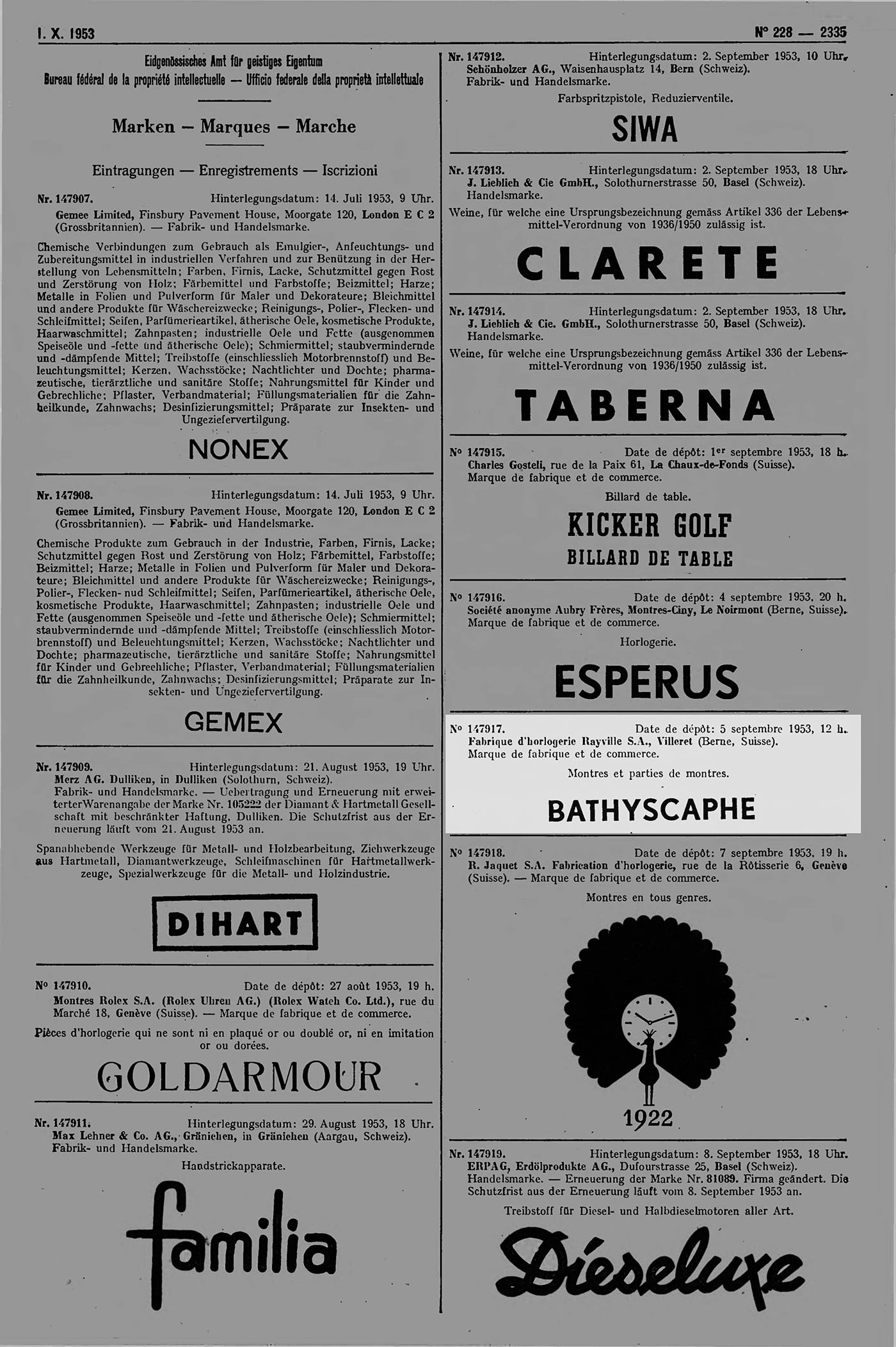
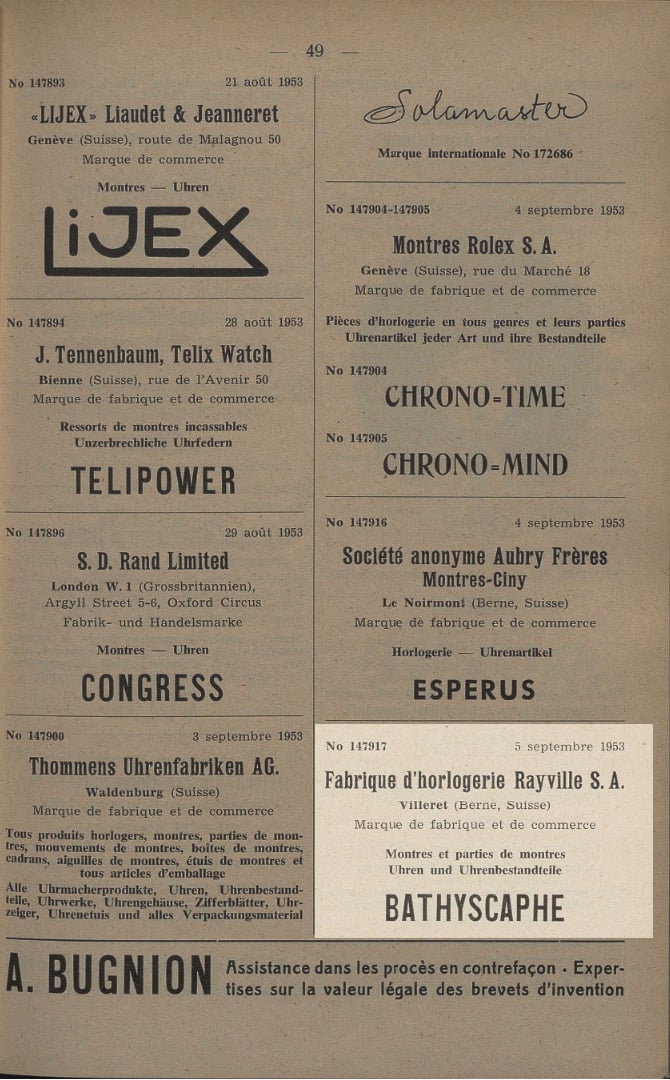
Even though registered in 1953, the name Bathyscaphe will only materialise as a watch in 1956. During the second half of the 1950s and the early 1960s, following the earliest dive watches (mostly military-issued, professionally-oriented models), a new generation of dive watches emerged alongside the growing popularity of recreational diving: the so-called skin diver. Still fairly capable, with necessary diving credentials, the skin divers were, however, less technical and intended for leisure and recreational diving. Characterised by more compact proportions, cleaner lines, and a refined aesthetic, skin diver watches combined essential diving features with a more understated and daily-oriented design, making them suitable for underwater activities and on-land wearability.
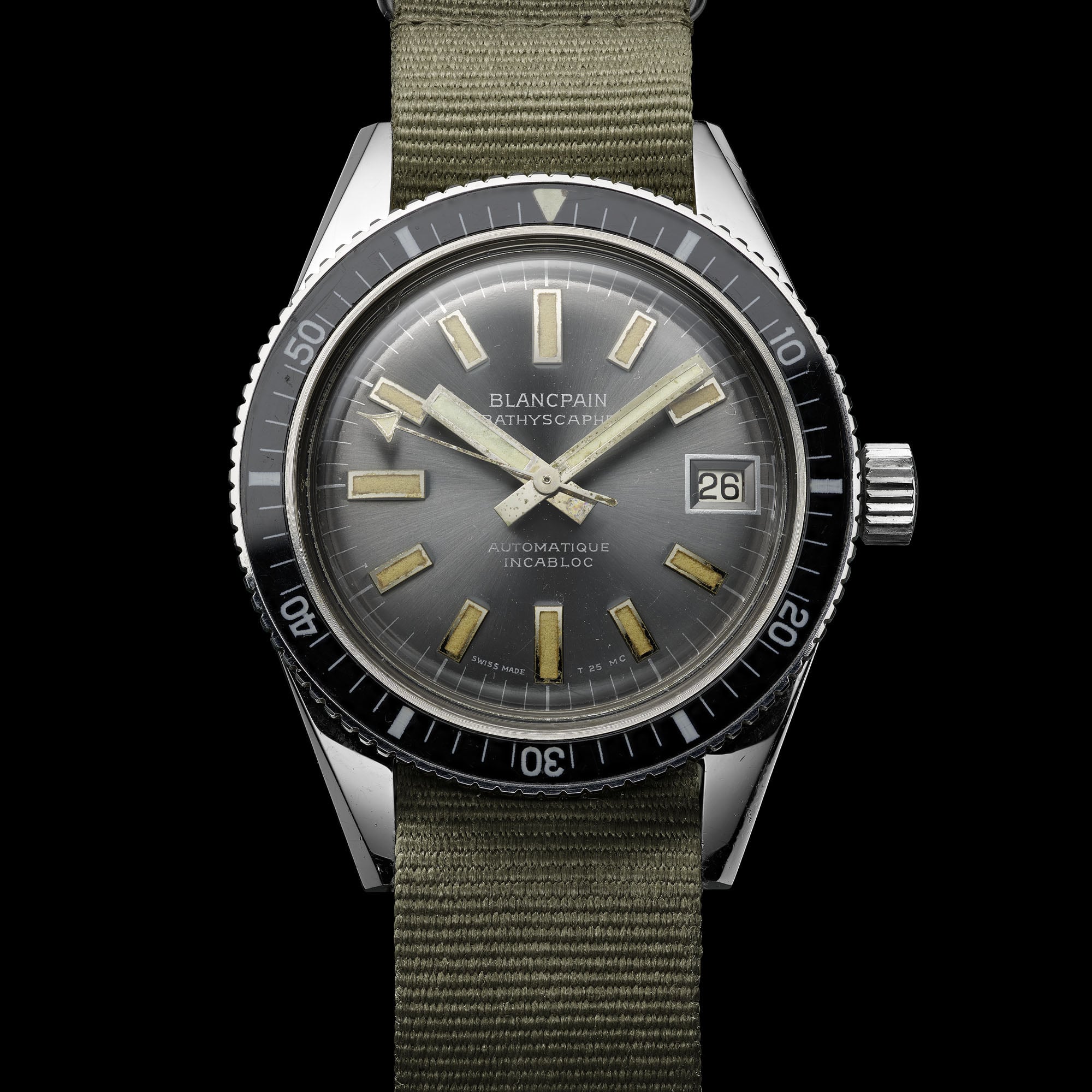
The Blancpain Bathyscaphe was launched in 1956, as the slimmer, smaller and less technical sister to the Fifty Fathoms, the latter being a professional diving instrument for military forces, professional divers, and underwater specialists measuring a whopping (back then) 41mm. The Bathyscaphe, on the contrary, was offered in a more compact 35mm case with a slimmer and more discreet profile, reflecting a more civilian style – and this is still true in Blancpain’s current collection.
The Bathyscaphe 70th Anniversary, a 1968 reborn
Seventy years after its creation, Blancpain celebrates the Bathyscaphe with a faithful reproduction of a historic model… but not the original version of 1956. Instead, Blancpain looks at a later version that is probably one of the most emblematic expressions of the Bathyscaphe’s history, at least in terms of design and popularity: a version from 1968. This edition was chosen “for the way it embodied the collection’s defining qualities: balanced proportions, functionality, and understated elegance,” as the brand explains.
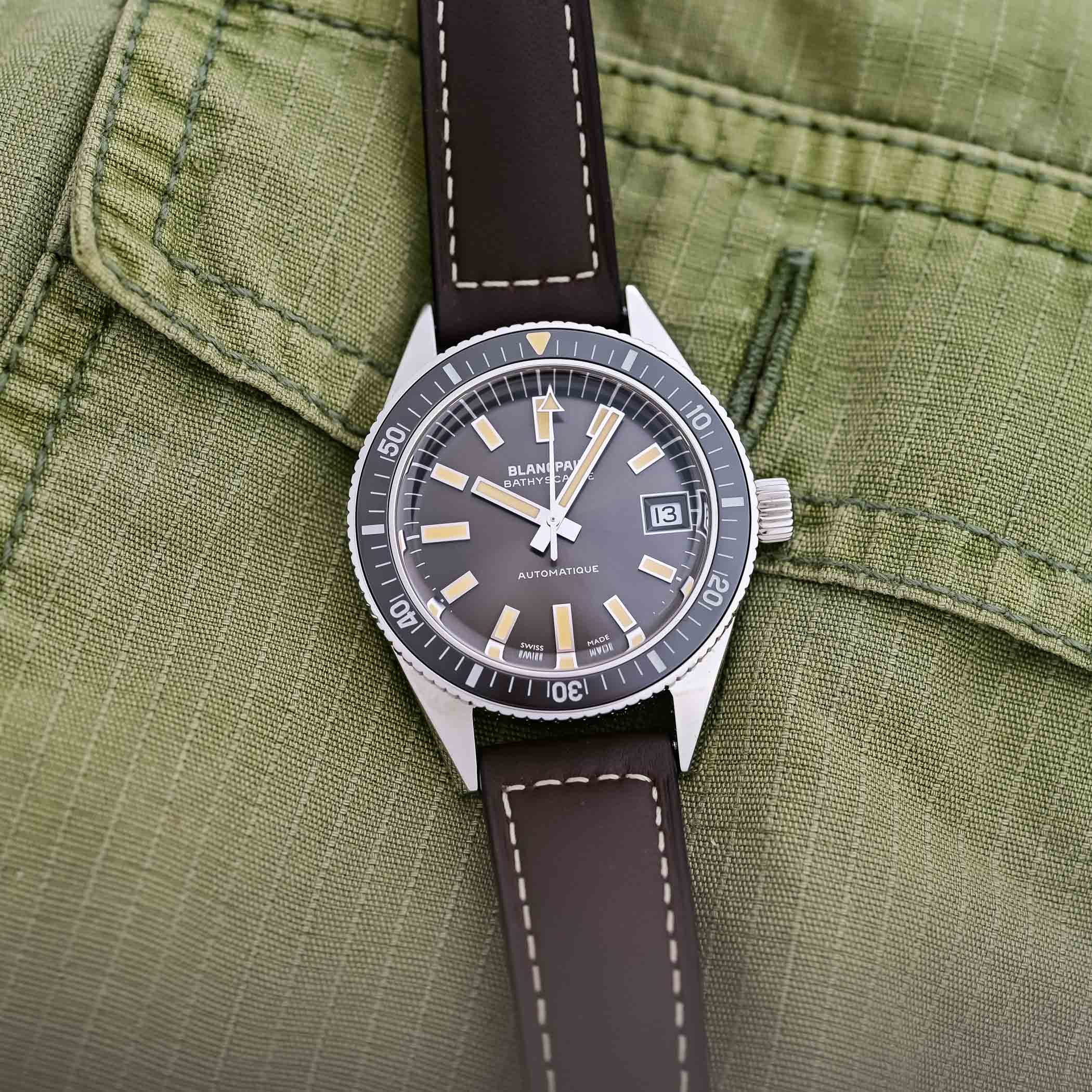
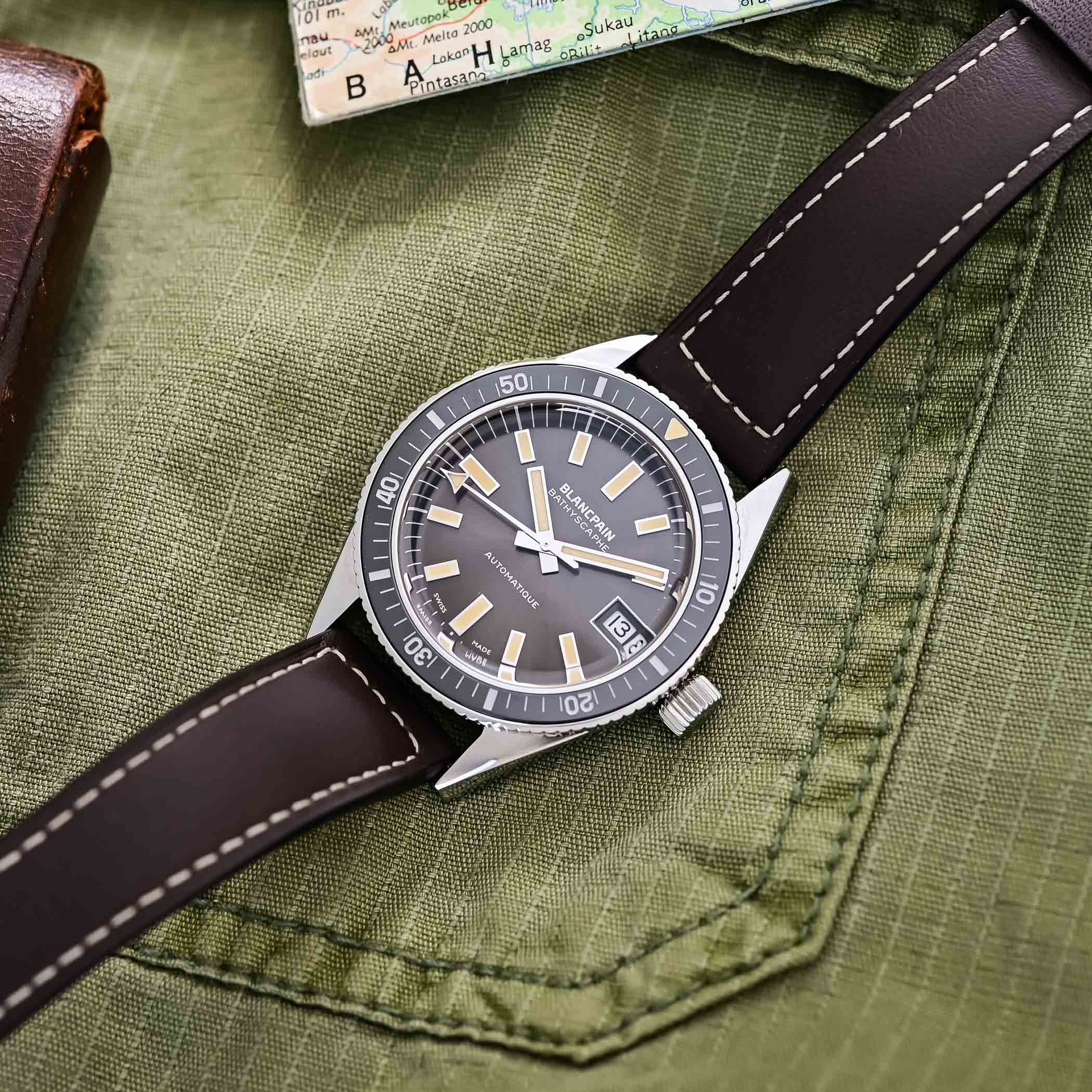
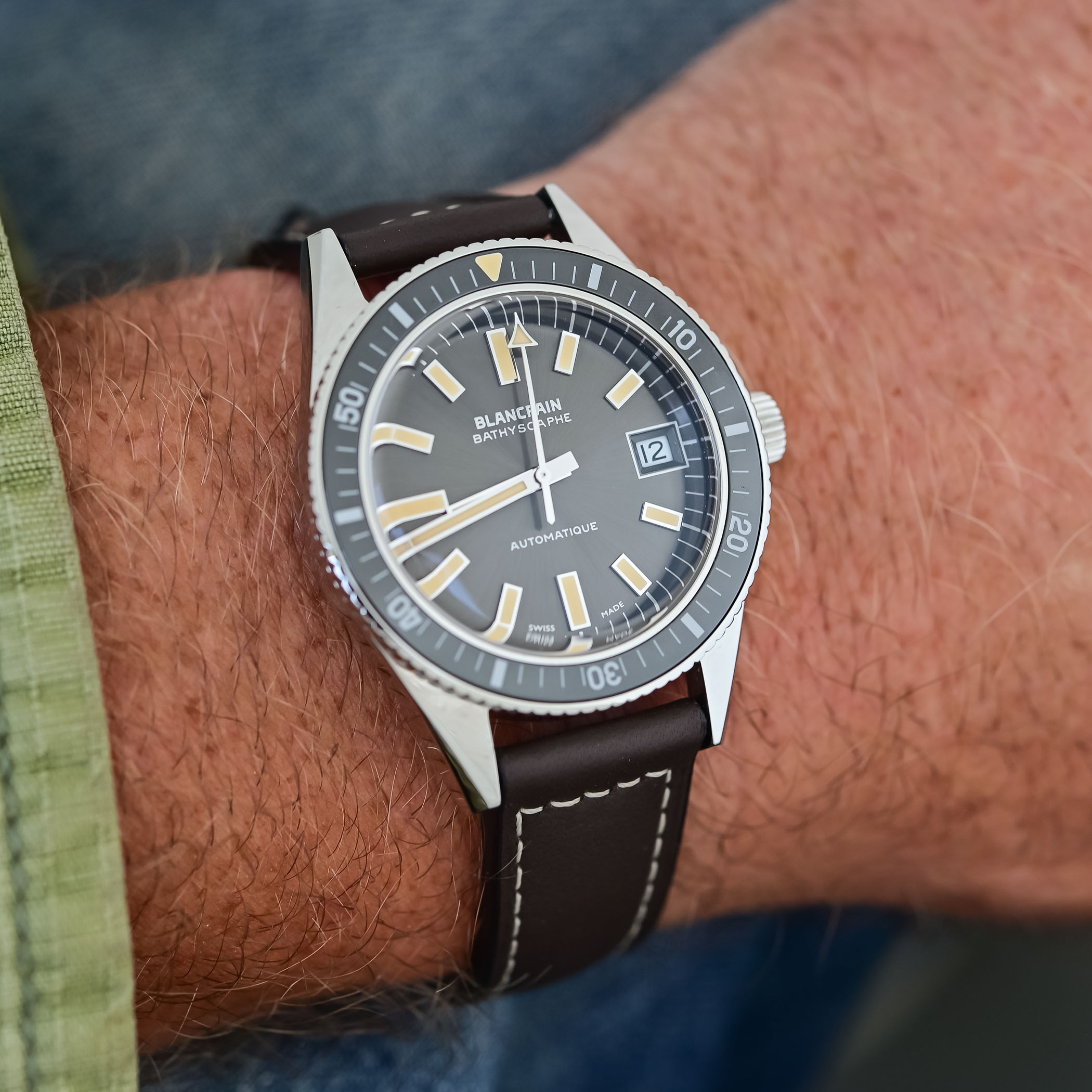
The Blancpain Fifty Fathoms Bathyscaphe 70th Anniversary limited edition is a classic exercise of vintage re-edition, mixing faithful historical design with modern technology. Here, though, Blancpain has done a great job of staying as close as possible to the original iteration, first by respecting the proportions. A classic skin diver model, the Bathyscaphe 70th Anniversary comes in a compact case developed exclusively for this limited series and measuring only 37.40mm in diameter, identical to the 1968 model. Thickness is now 12.30mm, a bit more than the original model (about 11mm), but that can be explained by the increased water resistance, now rated at a modern 300m. The case, made of polished steel, is defined by a slender mid-case profile, symmetrical straight lugs with nice facets and a sharp look that emulates that of the 1968 Bathyscaphe. And if you find the diameter too compact, keep in mind the 46.50mm lug-to-lug, giving the watch enough wrist presence.
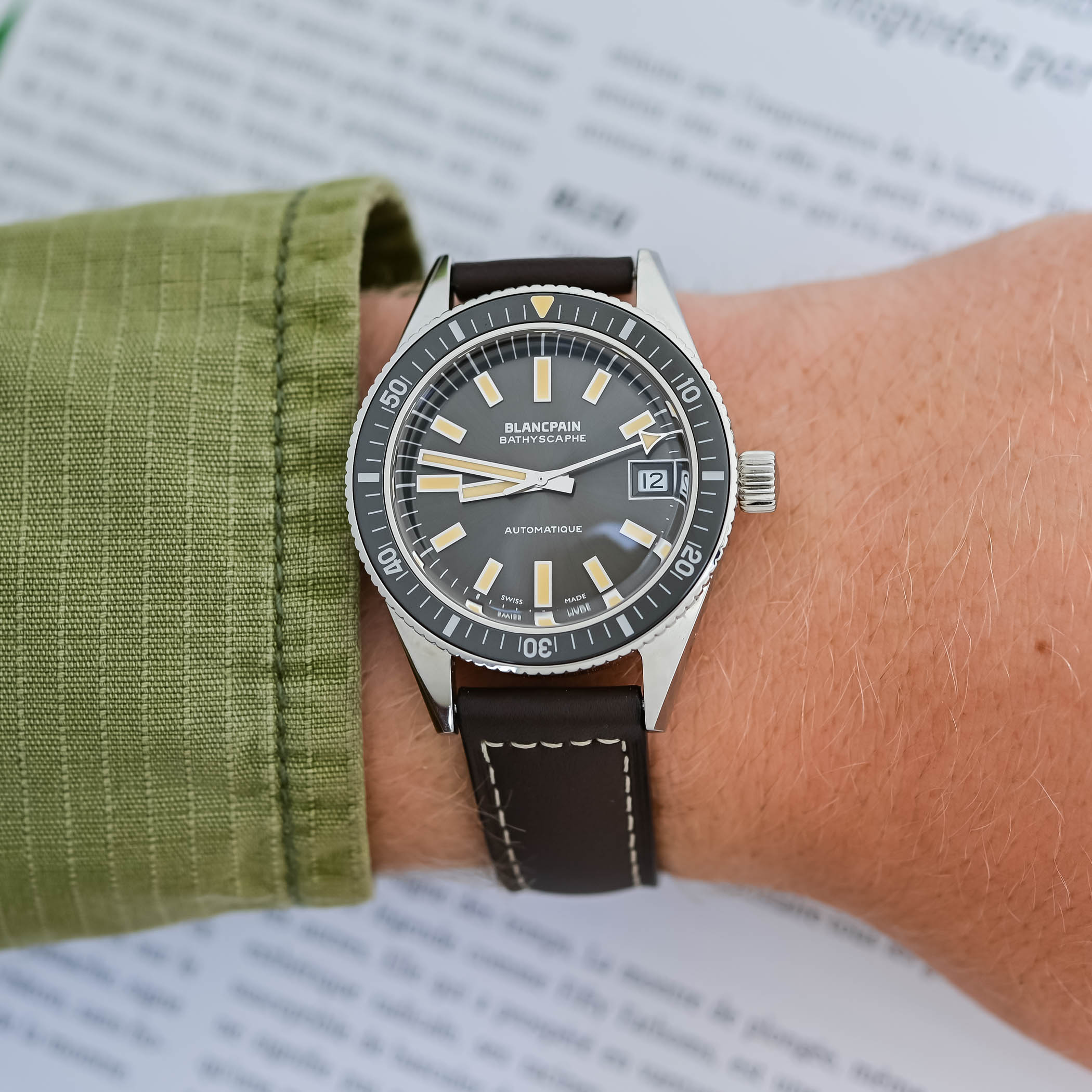
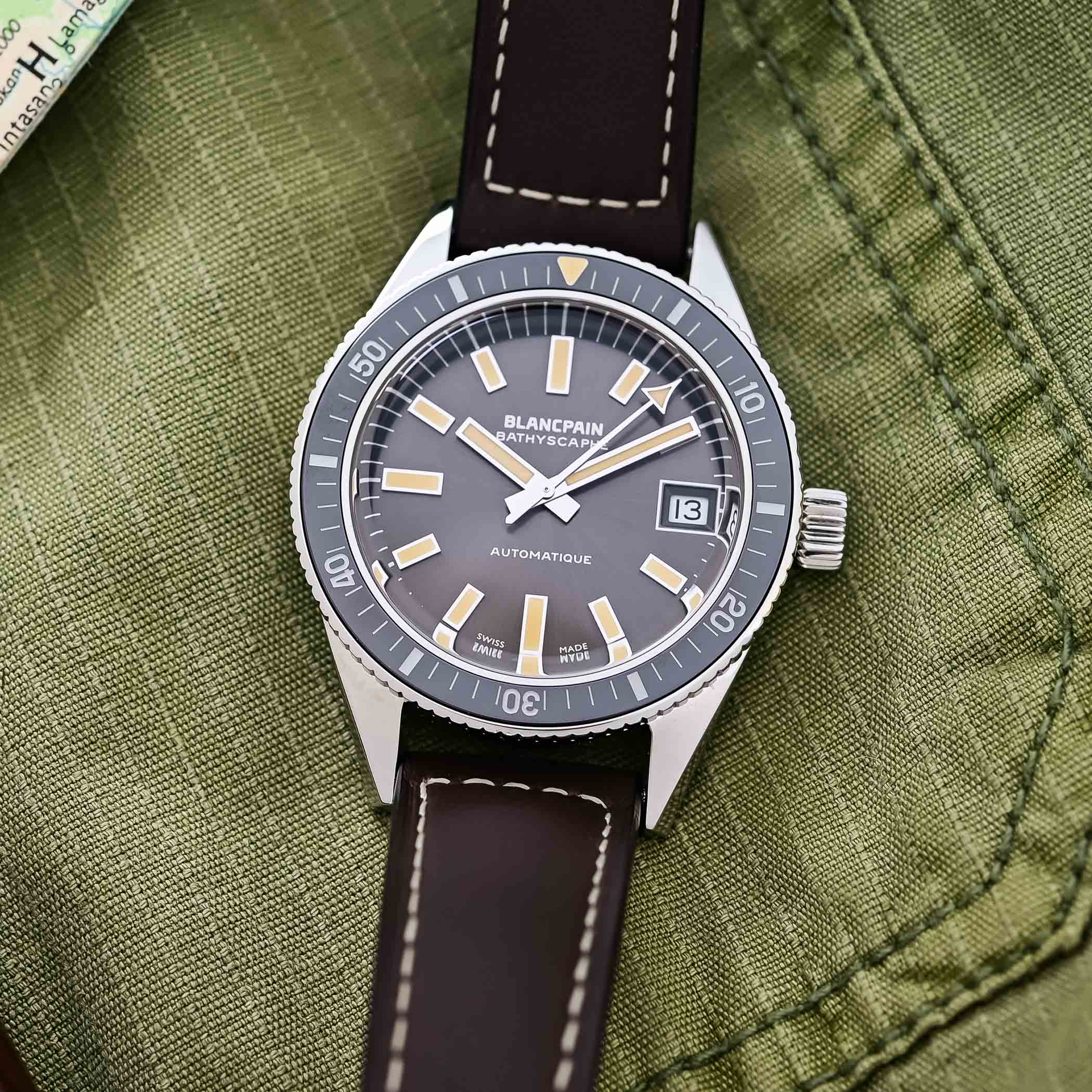
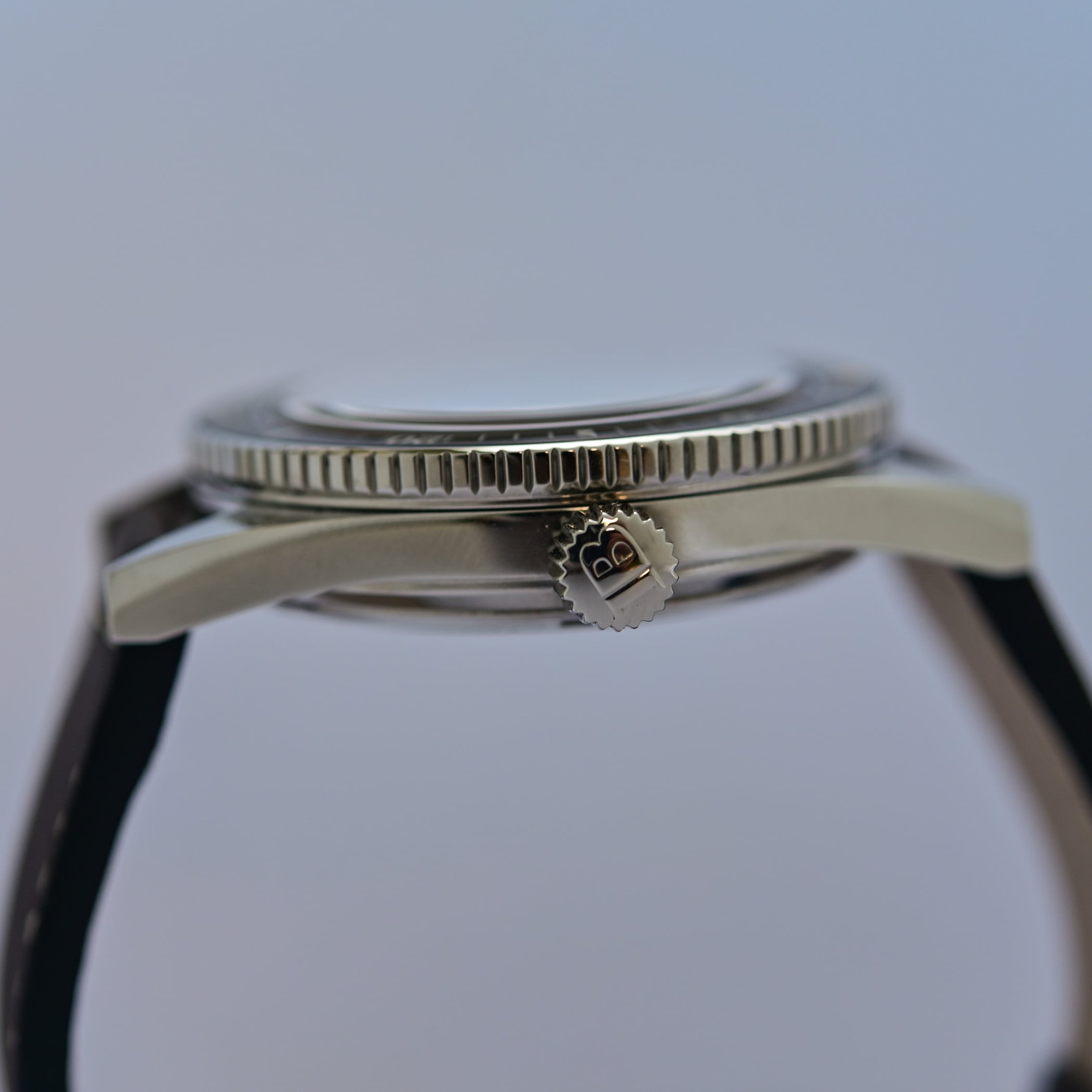
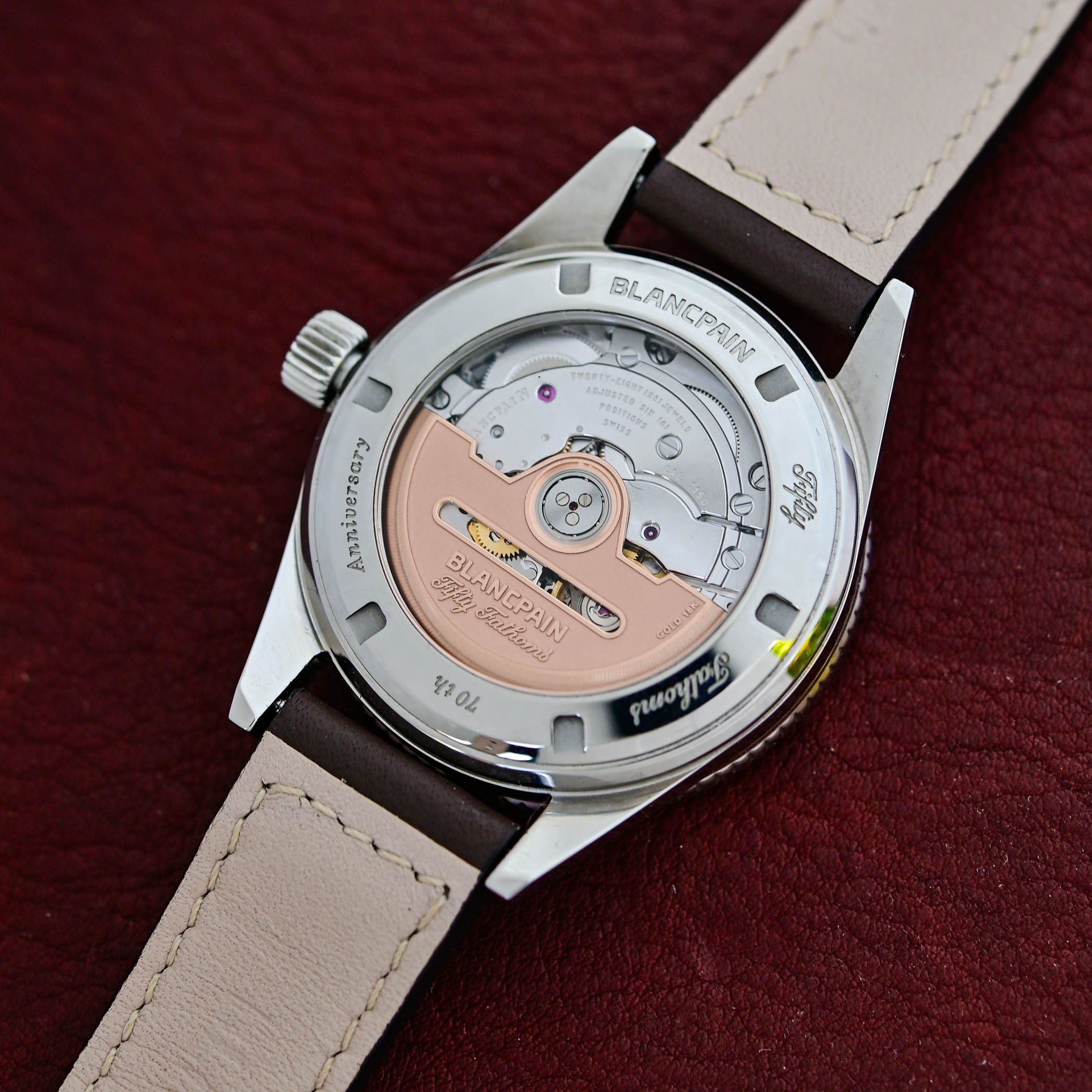
Just like the original version, the bezel (now unidirectional, not bidirectional like the original) of this vintage-inspired Fifty Fathoms Bathyscaphe is made of polished steel and extends into a ring at the base of the glass box crystal, which replaces the original plexiglass but mimics its look. In the same vein, the design of the bezel’s insert mixes heritage and innovation. The look has been preserved but reworked in ceramic with lacquered numerals, replacing the original black hesalite material, to enhance resistance. As a modern dive watch should, the crown and caseback are screwed, and the latter, as a concession to contemporary tastes, features a sapphire crystal revealing the movement.
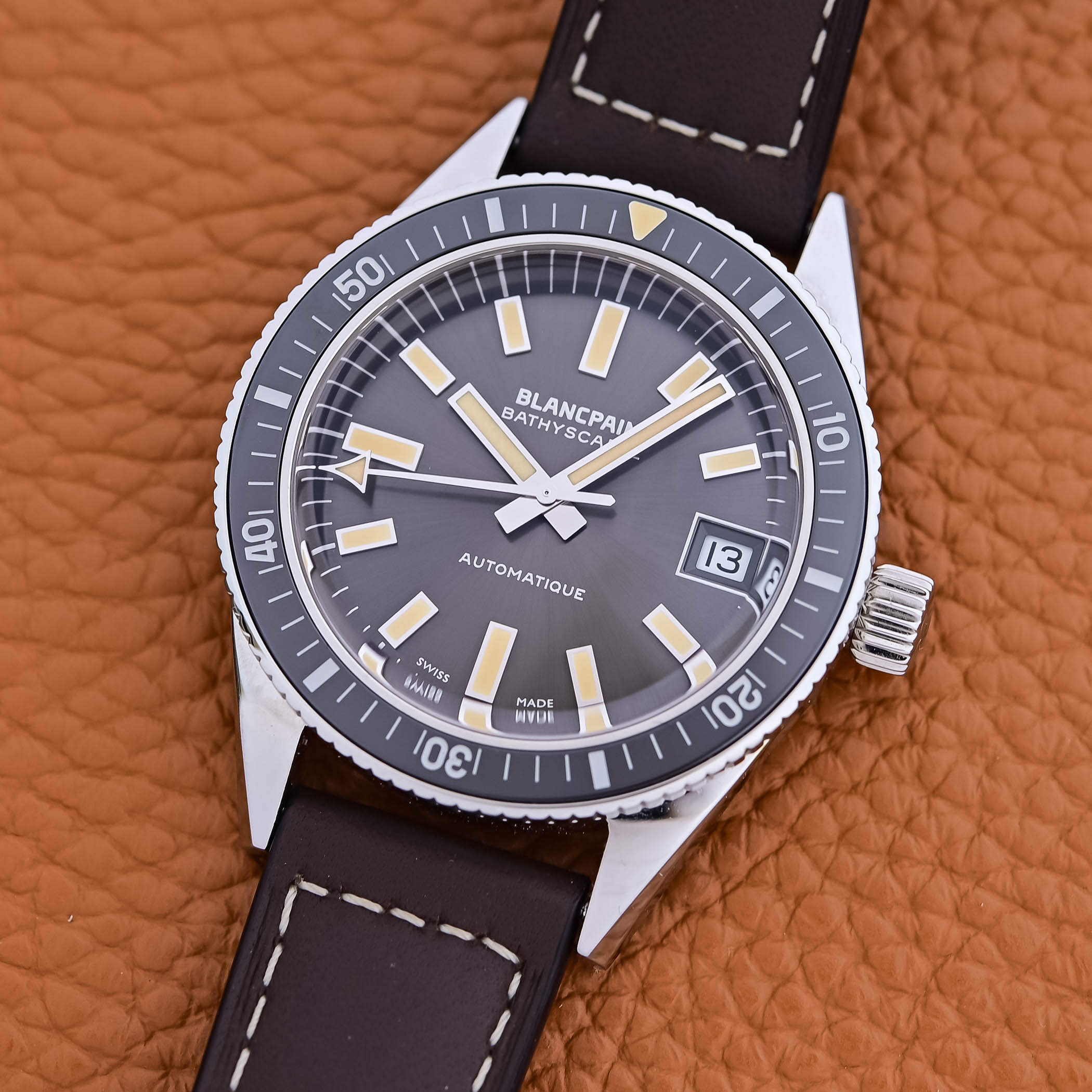
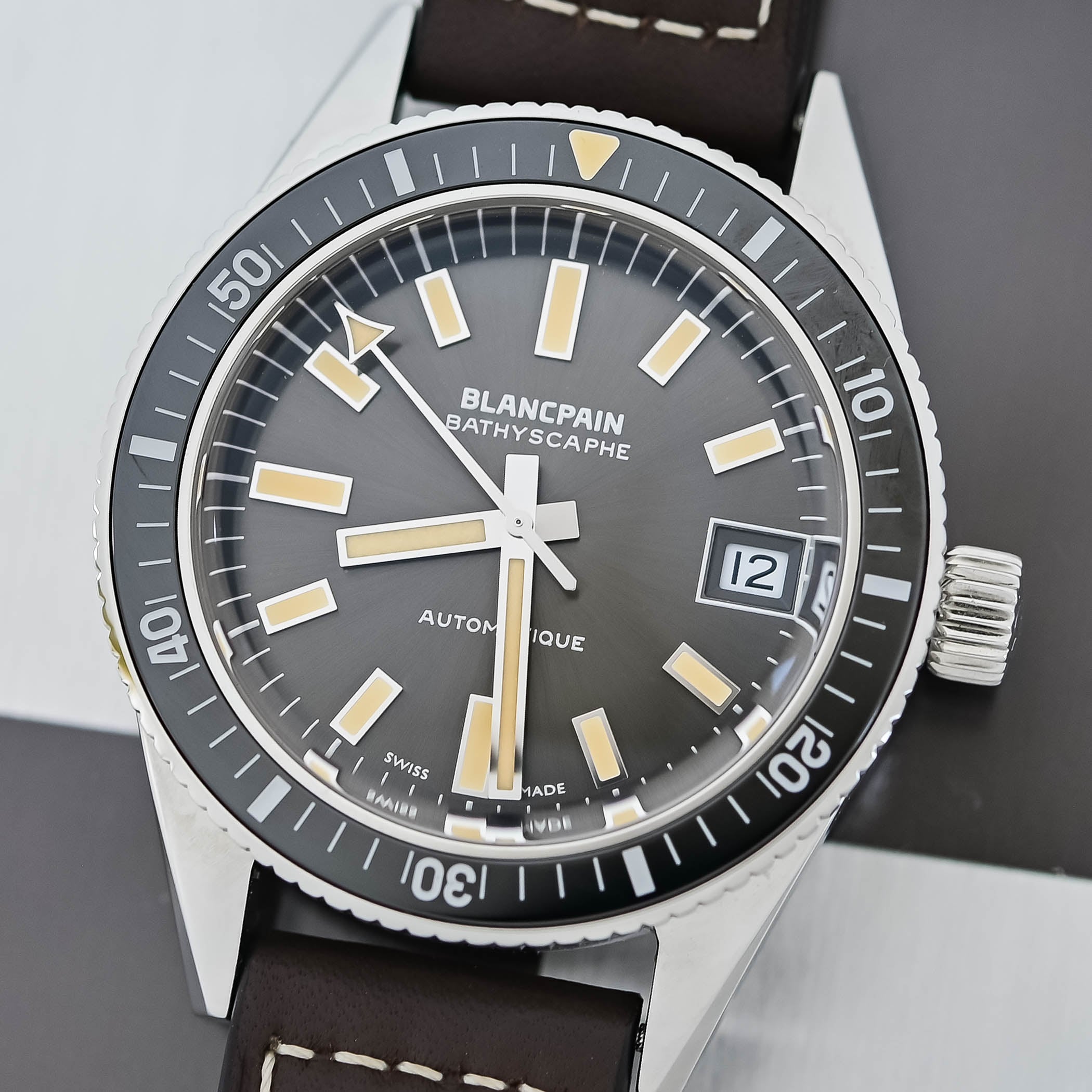
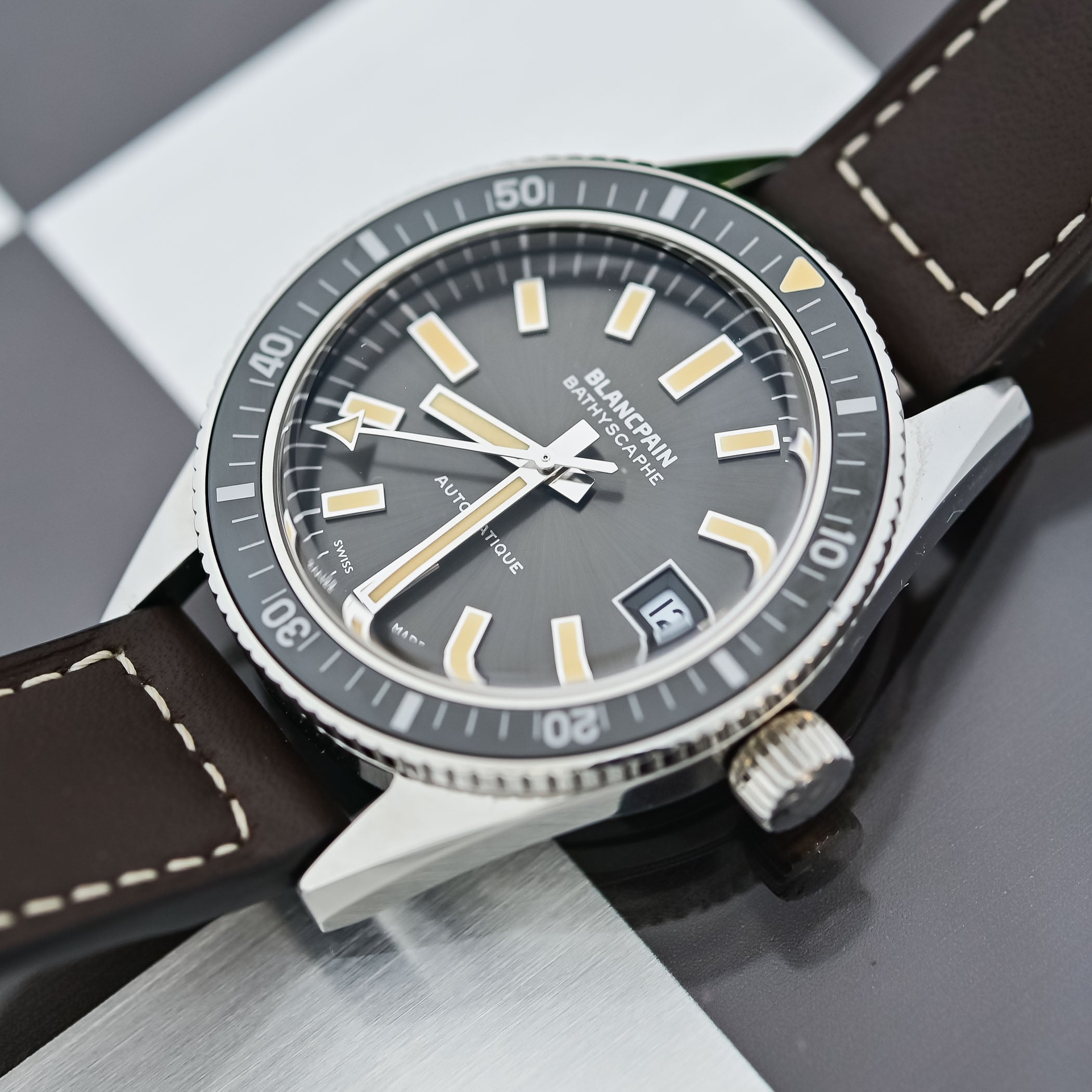
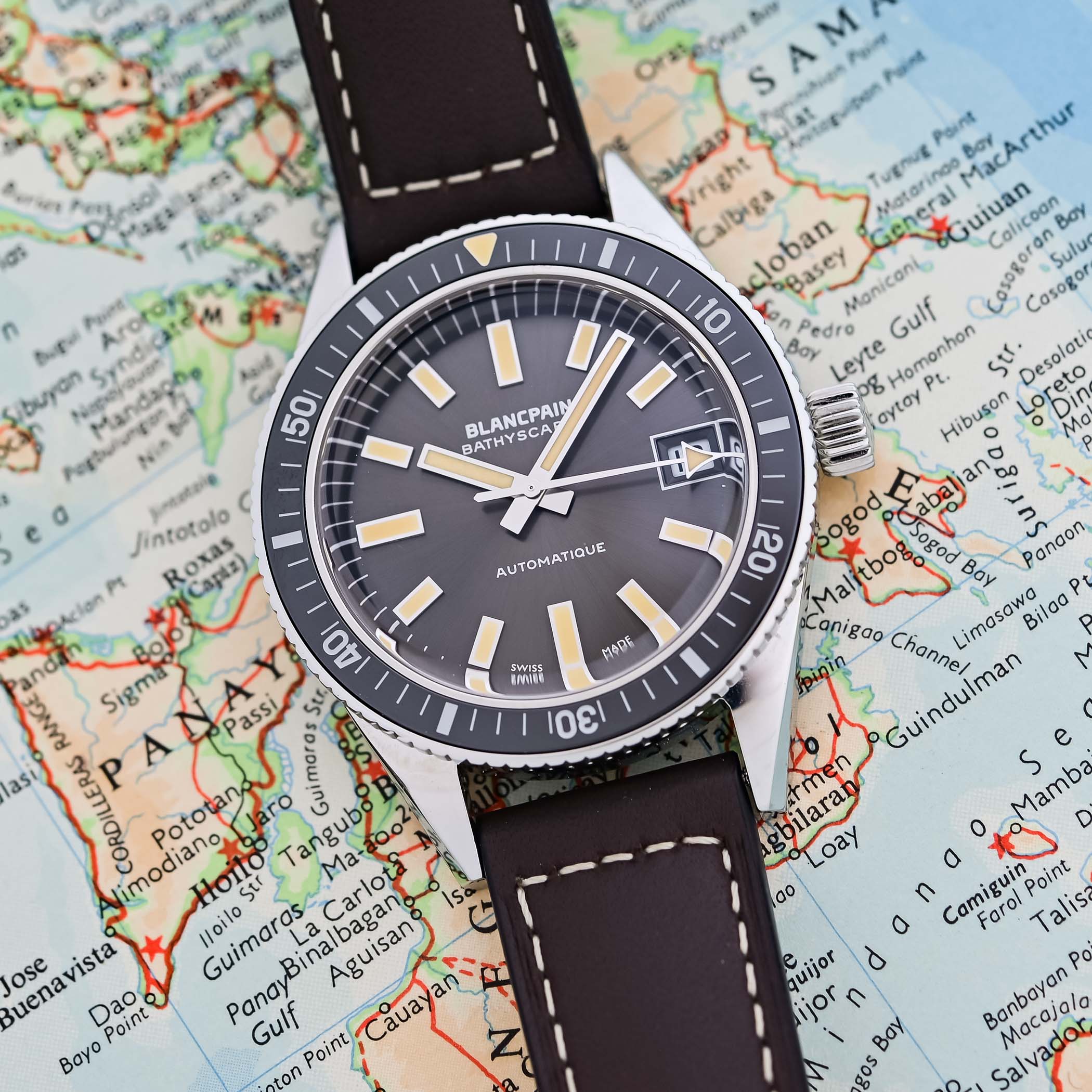
The vintage game continues strongly on the dial too, as the Bathyscaphe 70th Anniversary retains the style of the 1968 version with a sunray-brushed base and a so-called “meteor grey” colour that gives it warmth and a bit of a faded effect. You’ll also note the mid-20th-century Blancpain logo, as well as the sharp baton hands and applied hour markers, both filled with vintage-coloured Super-LumiNova. The second hand has also been recreated with its distinctive arrow tip, and the date window at 3 o’clock is framed by a thin white line.
Modern mechanics
While the looks of the Fifty Fathoms Bathyscaphe 70th Anniversary are certainly on the vintage side, the mechanics are modern. It is powered by the well-known Calibre 1150, an in-house automatic movement with two barrels and a solid 100-hour power reserve. Beating at 3Hz, it includes a silicon hairspring that provides antimagnetic properties. The sapphire back reveals a nice decoration, with an openworked 18k gold oscillating weight, snail-brushed bridges and polished chamfers.
Availability & Price
Worn on a chocolate brown leather strap with a steel pin buckle, this special version of the Bathyscaphe is delivered in a Peli™ case. A limited series of 300 pieces only, this 70th anniversary edition will retail for CHF 13,800.
For more details about this highly appealing and faithful Bathyscaphe reproduction, please visit www.blancpain.com.

11 responses
Lovely, but why on earth do they sell a dive watch on a calf leather strap?
WHAT AN AWFUL RELEASE…
62MAS Homage…
^^^? Why??
It’s a trophy watch, not actually built for use in water. Otherwise it wouldn’t come with a calf leather strap and a glass back. Oh, and then there’s the fatuous insult to injury with the laughable price so the trust fund babies can buy themselves another palatial estate or two.
CHF 13,800 for a watch that looks like a Seiko 62MAS…
Agreed, Seiko 62MAS, unfortunately on a leather strap, definitely not for diving but dressing
To J Quincy Magoo, if you have a problem with “trophy watches” you’re on the wrong site.
And jealousy is ugly.
Seiko 62mas copy.
A gold rotor on a so called tool watch?
Toller Vintage -Diver, das einzige was nicht vintage ist, is der Preis, der ist nicht nur modern, sondern seiner Zeit weit voraus ?
The simulated aging of luminescent material should be erased from horology design.