


 Not all images were able to load for printing. Please close the print window and try again.
 Audemars Piguet Launches The Retro-Futuristic Neo Frame Jumping Hour
Inspired by the Streamline design movement and the 1929 pre-model 1271, AP goes out of its comfort zone.
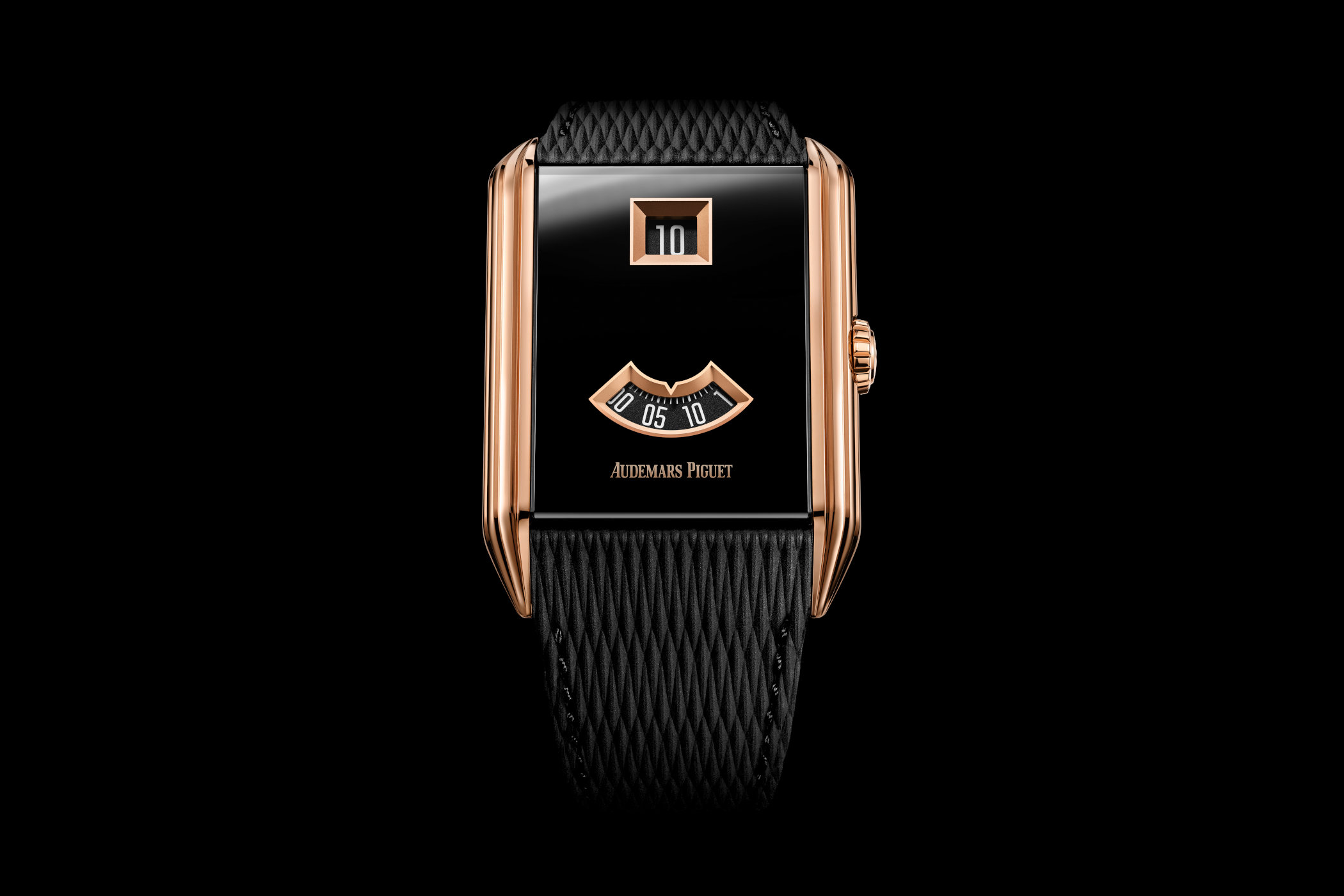
With 3 of its 4 main collections based on the original Royal Oak design, it’s fair to say that Audemars Piguet is a bit conservative in some aspects. But, from time to time, and not without great boldness, the brand releases something unexpected and not octagonally designed. As the best example of what AP can do when it moves out of its comfort zone, we have to take a look back at 2024 and the launch of the brutalist [Re]Master02 (love it or hate it, but it was audacious). Now, the brand does it again with the Audemars Piguet Neo Frame Jumping Hour, a watch that surfs on the trend for jumping hours and guichet watches and revives a vintage, streamline-inspired design of 1929, but in a surprising, futuristic manner.
Once again BASED on AP’s vast historical collection
According to what Audemars Piguet explained to us, “the jumping hour revolutionises time display by replacing traditional hands with numerals that jump every 60 minutes. This system first appeared around 1650 in night clocks and was adapted in the 18th century for pocket watches to improve legibility. Initially, the jumping hour was paired with a secondary dial featuring an hour hand. From 1890 onwards, minute indications appeared on a rotating disc viewed through a second aperture. With the rise of wristwatches during the interwar period, the jumping hour gained popularity for its modern display and practical advantage: the full dial with two apertures helped protect the fragile mineral glass of the timepiece. These wristwatches elegantly combined form and function.” This was the case, for instance, with the highly popular Cartier Tank à Guichets, first seen in 1928. But Audemars Piguet also had its fair share of jumping hour watches.
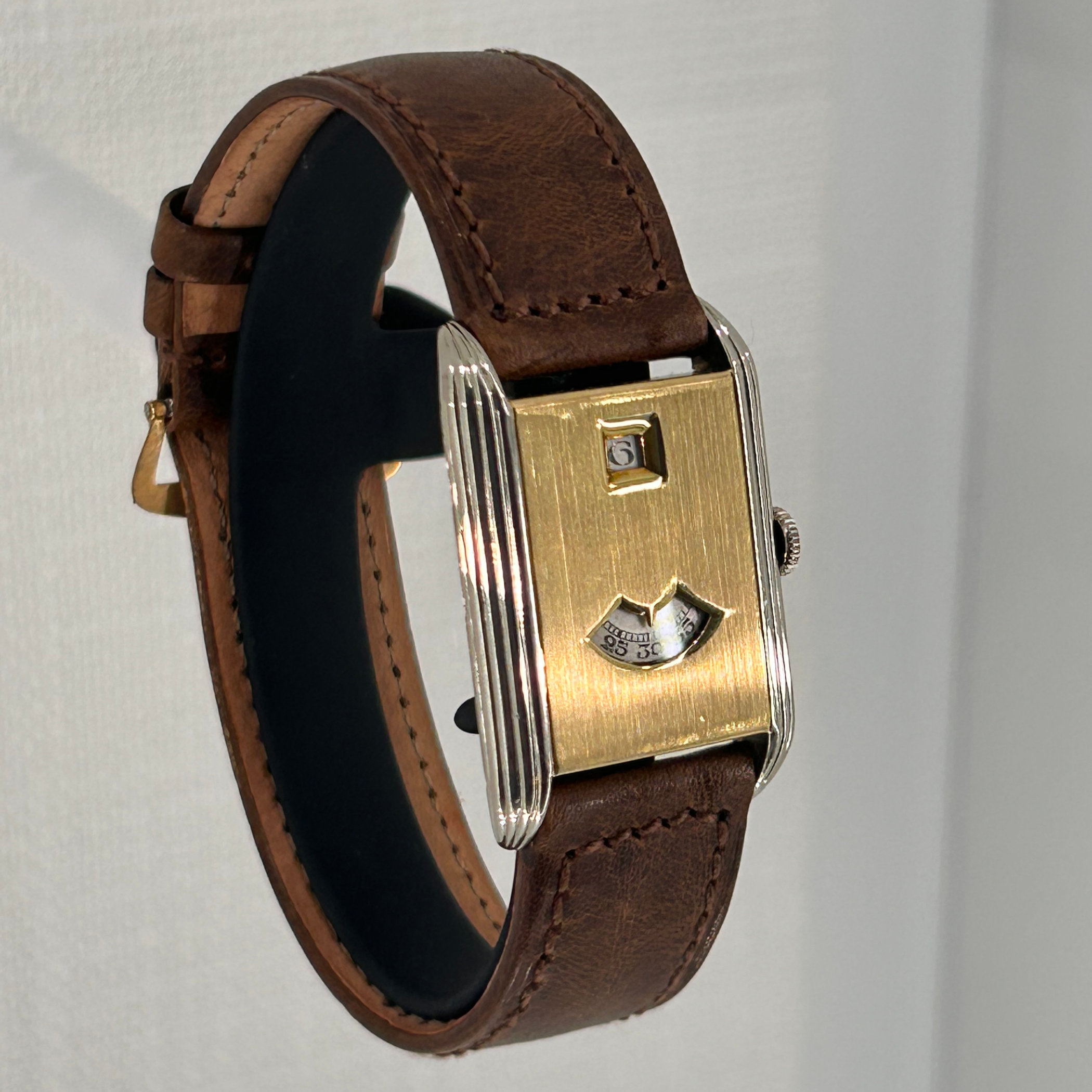
Between 1924 and 1951, the brand sold 347 timepieces with this display complication, including 135 with dual apertures. Pre-model 1271, marketed in 1929 and 1930, was among the first to feature dual apertures. Only 14 pieces were made in four variants: white gold, white and yellow gold, white and green gold and a unique platinum piece. Nearly all were sold before the October 1929 stock market crash, which ended the Roaring Twenties. The platinum model, now housed in the Audemars Piguet Musée Atelier, served as the inspiration for the new Neo Frame Jumping Hour model.
Jumping hour wristwatches faded at the onset of World War II but saw a revival in the 1960s and 1970s during the Space Age design era. Their true renaissance came in the early 1990s, when Audemars Piguet began combining the complication with minute repeaters, and in 1997, when Cartier reissued the Tank à Guichets. And, for a couple of years now, the concept is back in full swing.
The Audemars Piguet Neo Frame Jumping Hour
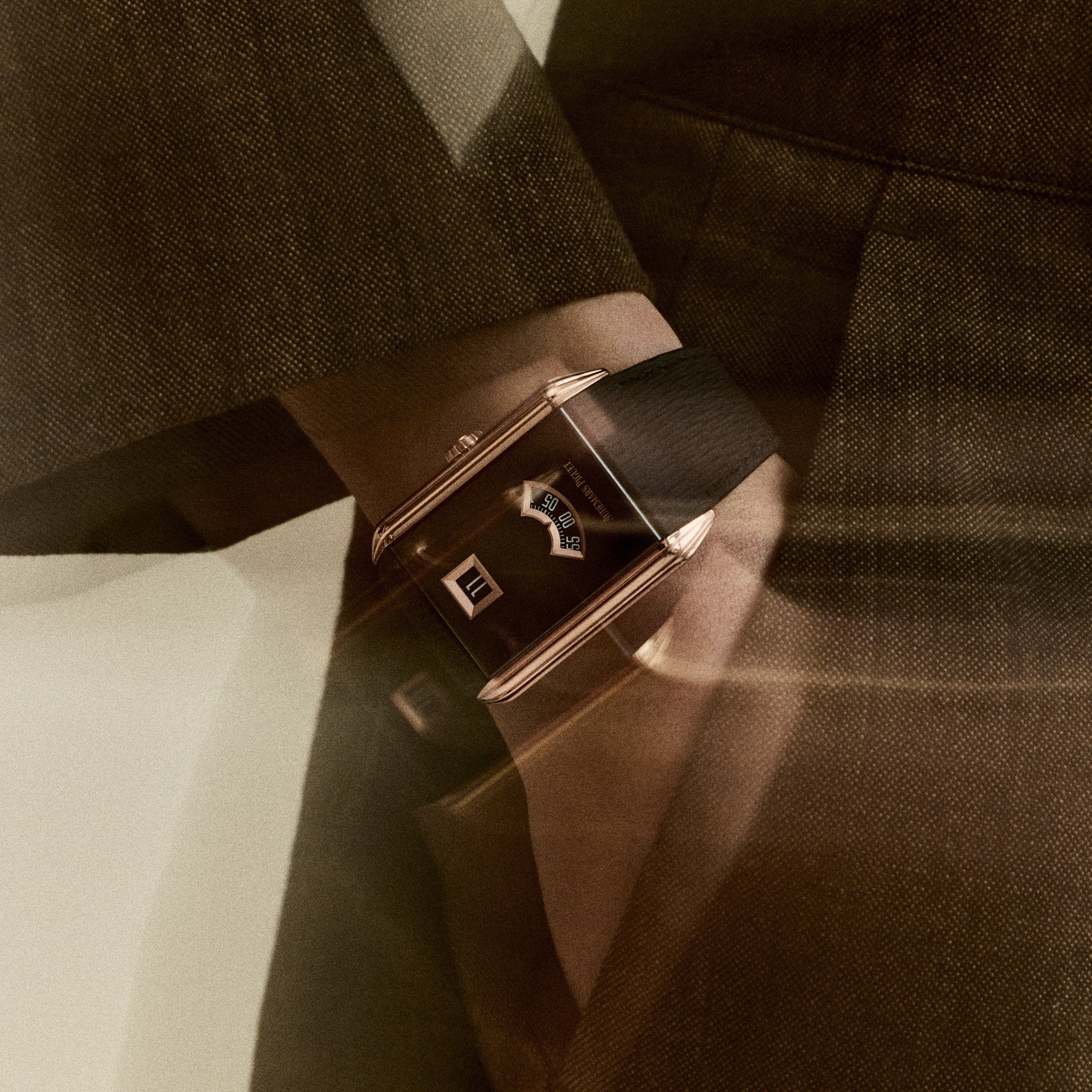
Following several jumping hour watches from Cartier, Chronoswiss, Czapek, Bremont and countless other brands, it’s now time for Audemars Piguet to bring its own vision of the concept, with a watch that’s both rooted in the past but also bold and futuristic, as well as being the first AP model to feature a selfwinding jumping hour movement.
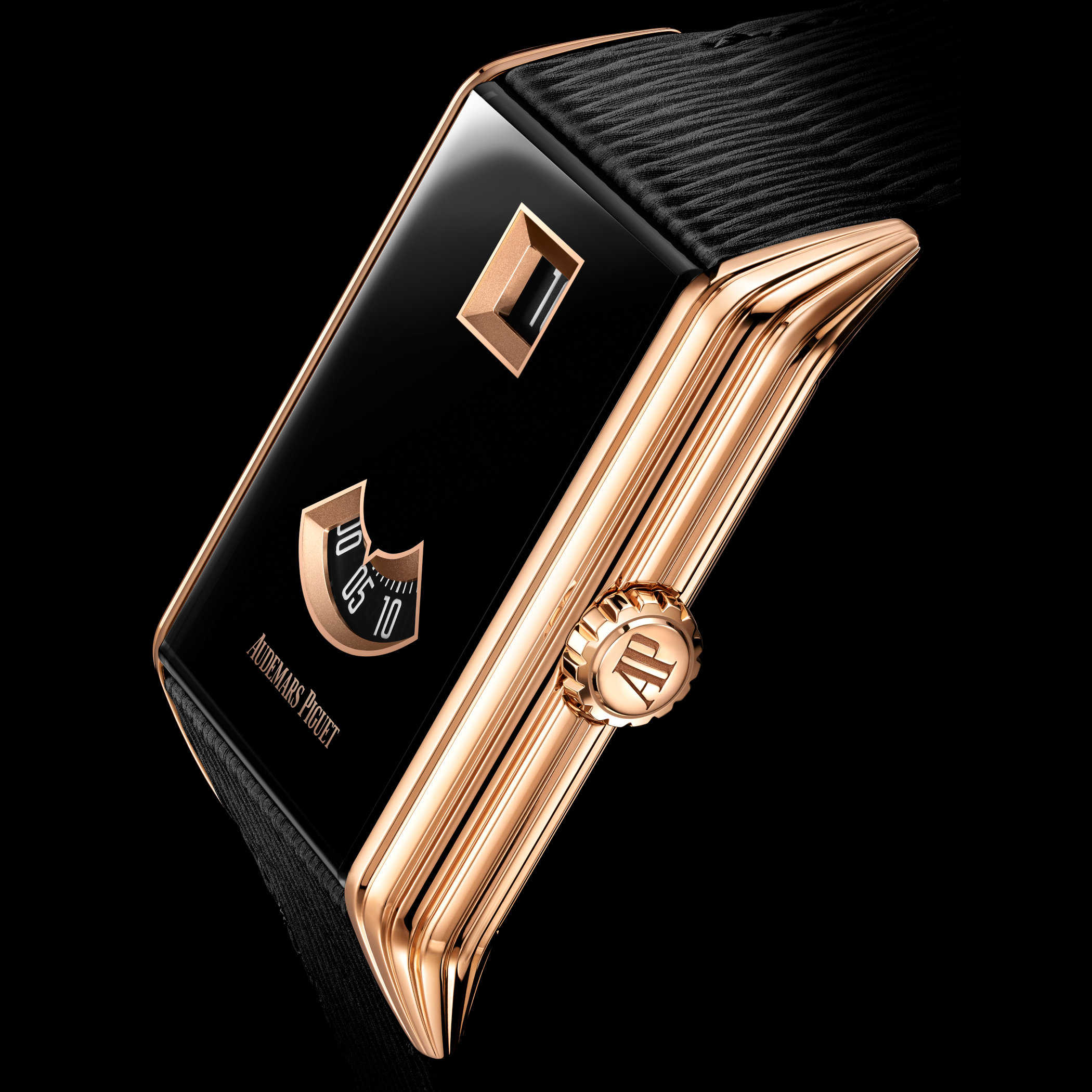
In the same vein as the [Re]Master01 and [Re]Master02, the Audemars Piguet Neo Frame Jumping Hour is not just a copy of the past, but it reinterprets it in a much more modern way. And while using multiple historical references, it also adds contemporary proportions, mechanics and construction to the equation. The case retains the signature elements of design found on the Pre-model 1271, with a rectangular shape framed by two lateral gold modules with quite some texture. Just like the original, this new model is deeply inspired by the Streamline Moderne movement – also known as Paquebot or Ocean Liner style – a late branch of Art Deco, based on aerodynamic forms, fluid lines and curved shapes.
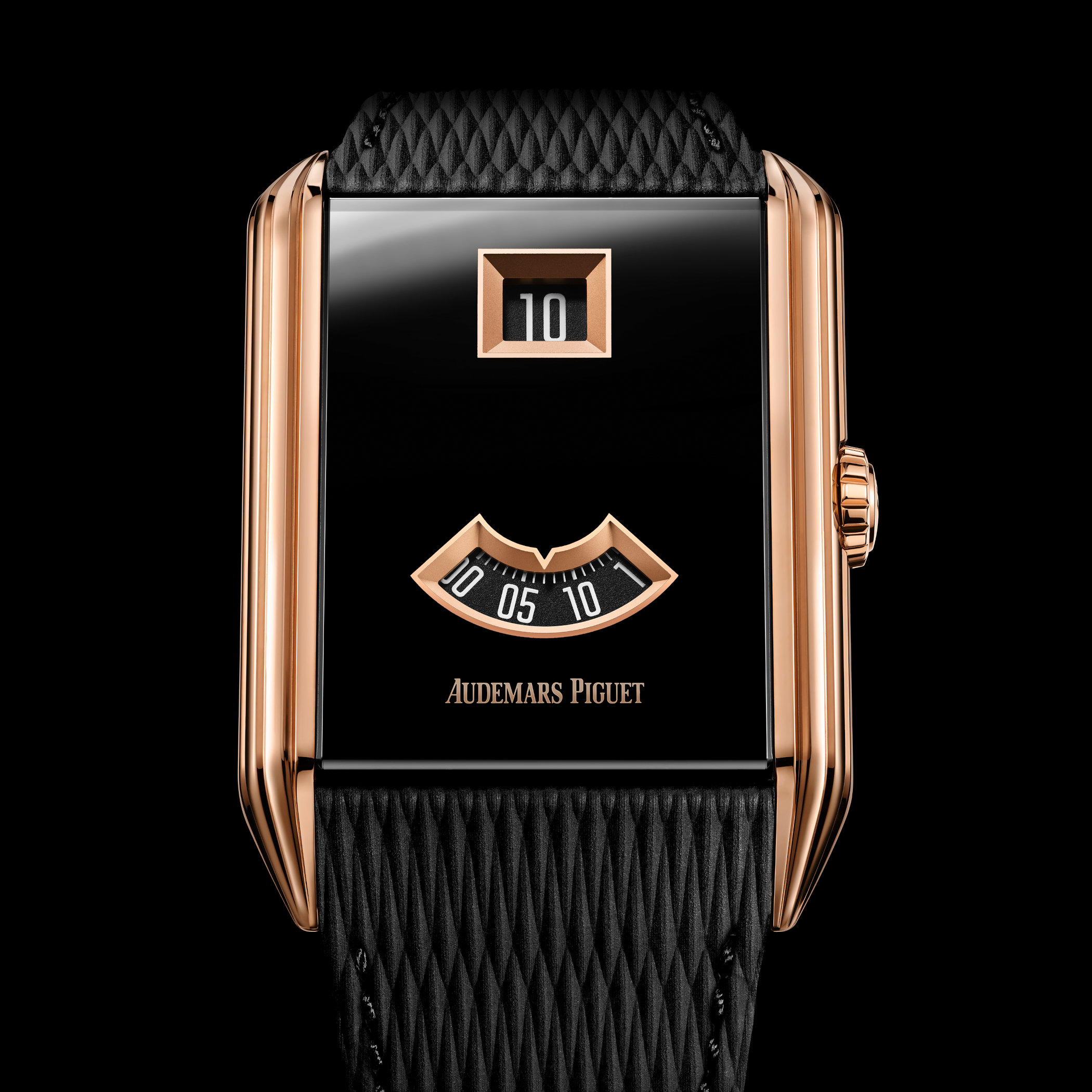
Now, however, the case of the AP Neo Frame Jumping Hour measures 47.1mm in length, 34mm in width and a reasonable 8.8mm in thickness – not specifically compact but still, on paper at least, quite restrained. The 18k pink gold case is flanked by 8 gadroons on each side, extending into long lines that taper into pointed lugs. This distinctive CNC-machined motif is echoed on the caseback, crown, and oscillating weight. The top surface of the watch is worth mentioning. Originally, jumping hour watches featured metal dials (in gold or platinum), but here, the dial is made of black PVD-coated sapphire. Look closely, though, and you’ll see that there is no metal framing at 12 and 6 o’clock, and the sapphire is exposed – a challenge when it comes to water-resistance. To ensure a decent 20m WR, the dial plate is bonded to the sapphire crystal and then screwed into the case, a technique developed specifically for this model.
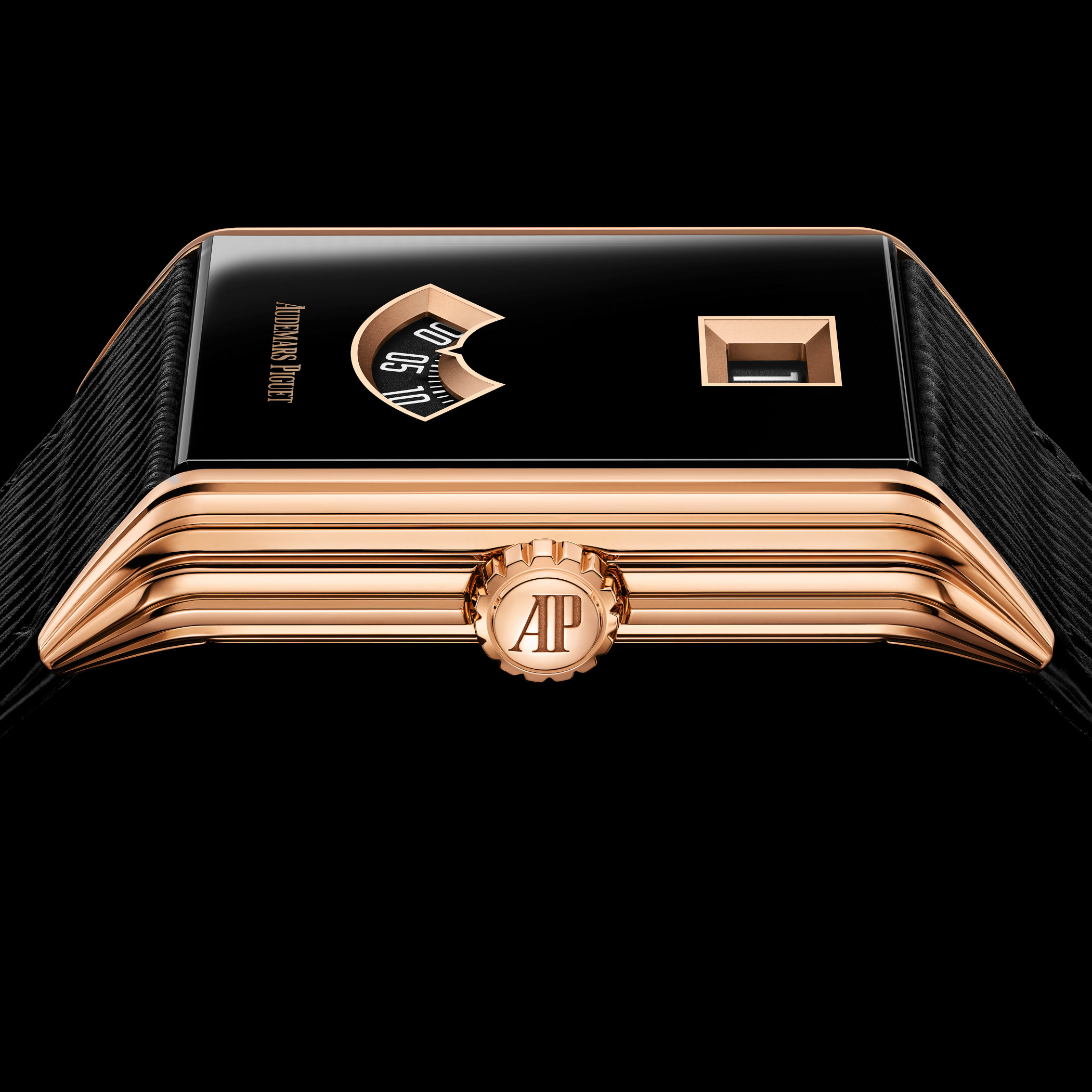

The front of this watch is quite traditional, however, with two matte gold-framed apertures for the time indications – jumping hours at 12 o’clock in a rectangular window, and trailing minutes at 6 o’clock with an arched aperture. With white printed numerals on matte black printed discs, and the pitch-black background offered by the PVD-coated crystal, the indications appear almost like projected under the dial.
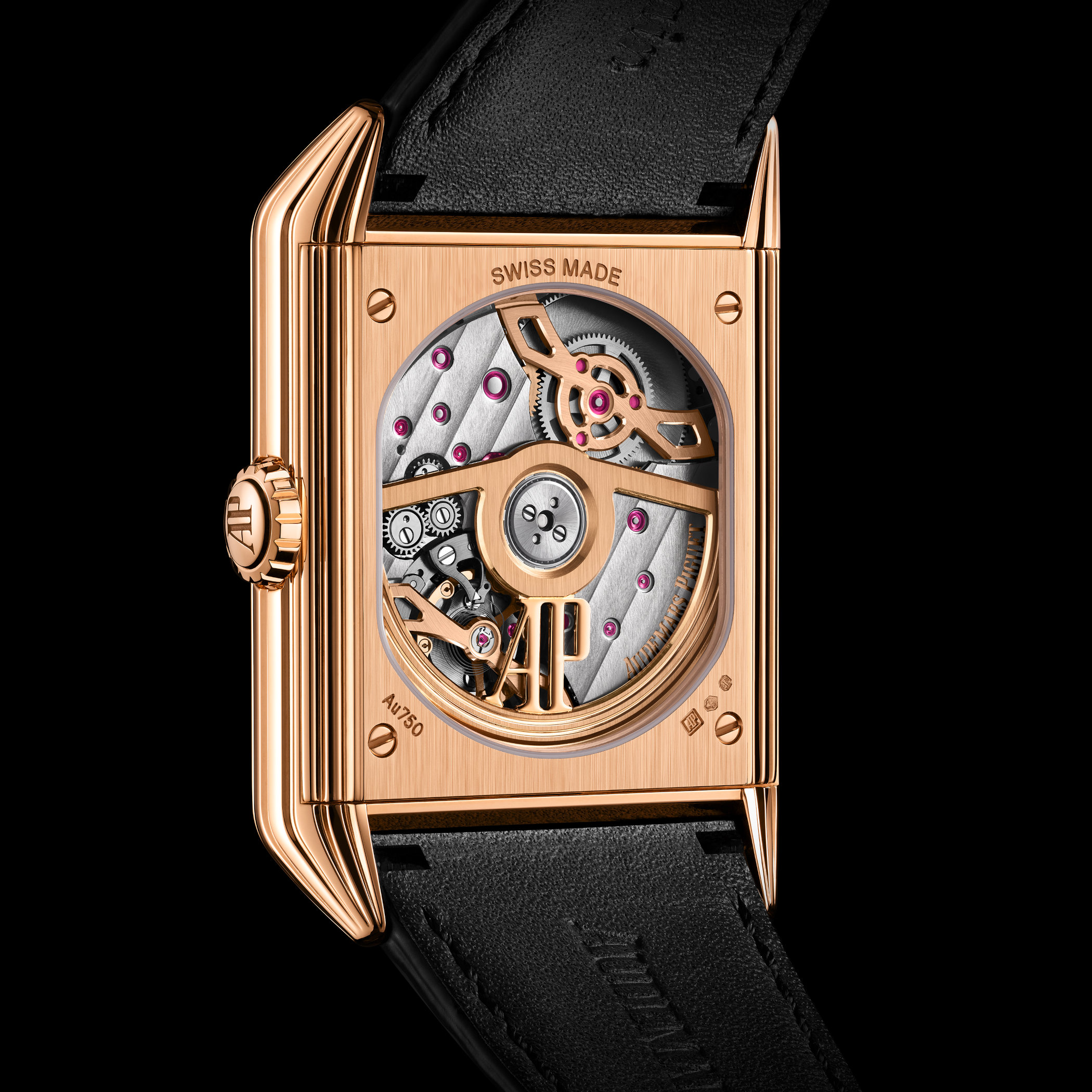
Under the sapphire back is the new(ish) calibre 7122. It obviously looks familiar from the back, as sharing its technical base with the Calibre 7121 introduced in 2022 in the Royal Oak Jumbo 16202ST. Developed in-house, most modifications consisted of updating the display with instantaneous jumping hours and trailing minutes. Still running at a 4Hz frequency, wound by a solid gold openworked rotor, the 52-hour power reserve is almost identical to the calibre 7121 (55h), despite the energy consumption of the jumping hour mechanism. This is explained by a titanium hour disc and an aluminium minute disc, also enhancing shock resistance. Finally, it features a patented shock-absorbing system that mechanically prevents hour jumps in case of impact.
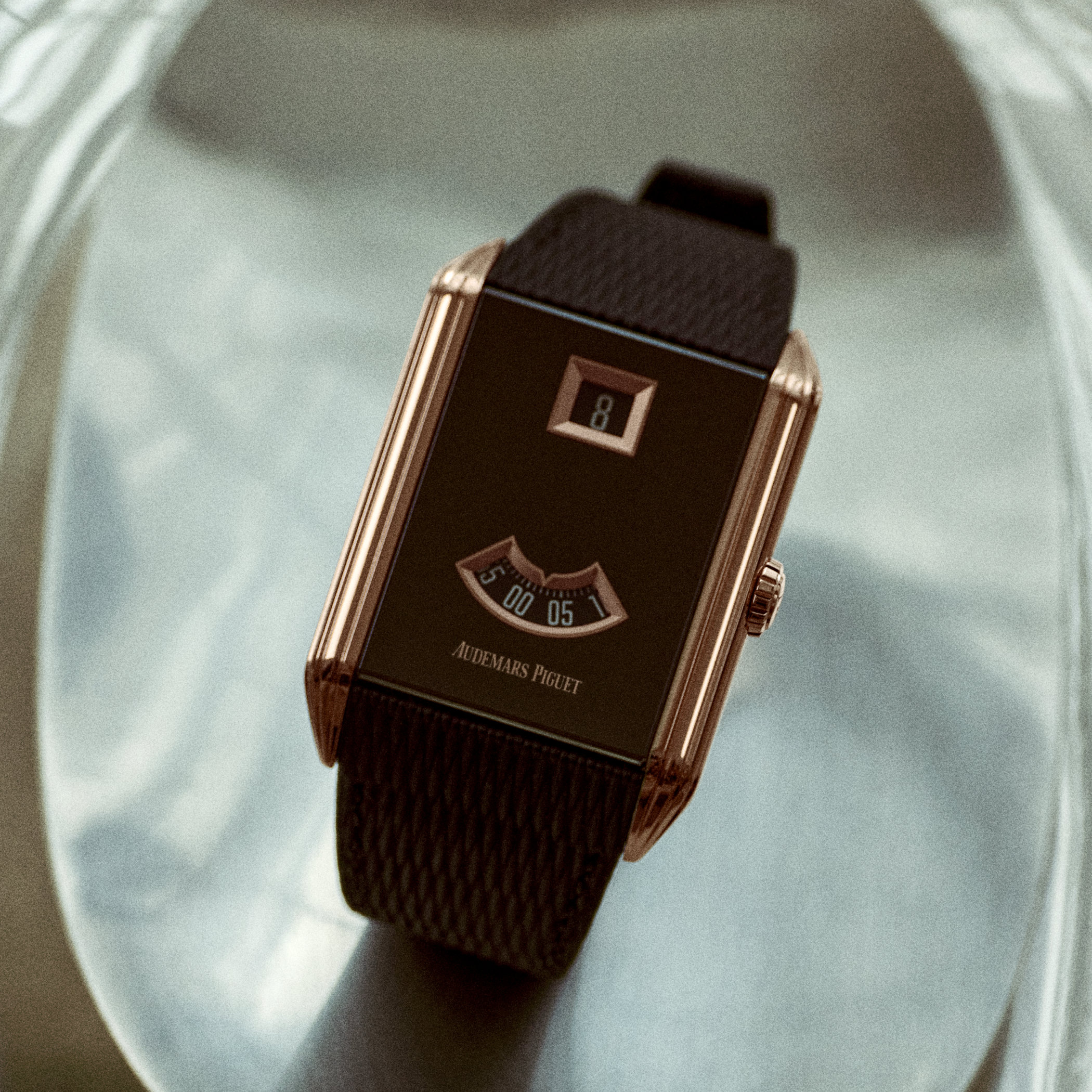
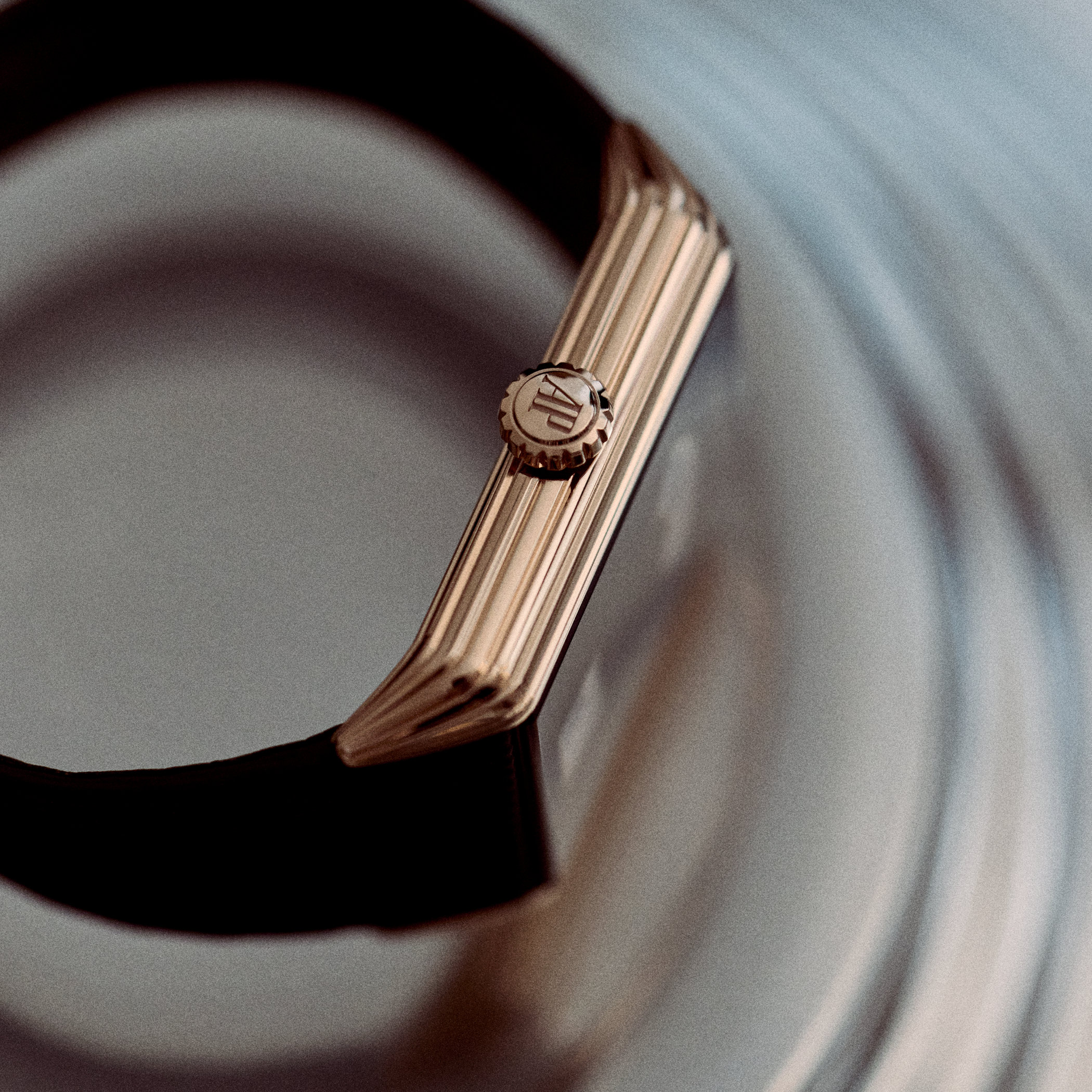
The finishing touch to this obviously bold Audemars Piguet Neo Frame Jumping Hour is a black calfskin strap featuring a textured motif, seamlessly integrated between the lugs and creating a sense of continuity between the black dial and the strap.
Availability & Price
Released as part of the permanent collection, the price of the new Audemars Piguet Neo Frame Jumping Hour 15245OR retails for EUR 64,900. For more details, please visit audemarspiguet.com.

4 responses
The best thing about this stunning release is that it is not a Royal Oak. Which means you can have it 2nd hand for half the price in a few years. Because the average AP customer is too dumb to buy it.
It looks ok, but for me it’s too big and firm watches without firm movements at this price are super lazy, it should have had a rectangular movement with a micro-rotor, easily done
Perhaps it’s just me but I feel that the minutes disc should be advancing in the opposite direction to the design.
For me, the best Audermars Piguet in decades. The size is perfect and very wearable especially for the smaller wristed (the dimensions in this article are incorrect by the way!). And thank goodness, the dial is not in gold like the Cartier tank guichet so that it does not scratch easily. When one spends so much on a watch, the last thing one needs is visible scratches.