


 Not all images were able to load for printing. Please close the print window and try again.
 Sellita Introduces The SW200-2 Power+ Family Of Calibres, An Updated Version Of The SW200
A reengineering of the Sellita workhorse caliber with a power reserve beefed up to 65 hours.
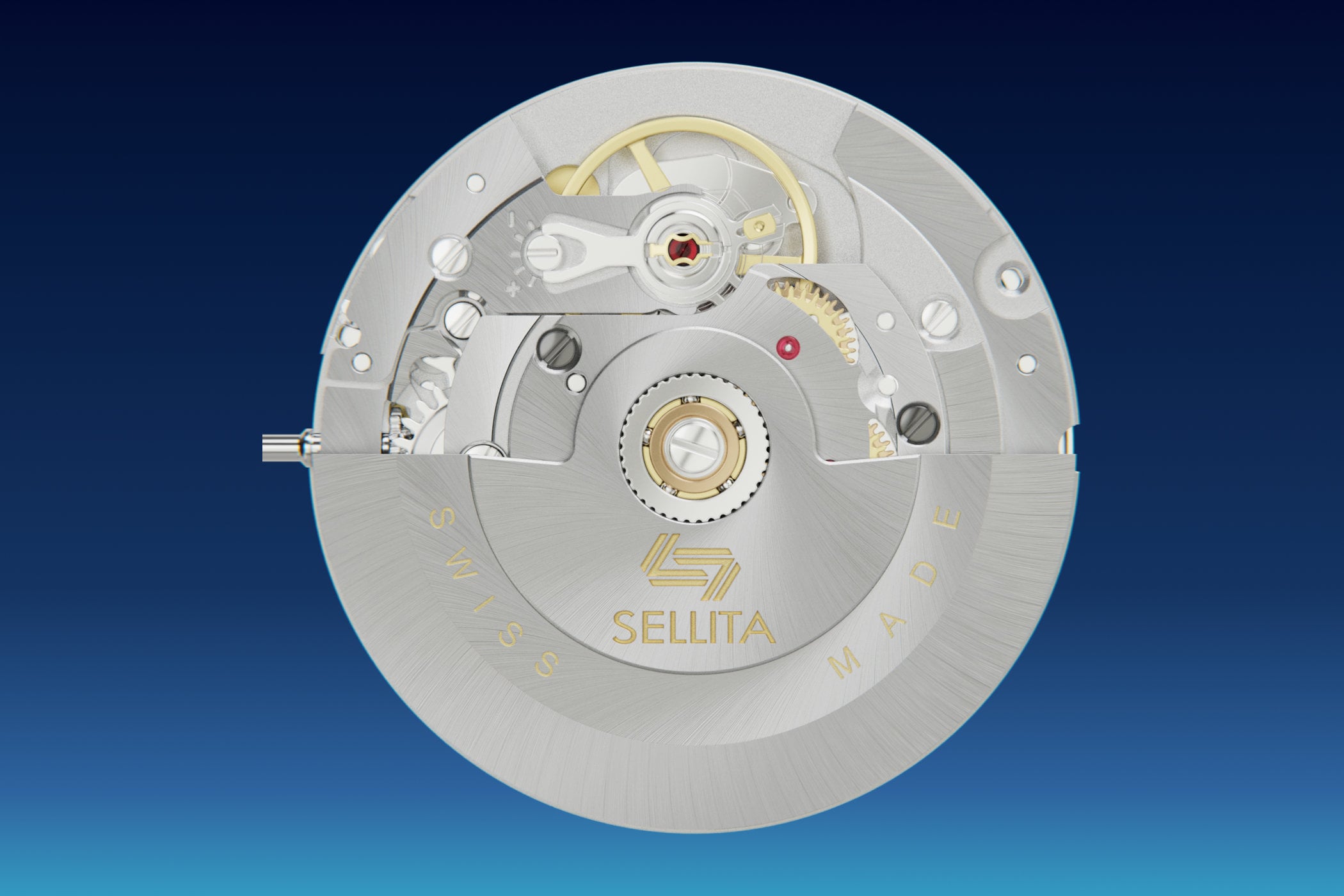
Sellita has introduced a new evolution of its most ubiquitous automatic movement: the SW200-2 Power+. This new calibre is designed to sit alongside the well-known and widespread SW200-1 during a transition phase, before progressively replacing it across collections. At first glance, nothing seems to have changed. The SW200-2 Power+ shares the same dimensions, architecture, and overall appearance as its predecessor, ensuring full compatibility for brands already using the SW200-1. However, beneath this familiar exterior lies a profound reengineering of the movement.

A Pillar of the Swiss Watch Industry
The SW200 is Sellita’s flagship automatic calibre and one of the most widely used movements in Swiss watchmaking today. As a high-quality, Swiss-made alternative to the ETA 2824-2, it has become the industry’s go-to workhorse for countless brands, from entry-level Swiss watches to certified chronometers. As ETA started to cut the supply of its movements to third parties (i.e. non-Swatch Group brands), several perfectly interchangeable clones of the ubiquitous 2824 emerged. Among these, the SW200 has become the main replacement with a yearly production of hundreds of thousands of units.
Its success lies in its reliability, ease of servicing, availability, and proven performance. Much like the ETA 2824 it is based on, the SW200 has earned a reputation as a robust and versatile movement suitable for a wide range of applications.
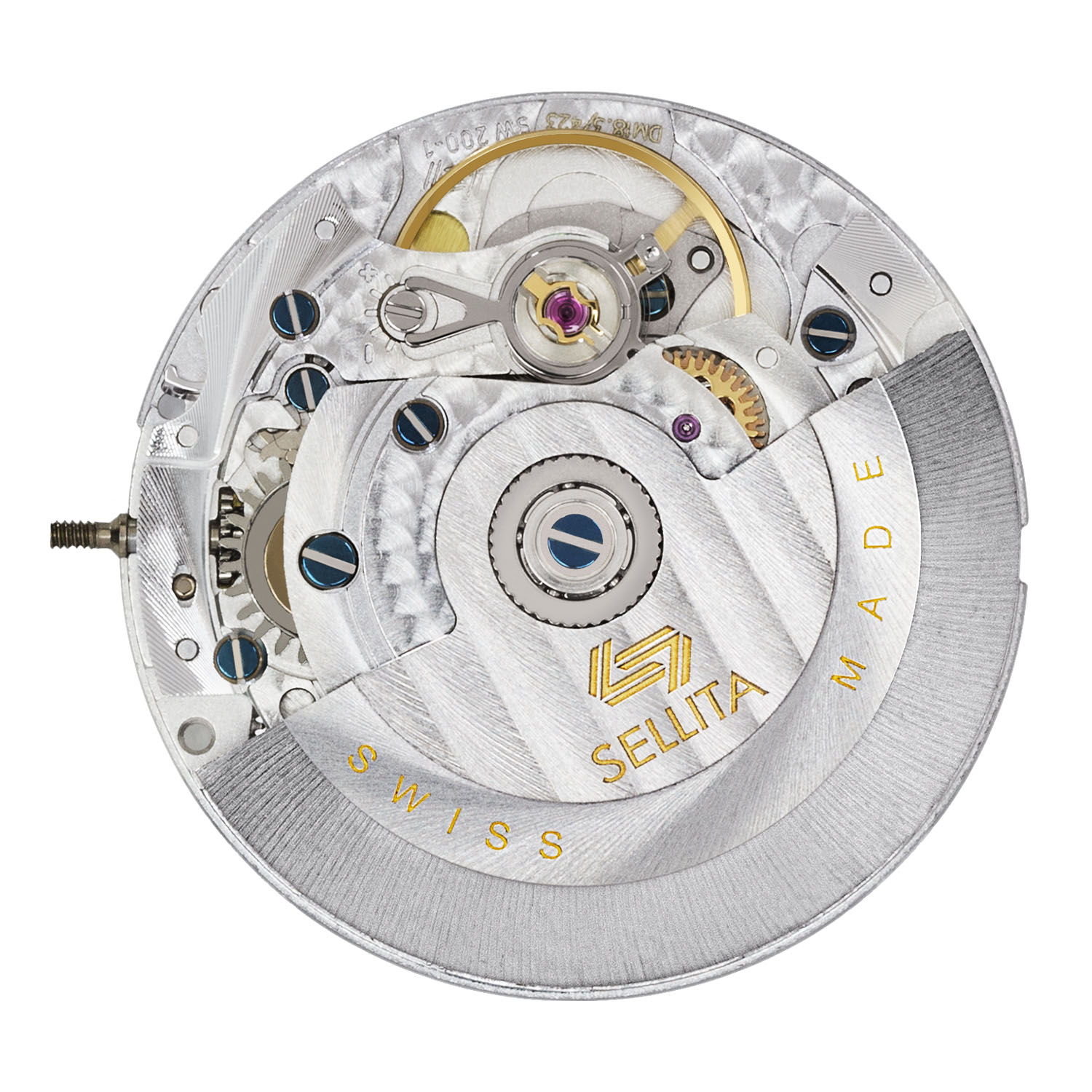
As said, if the ETA 2824 and the Sellita SW200 are reliable, precise, versatile and relatively affordable calibres, one of their main weaknesses is their rather low power reserve. This is not a dramatic issue, as we are talking about automatic movements that you do not need to wind as long as you wear your watch. Still, over the years, the competitors have released products that deal with this problem. ETA presented the Powermatic 80. Available for the sister companies of the Swatch Group, this modern reengineering of the 2824 comes with an 80-hour power reserve. More recently, the G100 series, with its 60 hours of power reserve, has allowed La Joux-Perret to grab a significant share of this segment of the market. Higher grade movements, for instance, from Kenissi, were also presented with substantial power reserve. If these are significantly more expensive, they have been adopted as an alternative by brands seeking differentiation.
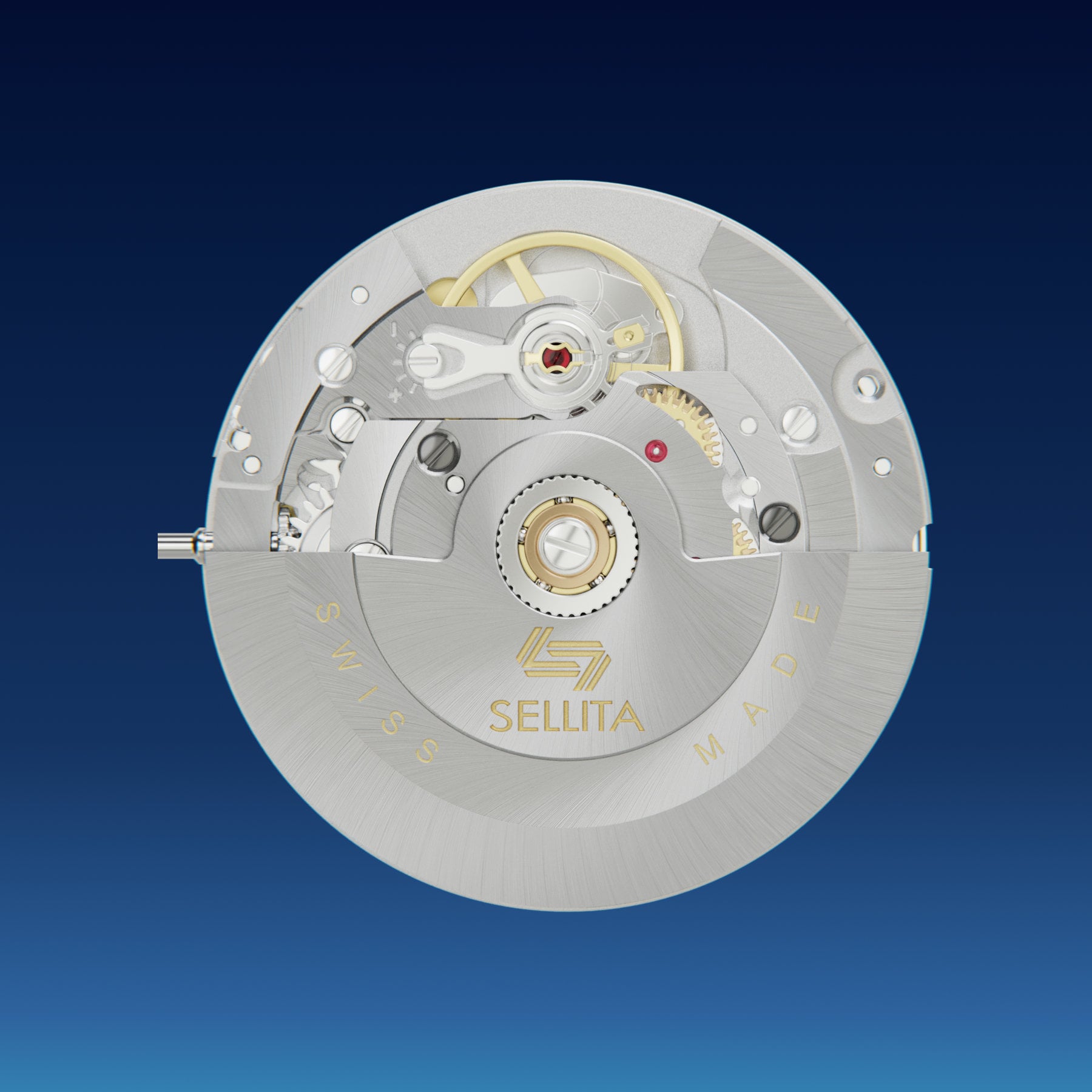
With the new SW200-2 Power+ (see above), Sellita aims not to reinvent this SW200 but to upgrade it, improving efficiency, stability, and power reserve while preserving its core strengths.
Key Technical Evolutions
The SW200-2 Power+ introduces several major mechanical upgrades:
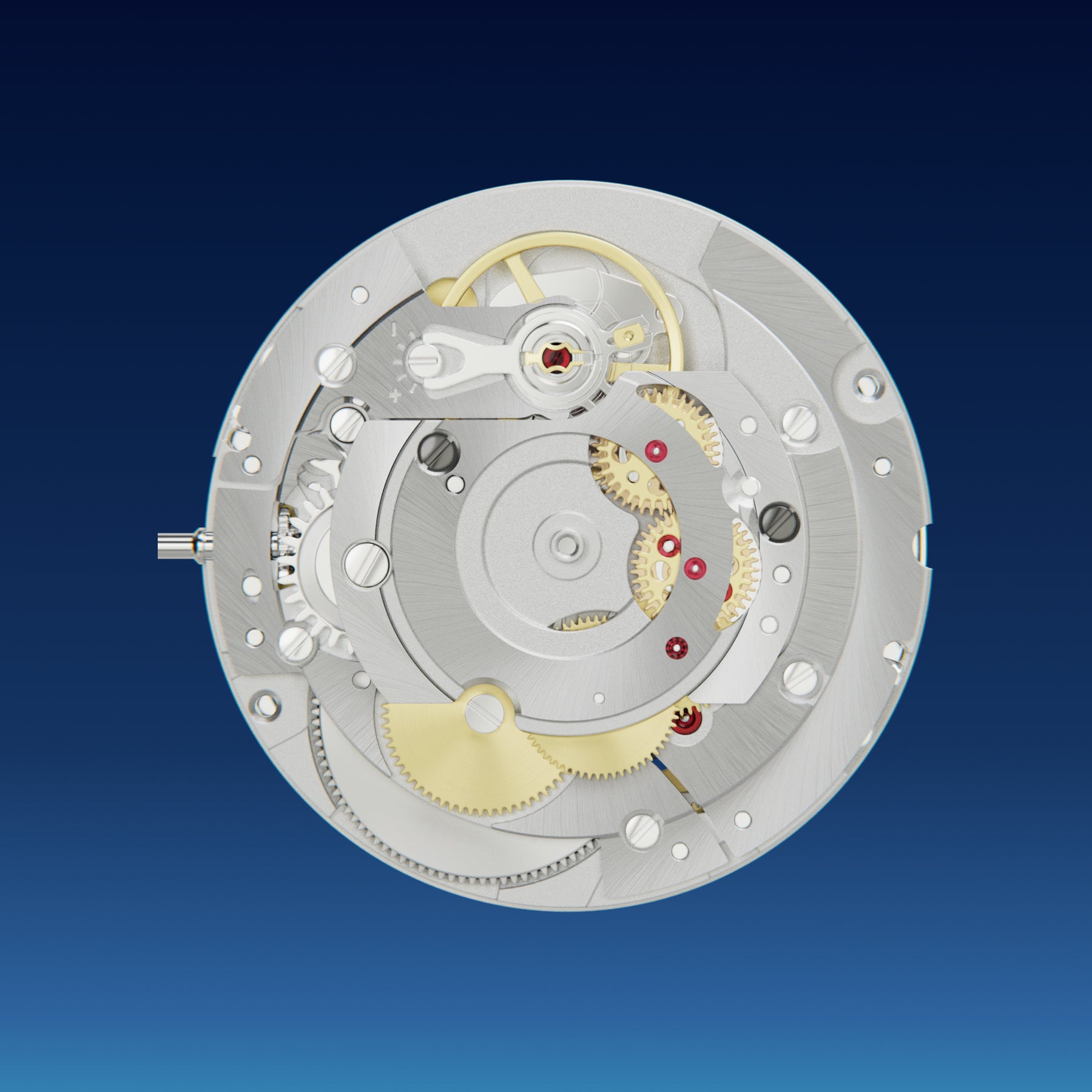
- A new gear train, featuring an optimised profile, particularly in the tooth geometry. The wheels are manufactured with a different colour finish compared to the SW200-1, making them easily identifiable during after-sales service.
- A new barrel, redesigned both in terms of geometry and mainspring. The spring now features more turns (spires), allowing for increased energy storage and contributing to an extended power reserve.
- An improved automatic winding system. If the SW200 winding system were perfectly operational, an enhanced solution makes sense. Indeed, with the increased power reserve, the winding efficiency had to be improved; people will now expect 65 hours of power reserve, so Sellita wanted to make sure these could be stored in the barrel more quickly.
- A new regulating organ, with the moment of inertia reduced from 16 to 8 mg·cm². Despite this reduction, the system remains highly stable. Unlike the ETA Powermatic 80—which achieves its 80-hour power reserve partly by lowering the frequency to 21,600 vph (3 Hz)—the SW200-2 Power+ retains its 4 Hz (28,800 vph) frequency. This is a crucial point for Sellita, particularly in the context of COSC chronometer certification, where a higher frequency offers advantages in rate stability and precision.
- A new regulator system (raquetterie), further enhancing adjustment and long-term stability.
- New Incabloc shock protection improves resistance to shocks and everyday wear.
- Reworked brass components: both the bridges and the mainplate have been redesigned to ensure greater rigidity, contributing to improved durability and consistent performance over time.

Evolution, Not Revolution
Beneath the familiar exterior of the SW200-2 Power+ lies a profound reengineering of the movement. In reality, the vast majority of the components are not interchangeable with the previous version. Only the date mechanism and the keyless work remain largely unchanged. And it’s not just the base three-hander and time-and-date movements that benefit from this new architecture, but it is implemented across the entire SW200 series, including those with an added complication/indication or skeletonised construction.
With the SW200-2 Power+, Sellita demonstrates a clear strategy: evolve a proven movement without sacrificing compatibility, serviceability, or chronometric ambitions. The result is a movement that respects the legacy of the SW200 while setting a new technical standard for one of the most used calibres in contemporary Swiss watchmaking.
For more details, please visit Sellita.ch.

7 responses
This is good to hear about upgrading the sw200-1 with the various modifications being brought into being. It’s about time. However, can you also provide information about the ongoing problem with the sw200 and the subsequent sw200-1, about gear teeth breaking due to hand winding of the movement, and if this has been corrected with the updated sw200-2? Thank you.
Would also like to know if they have improved other features such as the feel of thd hand winding action, self-winding efficiency.
Should prove interesting to see how ETA and the rest of the watch industry incumbent react to this development. Provided they managed to resolve the hand winding durability issue, feel of the feedback and maintain or improve the self-winding efficiency.
A new baseline. Nice bar raiser.
I like it that sellita wants to improve the SW200. The movement had to catch up with the competition in some way. The only problem that i see is that the SW200 biggest advantage wasnt its performance but its reliability. Im sure that the new movement is going to last probably longer but reliability for me also means that the product is serviceable and cheap to service. Since the new Movement has nothing in commo with the old one in terms of parts i would like to see the impact in the Watch industry. Will parts for the older models be harder to find and will the evolution be as successfull as his older brothers?
@J. Quincy Magoo we have reached out to Sellita and here’s their feedback: “We’d like to share some background on an issue that occurred in the past and explain how it has been addressed.
The issue in question was very marginal and affected only a small number of movements. It was linked to a specific handling step during watch assembly. In certain cases, the oscillating weight and its bridge were removed together in order to fit the dial and hands. If this was done while the movement was fully wound—a common situation, as movements are usually pre-wound before hand-setting—short, temporary load peaks could occur inside the winding mechanism. In rare instances, this initial stress could later lead to wear on the ratchet wheel teeth.
To avoid this risk, the correct procedure is to remove the rotor first. In addition, we introduced design improvements on our side: with the SW200-1, the construction was updated so the automatic bridge no longer needs to be removed during assembly, and the tooth geometry was refined to increase robustness.
With the SW200-2 Power+, further advances in energy management reduce mechanical loads even more, improving long-term durability in everyday wear and increasing overall reliability during winding.”
We’re very excited about the new SW200-2 Power+!
Thank you Xavier for reaching out to Sellita and for the information on any efforts to fix the ongoing problem with gear teeth breaking. I hope it’s true what they are saying about further improvements in reliability during winding, especially since it appeared the problem was still affecting the sw200-1 movement.