


 Not all images were able to load for printing. Please close the print window and try again.
 The New Tissot Visodate Collection, a Classic Redesigned
The Visodate is back in very good shape, proving once again that Tissot does more than just being accessible.
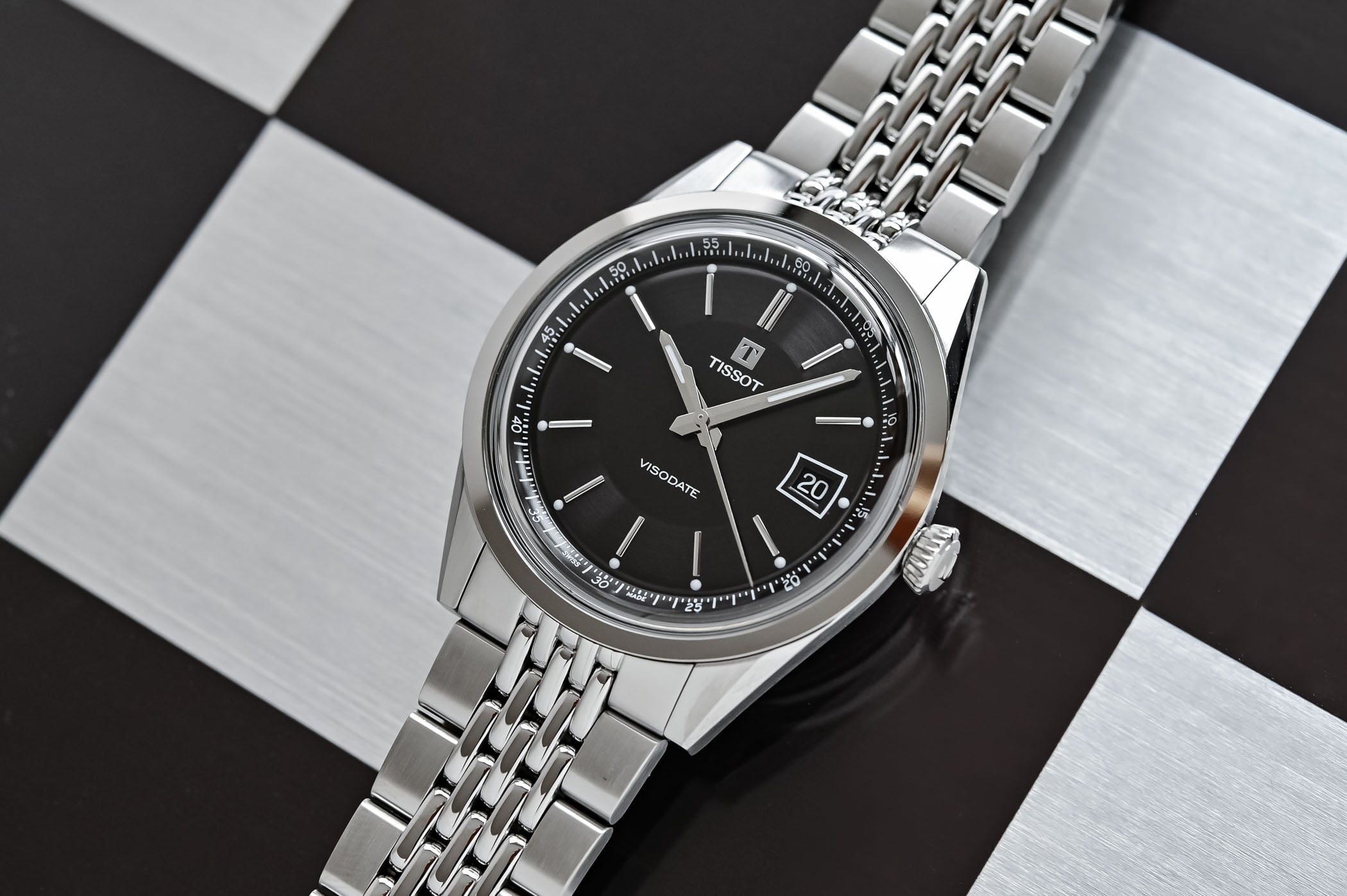
With over 170 years of history, you can easily imagine that Tissot has a few, if not many, important models in its portfolio. Next to watches such as the PR516 or the 1973 Chronograph, the brand has one particular watch that’s worth mentioning, the Visodate. First created in 1954, it was, as you can guess from its name, one of the brand’s first watches to integrate a date window. In recent years, the Tissot Visodate has been one of the brand’s most accessible mechanical watches, but somehow lacked some appeal to really stand out. Things are changing now, as the Le Locle-based brand revamps its watch from head to toe, with the brand new for 2026 Visodate Collection.
Historical Reminder
Let’s bring back a bit of clarity in the whole evolution of the date display on watches – a fairly simple complication, if not the simplest, but one that is found so often that it remains important to mention. Contrary to what is often believed, the Rolex Datejust wasn’t the first watch to display the date, not even the first wristwatch to do so. Having perpetual calendar pocket watches invented in the mid-18th century (most likely by Thomas Mudge in 1762), you can easily imagine those having a date function. As for wristwatches, Movado introduced the first date window on a dial (at least on a production model) in 1915, while watchmaker A. Hammerly patented a pointer date in the same year. What the Datejust should be remembered for is to be the first automatic watch with a date window at 3 o’clock that automatically changed at midnight (although not yet instantaneously – this feature appeared on the Datejust in 1955-56 with calibre 1065).
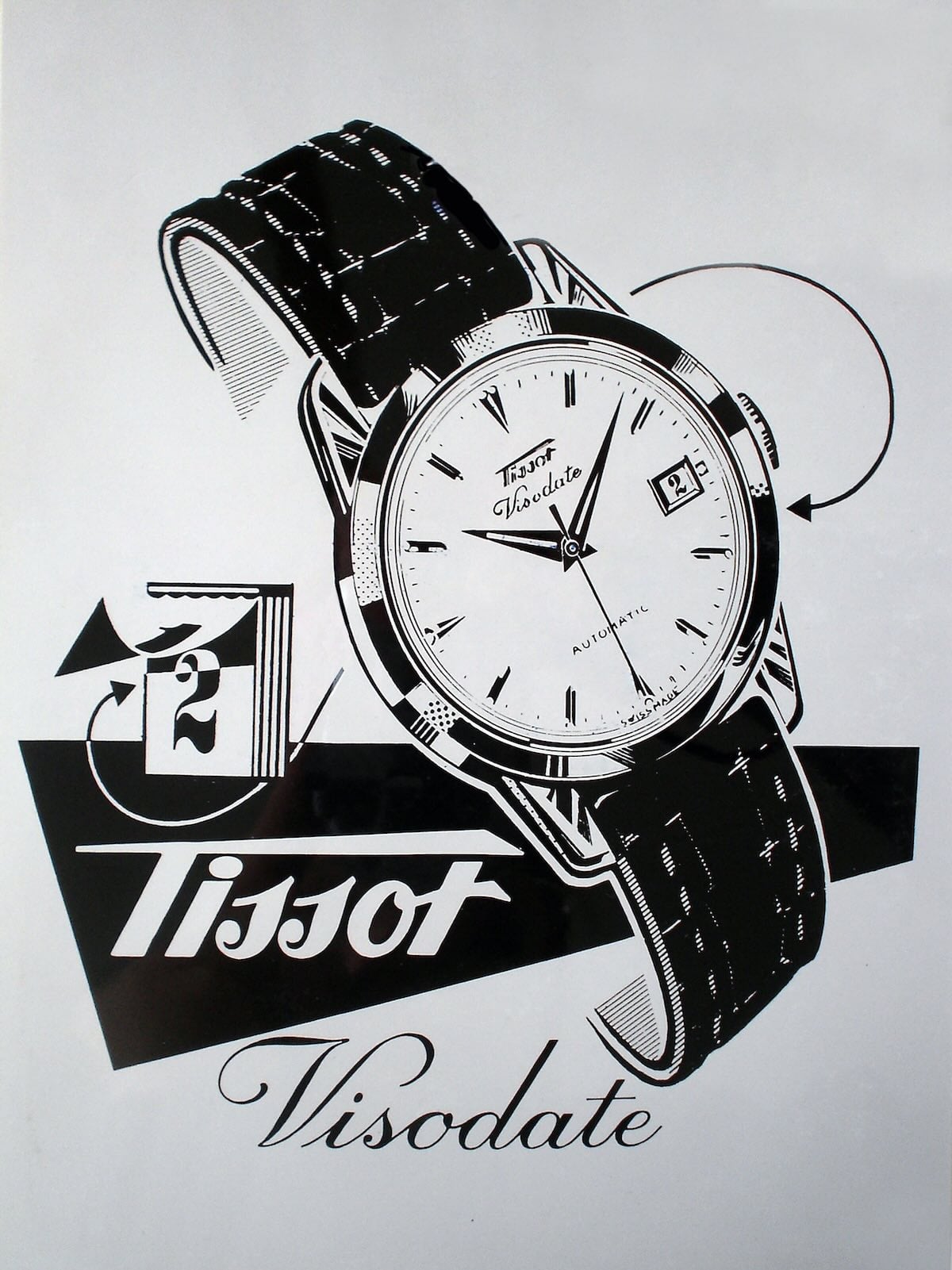
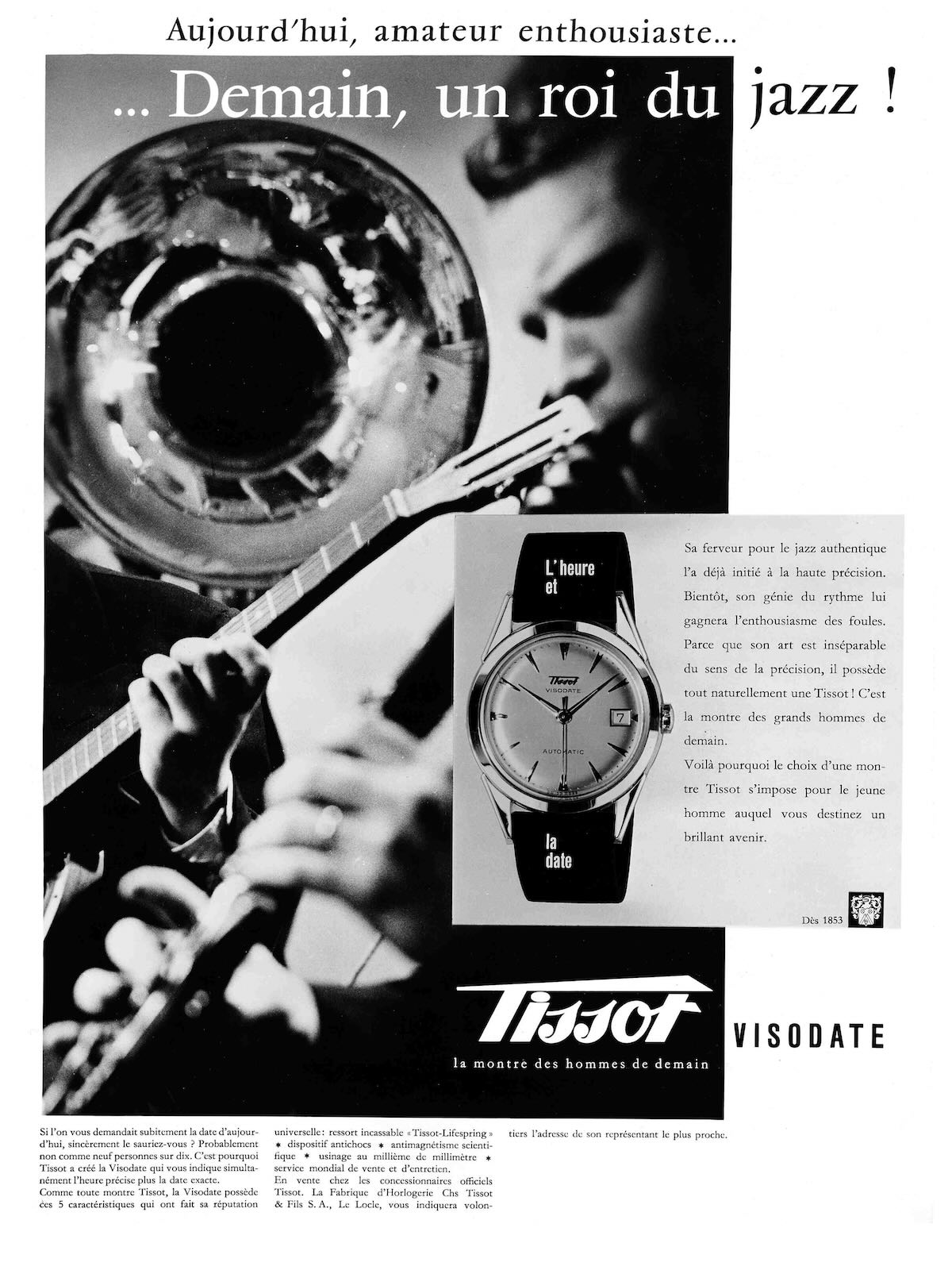

So, why does the Tissot Visodate matter? In 1953, Tissot was celebrating its 100th anniversary and released the Centenary model, a watch with a sleek date window at 3 o’clock, and also the first automatic watch to feature a date window that instantaneously changed at midnight. This model paved the way for the Visodate released a year later. The concept proved popular and later spread across multiple models, such as the Visodate Camping, the Visodate Seastar Automatic or the Visodate Seastar Seven.
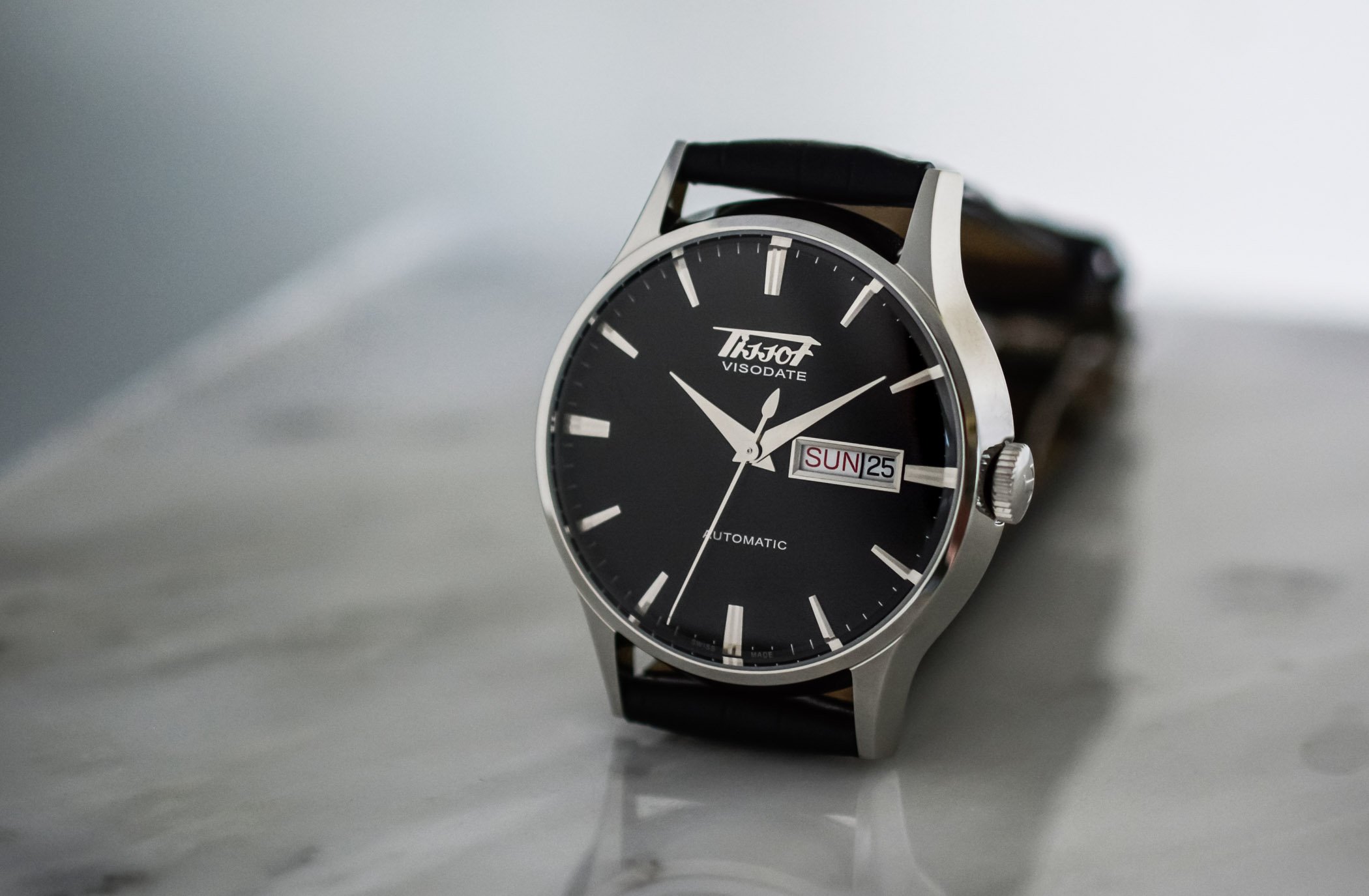
Later, the name resurfaced, stamped on the dial of accessible, slightly vintage-inspired watches (with a date window, or a day-date complication), as the model we’ve reviewed here. This generation, born in the early 2010s, was linked to classic watches at a fair price. But the model felt a bit dated. Indeed, Tissot has undergone a quick evolution in recent years. Following the release and success of the PRX, the brand started to revise some of its more classic models, such as the Chemin des Tourelles, the Ballade, the PR516 or the Le Locle. Recently, Tissot released the Classic Dream Powermatic 80, a sub-500 entry-level watch (classic, maybe too classic). But with the new Visodate, Tissot brings both affordability, substance and a very appealing design.
The new Tissot Visodate Collection
Accessible watches often have to deal with compromises in order to keep the price reasonable. But Tissot, one of the largest brands of the Swatch Group and the most active in the sub-1000 euros field, is better positioned than anyone else in Switzerland to pair fair prices with appealing watches. The recent PR516 Powermatic 80, even though on the sporty side, was a great example of what Tissot is capable of. The new Visodate, in a more classic registry, does the same.
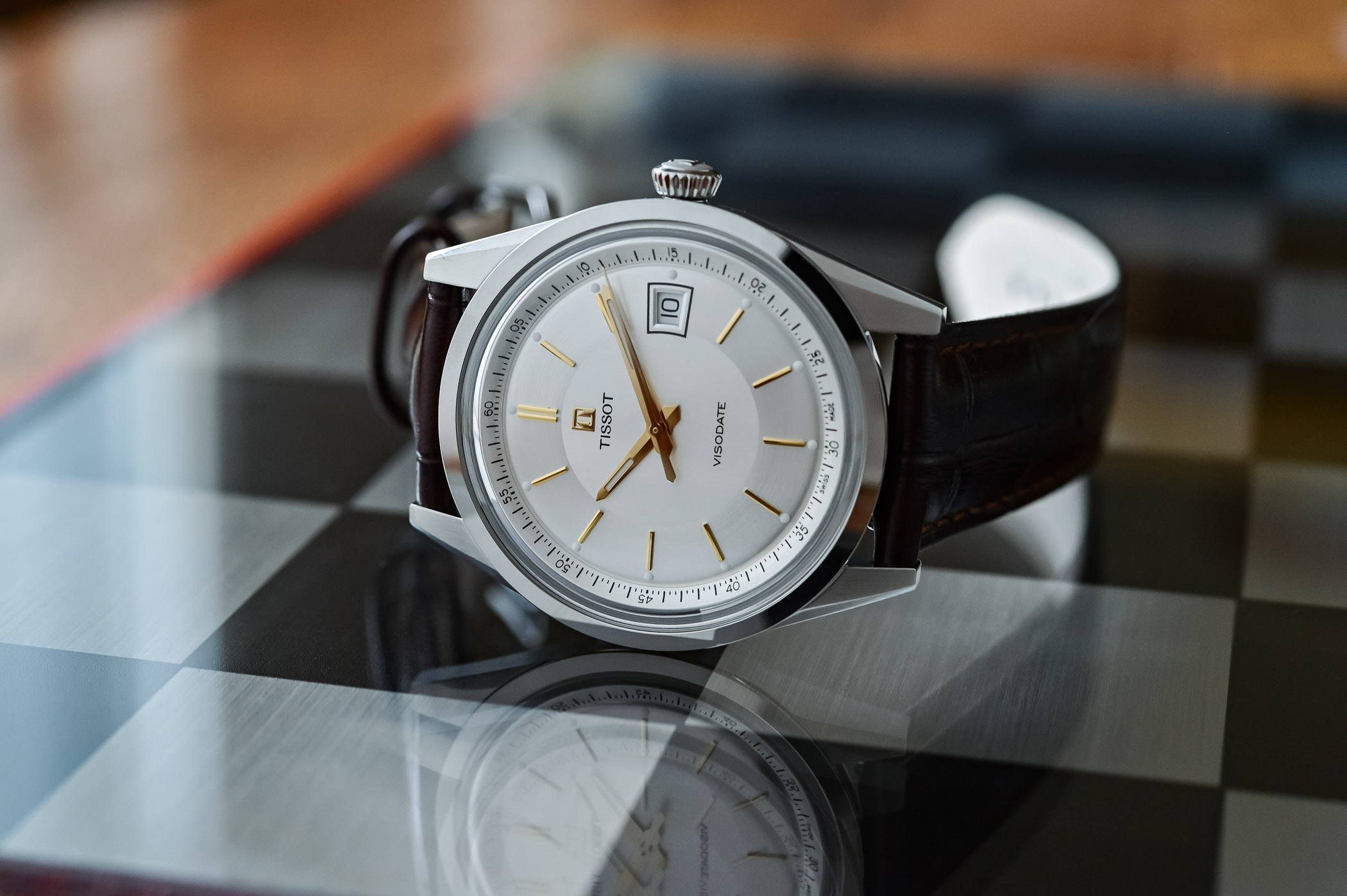
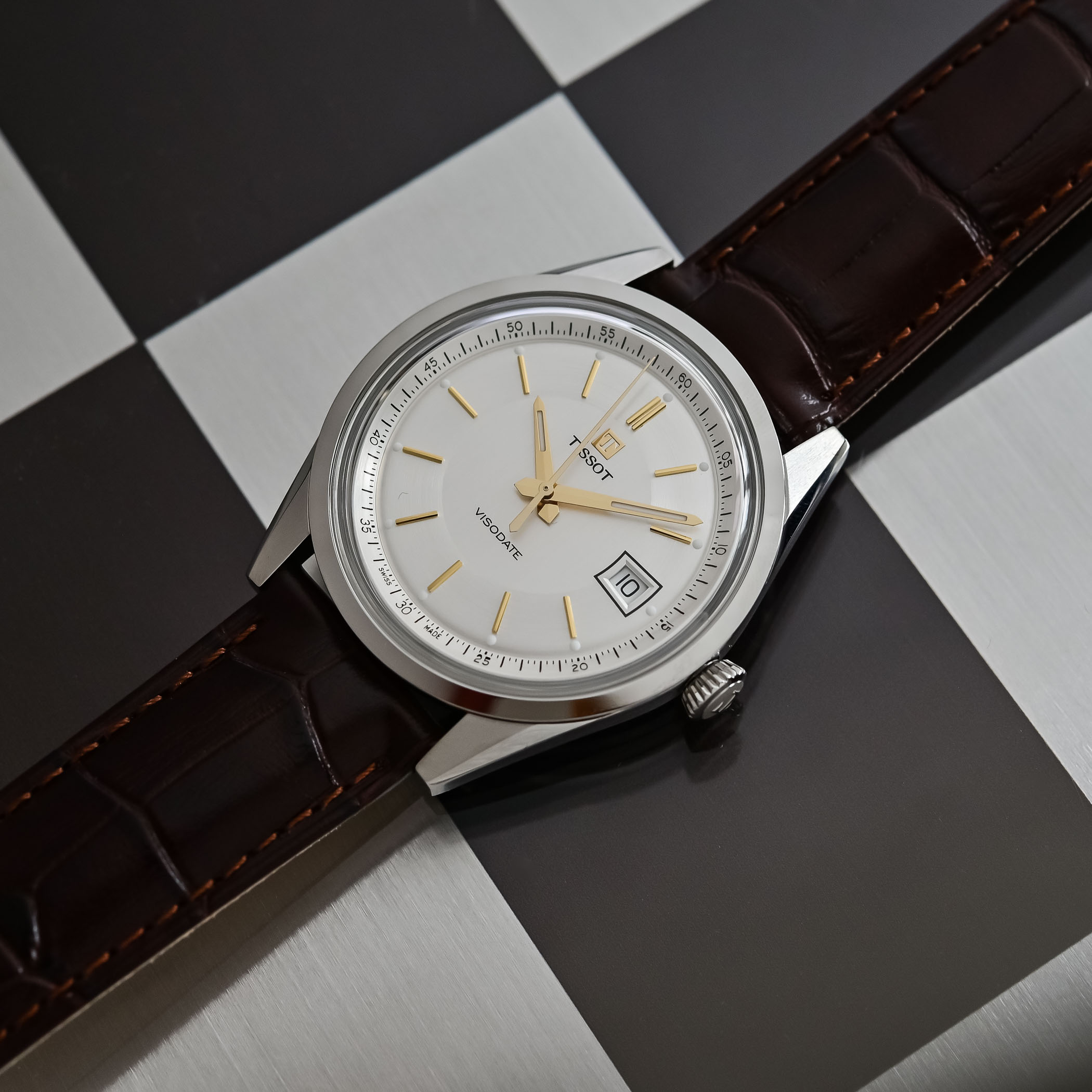
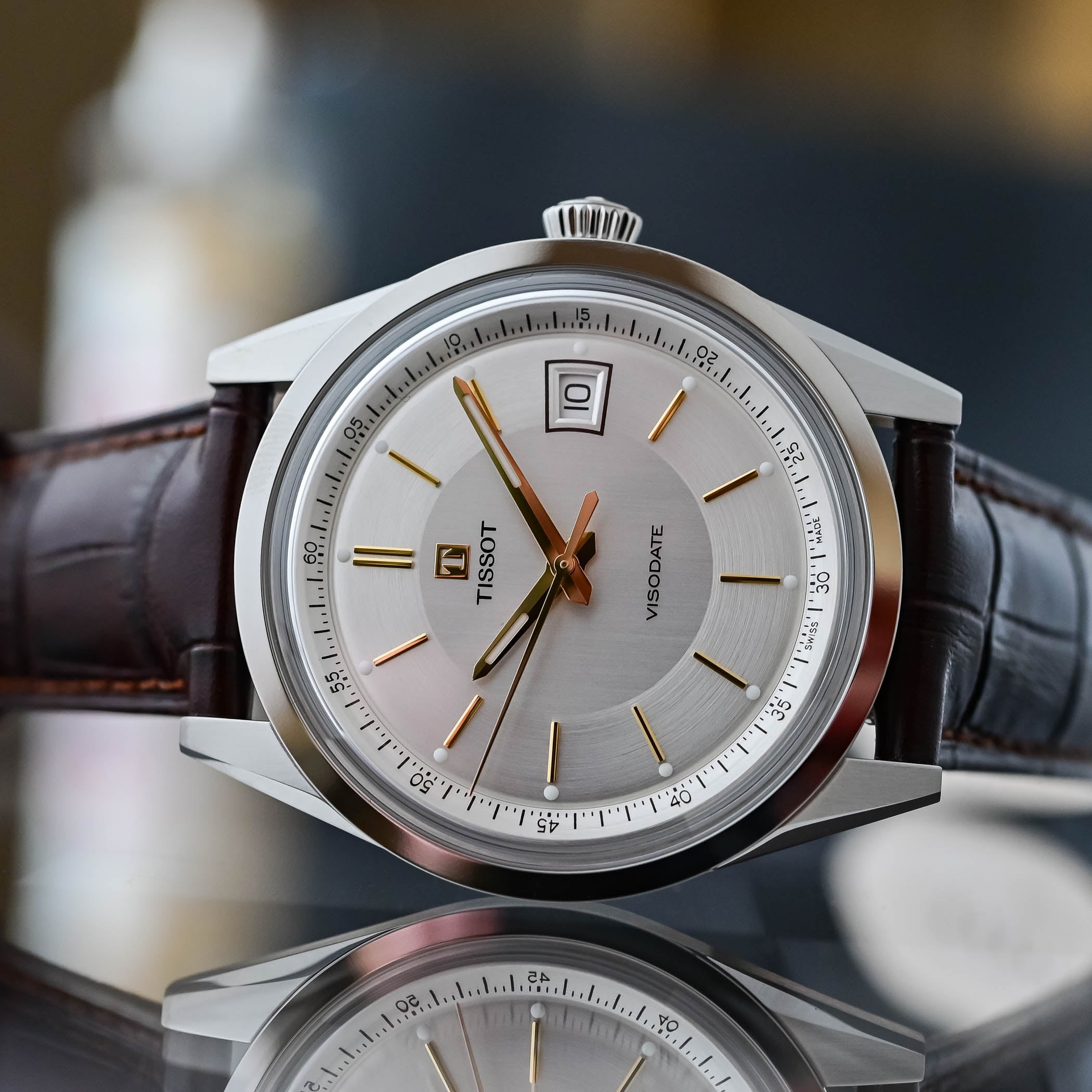
Forget everything you knew about the previous generation of Visodate. The new collection for 2026 starts fresh, without forgetting its roots. Sleek shape, refined proportions, more charisma thanks to newly shaped case and bracelet, as well as newly designed dial with a high level of detail, proven mechanics inside. A classic recipe mastered by Tissot.
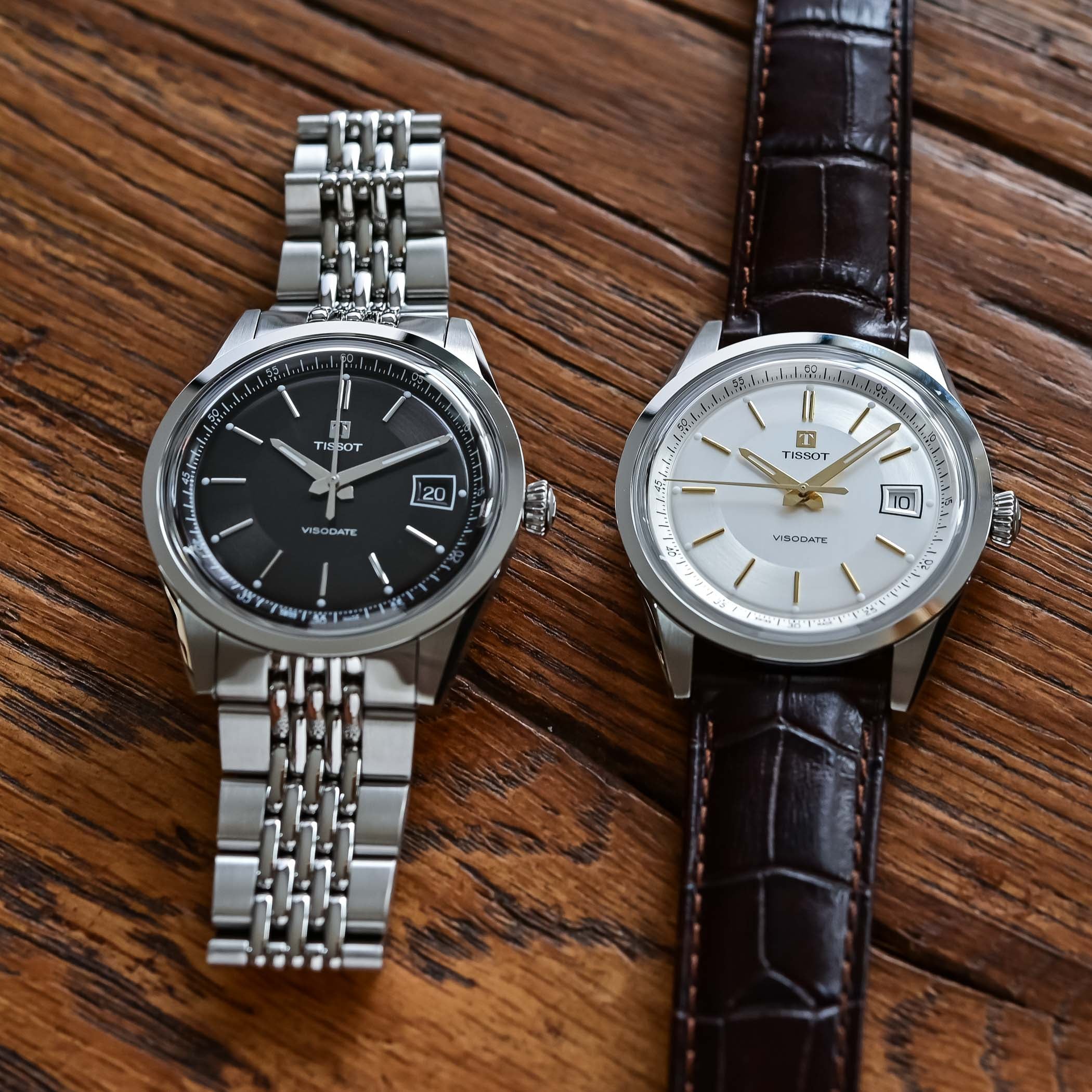
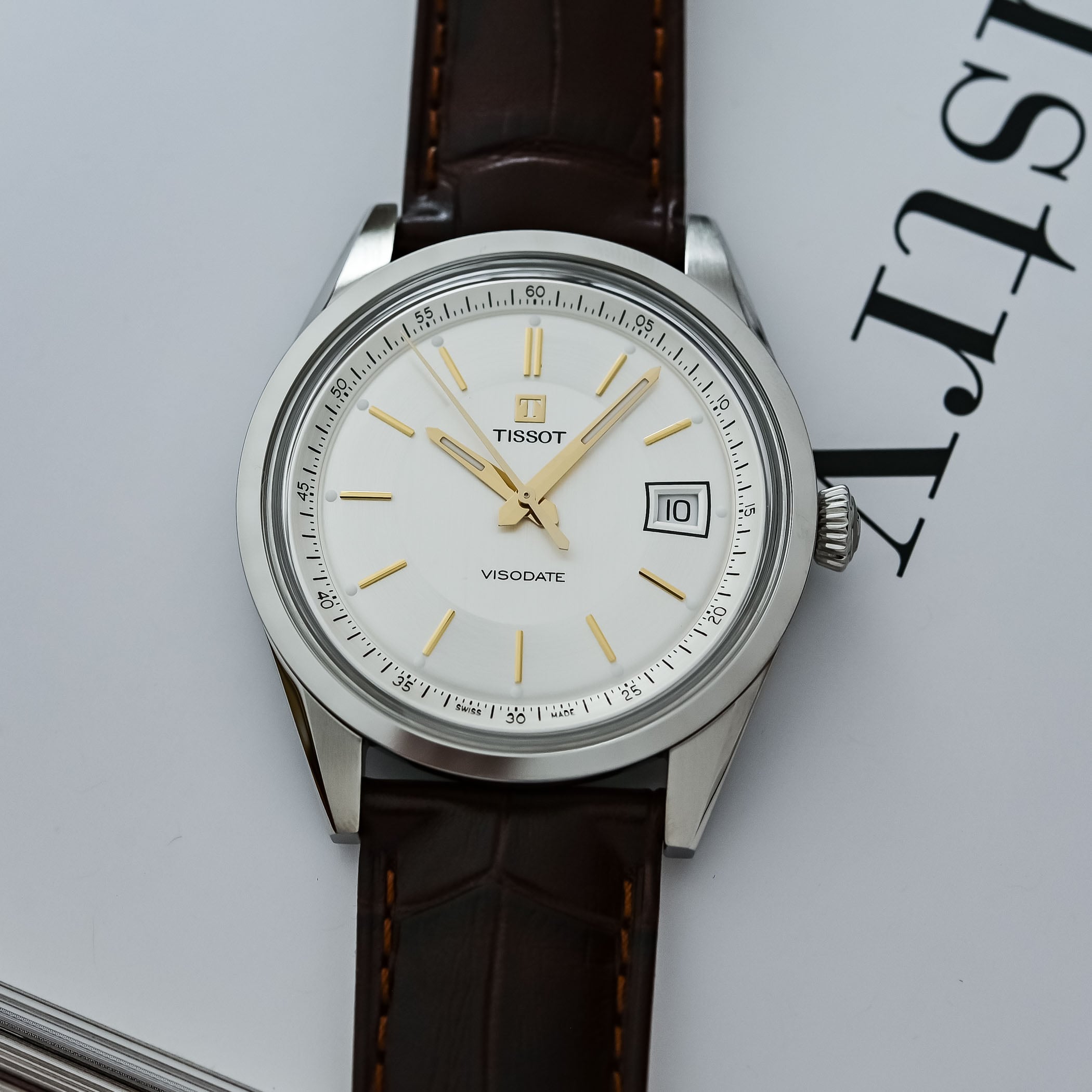
First, and sorry if that’s not really objective, but the new Visodate looks quite fantastic overall. A compact, thin and sharp new case brings a watch with more character, yet retaining a light retro touch and classic flair. The case, which measured 39mm in diameter (1mm less) and 10.45mm in thickness (1.2mm less), has been completely redefined and now sports sharp lines with tension and dynamism. The combination of the straight lugs, the thin and flat polished bezel and an elegant polished bevel on the side the lugs adds depth and refinement. Also adding to the perceived value of the Visodate, it is now equipped with a box-shaped sapphire crystal with AR coating, a conical crown and a see-through caseback. Water-resistance is rated at 50m, sufficient but not exceptional.
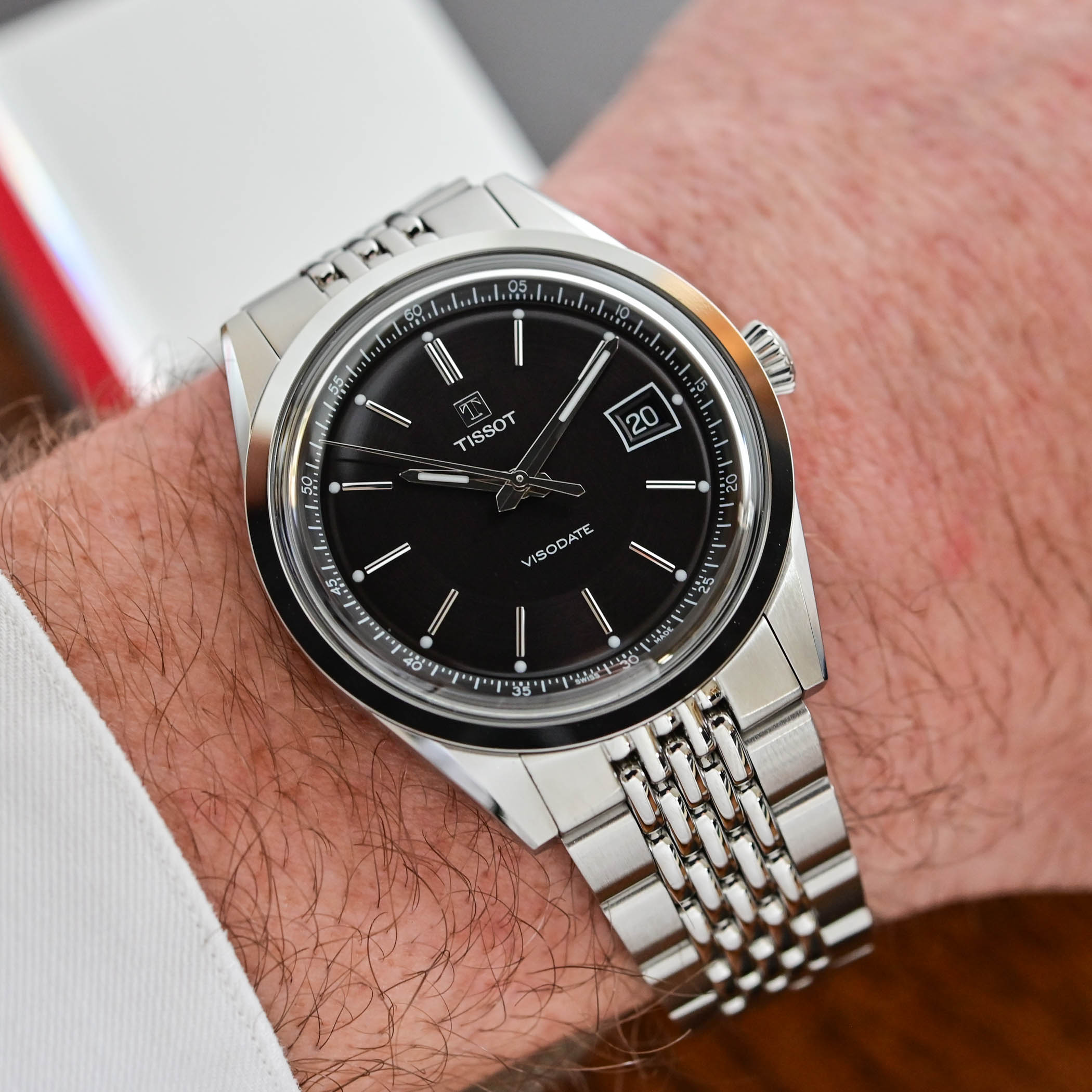
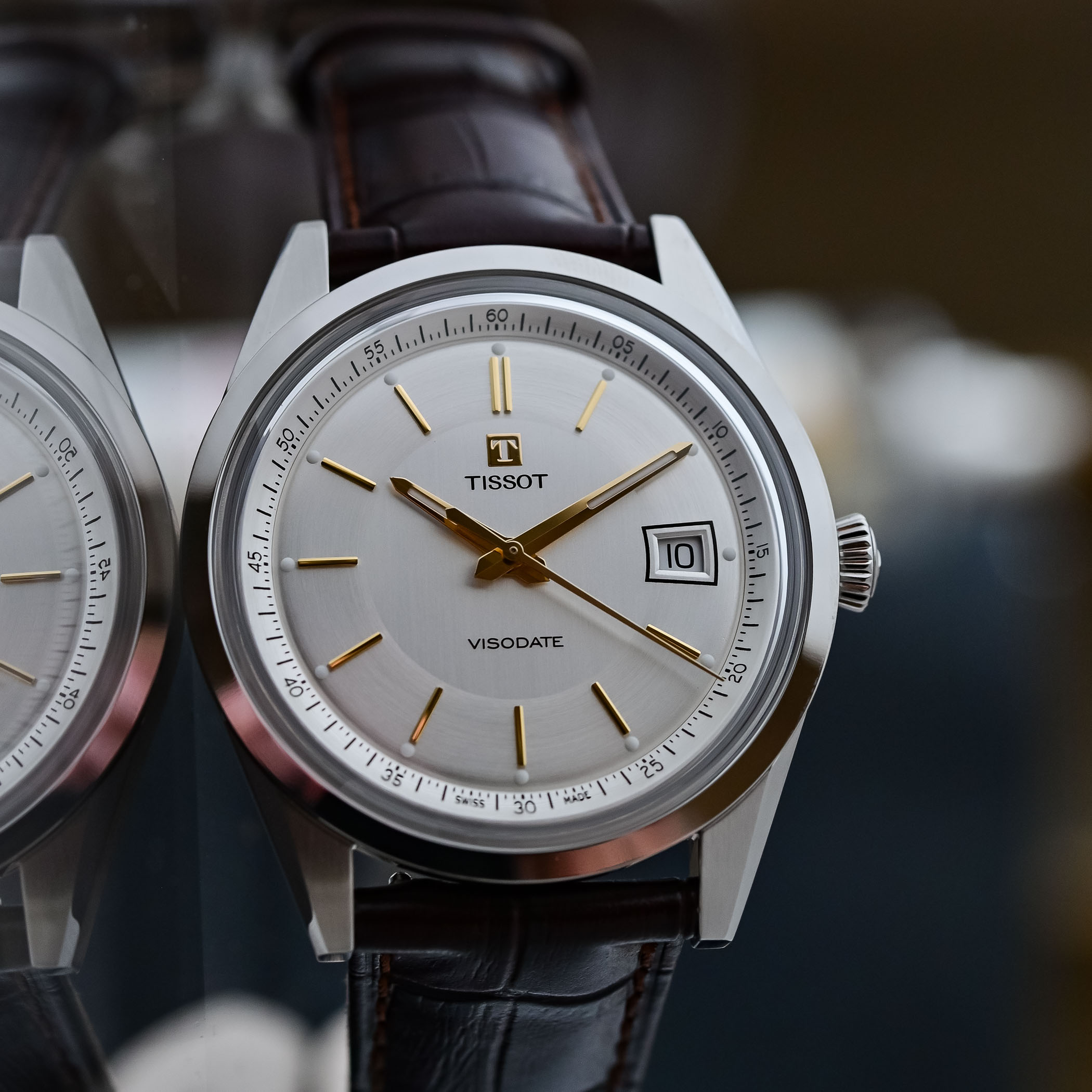
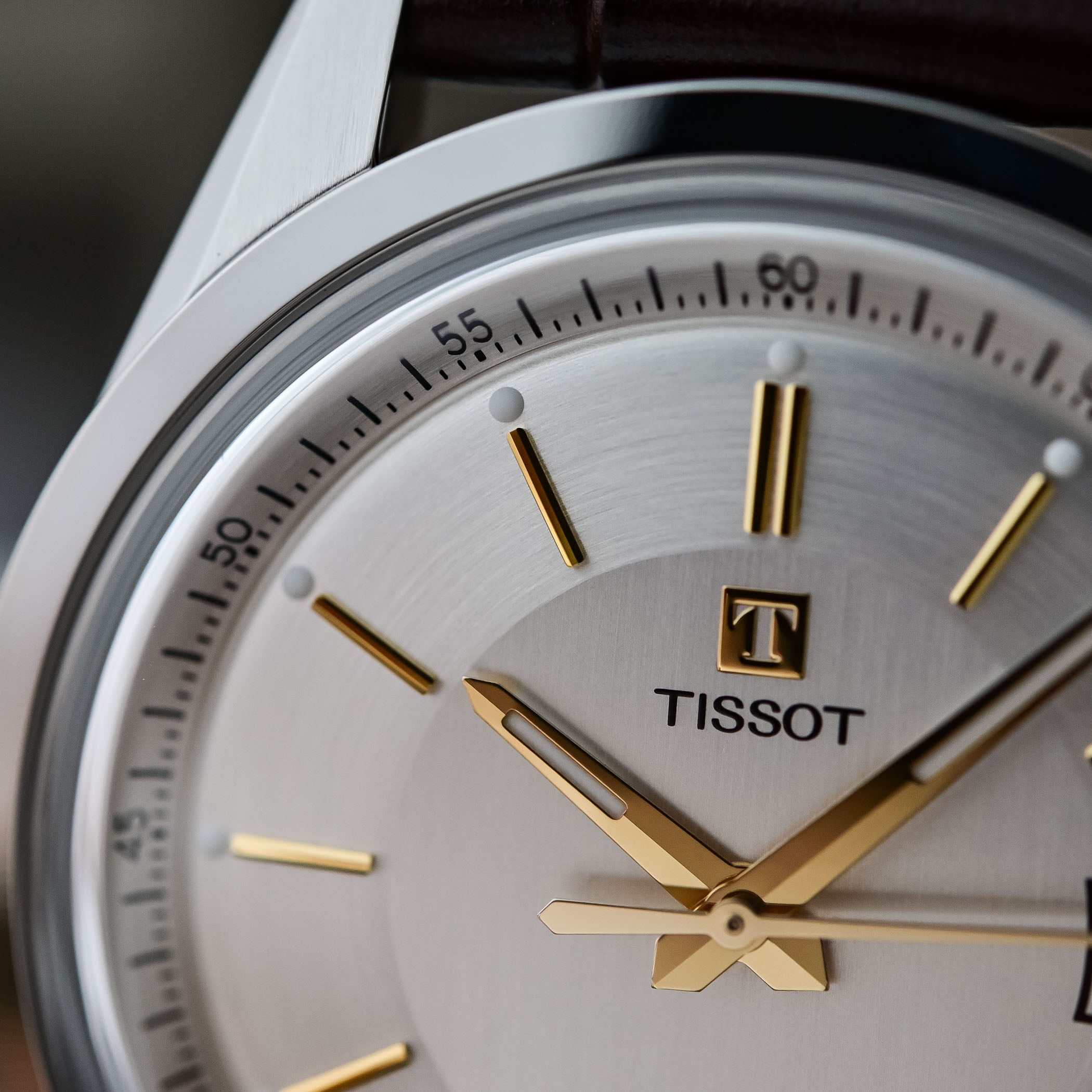
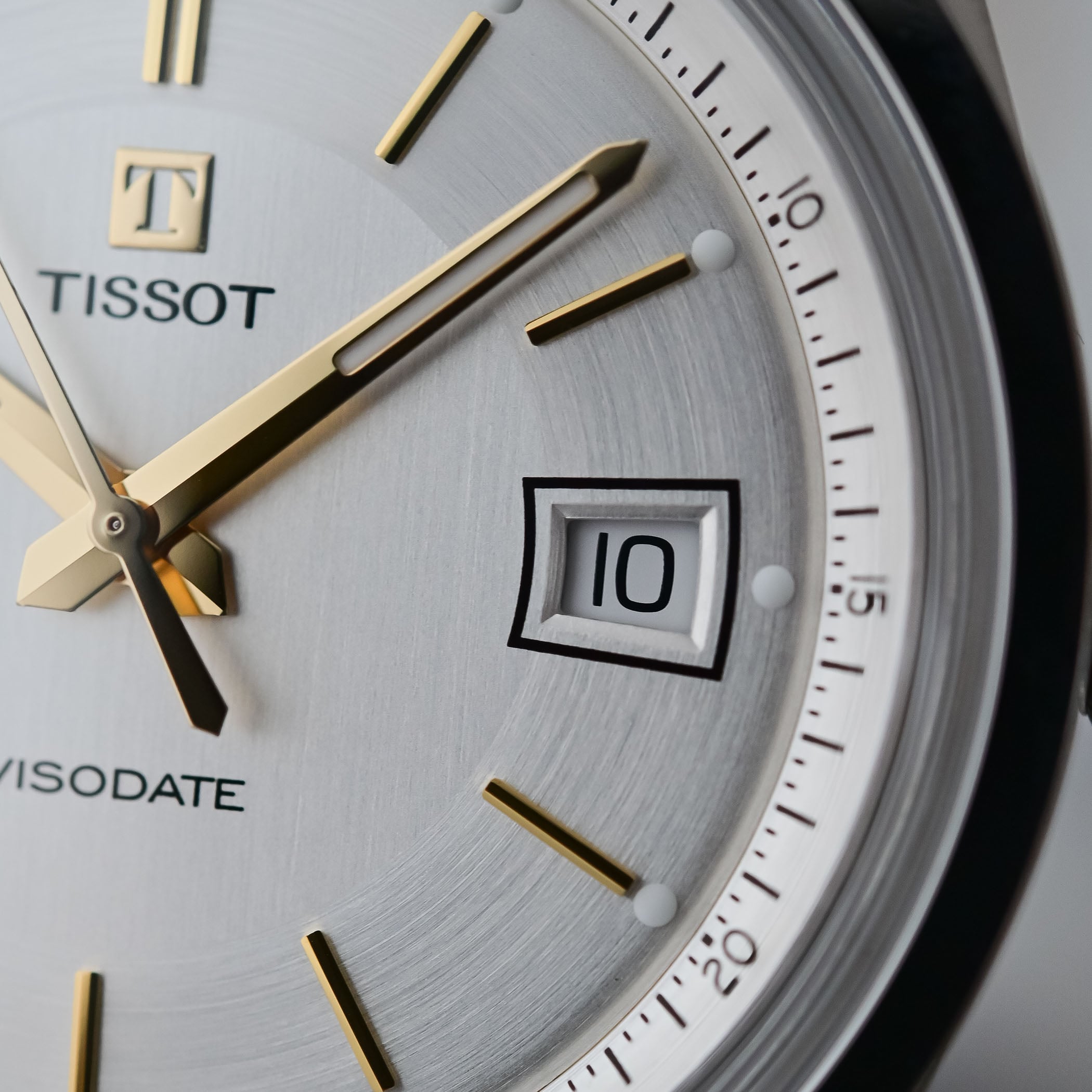
Moving on to the dial, and before talking about colours, the Visodate changes everything here too. From a dial that was previously flat and rather simple, Tissot now moves to something with far more depth and detail. Contrasting with the taut lines of the case, the dial plays on curves, a feeling that’s enhanced by the box-shaped sapphire crystal and the domed profile of the dial. The latter combines two types of finishing, with an interplay of circular and vertical brushing that plays nicely with the ambient light. The dial is framed by an angled inner flange with minutes and seconds track. At 3 o’clock, the trapezoidal date window is emphasised by a framing line, making it stand out (expected considering the original vocation of the watch).
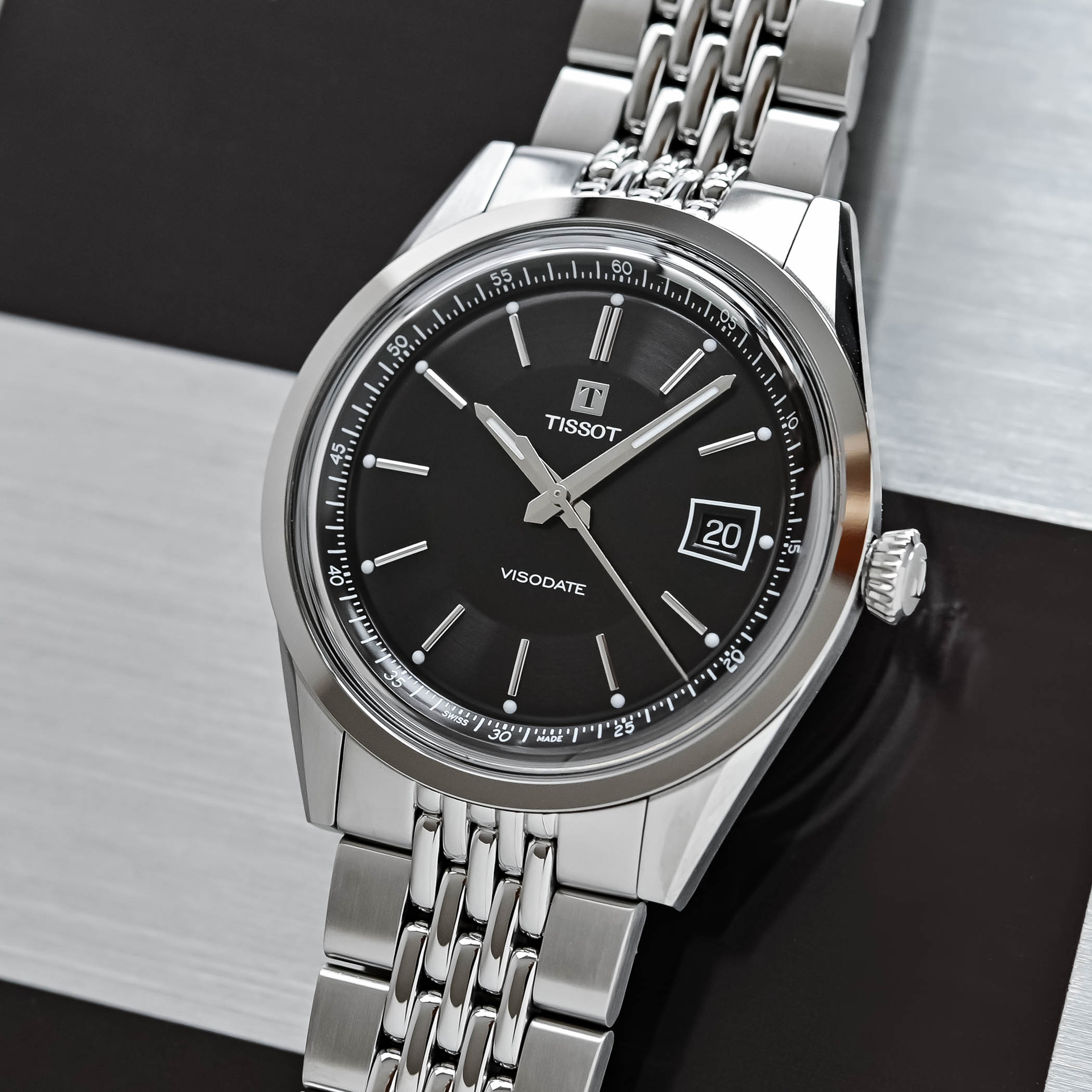
The dial of the Tissot Visodate also incorporates new applied markers, which are polished and facetted, as well as new, slimmer and more refined Dauphine hands with Super-LumiNova. Small SLN dots are also applied next to the polished markers. Three versions of the Visodate will be released. The first one pairs a silver-toned dial with gold-coloured indexes and hands, and it is worn on a brown leather strap with an embossed crocodile pattern, resulting in a dressier, warmer edition. The two other models are sleeker, slightly more modern and a bit more casual, with their retro-style beads-of-rice steel bracelet and dials in black or dark blue, paired with silver-toned hands and markers.
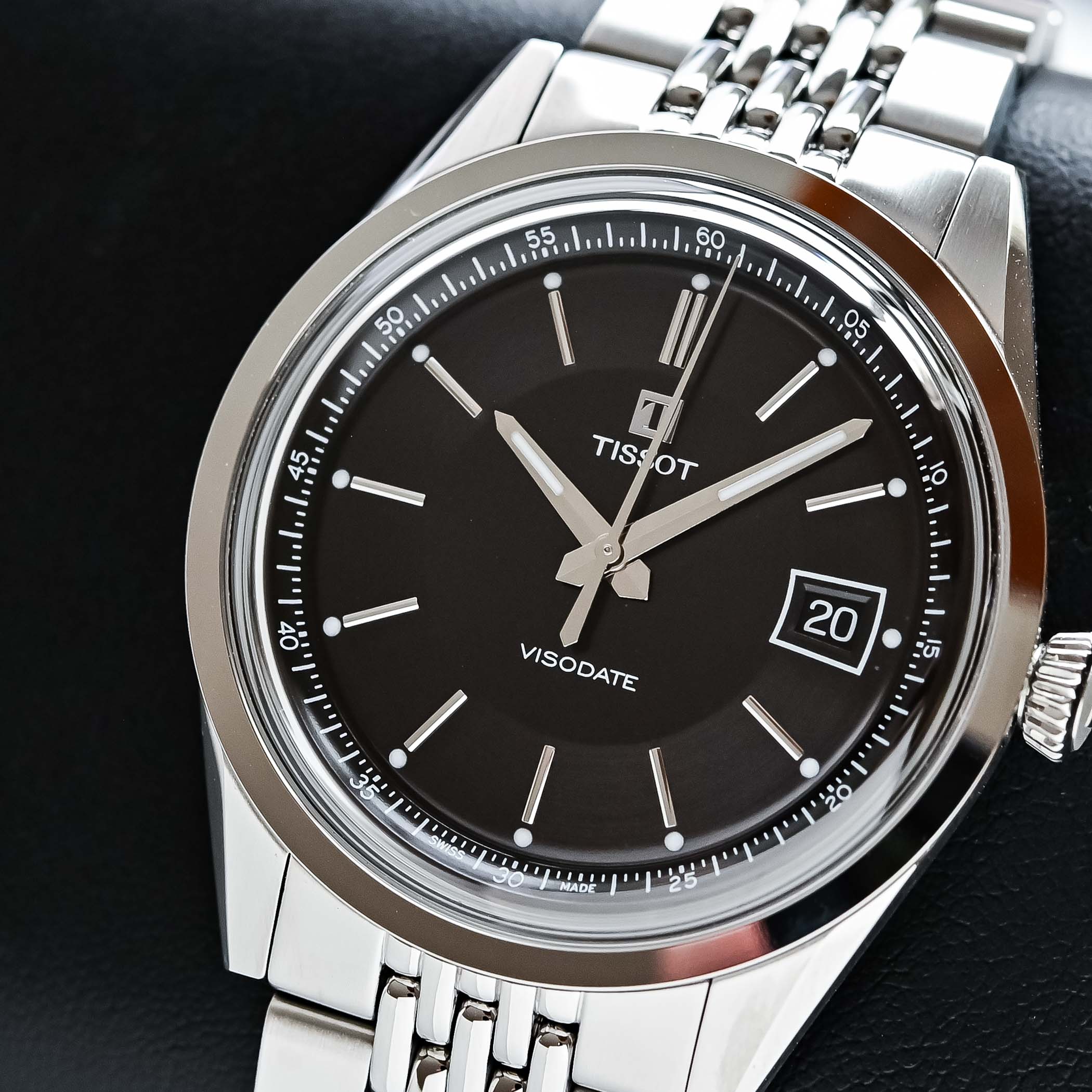
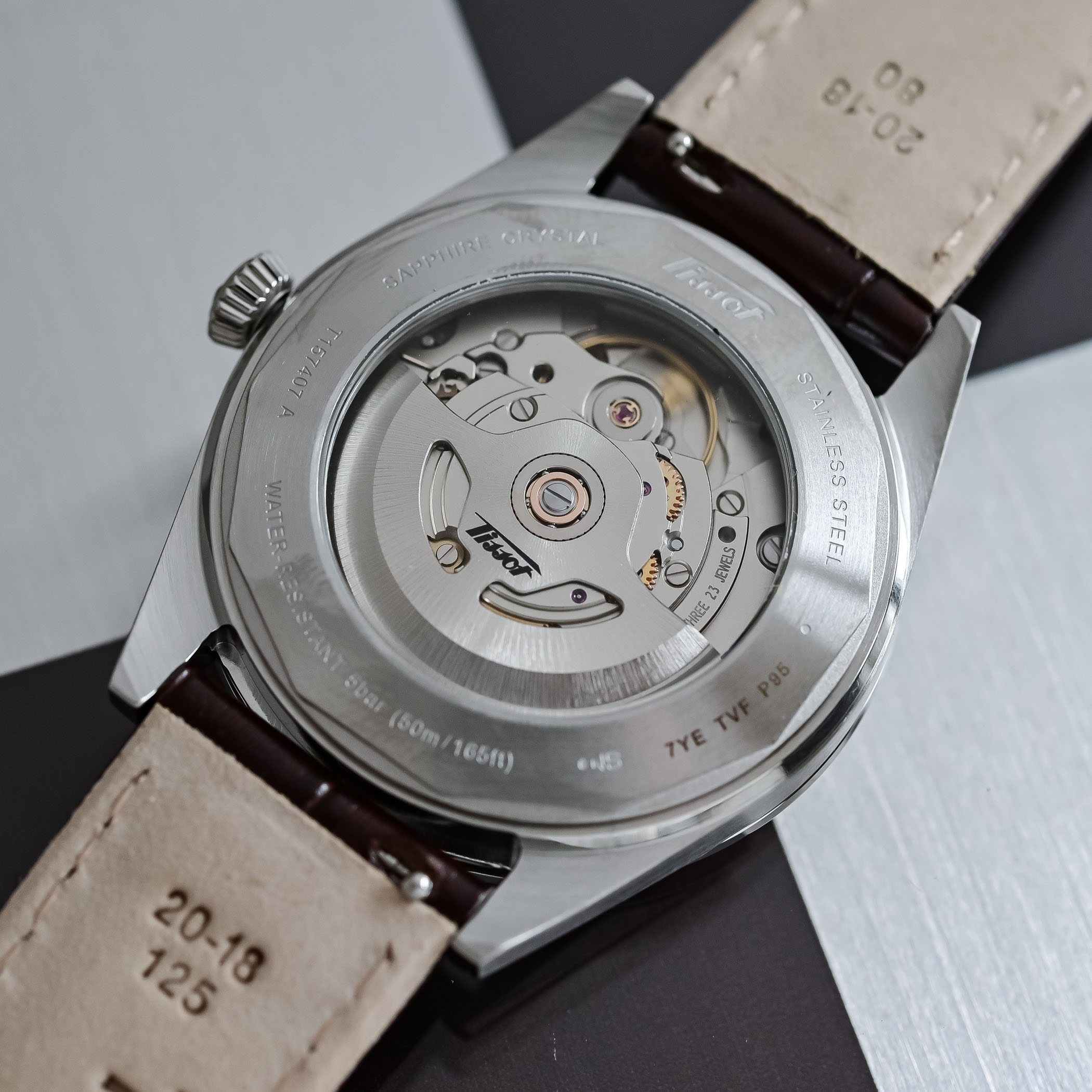
Under the see-through caseback is a familiar automatic movement, the Powermatic 80 – a movement that’s at the core of most Tissot collections. This evolution of the emblematic ETA 2824 has been revised with a new kinetic chain and a reduced frequency of 3Hz. The result is a solid 80-hour power reserve. It also incorporates a magnetic-resistant Nivachron balance spring.
Availability & Price
A thoughtful revision of a classic watch, which adds great depth and appeal, the new Tissot Visodate collection is immediately available from the brand and retailers, and is part of the permanent collection. The version with silver dial on leather strap (ref. T157.407.16.031.00) is priced at EUR 795, while the two models on steel BoR bracelet (T157.407.11.051.00 in black and T157.407.11.041.00 in blue) are priced at EUR 875. It is about 100 euros more than the previous generation, but feels justified by the step up in style, detail and finishing. Classic Tissot, delivering great value.
For more details, please visit www.tissotwatches.com.

6 responses
Nice novelty from Tissot looks like refined according to market price, contrary to your pictures, Tissot website show black one with white date disc, hope this is an error, charm coming from black date and dial…..
Make it 37mm and I’d get the both the blue and silver dialed versions. It’s just a bit too large.
Does it still have the instant date change? It isn’t mentioned..
@Michel Moll – yes it does
Basically a Heuer Carrera date for the masses, but on the appropriate bracelet.
Too bad it includes the the usual Tissot blunders, like bloated size and ugly gold hands
Plastic parts that need to be replaced every 3-4 years at the price of a new watch…