
 Not all images were able to load for printing. Please close the print window and try again.
 Urwerk Reconfigures its Time Display with the UR-300 Time Quantum
The indie brand transforms its signature wandering-hour indication, introducing a system that changes the entire time display in a single, instantaneous movement at the top of every hour.

Since its foundation in 1997, Urwerk has looked at mechanical watchmaking from a very unconventional perspective. Co-founders Felix Baumgartner and Martin Frei have developed an unmistakable style, with satellite hours, wandering displays, and retrograde indications. Their watches frequently take inspiration from astronomy, but the new UR-300 Time Quantum looks not to heavenly bodies but to the microscopic world of particles and energy. The new watch features an entirely new display architecture, one that dismantles and reconfigures itself once the hours change.
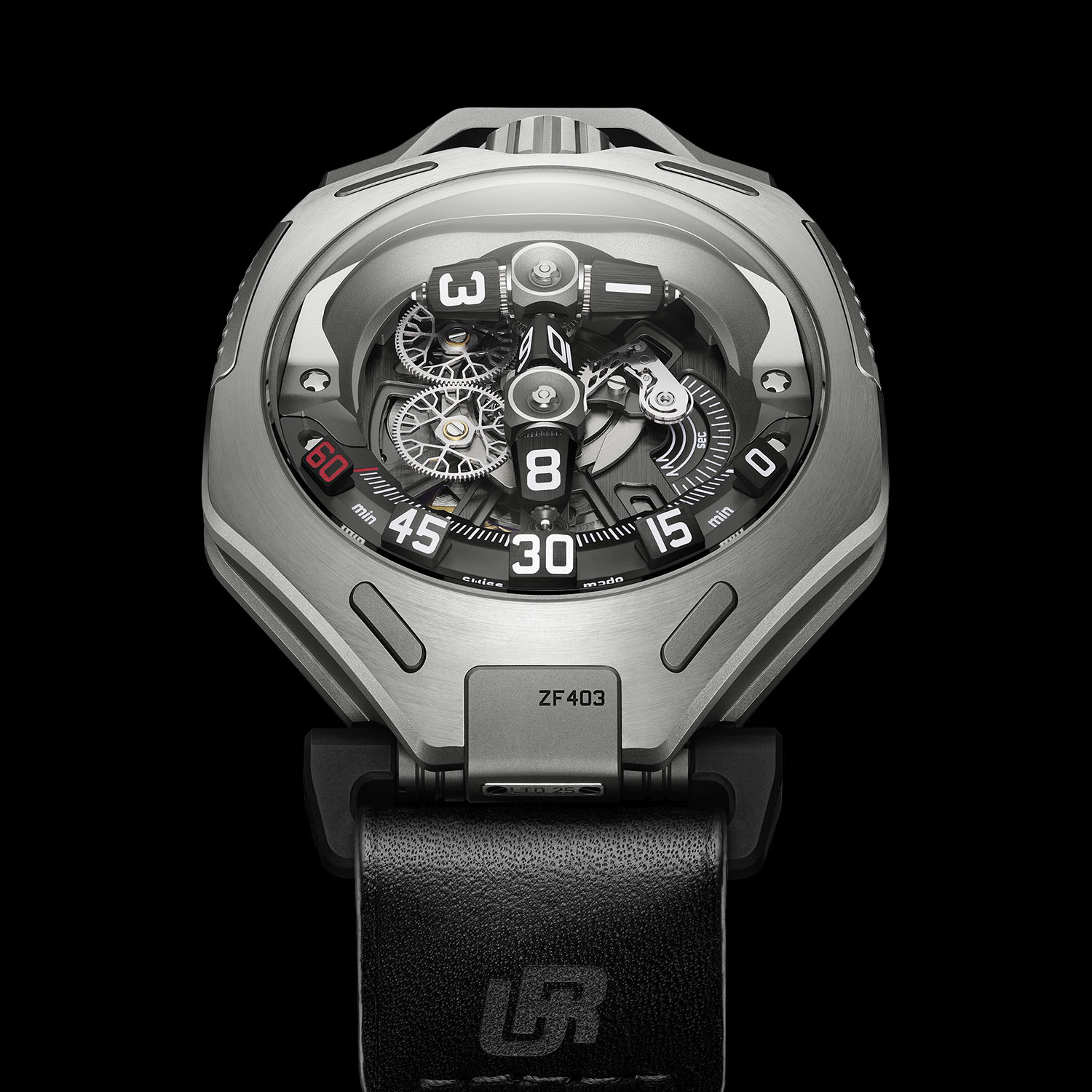
The watch’s name, Time Quantum, refers to the concept of a discrete transition from one state to another. To understand the concept behind the new Baugartner and Frei’s creation, I came across this article and, frankly, got lost for a while: The closer we look at time, the stranger it gets. Urwerk uses the behaviour of atoms and energy-charged particles as a conceptual framework for its new display, drawing a parallel between the reorganisation of matter and the mechanical transformation taking place here. The mechanism does not reproduce or explain quantum physics, but it turns the idea of a sudden change of state into a very mechanical sequence.
From Orbiting Satellites to Atomic Movements
The wandering-hour indication is Urwerk’s signature feature. In watches across many of the brand’s series, such as the UR-120, UR-150, or the UR-230, rotating hour satellites travel along a graduated minutes scale to indicate the time. The UR-300 takes the same approach, but in a different way. In this new watch, the hour indicators are arranged not on a rotating carousel, but on a newly developed modular structure that changes configuration every 60 minutes.
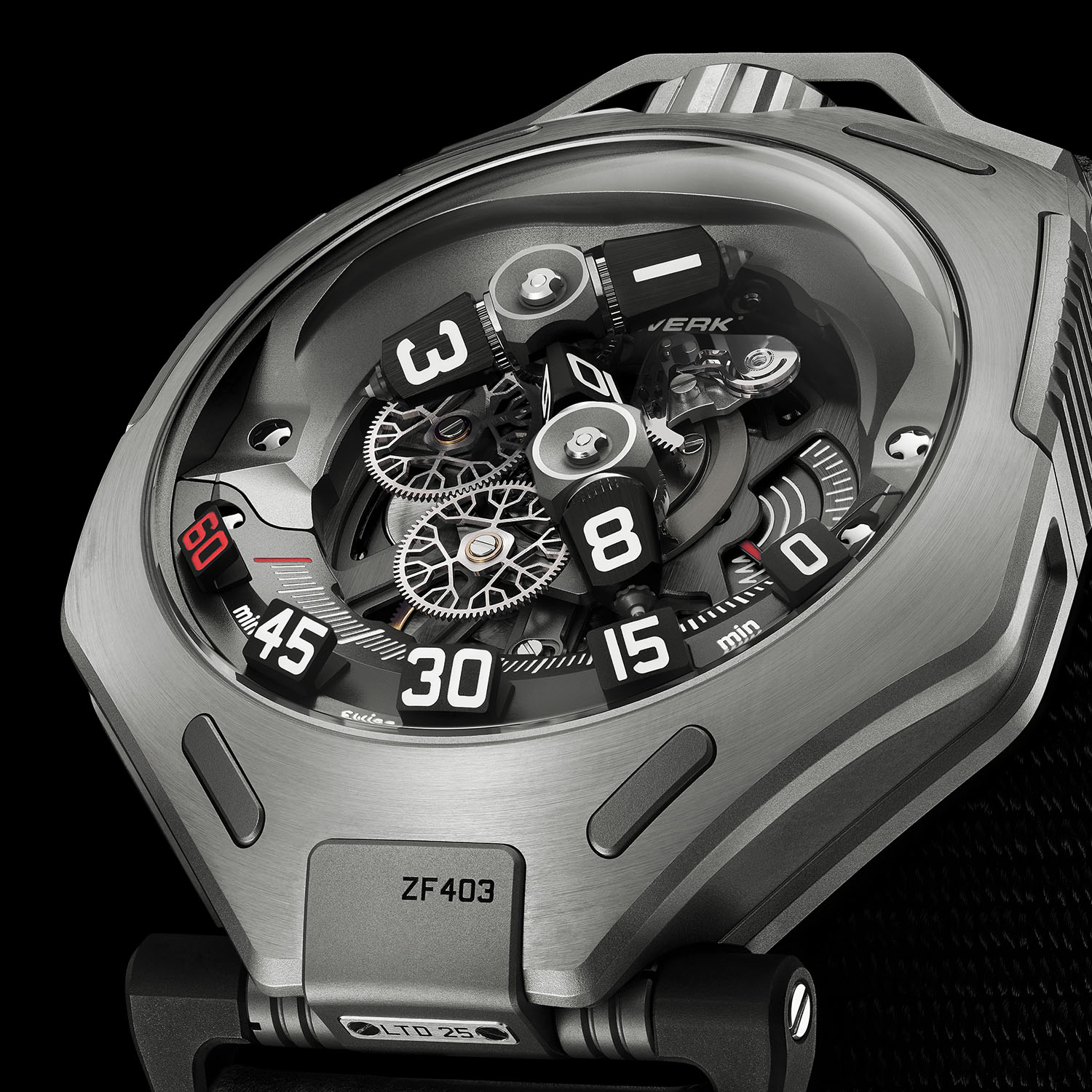
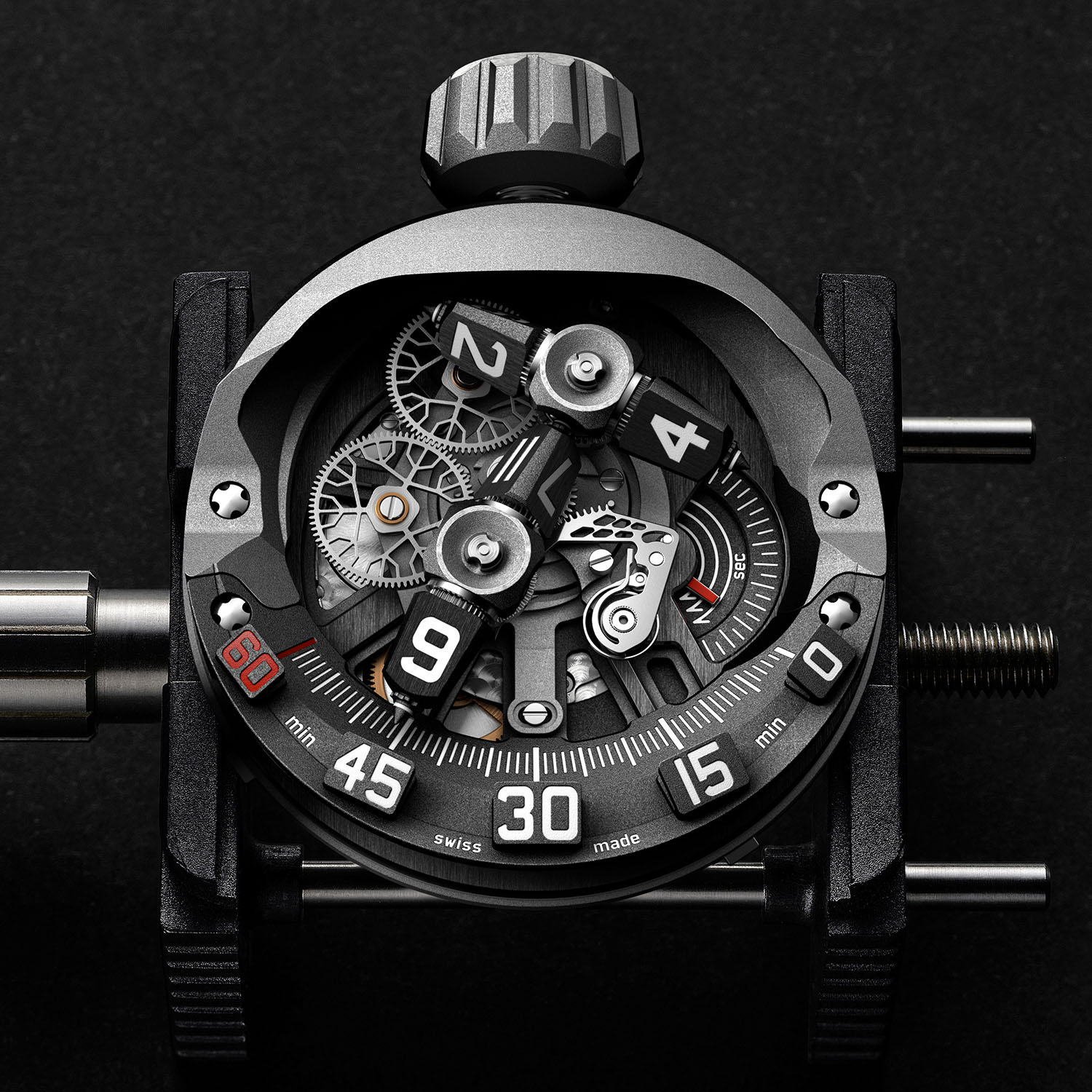
Under the sapphire crystal, two linear hour modules form a T-shaped frame. Each module carries a three-sided rotating hour prism on each end. Four prisms provide the twelve-hour indications through their three faces. The lower end of the T-frame is the active hour display. It travels along a curved, 108-degree minutes scale, from 0 to 60. The frame’s geometry determines the relationship between the moving hour display and the minute indication.
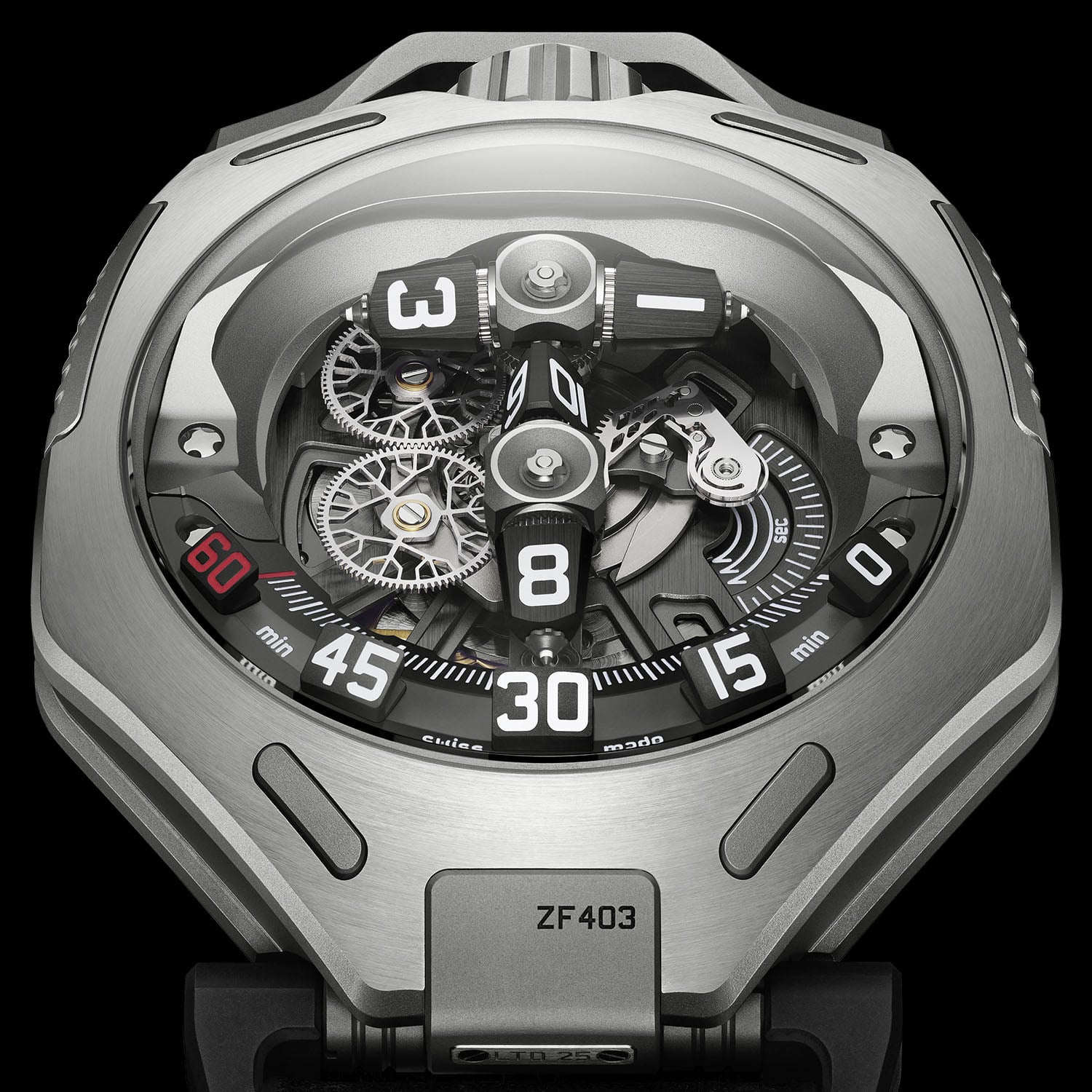
When the indicating prism reaches the end of the minutes scale, three operations occur simultaneously. The T-frame jumps forward and rotates by 72 degrees, placing the next hour prism at the beginning of the minutes track. The crossbar pivots around its midpoint to become the new stem, while the previous stem rotates in the opposite direction to form the next crossbar. Finally, all four prisms rotate, presenting the numeral for the new hour. In other words, the display reconfigures itself as the hour modules, prisms, and frame move in one coordinated motion. After the transition, the new hour indication begins its journey along the minutes scale.
The Mechanical Problem Behind the Spectacle
As one could imagine, the mechanical performance required resolving a few engineering challenges. An instantaneous jump involving several moving components needs enough energy to complete the transition, but not so much that the components recoil, or the movement suffers from unnecessary stress. Also imagine handling tolerances in the gear trains and moving parts so that they withstand sudden acceleration without introducing excessive play or reducing transmission efficiency.
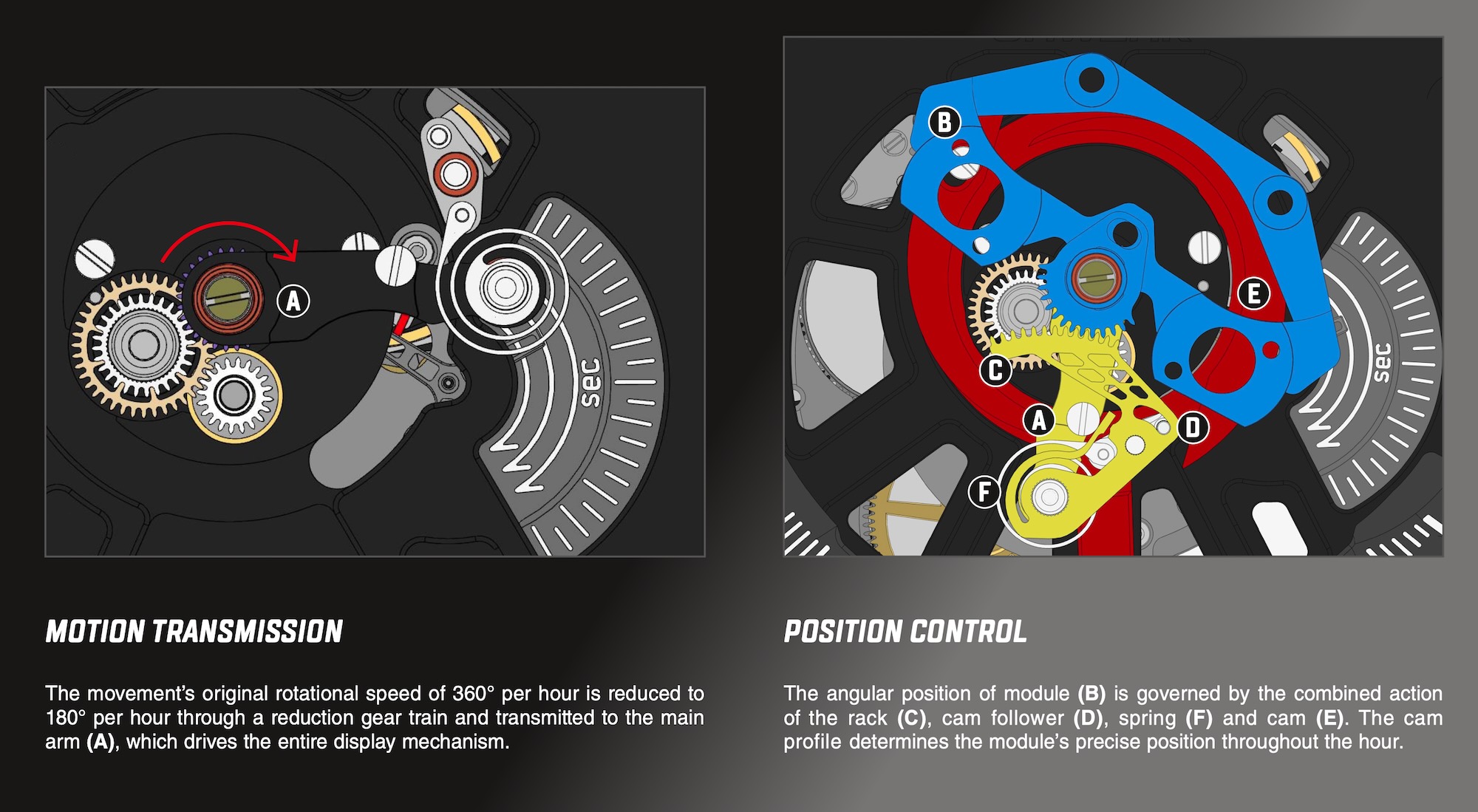
Urwerk’s technical fact sheet (titled For the Nerd in You) explains that the movement’s initial rotational speed of 360 degrees per hour is reduced to 180 degrees and transmitted to the main arm. The arm rotates counterclockwise, while a cam makes a clockwise correction of 72 degrees per hour. Thus, the hour display moves 108 degrees per hour, followed by the 72-degree jump at the hour change. A rack, cam follower, spring, and cam control the module’s angular position. The cam profile governs the module’s position throughout the hour, coordinating the continuous movement with the abrupt transition.
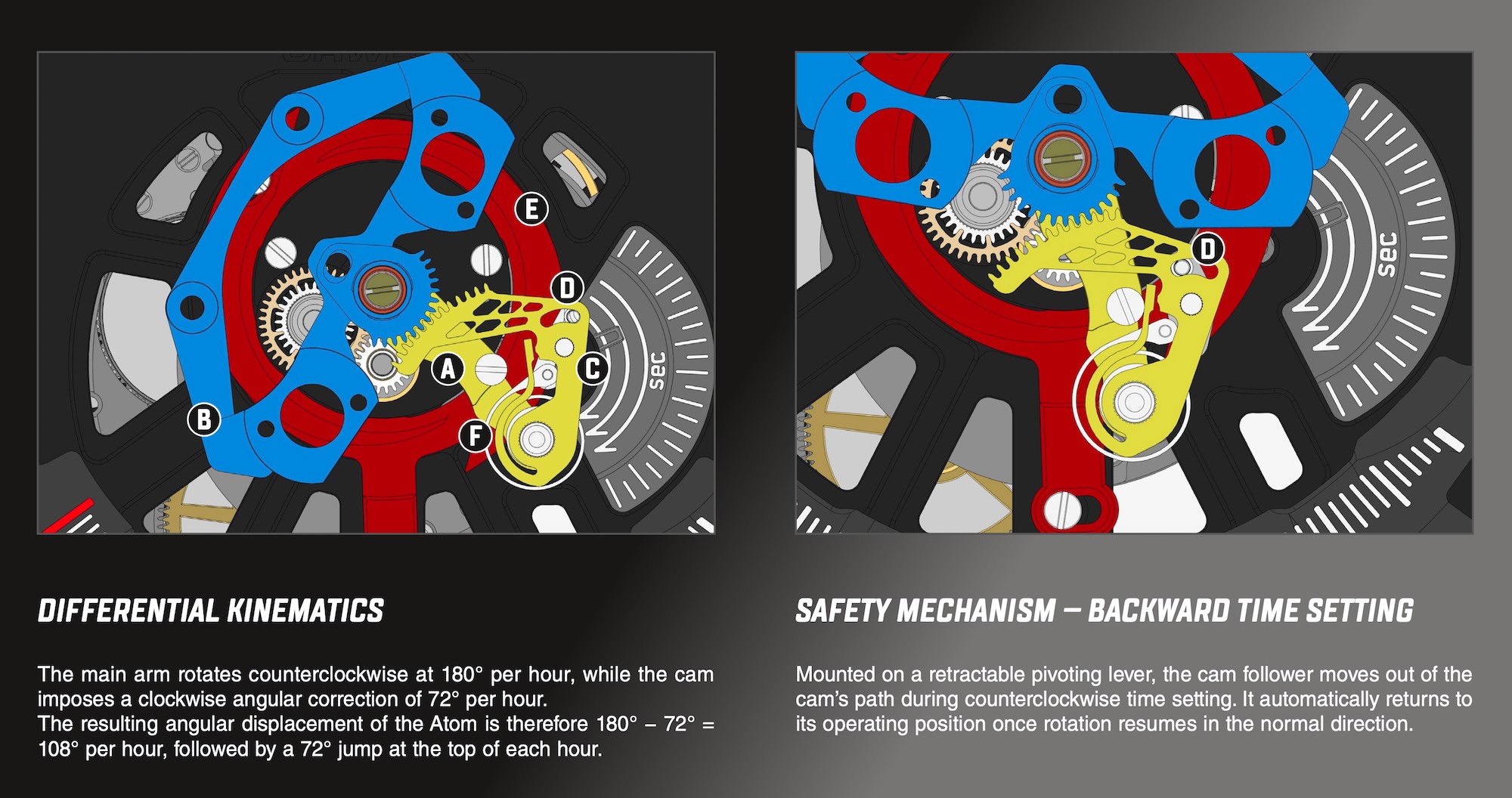
Urwerk has also considered the nuances of setting the watch, with a safeguard that lets you set the time backwards without forcing the positioning mechanism through its normal operating sequence. When you adjust the time backwards, a retractable pivoting lever moves the cam follower out of the cam’s path. Once the mechanism resumes its normal direction of rotation, the follower returns to its operating position.
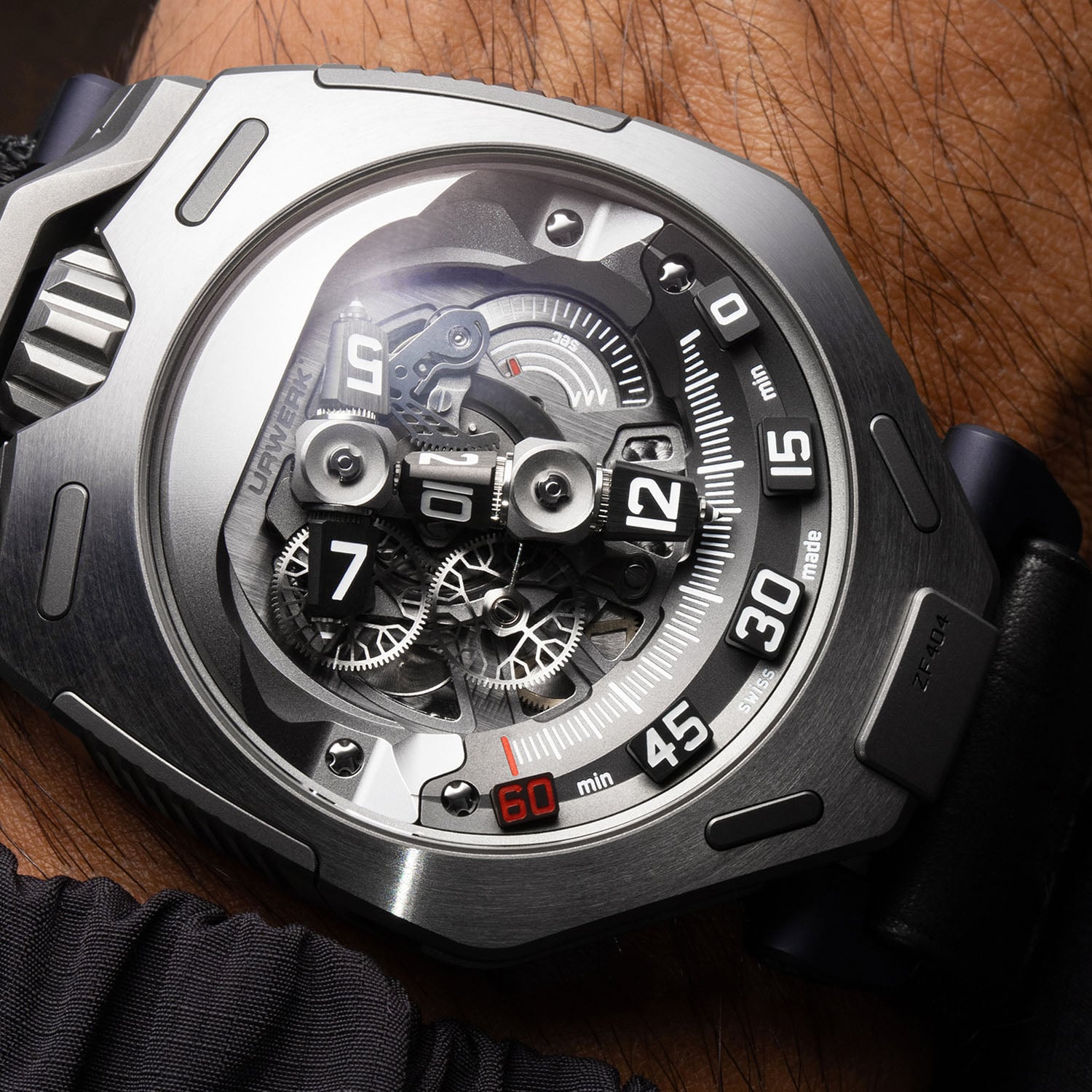
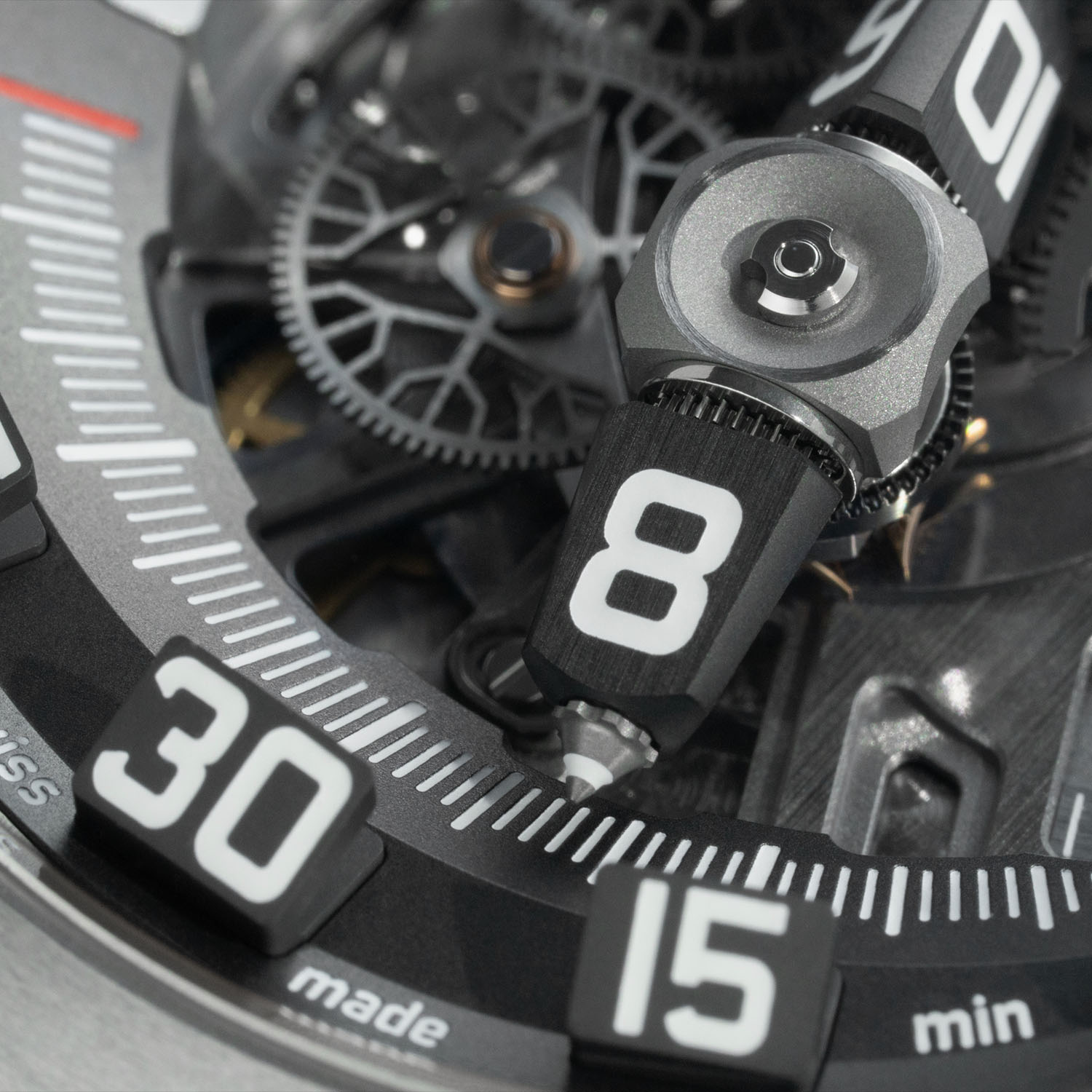
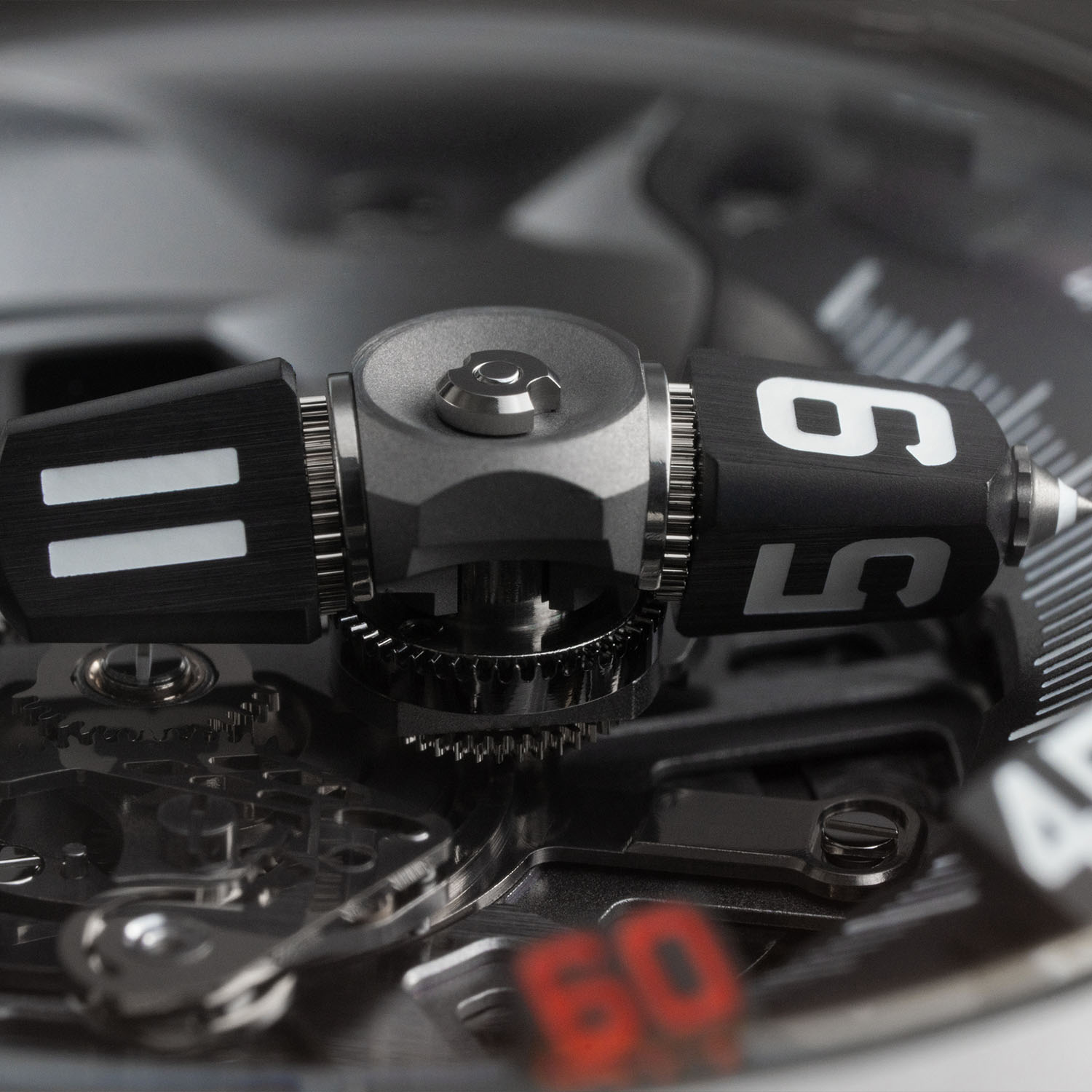
As with many Urwerk’s creations, the genius is not only in making an unusual indication possible, but in repeating it reliably, hour after hour after hour.
The UR-30.01V Movement
The watch is powered by the automatic UR-30.01V calibre (Vaucher base with an in-house display module), equipped with the brand’s Dual Flow Turbines. These regulate the winding of the movement, managing the energy supplied to its double mainspring barrel, balancing the energy required by the complex jumping mechanism against the need for a useful power reserve. The power reserve is 40 hours, not at all a long one by contemporary standards (Urwerk’s watches have never crossed even the 50-hour barrier, except for EMC), but keep in mind that the mechanism must meet the energy requirements of the reconfiguring display without letting the instantaneous change compromise the watch’s regular running.
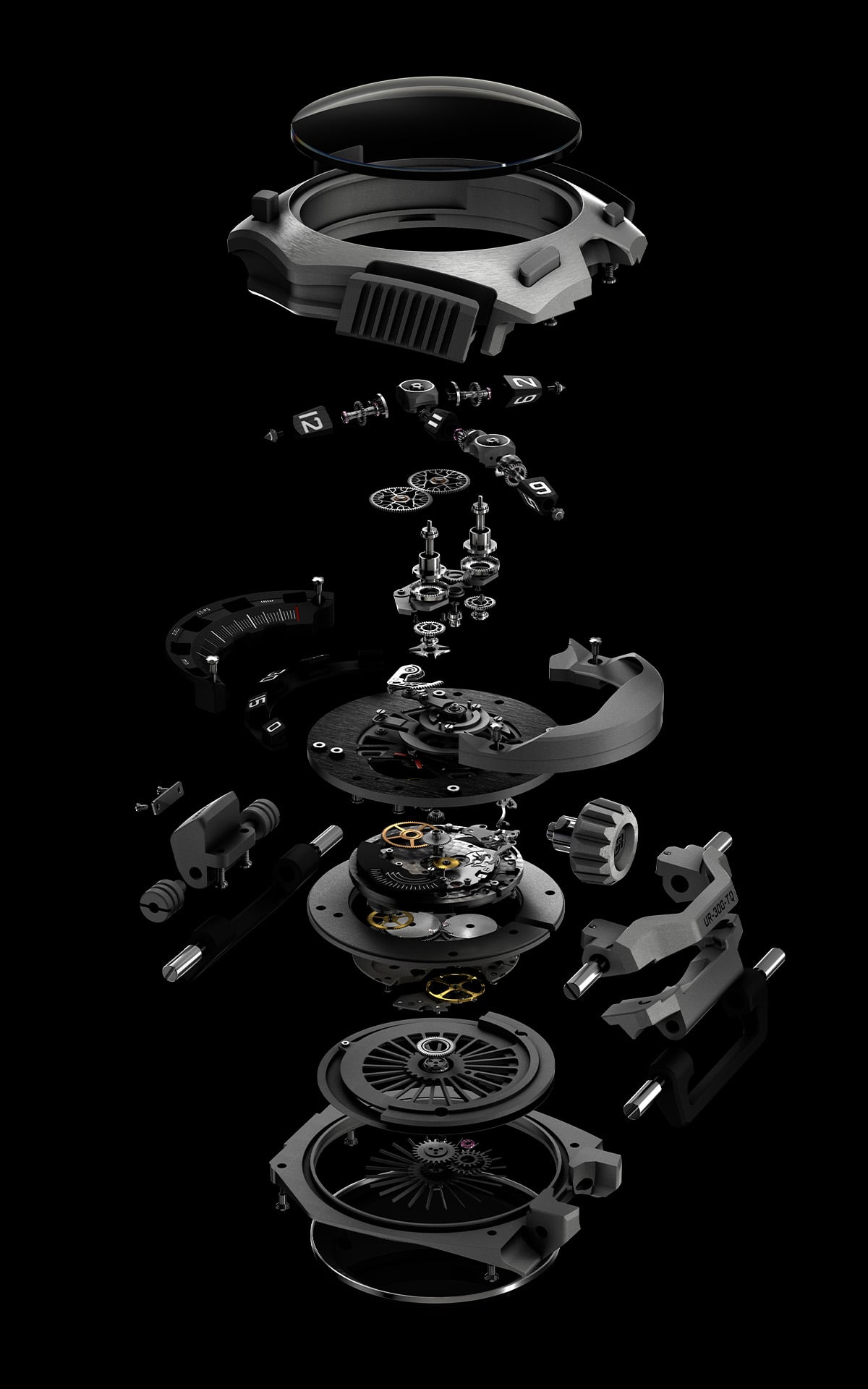
The movement uses a Swiss lever escapement and a monometallic balance wheel. It operates at 28,800 vibrations/hour. The parts responsible for the hour display are made from a range of materials, including beryllium copper, brass, anodised aluminium, ARCAP AP1D, titanium and LIGA-processed nickel. The variety reflects the different demands placed on these parts, from structural rigidity and low mass to precise geometry and reliable interaction between moving parts. Finishing includes circular and straight graining, Côtes de Genève, and chamfered, polished screw heads.
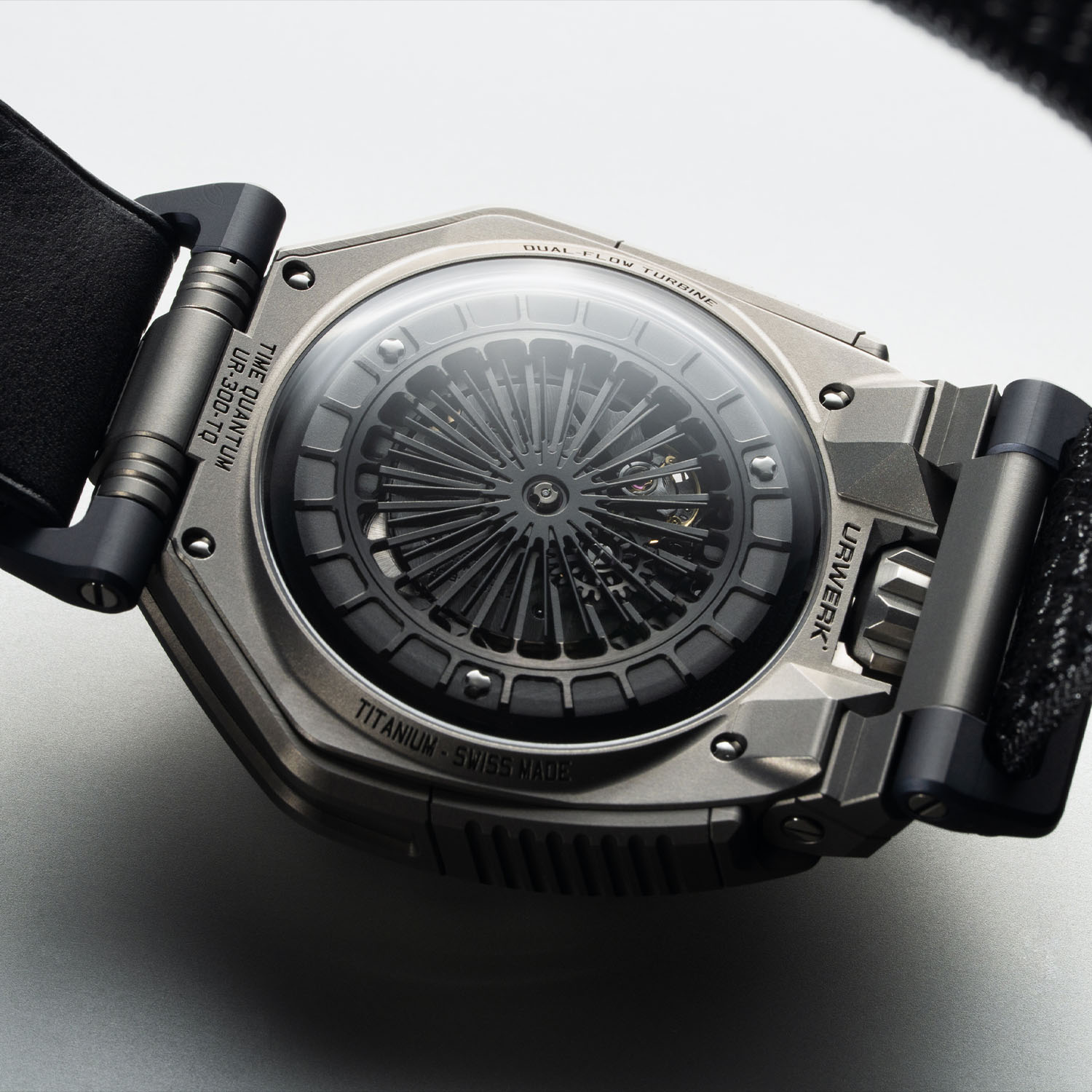
A Titanium Case for the UR-300 Time Quantum
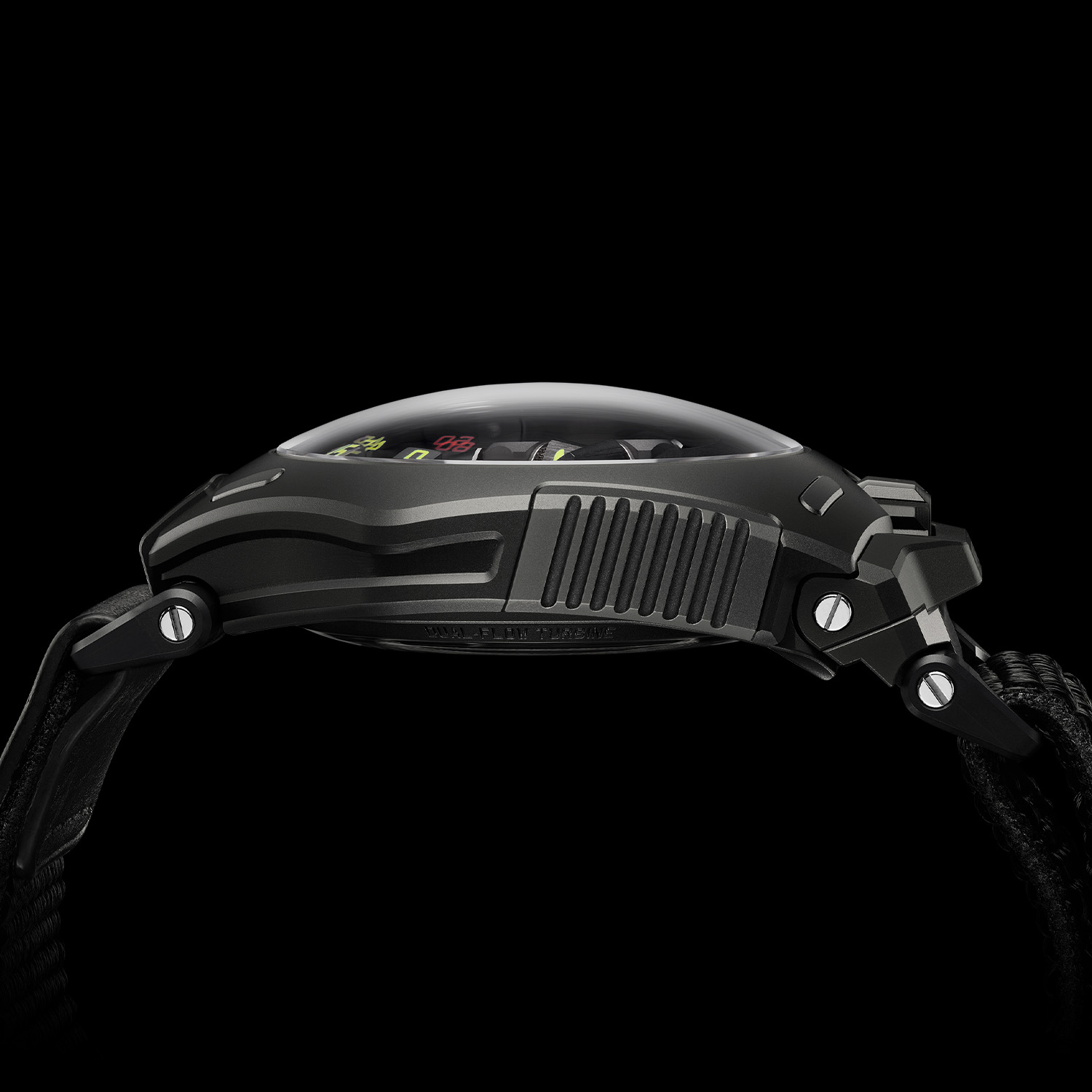
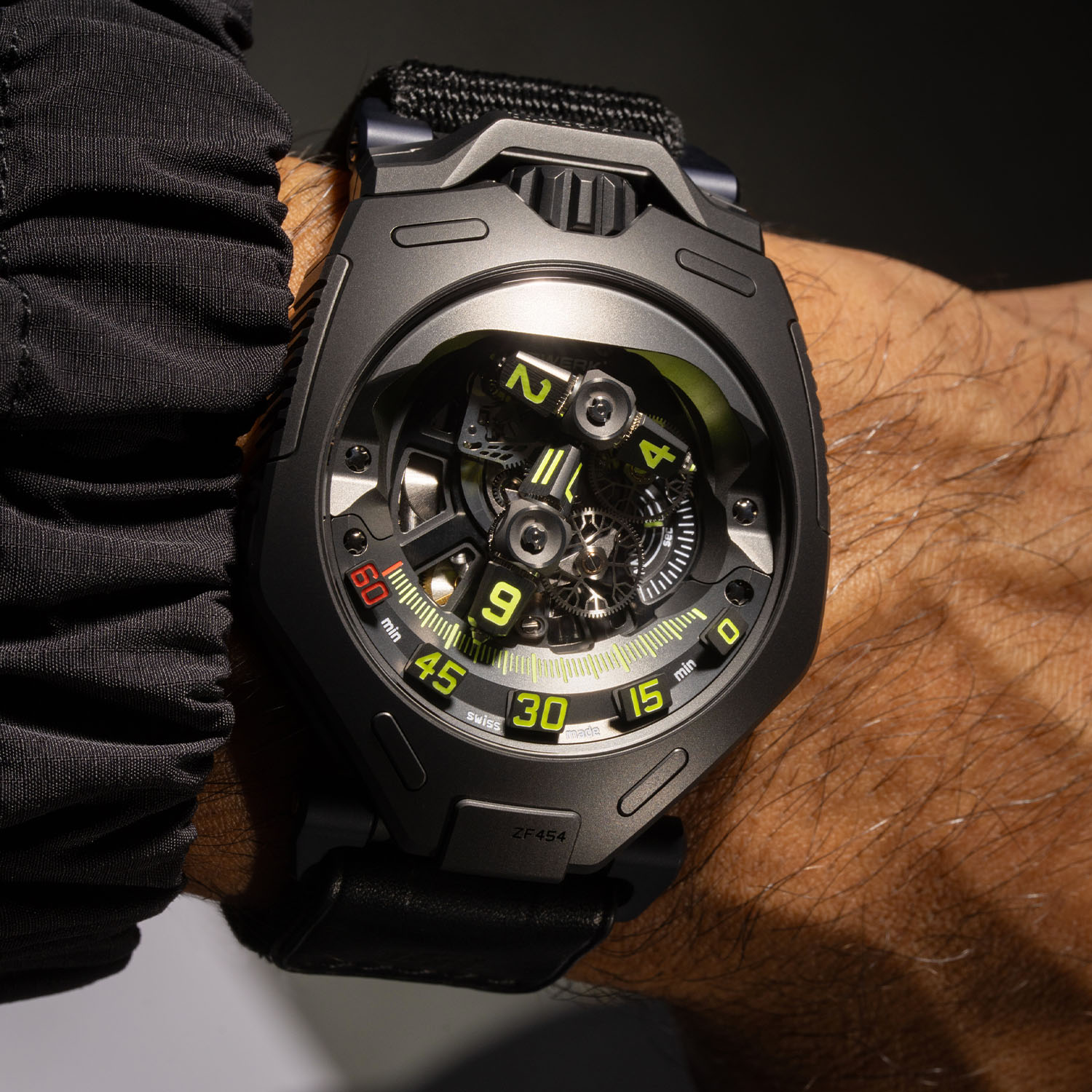
The UR-300 Time Quantum is housed in a Grade 5 titanium case, 30m water-resistant. The large case is 45.2mm wide, 58.8mm long, and 18.25mm thick, providing space needed for the four hour prisms, their moving supports, and the mechanism that allows the T-frame to change configuration. The crown is at the top, integrated and protected.
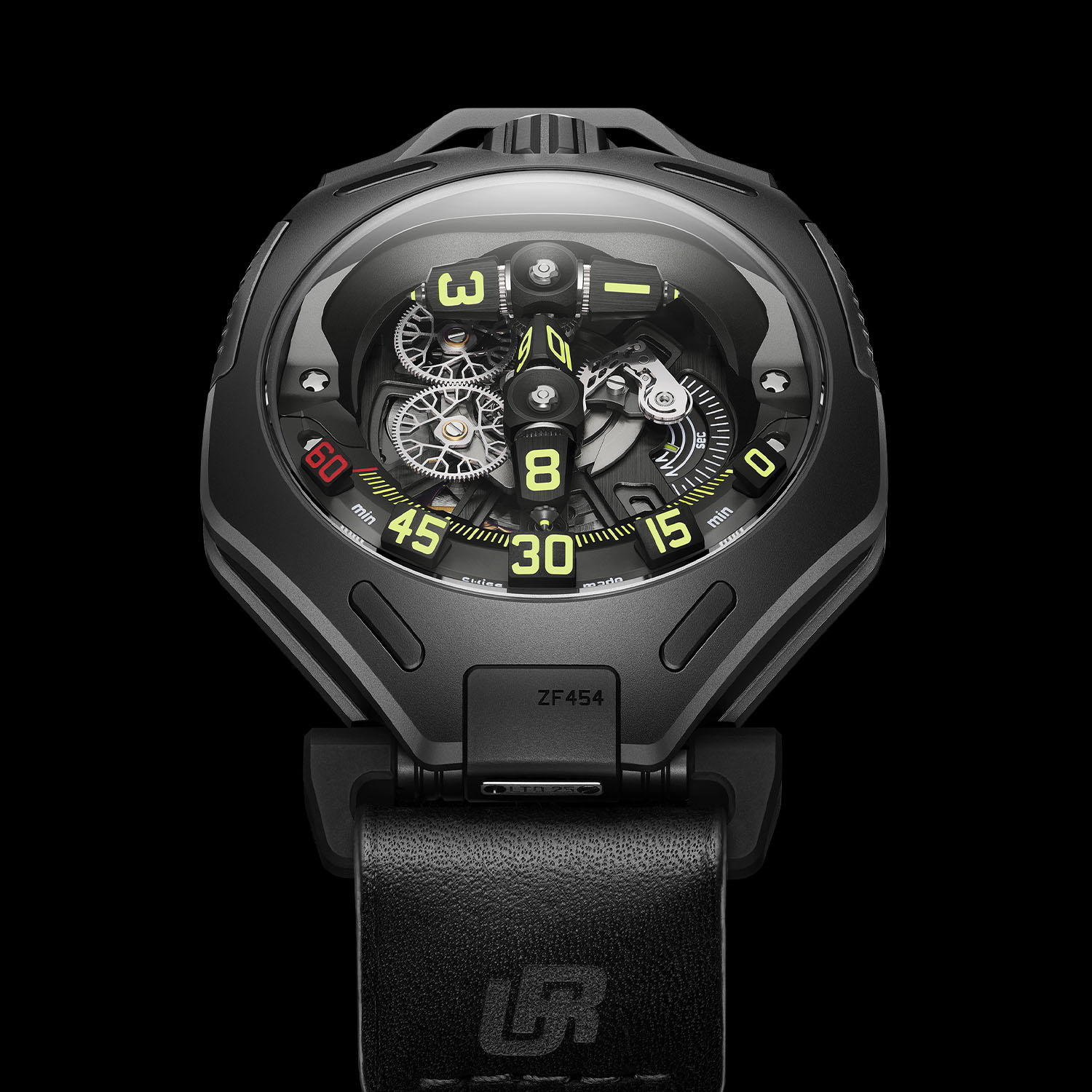
Two versions are available at launch. The Titan model uses Grade 5 titanium, while the AlTiN edition receives a PE-CVD finish. Both use sapphire crystals with an anti-reflective coating and come with NATO-style straps.
Production is limited to 25 pieces per version, and the price is CHF 168,000, excluding taxes. For more details, visit urwerk.com.