


 Not all images were able to load for printing. Please close the print window and try again.
 Is The Encor Series 1 The Coolest Restomod Ever?
What was already an iconic machine, made famous by the world's best known fictional spy, is now perfected thanks to the team of Encor.
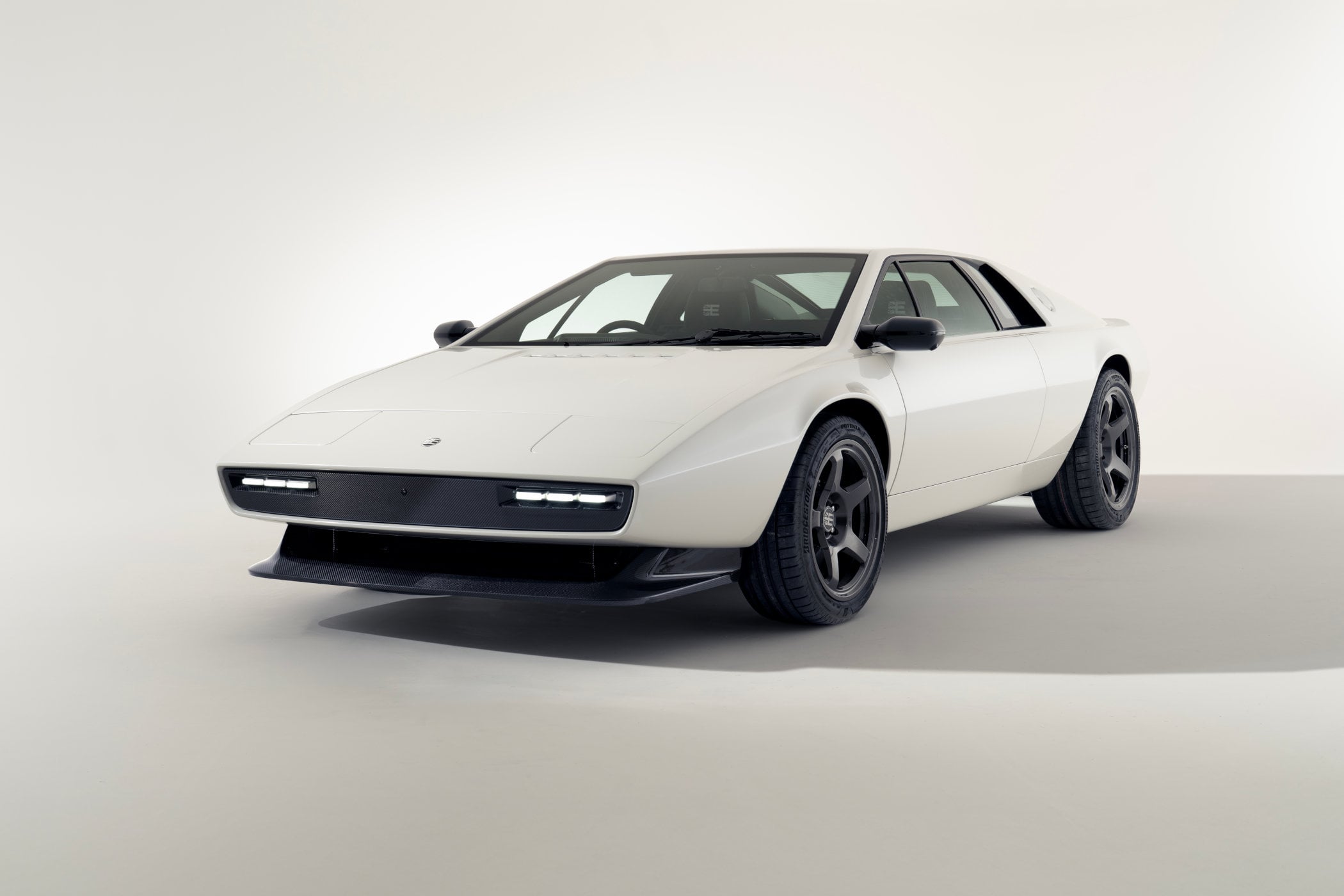
In the ever-increasing world of restomods, remasters, continuation cars and so on, some projects raise the question of why it hadn’t been done before. By now, we’re well familiar with the slew of Porsches from Singer, Nardone, Tuthill, KAMM and so on, but there are plenty of brilliant machines out there to receive the same praise and treatment. And to be honest, despite the fact that I have a deep love for Porsche, some of these overlooked icons would feel a touch more inspired by now. Encor.Design thought so too, as they have just launched what I feel could be one of the absolute best restomod or remasters in a long while, the Series 1. And yes, finished in pristine white, it feels like you can drive this in and out of the water, like ‘Wet Nellie’ in The Spy Who Loved Me! You shouldn’t, though, just to clarify.
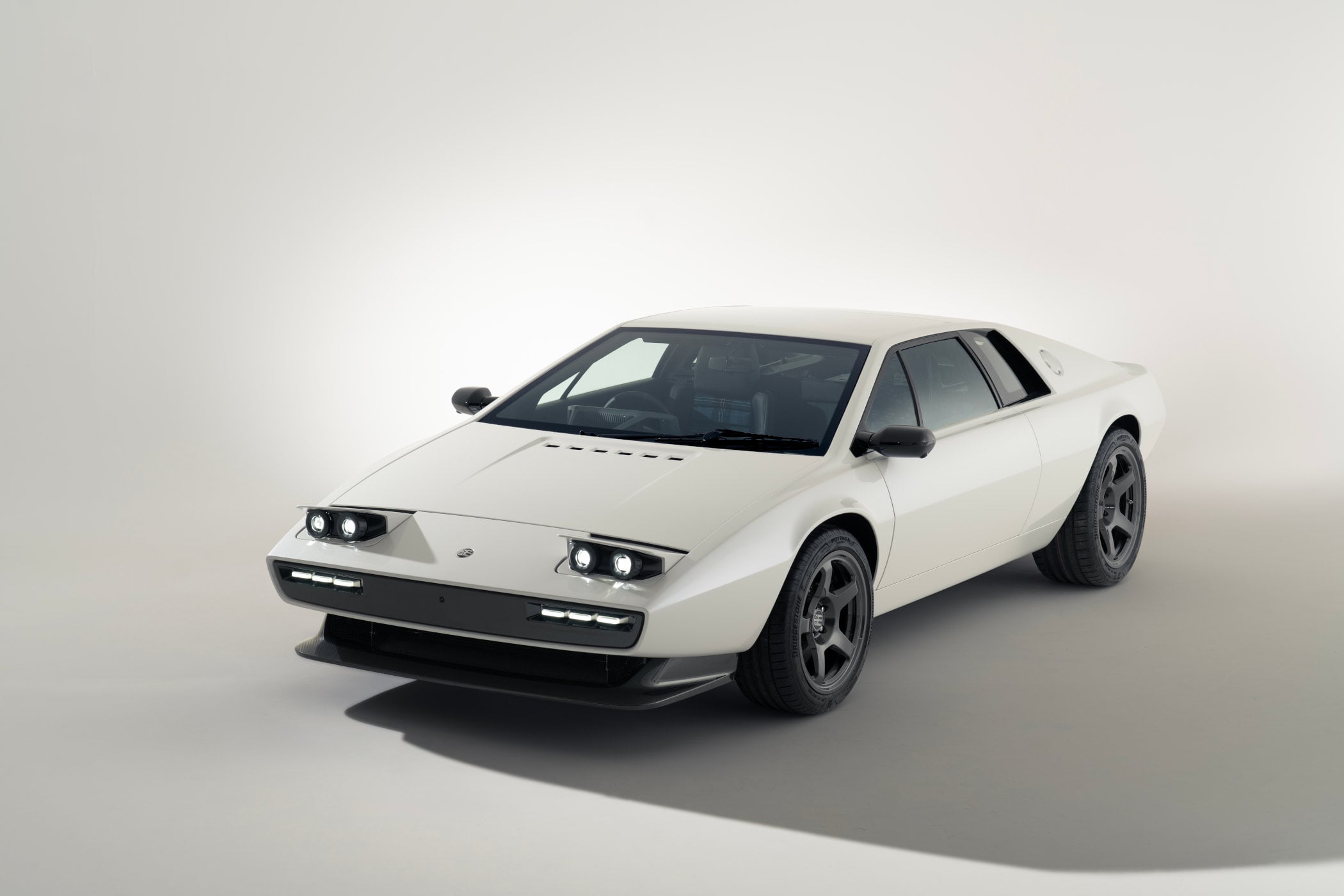
Wedge-shaped perfection
Introduced in 1975 and put into production a year later, the Lotus Esprit is one of the most famous sports cars coming from the UK. Better yet, it’s known across the world not only for its movie antics but as an iconic wedge-shaped machine from the brilliant mind of Colin Chapman (with some help from the Italians). It is one of those types of cars that seemingly everybody loves, and for good reason. It was one of the pioneers of the straight-line, edgy design ethos that dominated automotive design in the 1960s and early 1970s. It was almost like a concept car had been put on the road, and it’s partially true in a way.
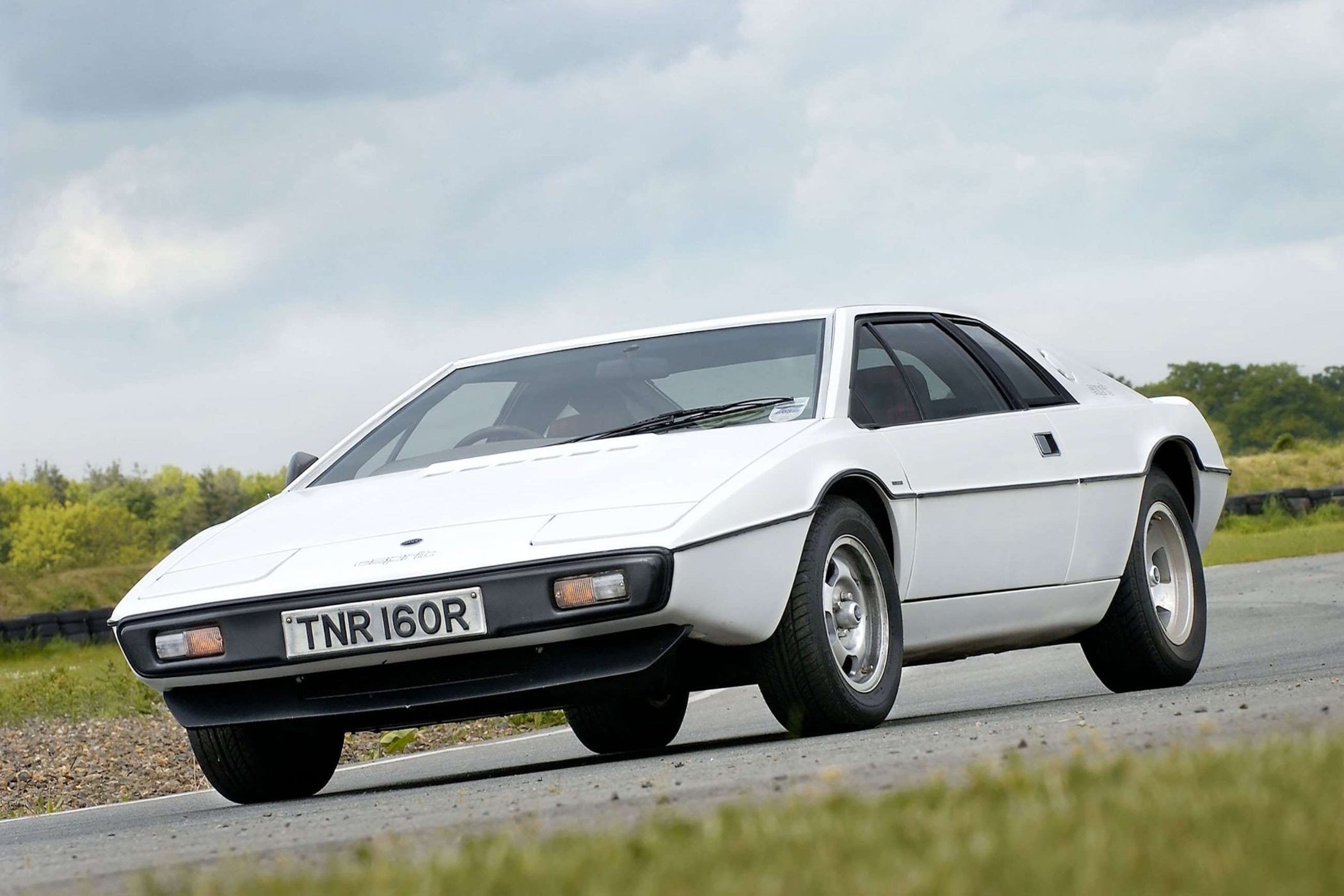
Penned by the late, great Giorgietto Giugiaro, the Esprit would become an icon of design in general, transcending just automotive design. It was suggested to Chapman by Lotus designer Oliver Winterbottom to enlist the help of Giugiaro’s design firm, Italdesign, to design a replacement for the Europa. A full-size concept was shown at the Turin Auto Show in 1972, which convinced Chapman to further develop it for the road. A second, now working prototype would be constructed, which served as the foundation of the new Esprit. The Esprit is characterised by just a few straight lines and a very low nose barely rising up to meet the front window and the roof line. Further enhancing the design, and the low height of the Esprit in general, was a single straight line running from bumper to bumper and across the wheel arches, something that lived on in later generations as well.
The first-gen Esprit was introduced with a 160bhp 2-litre four-cylinder engine, which made light work of the car that tipped the scales at a mere 900 kilos, in part thanks to a fibreglass body. The engine was mounted longitudinally in the back, and fed power to the rear wheels only through a gearbox from the Citroën SM. It borrows some parts from other cars as well, as the taillights came from the Fiat X1/9, for instance. It also featured in-board rear brakes, pop-up headlights (who doesn’t love those!) and a wrap-around instrument cluster in the interior. Lauded for its handling, the Series 1 Esprit is also the rarest of all its generations, with just over 700 built.
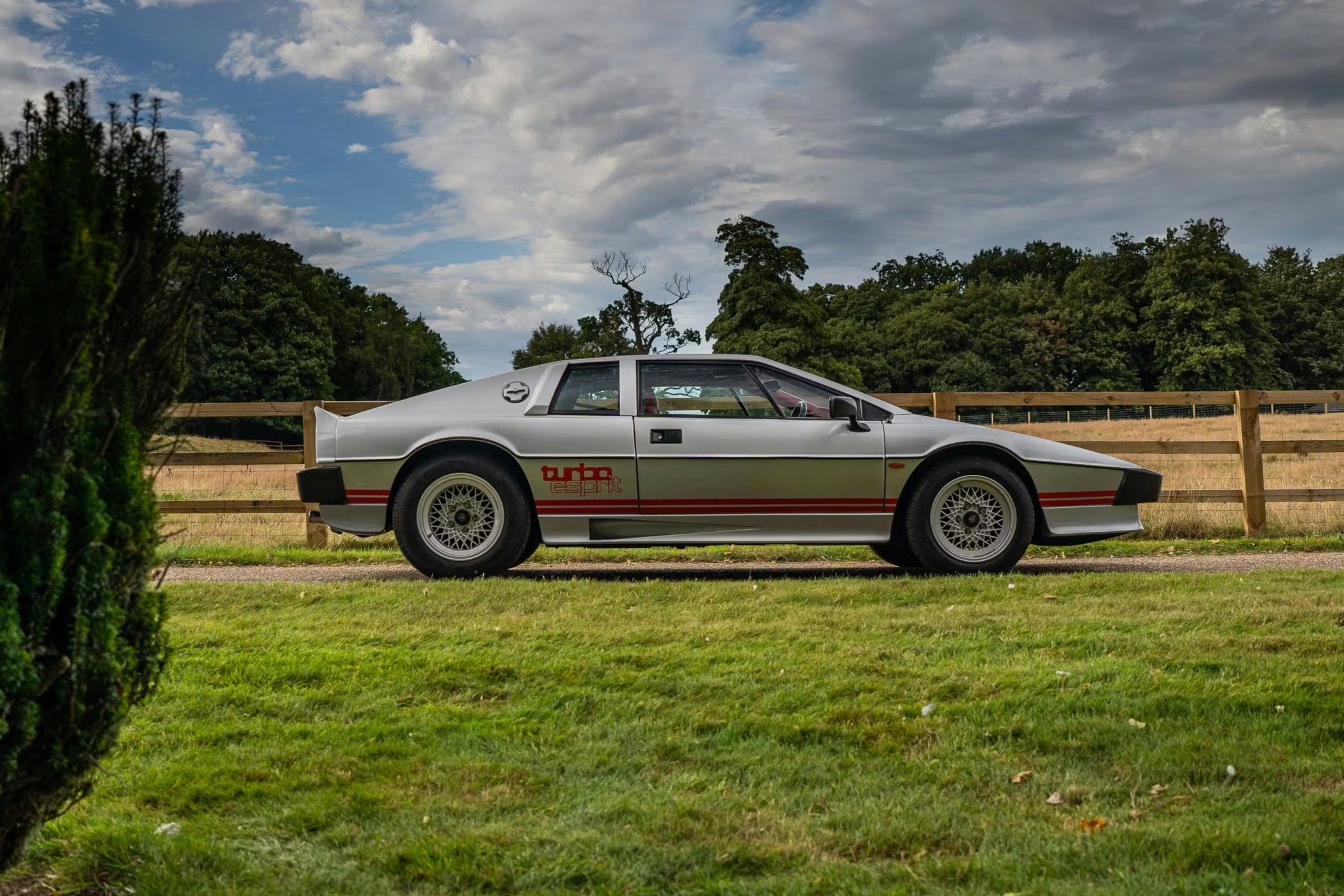
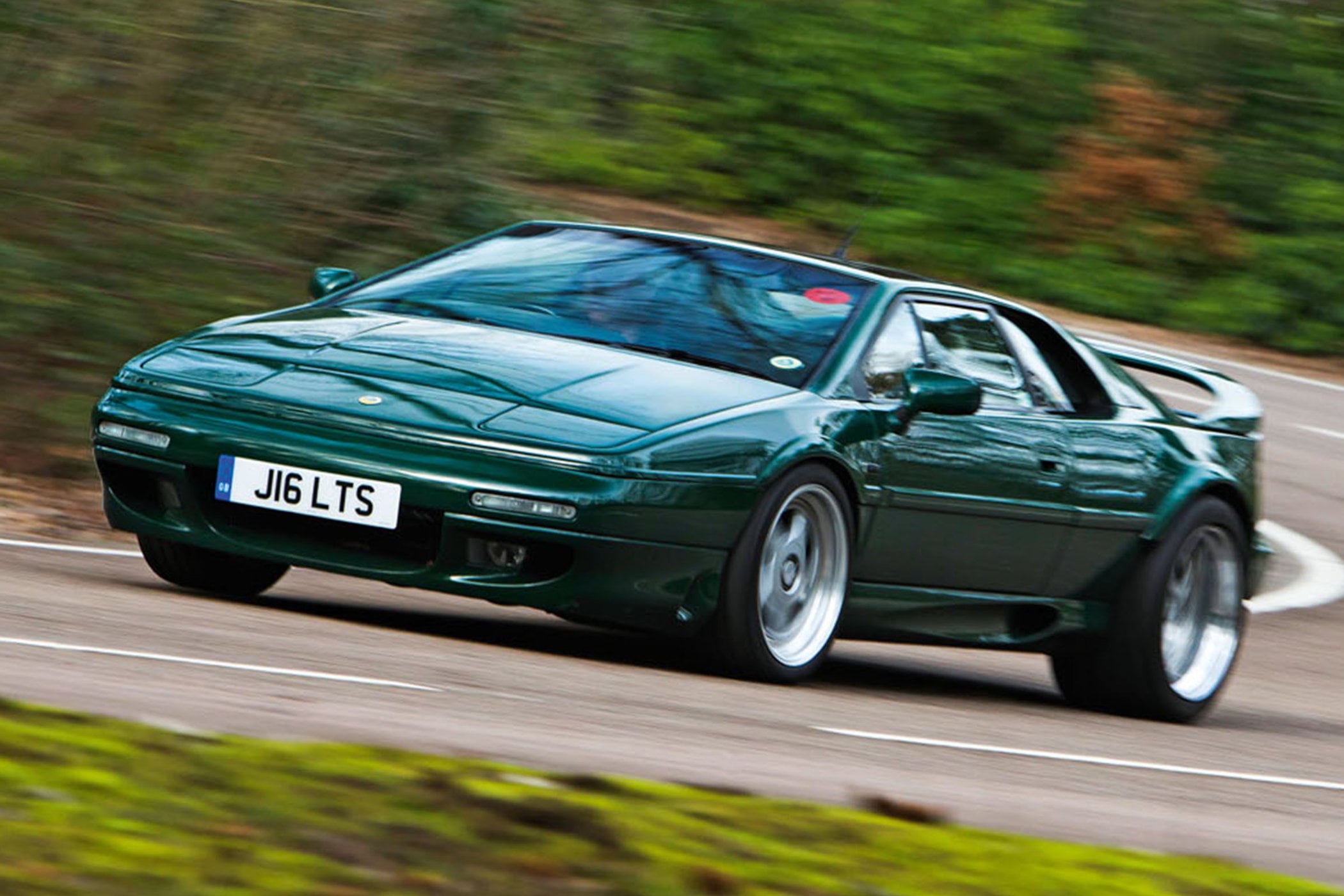
In 1978, a slightly updated version, the Series 2, would be introduced, which would also welcome a 2.2 litre engine, providing a bit more torque over the 2.0 litre unit. Not long after the S2 was in production, the Essex Turbo Esprit would be added to the line, with power rising to 210bhp thanks to forced induction. By 1982, it was time for the Series 3 to take over, with again a slightly tweaked exterior and a bit more power. Then, a massive redesign was introduced in 1987, which still carried the essence of the wedge shape of the original, but with a far more rounded and aerodynamic style. Known as the X180 series, this third-gen Esprit would be in production until 1994, when it would be replaced by the S4, the last generation of the Esprit. This S4 would also be the stepping stone for the most powerful Esprit, with the introduction of the V8 in 1996. Delivering 350bhp from Lotus’ own 3.5-litre V8, it had a top speed of 280kph and a zero-to-100kph of just over 4 seconds.
Wet Nellie
Out of all the generations and variations of the Esprit, one stands out far above the rest. Affectionately named ‘Wet Nellie’, it’s a Series 1 Lotus Esprit in white, used in the 1977 James Bond film The Spy Who Loved Me. It features as the titular hero’s personal weapon of choice in the iconic 9-minute-long car chase, and famously converts to a submarine to escape the baddies entirely, after Bond jumps it off a pier into the ocean. The trademark witty humour of early Bond flicks is perfectly exemplified when ‘Wet Nellie’ is driven out of the water onto a beach, with James Bond lowering his window and, well… I’ll let you relive that brilliant chase scene for yourself:
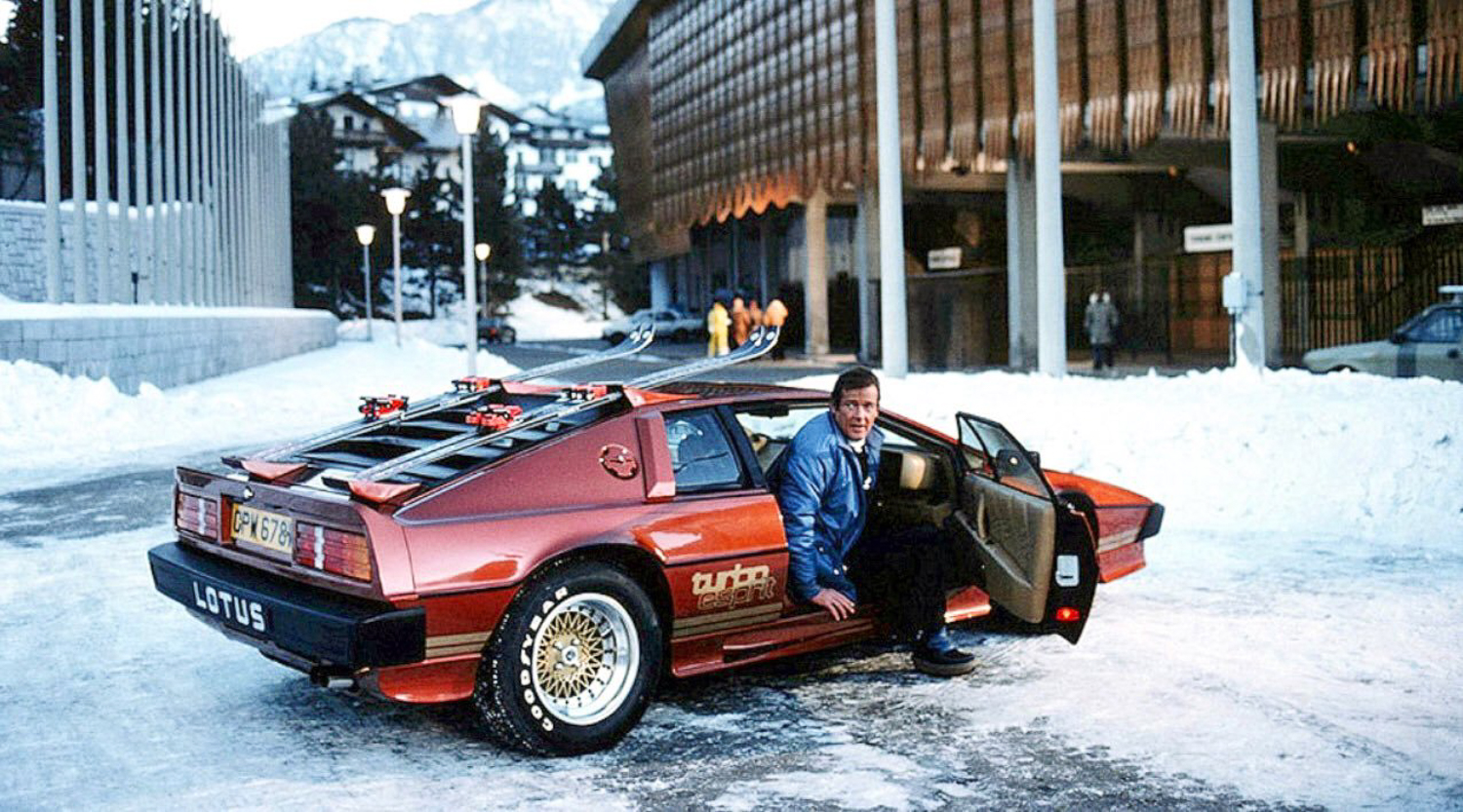
This appearance is part of the reason the Esprit gained popularity the world over, as it is an iconic bit of movie history. Its name, Wet Nellie, is a follow-up to Little Nellie, the autogyro helicopter used by Bond in the 1967 film You Only Live Twice. Built using an actual Esprit S1 bodyshell, the submarine tended to dive down due to the wedge-shaped design. The fins that ‘replaced’ the wheels would provide lift, stabilising the machine and allowing it to sail through the water. It had no functioning interior whatsoever and was operated by a scuba diver during filming. The Esprit would again be used in a Bond film, with Roger Moore using a maroon Essex Turbo Esprit in the 1981 movie For Your Eyes Only (see above).
The Series 1
With such a history and legendary status, it’s somewhat surprising a Series 1 Esprit hadn’t been restomodded before, or perhaps the news hasn’t reached me. That now changes with Encor.Design, who take what is widely regarded as the UK’s first supercar and reimagine it as if it were designed today. And the result… simply staggering! Encor.Design is foundedby industry experts with decades of combined experience, including developmental work for the Lotus Emira (introduced in 2021) and working for Koenigsegg and Aston Martin, to name just a few.
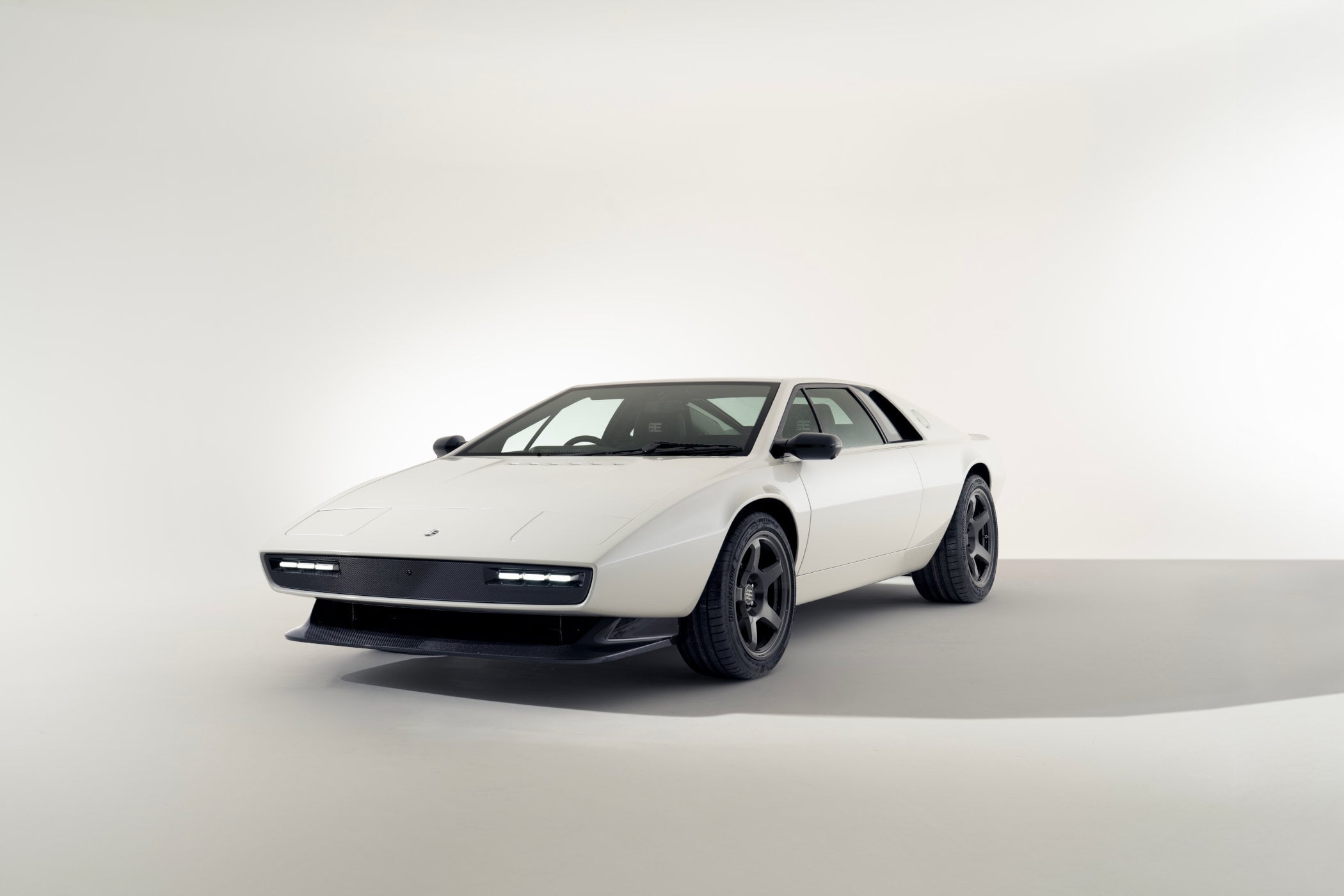
The Encor Series 1 uses a Series 4 Esprit V8 as a starting point, ideally provided by the clients, and rebuilds it into a crisp yet very tasteful take on the Series 1 Esprit. It really is the best of both worlds; the pure wedge-like shape of the original, with more power than the fastest road-legal Esprit to ever leave the factory. For each of the 50 that will be built, extensive work on the chassis is carried out first. It’s stripped, cleaned, refinished and improved where needed, before welcoming back a completely rebuilt 3.5-litre V8. Forged pistons, upgraded injectors, new turbos and more, now give it 400bhp. And as the weight is kept under 1,200 kilos, the Encor Series 1 delivers serious performance, with the 0-100kph sprint taking less than four seconds, and a top speed of over 280kph (175mph).
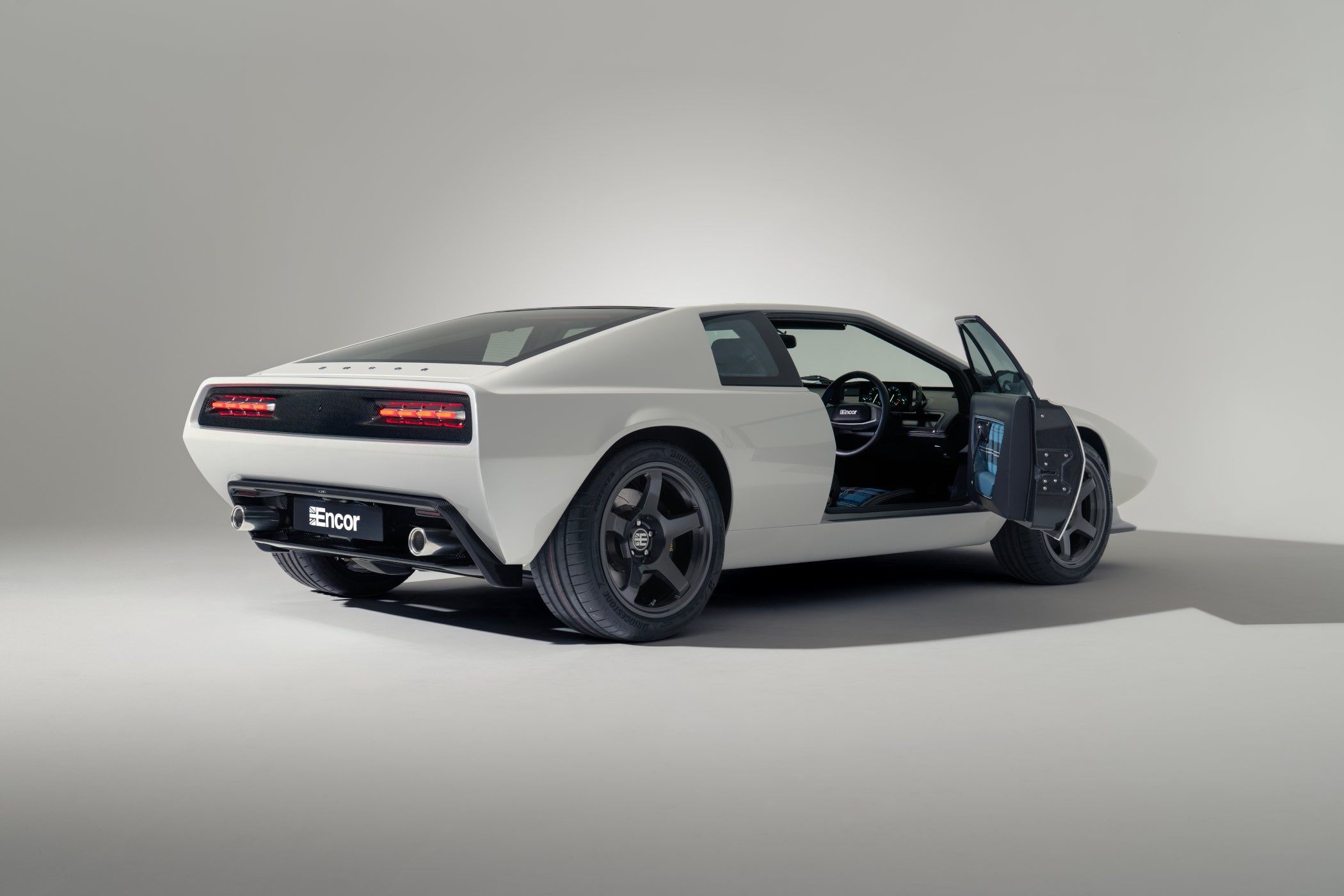
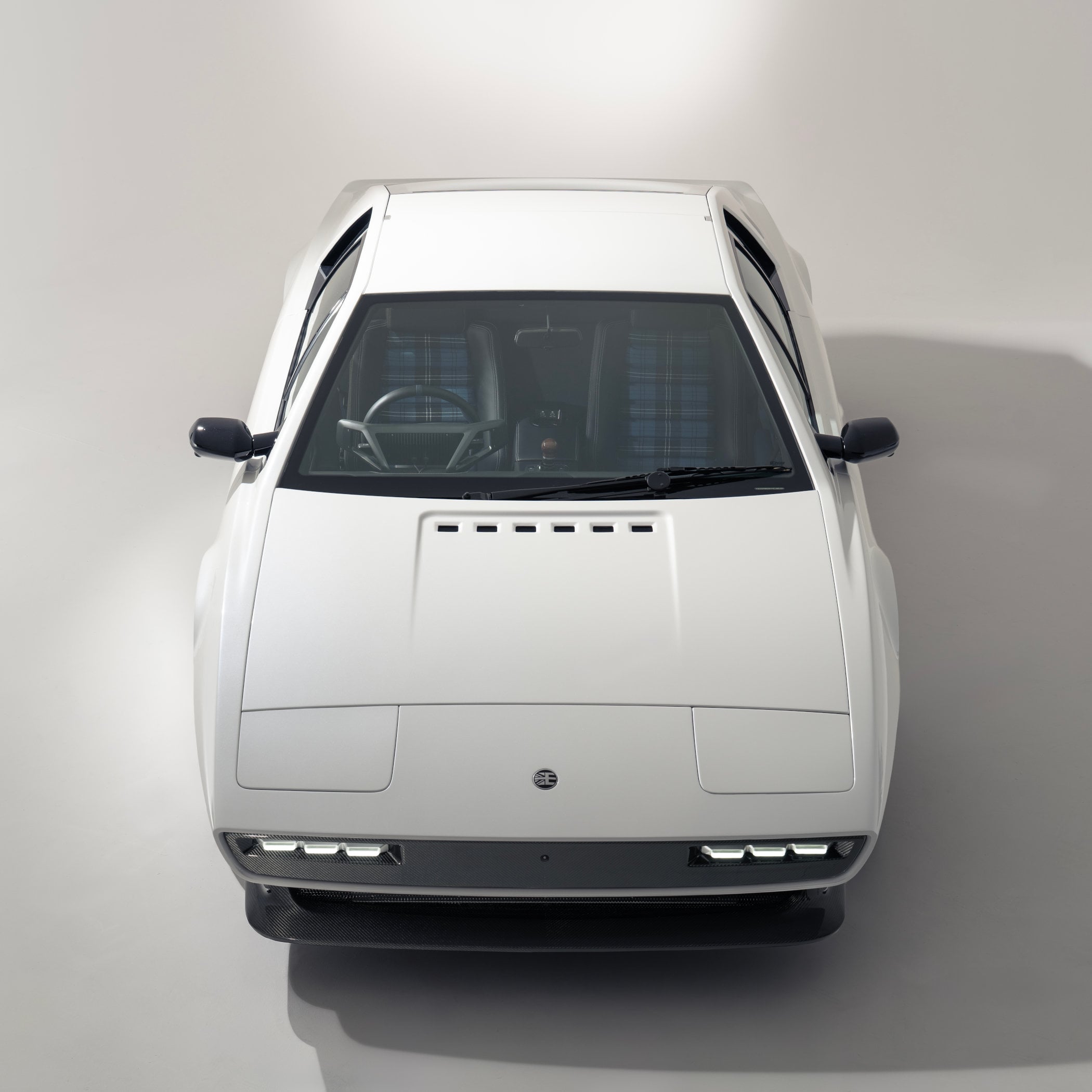
The body is drawn up from carbon fibre, and only subtly nipped and tucked to go from the original design to this reimagined Series 1. The team kept the spirit of the 1976 model very much alive and cleverly enhanced its brilliant simplicity. Up front, you get new LED headlights that still pop up on demand. The lines of the Esprit have been polished front to back, yet its essence and soul are still very much intact. The sharp nose still rises ever so slowly to meet the cabin, and along the crease along the side that visually splits the lower and upper halves of the body is still there, yet the plastic trim line is removed. The wheelarches still have that distinct outward flare, and wrap around sleek, five-spoke wheels that resemble the ones found on the original S1.
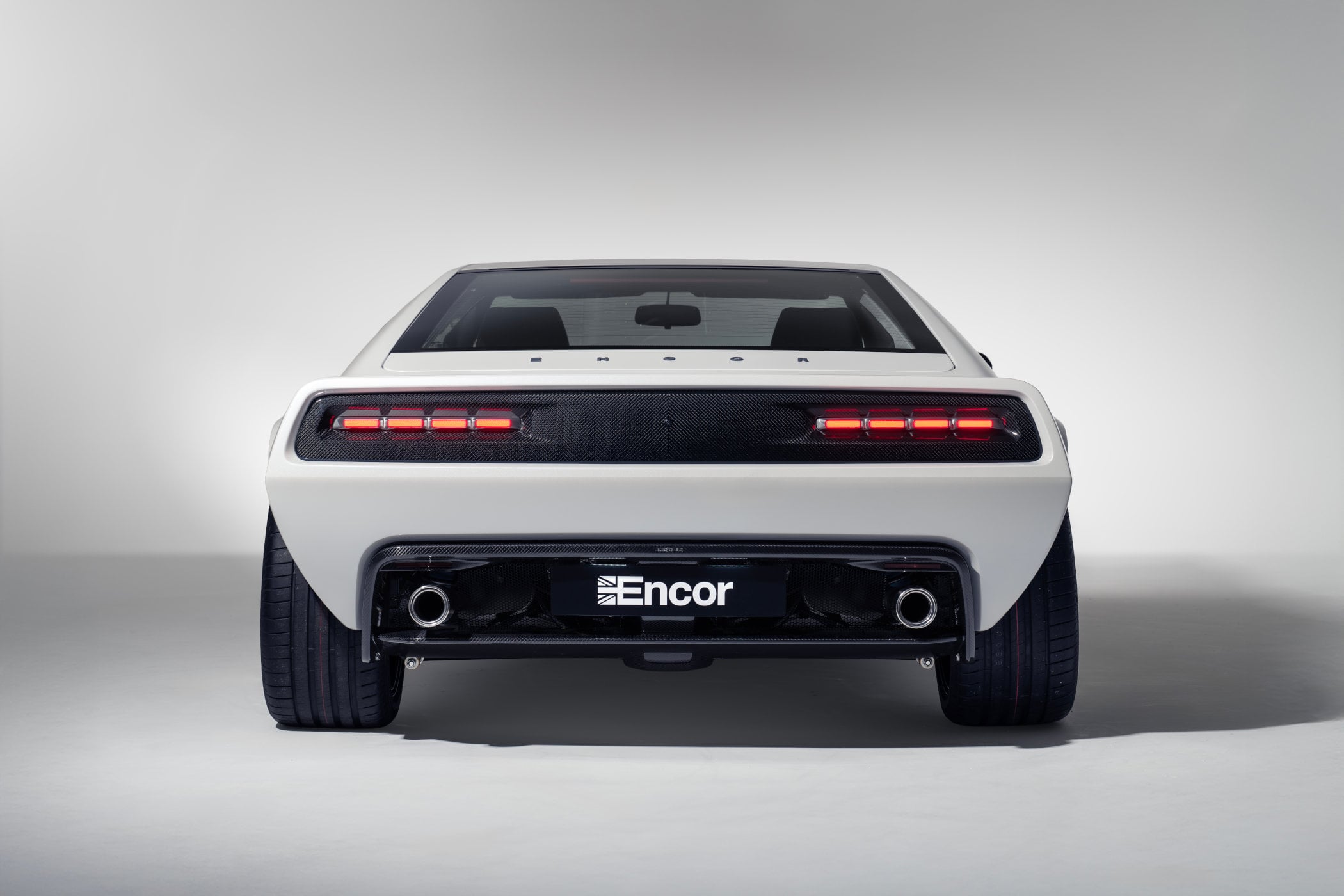
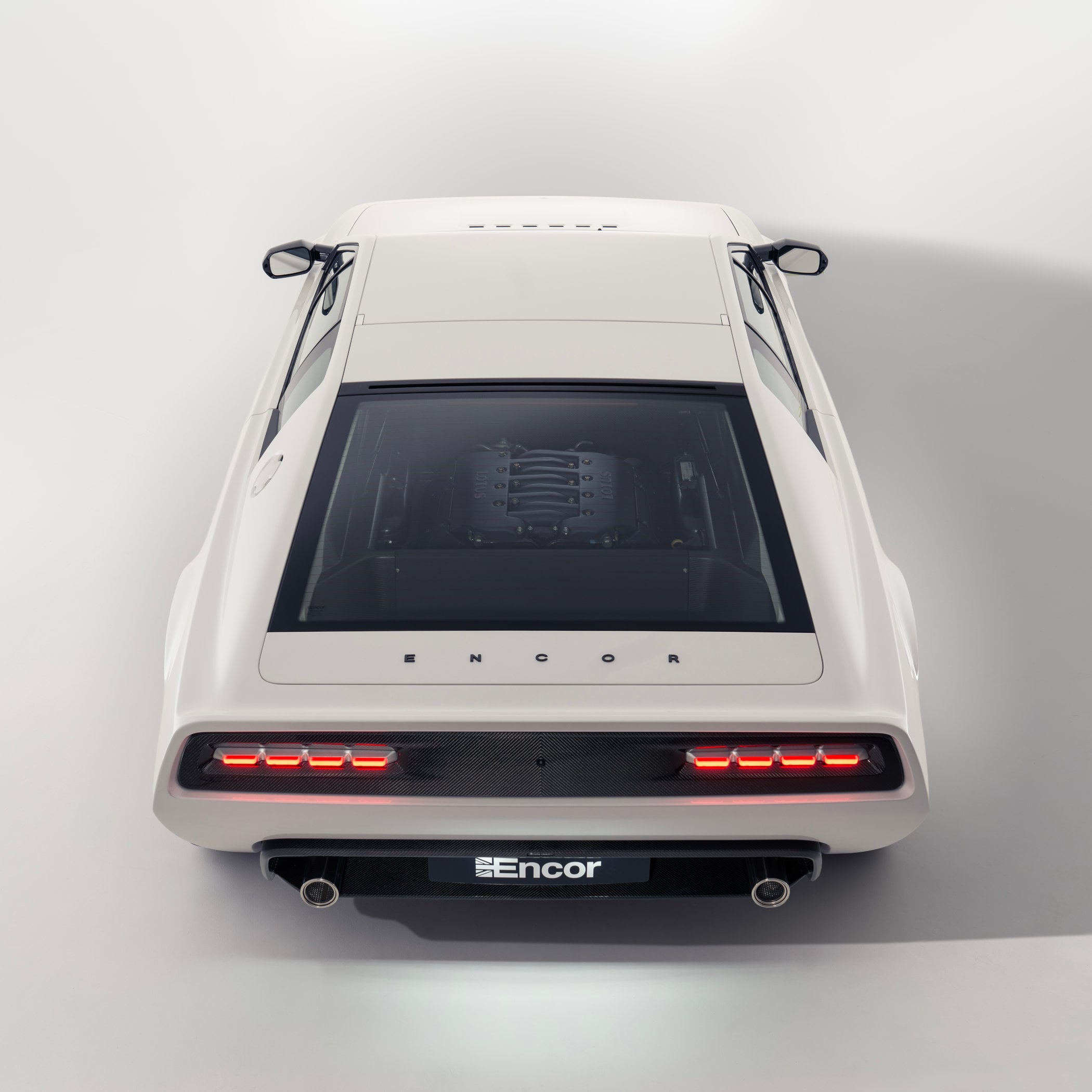
The engine is visible beneath a squarish glass panel that flows down into the ultra-clean rear. The tail gently sweeps up a little before being cut off. The taillights are mounted in a recessed black panel, with dual stainless steel exhaust tips unboubtedly belching out a glorious sound. They are wrapped in one of the most stylish diffusers I have ever seen. Nothing screams “look at me!” on the Series 1; it’s all very refined and elegant, and to me, that makes it just about perfect!
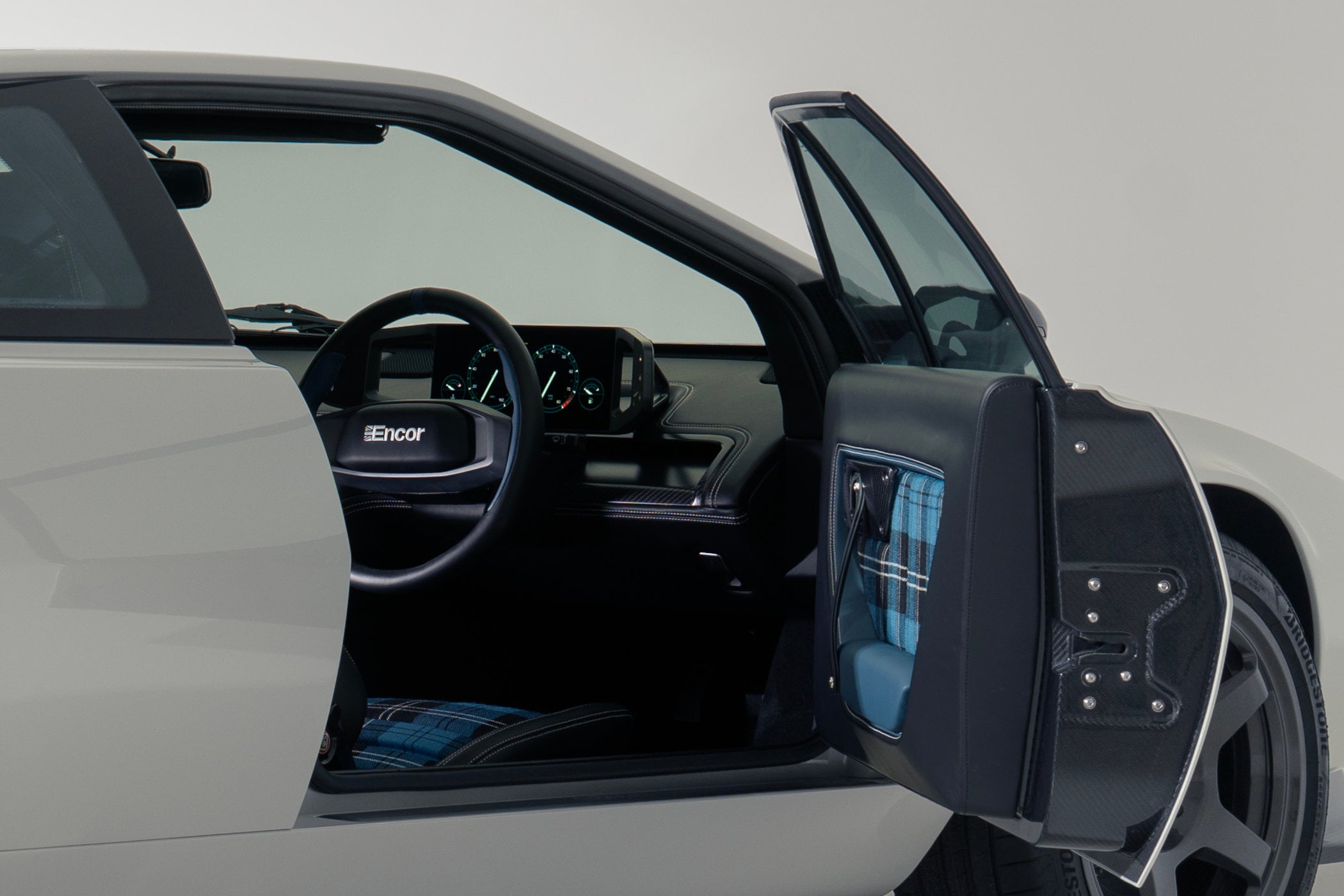
On the inside, it’s more of the same. Staying close to the original design of the cabin, it’s elegantly integrated with modern tech. You get a floating digital wrap-around instrument panel for the driver, integrated Bluetooth connectivity, and a touch-screen for the car’s controls in the carbon fibre centre console. The seats of the donor car get the spa treatment as well, with new foam and upholstery. The tartan panels on the doors and seats carry you back to the 1970s, while the wooden gearknob lets you control the donor Esprit V8’s five-speed manual gearbox, revised by transmission specialists Quaife. And naturally, with such a machine, there will be tons of personalisation options available.
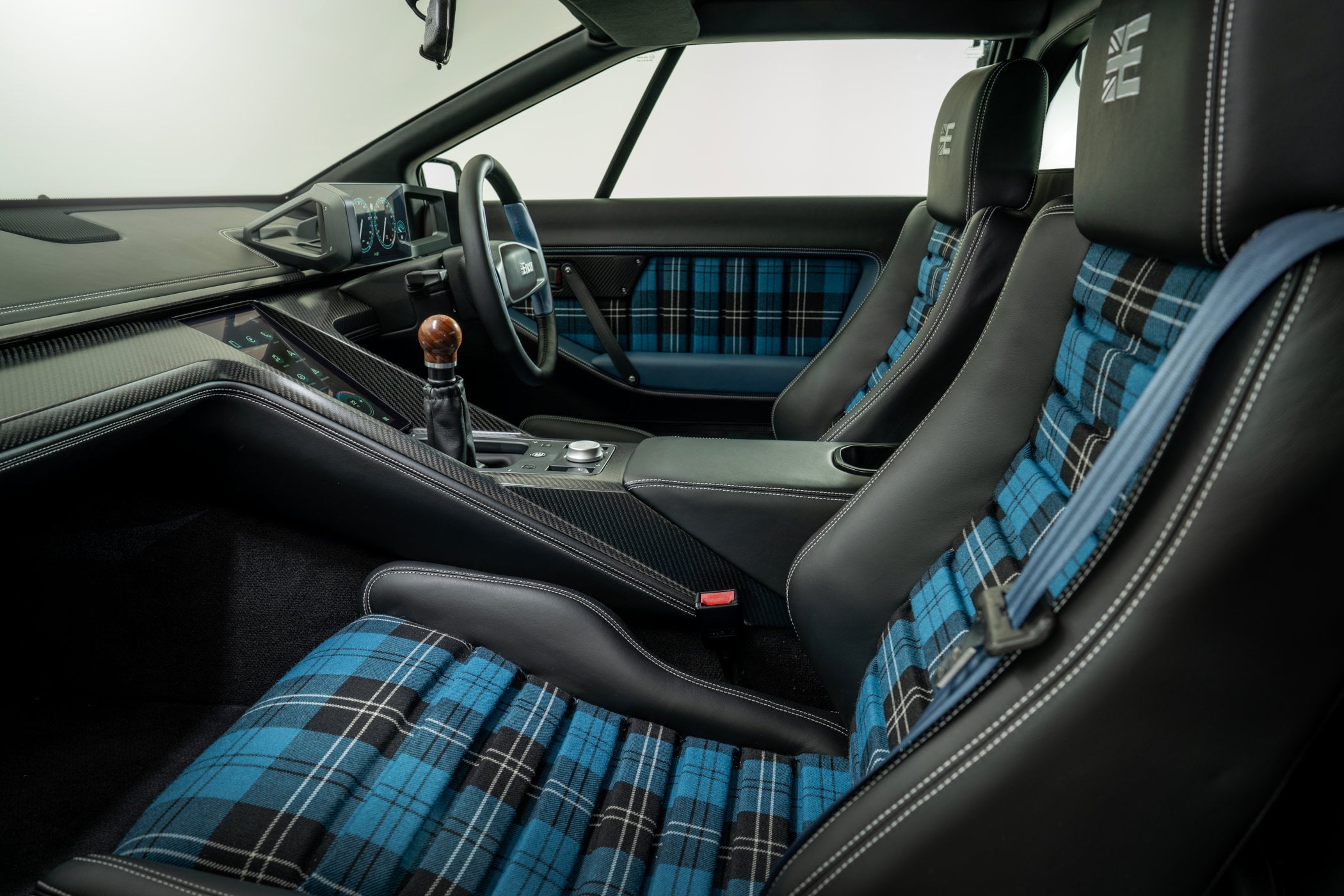
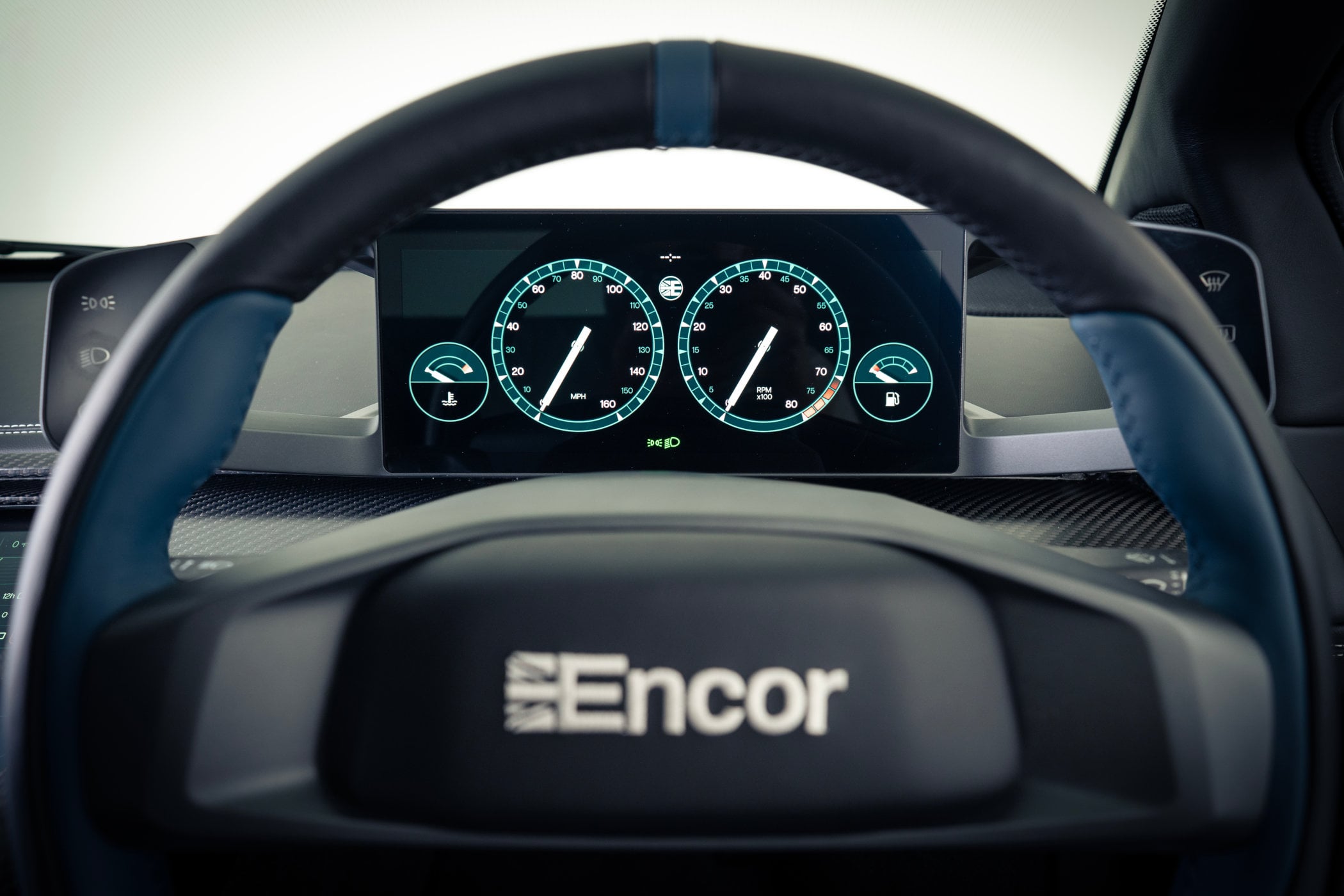
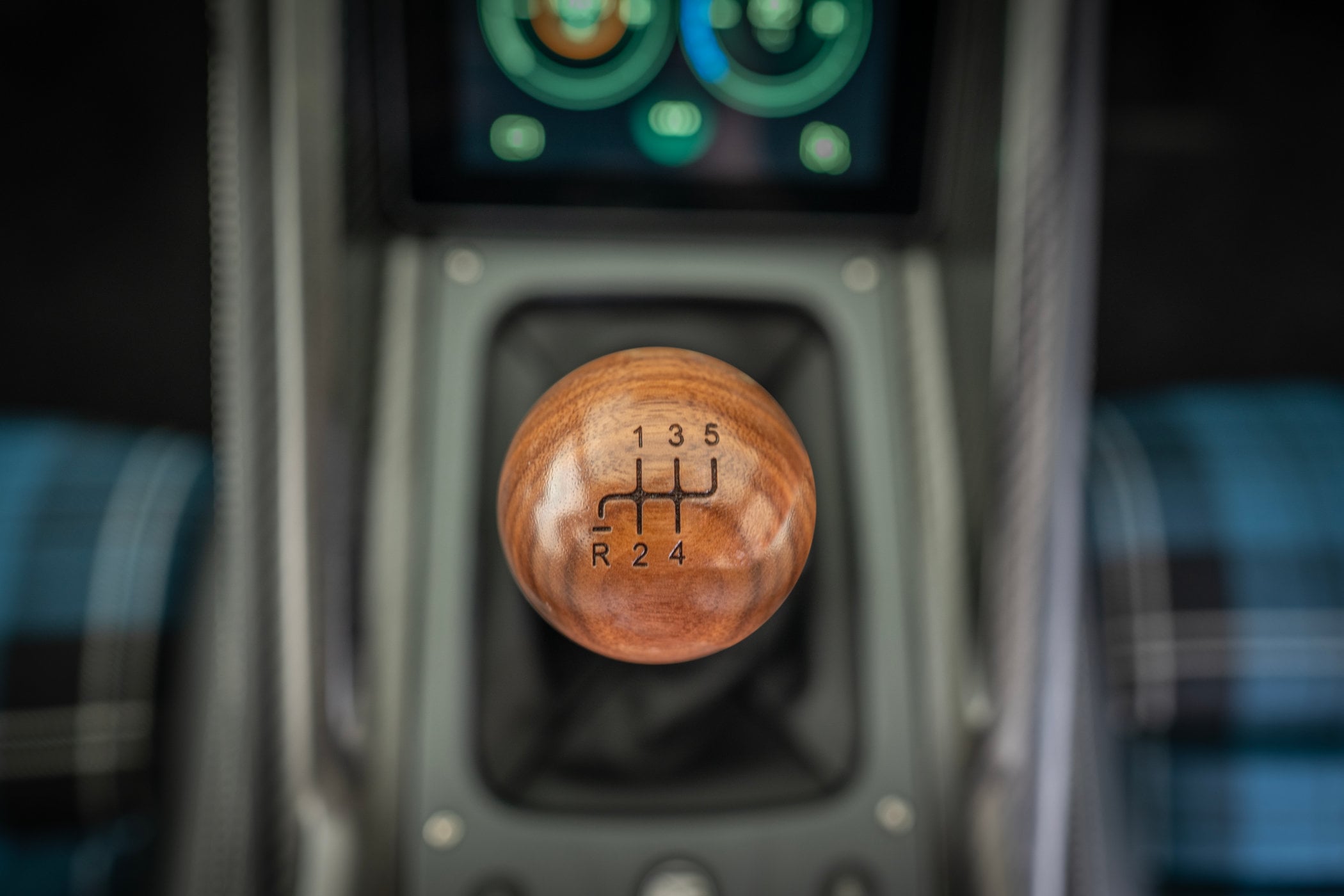
As mentioned, only 50 will be built before Encor.Design (hopefully) moves on to its next remastered icon. The price for the work to put a Series 1 on the road starts at GBP 430,000, and that’s without the donor Esprit V8 and not factoring in any bespoke options. And if I had the budget, I would finish it in this pristine white as well. Or British Racing Green! Or John Player Special black-and-gold, or…..
For more information, please visit Encor.Design.
Editorial Note: All information and images are sourced from previous articles or sourced from and used with permission of Encor Design, unless stated otherwise.

1 response
Starts at £430,000? Or you could just buy an Aston Martin, a Bentley and BMW and still have change for a decent coffee.