


 Not all images were able to load for printing. Please close the print window and try again.
 Old Meets New, With The 2019 Jaguar D-Type Long Nose Continuation For Sale At Hilton and Moss
A one-of-25 Jaguar-built continuation car of a truly legendary racing machine!
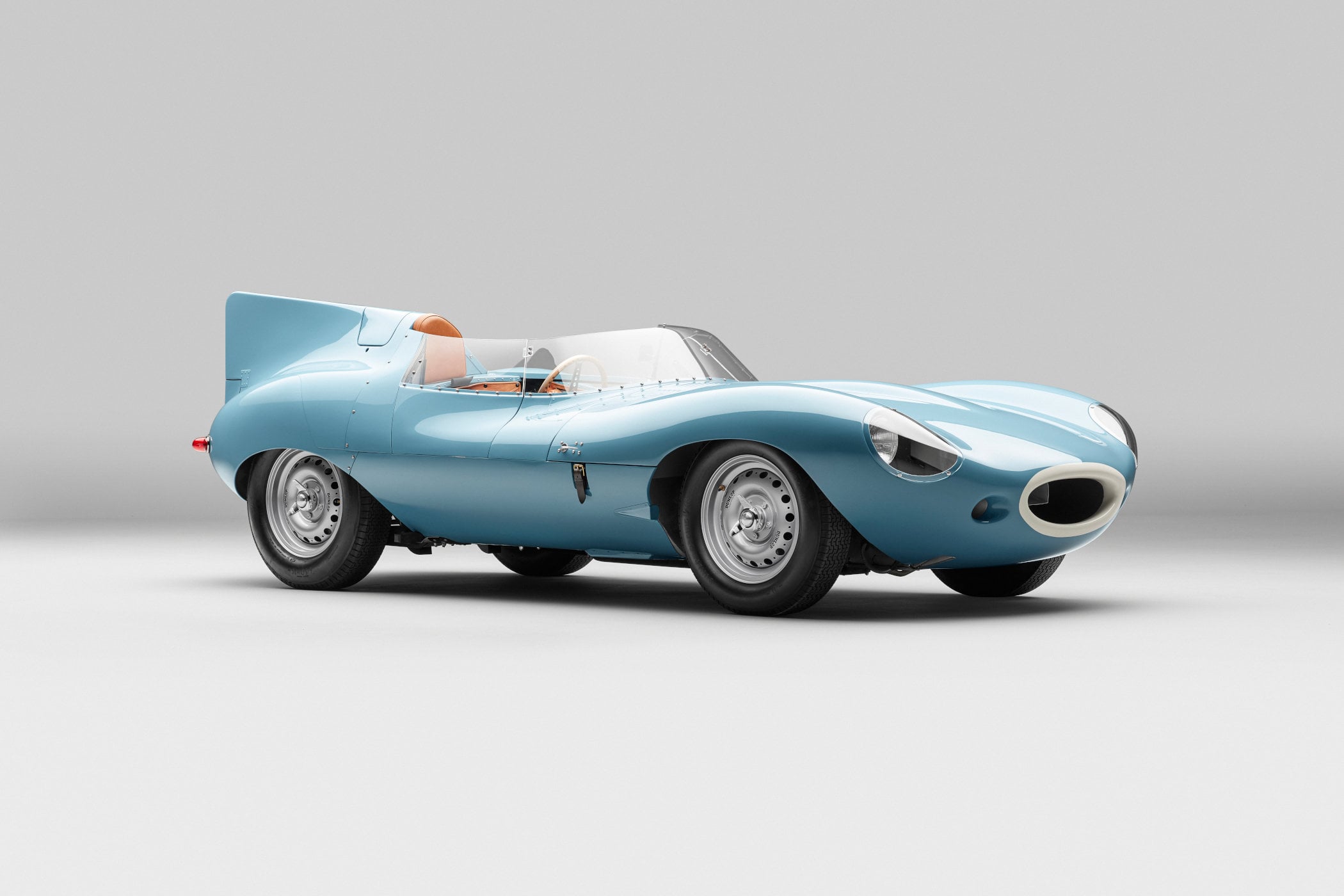
You’re probably thinking, “Wait, what? Wasn’t the D-Type built in the 1950s?” and you’d be absolutely right. But what we have here is a continuation car, built by Jaguar themselves based on the original plans, drawings and designs of the D-Type. So it’s old, but it’s also new. Or relatively new, that is, as Jaguar actually built this one back in 2019 as part of the D-Type Continuation Program, which aimed at completing the original planned run of 100 cars. Built to the exact specifications of the original and using period techniques, this one-owner car, built to the 1956 Long-Nose configuration, can be yours as it’s up for sale at Hilton and Moss in the UK.
I regularly browse upcoming auctions from the likes of RM Sotheby’s, Bonhams and Mecum, but also scour through various sites I enjoy on a personal level, in the pursuit of suitable content for our weekly automotive column. While it can be pretty much anything, I have a soft spot for vintage Le Mans and Formula 1 racing. This one, which is up for sale at vintage car restoration specialist Hilton and Moss in the UK, perfectly fits that bill, as it is truly a legendary race car! My first encounter with the D-Type was at the Louwman Museum in The Hague (Netherlands), where chassis XKD 606 is on display. I have always loved that car, so you can imagine my excitement when I came across this one!
The D-Type Legend
Shortly after World War II, Jaguar, like so many other manufacturers, returned to racing in a very serious way. It made its debut at Le Mans in 1950 with three factory-modified but privately entered XK120s, the fastest production car back then. It faced competition from the likes of Ferrari, who won the year prior, but also from the brutish Cadillac Series 61 known as “Le Monstre”, the French Talbot-Lago and Delage teams, and a slew of British cars from Aston Martin, Allard, Frazer Nash, and so on. Two cars managed to finish, in 12th and 14th overall, showing the potential of both the straight-6 XK engine and the XK120 chassis.
A year later, Jaguar returned with the purpose-built C-Type, using the same XK120 running gear but with a chassis, suspension and body designed specifically for Le Mans. Now running as a factory, or works team, Jaguar lined up three C-Types and chased victory. And victory they got, as drivers Peter Walker and Peter Whitehead managed to beat the odds and cross the finish line first. In 1952, Jaguar made aerodynamic improvements to the C-Type, but it was to no avail. The cars were prone to overheating, and the new Mercedes-Benz 300SL proved too fast for them. Jaguar and the now aluminium bodied and slightly more powerful C-Type returned to the top spot in 1953, coming in first, second and fourth!
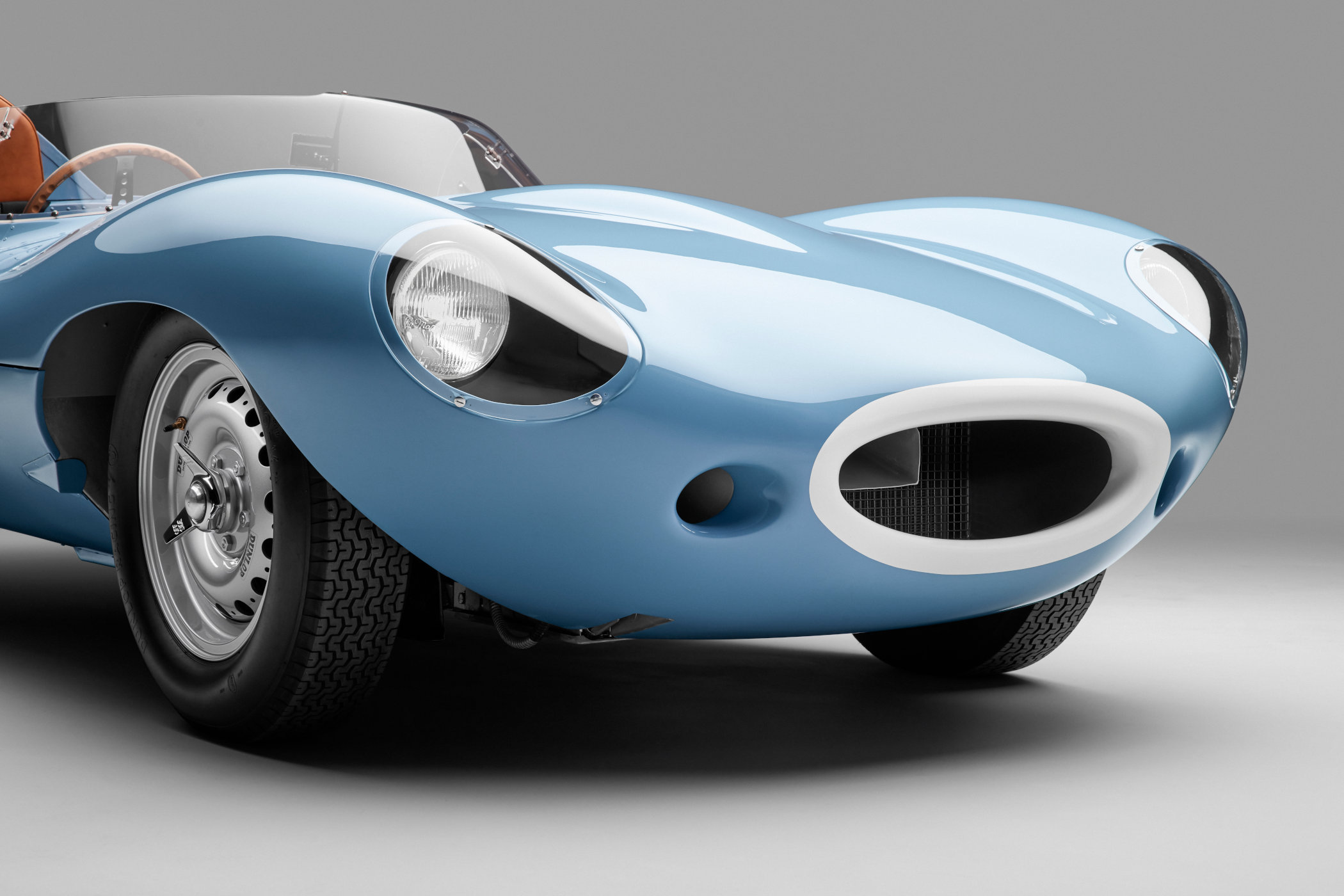
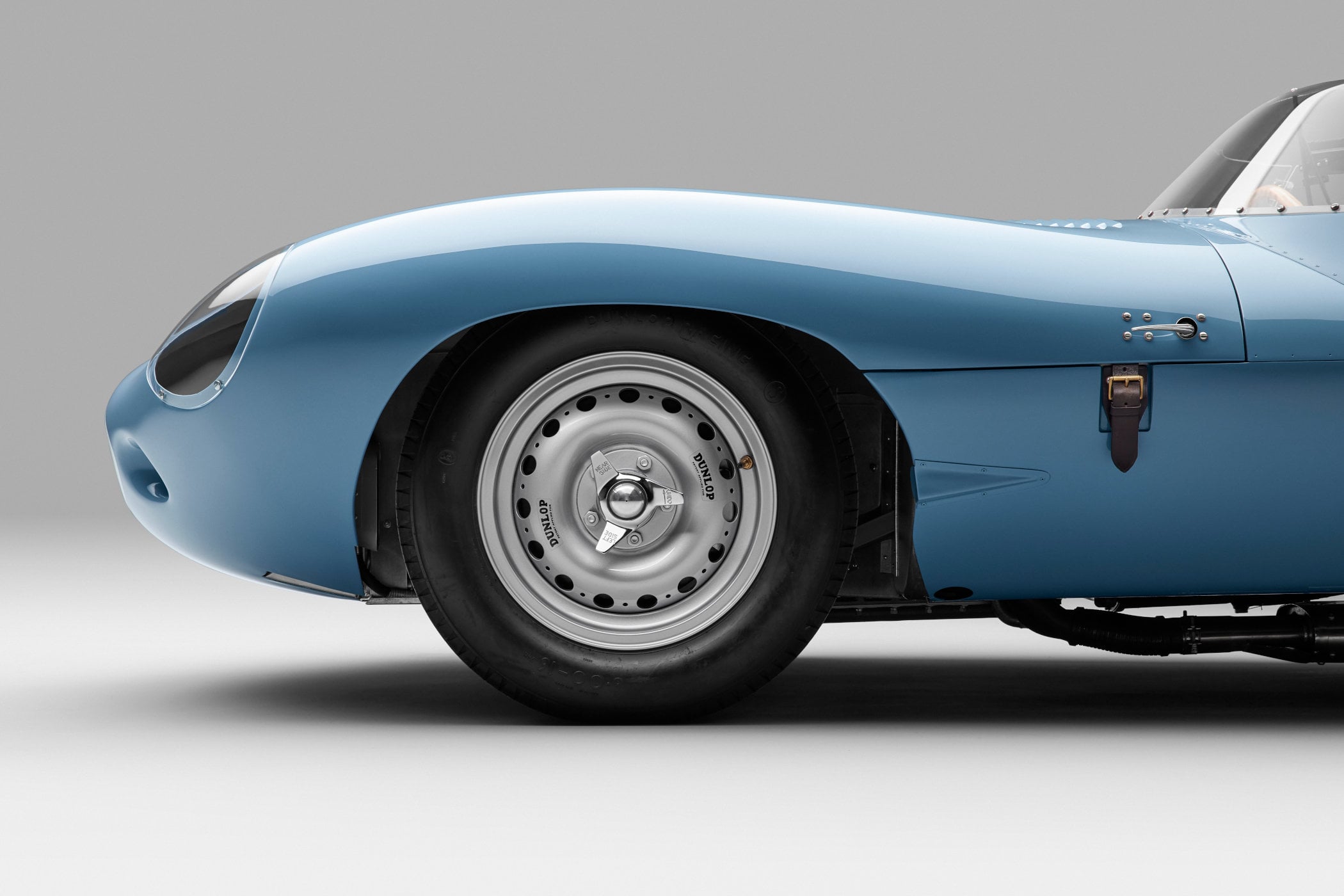
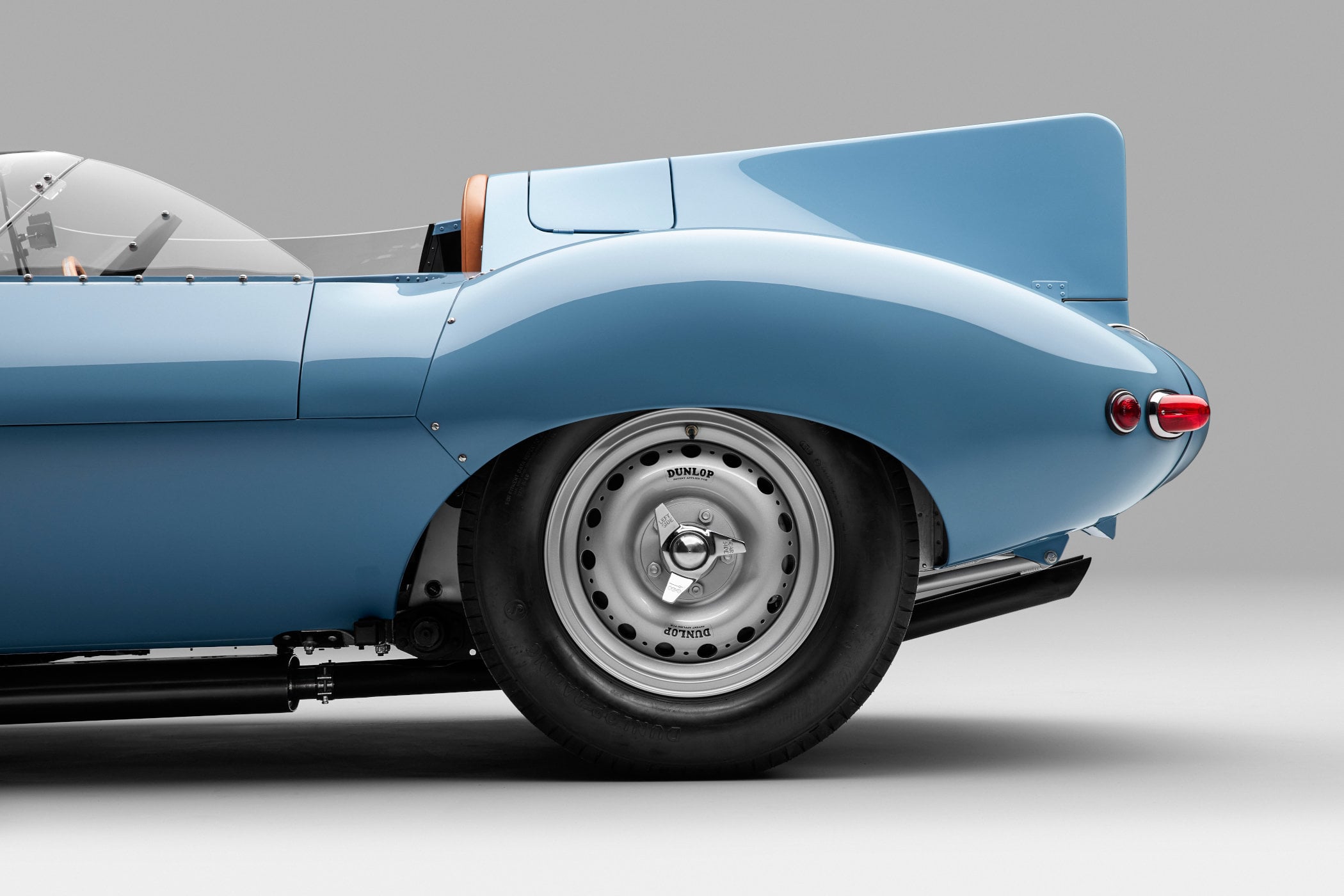
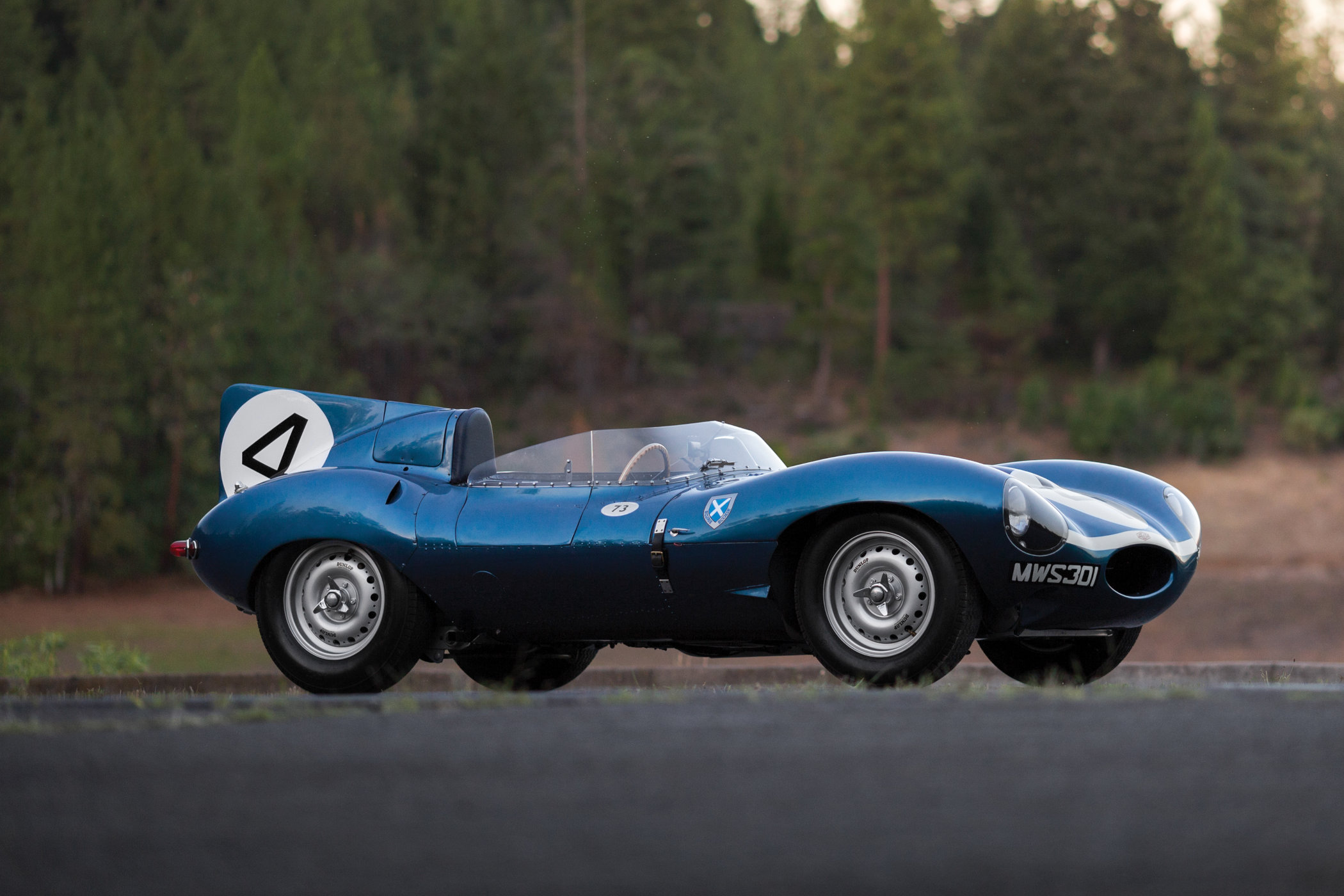
This return to glory fueled Jaguar to develop a replacement for the C-Type, which would be the aptly named D-Type. Using lessons learned from the C-Type, it would be a revolutionary car, with a monocoque construction and, for the time, advanced aerodynamics. The slippery body would drastically reduce drag, and the vertical tail fin, the car’s signature design feature, would keep it stable at high speeds. It made its Le Mans debut in 1954, finishing second overall with a short nose configuration, but for the 1955 running of Le Mans, Jaguar fitted the D-Type with a long nose body for better high-speed stability. It again used the 3.4-litre XK engine for its three entries at Le Mans in 1954, 1955 and 1956, increased it to 3.8 litres for 1957, and then reduced it to 3.0 litres to comply with the new regulations put in place for the 1958 edition.
The D-type went on to win Le Mans three years in a row. In 1955, it was Ivor Bueb and Mike Hawthorn who came across the finish line first, followed by Ron Flockhart and Ninian Sanderson in 1956, and Ivor Bueb and Ron Flockhart in 1957. This cemented the D-Type as not only one of Jaguar’s finest ever, but also as a true Le Mans legend, as very few cars have ever won back-to-back! It would also be Jaguar’s last Le Mans winning car until the mighty V12-powered XJR-9LM driven by Jan Lammers, Johnny Dumfries and Andy Wallace won again in 1988. Jaguar’s seventh and final Le Mans victory came in 1990, with the XJR-12LM piloted by Martin Brundle, Price Cobb and John Nielsen.
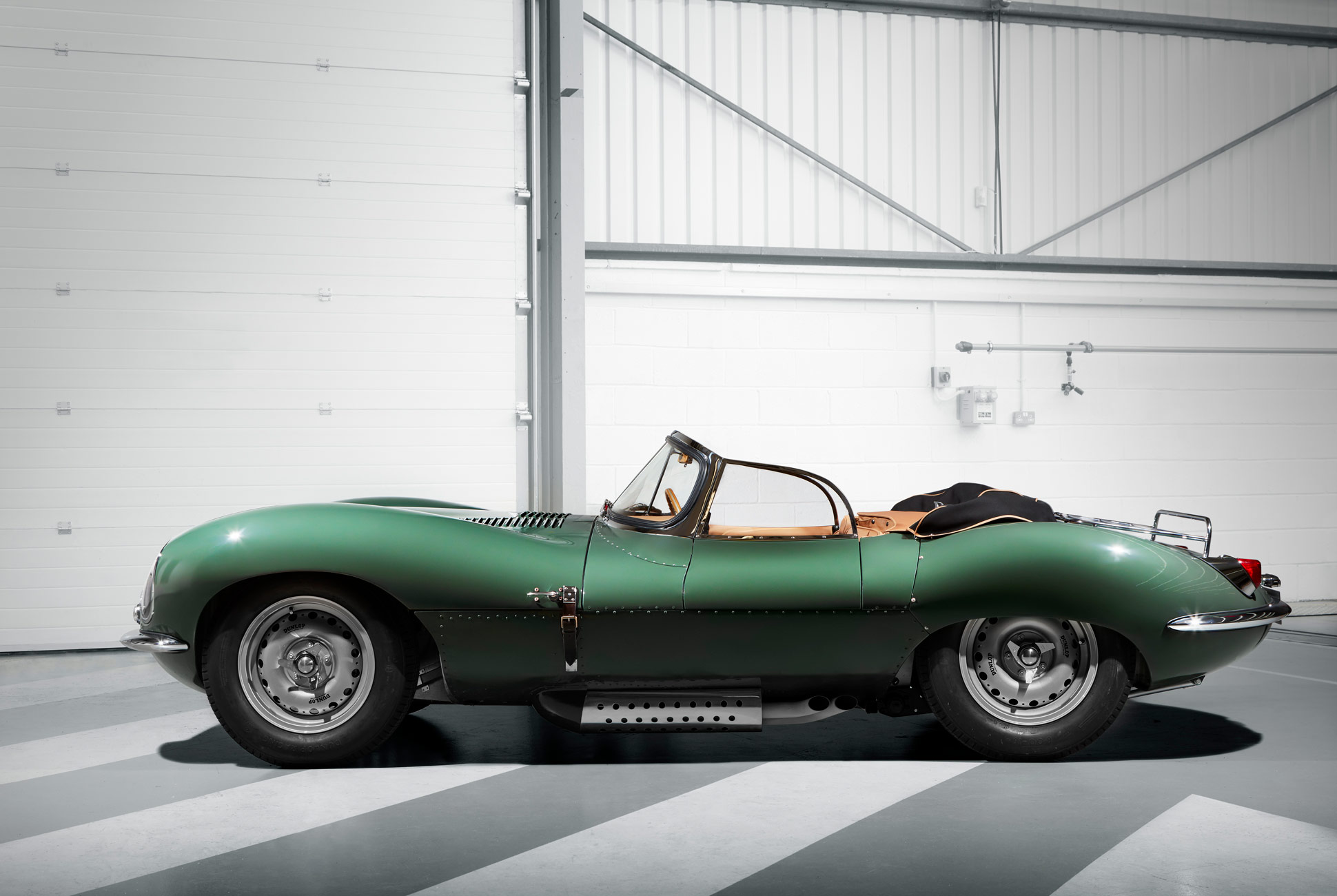
Initially, Jaguar intended to build 100 D-Types, but a fire at the production facilities destroyed nine chassis, and production eventually halted far earlier than planned. Sources say that 71 cars were completed, although Jaguar claims it built 75. Regardless of how many cars left the factory, out of the total number of D-Types it built, Jaguar converted 16 into road-going XKSS versions (see above) and would use many elements of its design and construction to develop the legendary E-Type.
Baby Blue Britton
Don’t make the mistake of calling this a restomod, as a restomod generally uses a donor car which is then updated, often with more power and modern amenities such as Bluetooth connectivity. It’s also not a restoration car, as it was not originally built in the 1950s. A continuation car is a brand-new car built from the ground up according to the plans of the original, possibly paired with 3D-scanned data of the original car. It’s also possible to use original yet never-used-before parts, like a series of chassis or engines, but no donor car is taken off the road in order to build a continuation car. It basically continues, as the name suggests, the production of the original run of cars.
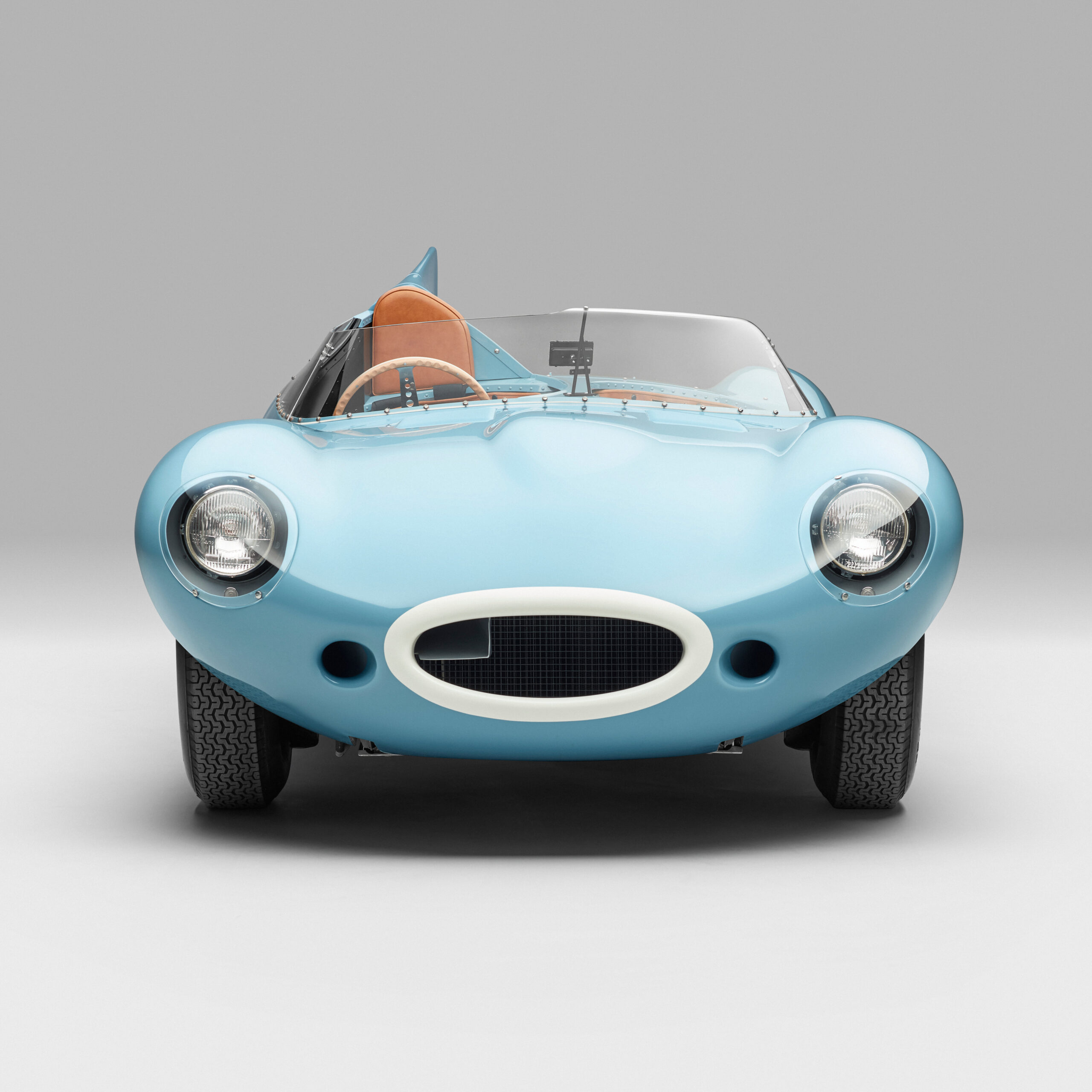
This Jaguar D-Type Continuation car was part of the 2019 factory-program to build the remaining 25 cars Jaguar never managed to build in the 1950s, finally fulfilling the 100-car promise made by Jaguar over 60 years ago. Each car was built by hand by Jaguar Classic at the brand’s facility in Warwickshire, England, using painstakingly sourced original materials and using the same techniques involved in building the original D-Type. Jaguar again offered it in 1955 short- or 1956 long-nose configurations. The body was made of lightweight riveted aluminium panels, and it was fitted with a straight-six 3.4-litre XK-engine and a 4-speed manual gearbox. With approximately 320bhp, it will take you from zero to 100kph in under 5 seconds, and on to a top speed, if you dare, of over 275kph (~170mph).
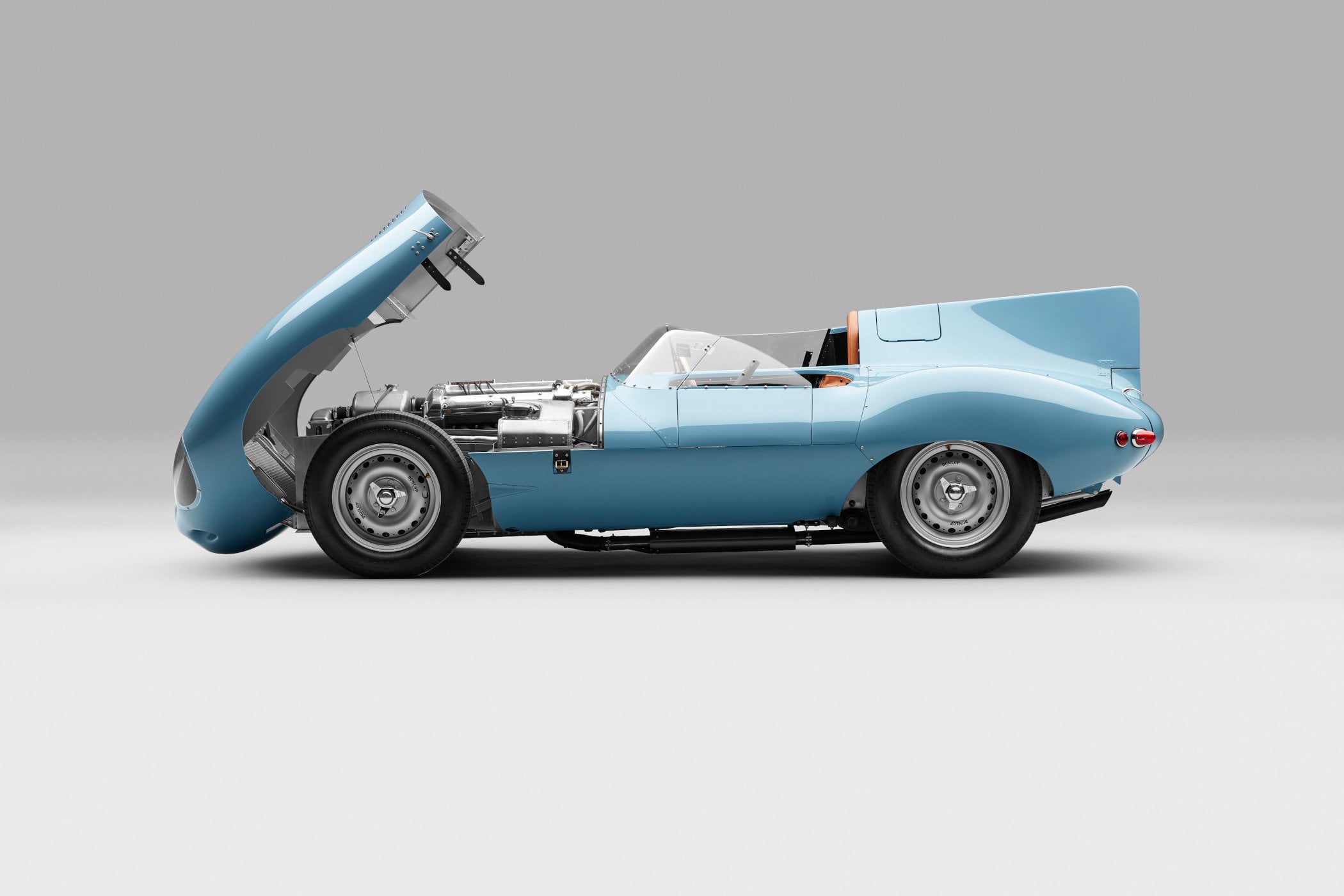
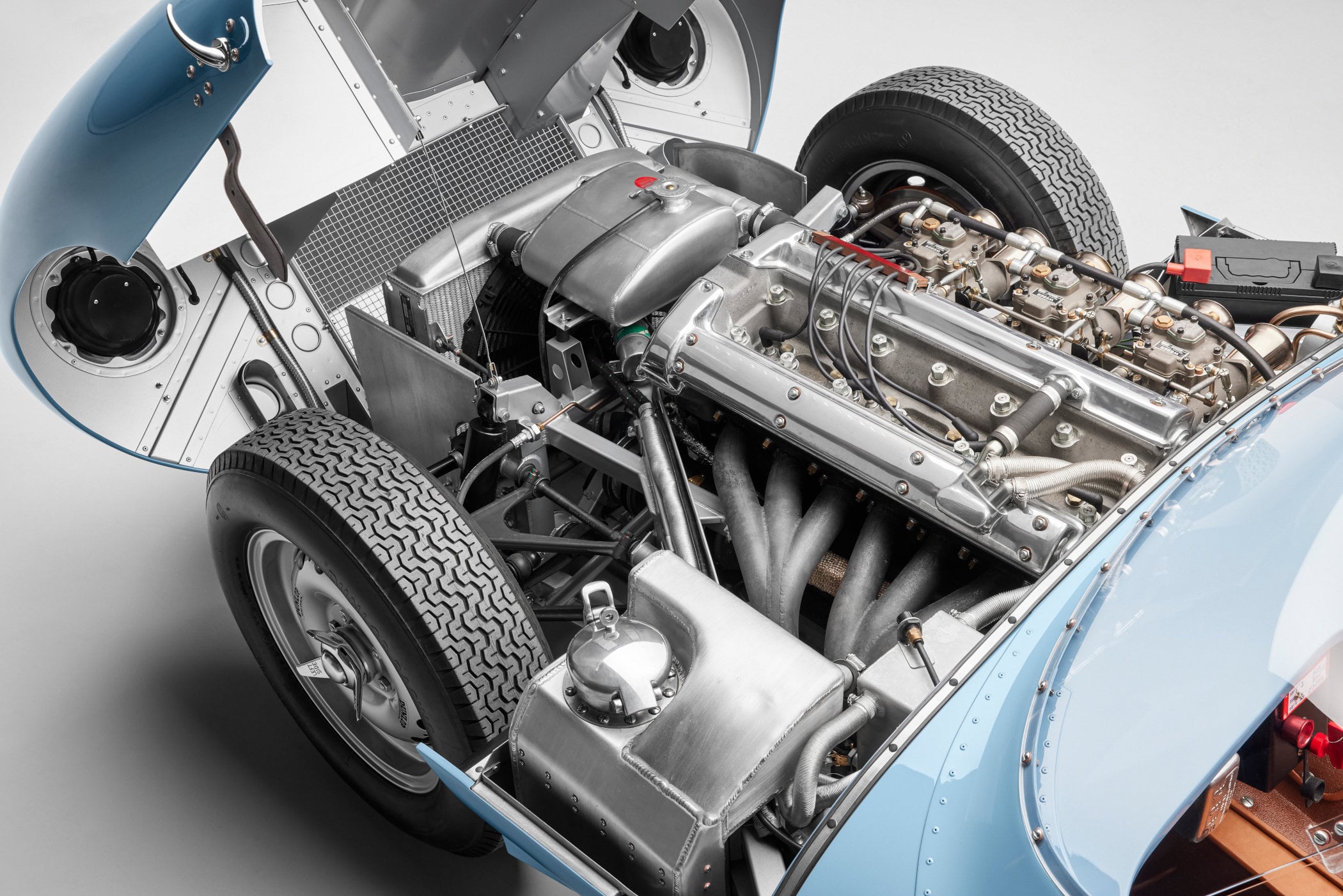
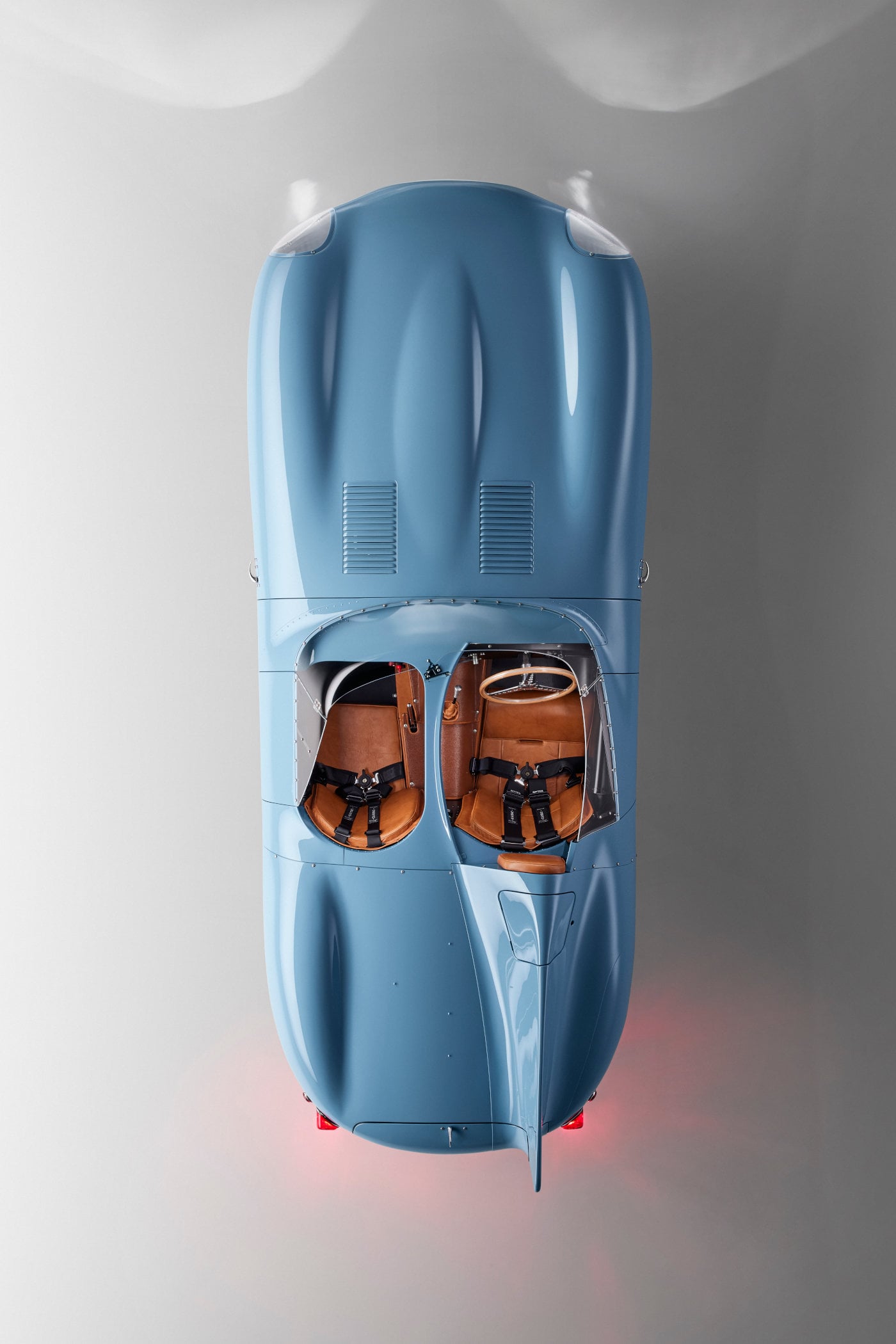
The interior is hand-trimmed and faithful to the cars as they ran at Le Mans in the 1950s. That means it has leather-clad seats, a leather headrest for the driver, a wood-rimmed steering wheel that seems to sit at a bit of an angle, and so on. About the only modern element you will find in there is the four-point racing harness and a large kill switch, which is mandatory if you want to take this into FIA-regulated classic races.
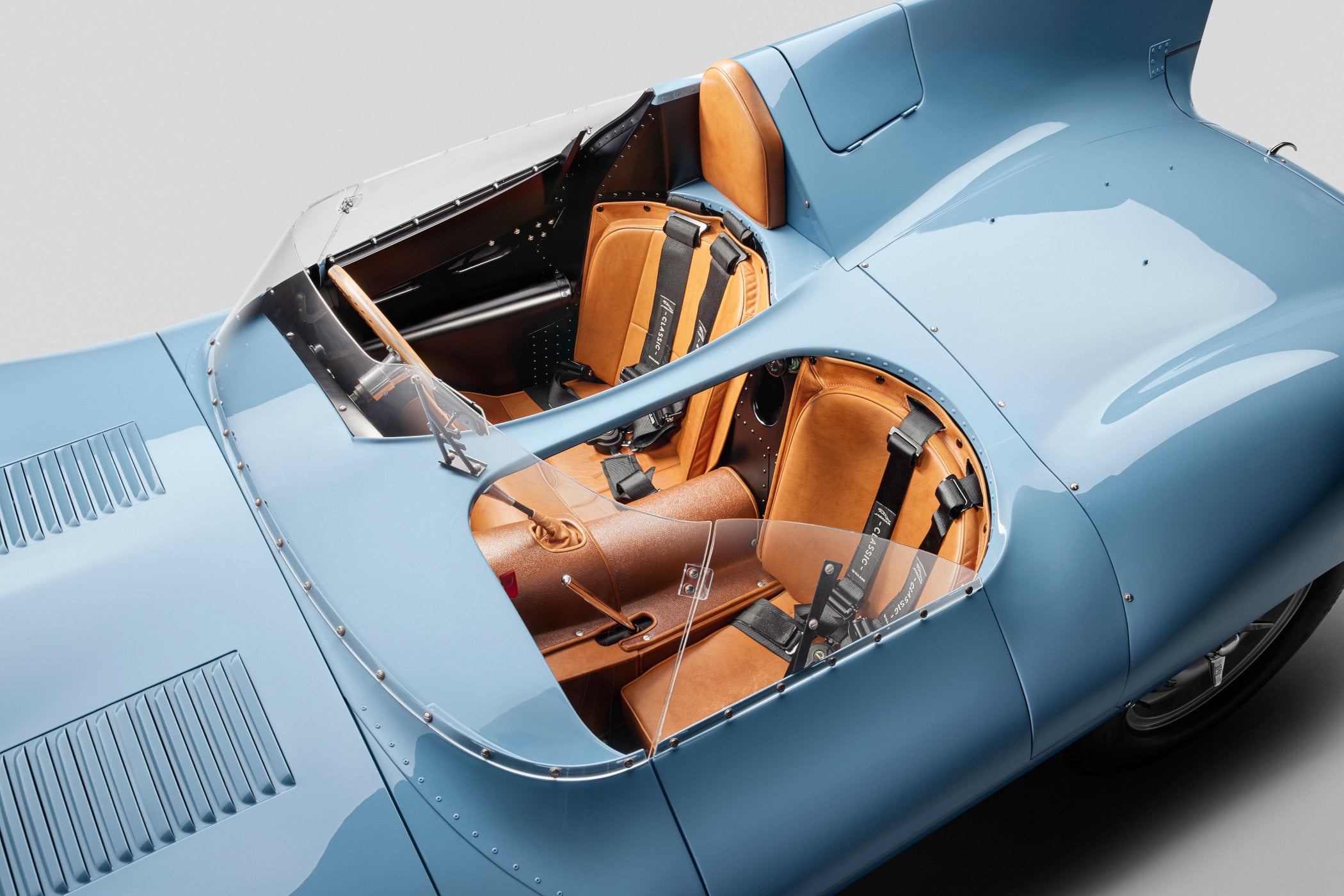
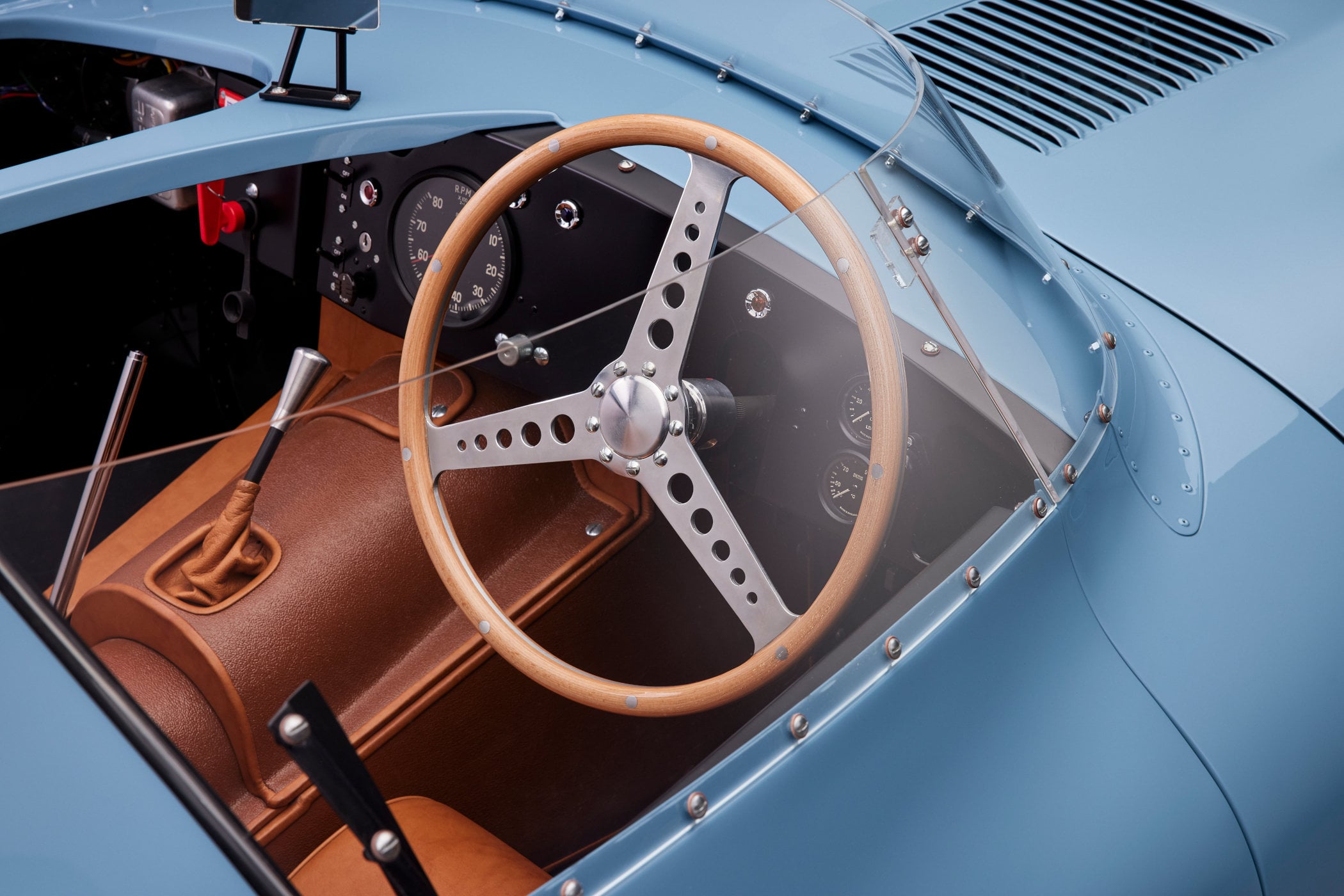
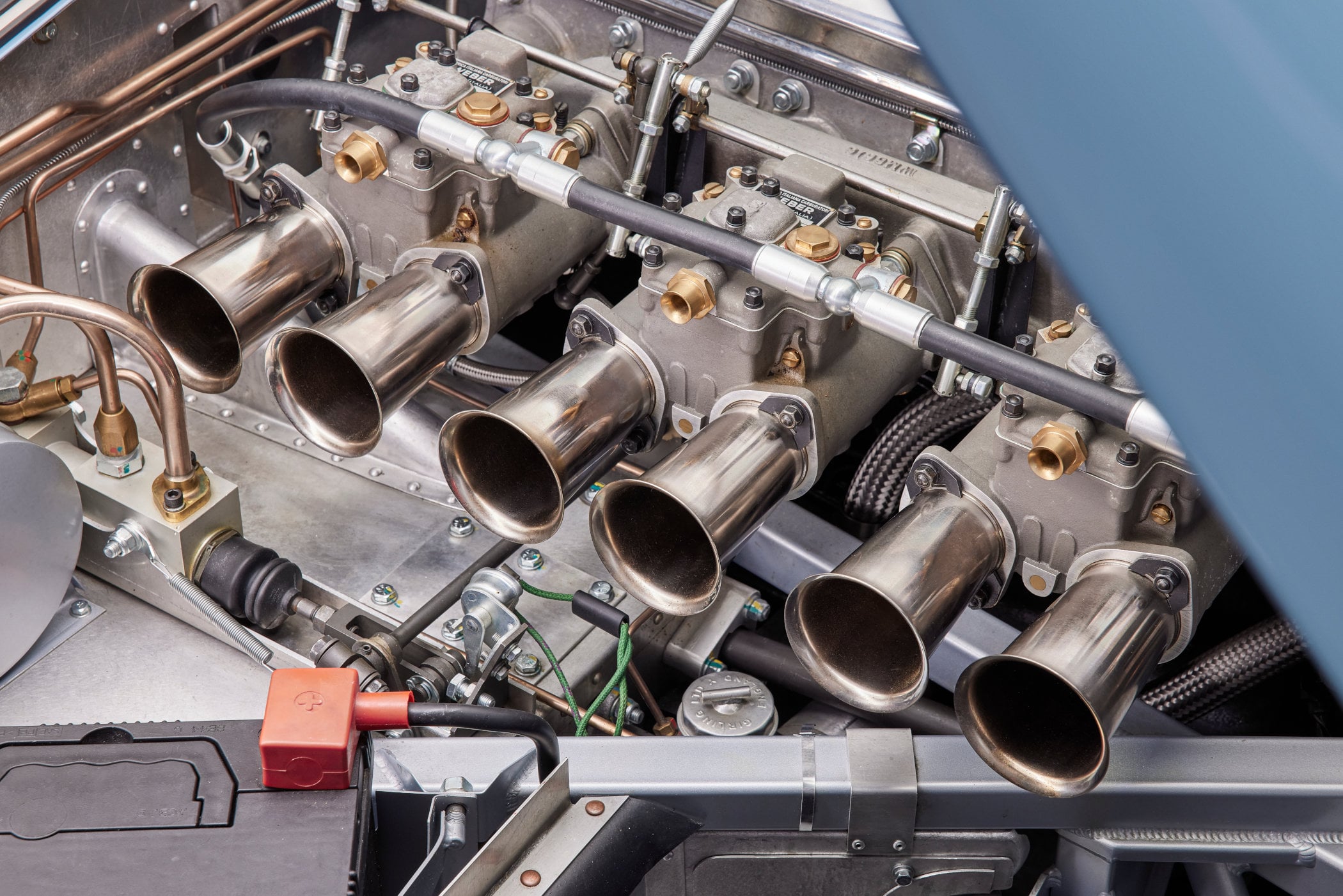
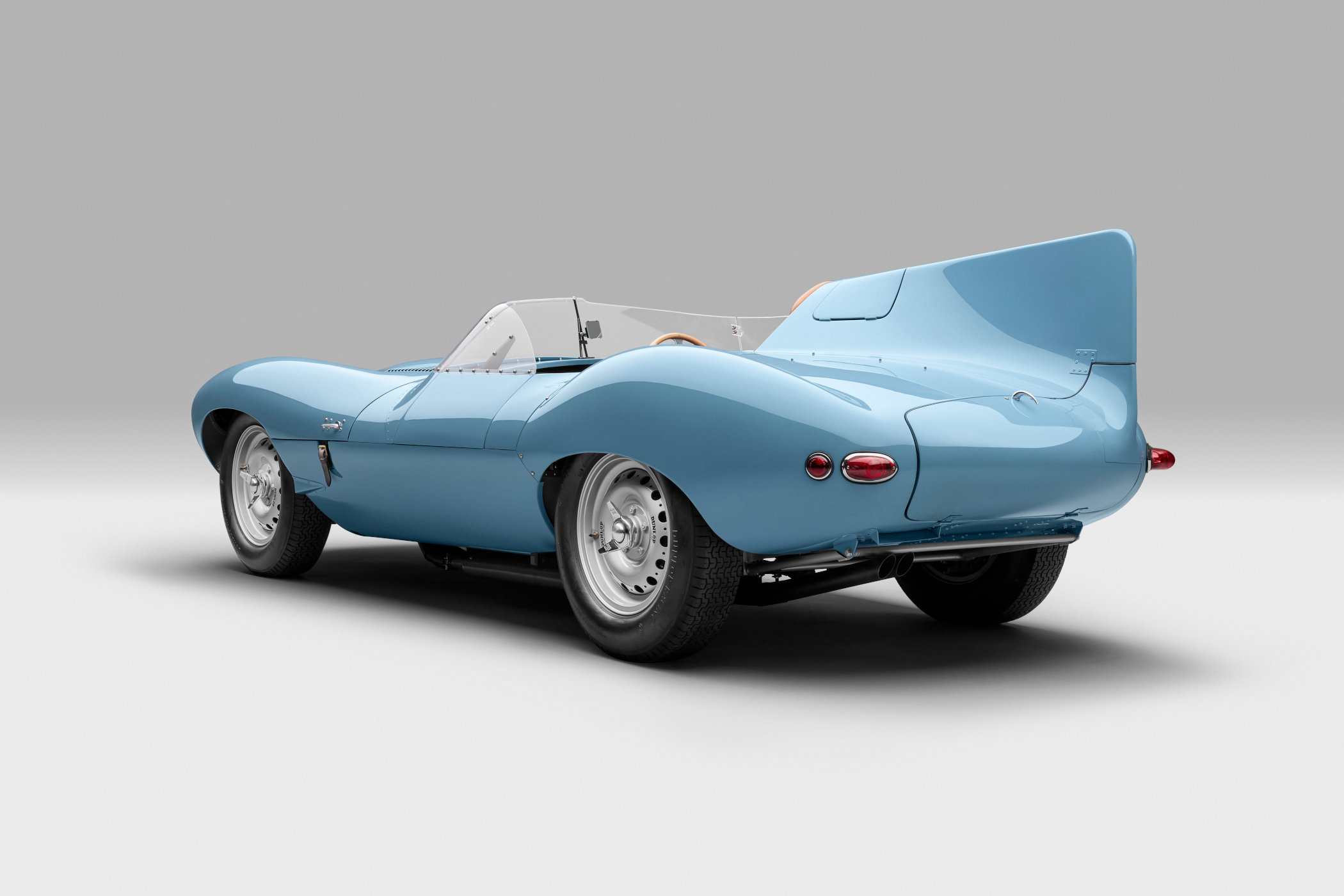
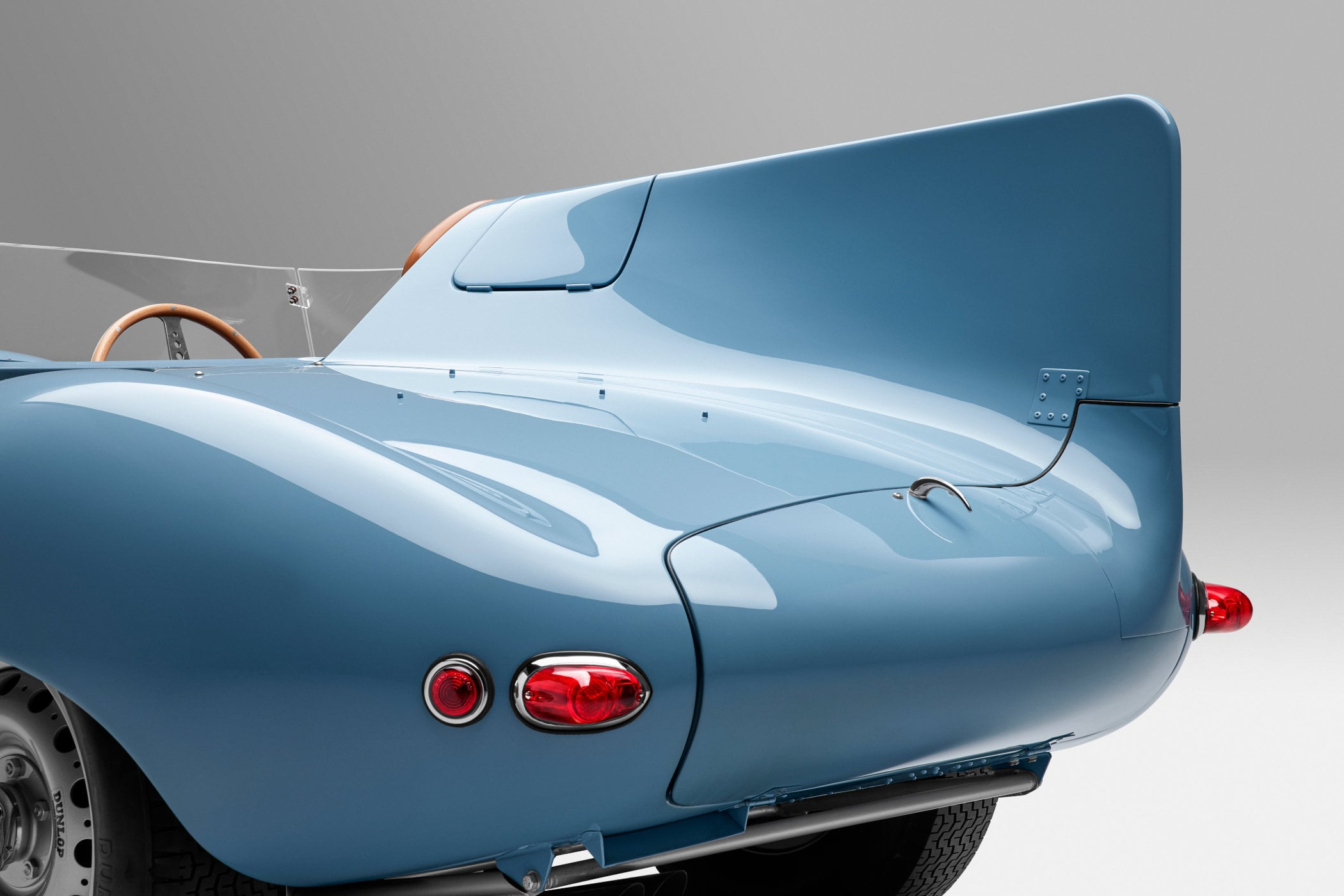
Each of these cars required over 4,000 hours of labour to be put together, and the result is stunning. This one-owner car is built to 1956 Long-Nose spec and is finished in a striking light blue, with a white trim around the front grille. To me, the most beautiful elements in the D-Type, which are of course perfectly captured here, are the tail fin and the asymmetrical wraparound windshield, the huge aluminium clamshell front end, and the semi-tucked wheels. It’s just a thing of beauty, from every angle. It’s available through Hilton and Moss for an undisclosed asking price, but originally, the cars were sold at a price of GBP 1.75 million. Certainly a huge sum of money, but an original Jaguar D-Type, let alone one of the Le Mans-winning cars, is worth considerably more than that! Just to put this into perspective, RM Sotheby’s sold the original 1956 Le Mans-winning D-Type for an astonishing USD 21,780,000 back in 2016!

For more information, please visit HiltonandMoss.com.
Editorial Note: The information used and images portrayed in this article are sourced from and used with permission of the Hilton and Moss company, unless stated otherwise.

4 responses
We need car design to become this friendly (for a lack of a better word) again. These cars look so unaggressive, yet nobody would question that it is seriously quick.
I concur.
I would argue we need cars to become slower, lighter and more involving again, too.
More friendly indeed, but not only in looks.
Maybe in general, we should stop the idolising of despicable thugs and start looking down on them again.
A true driver’s car, unlike anything sold en masse today, or anything raced in F1.
If you’d like to see an original, XKD 538, it sits in the Simeone Foundation Automotive Museum, Philadelphia, PA, USA. They periodically take the cars out to the rear lot for a little exercise. Go to the museum web site for the Demonstration Day schedule. The museum D-Type may be scheduled later this year.