


 Not all images were able to load for printing. Please close the print window and try again.
 The Superb Moritz Grossmann Tourbillon in Titanium
Traditional mechanics, modern material and a show to be seen.
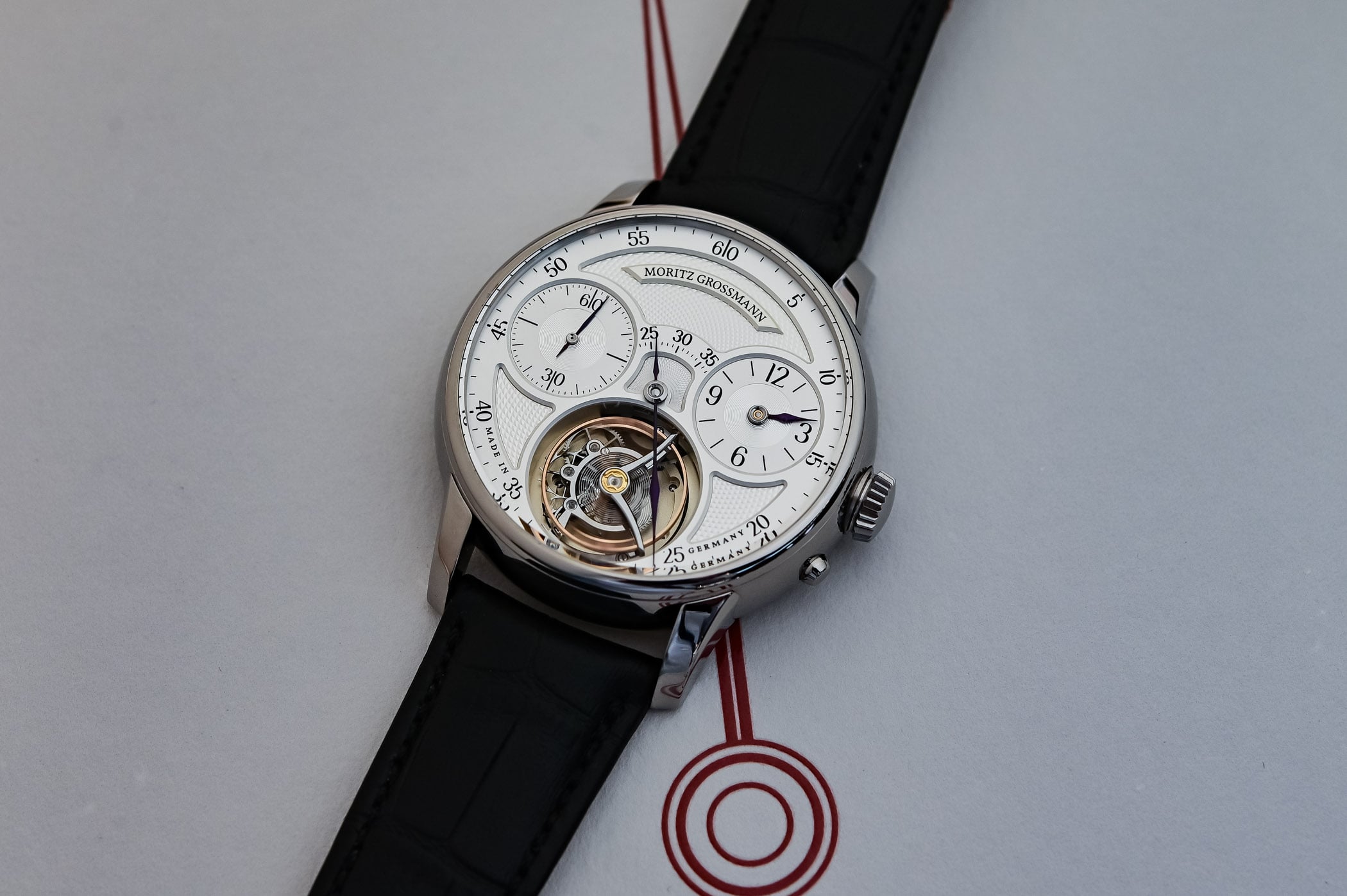
The tourbillon… is it a visual stunt or a useful component? If you chose to put one in a watch to do the work it was designed to do, you might as well keep it hidden. If the purpose is to mesmerise the onlooker with its rhythmic ballet, make it big, make it seen, so that we can appreciate it without the need for binoculars. If it’s both show and functionality, still make it big, Moritz-Grossmann-big!
Since Moritz Grossmann unveiled its first in-house tourbillon calibre in 2013, the complication has been approached as a kind of mechanical thesis: slow, legible, and rooted in Glashütte tradition. After several other executions and being released last year alongside the Tourbillon Tremblage in white gold with a rose-toned dial, Grossmann revisited the idea through a distinctly contemporary lens with the latest Tourbillon Titanium. While the Tremblage is a beautiful piece, the titanium model, with its colourways, brings the focus to the emotional centre of the watch.
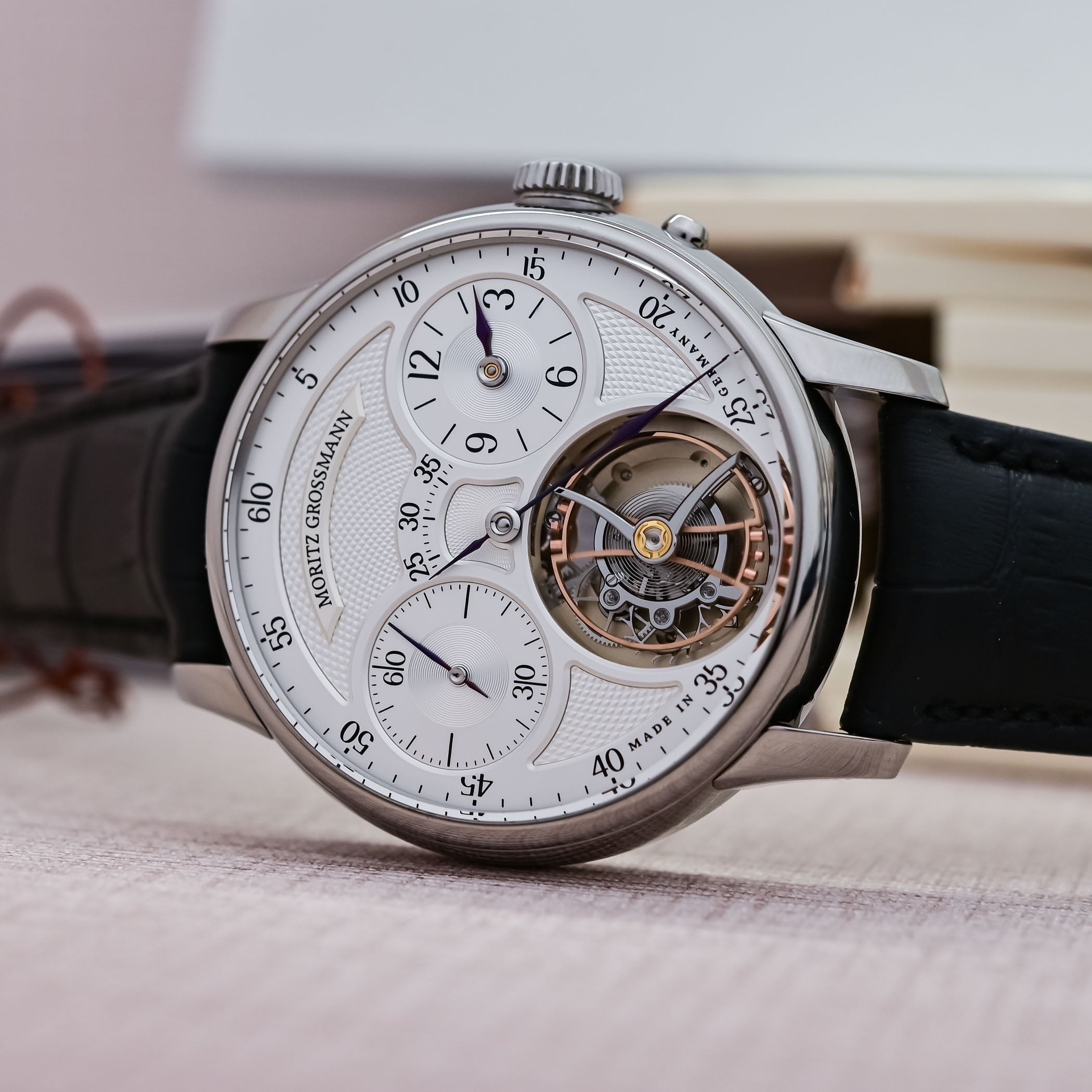
On the wrist, the 44.5mm titanium case feels big but sits with comfort, thanks to its light titanium, balanced mass distribution, and manageable thickness of 13.9mm. Titanium is often chosen for weight reduction; it also defines the character. The metal’s darker, muted sheen works nicely for the watch’s proportions. The bezel is slim, allowing the dial to breathe, while the three-part construction retains the typical Grossmann look. The crown is large enough to use with ease; it is made in titanium to match the case, as is the small pusher. Water resistance is 30m.
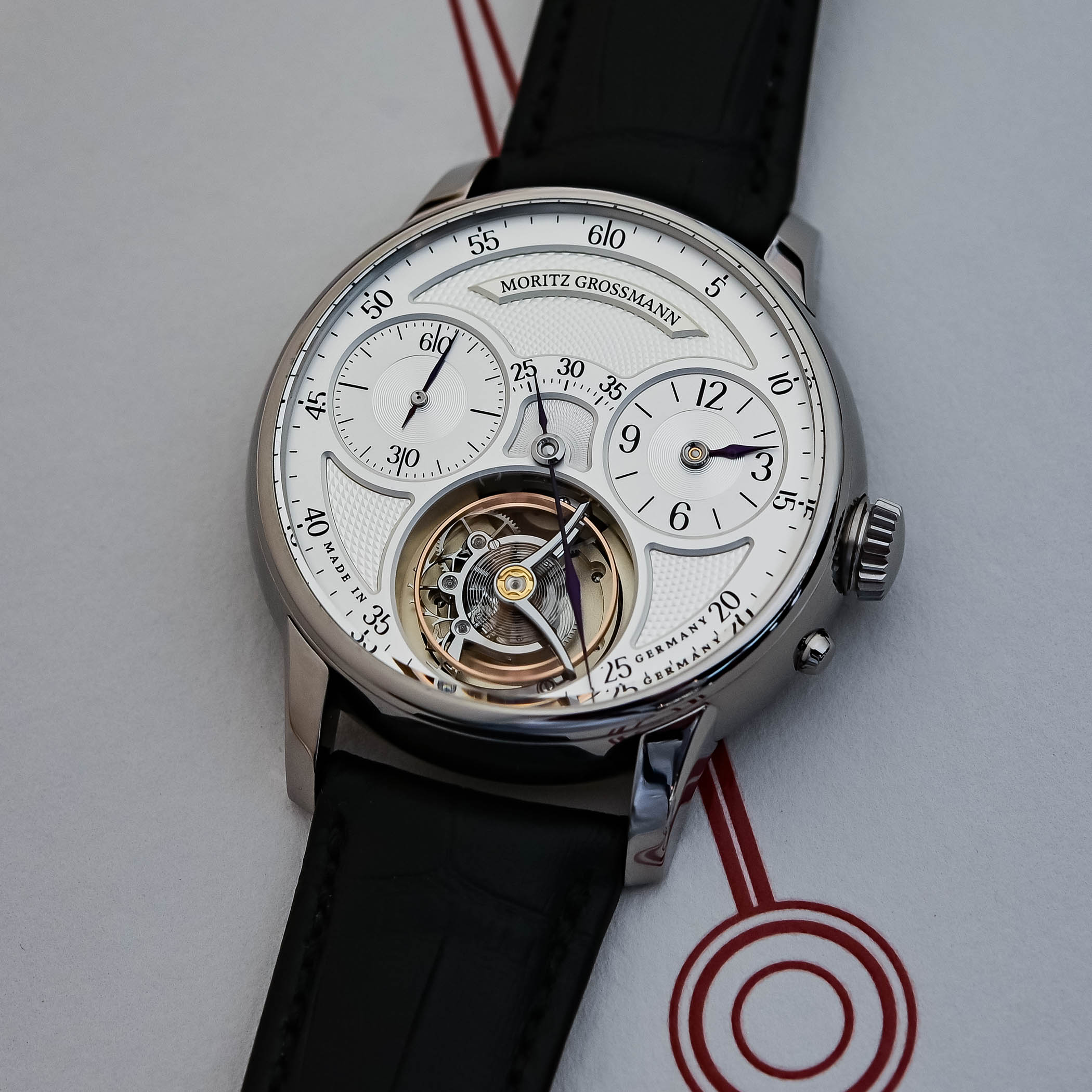
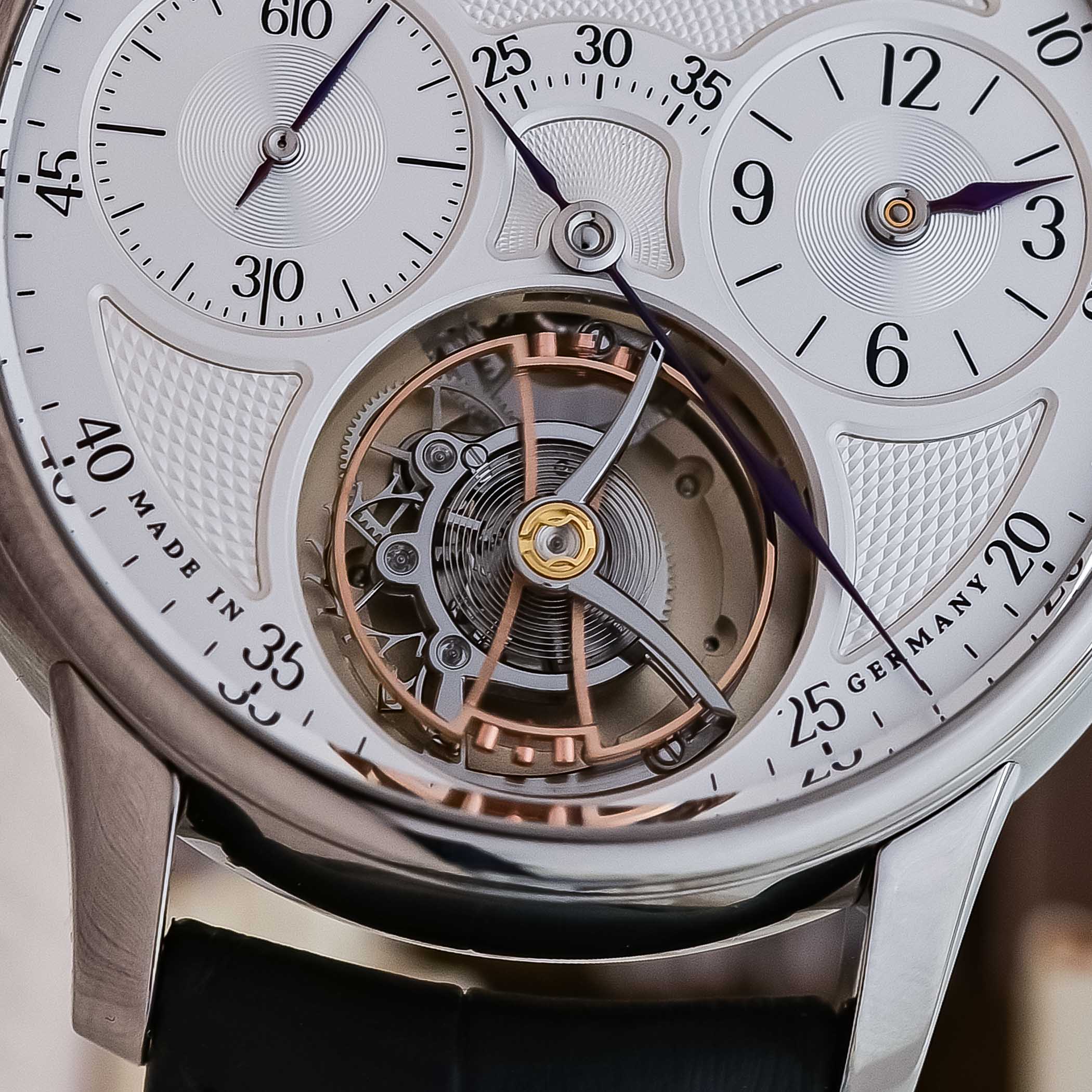
The dial is the place for tradition and modernity to meet. Made from solid silver and finished with a fine grain d’orge guilloché, it is cut by hand on historical machines, line by line. Up close, the texture is crisp and regular, catching the light without becoming ornamental noise. The layout is familiar, with the tourbillon commanding attention at 6 o’clock, central minutes, off-centre hours at 3 and small seconds at 9, all indications are by the brown-violet annealed steel hands. The large tourbillon aperture interrupts the minutes scale between 25 and 35 minutes, bridged by an extended minute’s hand end, reading from a separate scale positioned between the subdials, a logical and characterful solution.
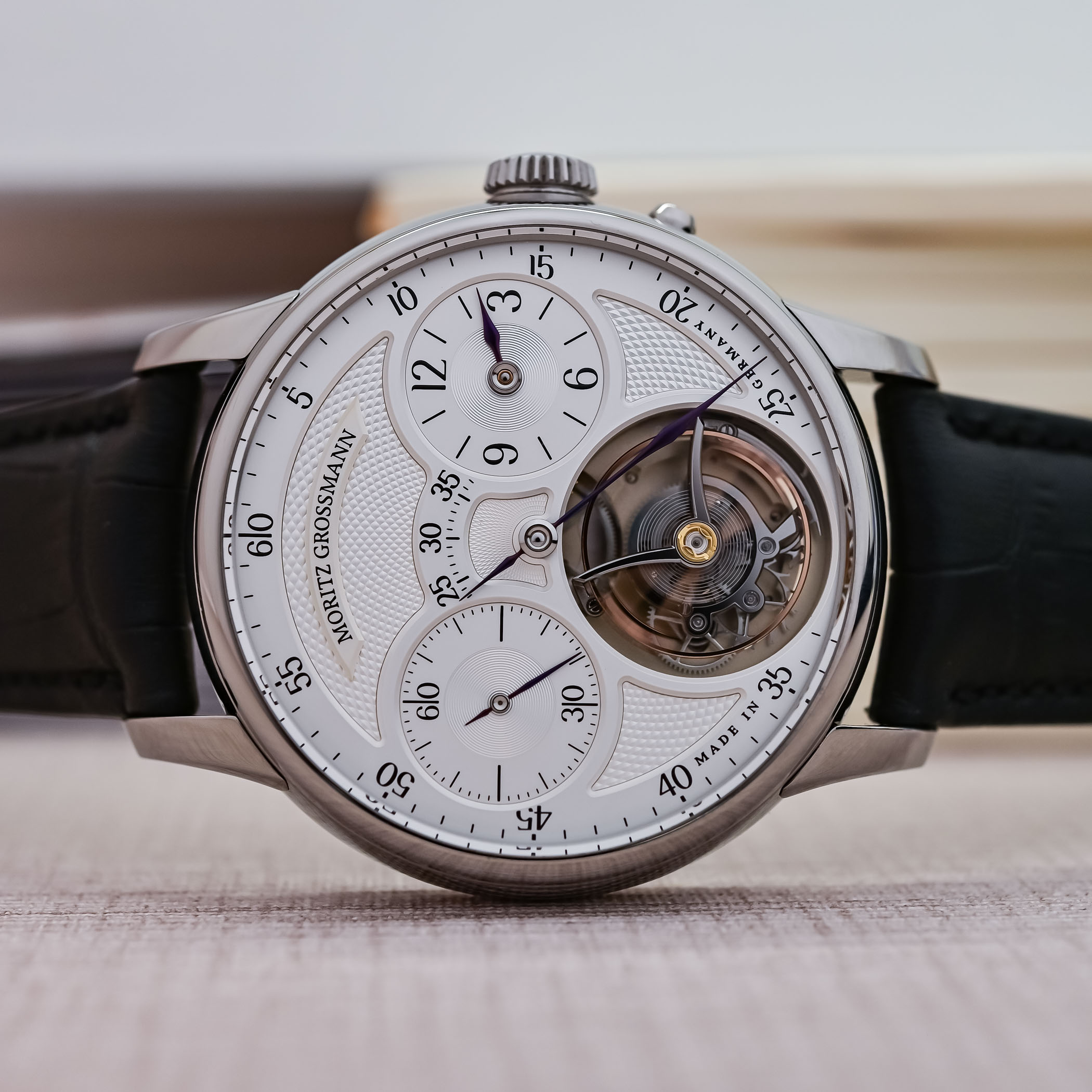
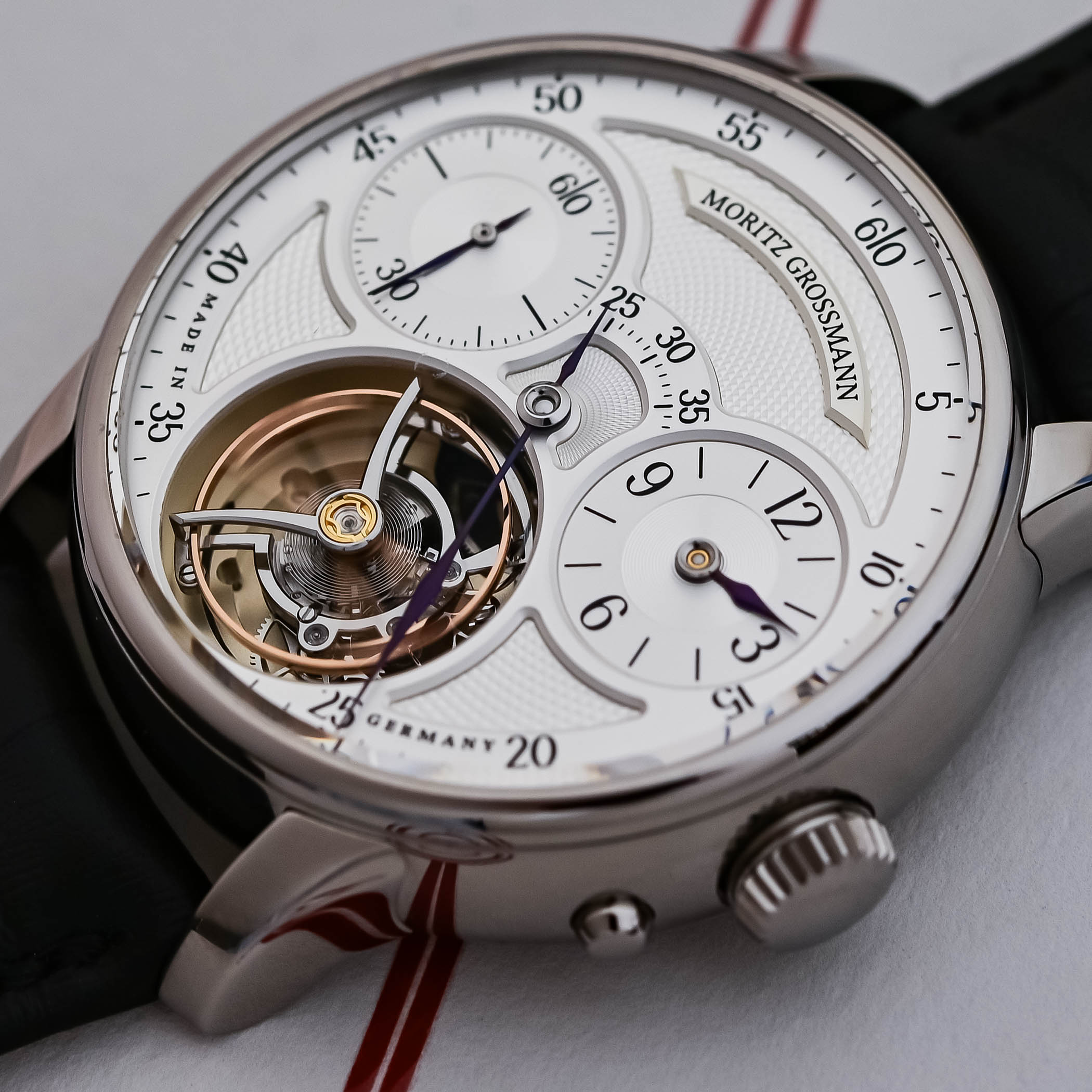
The tourbillon, of course, is the star. Grossmann’s flying tourbillon is big (not as huge as the 27mm of the Kerbedanz Maximus, though, more like the Voutilainen Détente Escapement Tourbillon), with a 16mm cage rotating once every three minutes rather than the usual one. This slower rhythm gives the opportunity to appreciate the construction in detail: the V-shaped balance bridge inspired by Alfred Helwig, the open design, and the finely finished cage top supported by just two pillars. It is dramatic, yes, and that’s the point.
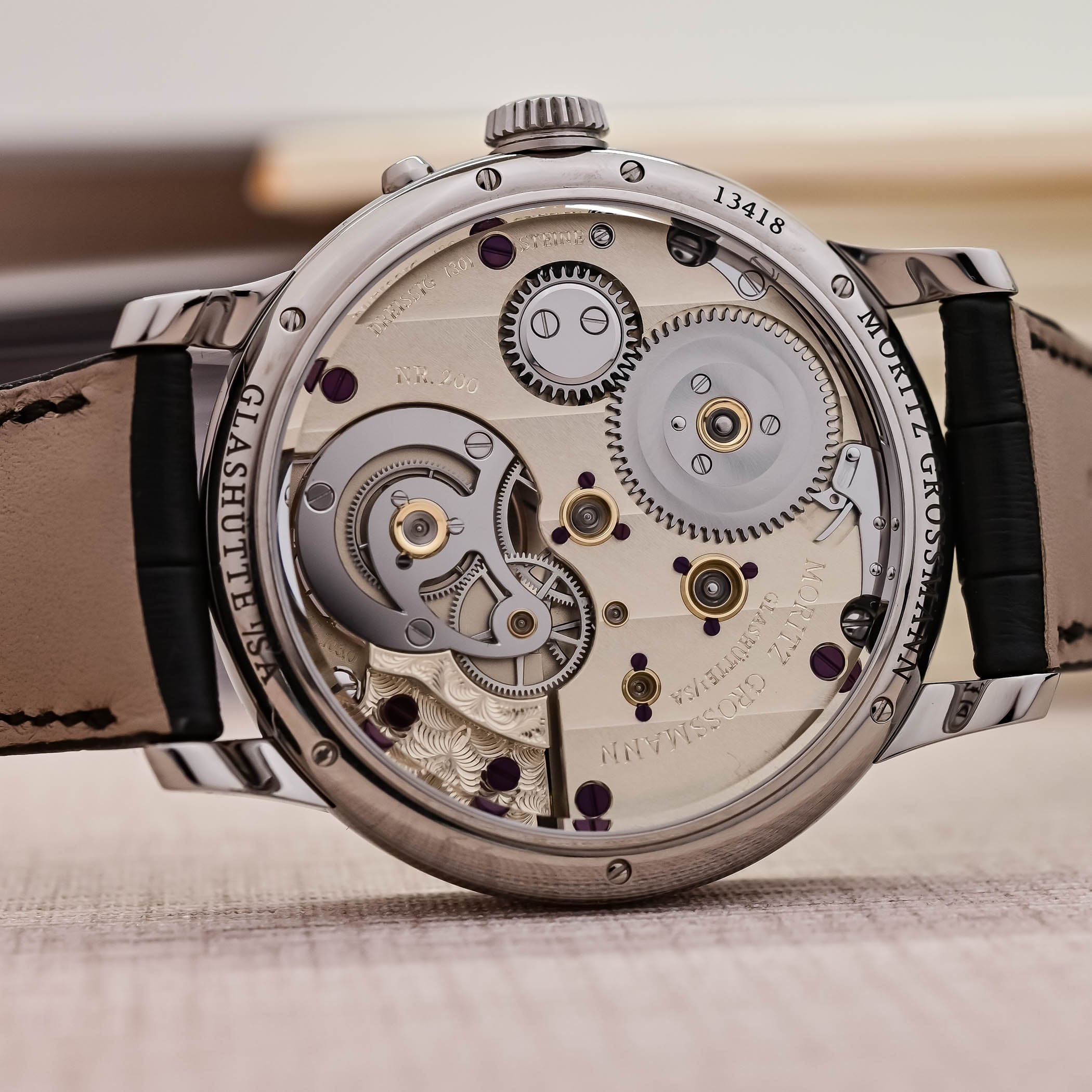
Turning the watch over reveals the “same old” calibre 103.0, a hand-wound movement with untreated German silver plates featuring broad Glashütte ribbing, with hand-engraved flourishes on the plate and tourbillon cock. Gold chatons, secured by polished screws, hold white sapphire jewels, while the ratchet wheel features three-band snailing. The balance beats at a traditional 18,000 vibrations/hour, and the movement delivers a 72-hour power reserve. A signature Grossmann feature is the pusher-activated manual winder, separating hand-setting from restarting the movement, complemented by a stop-seconds mechanism acting directly on the human-hair brush balance rim.
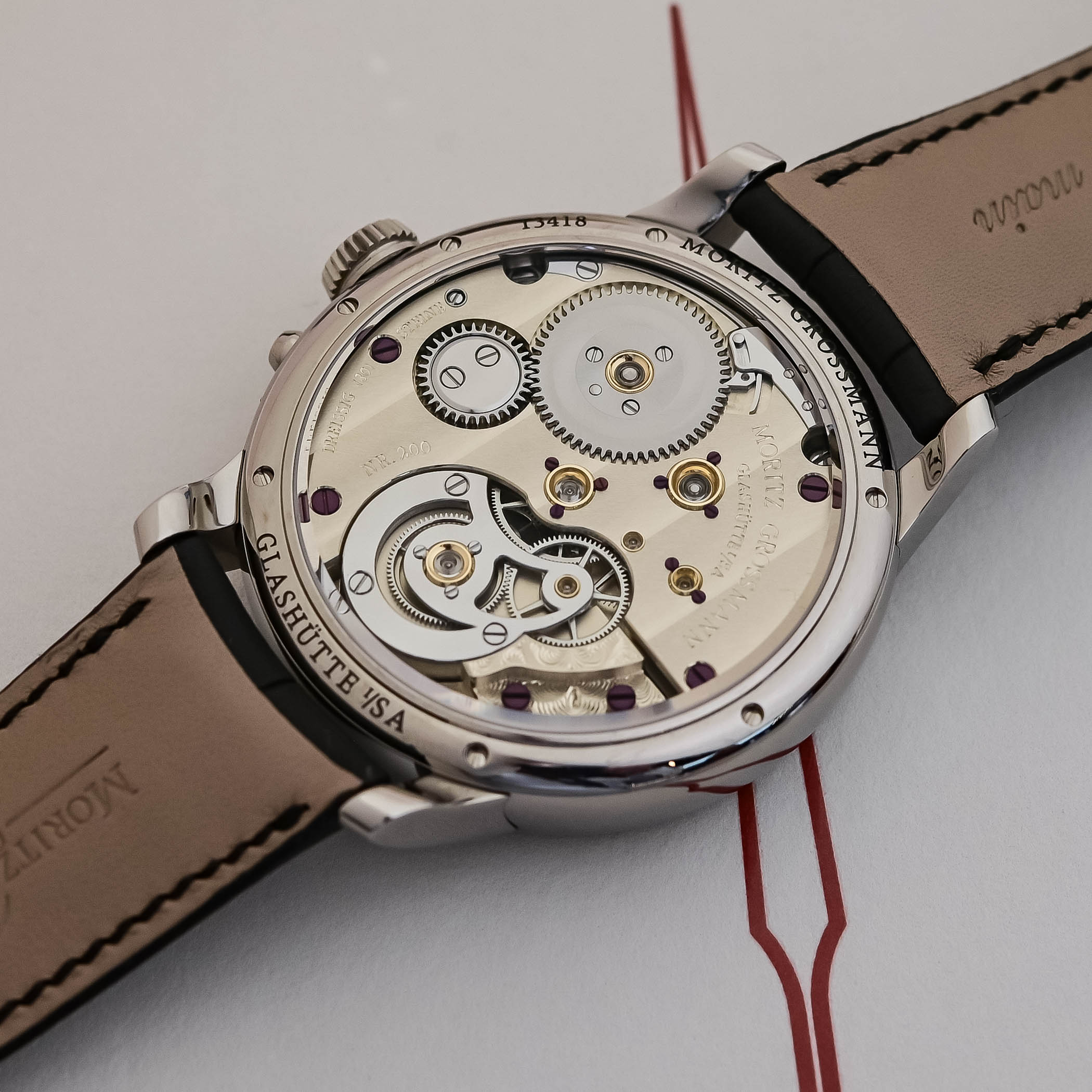
The Moritz Grossmann Tourbillon Titanium is worn on a hand-stitched black alligator strap with white stitching, closed by a titanium butterfly clasp. Production is limited to 12 pieces; the price is EUR 165,700 as it is serious haute horlogerie, offering mechanical depth, integrity, and restraint, even though Grossmann engineers allowed themselves a bit of theatre. For more details, please consult www.grossmann-uhren.com.

1 response
Seriously now ?