


 Not all images were able to load for printing. Please close the print window and try again.
 Dr. Andreas Kaufmann on How Leica Blends its Photographic DNA with German Watchmaking
From iconic cameras to timepieces, the brand outlines its long-term ambitions of becoming a respected German watchmaker.
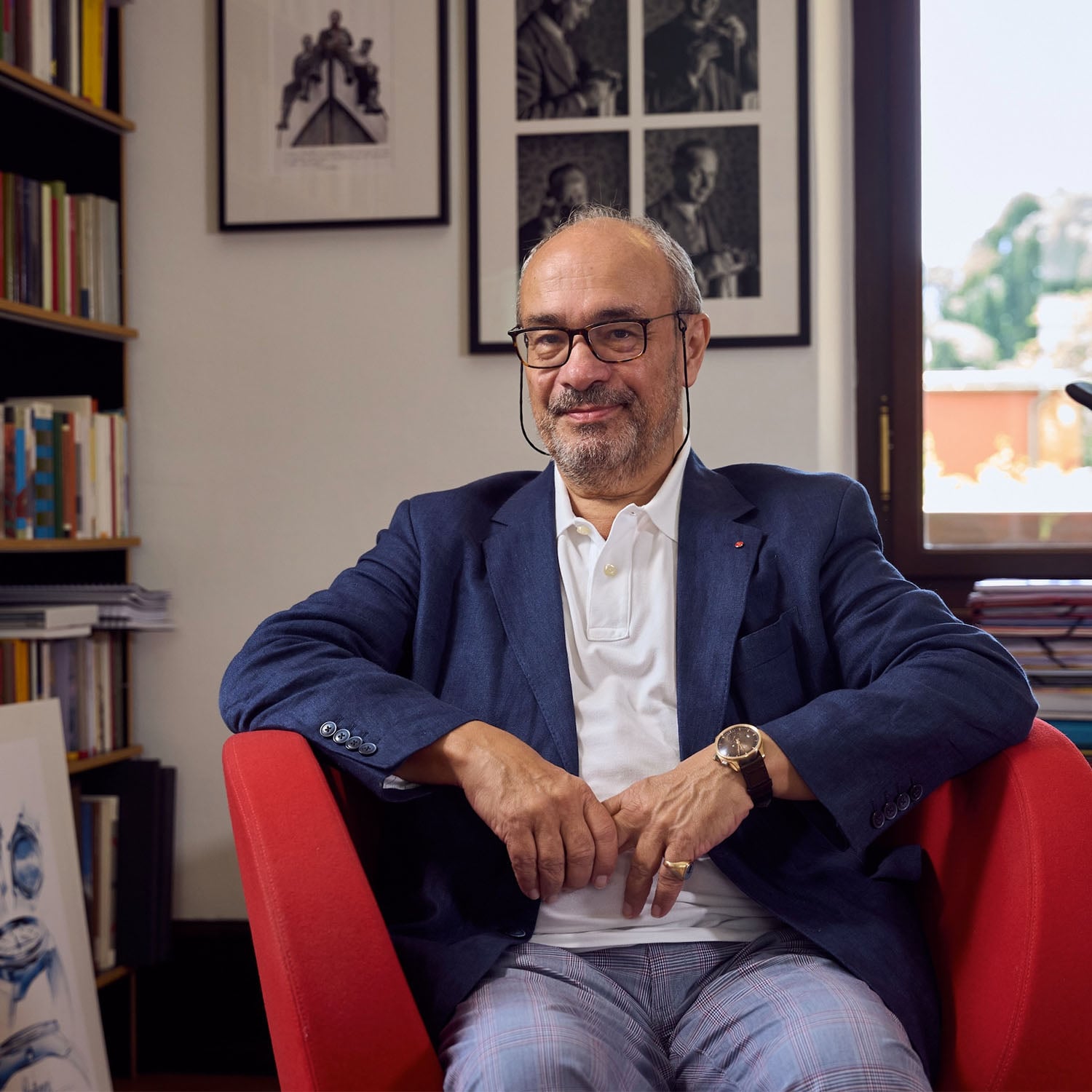
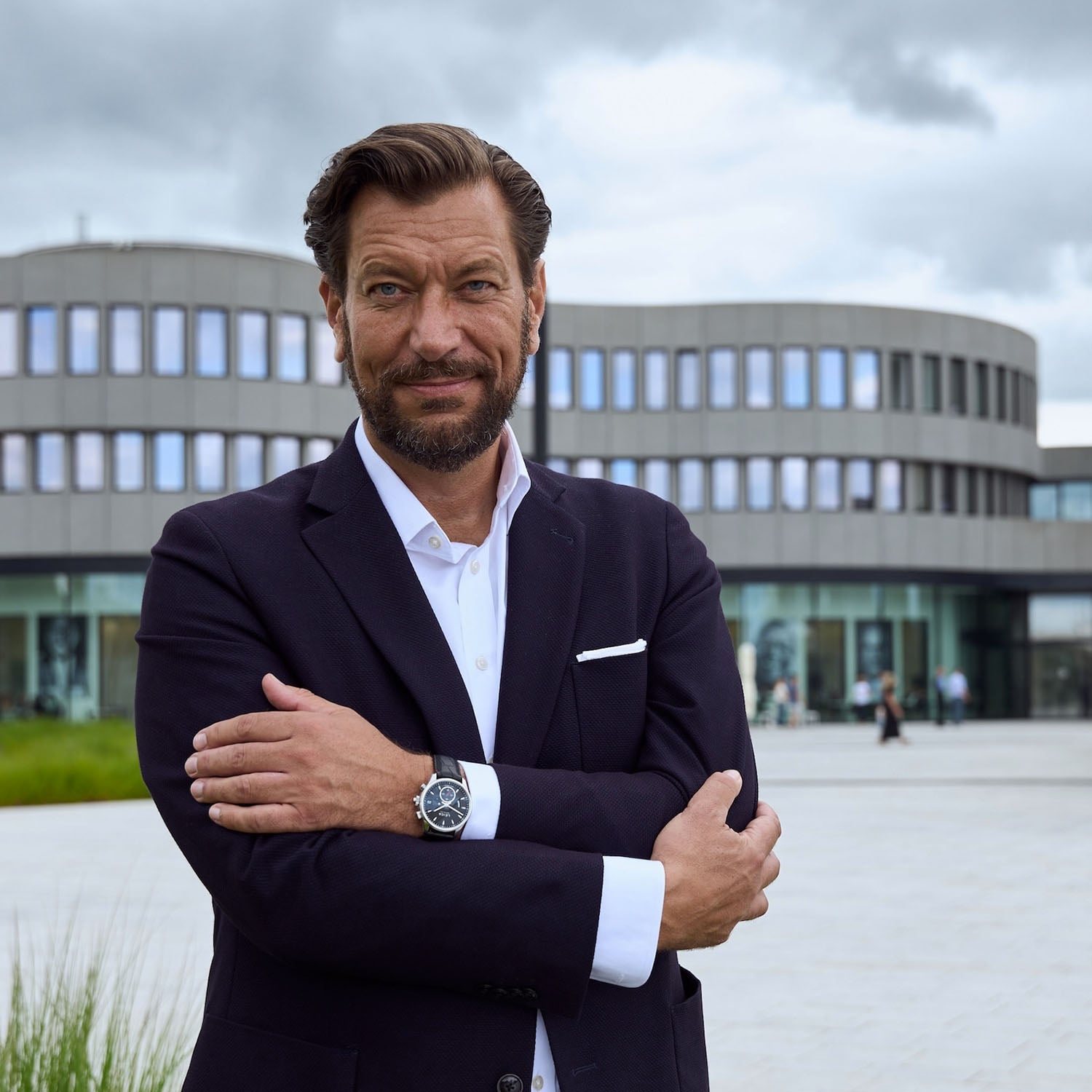
Dubai Watch Week is a remarkable platform for engaging with influential figures, and this year’s edition offered us the chance to sit down with two of Leica’s key leaders. Together, we explored the past, present, and future of one of Germany’s most storied manufacturers – an icon in photography renowned for its precision engineering, craftsmanship, and unmistakable visual identity. Dr. Andreas Kaufmann, Chairman of the Supervisory Board of Leica Camera AG, has played a pivotal role in the company’s modern resurgence. Joining him was Henrik Ekdahl, who heads Leica’s watch and accessories division, one of the brand’s most ambitious creative ventures. Our conversation shed light on how Leica continues to evolve its identity while honouring its heritage, and, of course, on its watchmaking journey and future ambitions.
Frank Geelen, MONOCHROME – What, in your opinion, makes Leica unique?
Dr. Andreas Kaufmann, Leica – Leica’s story is deeply rooted in history and in know-how. For 120 years, the Leitz family ran the company, originally founded by Ernst Leitz I as Ernst Leitz Wetzlar. Under his leadership, the business expanded significantly, but it was his son, Ernst Leitz II, who put the company on the global map. Guided by his motto, “Die Welt ist Mein Feld” (The world is my field), he began in 1895 to expand the company’s activities worldwide.

To put this into perspective, Leica was introduced in 1925 as a new camera system, and by 1935, for example, there were already 16 Leica dealers in China. Drawing inspiration from the watch industry, Ernst Leitz II implemented division of labour, allowing the company, already specialised in microscopes and optical instruments such as binoculars, to produce cameras to the highest standards. This capability made it possible to launch the Leica system: a full system, a high-end camera that could fit in your pocket. In 1925, the Leica I was the first mass-produced 35mm camera and revolutionised photography. The spirit of precision, reliability, and innovation of the Leica I remains alive today.
Leica has since defined six core fields of expertise: optics, mechanics, electronics, software, design, and, since 2005, selective distribution. The company is unique in the industry for directly managing its own stores, enabling direct communication with our clients. These are a few of the elements that define Leica.
What about watches?
Leica has long been connected with watchmaking. It is rooted in the company’s heritage, as our founder, Ernst Leitz, was trained in watchmaking in Neuchâtel. Leica’s heritage has always been closely tied to watches. There is a connection between mechanics and design. But when you look at some of our past watch creations, the design language was not clearly Leica. Not as powerfully consistent as the design of our cameras.

This led to our project team in 2015 and the establishment of a serious, consistent watchmaking project. The idea was to integrate the Leica DNA into a watch. We worked with German industrial designer Professor Achim Heine, who had already been a Leica designer for 10 years. That gave birth to the ZM1 and ZM2. We sat down with Reinhard Meis, you know, the designer of A. Lange & Söhne, among other things, and we designed the basis of a movement, not any movement, but our own movement. Andreas Strehler was also involved.

Was it based on an existing movement? How is it made in Germany?
Some elements, just a few, were derived from an Eterna movement that never made it to the market, but it is our design made with Meis and produced with our partner in the Black Forest region of Germany.
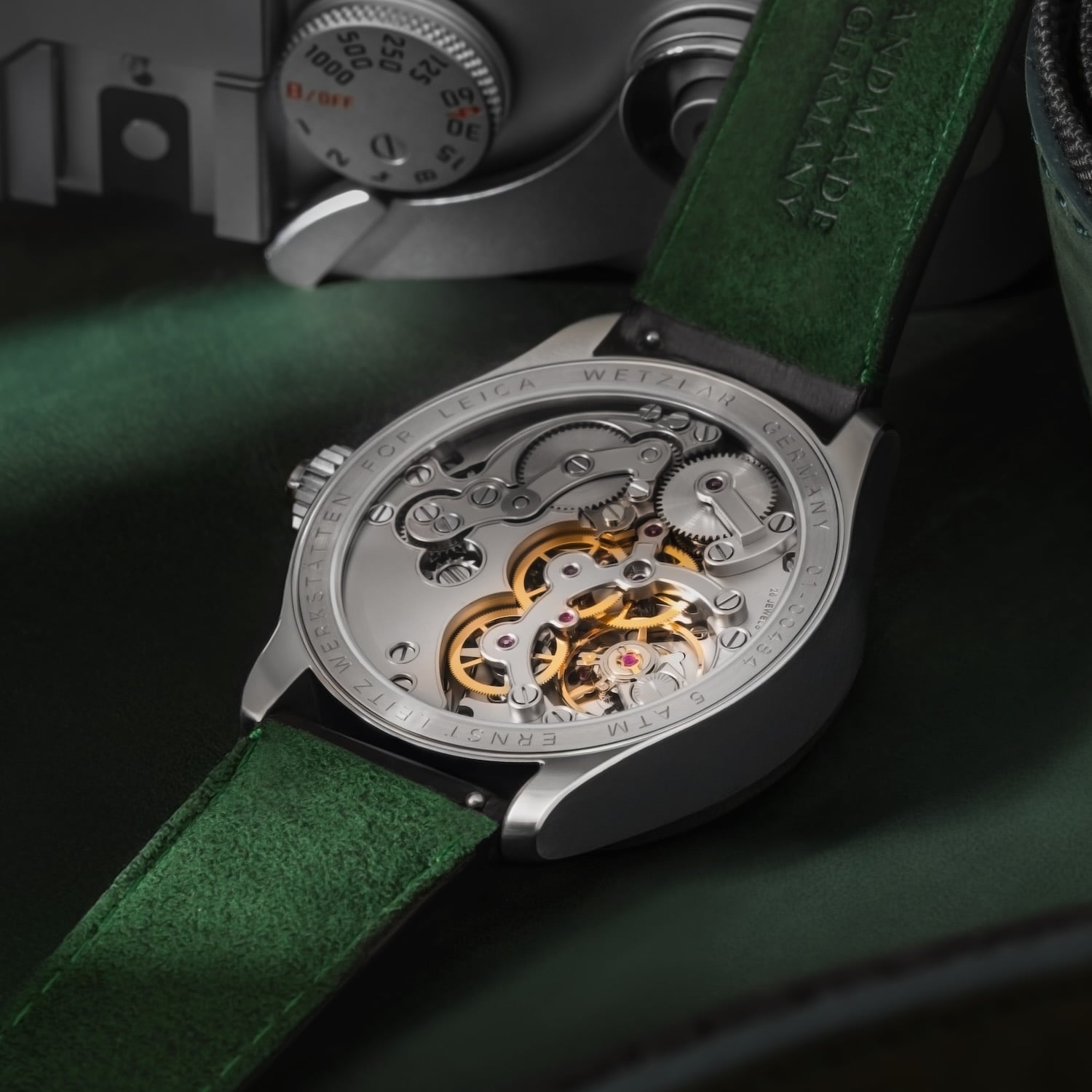
So, tell us about the watch’s design and functionality?
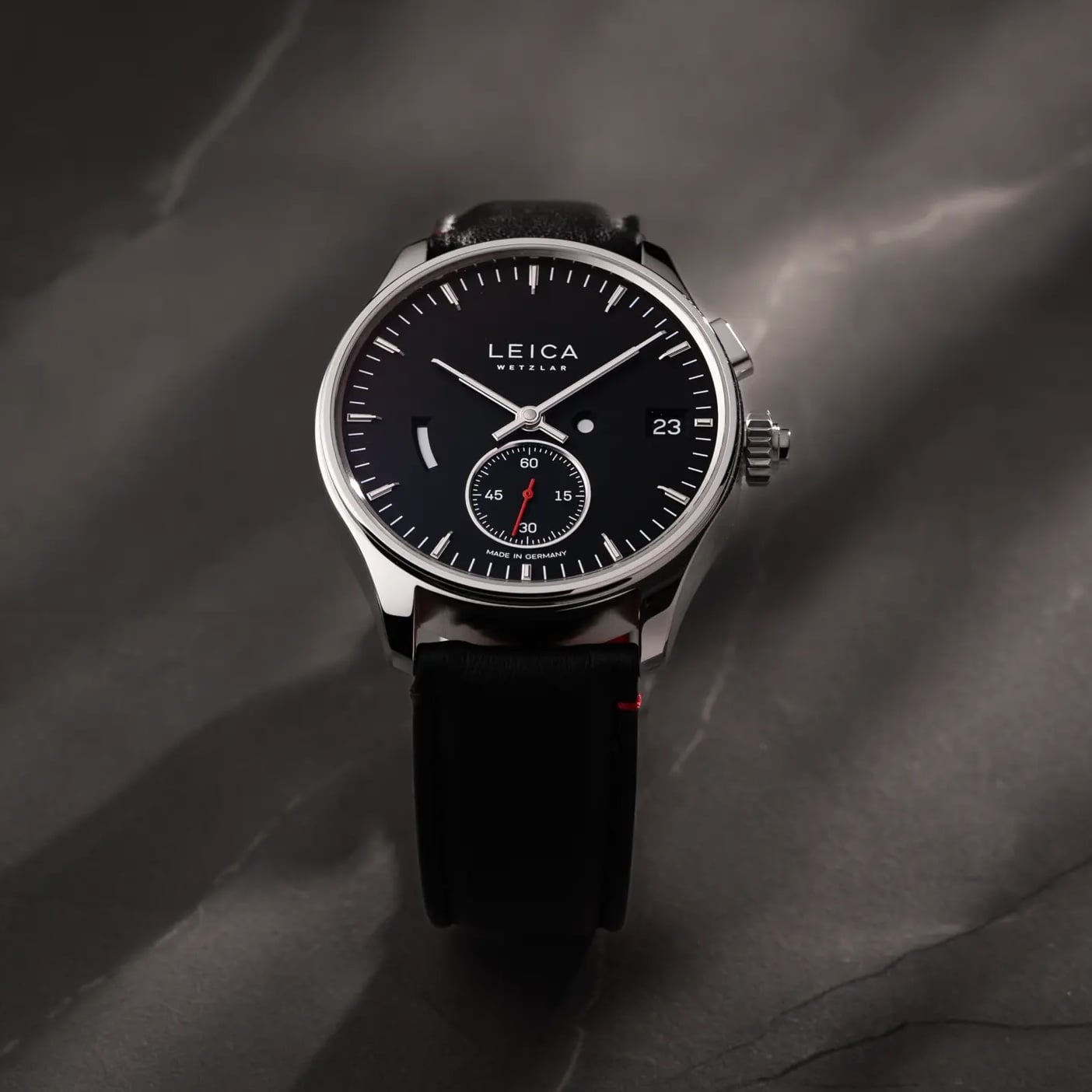
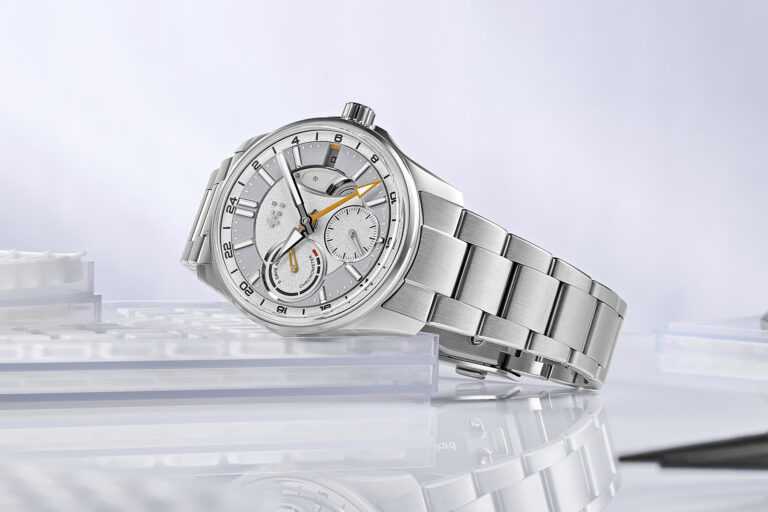
The references from Leica’s world of cameras are not an end in themselves; they make sense, they have functionality. This led us to introduce original functions. The crown has a function selector. First, you use it to wind the movement, and then, rather than being pulled out, it simply has to be pushed to reset the small seconds hand to zero. The small round status indicator then turns red. The result is a convenient and ultra-precise method of setting the correct time. The date is corrected with the pusher above the crown. The handwound movement also has a unique power reserve indicator, with closing blades that indicate remaining power. The ZM2 adds a GMT function with a day/night indication. So, this is German engineering design, things done differently and, specifically, practical.
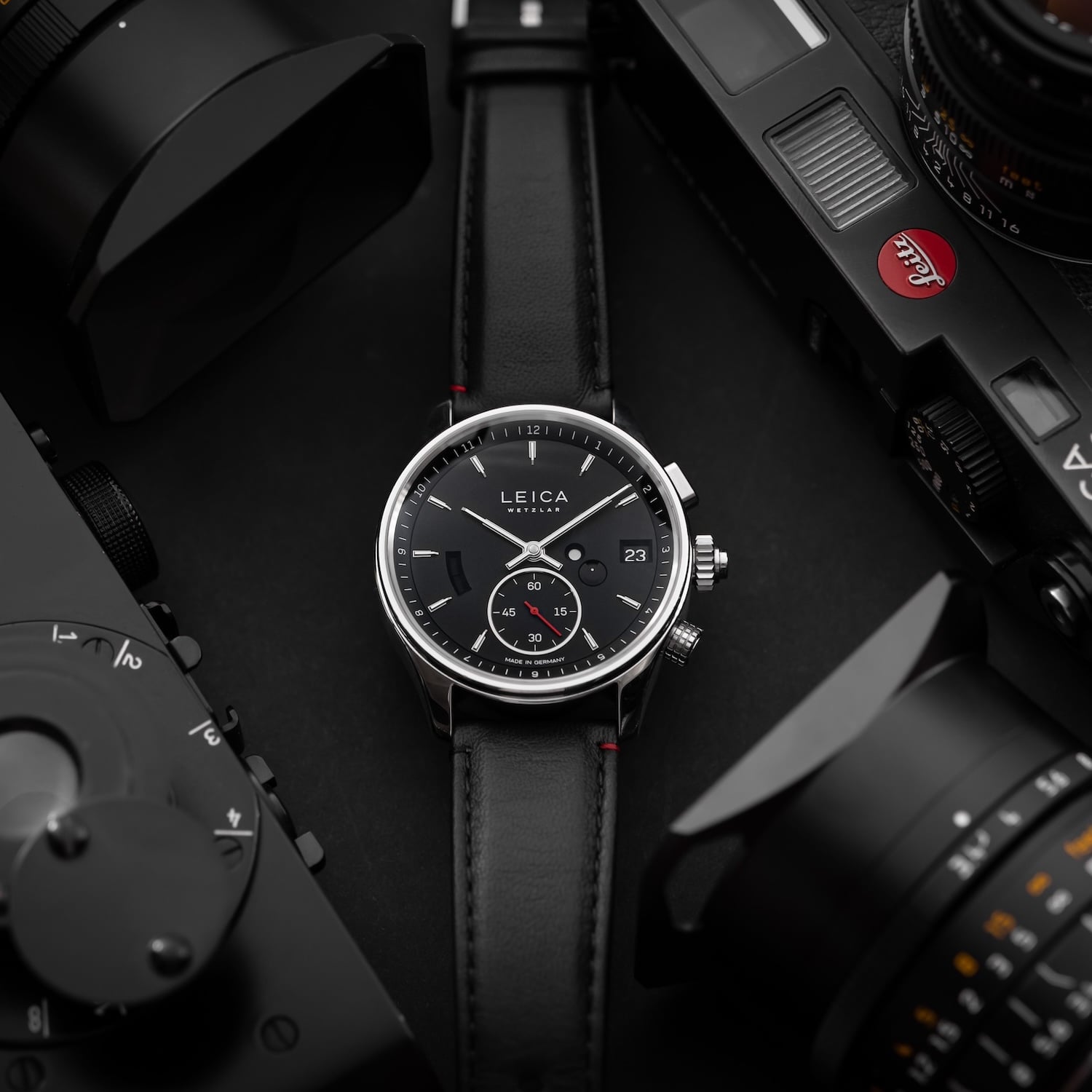
And then you released the ZM11 and ZM12, for which you worked with Chronode for the movement?
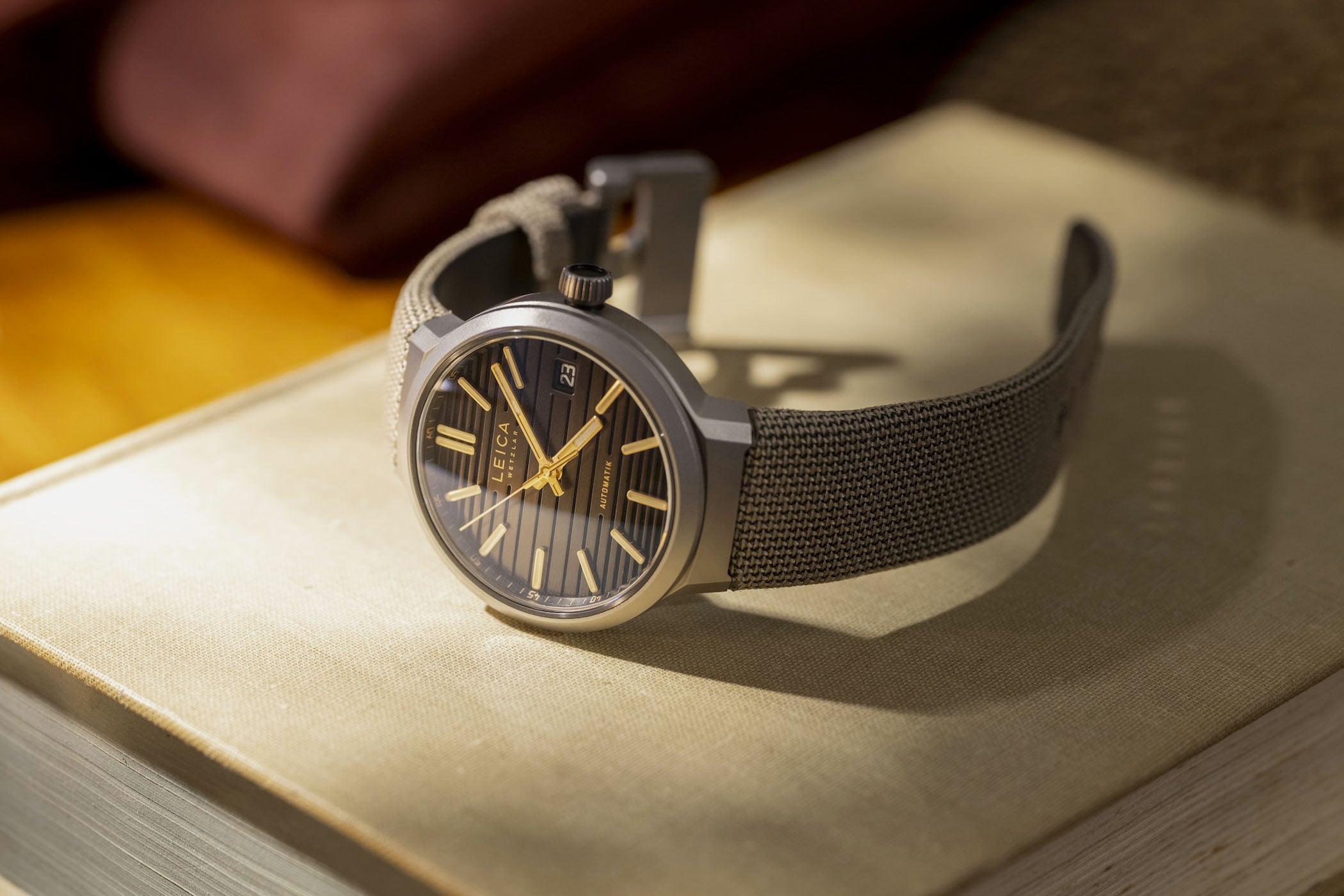
The ZM11 and ZM12 are typical Leica. They feature a unique dial with a subtle gradient effect. These are 41mm and 39mm, respectively. The ZM11 has a date and a central second movement; the ZM12 has no date and a small second counter at 6 o’clock. Their automatic movement is made with Chronode, the famed movement company of Jean-François Mojon in Switzerland. The watch also features a practical interchangeable strap system.
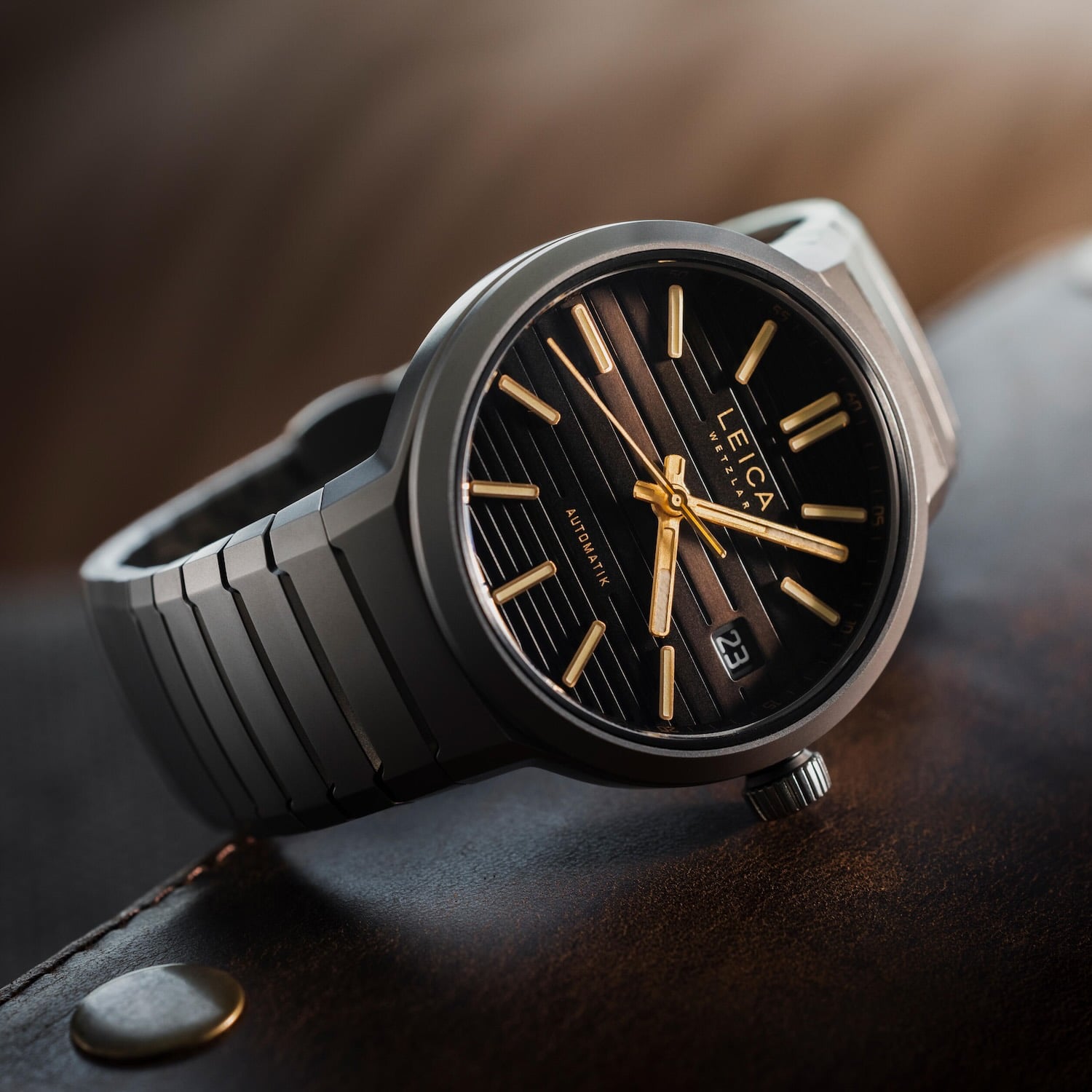

What about the distribution of the watches? How can enthusiasts purchase these?
These watches are sold through our retail network and through our online shop. But we are not making watches only for Leica fans or existing Leica customers, so we plan to expand distribution. We want to work with the right retailers.
What are the plans for the future with regard to products?
We will build on these two existing lines, but of course, we’ll come up with new products. We are currently working on new things. But in general, at Leica, we do not provide details about ongoing projects.

And rightfully so! All in all, what are the ambitions for Leica watches?
We want to be a respected, small-scale, high-end watch brand with German roots. We have time and a long-term vision.
For more details, please visit www.leica-camera.com.

3 responses
Leicas are fashion objects, rarely used by actual photographers nowadays. They are nice to use, with a very simple UI, they come at silly prices and they are not built for the eternity like their analogue ancestors. Their watches are even more grossly overpriced.
Leica has decided its future lies with the dilitante. Like Jaguar it has abandoned the base that made it great. A shame, but it is the elitist that will rule the direction of one of the most iconic optical and technological companies in the world.
As companies move upscale in pursuit of a new relevancy they usually fail to achieve it
By definition, luxury goods are meant to be more expensive than their strict material worth. That is because they offer something else that suits the taste or aspirations or certain people. From this perspective (and even if they are too pricey for me), I think Leica watches is an interesting and legitimate experience. Firstly, cameras and watches have a lot in common. They all rely on industrially produced, yet precise mechanisms, and they played a very important role in modern history. Secondly, the roots of the company are partly based in watchmaking. I was surprised to learn that the founder came from such background. Lastly, I like the way the current Leica company approaches watchmaking. By taking their time and not over abusing of their reputation in the camera world, they produced a clever movement with the ZM 1/2, and a fresh and modern design with the ZM 11/12. After such a great beginning, I expect great things to come. For example, I would love to see an evolution of the LH-10/20 movement in the newer case, which is more suited to explore the world with its smaller size and better water resistance.