


 Not all images were able to load for printing. Please close the print window and try again.
 The Montre École Souscription by Young Indie Duo Hazemann & Monnin
The promising duo has delivered not one but two highly personal editions of their Montre École.
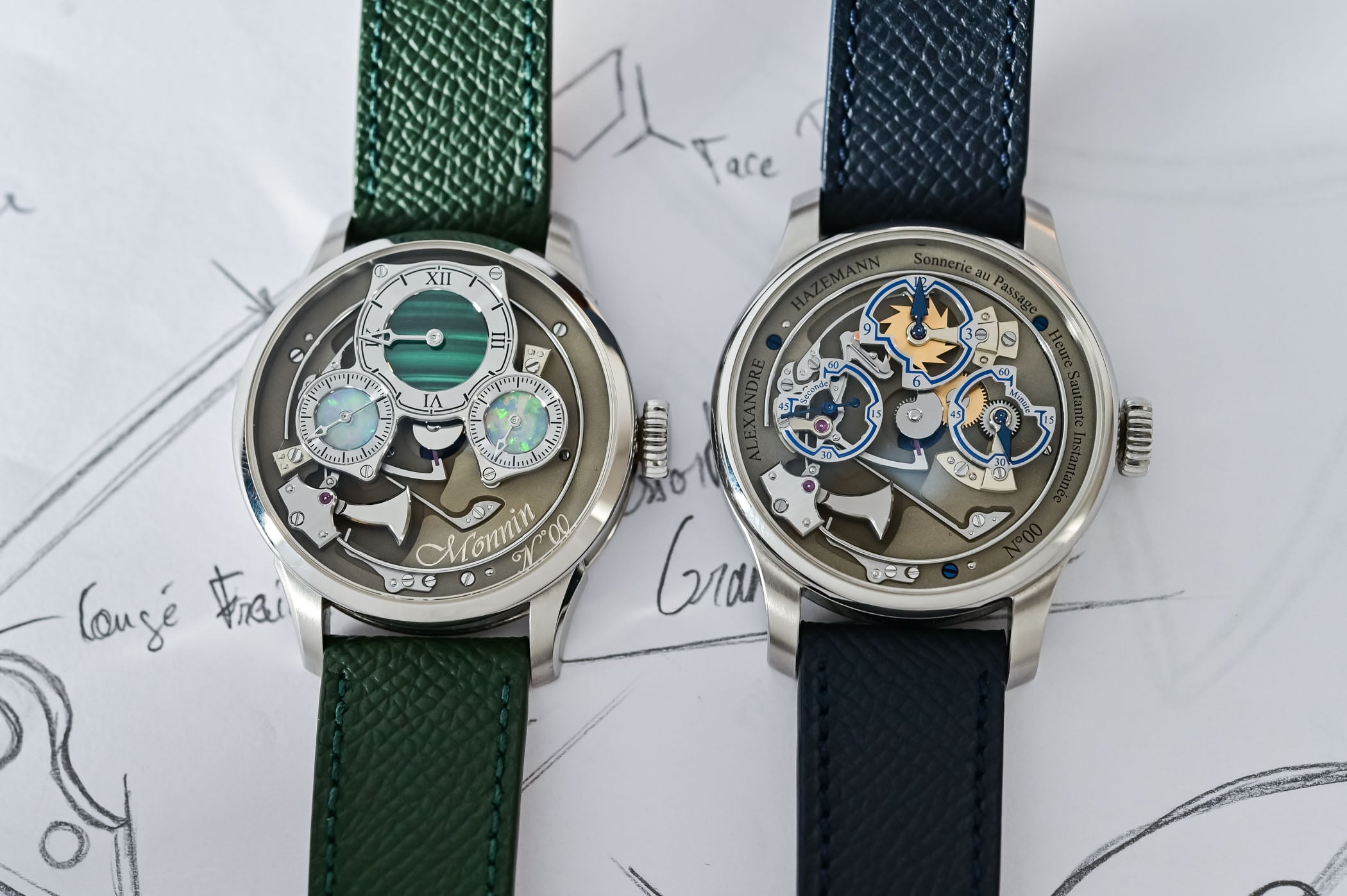
The Lycée Edgar Faure in Morteau has been nurturing an impressive wave of independent watchmakers, emerging with fresh visions and artisanal talent. In recent years, it has produced notable names such as Sylvain Pinaud, Théo Auffret, Rémy Cools, John-Mikaël Flaux, Cyril Brivet-Naudot, Thomas Aubert and Alexis Ramel-Sartori, and many others. Today, we turn our attention to a creation by another talented duo trained at this institution: Alexandre Hazemann and Victor Monnin. Their collaborative Montre École (school watch) project not only garnered acclaim but also laid the foundation for their own brand, Hazemann & Monnin, whose work has recently been further recognised with a nomination for the 2026 Louis Vuitton Watch Prize for Independent Creatives.
The start of the adventure for the young duo
As mentioned in the introduction of this article, the Montre École (school watch in French) of Alexandre Hazemann and Victor Monnin laid the foundation of their brand. Just like another duo we covered recently on MONOCHROME, Aubert & Ramel, the F.P. Journe Young Talent award was instrumental in putting these young watchmakers in the spotlight and provided the extra push that inspired them to start their business, establishing their workshop in Switzerland, in Saint-Aubin on the shore of the Neuchatel lake.
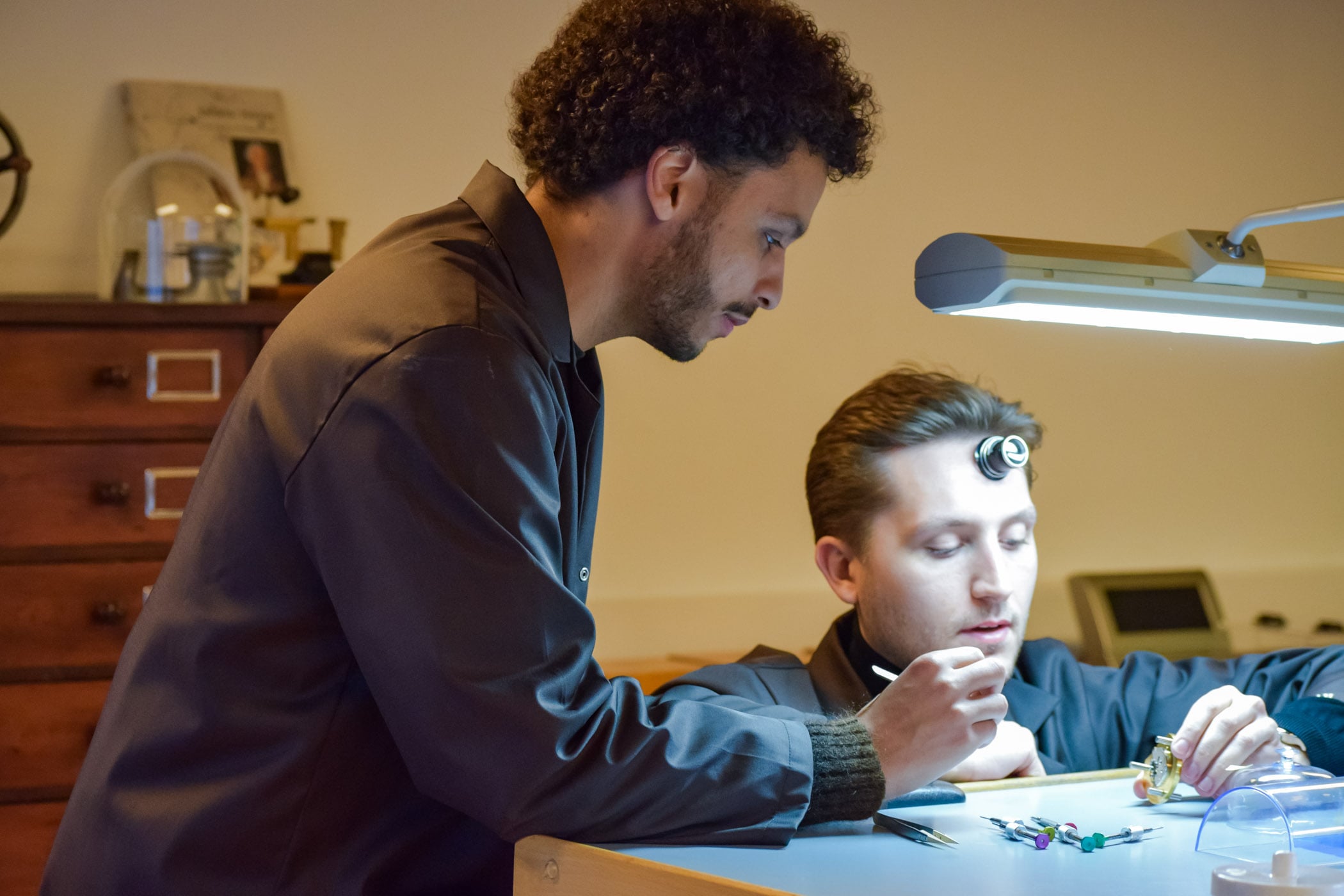
In just a few months, a team of now 15 people has been brought together, developing and crafting Haute Horlogerie watches the traditional way. These watches are manufactured almost entirely in-house, using a combination of traditional tools and a few CNC machines to produce most parts of their movements, dials, and hands. Some notable exceptions include the hairsprings, made with Atokalpa, as well as the mainsprings, cases, and buckles. Their watches are crafted in the traditional manner but with a young, modern eye, displaying obsessive attention to detail and with every decoration executed in-house to a remarkable level.
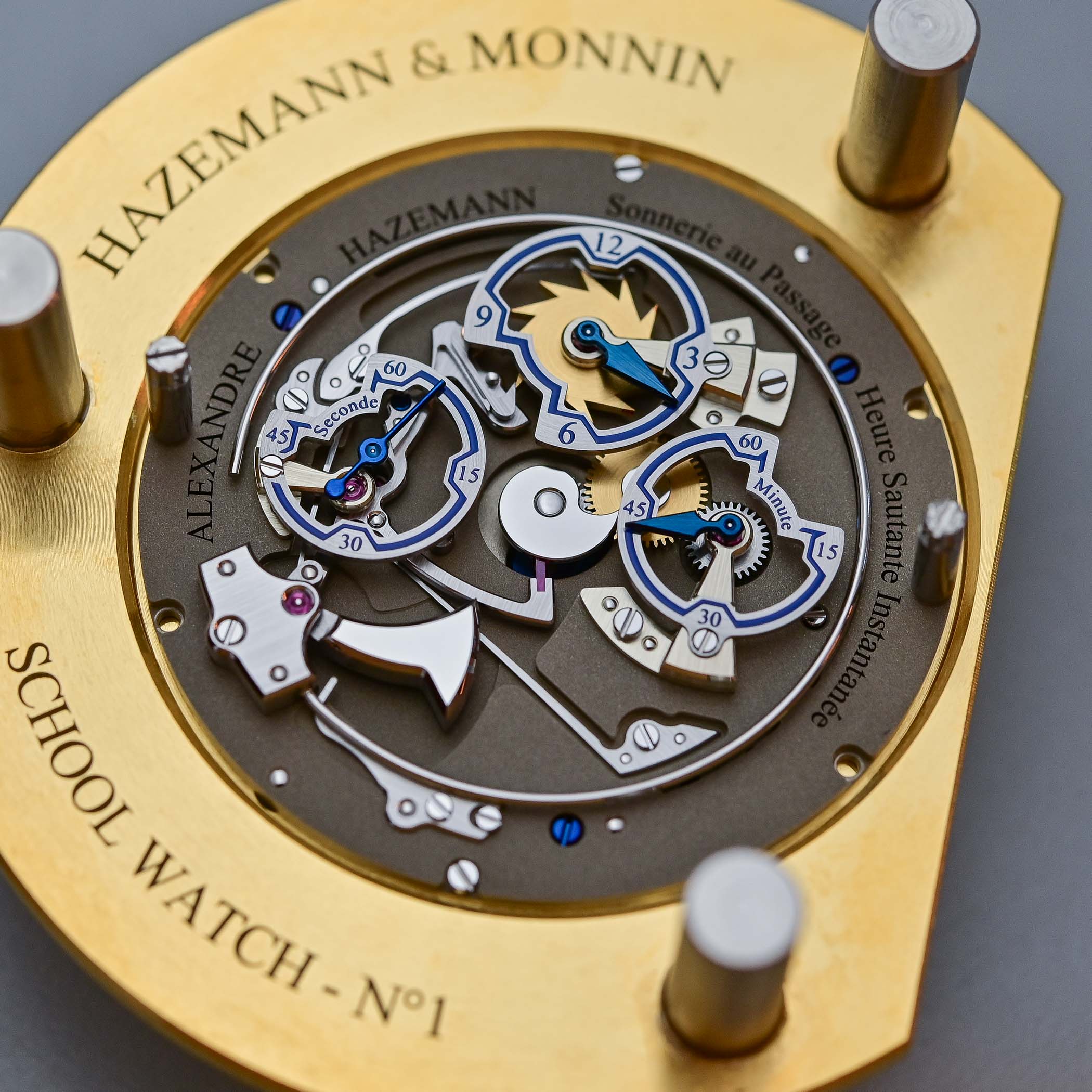
The Montre École Souscription
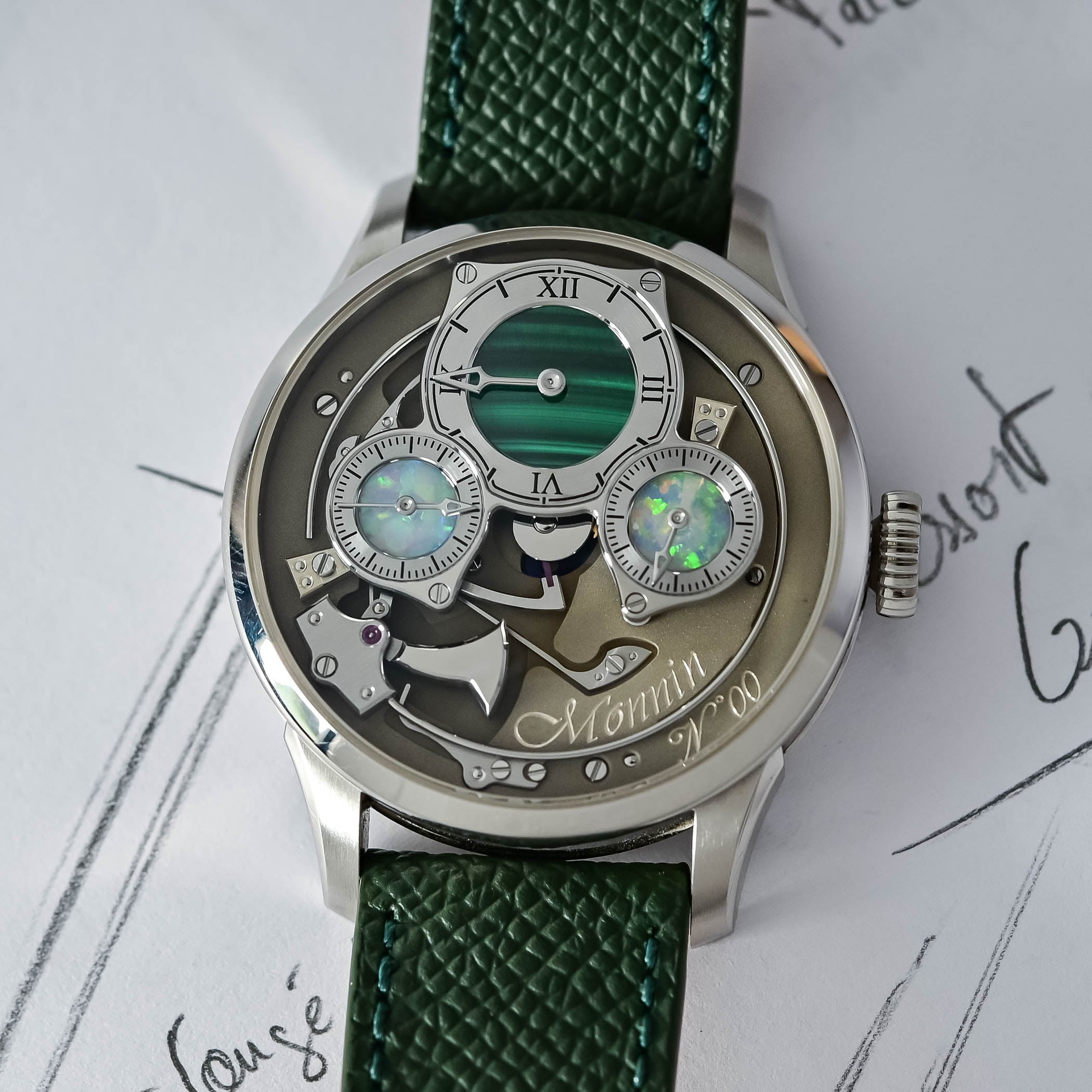
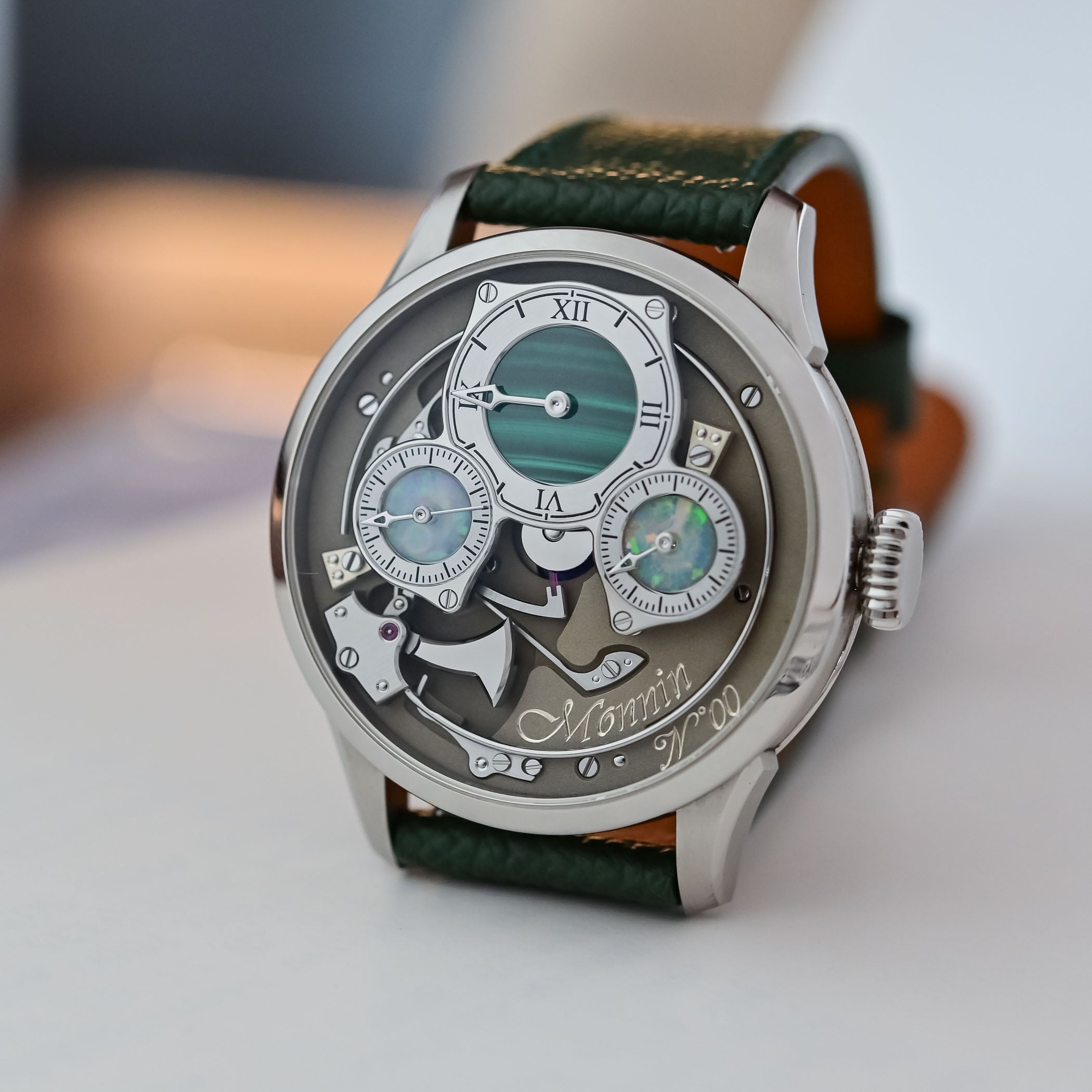
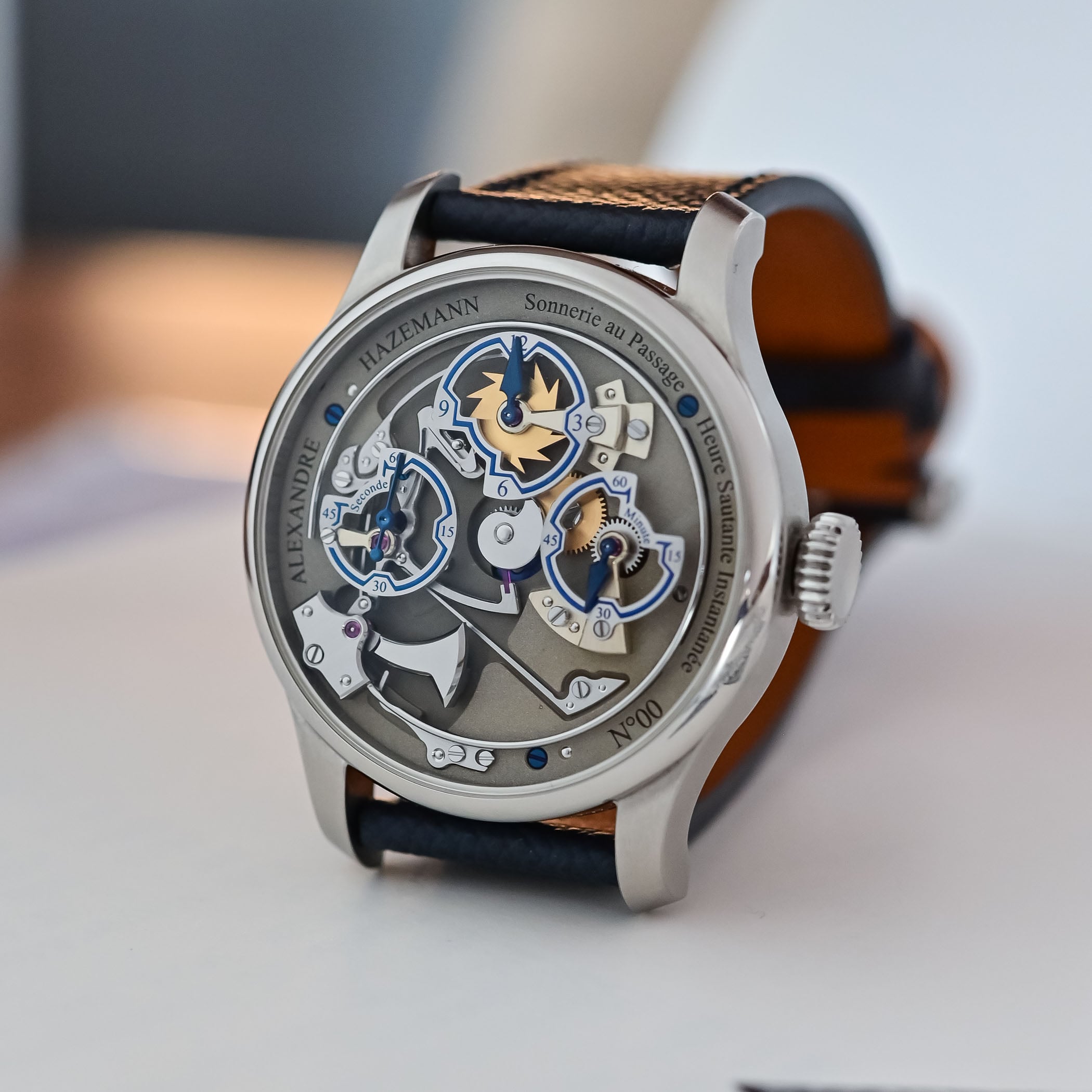
The now-commercialised Montre École Souscription by Hazemann & Monnin is inspired by their school watch, which we had discovered a few years ago in this interview by Robin, but also adds several important upgrades, making them even more appealing. It combines a regulator-like, dissociated display of the hours, minutes and seconds with two complications working in harmony: an instantaneous jumping hour and an hour-strike au passage alerting the wearer of the passing time without having to look at the dial. Its openwork design creates a striking visual display while offering a captivating orchestration of sound and movement.
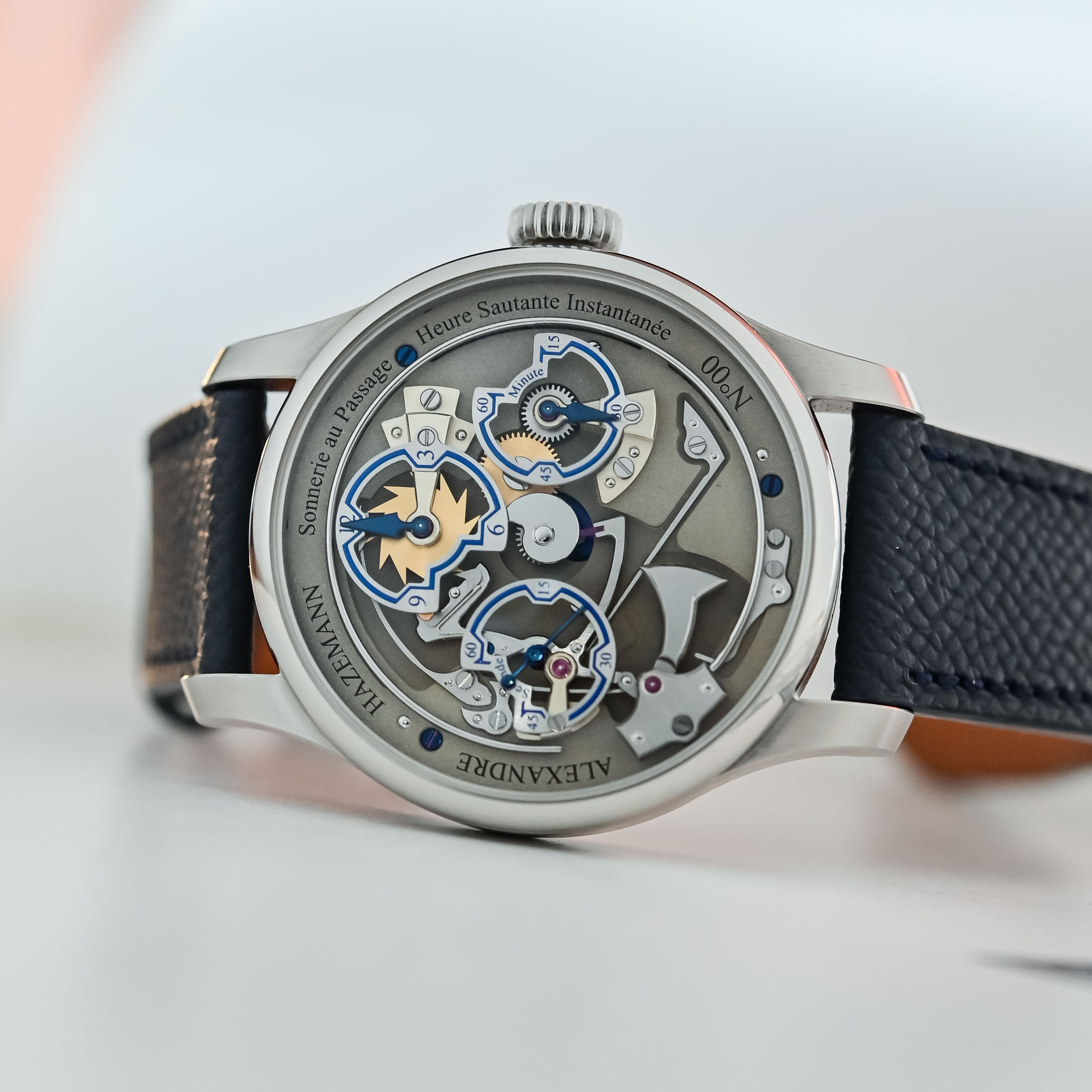
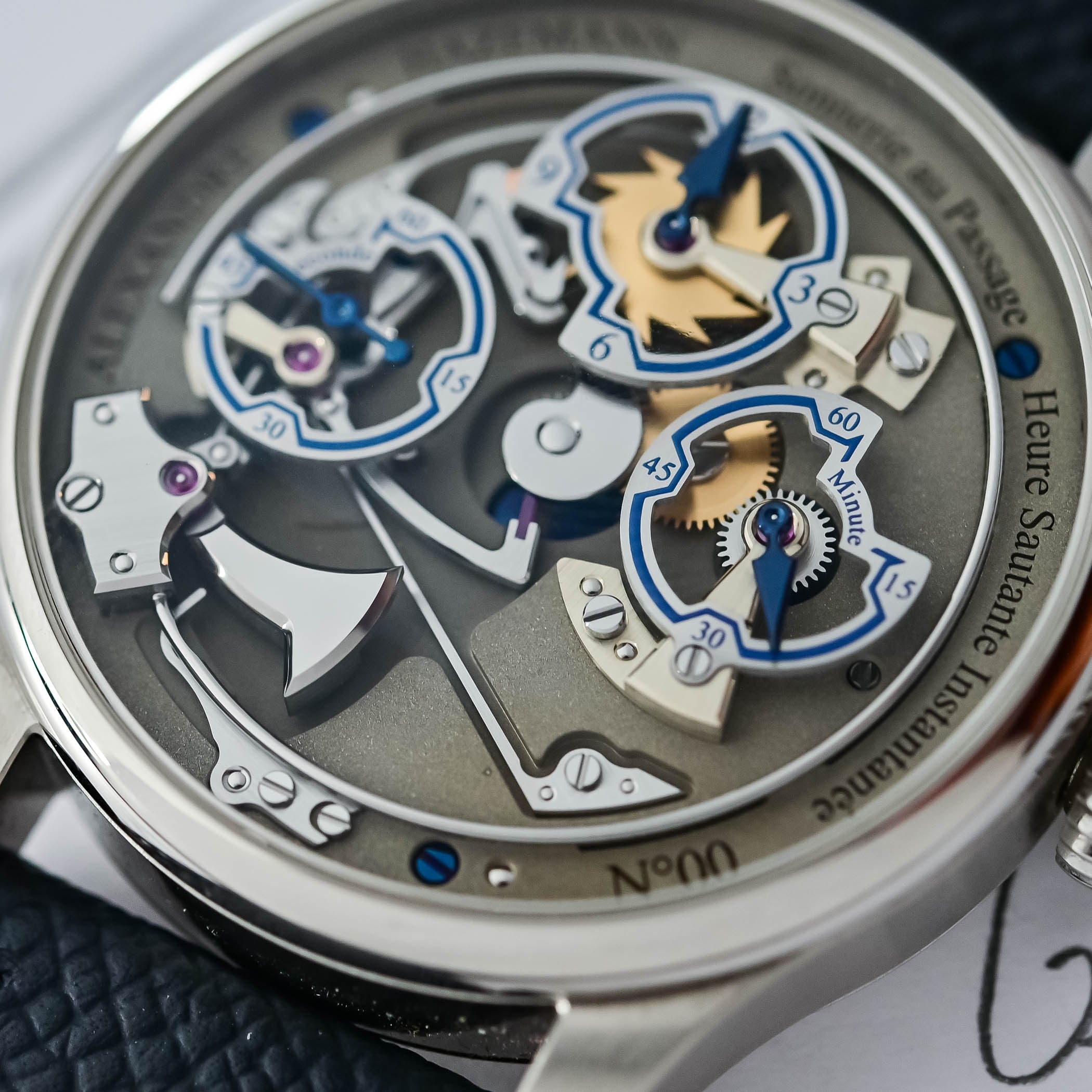
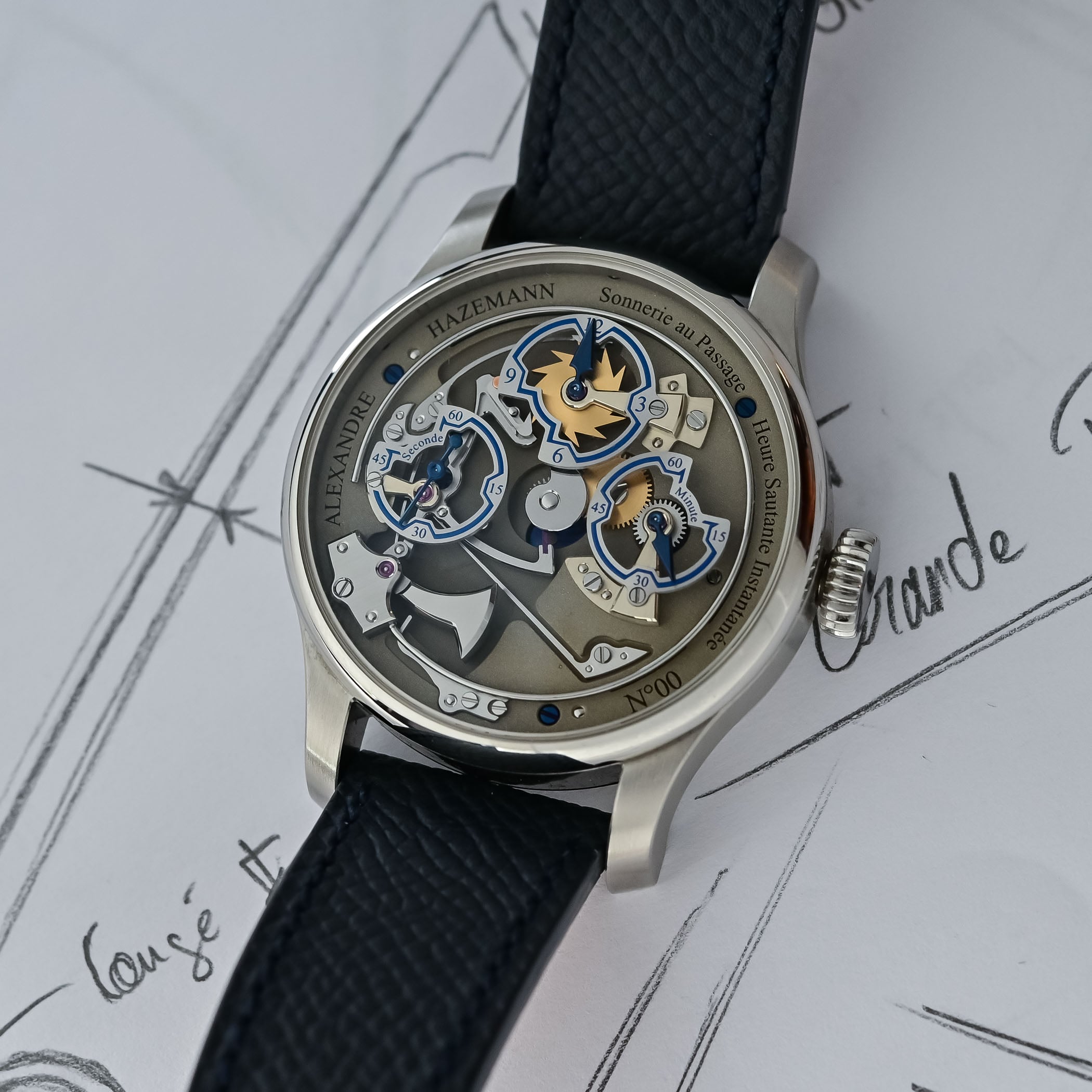
Indeed, the mechanism driving these is fully visible dial side (particularly for the technical/skeletonised Hazemann version). Both the jumping hour and an hour-strike au passage are driven by the snail cam at the centre of the movement. This cam accumulates energy over an hour. As this feeler of the grande bascule lever resting against its surface falls, one of its arms drives the hour jump, advancing the 12-tooth wheel at 12 o’clock. Simultaneously, another arm lifts the hammer to strike the hour on the gong in synchrony. The snail feeler of the grande bascule lever has a ruby tip to reduce friction and wear while improving precision.
One of the challenges was then to obtain the right chime with a variety of factors coming into play: the strength of the strike, the angle, the shape of the hammer and naturally the shape, length and material for the gong. For the latter, Hazemann and Monnin adjust it by carefully removing material with a file while listening to the sound it produces, using their ear to fine-tune the pitch, resonance, and clarity of the note.
High-end decoration & in-house calibre
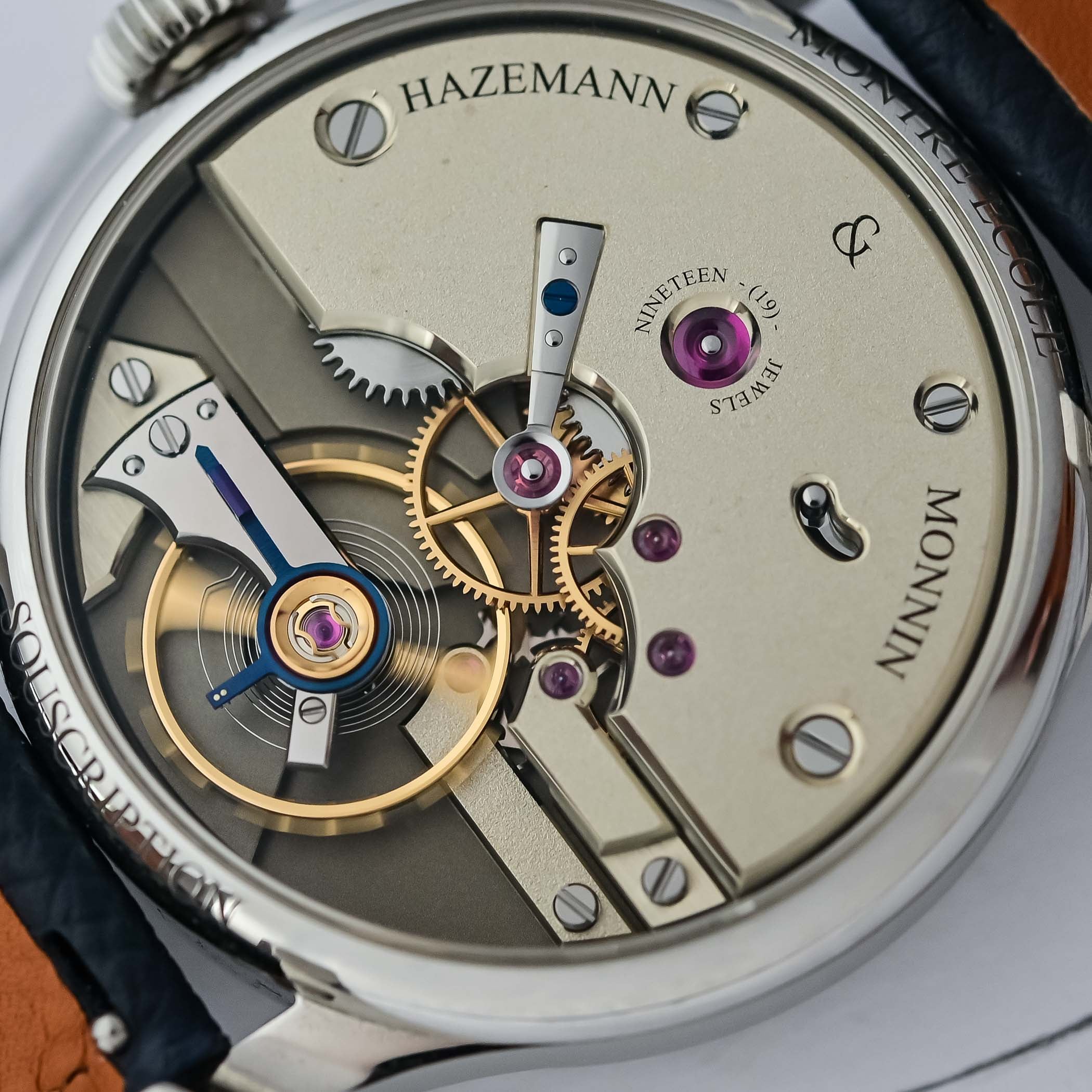
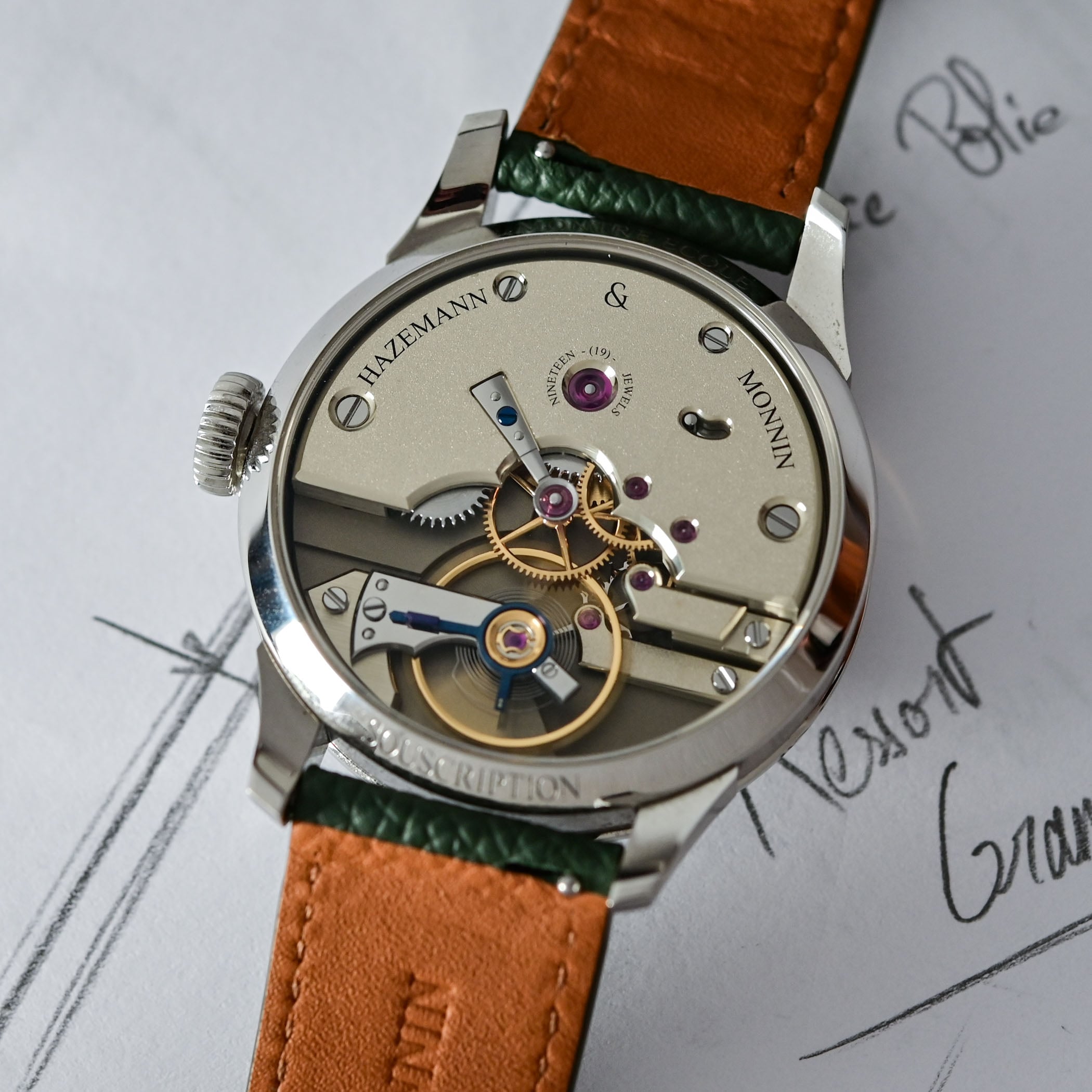
Turning the watch over, the transparent caseback allows you to discover the other side of the handwound calibre HM01. If their actual school watch was derived on a LJP 6900 base, this new calibre has been entirely designed in-house. Everything has been reengineered, and the “production” movement and the watch are now smaller. Its elegant architecture relies on an aligned barrel, a centre wheel, and balance along the vertical axis and is built across distinct planes. The idea was to create a sense of depth just as for the front of the watch. The large 13mm variable inertia balance beats at 18,000 vibrations/hour. The HM01 calibre comes with a 50-hour power reserve.
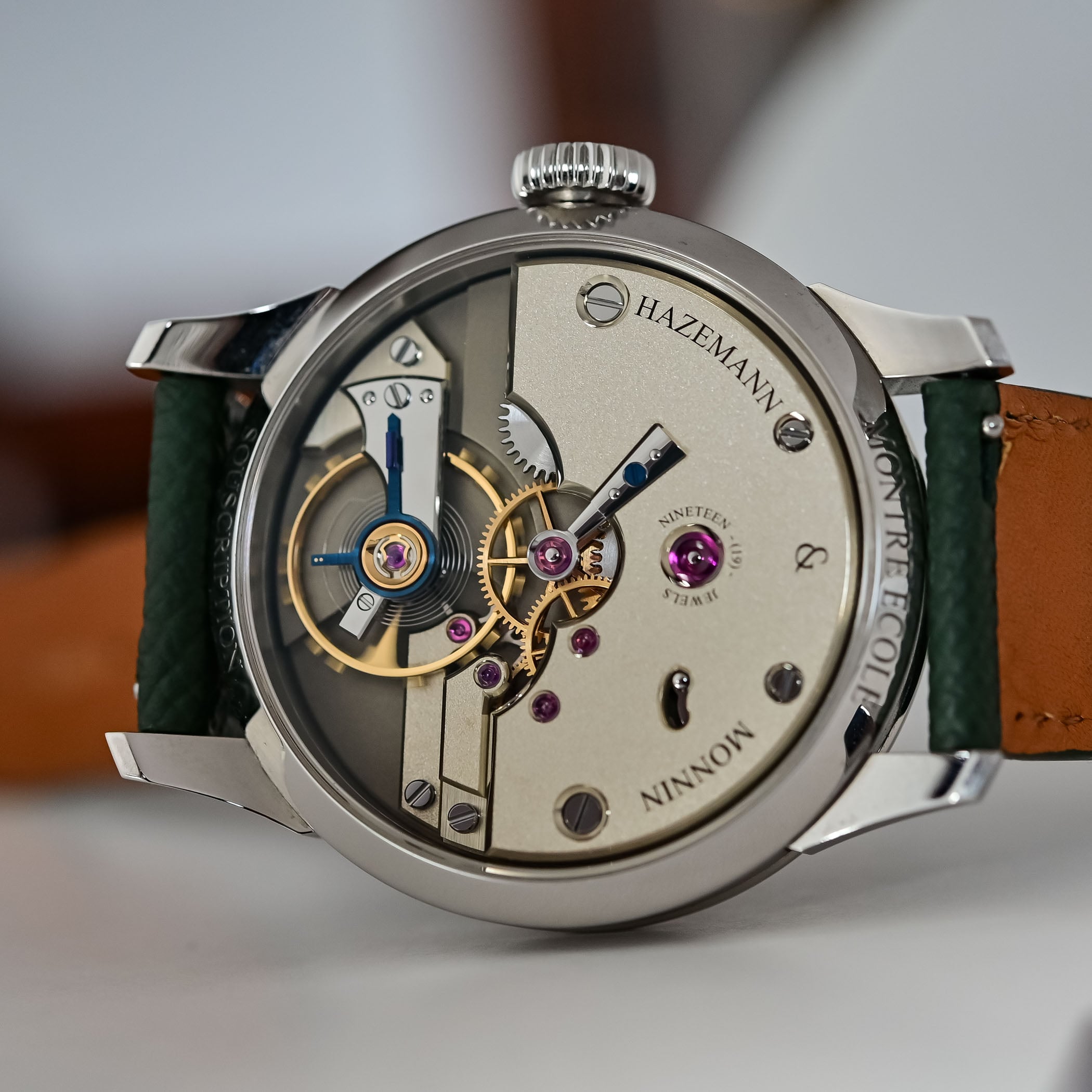
The bridges and main plate are crafted from German silver and finely frosted by hand using small silicon balls. Their sides feature a wide, elegant chamfer (about 0.6mm). The large ruby of the mainspring bridge is another nice detail. The balance bridge and the small bridge securing the centre wheel stand out, being made of steel and finished with black polishing.
Two editions, the Hazemann and the Monnin
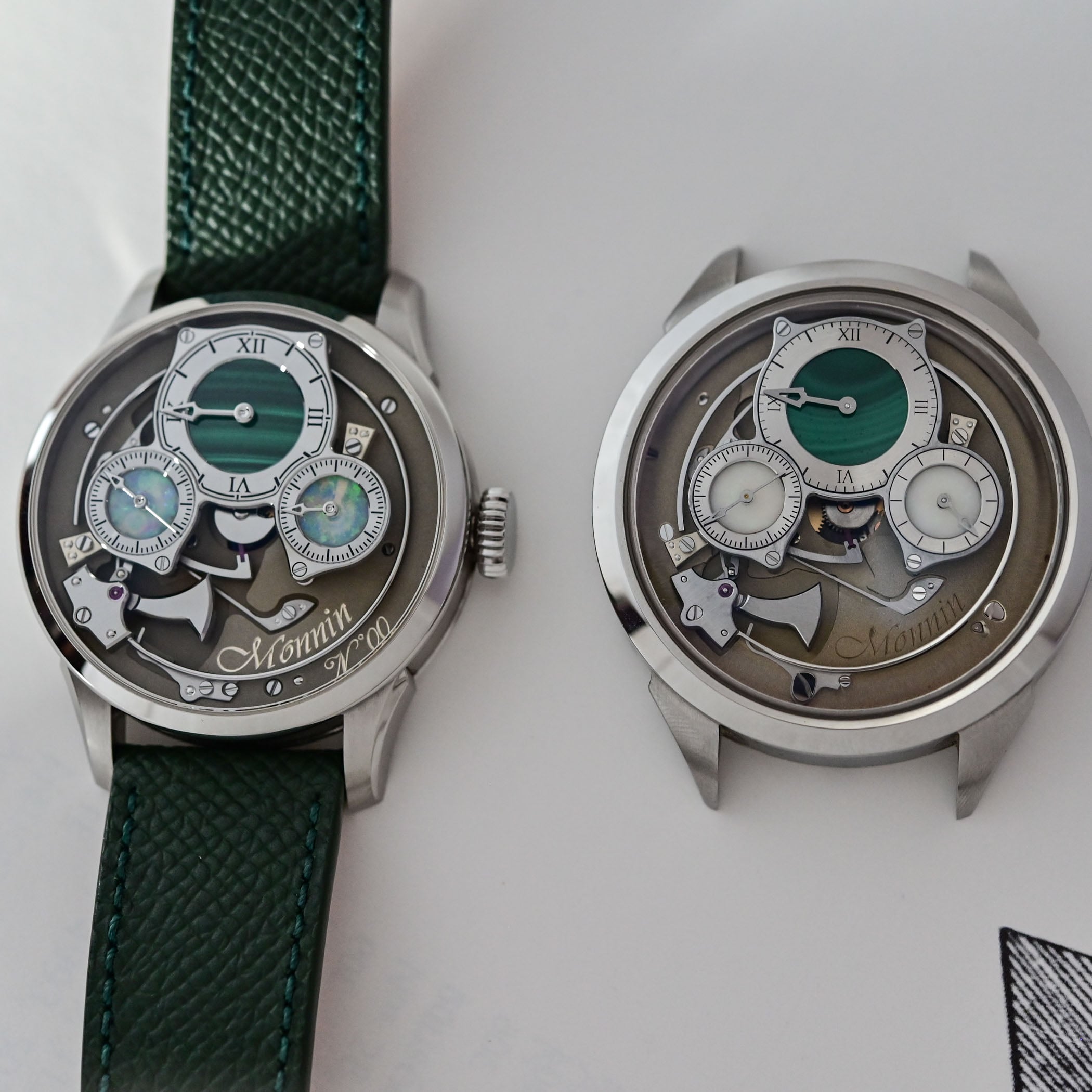
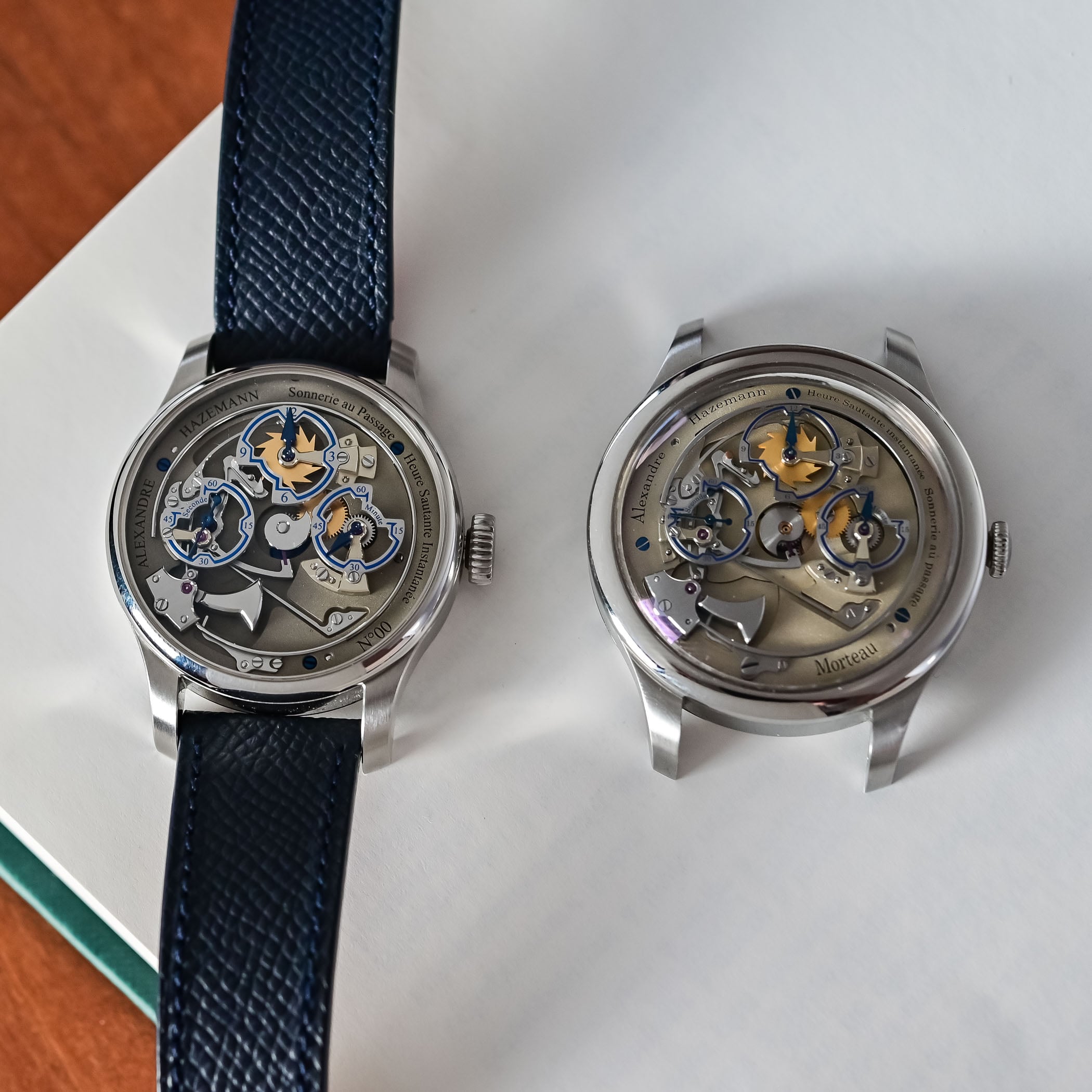
The watch comes in two different versions (just like their original school watches), and they are released in a limited edition of just 10 pieces each. The blue one is the technical expression and bears the name of Alexandre Hazemann at the front, while the other is more artistic with its malachite and opal sub-dials and is called after Victor Monnin.

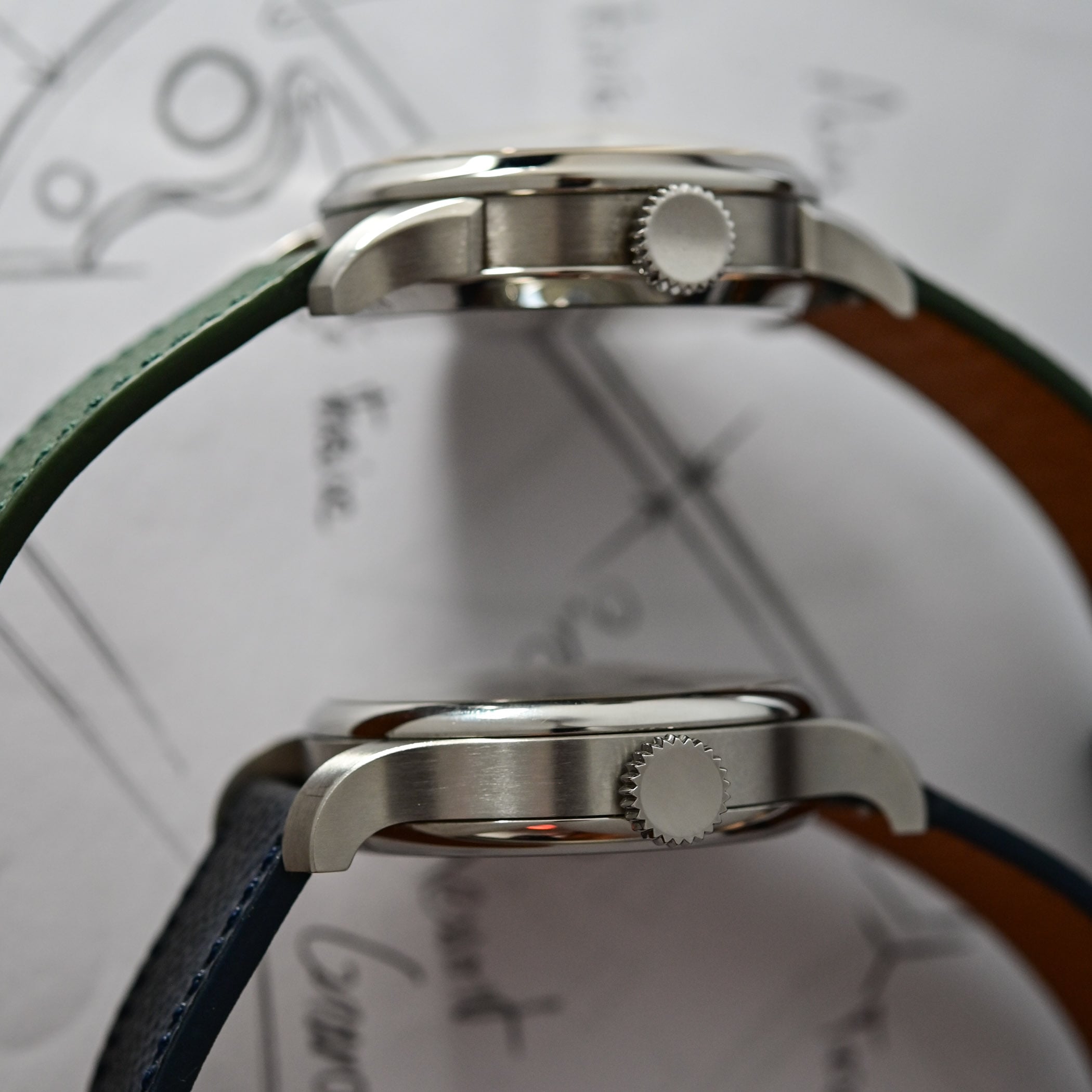
The Hazemann & Monnin Montre École Souscription comes in a no-nonsense steel round case with classic proportions, clean lines and a balanced design that conveys understated elegance. As said, it is smaller than the original school watch, and it measures 39.5mm x 10.9mm. There are actually two different cases with distinct profiles. The technical Hazemann version has a monobloc construction for the case middle, while the artistic Monnin version has soldered lugs.
These two first editions retail for CHF 59,000. These are already sold out and delivered. A new variation on the concept is scheduled for unveiling in 2026, while a new complication housed in a new case will be unveiled in 2027. We can’t wait to see what the duo is cooking up to see whether their work lives up to the superb promise of their first opus.
For more details, please visit www.hazemann-monnin.ch.


1 response
the watch doesnt deserve that price