


 Not all images were able to load for printing. Please close the print window and try again.
 Experiencing the Moritz Grossmann Perpetual Calendar
The brand's most complicated watch is a classic of Glashütte’s watchmaking, with great substance.
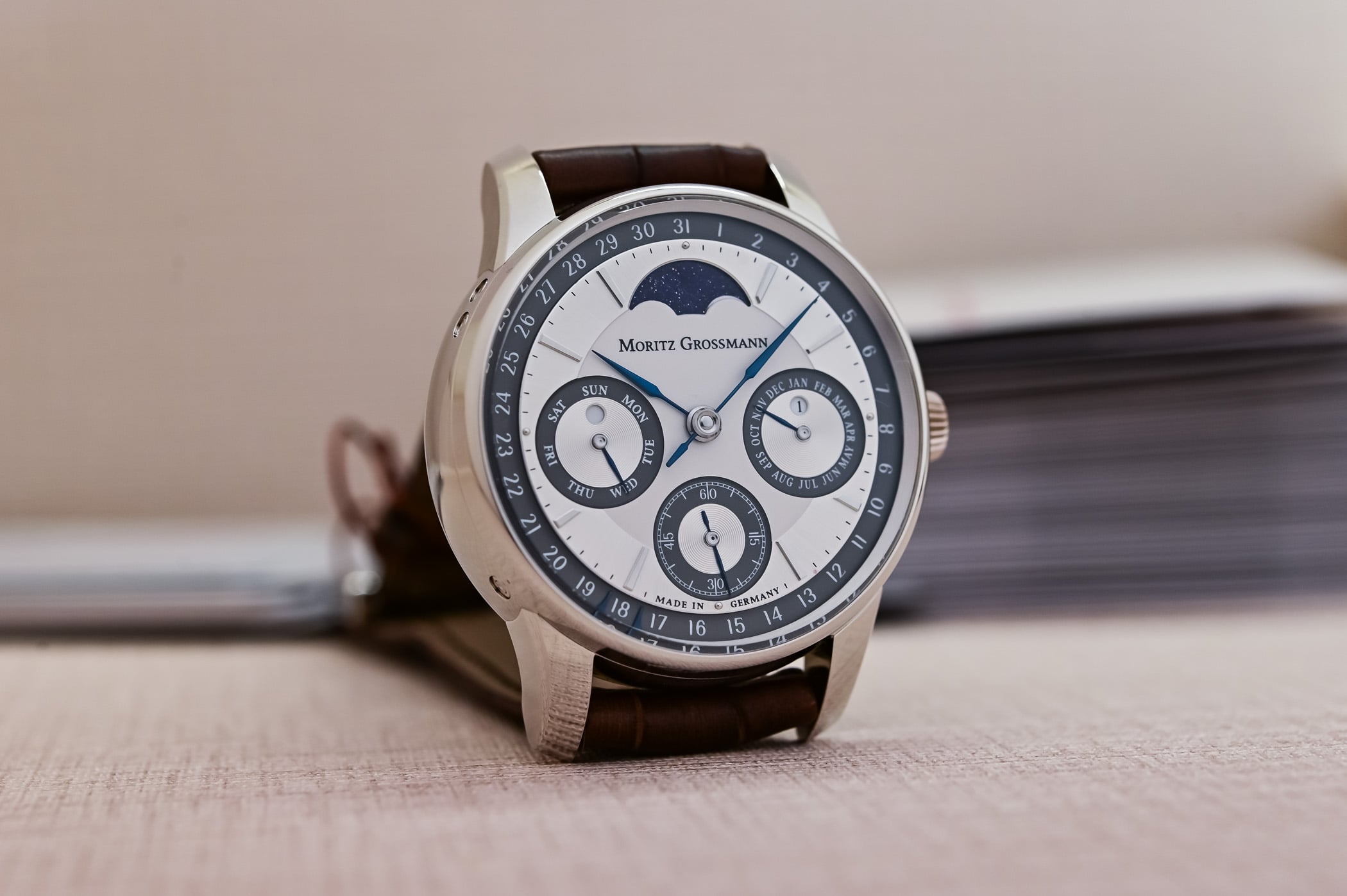
Forgive the lyrical tone, but to encounter a Moritz Grossmann watch is to feel time transformed into form and substance. These are timepieces that are great to look at and study in detail with a loupe, but also wonderful to experience through touch, balance, and inner rhythm. Since Christine Hutter revived the storied name in 2008, the Glashütte-based manufacture has steadily crafted watches with fine classical restraint and a nearly poetic precision. Towards the end of 2025, for its 17th anniversary, Moritz Grossmann unveiled the Perpetual Calendar, its most complex creation (well, next to the tourbillon), a watch that blends enduring mechanics and sensual design.
The Case
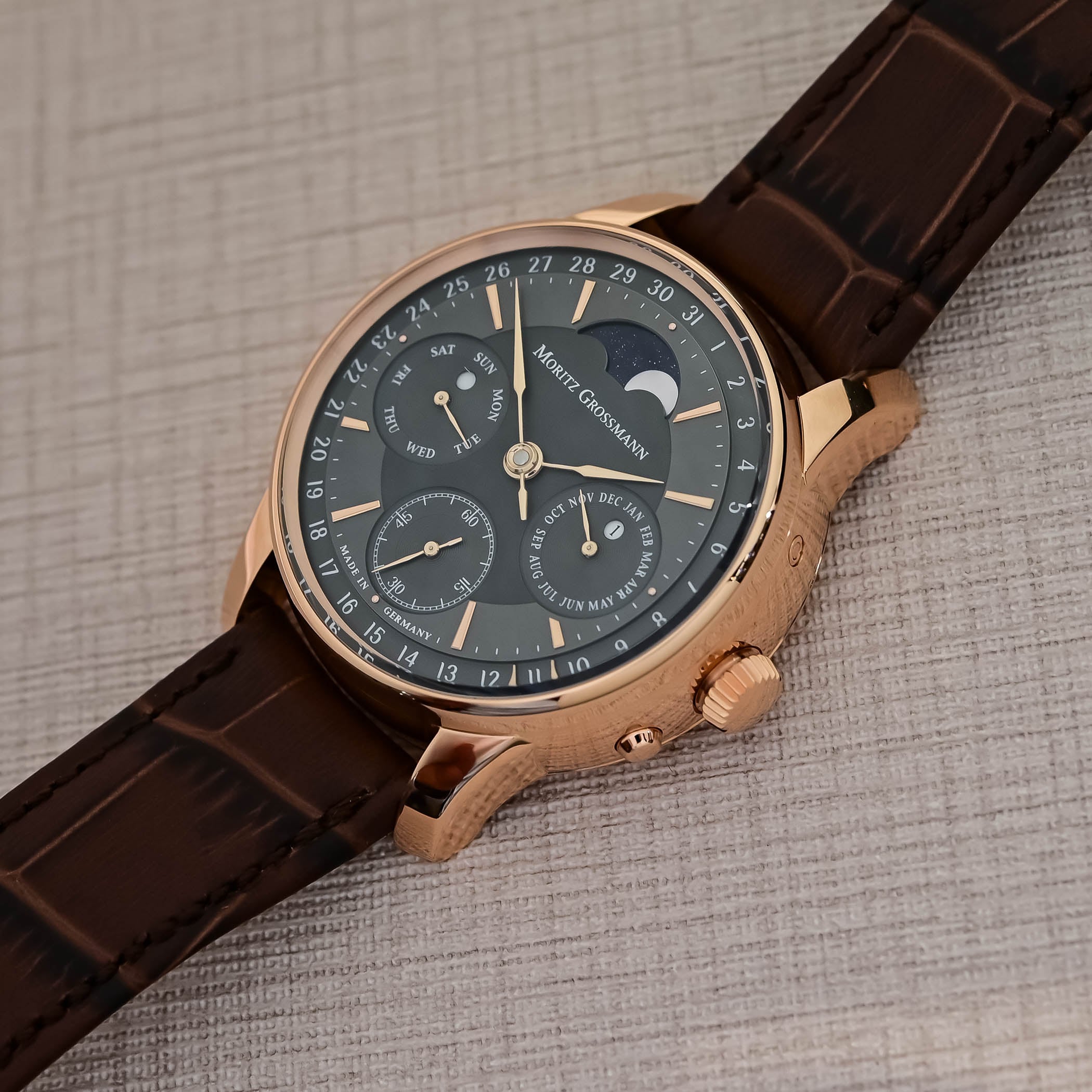
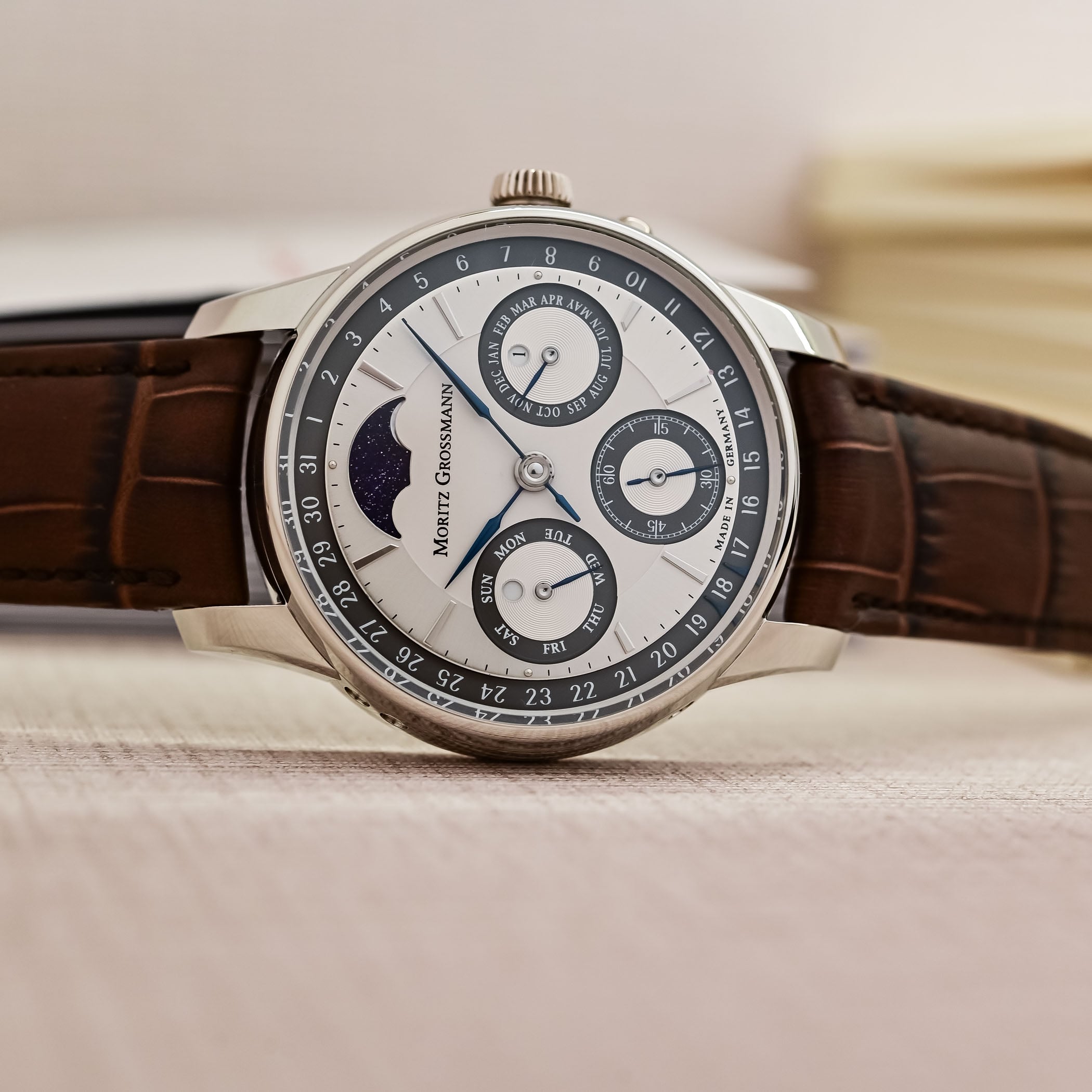
When in the hand, the watch feels as if generations of wear had smoothed it. On the wrist, at 41mm in diameter and 13.9mm thick, it is substantial but proportioned. Yes, it could be thinner, but these measurements are also, somehow, a hallmark of the brand. The rose gold models are surprisingly warm to the touch (did I imagine that?), while the platinum edition is cooler, denser, and heavier, a presence you feel immediately. The winding crown is fluted for grip. A little pusher at 4 o’clock is part of Grossmann’s winder system that protects the movement from dust and shock when the crown is pulled. The correctors, recessed into the caseband (to set the date, day, month, and moon, and a sum corrector for the date that makes all other indications follow), respond to action with soft, deliberate clicks.
The Dial
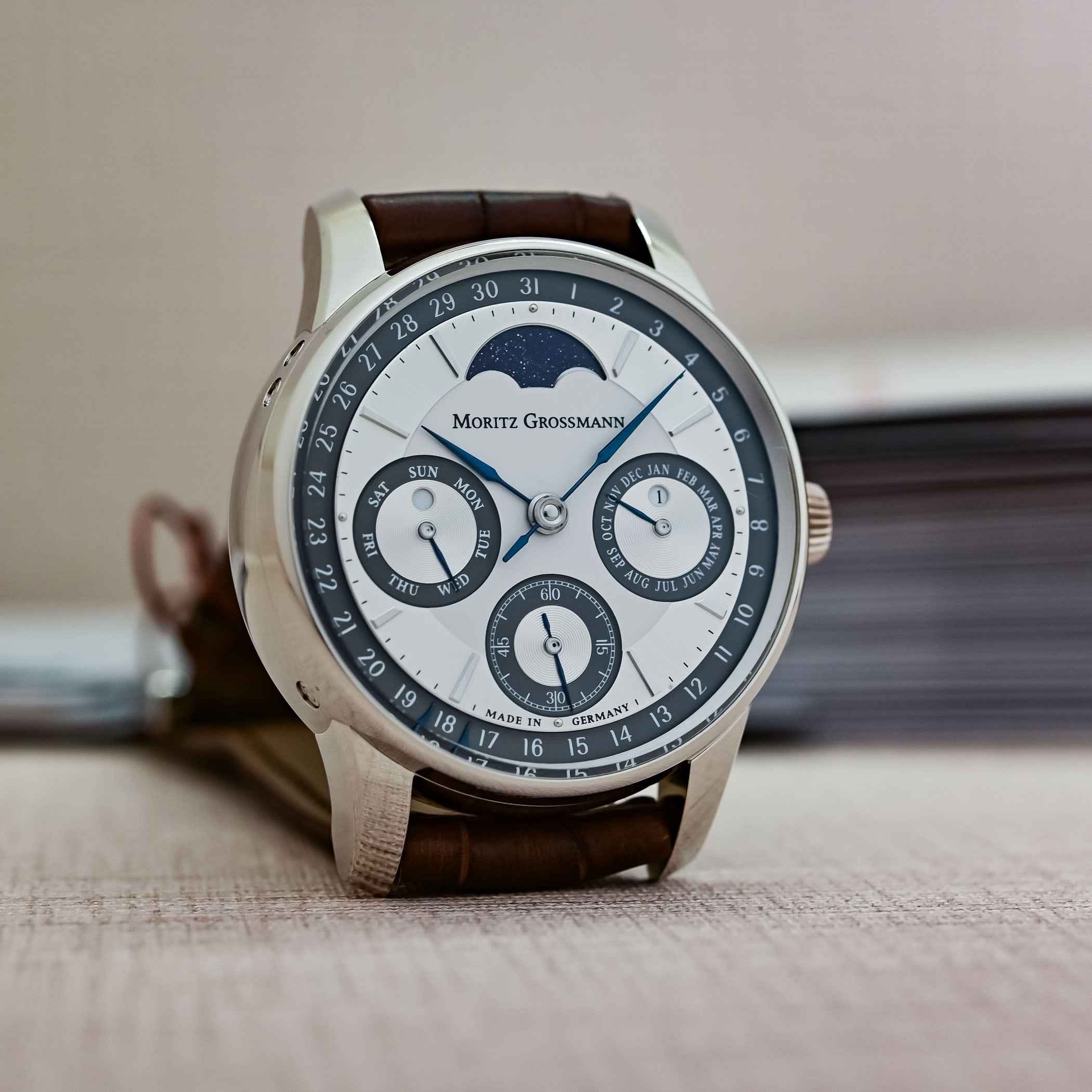
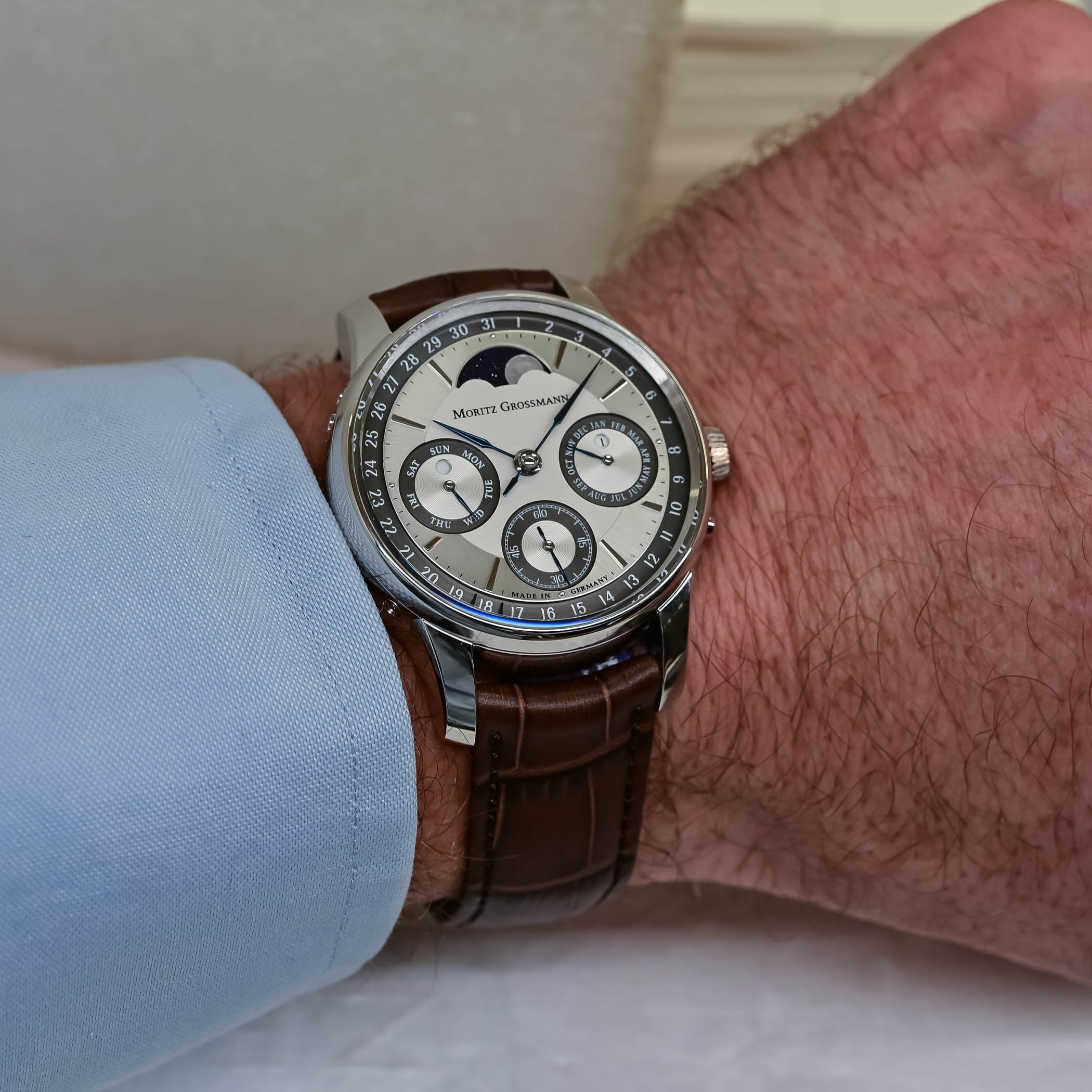
Each version of the Perpetual Calendar pairs its metal with a distinctive dial, three variations that translate the same build into different moods. The rose gold with an argenté dial looks and feels classical and luminous, the soft silver-white tone echoing early Glashütte pocket watches. The rose gold with an anthracite dial introduces a more introspective tone, the darker hue giving the watch a solid contemporary gravity. The platinum with a silver and anthracite dial (personal favourite) feels intellectual, serene, and cosmic, if you allow it, with blued-steel hands cutting gracefully through the two-tone surface.
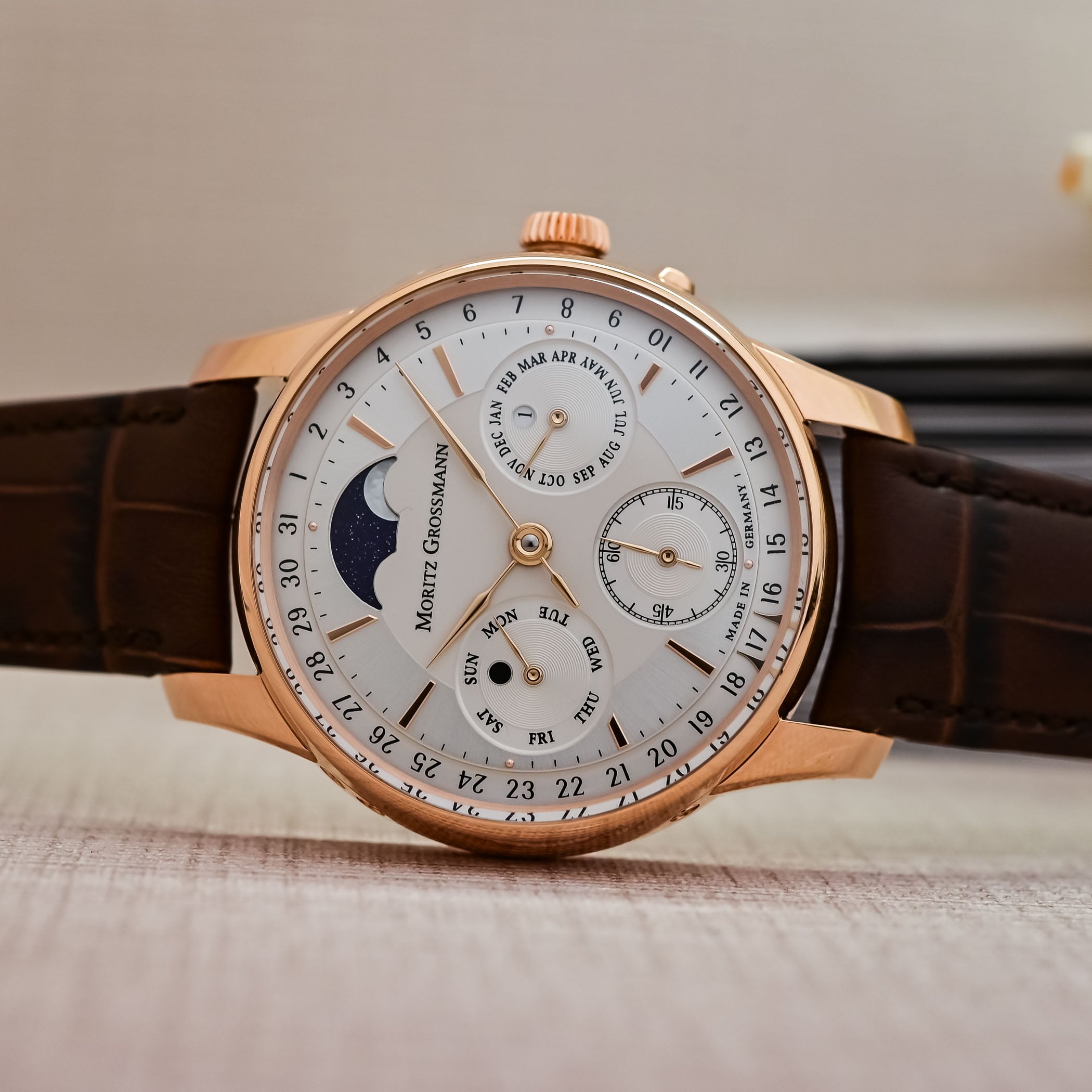
The dial is a composition of circles and textures. Around the perimeter, a ring bears the full date scale from 1 to 31, indicated not by a hand but by a small, cup-shaped frame that encircles the correct date, making the passage of days almost exciting to watch.
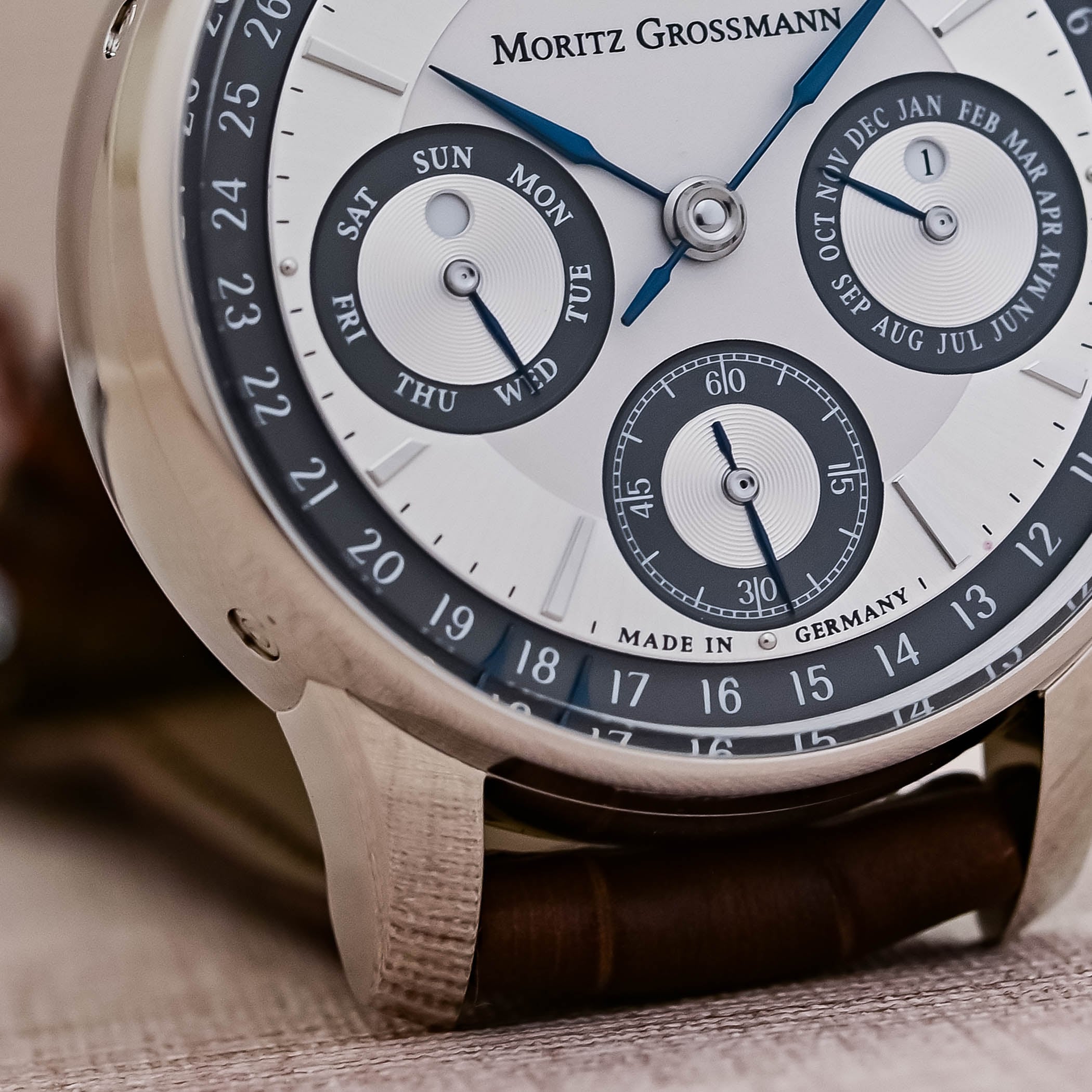
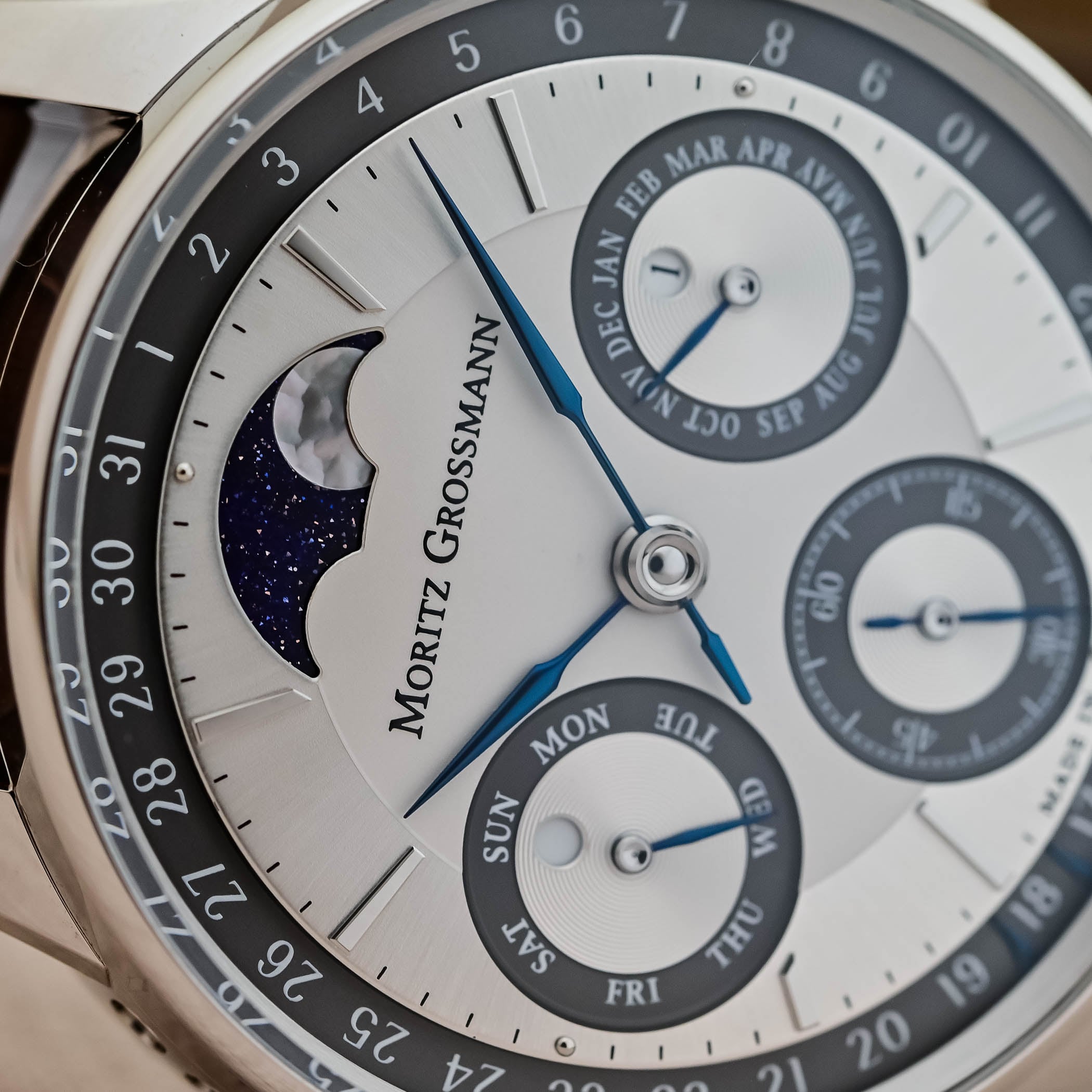
Two smaller sub-dials, the day of the week at 9 o’clock and the month at 3 o’clock, are decorated with azurage grooves. At the top of each, a tiny round window offers quiet revelations: one displays the leap-year cycle, the other is a day-night indicator. At six o’clock, the small seconds subdial brings life to the otherwise nearly motionless image. At twelve o’clock lies the watch’s enchanting feature, a moon phase display, with a mother-of-pearl moon and a dark blue goldstone sky; the goldstone’s surface glitters with copper crystals, not too bright, but softly.
The Movement
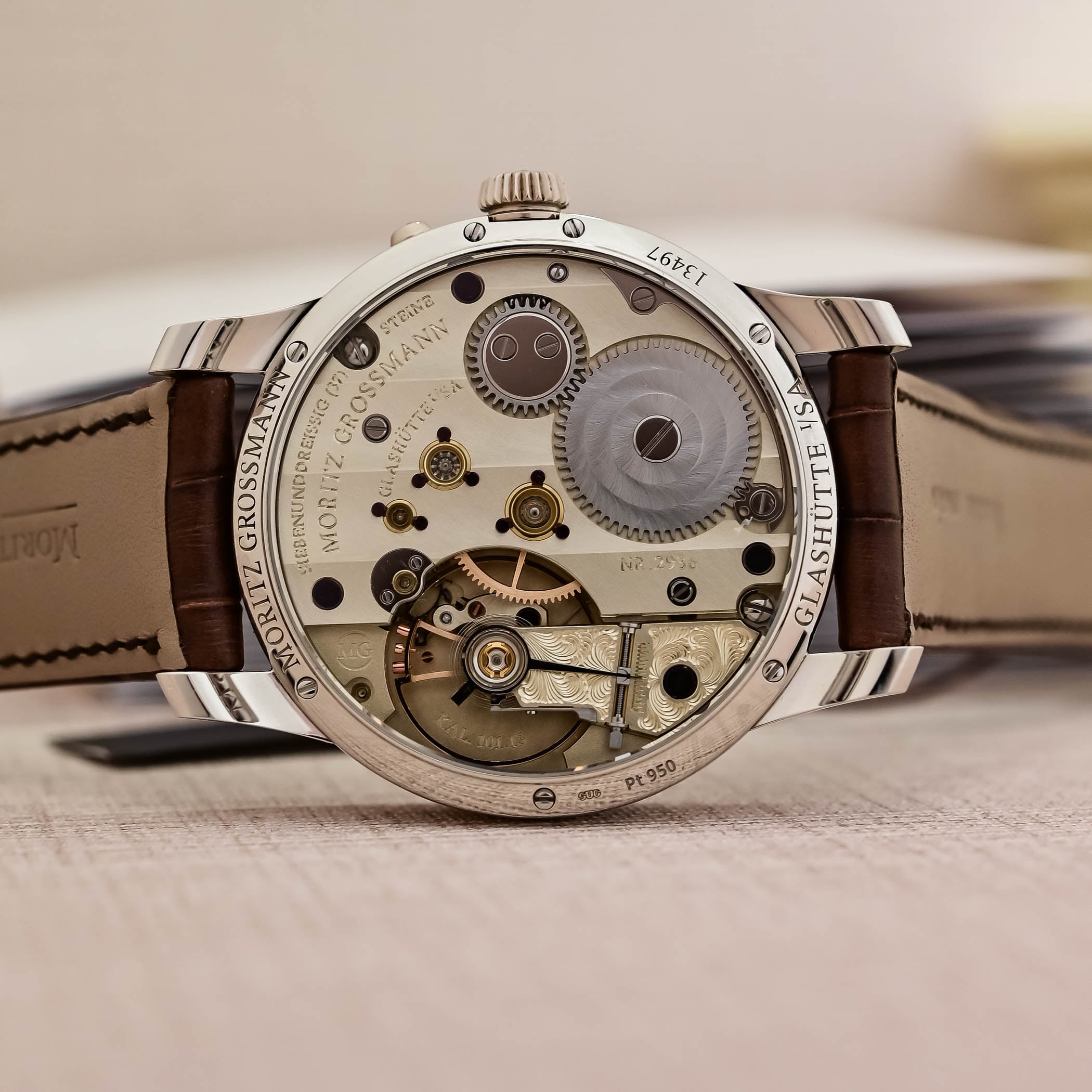
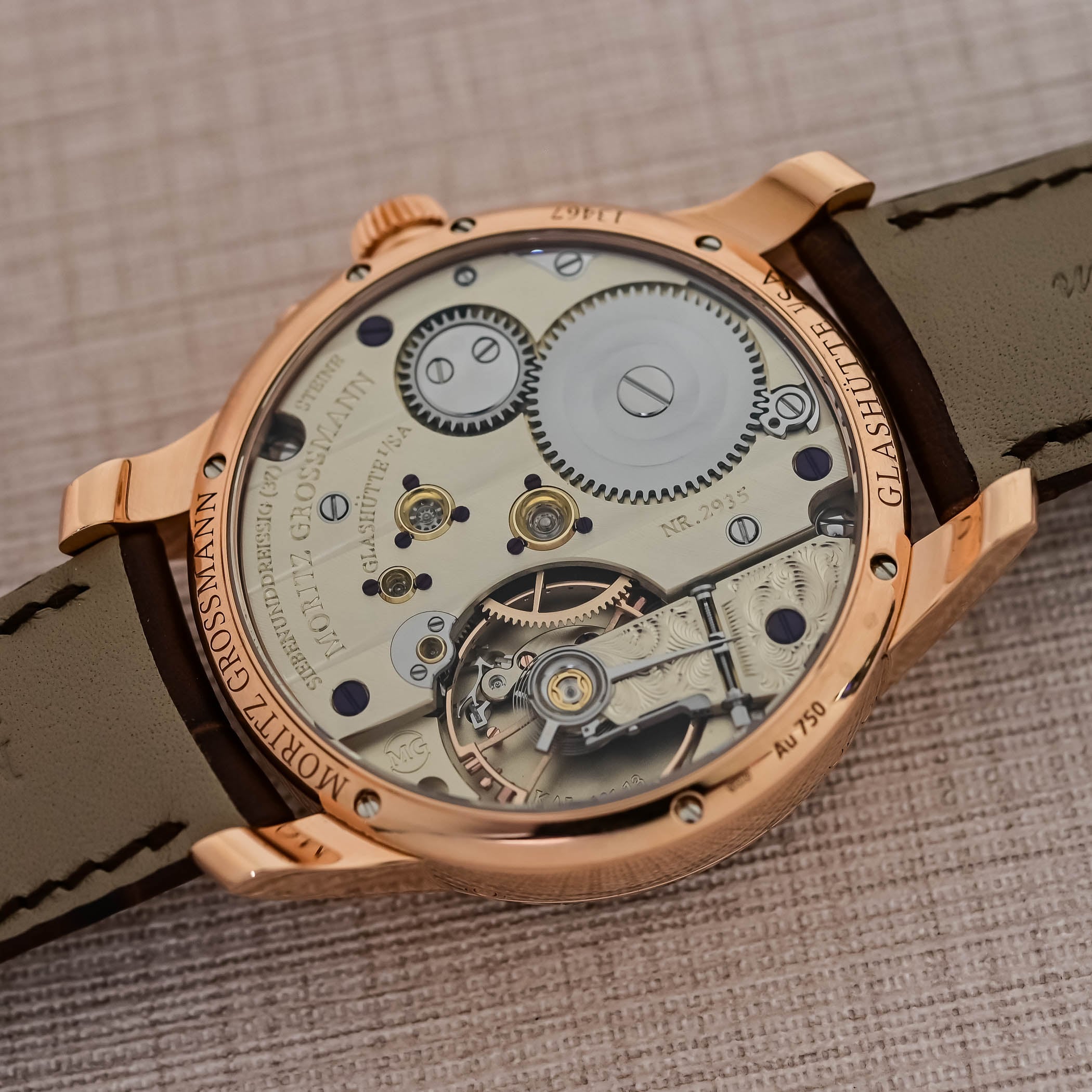
Turning the watch reveals the calibre 101.13, a hand-wound, meticulously finished movement, which combines a base calibre of 190 components with a perpetual calendar module of 211 parts. The broad 2/3 plate, made from untreated German silver, has a warm, faintly golden hue that, blame it on the festive season, looks champagne. The hand-engraved balance cock, polished screws in gold chatons, the wide striping and the slow beat (18,000 vibrations/hour) of the 14.2mm balance wheel appear and feel very traditional, exemplary of Glashütte watchmaking.
The Details
The Moritz Grossmann Perpetual Calendar (all versions) is offered on a hand-stitched strap in dark brown alligator leather, closed with the prong buckle, in gold or platinum. The gold editions are priced at EUR 83,000 and the platinum version at EUR 91,800.
For more details, please visit www.grossmann-uhren.com.

4 responses
Interesting entry into the world of perpetual calendars. Consistent as well. Not a class leader, but it fills out the catalogue. The peripheral jumping date mechanism is a key differentiator, but its benefits are easier to appreciate in the simple Date watch.
Another watch most people won’t be able to wear given absurd proportions.
3940 is 36mm by ~9mm…
It might be only me, but the dial design somehow feels cheap.
The movement might be finished well (albeit still looking like it is Unitas based), but what you see most – the front – is truly terrible. Proportions, design, pseudo-historic brand…