


 Not all images were able to load for printing. Please close the print window and try again.
 The Breguet Experimentale 1, With 10Hz High-Frequency Tourbillon and Constant Force Magnetic Escapement
Breguet is back to proper innovation, like its founder once did!
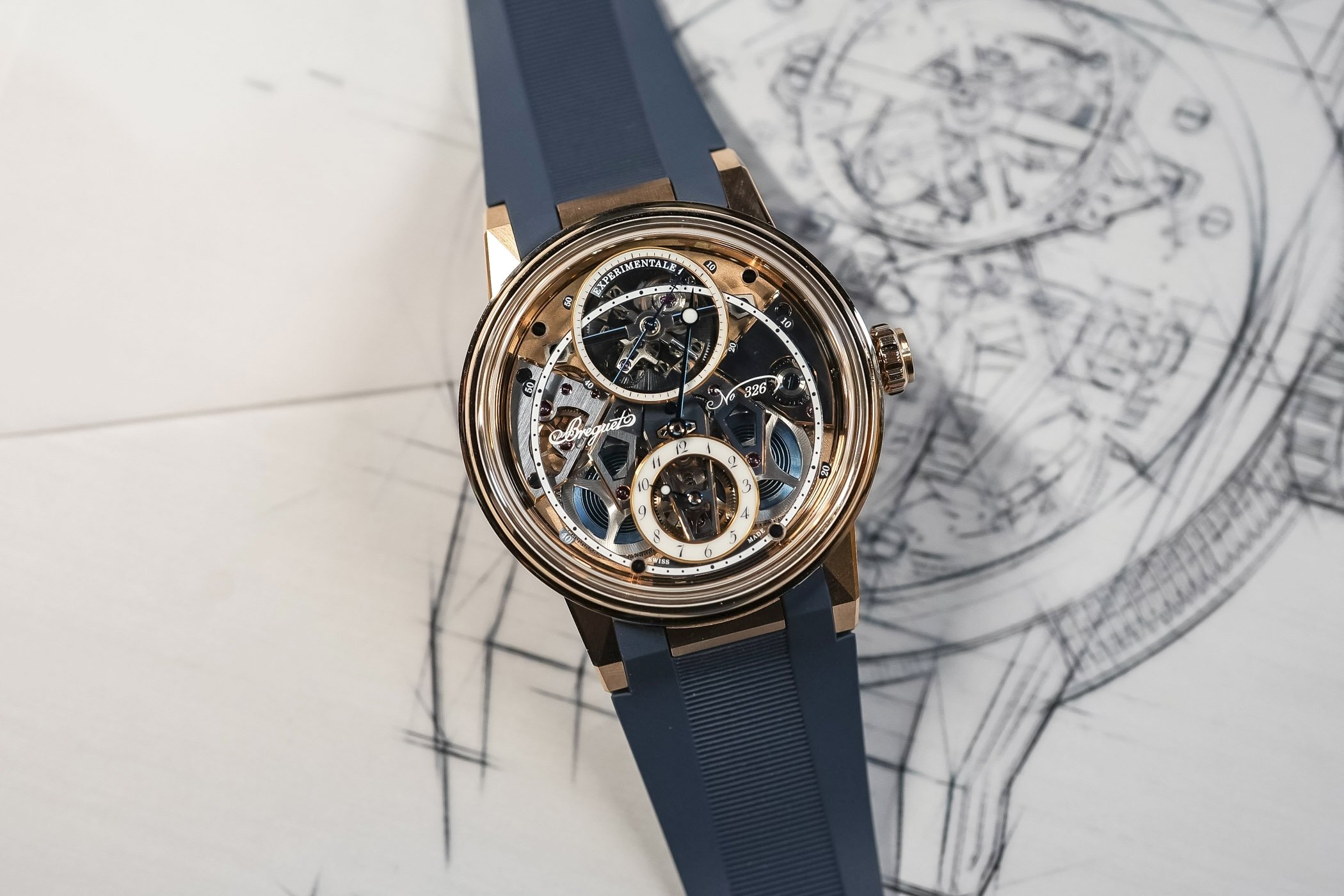
Innovation spirit and inventiveness have always been part of Breguet, specifically as its founder, Abraham-Louis Breguet, was responsible from 1775 onwards for so many of the watchmaking innovations of that era: the tourbillon, the perpétuelle watch, the natural escapement, the constant-force escapement, the shock absorber, the Breguet balance-spring with its terminal curve, the gong-spring… In recent years, Breguet somehow lost a bit of this innovation-driven spirit, but this year, it is the brand’s 250th anniversary and its recently appointed CEO, Gregory Kissling, is on a mission to revive the brand. Following the launch of the splendid Souscription watch, winner of GPHG 2025, and the refinement of the magnetic pivot concept, it is now time for the grand finale, the watch to close the celebrations in beauty… Meet the Breguet Experimentale 1, a watch that opens a new R&D-driven collection, redefines the Marine line and showcases the brand’s latest technical developments. And it features an unprecedented hi-beat tourbillon with a new constant force escapement built on controlled magnetism.
The new Breguet Experimentale 1 is a bridge between the past and the future, using the innovative spirit of the brand’s founder, Abraham-Louis Breguet, as a motto for the development of a new collection and programme that aims to show what Breguet is capable of in terms of R&D, shedding light on the entire field of horology through its work on materials, electromagnetism, vibra tory mechanics and acoustics. Breguet was once the most famous watchmaker, a man who invented and perfected numerous devices that are still in use today. The Experimentale collection offers a glimpse of what Breguet watchmaking will look like in the future, and revives the inventiveness that we often associate with A.L. Breguet.
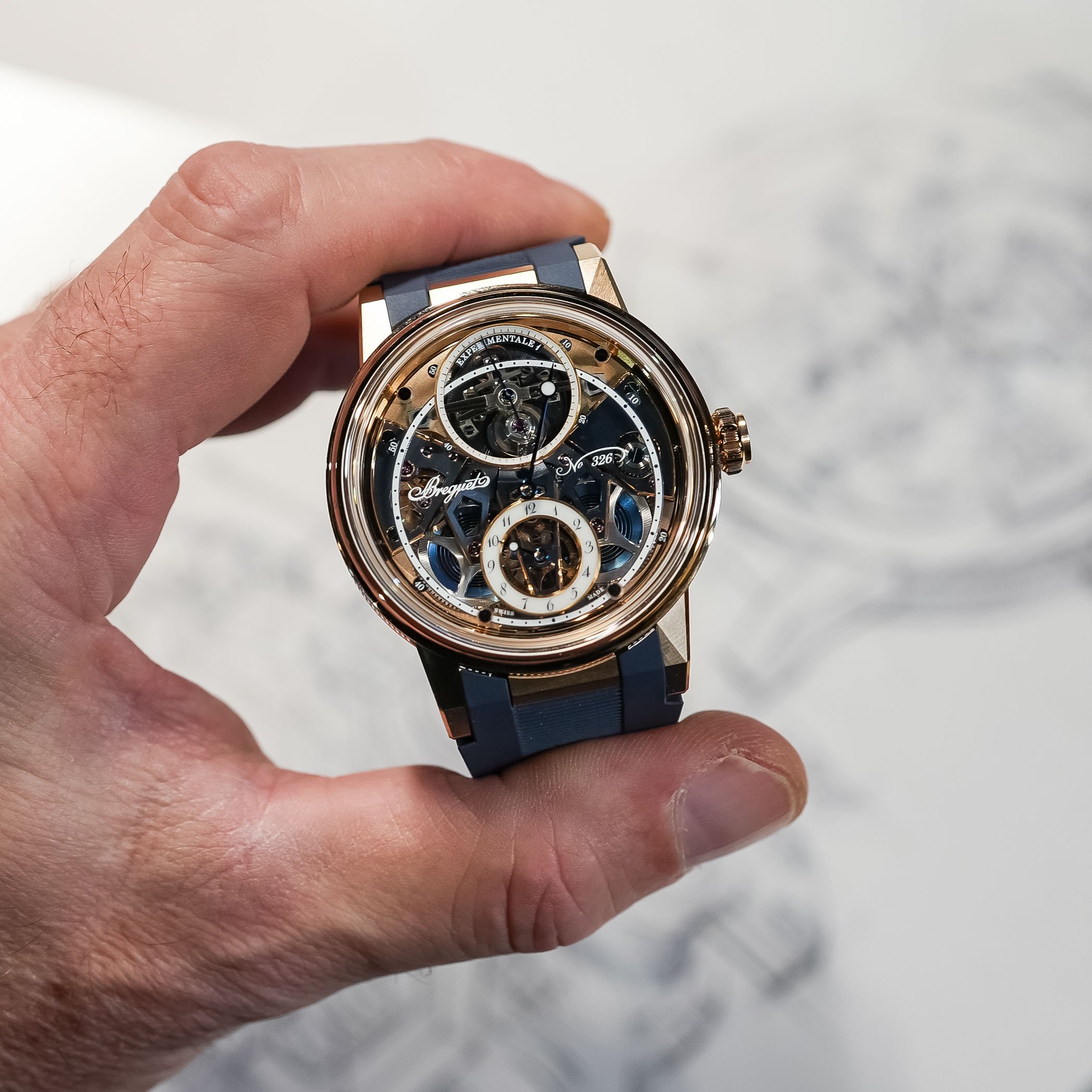
This Breguet Experimentale 1 is both the first watch in this collection as well as the last one in Breguet’s 250th anniversary celebratory lineup. And as such, it encapsulates multiple angles dear to the brand: a tribute to Breguet’s appointment to the Paris Bureau des Longitudes in 1814, when he was awarded the title of Horloger de la Marine Royale, a reengineering of the man’s greatest invention, the tourbillon (patent 26 June 1801), and the evolution of the work on magnetism started in 2013 with the Classique Chronométrie 7727, and recently perfected with the Classique 7225.
The quest for precision through magnetism
Before we start to talk about the watch itself, which feels like a strong design evolution of the Marine collection (which will potentially find its way into the standard collection…), we need to talk about mechanics here, and the star of the show, the 10Hz, high-frequency tourbillon and its constant force magnetic escapement. With the Classique Chronométrie 7727 and Classique 7225, Breguet demonstrated that magnetism wasn’t necessarily the enemy of a watch movement. On the contrary. When used intelligently, magnetism could become an ally. In the case of the 7727 and 7225, it consists of using a magnetic pivot, where two micro-magnets, each set into an endstone, generate opposing magnetic fields to keep the balance staff perfectly centred. This solution nearly eliminates positional error, drastically increases shock resistance and allows a 10Hz frequency with minimal wear thanks to reduced friction.
The Breguet Experimentale 1 relies on the experience gathered while developing and perfecting the magnetic pivot concept, but brings controlled magnetism to the escapement in order to increase precision to an astonishing level. This new assembly, which consists of a high-frequency tourbillon, and a constant force and magnetic escapement, is an unprecedented concept that combines traditional watchmaking and scientific research. This new magnetic escapement and 10Hz tourbillon aim at solving the delicate equation of precision.
The quest for accuracy cannot be reduced to one sole problem with a single solution, but instead involves at least three variables. The first issue comes from the normally inconsistent amplitude of the balance. As the barrel unwinds, its torque decreases as the power reserve is depleted. As such, it’s impossible to maintain a constant amplitude if the energy it receives is not consistent, at least without the use of a constant force device. The second issue is the effect of gravity on the entire regulating organ (balance and hairspring). This issue was solved by A.L. Breguet in 1801 with the invention of the tourbillon, a device that brings the regulating organ in a constantly rotating cage, thus negating the effect of gravity. The third factor is shock resistance. All watches are subjected to accelerations that are multiples of the Earth’s gravitational acceleration, as well as impacts. Every impact and every movement affects the regular running of the watch and thus its precision.
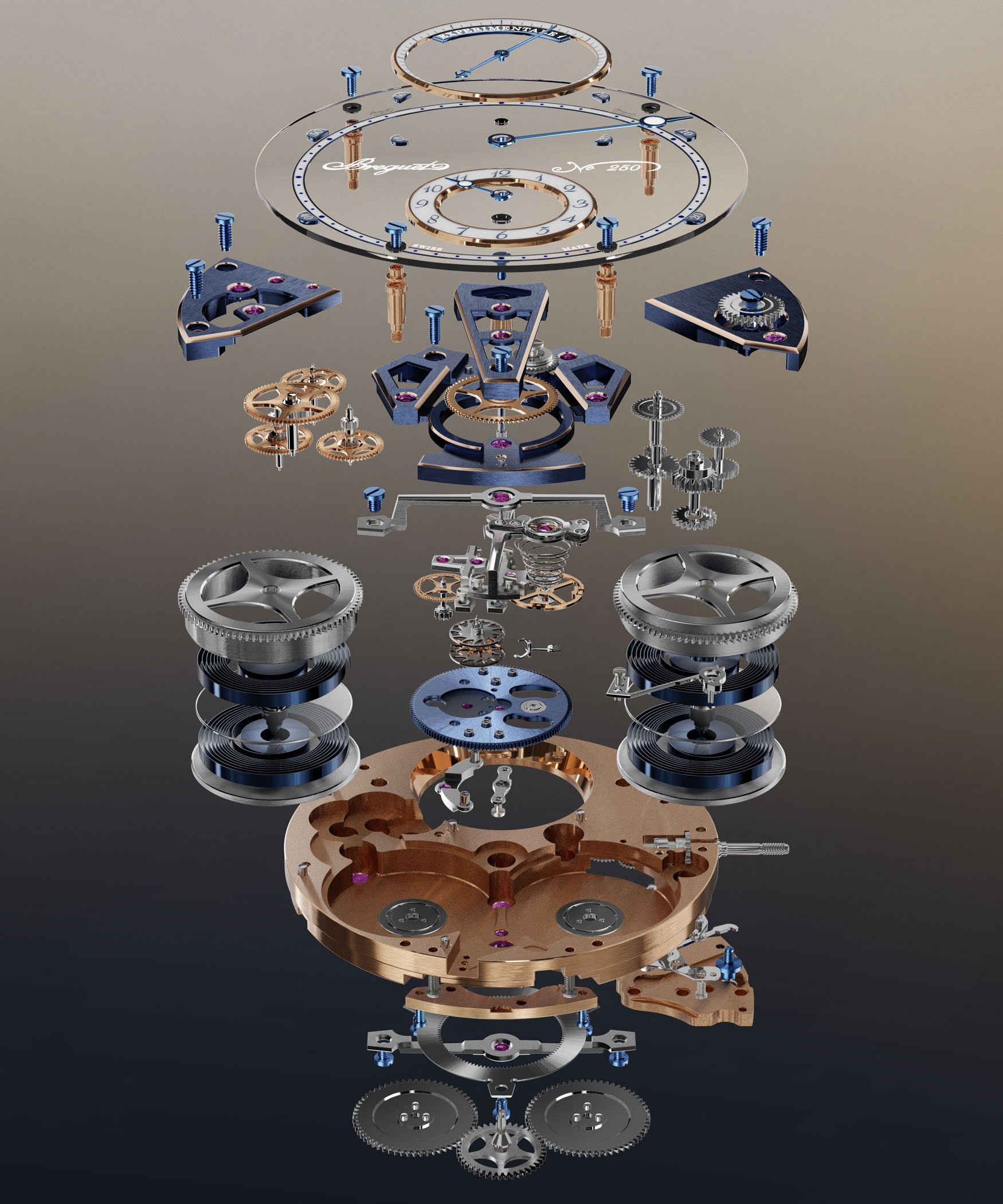
The Breguet Experimentale 1 aims at solving these three crucial issues in one single solution that is “as elegant as it is ingenious” (I’m here quoting the brand, but it’s quite justified). Breguet has developed a 10Hz tourbillon with constant force magnetic escapement. Breguet already demonstrated the benefits of controlled magnetism in a watch movement. Here, magnetism serves to impart a stable impulse to the balance throughout the power reserve, as well as to decouple the impulse function from the rotation of the escape wheel, the tourbillon cage and the rest of the going train.
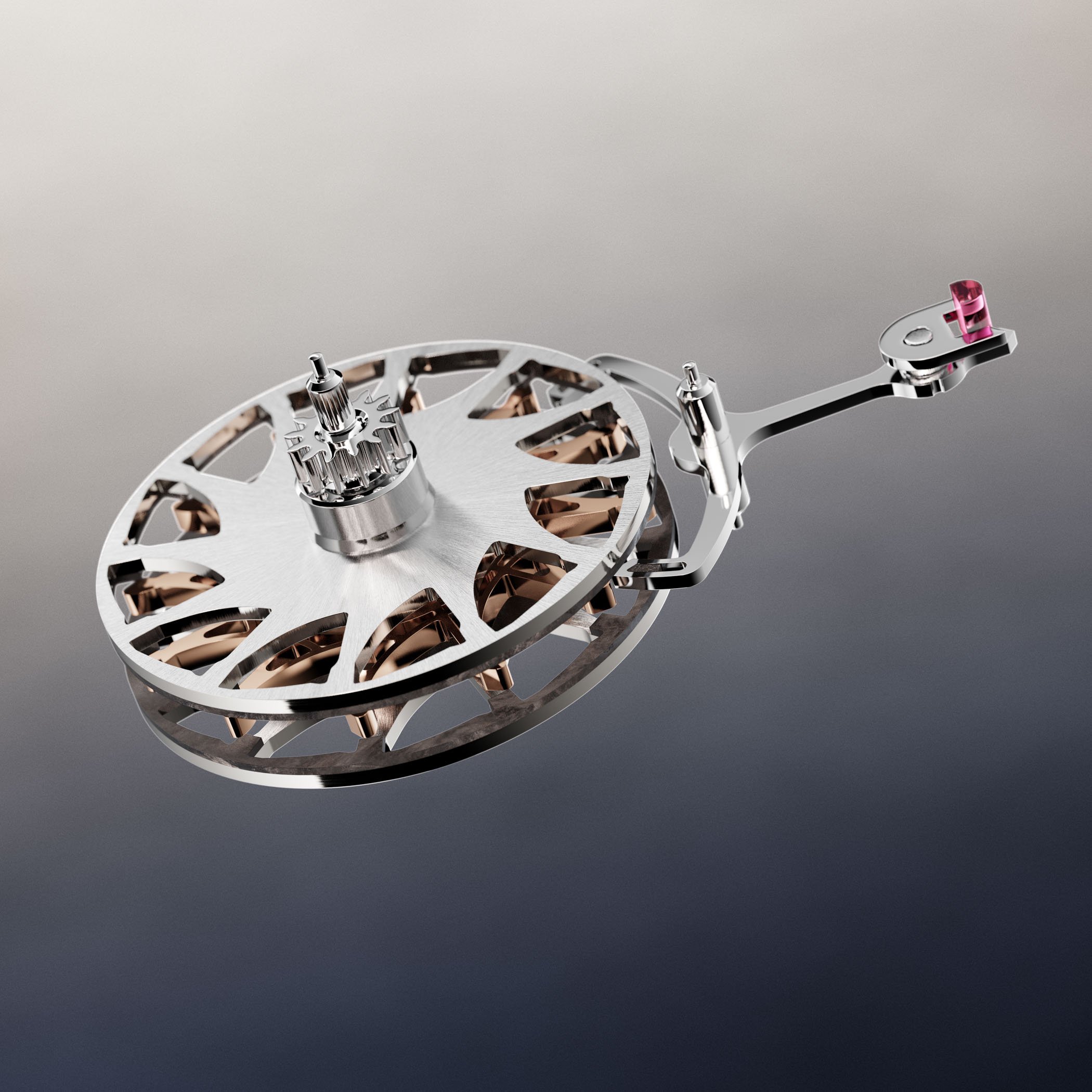
This newly developed device involves two escape wheels, each equipped with a magnetic track, at the centre of which beats a pallet lever with likewise magnetic pallets. The idea is to take cues from constant-force escapements. Below a certain operating torque, the tourbillon stops very quickly, while above this threshold, the balance oscillates at its maximum amplitude. This new escapement also makes it possible to decouple the impulses transmitted to the balance from the rotation of the escape wheel and hence from the rest of the gear train. Unlike in a Swiss lever movement, the inertia of the tourbillon cage has almost no influence. By decoupling these two functions, Breguet has been able to create a tourbillon with a 10Hz oscillator in such dimensions, also giving free rein to design choices, for example by offsetting its balance from the cage’s centre of rotation.
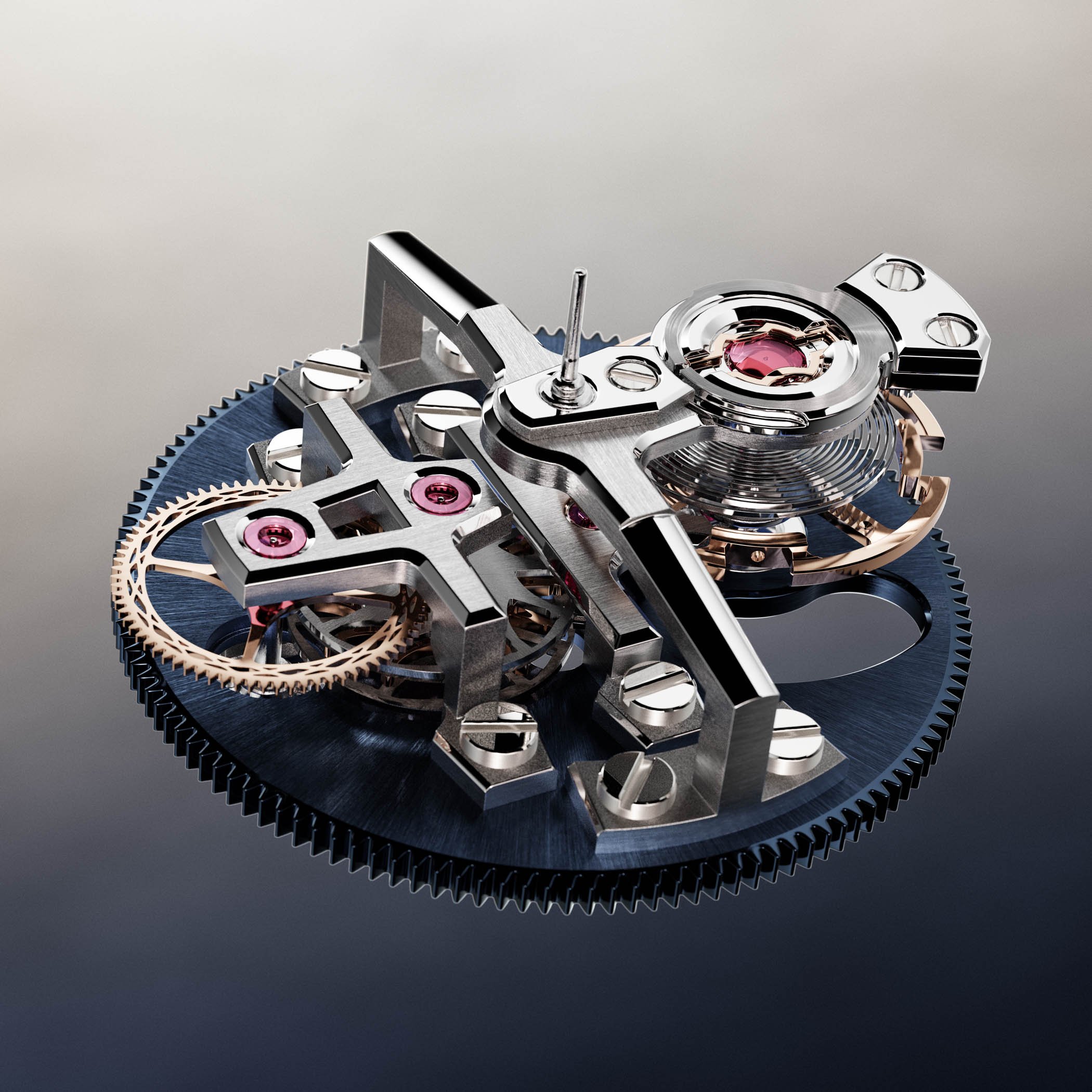
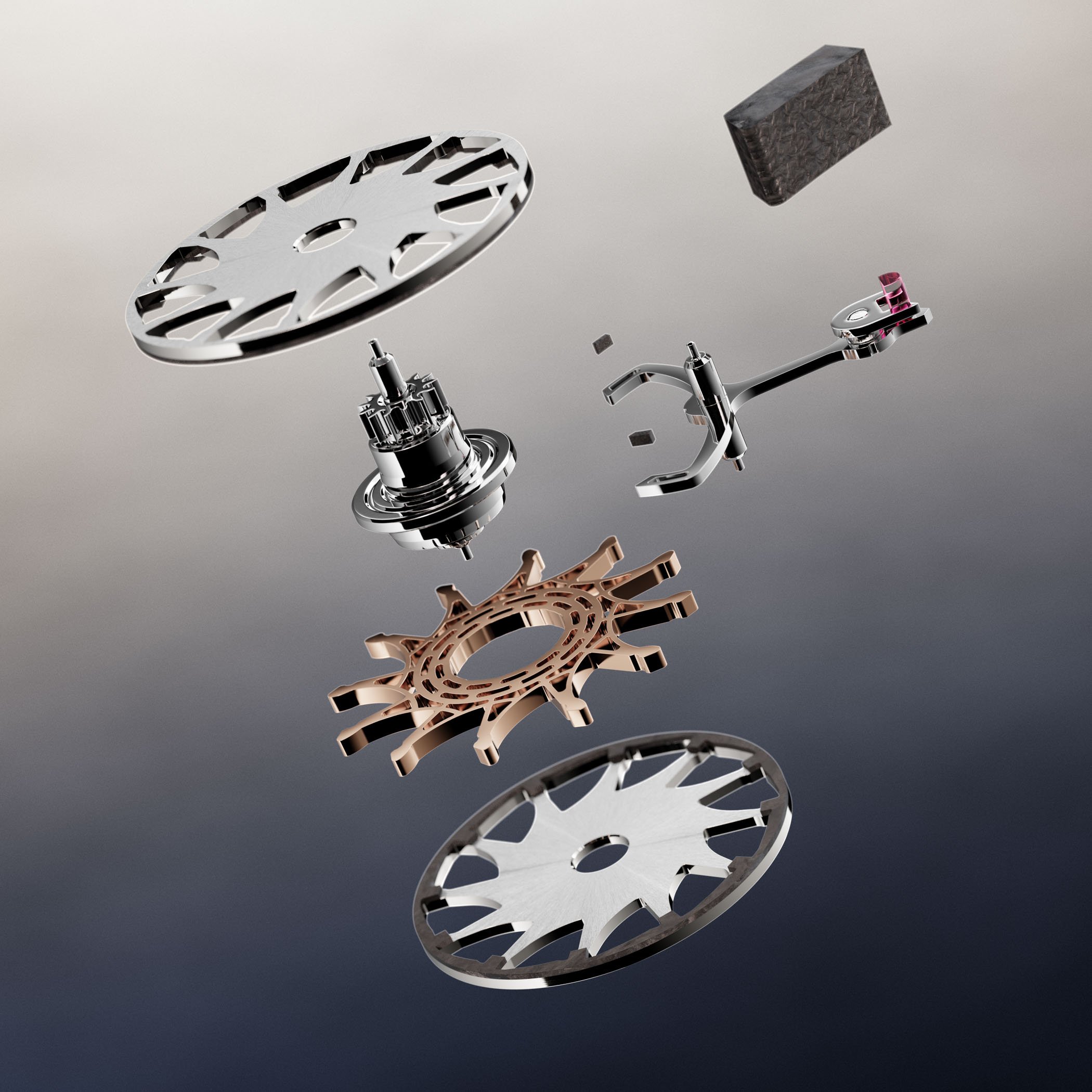
The construction of the escapement mechanism is also unusual. Between its two escape wheels equipped with a magnetic track, an intermediate stop wheel ensures that the device does not suffer any unwanted jumps. Most of the other tourbillon components are non-magnetic in order to avoid any interaction that could interfere with its smooth running. The balance-spring is made of silicon, the fixed fourth wheel of LIGA (NiP12) and the other components of titanium or Nivagauss.
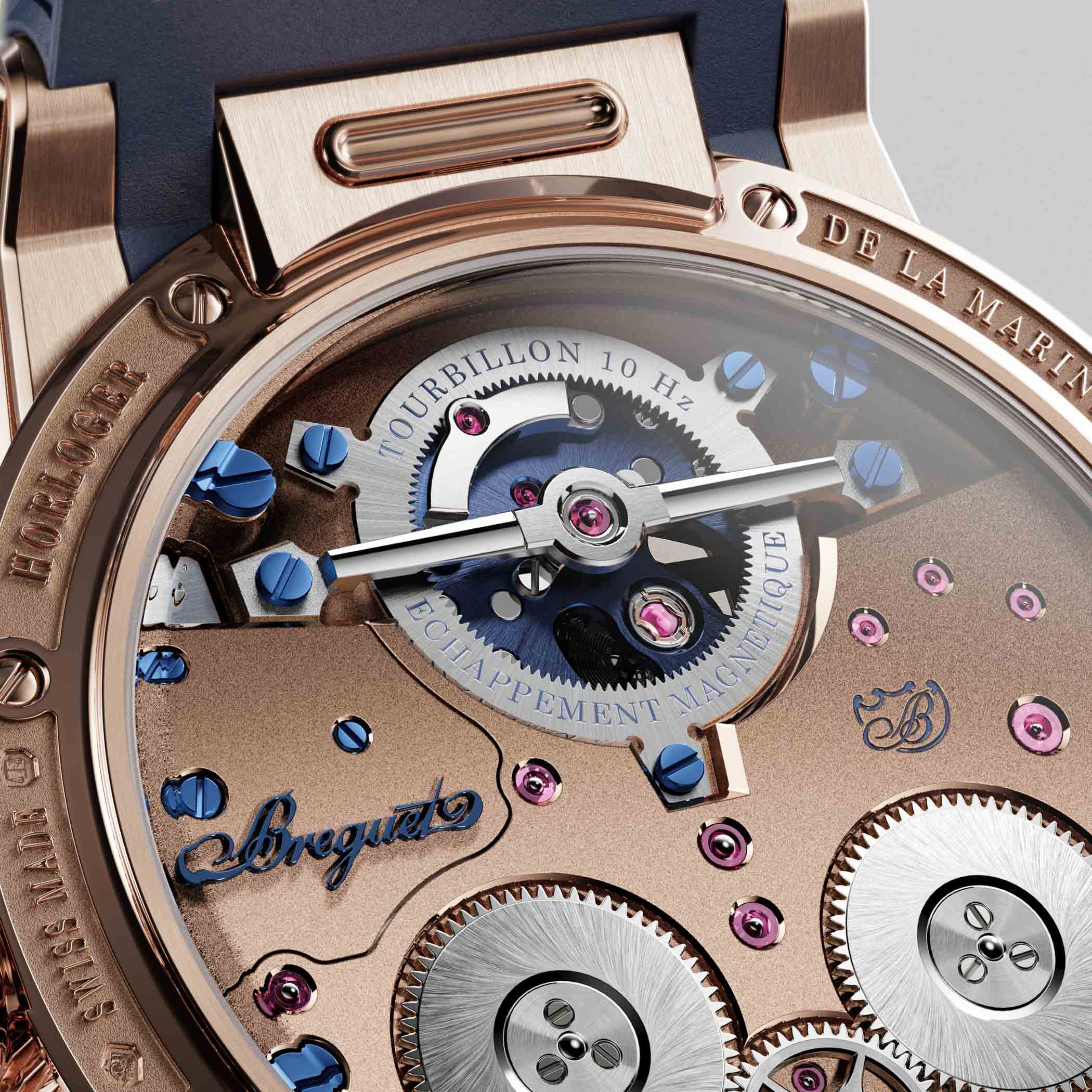
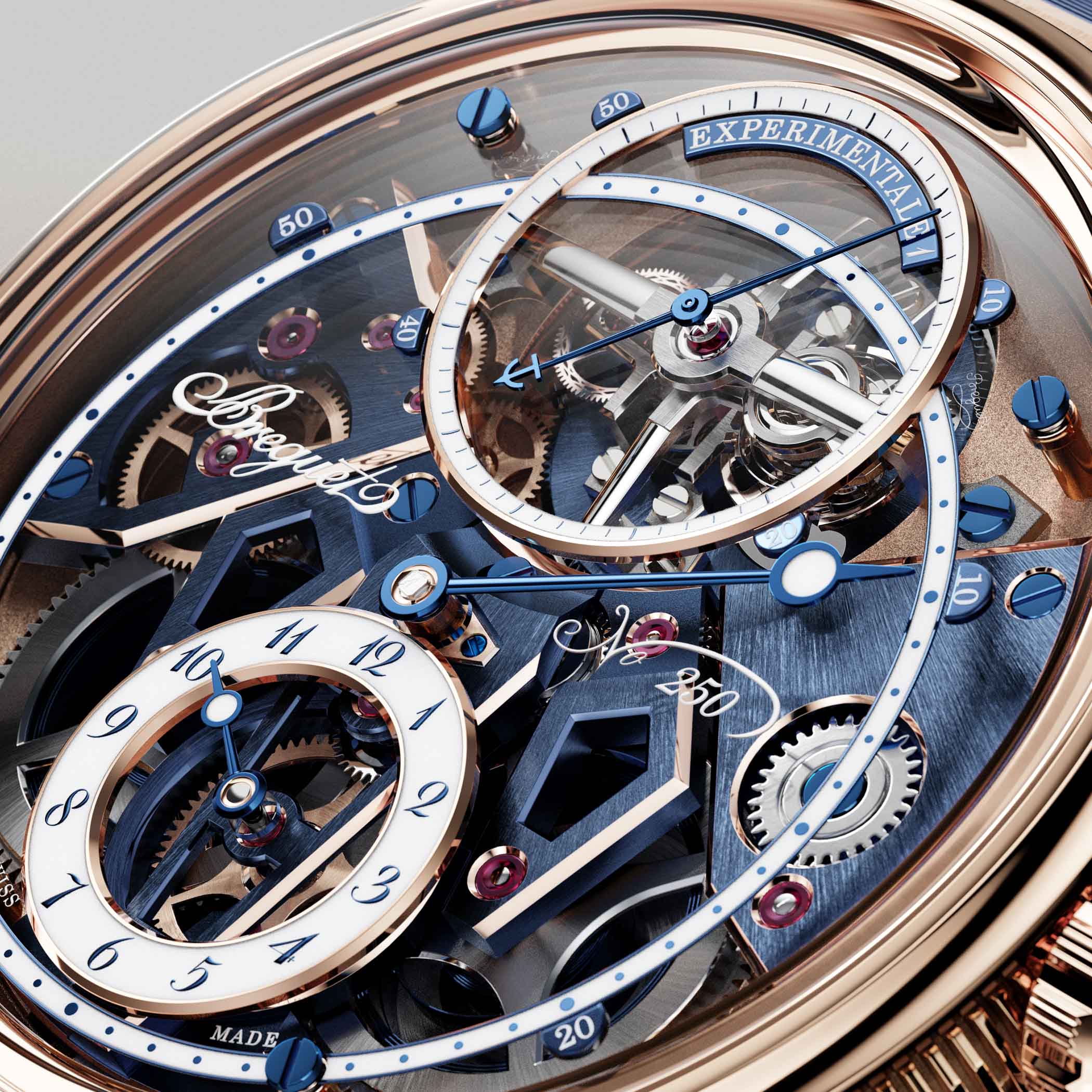
Yet, looking closely at this technical solution, you’ll note that it feels at the same time rather traditional. There’s still a pallet fork and lever, and no need for a remontoire d’égalité as a constant force device. The reason is that the pallet fork is driven by magnetism, meaning that the impulse is contactless, reducing friction to the max. This system itself is what creates constant force, by not having friction or influence from the winding state and torque of the mainspring barrel.
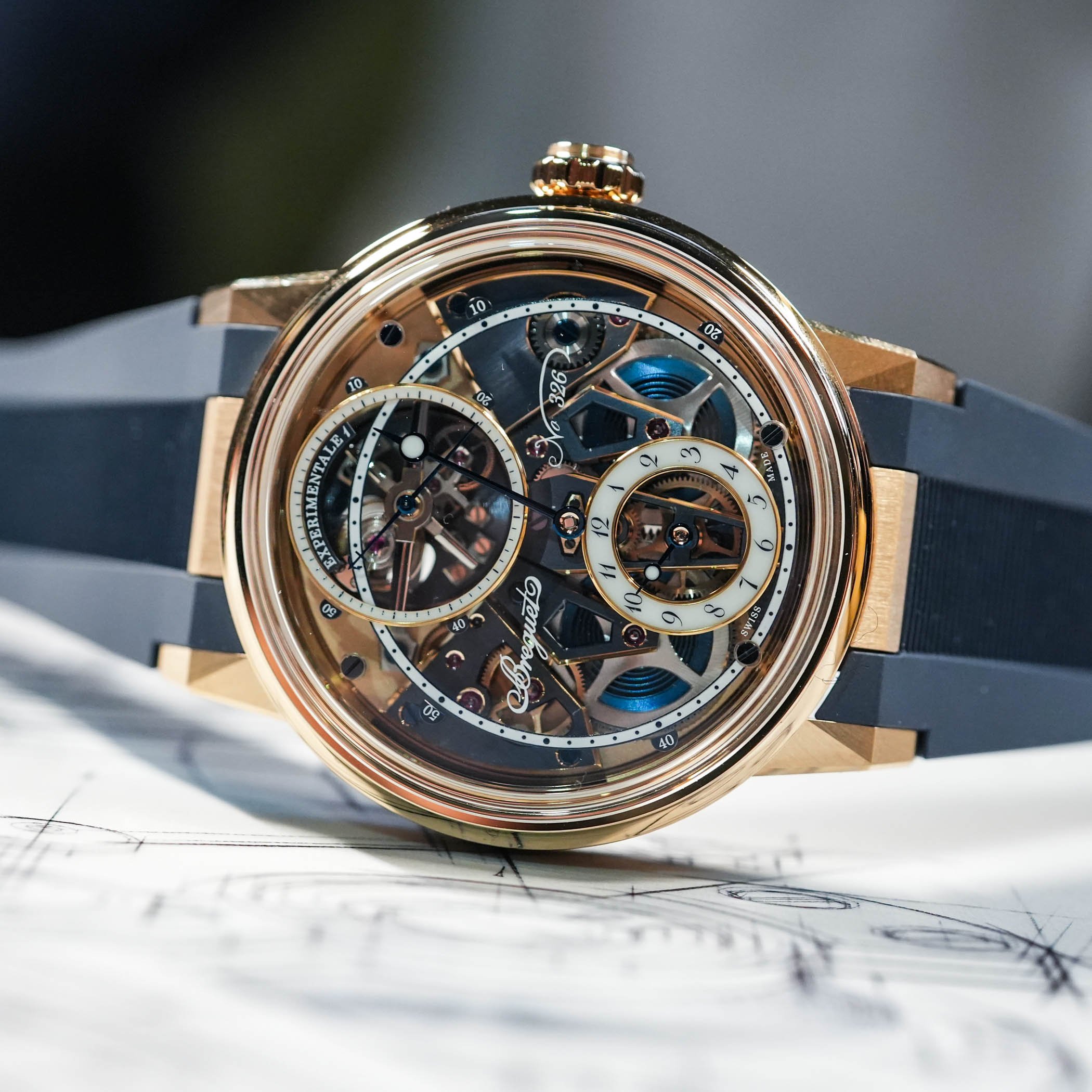
Compared to most tourbillon regulators, running at 2.5Hz, 3Hz or 4Hz (in rare instances), the tourbillon of the Breguet Experimentale 1 runs at a very high frequency of 10Hz or 72,000 vibrations/hour, double what the industry usually calls hi-beat (5Hz or 36,000 vibrations/hour, like Grand Seiko and Zenith). This means that the tourbillon is here more stable and more accurate. The Experimentale 1 is thus certified by the Breguet hallmark in the “Scientific” category, meaning it has a guaranteed accuracy of -/+ 1 second per day.
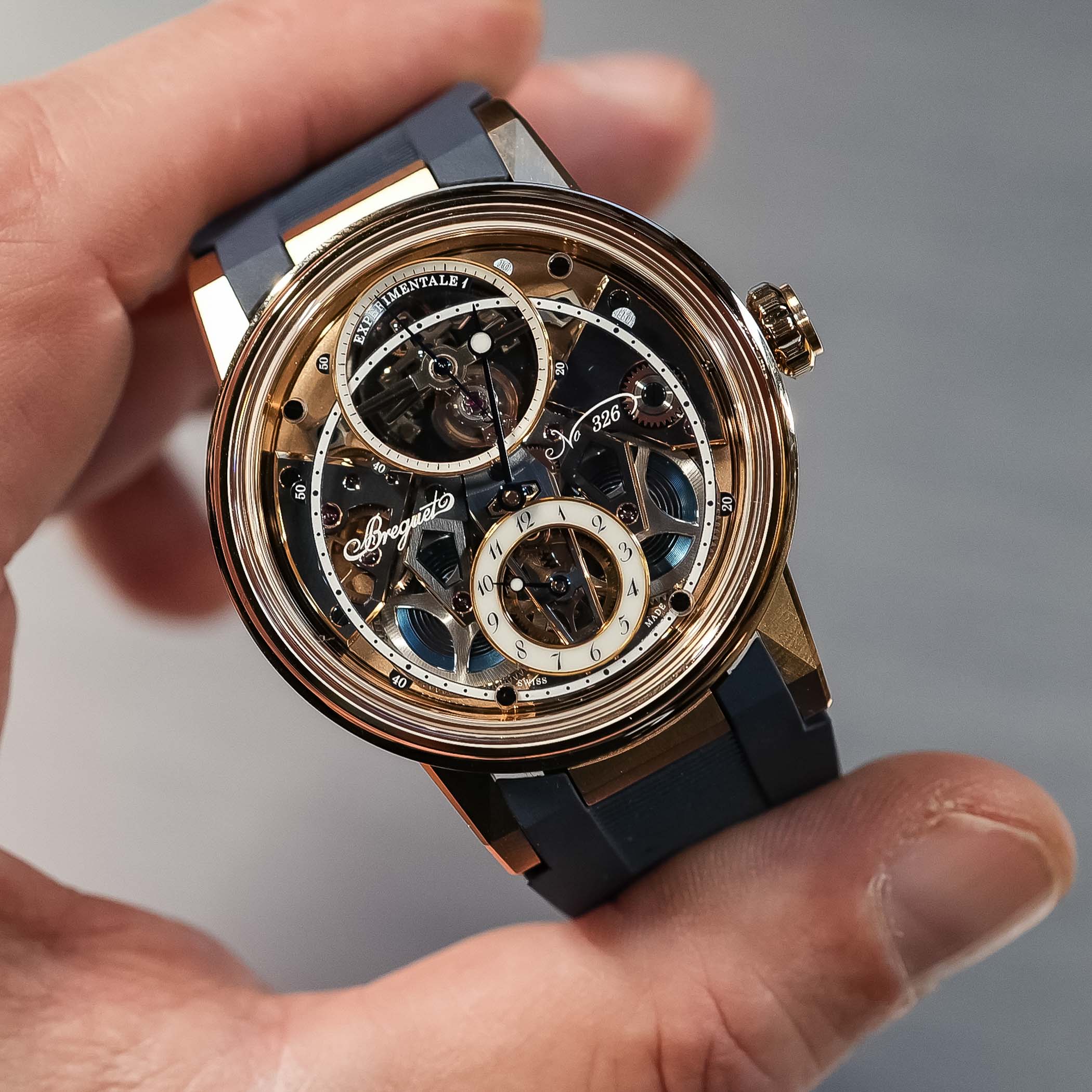
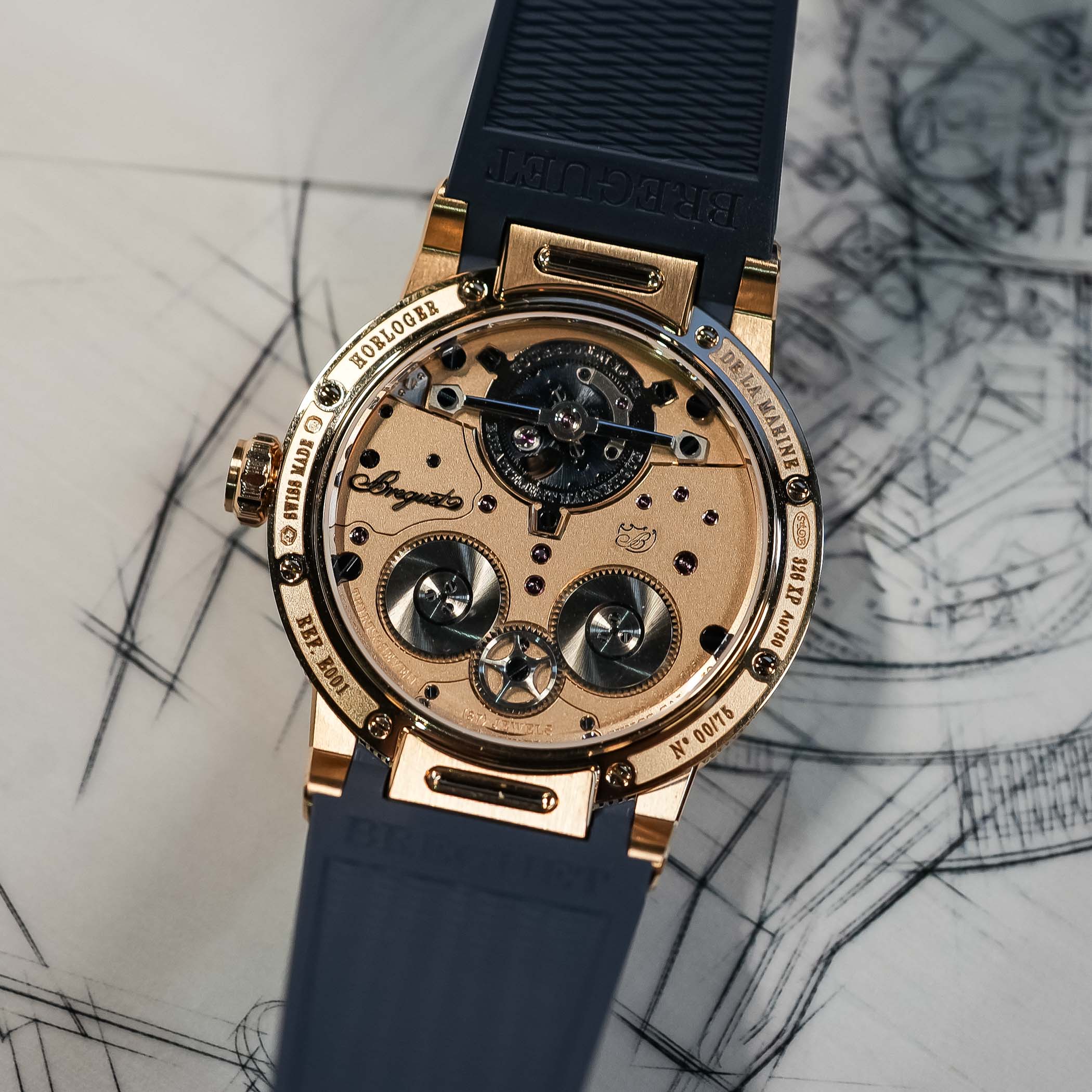
All of this is built into a new in-house movement, the large Calibre 7250. Made of 18K Breguet gold movement blanks, with elegant matte surfaces, the movement features a patented twin barrel, on two series-coupled levels, each consisting of a double spring separated by a sapphire spacer, arranged on either side of the minutes axis at 3 and 9 o’clock respectively, giving a total of four springs to optimise energy management in relation to the space available. The back of the movement is elegantly decorated, with a mix of traditional techniques (bercé polished tourbillon bridge, anglage with internal angles) and a technical, modern look to it. The watch is delivering a 72-hour power reserve.
Avant-Garde Marine design
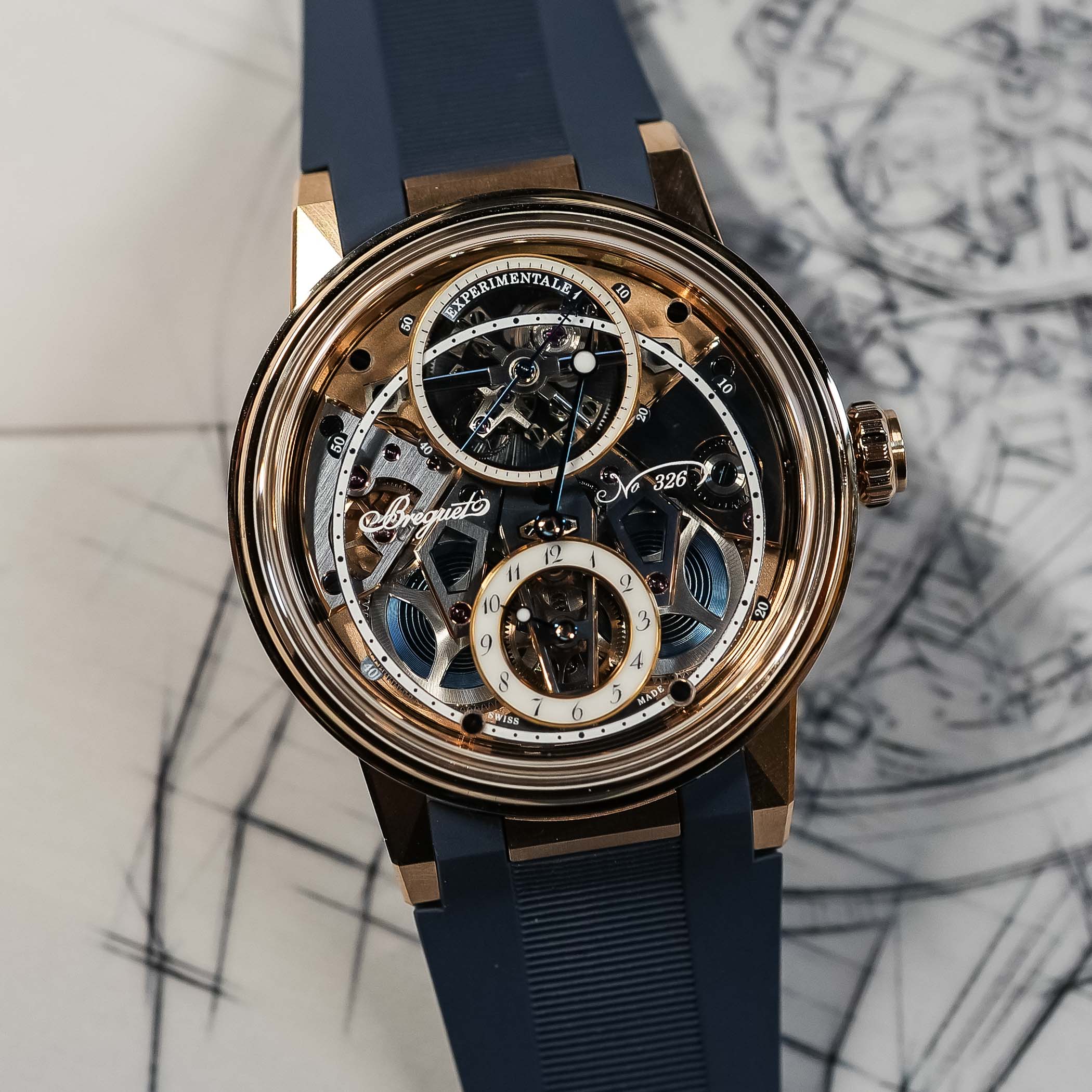
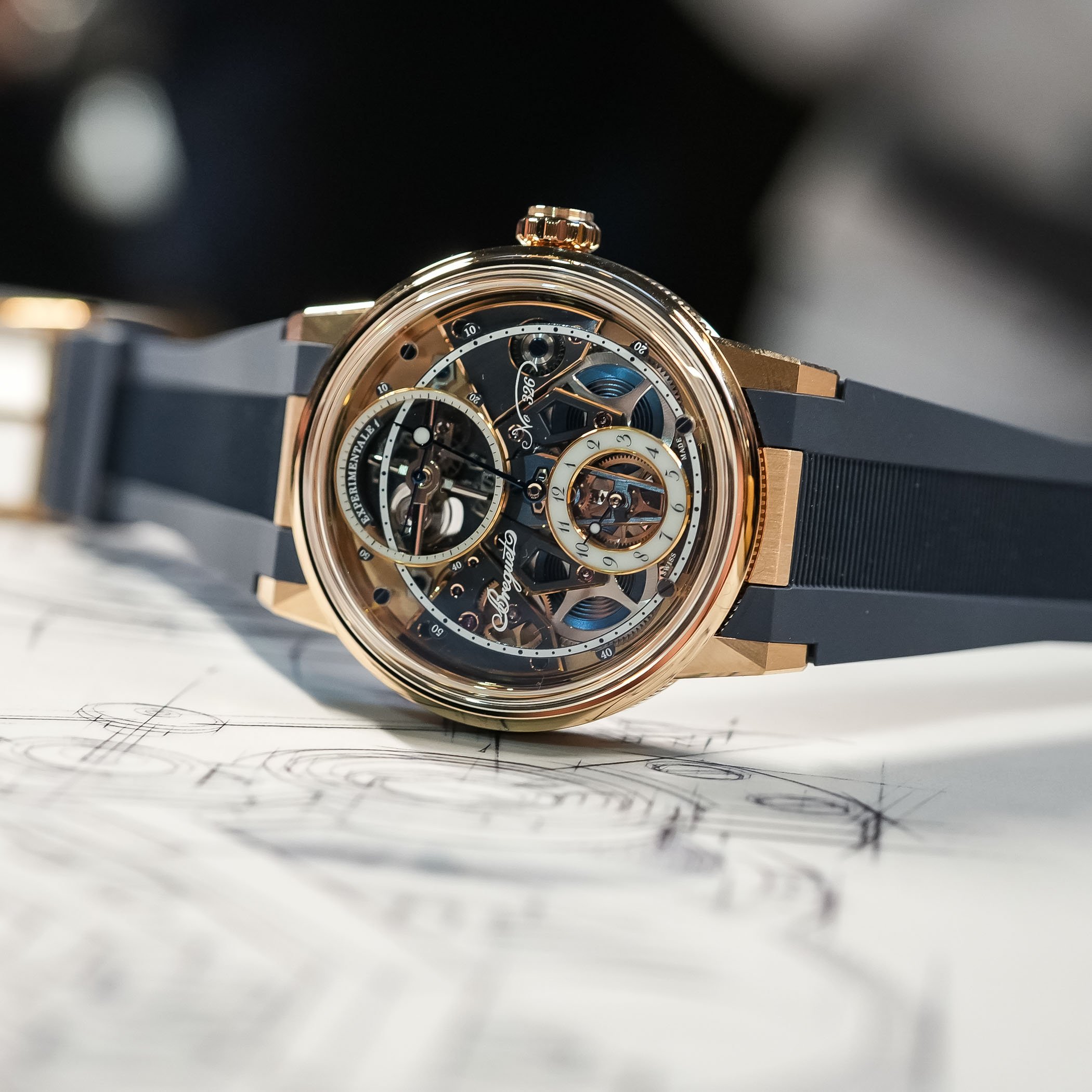
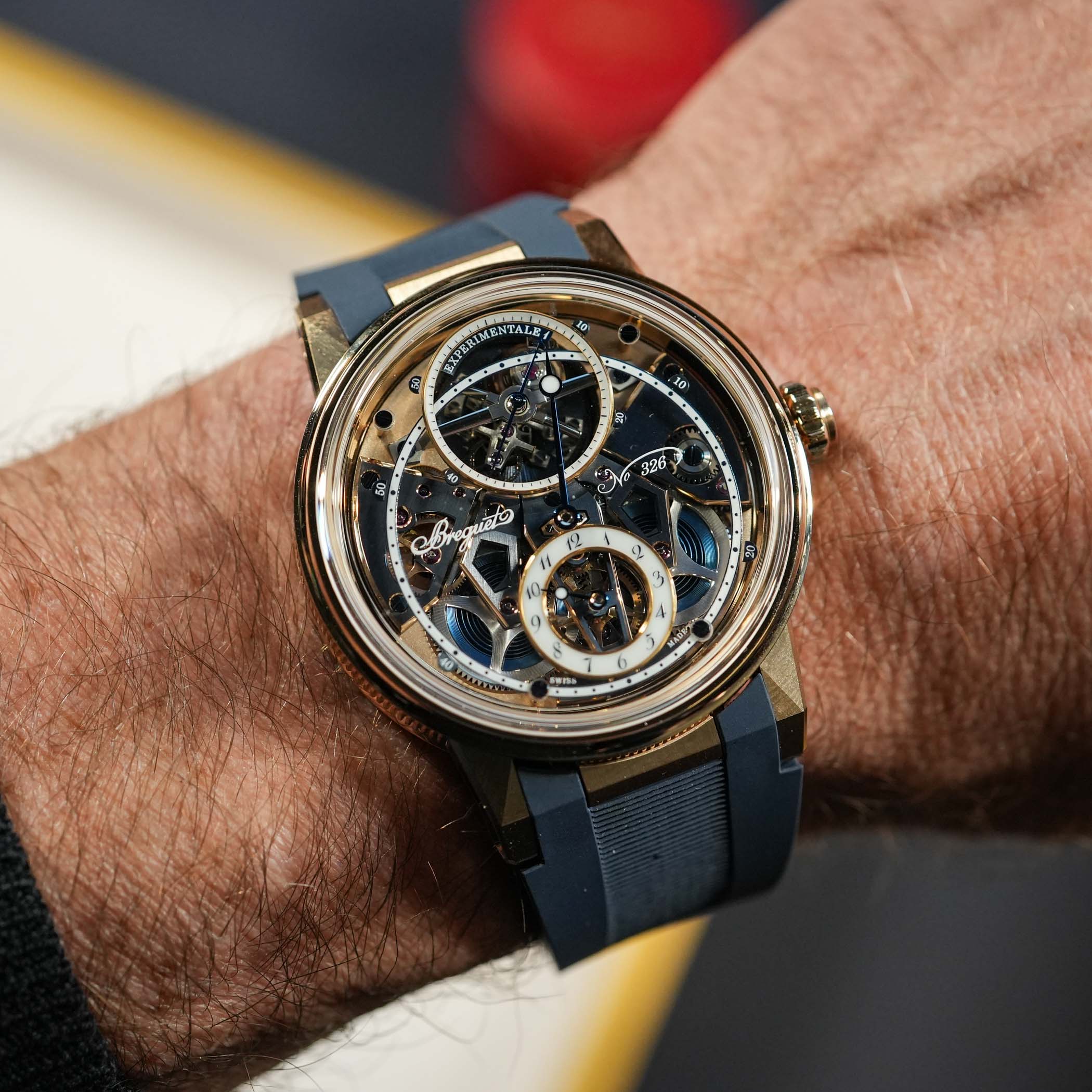
In addition to introducing a new movement and a new high-frequency tourbillon with constant force magnetic escapement, the Breguet Experimentale 1 also inaugurates a new design language for the brand. Inspired by the Marine collection, the Experimentale 1 feels like the next step, with a sharper, more contemporary design (there’s a bit of UN Freak when looked at from the front). The case, made of 18K Breguet gold, measures 43.5mm in diameter and 13.30mm in thickness, with strong facets and angular shapes. The lugs, including a central lug module, are hollowed and alternate between sandblasted, blued and satin-brushed finishes, as well as a blue ALD-treated Breguet gold inlay. The side retains a Breguet signature element, the futed caseband, here reworked with a more modern approach and a stepped bezel.
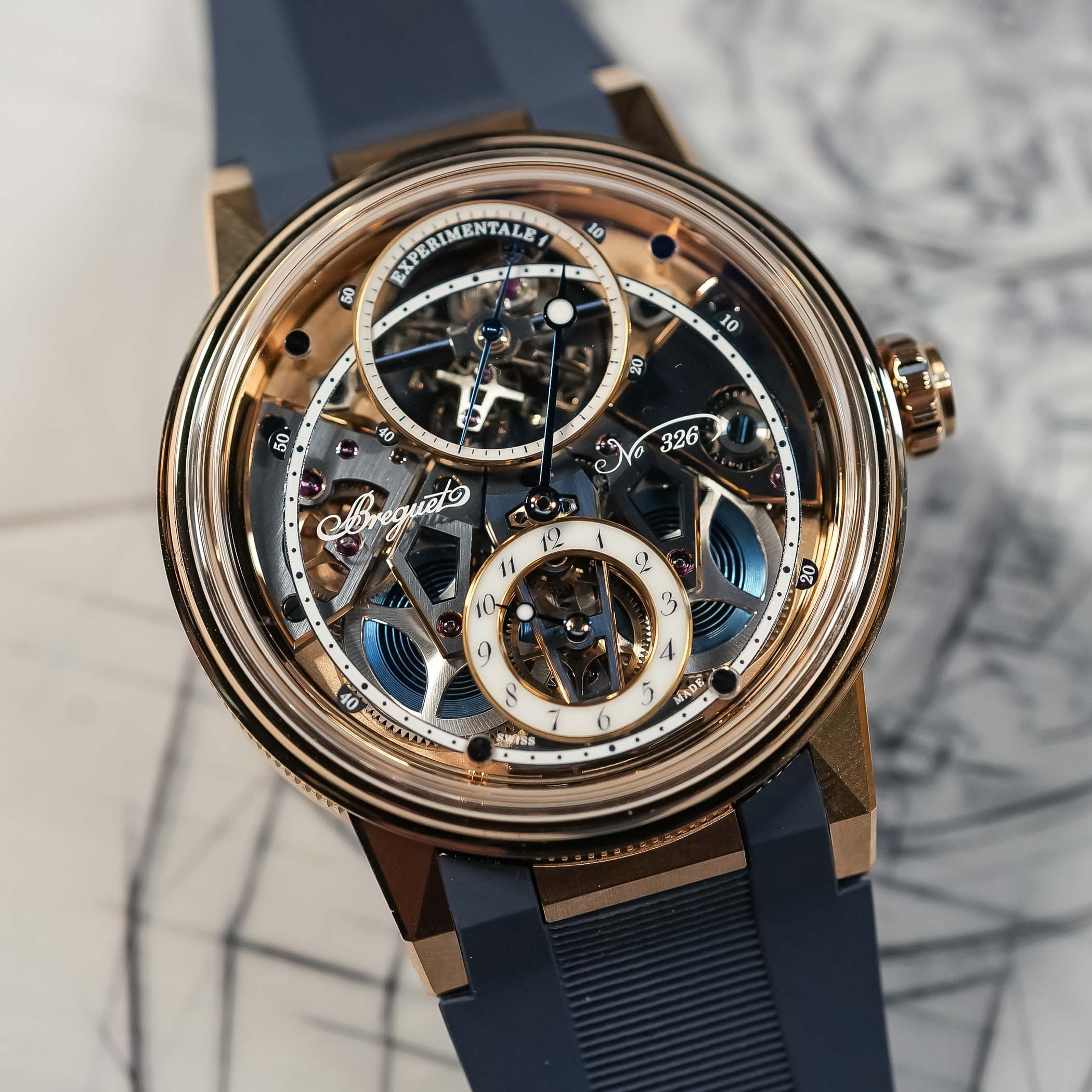
The Expérimentale 1 is inspired by an antique Breguet creation, the pocket watch No. 3448 and its regulator-style display. The sapphire dial is built with symmetry in mind. The upper section is home to the 10Hz tourbillon module, while the lower part integrates the hour sub-dial, flanked by the two twin barrels. The visible bridges are either left in untreated Breguet gold or satin-brushed with hand-applied polished bevels, and coated in navy blue. The seconds are classically displayed on the tourbillon, and the minutes are offset on a large, white suspended ring intersecting the tourbillon and filled with SLN. The hands, an evolution of the classic open-tipped Breguet hands, are blue ALD-treated and filled with SLN too. The whole sapphire dial rests on four gold pillars.
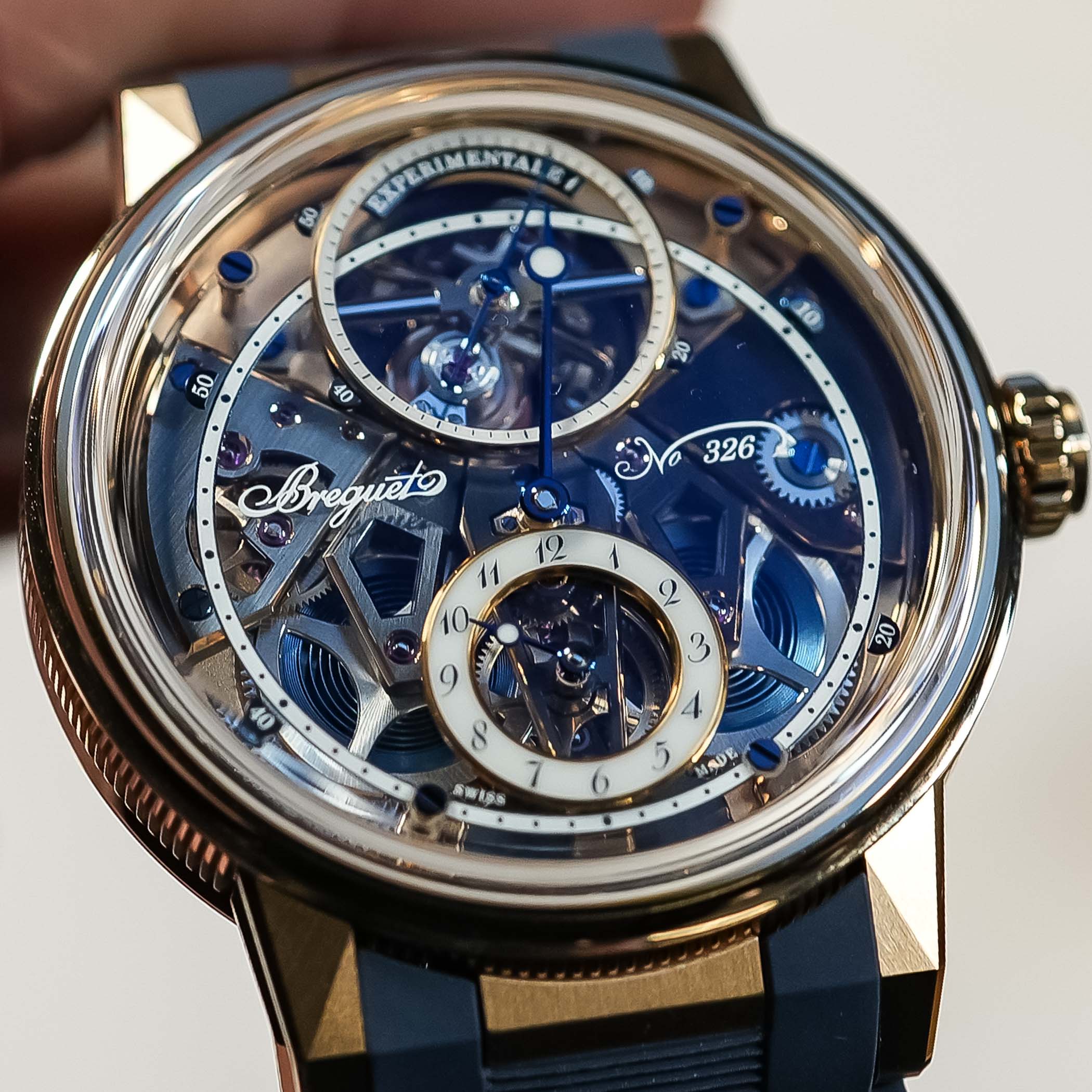
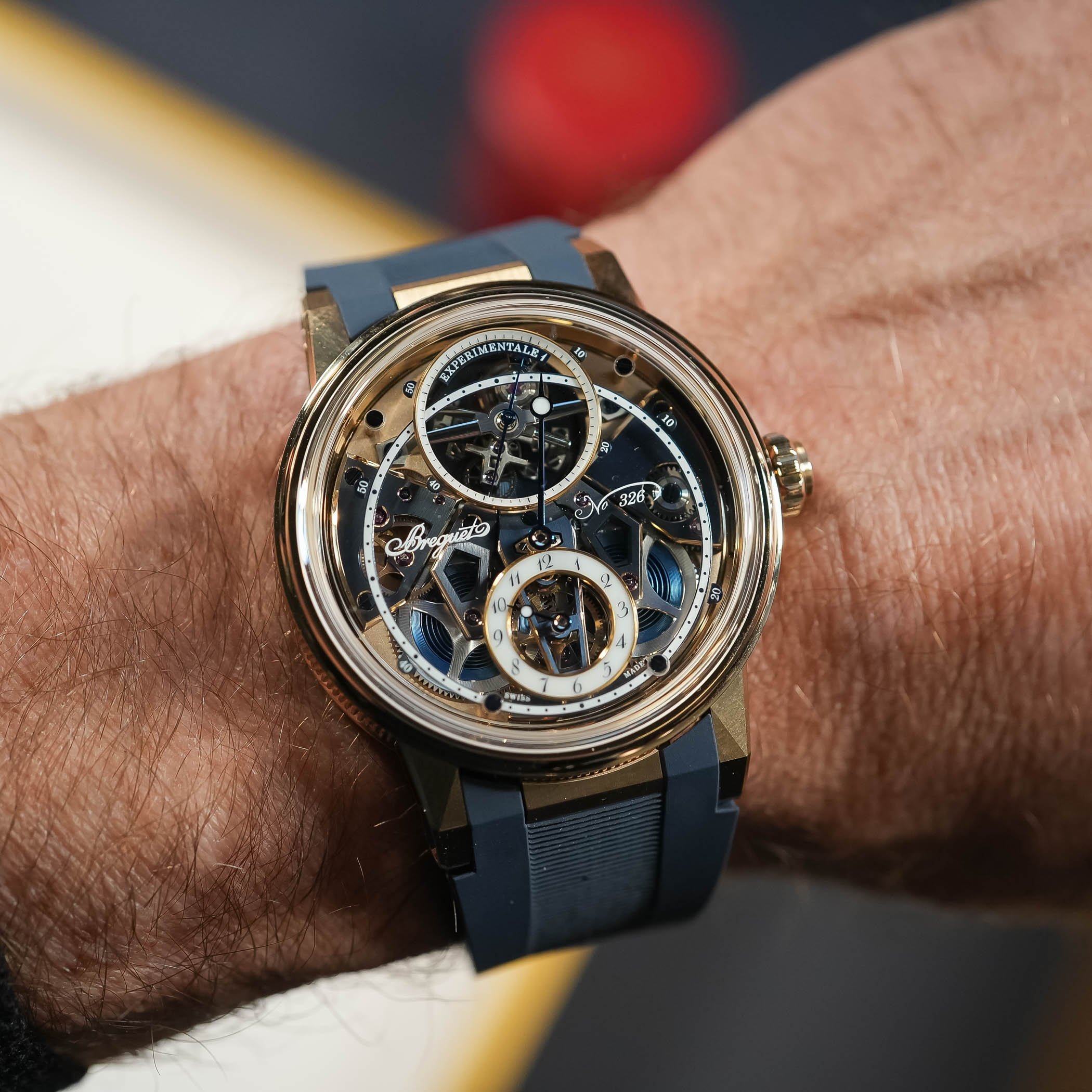
The Breguet Experimentale 1 continues its modern and avant-garde style with a blue rubber strap, nicely integrated within the whole case and equipped with a quick-release system, thanks to pushers located on the back of the central lug modules. It is closed by an 18k Breguet gold pin buckle.
Availability & Price
The Breguet Experimentale 1 reference E001BH/S9/5ZV is a limited edition of 75 pieces that will retail for CHF 320,000. For more details, please visit breguet.com.


2 responses
WOW. This is Breguet flexing. What an absolute masterclass.
What time is it? Cos in all these photographs……I can’t tell the time, date or anything?