
 Not all images were able to load for printing. Please close the print window and try again.
The Blancpain Carrousel Incliné, A New Angle on Chronometric Precision (Incl. Video)
With a new 30-degree inclined flying carrousel movement, the latest Blancpain watch delivers exceptional rate consistency throughout its 100-hour power reserve.
You’re certainly familiar with the tourbillon regulator, the device patented by Abraham-Louis Breguet, which helps counteract the negative effects of gravity by constantly rotating the regulating organ on its own axis. The tourbillon, while the most familiar system, isn’t the only one to perform this task. The carrousel, a speciality of Blancpain, also benefits chronometry and stability by having the beating heart of the watch continuously changing position. Now, after revealing a true masterpiece in chiming complication, the Grande Double Sonnerie 15GSQ, Blancpain comes back to high-end watchmaking again by introducing the Carrousel Incliné, featuring a 30-degree inclined carrousel, a first in watchmaking. Let’s go over the details in this in-depth article as well as in our video above.
carrousel vs. tourbillon
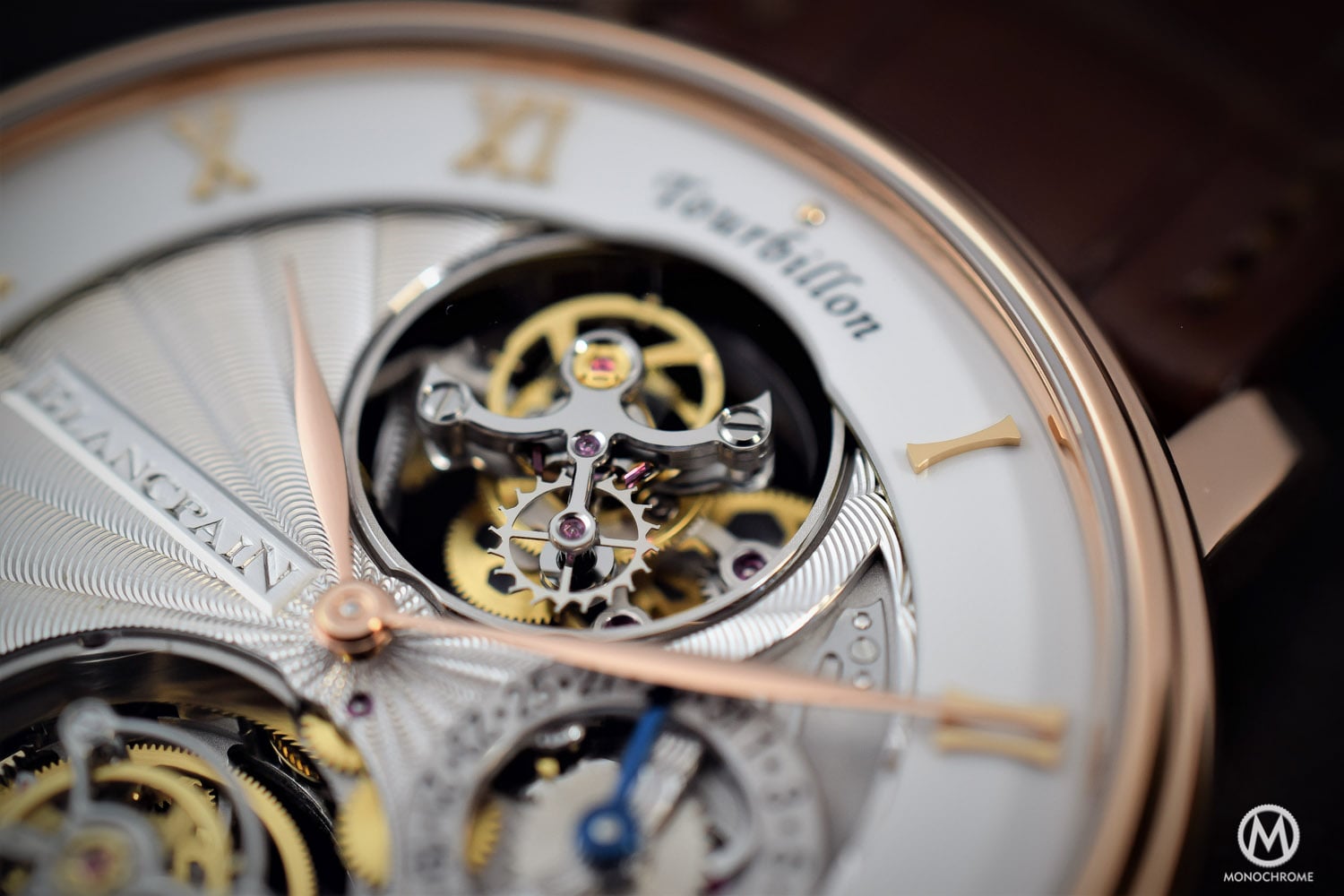
Both the carrousel and the tourbillon reduce gravity’s effect on a mechanical watch’s rate by constantly changing the regulating organ’s position, but their construction differs. In a tourbillon, a fixed wheel drives the cage’s rotation and also interacts with the escapement (a single powertrain with a fixed gear). A carrousel uses two separate gear trains: one powers the escapement, while the other drives the cage’s rotation. The absence of a fixed wheel is the main distinction between the two mechanisms.
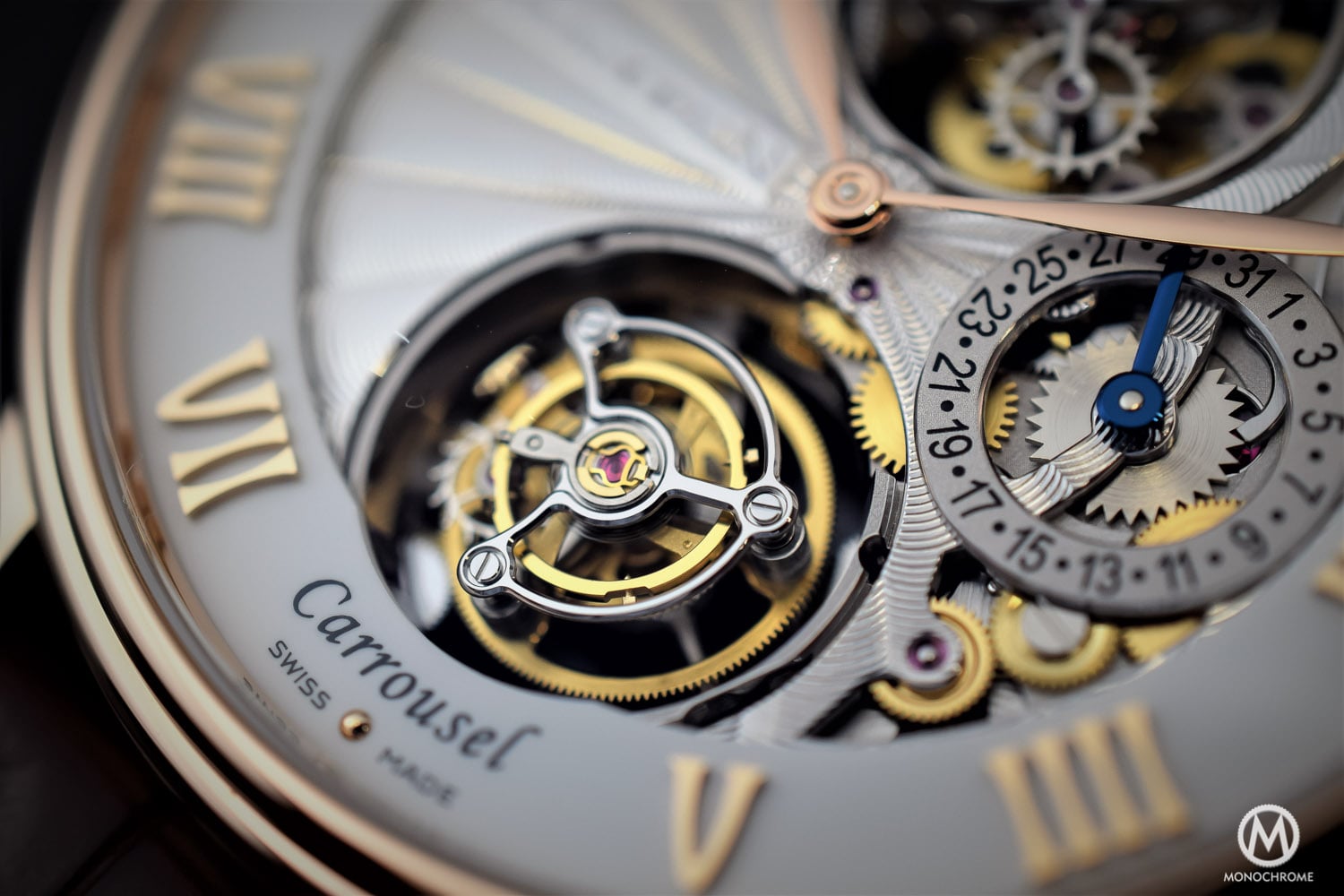
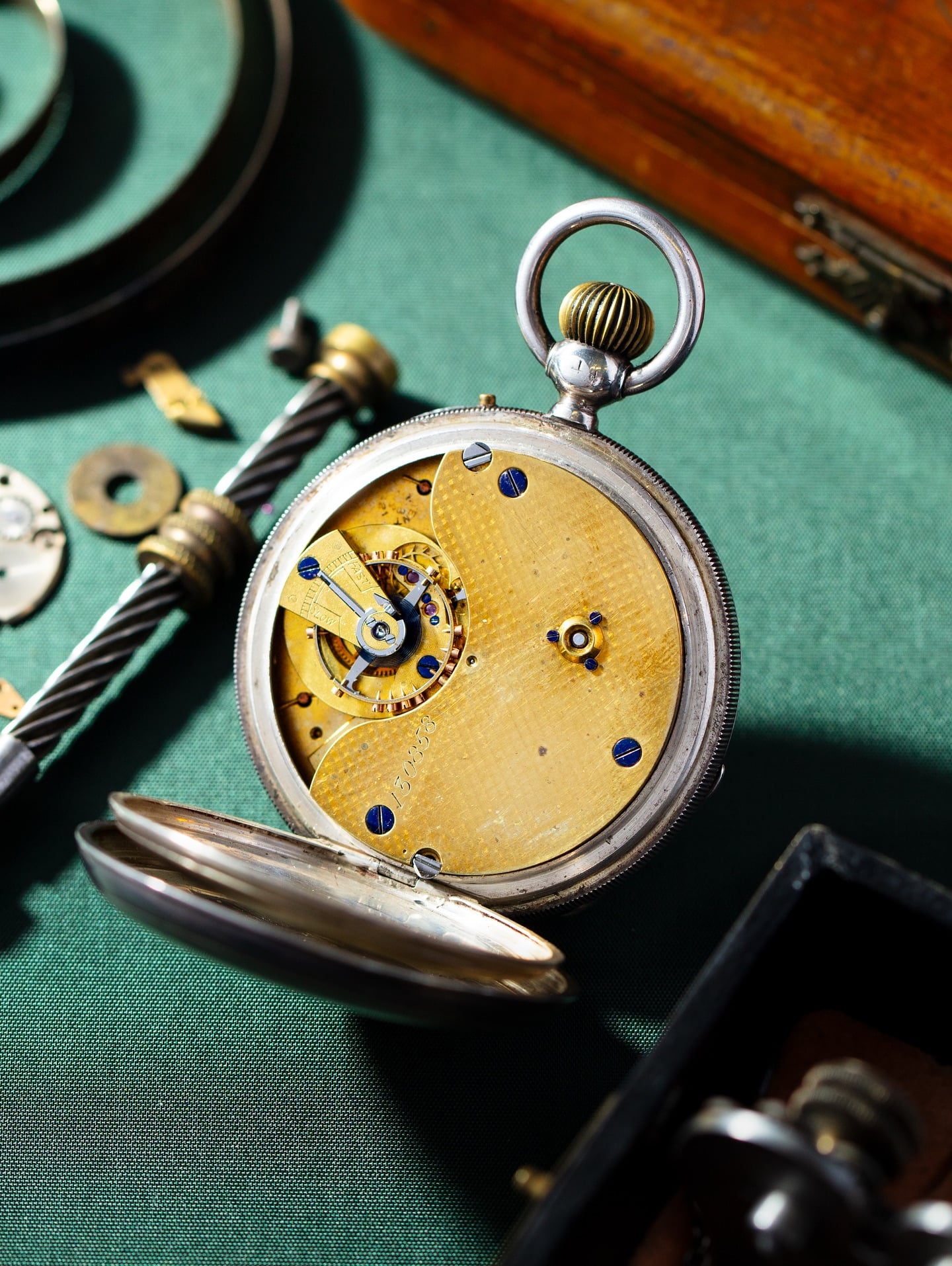
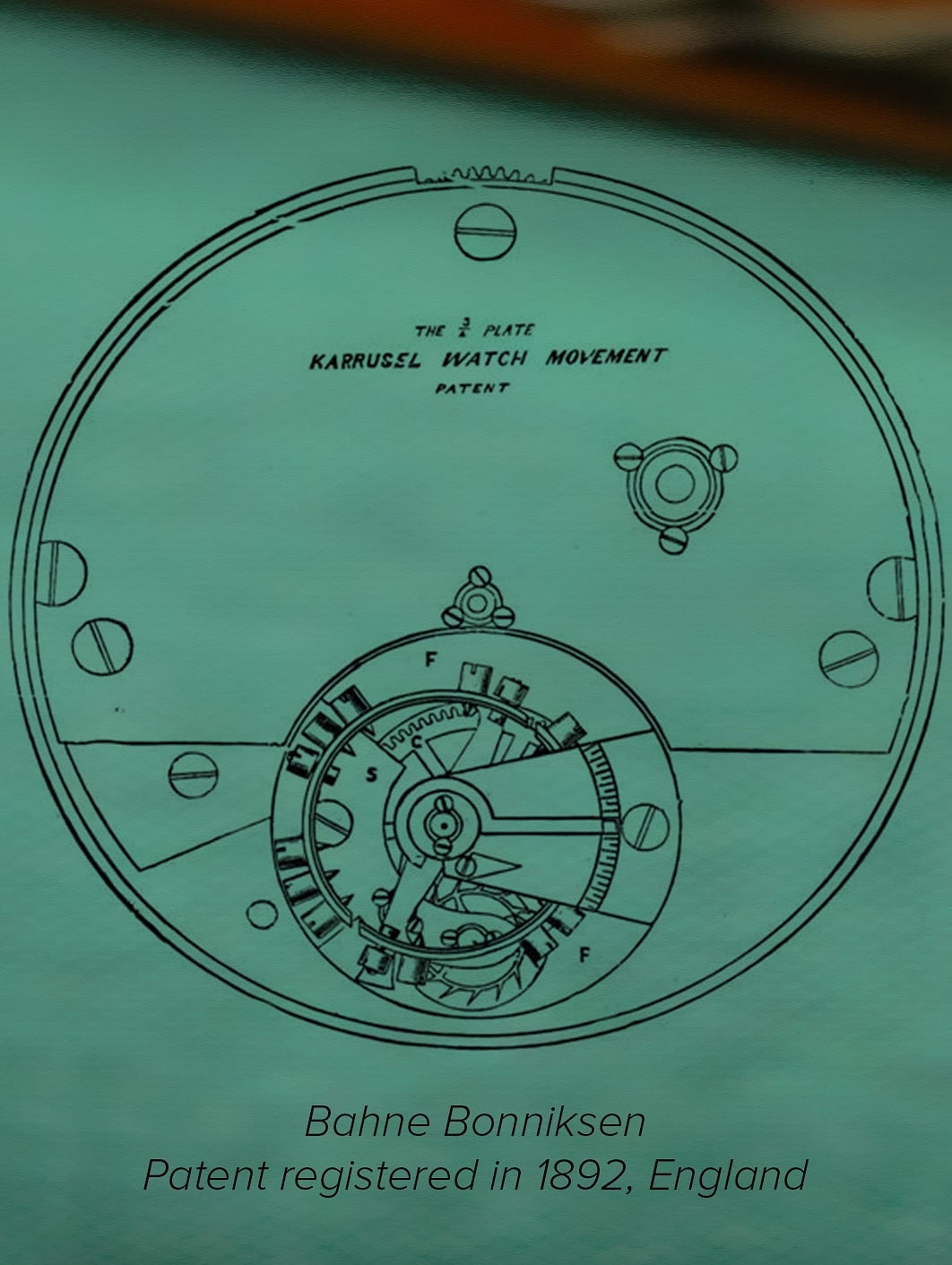
The carrousel (Karrusel) was developed by Bahne Bonniksen, a British watchmaker of Danish origin, who patented his system in 1892. It was mainly used in precision pocket watches made in Britain around the turn of the 20th century. Interestingly, the Bonniksen name is back in focus today: the independent project Naissance d’une Montre 4 aims to reconstruct and reinterpret Bonniksen’s work and launch a brand.
Blancpain has its own history with the complication. The Manufacture brought the flying one-minute carrousel to the wrist in 2008 with the Carrousel Volant Une Minute, followed by models including the Villeret Carrousel Phases de Lune. In 2013, the Villeret Tourbillon Carrousel combined a flying tourbillon and a flying carrousel in the same watch, using calibre 2322. The Manufacture also explored the combination in the L-Evolution Tourbillon Carrousel, as well as in the Le Brassus Tourbillon Carrousel and the Le Brassus Carrousel Répétition Minutes Chronographe Flyback. The new Carrousel Incliné focuses on the geometry and performance of the carrousel alone, showcasing the movement through the watch’s transparent construction.
The Transparent Case
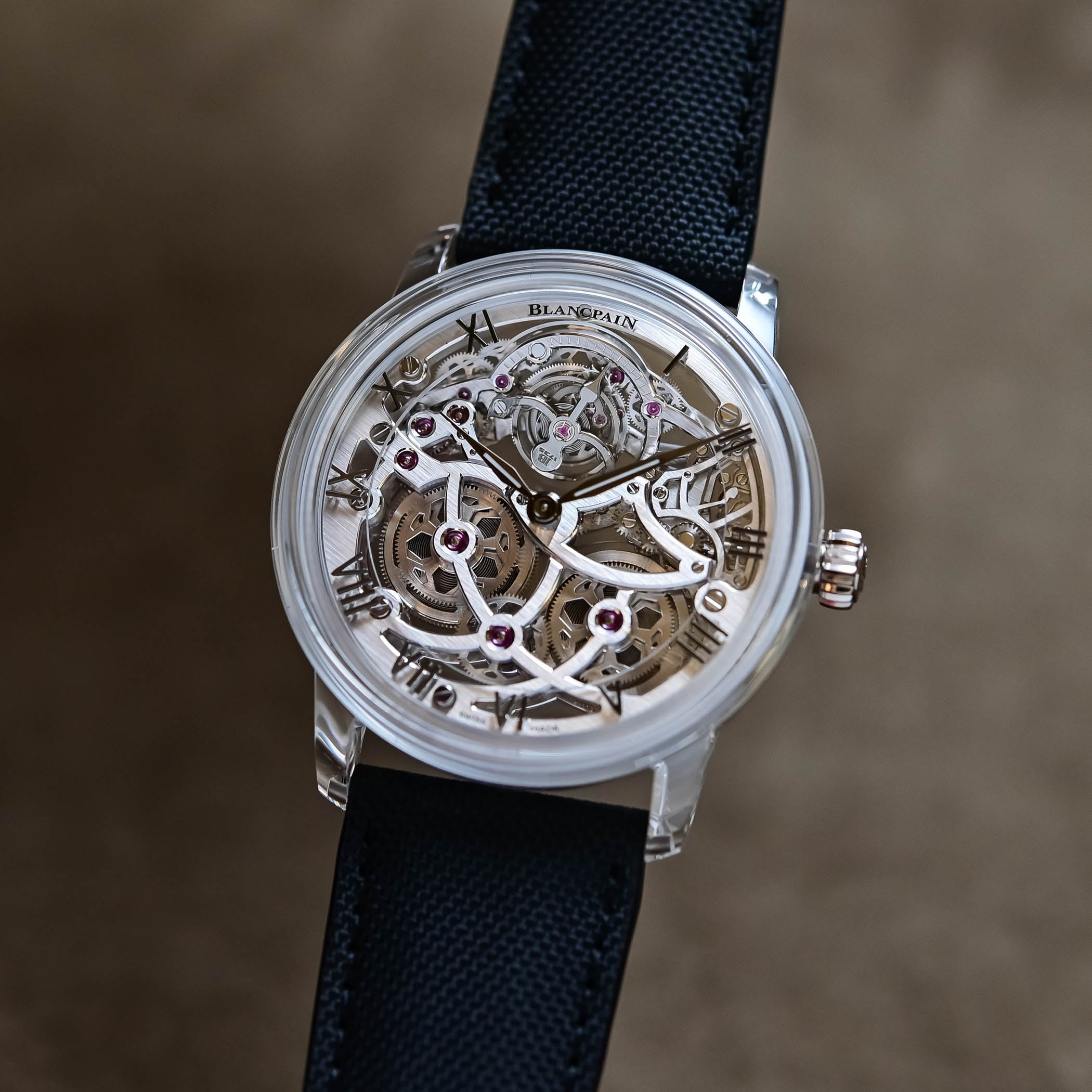
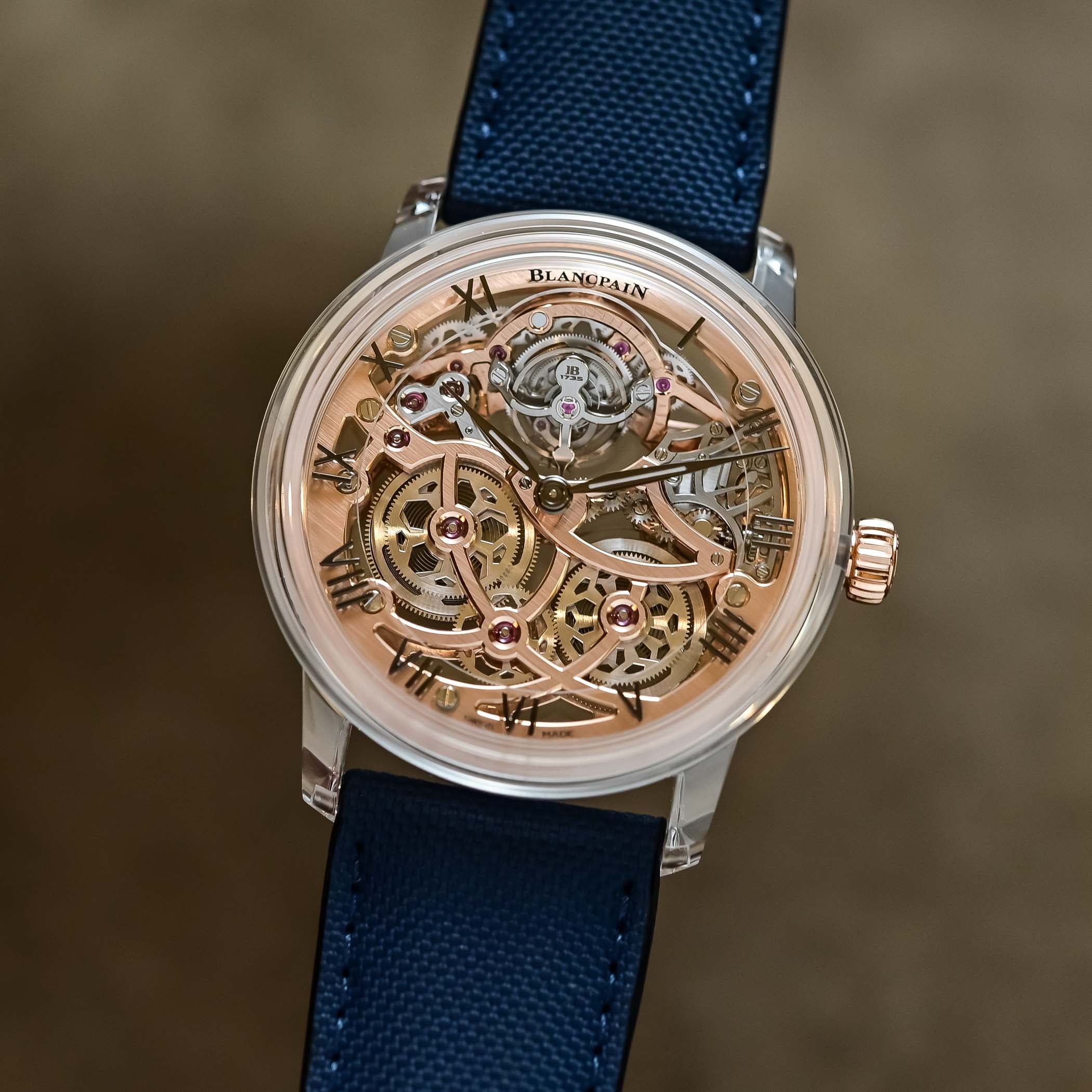
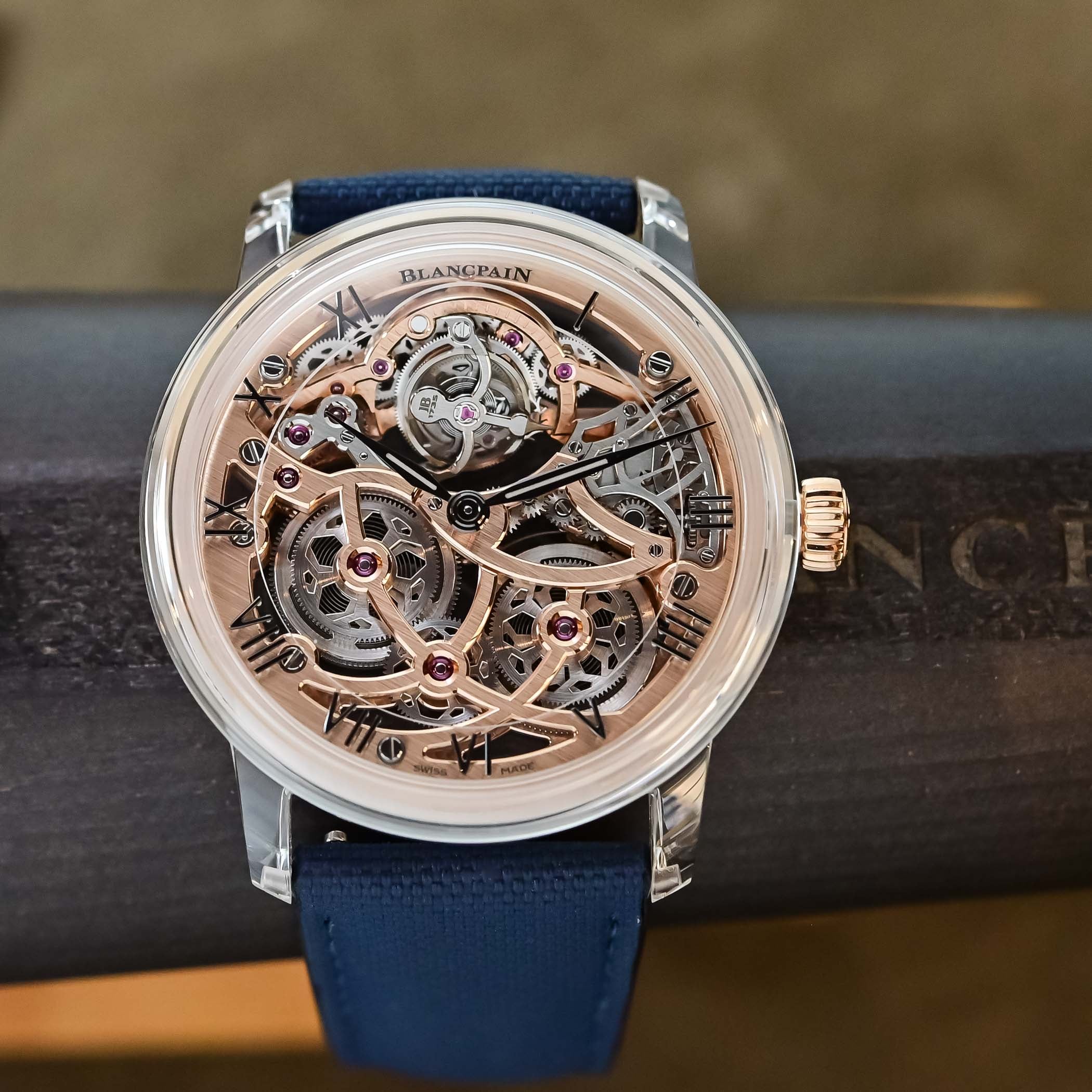
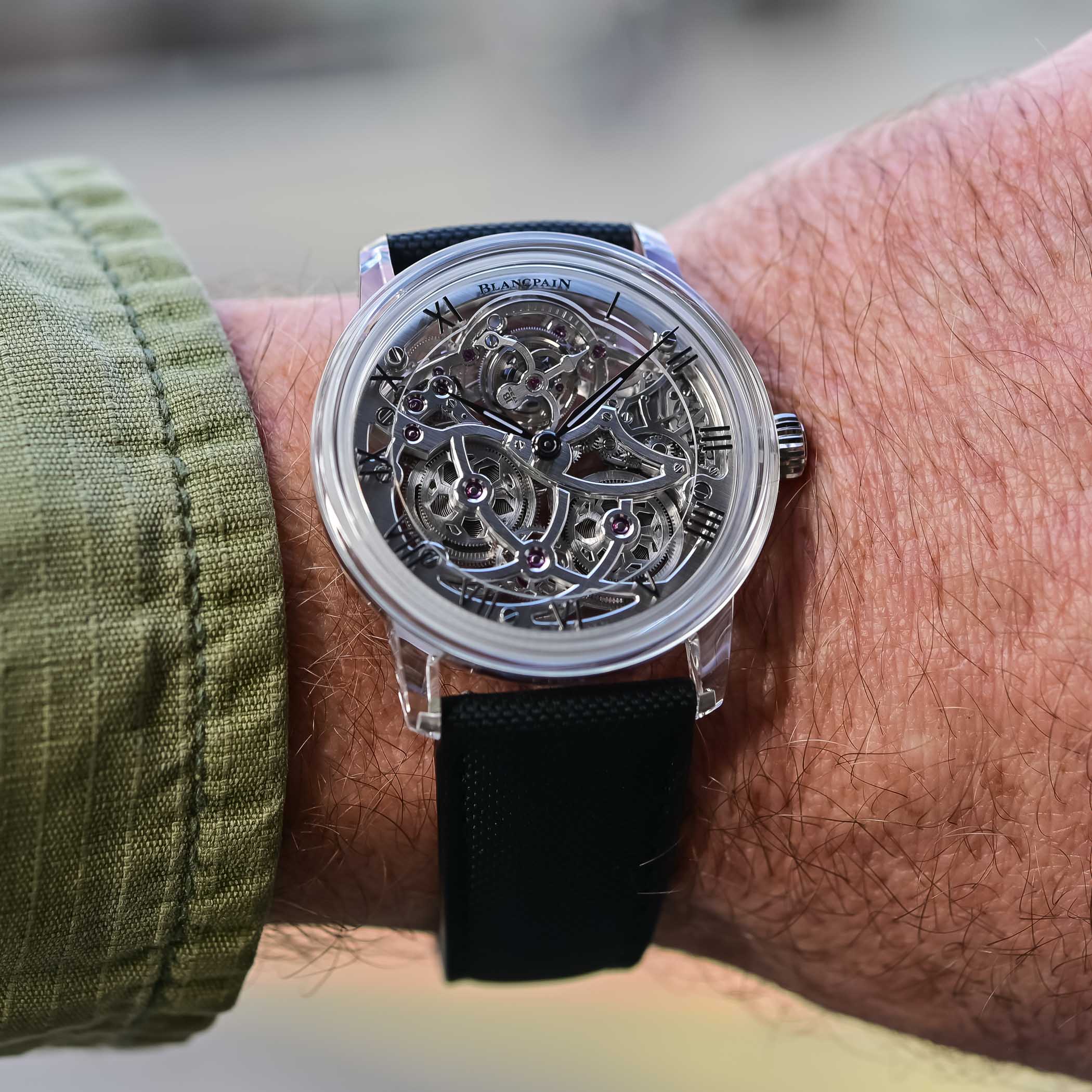
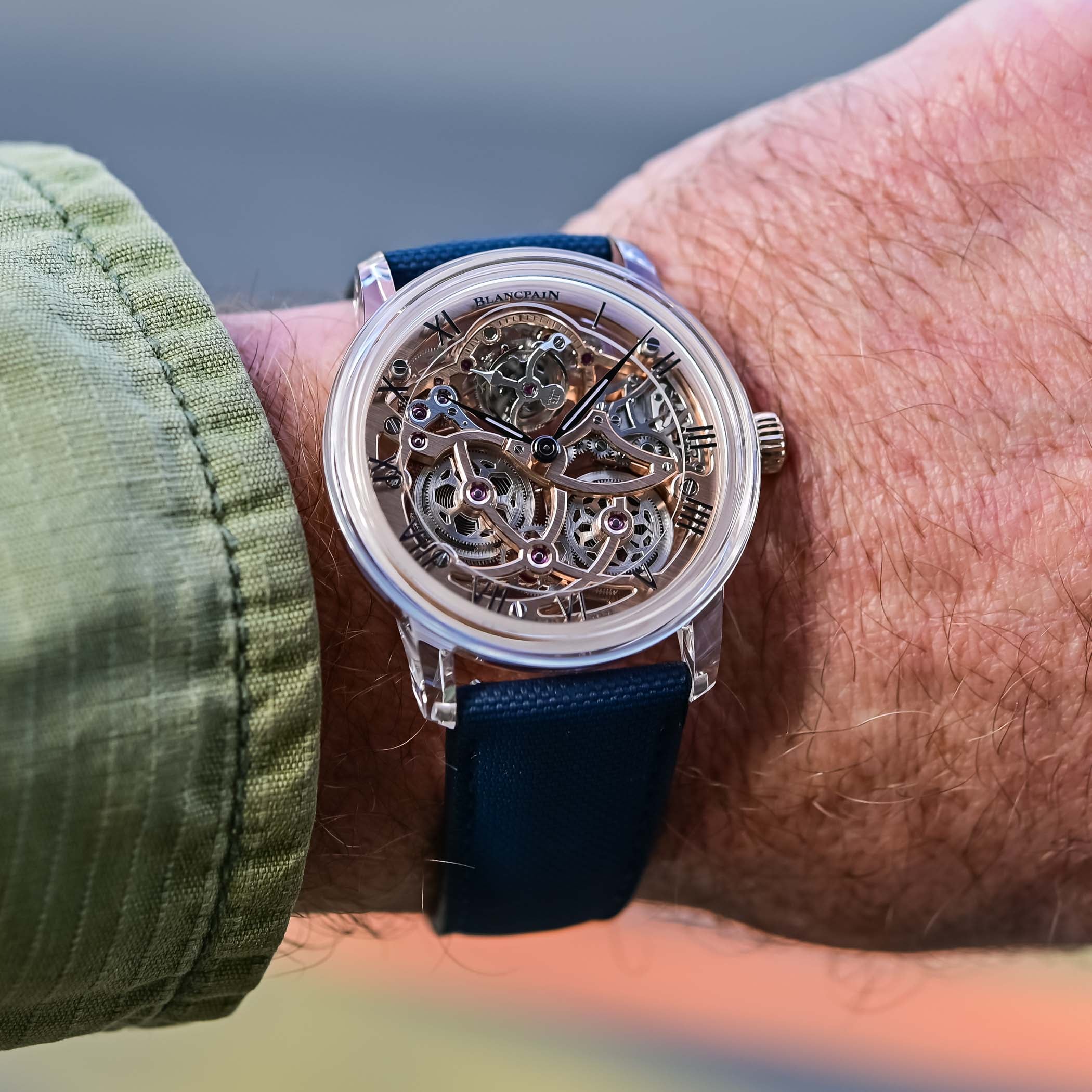
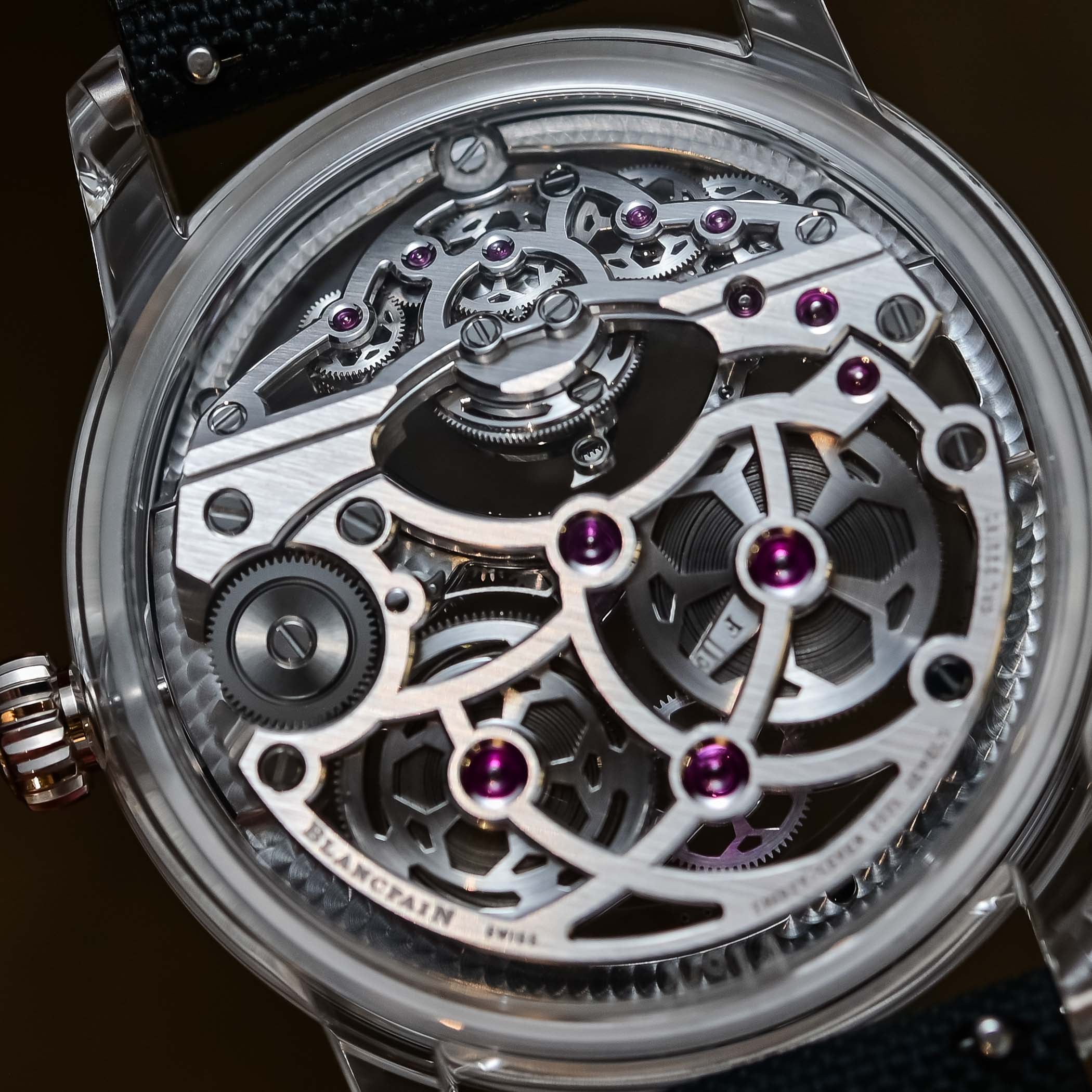
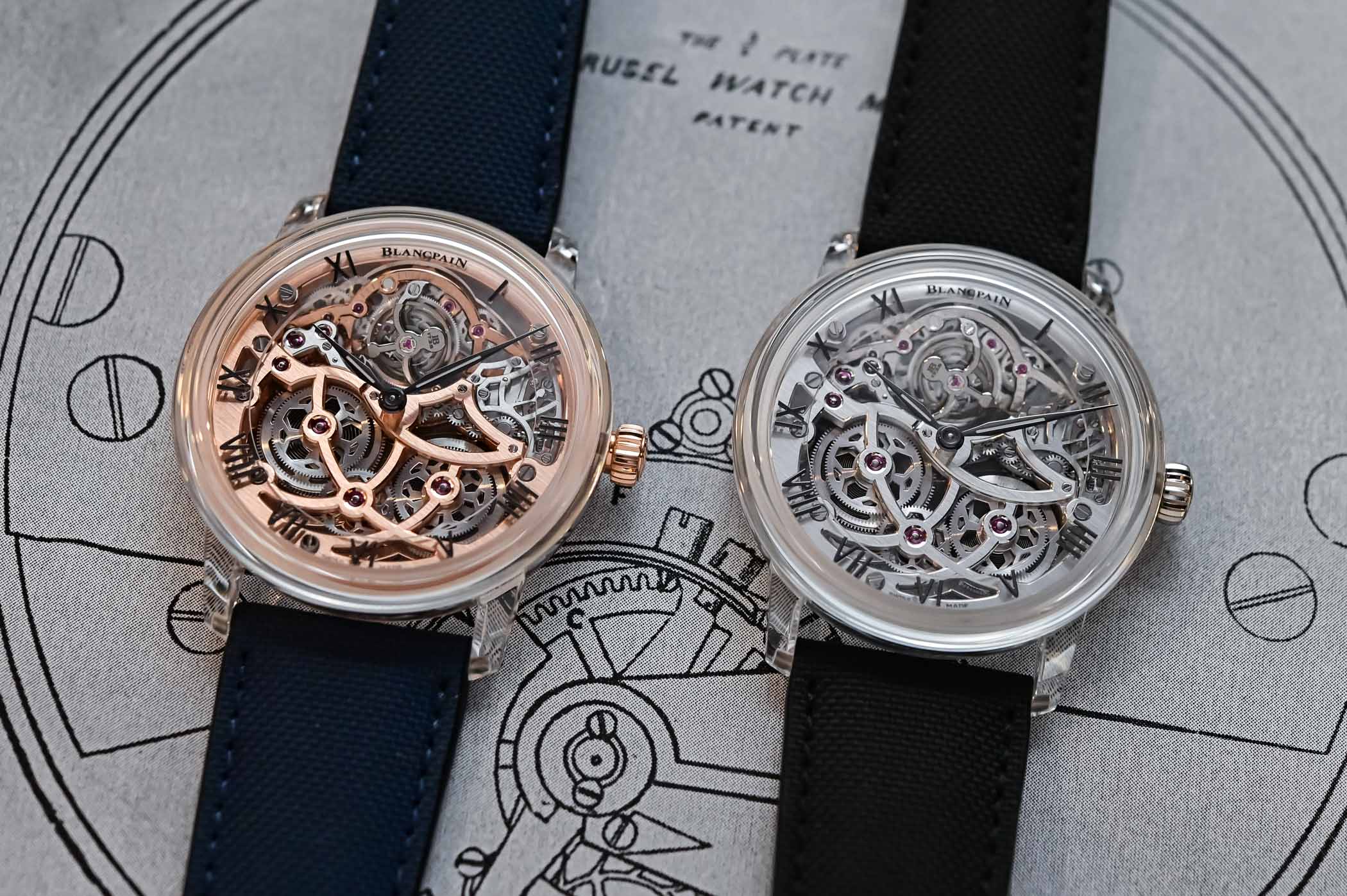
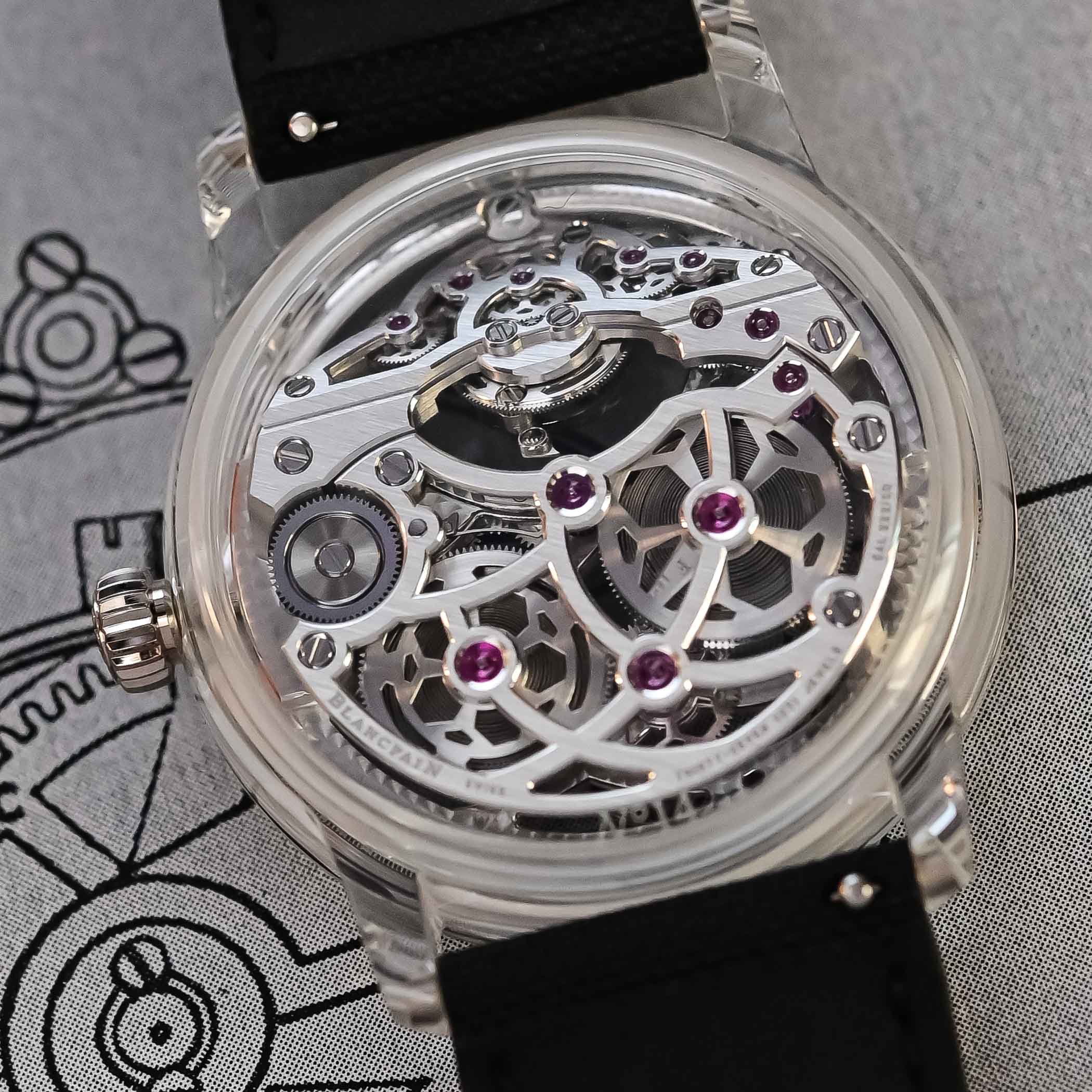
The new Blancpain Carrousel Incliné case is made of sapphire crystal, marking the first time Blancpain has used this material for a complete case construction. Measuring 40.3mm in diameter and 11.3mm thick, it has an integrated design in which the middle and back are formed as one component, while the bezel and crystal are integrated into another. The transparent case exposes the movement from virtually every angle, making the calibre’s build and finishing an essential part of the experience.
The Dial and Display
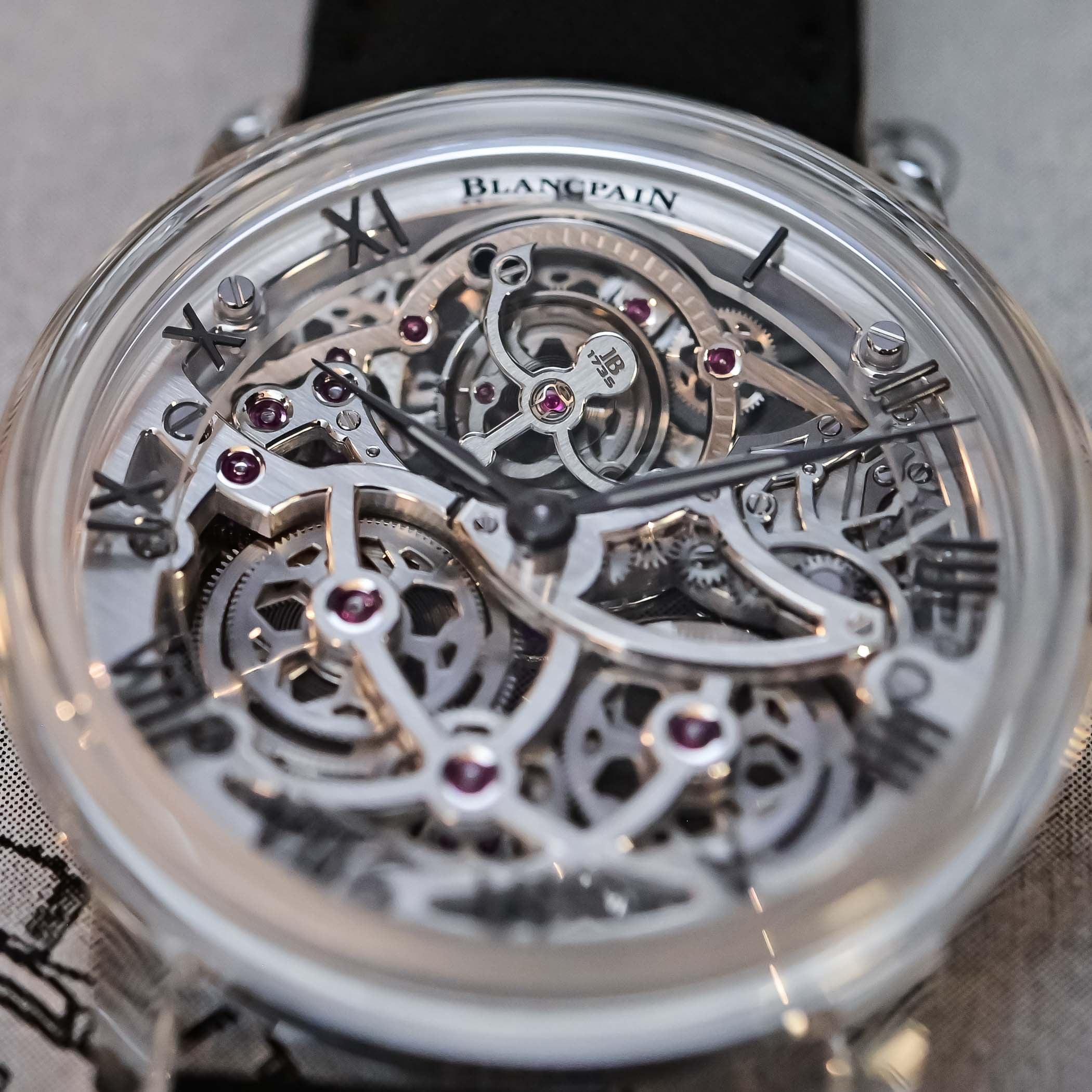
The transparency continues with the dial of this Carrousel Incliné, which is also made of sapphire, and skeletonised movement components are part of the display. Gold Roman appliques on the dial’s periphery mark the hours. Hands treated with luminescent material indicate the time. For the running seconds, the carrousel carries a beak-shaped indicator that marks the passing seconds, so the rotating regulator is the technical centrepiece and a functional element of the display. The two skeletonised mainspring barrels are also visible, providing a visual reference for the remaining power reserve, and on the reverse, an E/F (Empty/Full) indication showing the state of wind can be found on the barrel that supplies the going train.
The Inclined Carrousel and Calibre 222ISQ
The new, hand-wound calibre 222ISQ was developed over four years. It is defined by a flying carrousel, inclined at 30 degrees, designed to reduce positional rate differences by changing the orientation of the regulating organ as the cage rotates, keeping it constant across all six positions and throughout the movement’s impressive power reserve. Blancpain tested inclinations ranging from 0 to 35 degrees, in five-degree increments, studying rate, amplitude and variation across four vertical and two horizontal positions. The tests revealed that 30 degrees was the most effective configuration. The idea of inclined regulating organs isn’t new, and is regularly used by Greubel Forsey, which has demonstrated its effectiveness.
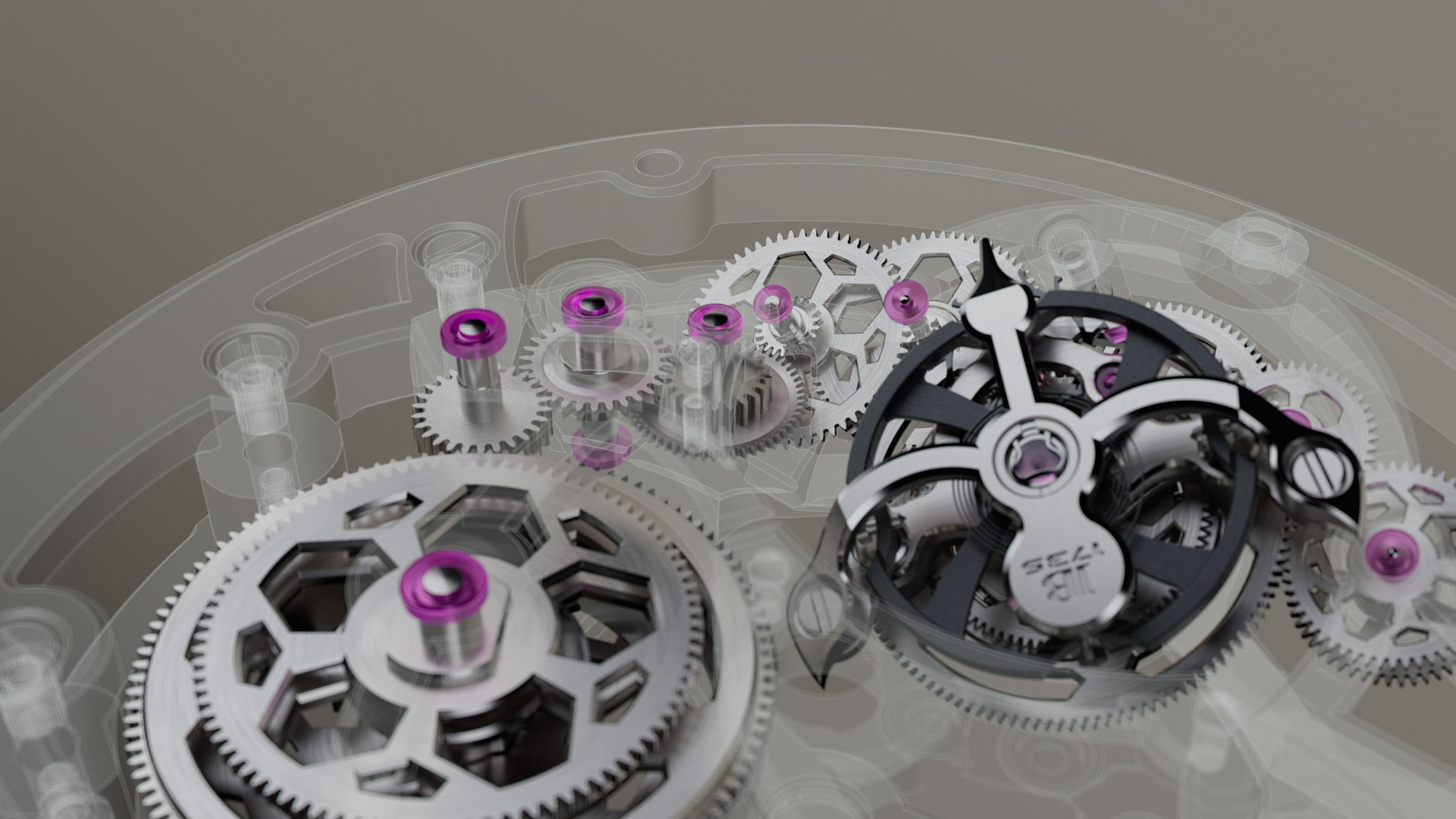
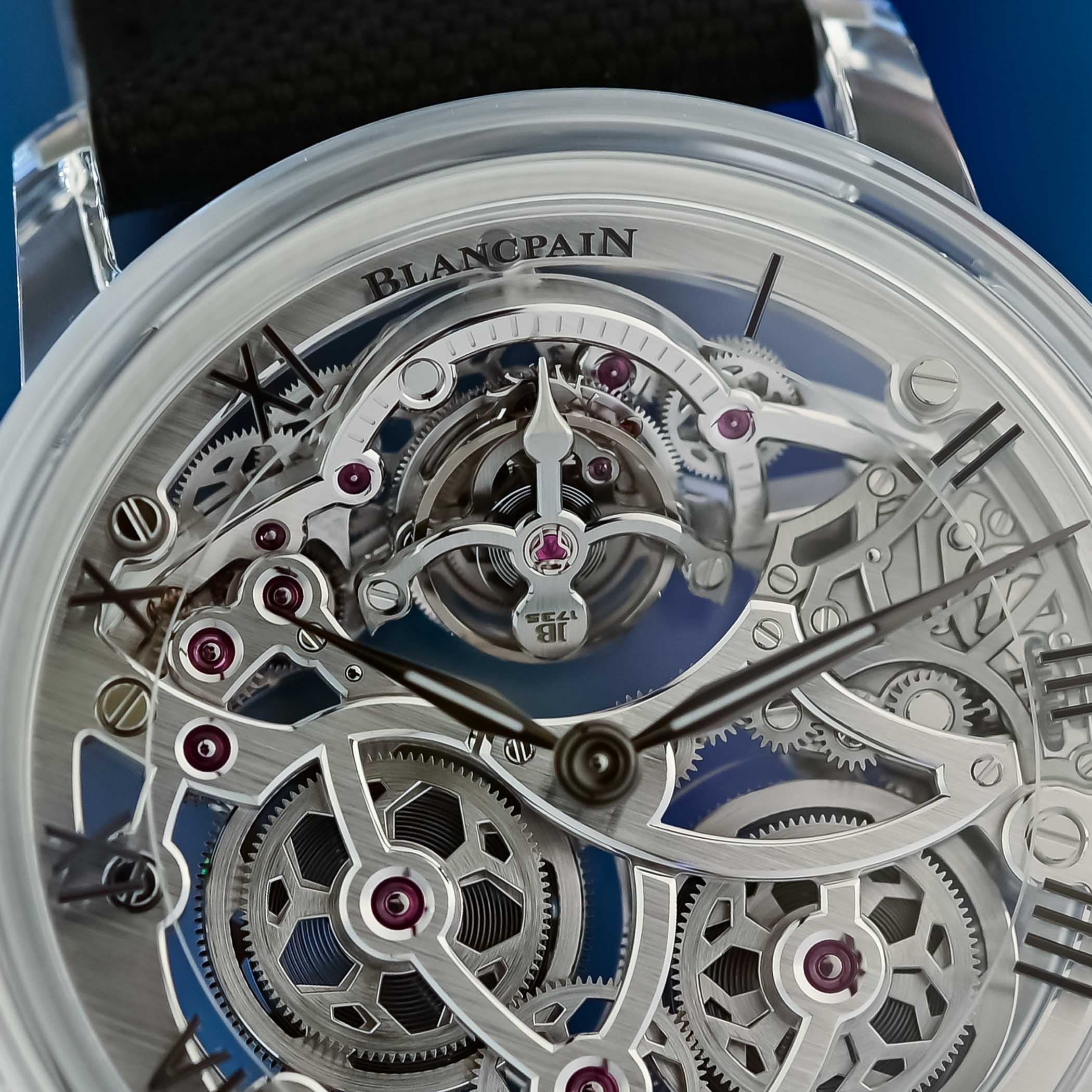
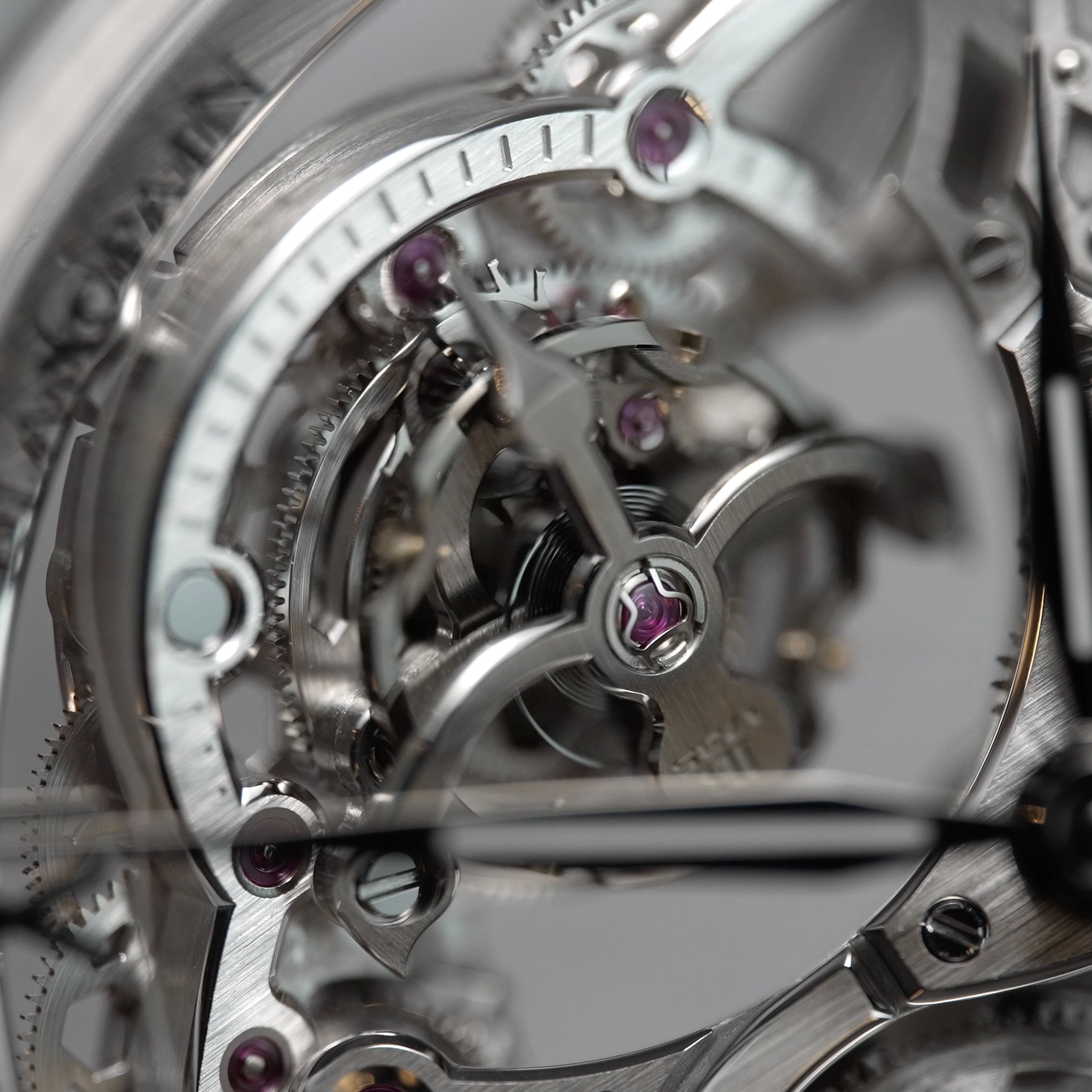
The carrousel completes one rotation per minute and runs at a fairly rapid rate of 28,800 vibrations/hour; its balance measures 8mm in diameter and features a silicon hairspring. To travel back in time, carousel movements used to operate at slower beats, like the earlier 3Hz Blancpain calibre 225, and the brand increased it to 4Hz with the introduction of calibre 233 in 2010. And the one-minute rotation was not the conventional speed either. Blancpain has also worked to reduce the mass of the rotating assembly: the cage is 8.5% lighter than the previous construction, while its rotational inertia has been reduced by 30%.
The inclined architecture required a careful transition between the movement’s horizontal plane and the angled regulator. Blancpain describes this as a two-stage geometry, with a first transition of 22 degrees followed by a further eight degrees to reach the final 30-degree inclination. The 9mm cage is supported by a double ball-bearing system, for which a patent application has been filed. The movement measures 35.2mm in diameter and 5.3mm thick, with the maximum height of the complete calibre reaching 6.98mm at the cage.
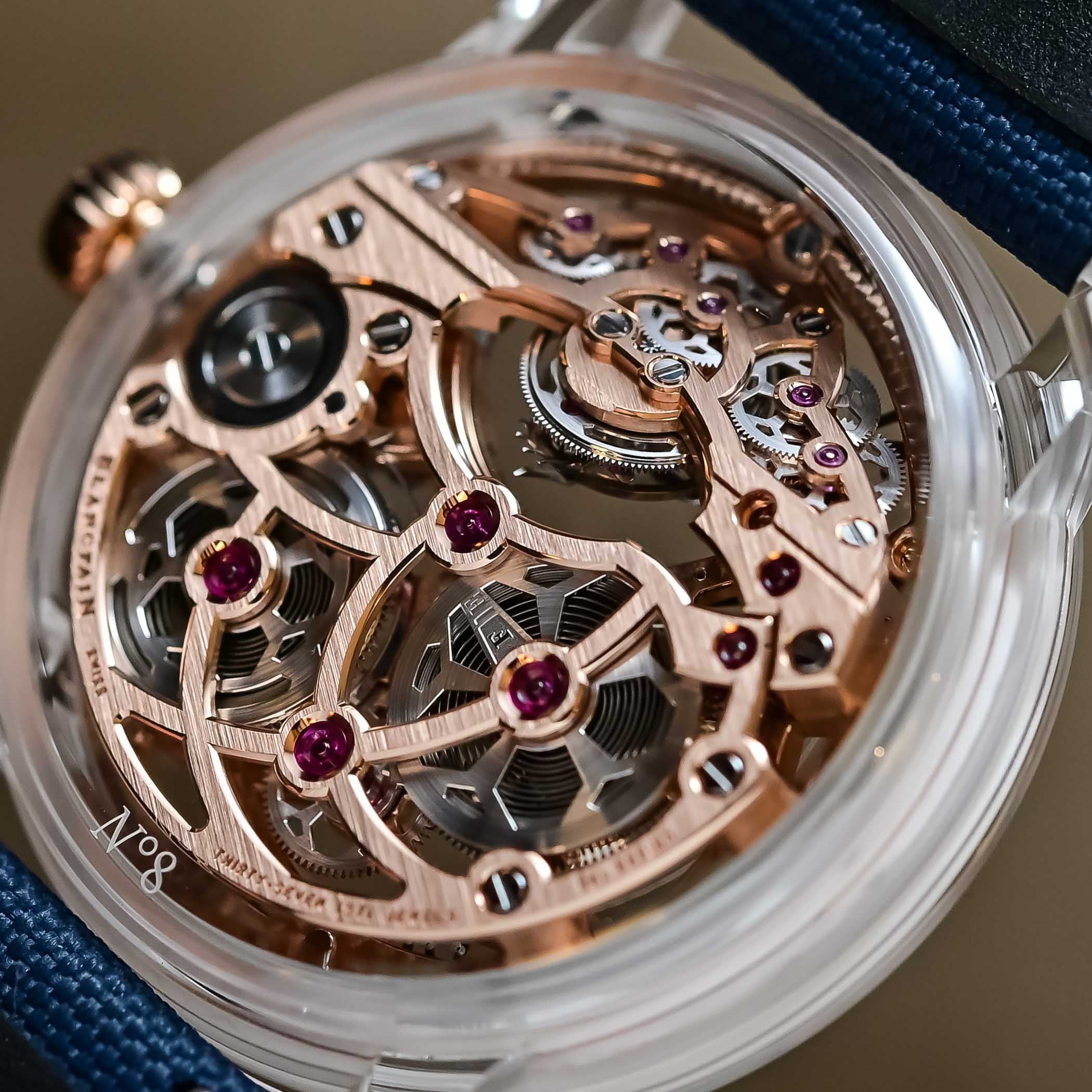
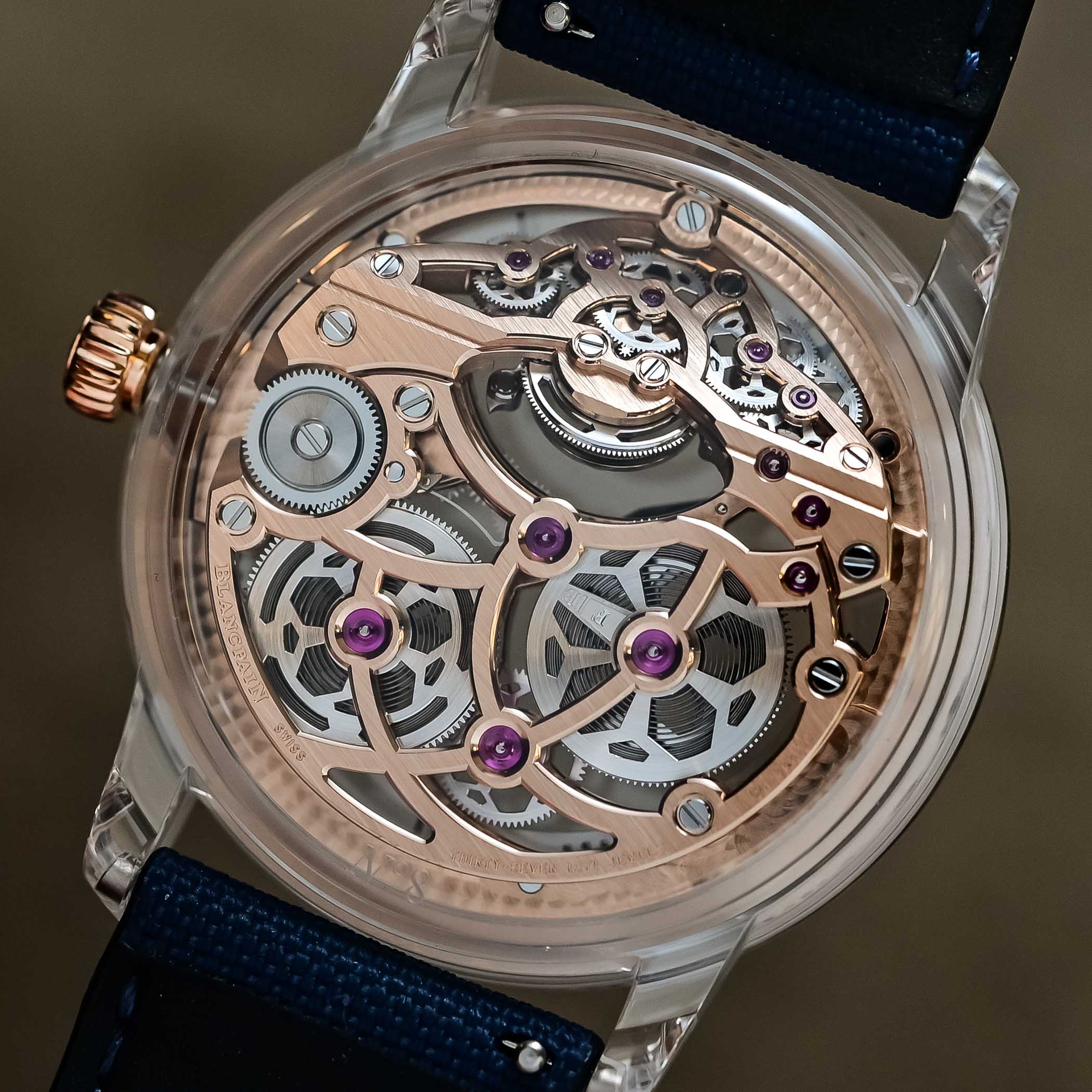
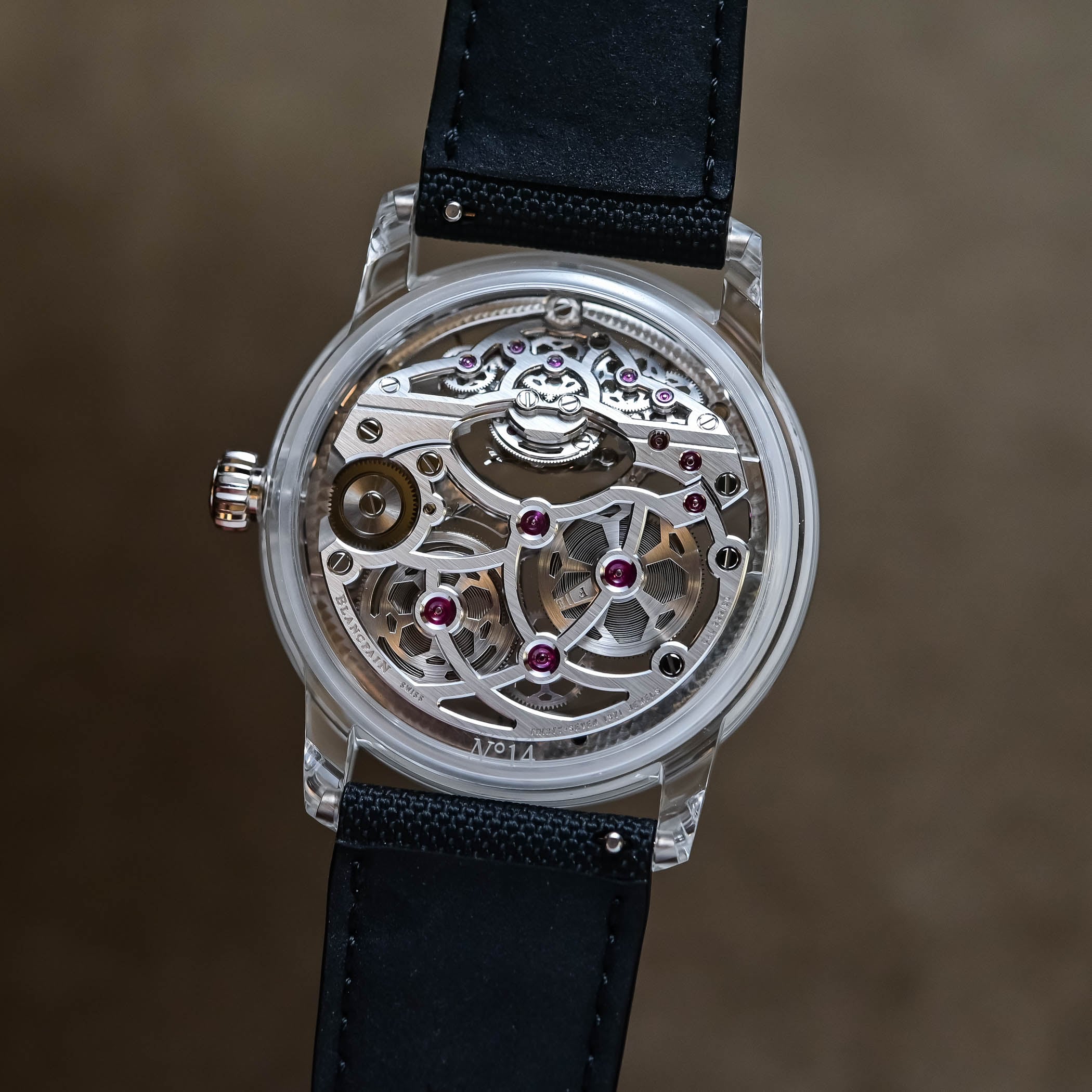
Power is supplied by two mainspring barrels connected in series, providing a 100-hour power reserve and aiming to maintain stable torque as the springs unwind. The calibre comprises 224 components and 37 jewels.
Gold Bridges and Hand Finishing
The movement is available in two finishes: rhodium-plated 5N gold or 5N red gold. Both versions use 18-carat gold parts, with the bridges and mainplate visible through the sapphire dial and case.
Blancpain says that each movement receives around 210 hours of hand finishing. More than 60 dedicated tools are used, and the calibre features 253 sharp inward angles. The anglage is performed on both sides of the bridges, with 30-degree bevels on the upper surfaces and 45-degree bevels on the lower ones. Watchmakers use burins and abrasives to shape and polish the edges, with gentian stems employed for the final stages of polishing. The mainplate and barrel bridge alone require between 55 and 60 hours of work. Perlage and straight-grained satin finishes provide contrast across the remaining surfaces.
Thoughts and Price
The Carrousel Incliné sums up Blancpain’s watchmaking interests: its long-standing work on the flying carrousel, its search for better chronometric performance, and its increasingly ambitious movement design and use of materials. The inclined carrousel is the technical highlight, designed to improve timekeeping, and the sapphire case turns the movement into a mesmerising spectacle.
The watch is worn on a glazed blue-grey leather strap and secured with a gold folding clasp with a safety system – the prototypes we photographed were equipped with more casual textile straps. Notably, to prove the achievement, each watch will be accompanied by an individual certificate recording its performance over this period, with a stated rate tolerance of -0/+2 seconds per day. At CHF 380,000, the Carrousel Incliné is a very specialised expression of Blancpain’s approach to the complication and is sure to be appreciated by collectors. For more, visit blancpain.com.