


 Not all images were able to load for printing. Please close the print window and try again.
 Up Close with the New Louis Vuitton Escale Worldtime
A refined comeback of the LV Worldtime, backed by serious watchmaking ambition.
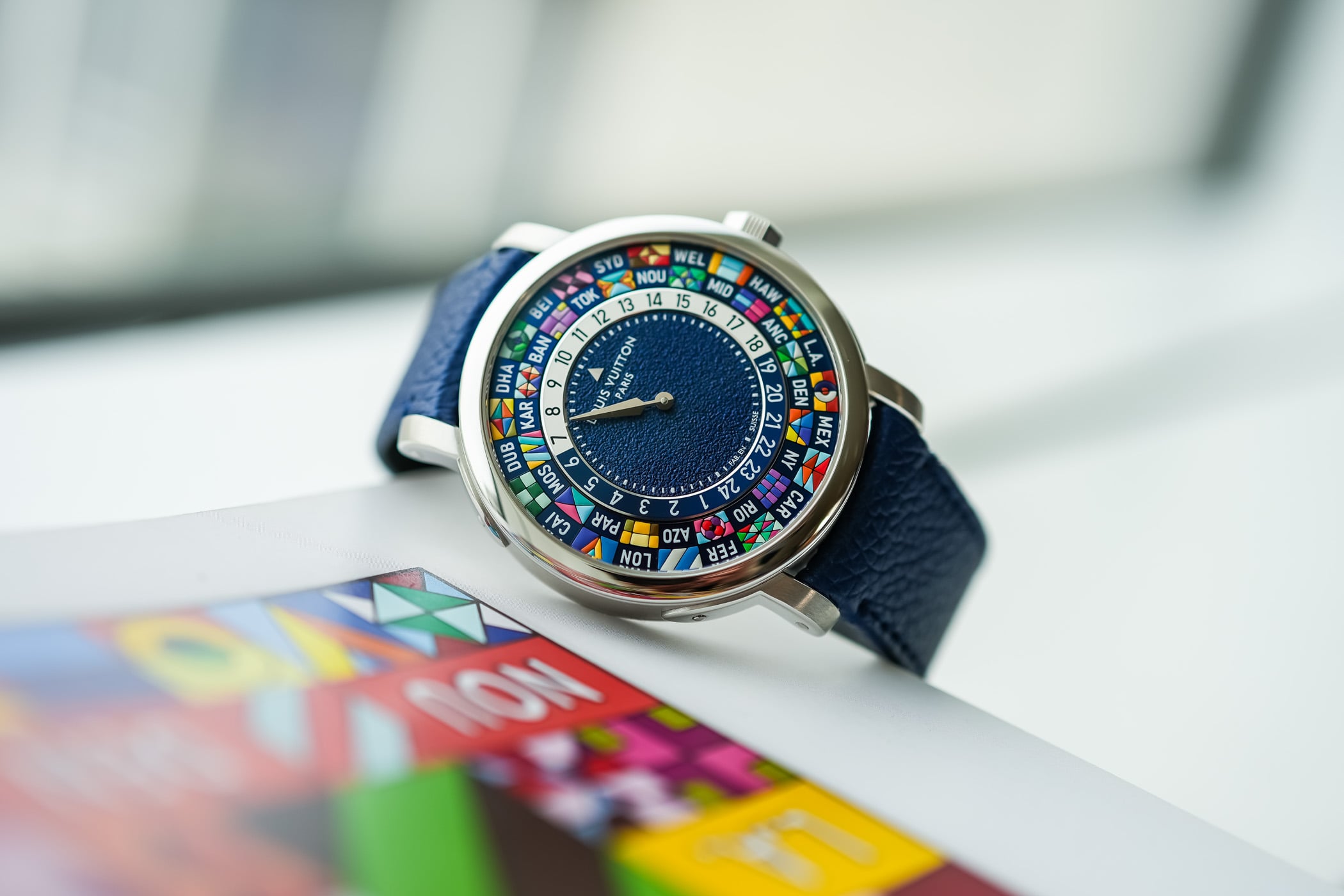
When Louis Vuitton unveiled the original Escale Worldtime at Baselworld in 2014, it caught the watch world by surprise. Not so much because of the technical part, but because of the attitude. Worldtimers were and still are conservative objects, often bound by the nearly 100-year-old Louis Cottier template and a pretty much shared visual. The Escale broke that tradition with colour, symbolism, and a dial that looked nothing like a classical complication, and many followed suit, seeking to offer new concepts. Over a decade later, following the Escale’s 2024 relaunch as a time-only watch, the return of complications we just witnessed is very much welcomed and even overdue, but our patience was rewarded in full.
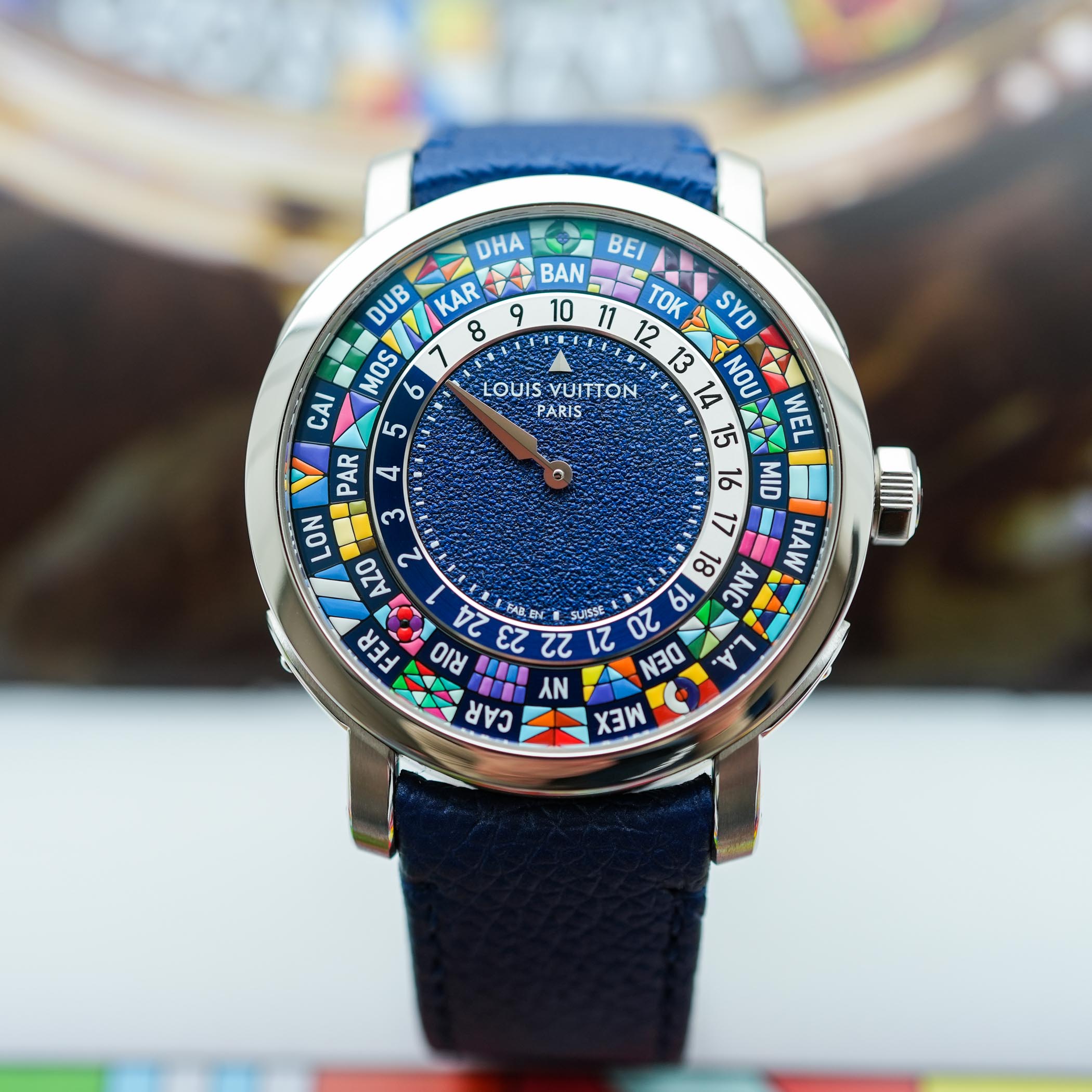
Alongside the 2026 Twin Zone models and an impressive minute repeater, Louis Vuitton and its watchmaking company, La Fabrique du Temps, brought back the worldtime complication (with a version featuring a central tourbillon), this time with far greater mechanical maturity, improved legibility, and a level of finishing that demonstrates what a great specialist La Fabrique du Temps (and its subsidiaries La Fabrique des Arts – artisitc crafts – and La Fabrique des Boîtiers – case maker) really is. We spent time with the new Escale Worldtime watch; here are our impressions.
A Compact yet Dense Case
The first thing that you notice is how compact and dense the new Escale Worldtime feels. The 40mm platinum case, at 10.3mm thick, is slimmer than many contemporary worldtimers and far more wearable than the dial’s visual complexity might suggest. Platinum brings its usual heft (yes, some of us like it heavy), but the proportions keep it from feeling uncomfortable.
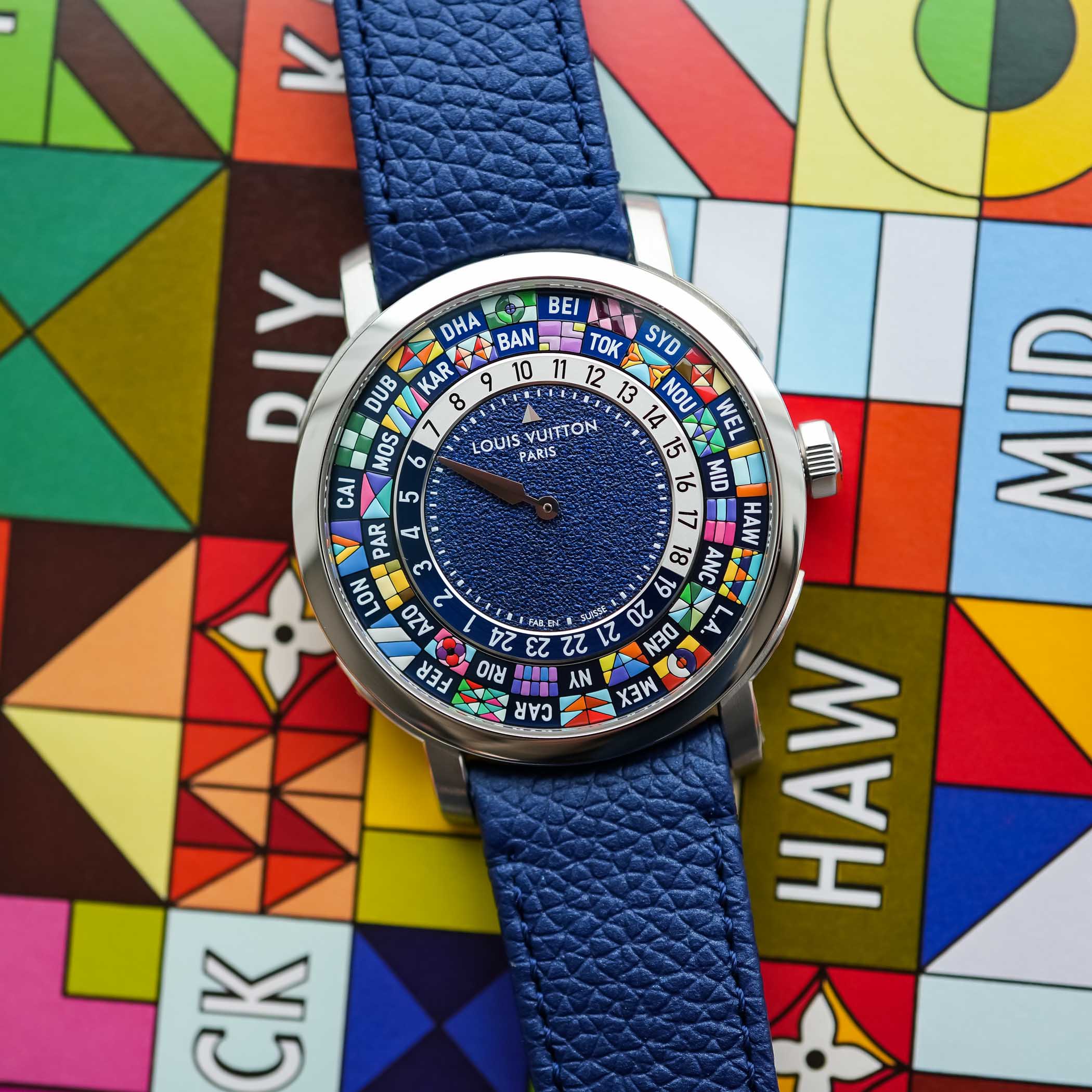
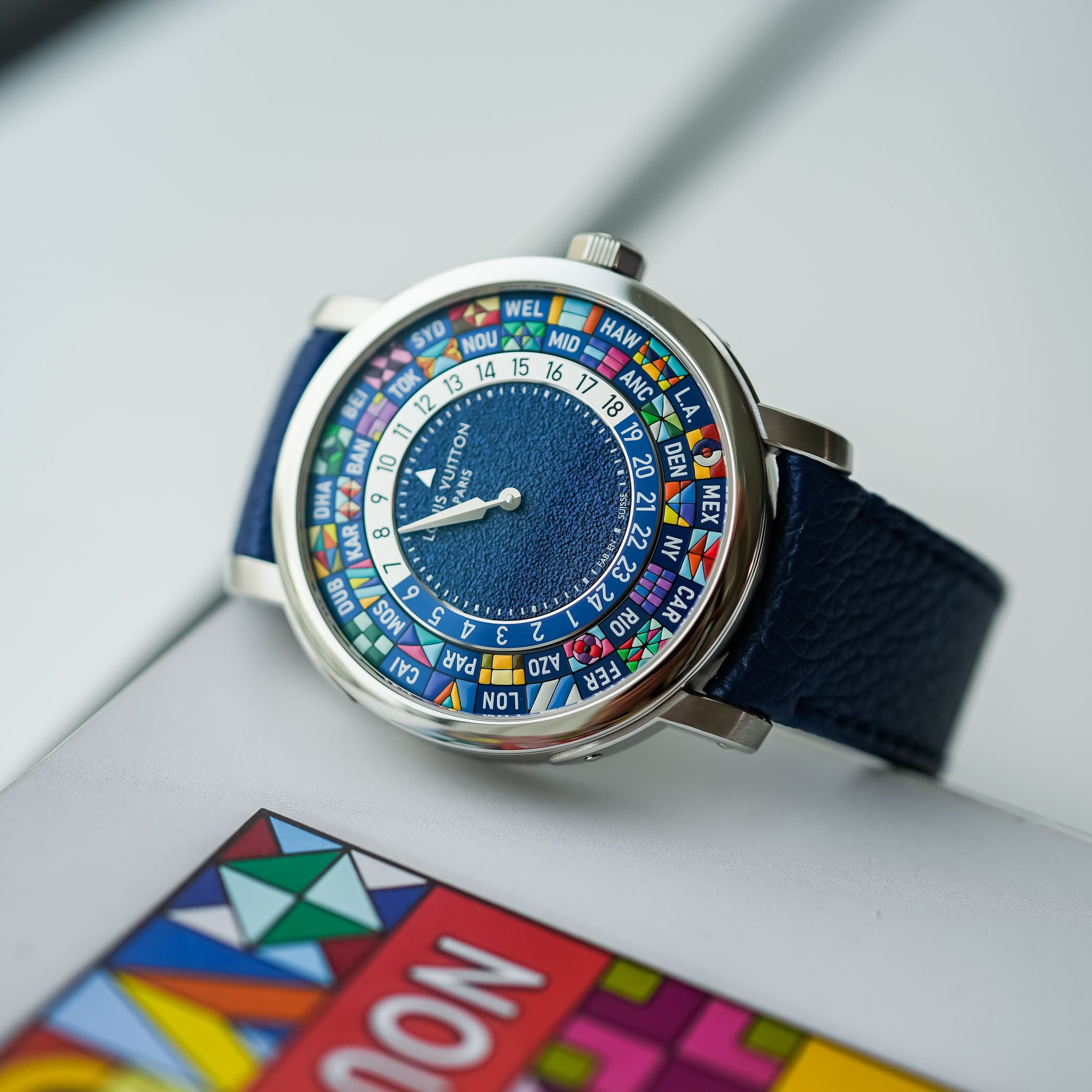
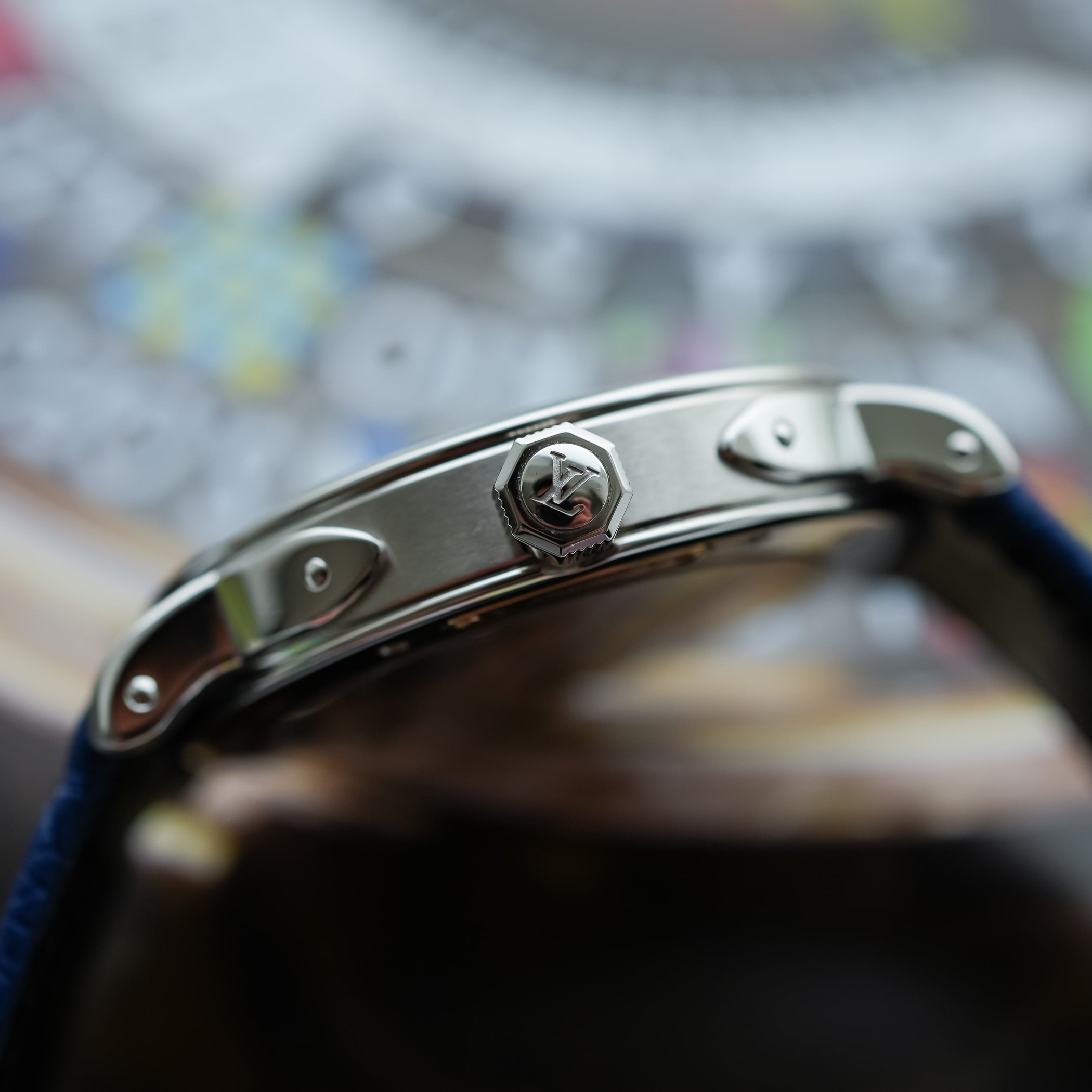
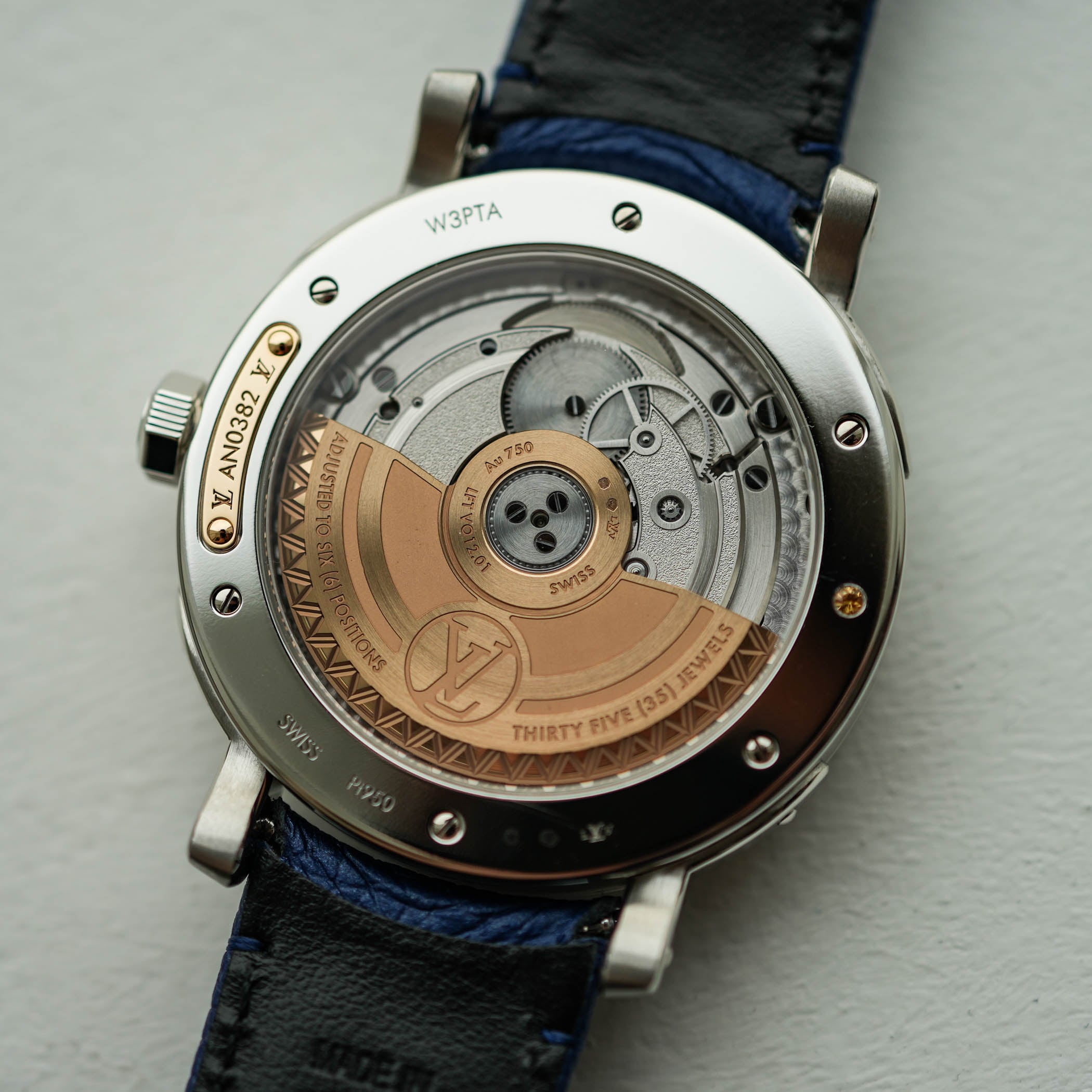
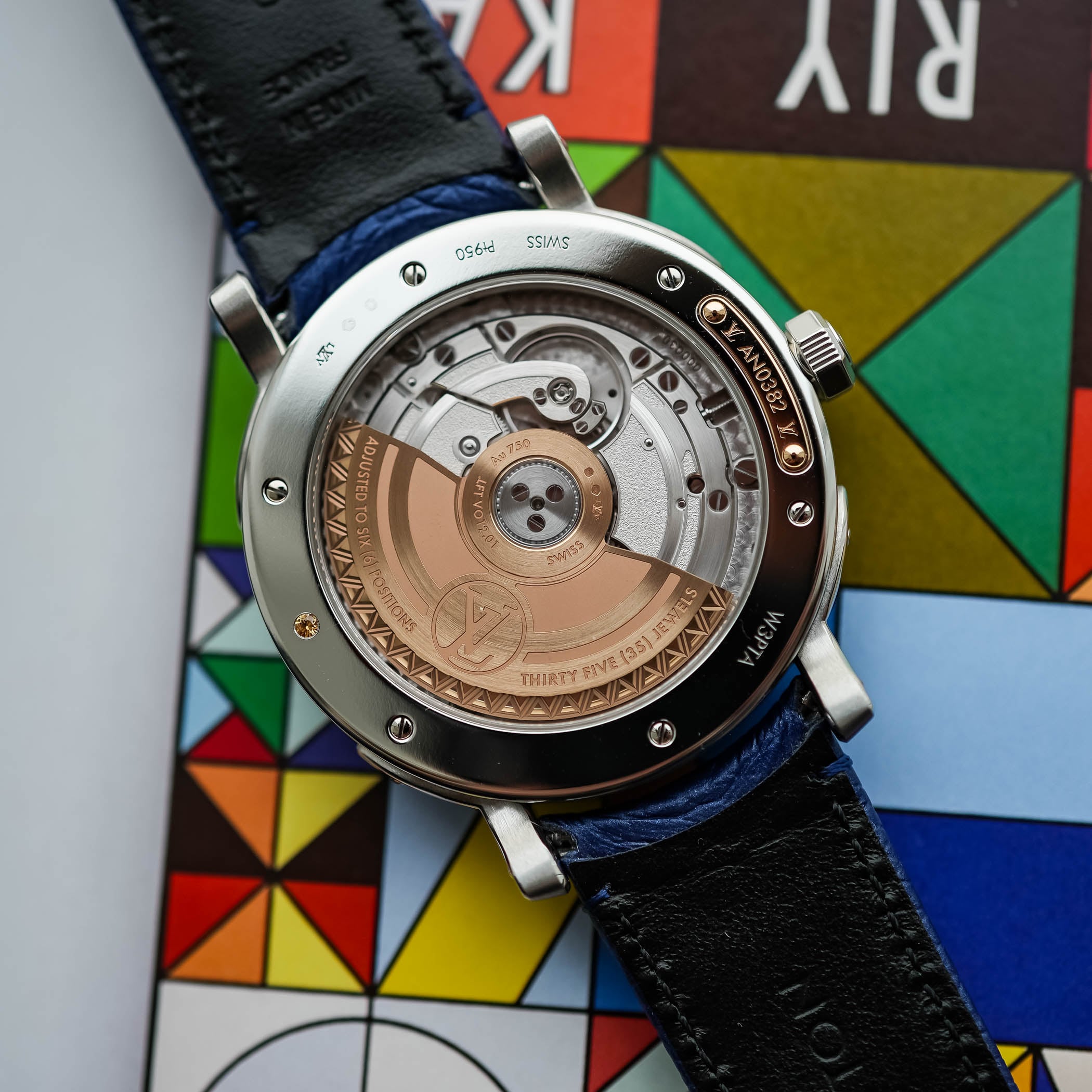
The Escale’s signature lugs (recognise the brass brackets and corners of Louis Vuitton trunks) remain the defining element. They sit on a brushed caseband, creating a nice, deliberate contrast. Up close, their execution is excellent: sharply defined, mirror-polished, with internal bevels to catch the light in different ways. The octagonal crown, another Escale hallmark, is crisp and tactile. The caseback reveals the movement, and a discreet detail: a saffron-coloured sapphire, Louis Vuitton’s signature for platinum cases, set opposite the numbered plaque. Water-resistance is 50m.
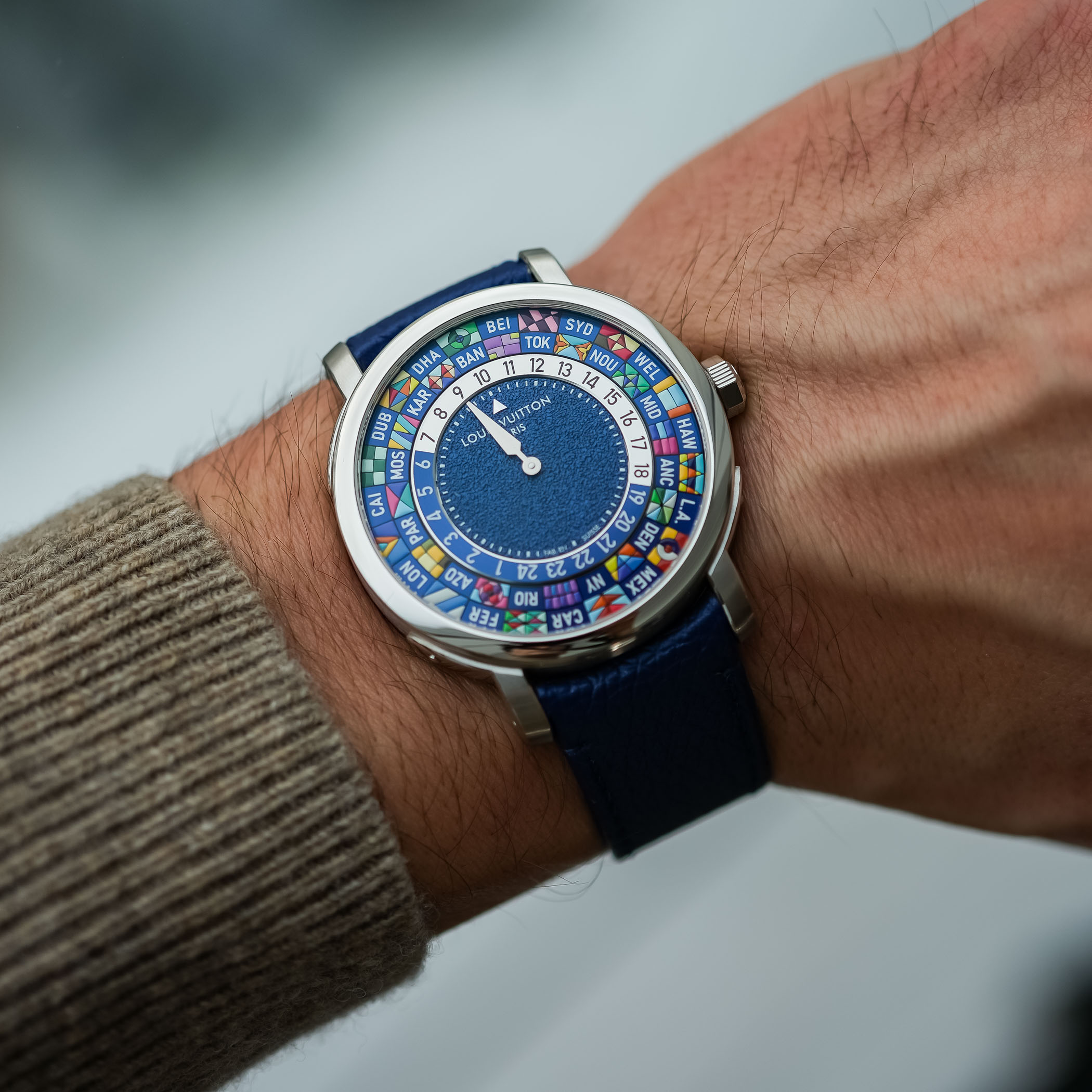
Colour, Craft, and Control of the Dial
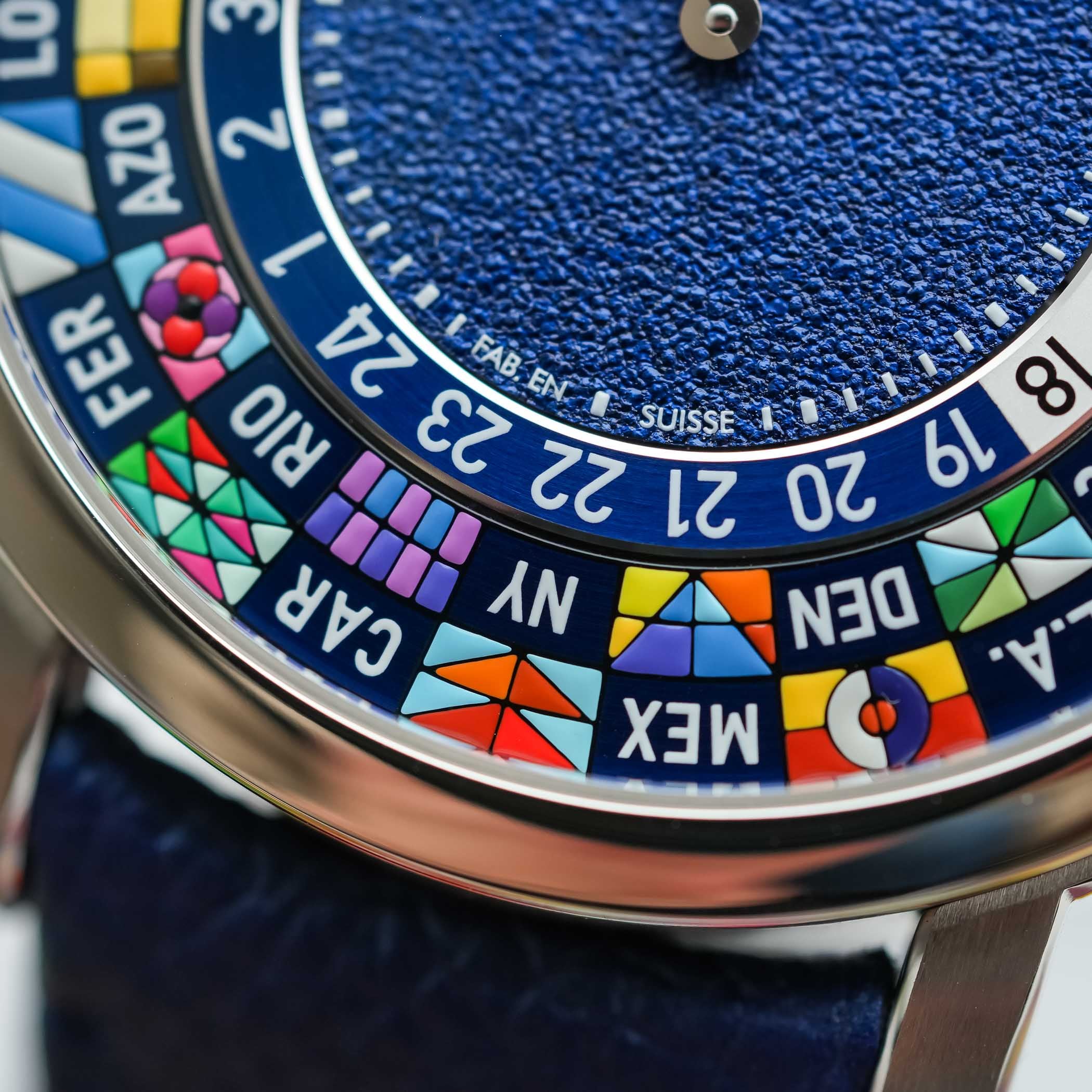
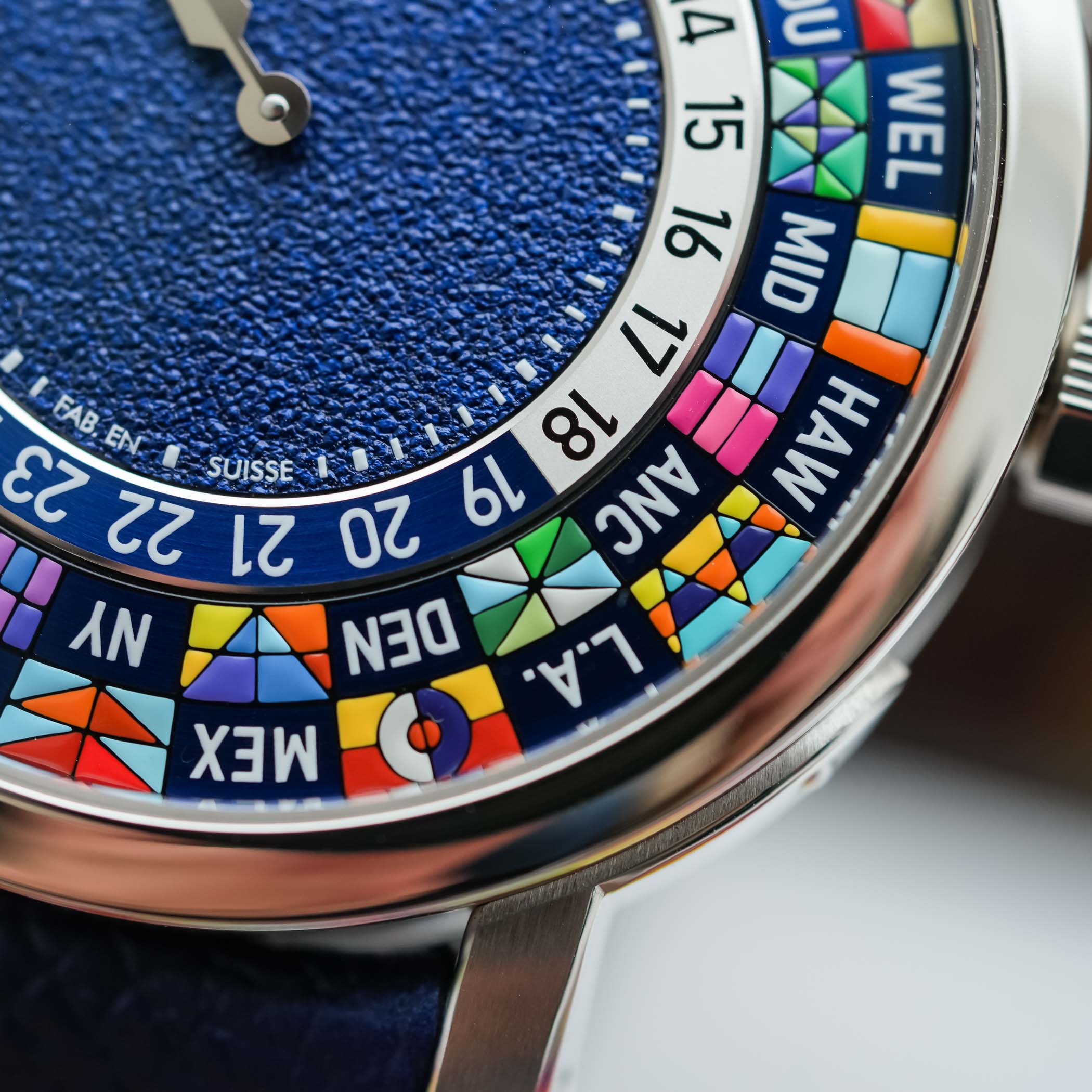
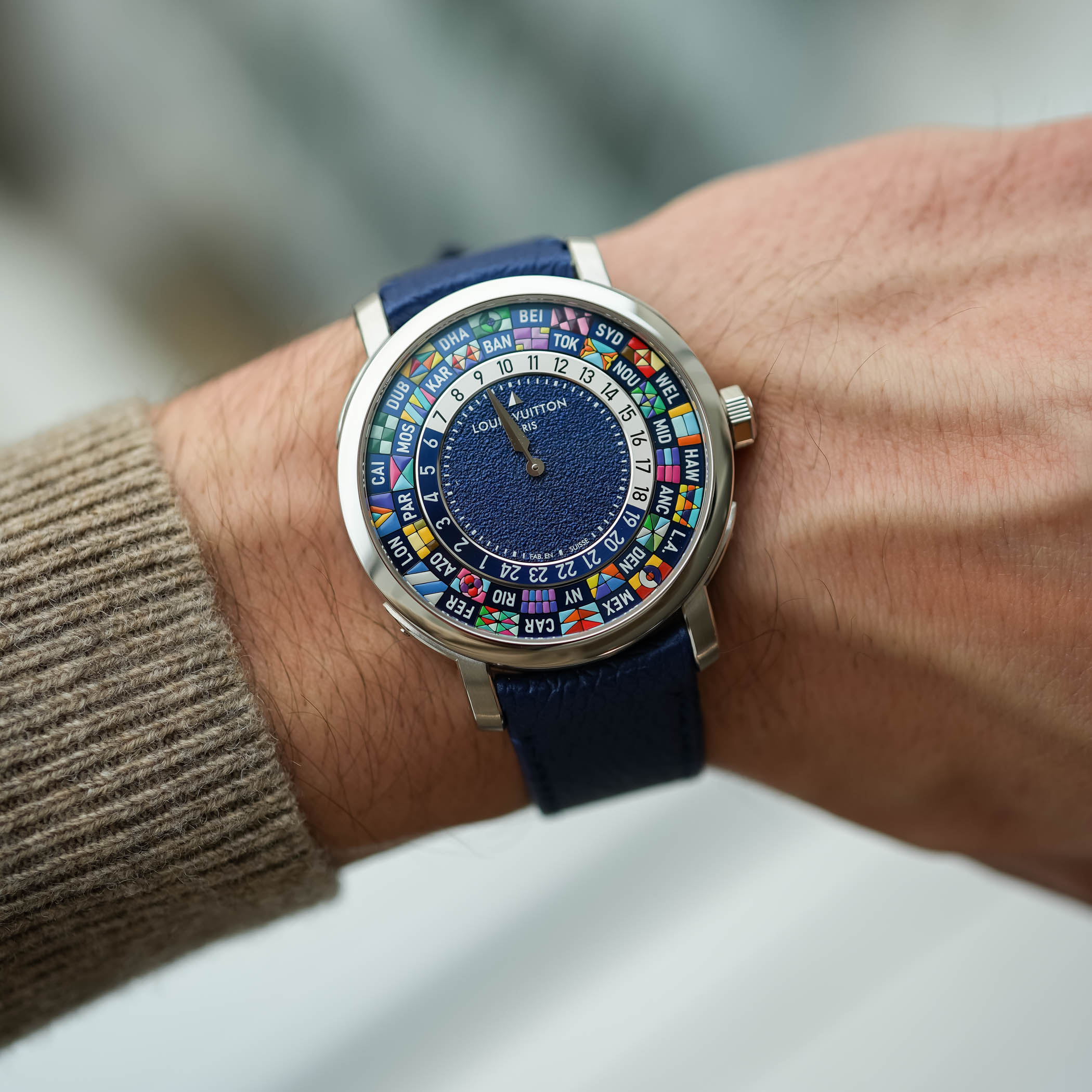
The dial brings emotion back as the hand-painted flags return. Arranged as the city ring for the world time function, the 24 miniature flags represent the world’s major time zones, but they are not national flags or maritime signals. Instead, each motif draws from Louis Vuitton’s own designs: Monogram flowers, Damier patterns, malletage linings, and historical trunk markings.
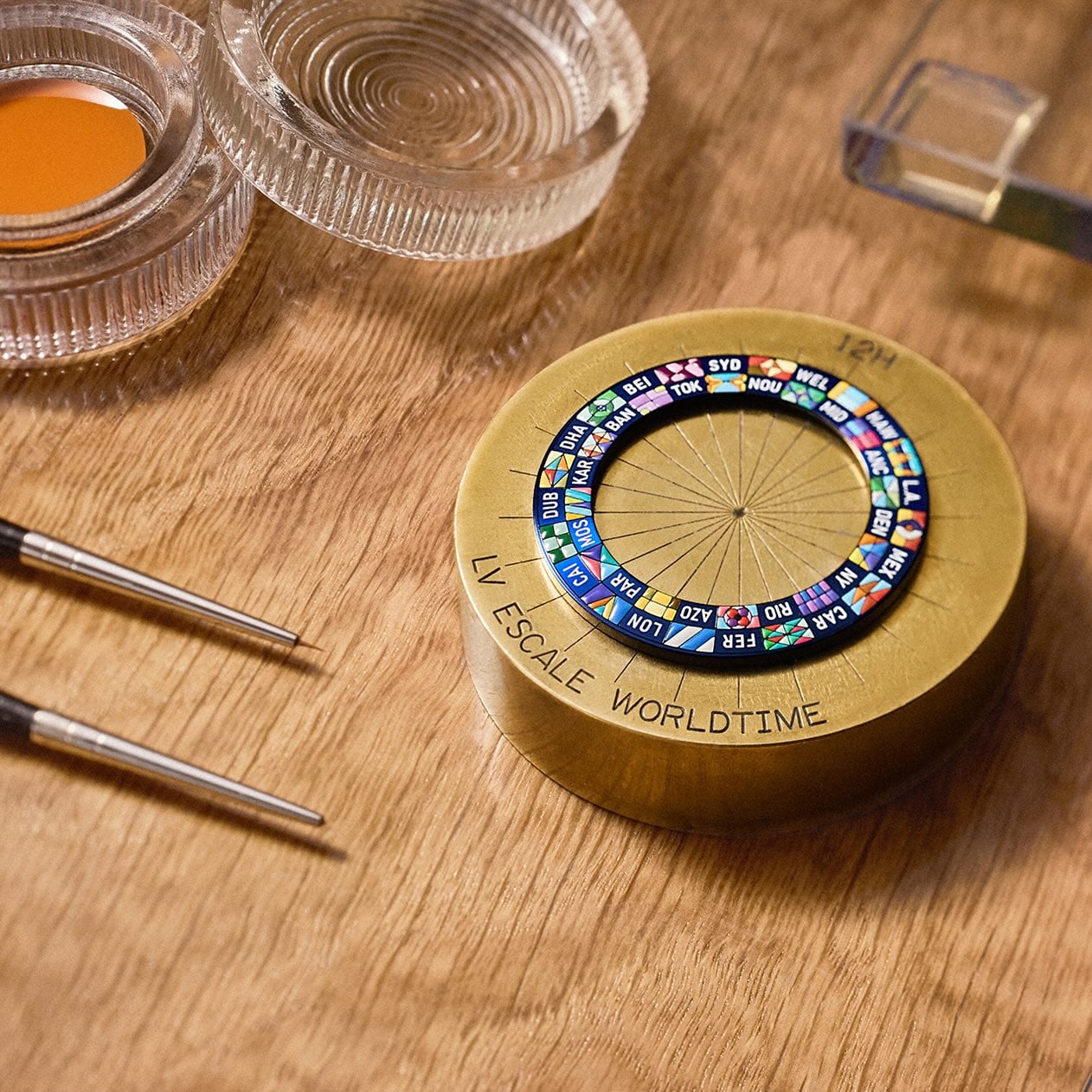
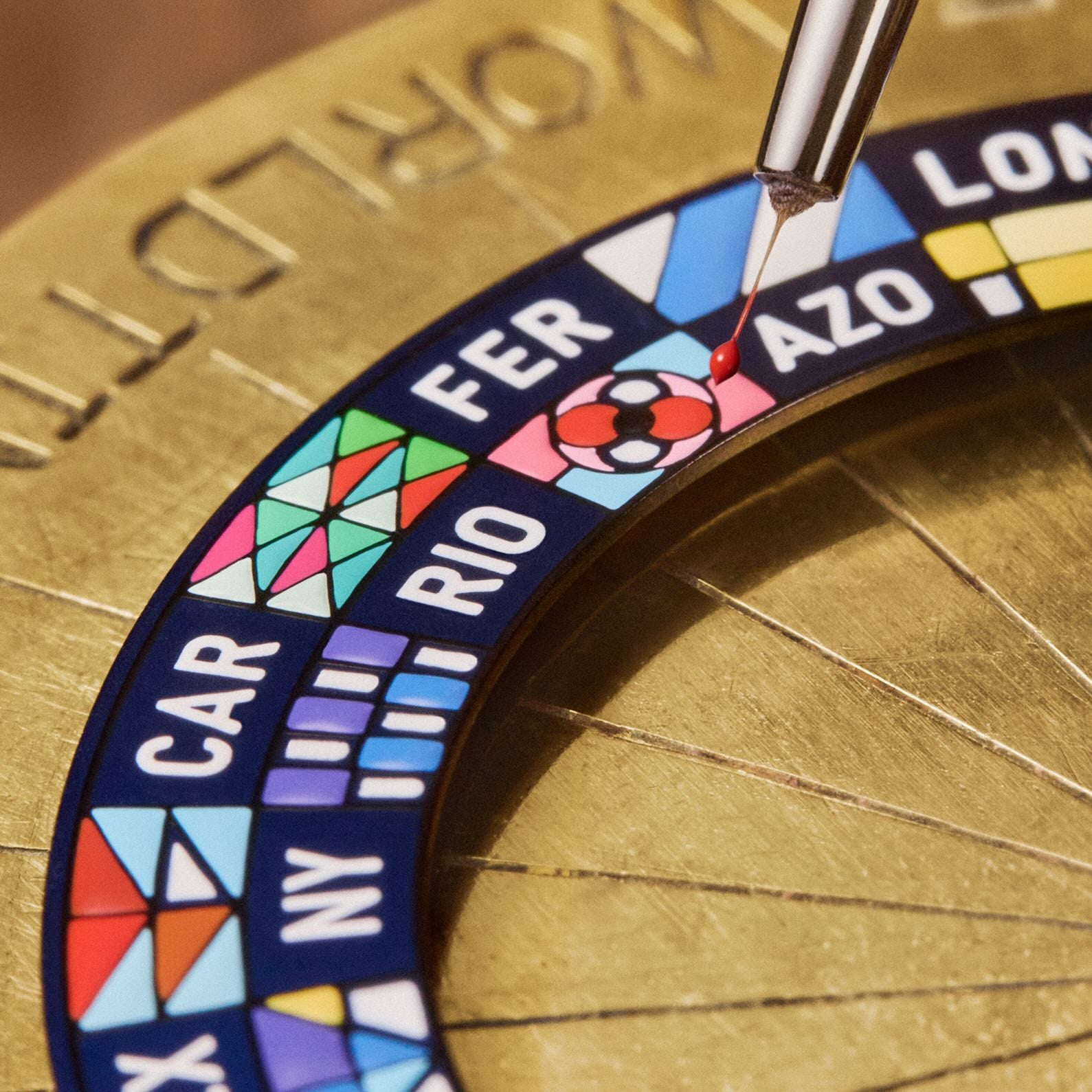
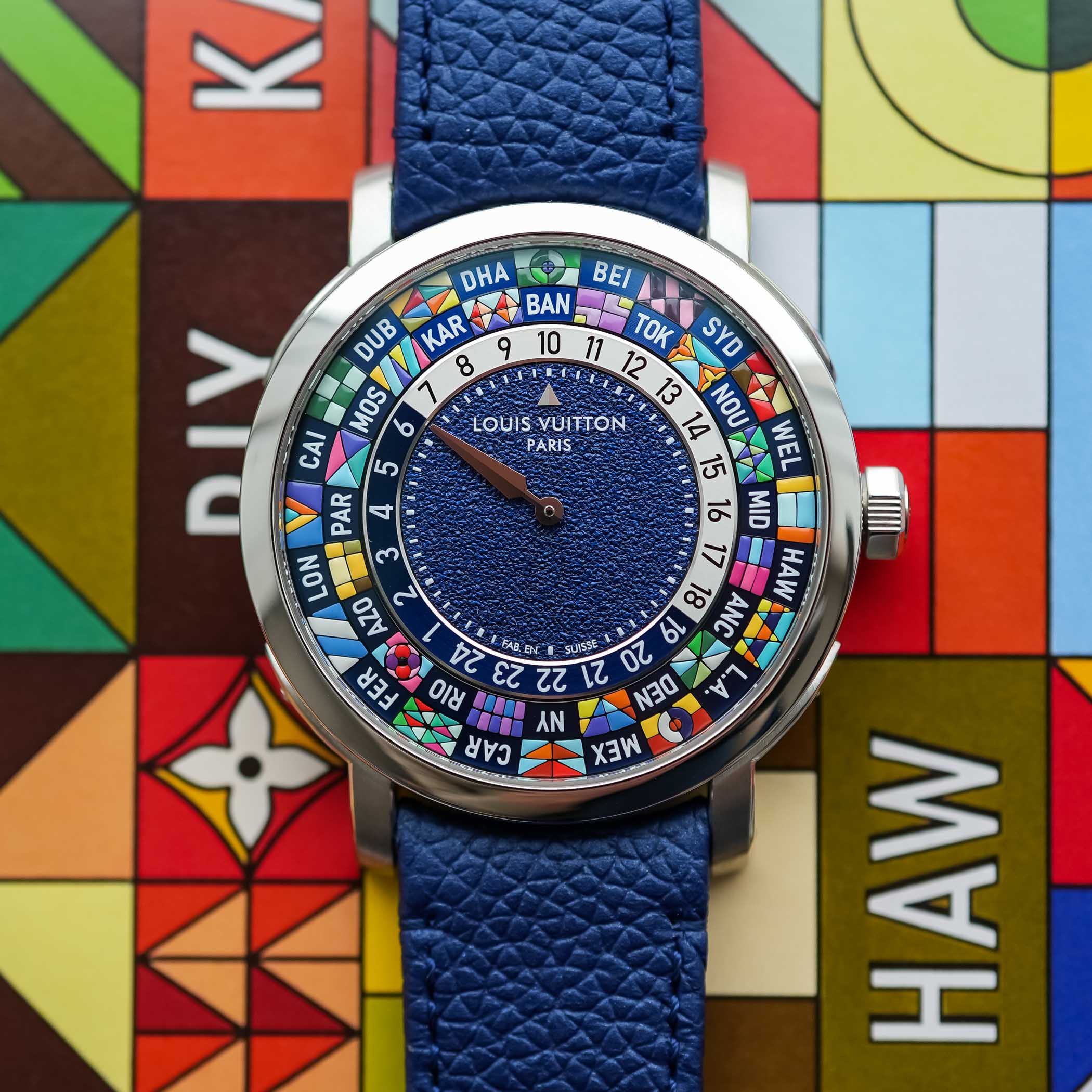
The level of detail is remarkable. The miniature painting is done by two artisans at La Fabrique des Arts, using 35 colours, applied one by one. Each colour layer is kiln-dried before the next is applied, meaning a single dial takes roughly one full week to complete. As one can see, the result is colourful and dimensional, with a noticeable relief that becomes apparent when light moves across the dial’s surface.
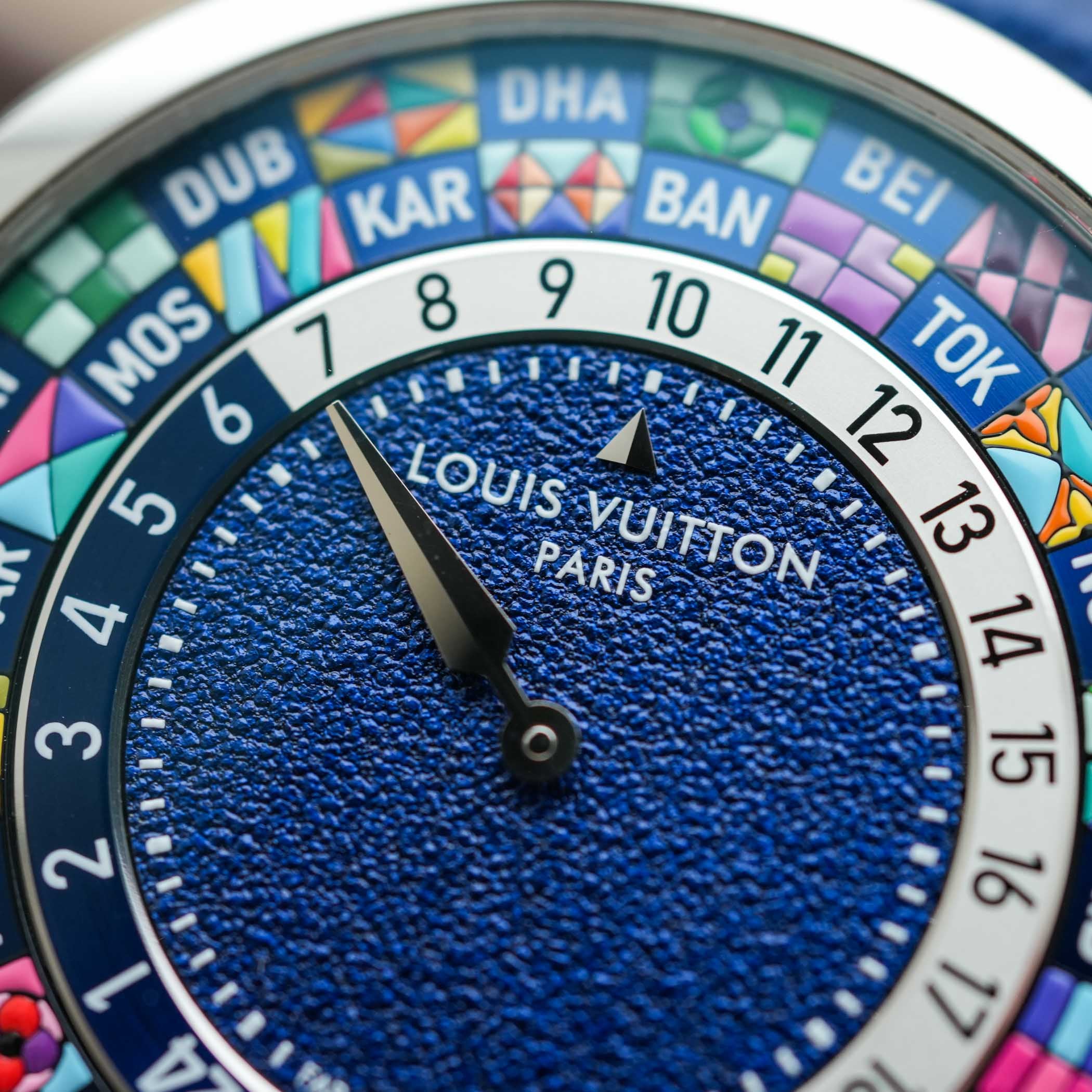
At the centre sits a grained blue dial, restrained enough to temper the intensity of the flag ring, yet rich enough to avoid appearing flat. The biggest evolution is functional. The original 2014 Escale Worldtime was visually bold but not particularly intuitive. Its rotating discs and triangular pointer required “acclimatisation”, and legibility definitely was not its strongest suit.
That’s no longer the case. The new Escale Worldtime uses a jumping hour disc that snaps into place every hour, and it also features a central minutes hand. All adjustments – city ring, hours, and minutes – are made via the crown. The jumping display alone changes the experience: the time is now instantly readable, without sacrificing the character that made the original so special.
A New In-House Movement
Powering the watch is the new calibre LFT VO 12.01, manufactured at La Fabrique du Temps. Beating at 28,800 vibrations/hour and offering a 62-hour power reserve (nearly double that of the 2014 model), it is the brand’s latest generation of automatic movements, sharing technical solutions with smaller calibres seen in recent Convergence and Spin Time models. The movement finishing is exactly where it should be at this level: sandblasted bridges, polished bevels, colourless jewels and an 18k rose gold rotor.
On the Wrist
Worn on a blue leather strap with a platinum pin buckle, the Escale Worldtime feels and truly is far more versatile than its dial might suggest. Despite the obvious artisanal “complexity”, it behaves like a traveller’s watch should: intuitive, legible, and useful across time zones. The watch sits comfortably under a cuff and never feels oversized. Look at the photo where it is placed on a 16.5cm wrist; it may occupy space, but the image is relaxed.
Availability & Price
At EUR 95,000 or USD 94,500, the Escale Worldtime is in high-complication territory, and it represents another meaningful step forward for Louis Vuitton as a watchmaker. With the return of the Worldtime, the introduction of the clever Twin Zone, and the expressive Escale Minute Repeater, the Escale collection has found its full voice. And at the centre of it all, this Worldtime feels like the watch that makes the most sense, historically, aesthetically, and for the wearer.
For more details, please visit louisvuitton.com.

5 responses
Up close with the already released pictures. You got my click I didn’t get s***
Lately LV watches are definitely improving, some are also very tempting, but prices are far too high for watches that retain very little value
Nice watch! Iwill sell my house, to buy it…
one will need a suitcase of money to buy this…
95.000 eur is 112,703 usd not fair